
Browse by Genre
Industrial Music / Industrial Metal / Aggro Industrial / Electro Metal
Industrial Noise / Power Noise / Harsh Noise
Synth Pop / Electro Pop / Synth-Electronica
Techno / Trance / Goa / Drum'n'Bass / Jungle / Tribal / Trip-Hop
Ambient / Electronica / Ethereal / Dub / Soundscapes / Abstract
Experimental / Avantgarde / Weird & Wired / Glitch / Noise / Field Recording
Dark / Gothic / Wave / New Wave / Dark Wave / Industrial Gothic
New Music / Downtown / Avantgarde Jazz / New Classical / World
Search Reviews
Music Reviews
Zane Trow: Ibis

There’s a peculiar kind of serenity that comes from watching a bird ignore the collapse of civilization. That, in a sense, is what "Ibis" sounds like - a quiet electronic vigil held on the edge of ecological and moral decay. Zane Trow, one of Australia’s under-sung sound artisans, has always worked in that liminal space between installation art and ambient music, crafting tones that feel more observed than composed. With "Ibis", he turns his ear toward a fragile wetland near his home, and by extension, toward the world’s fraying conscience.
This isn’t ambient as wallpaper - it’s ambient as protest, whispered through reverb. Field recordings of birds, wind, and an ice cream truck bell (a touch of tragicomic Australiana) drift among electronic sighs and rustling frequencies. It’s the sort of soundscape that feels like it might disintegrate if you breathe too loudly. “Channel” opens the album with restrained beauty, an unstable signal from a world half-drowned. The title track, “Ibis”, follows with gliding drones and avian punctuation - not imitations but presences, as if the birds themselves were collaborators.
Across the nine pieces, Trow traces the fading boundaries between natural and synthetic sound. “Eonganj” unfurls like a slow pulse through humid air, its synth textures both organic and anxious. “Rotunda” and “Stalune” add a sense of flickering geometry, tones folding back on themselves like memory loops. By the time “Xenvonlv” and “Waterwyattin” arrive, the electronics seem to breathe of their own accord - feedbacks, echoes, and pulses forming an unsteady ecosystem of tones. “909” closes with a faint rhythmic nod, a mechanical ghost haunting the wetlands.
The conceptual underpinning of "Ibis" is as political as it is sonic. Trow’s note accompanying the release references rising fascism, the erosion of empathy, and the normalisation of cruelty. Yet the music never sermonizes. Instead, it embodies resistance through tenderness - a radical act in itself. To listen to "Ibis" attentively is to remember that attention is a form of care, and that care, these days, borders on rebellion.
Technically, Trow’s touch is that of a craftsman who understands decay as a musical element. His use of delay units, analogue echo, and digital detritus suggests a fascination with entropy - sounds that bloom and wither, tones that refuse to resolve. There’s a kinship here with the textural poetics of Lawrence English (who mastered the record), but also with artists like David Toop or Asmus Tietchens - composers who treat silence and instability as compositional materials.
"Ibis" feels like an act of mourning disguised as listening. Yet there’s humor in its restraint, a quiet smirk in the inclusion of that ice cream truck bell - a reminder that absurdity survives even in decline. Maybe that’s the album’s secret: amid environmental ruin and political rot, the ibis still watches, the bell still rings, and Trow still records.
It’s not a requiem. It’s a witness statement - fragile, weary, and beautifully alive.
This isn’t ambient as wallpaper - it’s ambient as protest, whispered through reverb. Field recordings of birds, wind, and an ice cream truck bell (a touch of tragicomic Australiana) drift among electronic sighs and rustling frequencies. It’s the sort of soundscape that feels like it might disintegrate if you breathe too loudly. “Channel” opens the album with restrained beauty, an unstable signal from a world half-drowned. The title track, “Ibis”, follows with gliding drones and avian punctuation - not imitations but presences, as if the birds themselves were collaborators.
Across the nine pieces, Trow traces the fading boundaries between natural and synthetic sound. “Eonganj” unfurls like a slow pulse through humid air, its synth textures both organic and anxious. “Rotunda” and “Stalune” add a sense of flickering geometry, tones folding back on themselves like memory loops. By the time “Xenvonlv” and “Waterwyattin” arrive, the electronics seem to breathe of their own accord - feedbacks, echoes, and pulses forming an unsteady ecosystem of tones. “909” closes with a faint rhythmic nod, a mechanical ghost haunting the wetlands.
The conceptual underpinning of "Ibis" is as political as it is sonic. Trow’s note accompanying the release references rising fascism, the erosion of empathy, and the normalisation of cruelty. Yet the music never sermonizes. Instead, it embodies resistance through tenderness - a radical act in itself. To listen to "Ibis" attentively is to remember that attention is a form of care, and that care, these days, borders on rebellion.
Technically, Trow’s touch is that of a craftsman who understands decay as a musical element. His use of delay units, analogue echo, and digital detritus suggests a fascination with entropy - sounds that bloom and wither, tones that refuse to resolve. There’s a kinship here with the textural poetics of Lawrence English (who mastered the record), but also with artists like David Toop or Asmus Tietchens - composers who treat silence and instability as compositional materials.
"Ibis" feels like an act of mourning disguised as listening. Yet there’s humor in its restraint, a quiet smirk in the inclusion of that ice cream truck bell - a reminder that absurdity survives even in decline. Maybe that’s the album’s secret: amid environmental ruin and political rot, the ibis still watches, the bell still rings, and Trow still records.
It’s not a requiem. It’s a witness statement - fragile, weary, and beautifully alive.
The Necks: Disquiet
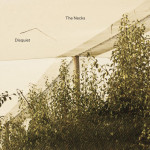
At this point, calling The Necks a band feels like calling an ocean a puddle. After nearly four decades, the Australian trio has become a geological phenomenon - vast, slow-moving, and resistant to the usual laws of genre or attention span. Their twentieth studio album, Disquiet, stretches across three discs and over three hours, yet somehow feels weightless, suspended in that hypnotic state where patience becomes revelation.
Tony Buck, Chris Abrahams, and Lloyd Swanton still work with the same elemental tools - drums, piano, bass - but what they build is something closer to weather than music. Their sound accumulates by degrees: a hi-hat shimmer, a bass pulse, a piano figure that hovers like a mirage, until the air itself seems to hum. It’s improvisation stripped of ego, full of tension and tact, like architecture built from breath.
The four long pieces - “Rapid Eye Movement”, “Ghost Net”, “Causeway”, and “Warm Running Sunlight” - unfold as parallel worlds, not chronological chapters. The Necks even suggest there’s no correct listening order; you’re free to drift among them as you wish. This feels entirely right: Disquiet isn’t an album to consume, but a terrain to wander. “Rapid Eye Movement” drifts through a lucid, almost neurological pulse; “Ghost Net” is darker, tangled, full of deep-sea metallic creaks and invisible motion. “Causeway” builds a bridge from minimal pulse to tidal resonance, and “Warm Running Sunlight” closes the circle in something that might - might - be called serenity.
What’s striking, as always, is the trio’s trust - in each other, in the listener, in the slow erosion of time. There’s no grand climax, no statement of arrival, just an unfolding. In a musical world obsessed with immediacy, The Necks continue to insist on duration - not as provocation, but as devotion. They make you *listen differently*, like staring at a horizon until you start to see the curvature of the earth.
The title, Disquiet, might be a hint of irony. The Necks’ music doesn’t soothe; it unsettles in the best sense - it shakes loose the constant noise of life until only presence remains. This isn’t ambient, nor is it jazz, nor drone. It’s something else: the sound of musicians who, after 39 years together, have learned that silence isn’t the absence of sound - it’s the most resonant instrument of all.
If patience is a radical act, then The Necks are still the most subversive band alive.
Tony Buck, Chris Abrahams, and Lloyd Swanton still work with the same elemental tools - drums, piano, bass - but what they build is something closer to weather than music. Their sound accumulates by degrees: a hi-hat shimmer, a bass pulse, a piano figure that hovers like a mirage, until the air itself seems to hum. It’s improvisation stripped of ego, full of tension and tact, like architecture built from breath.
The four long pieces - “Rapid Eye Movement”, “Ghost Net”, “Causeway”, and “Warm Running Sunlight” - unfold as parallel worlds, not chronological chapters. The Necks even suggest there’s no correct listening order; you’re free to drift among them as you wish. This feels entirely right: Disquiet isn’t an album to consume, but a terrain to wander. “Rapid Eye Movement” drifts through a lucid, almost neurological pulse; “Ghost Net” is darker, tangled, full of deep-sea metallic creaks and invisible motion. “Causeway” builds a bridge from minimal pulse to tidal resonance, and “Warm Running Sunlight” closes the circle in something that might - might - be called serenity.
What’s striking, as always, is the trio’s trust - in each other, in the listener, in the slow erosion of time. There’s no grand climax, no statement of arrival, just an unfolding. In a musical world obsessed with immediacy, The Necks continue to insist on duration - not as provocation, but as devotion. They make you *listen differently*, like staring at a horizon until you start to see the curvature of the earth.
The title, Disquiet, might be a hint of irony. The Necks’ music doesn’t soothe; it unsettles in the best sense - it shakes loose the constant noise of life until only presence remains. This isn’t ambient, nor is it jazz, nor drone. It’s something else: the sound of musicians who, after 39 years together, have learned that silence isn’t the absence of sound - it’s the most resonant instrument of all.
If patience is a radical act, then The Necks are still the most subversive band alive.
Fani Konstantinidou: Undertones
Artist: Fani Konstantinidou (@)
Title: Undertones
Format: CD + Download
Label: Moving Furniture Records (@)
Rated:

Title: Undertones
Format: CD + Download
Label: Moving Furniture Records (@)
Rated:
Fani Konstantinidou has a peculiar way of making a space speak. Not metaphorically - literally. Her new work, Undertones, listens to buildings, hallways, the air under a museum roof, the inside of an organ’s chest, and then lets them talk back through percussion and electronics. It’s the sound of architecture re-enacting its own acoustics, a duet between flesh and façade.
Originally conceived for a four-channel setting, Undertones has now been condensed into stereo - not simplified, just folded in on itself like origami made of resonance. The work unfolds in four movements, part graphic score, part improvisational game, where musicians are instructed to record short fragments of sound from around the performance space and feed them back into the piece. The result is something between composition and cartography - a sonic map that redrafts itself at every playback.
For this recorded version, Konstantinidou harvests fragments from Amsterdam’s cultural organs - quite literally. There’s the grand Concertgebouw organ, eerily silent of audience; the Utopa Baroque Organ in Orgelpark, recorded from inside its pipes; and the metallic hum of the Stedelijk Museum’s exterior roof. These field recordings don’t decorate the music - they anchor it, grounding the abstract percussion and electronic layers in the tangible hum of place.
The four movements - “Undertones I–IV” - behave like slow tidal shifts. Metallic shivers dissolve into deep electronic breathing; distant rumbles mutate into ghostly harmonics; the boundary between recorded and performed sound becomes impossible to trace. It’s immersive, occasionally unsettling, and surprisingly sensual in its treatment of resonance. Imagine Éliane Radigue and Z’EV attending a séance at the Rijksmuseum - the walls hum, the floor trembles, and nobody speaks for fear of breaking the spell.
Konstantinidou, a Greek-Dutch composer and performer with a background in exploring sonic identities across cultures and spaces, has been quietly building a body of work where context is composition. "Undertones" fits beautifully within the Moving Furniture Records ethos - that Amsterdam micro-institution where drone, minimalism, and field recording merge into a patient aesthetics of listening. But unlike many of her labelmates, Konstantinidou never treats sound as abstraction; her music breathes with biography, with locality, with dirt and air.
This is music that refuses to perform - it inhabits. The percussive idiophones, the electro-acoustic murmurs, the environmental traces: all coexist as if tuning a memory. The result is both intellectual and bodily, a work that rewards close listening but also just feels right vibrating through a pair of good speakers late at night, when you’ve forgotten the world still has a pulse.
If there’s a moral here (and there might be), it’s that sound is never neutral - it’s always a witness. In "Undertones", Fani Konstantinidou lets the world testify in overtones, echoes, and gentle shivers of presence. And somehow, that’s more political than any speech.
Originally conceived for a four-channel setting, Undertones has now been condensed into stereo - not simplified, just folded in on itself like origami made of resonance. The work unfolds in four movements, part graphic score, part improvisational game, where musicians are instructed to record short fragments of sound from around the performance space and feed them back into the piece. The result is something between composition and cartography - a sonic map that redrafts itself at every playback.
For this recorded version, Konstantinidou harvests fragments from Amsterdam’s cultural organs - quite literally. There’s the grand Concertgebouw organ, eerily silent of audience; the Utopa Baroque Organ in Orgelpark, recorded from inside its pipes; and the metallic hum of the Stedelijk Museum’s exterior roof. These field recordings don’t decorate the music - they anchor it, grounding the abstract percussion and electronic layers in the tangible hum of place.
The four movements - “Undertones I–IV” - behave like slow tidal shifts. Metallic shivers dissolve into deep electronic breathing; distant rumbles mutate into ghostly harmonics; the boundary between recorded and performed sound becomes impossible to trace. It’s immersive, occasionally unsettling, and surprisingly sensual in its treatment of resonance. Imagine Éliane Radigue and Z’EV attending a séance at the Rijksmuseum - the walls hum, the floor trembles, and nobody speaks for fear of breaking the spell.
Konstantinidou, a Greek-Dutch composer and performer with a background in exploring sonic identities across cultures and spaces, has been quietly building a body of work where context is composition. "Undertones" fits beautifully within the Moving Furniture Records ethos - that Amsterdam micro-institution where drone, minimalism, and field recording merge into a patient aesthetics of listening. But unlike many of her labelmates, Konstantinidou never treats sound as abstraction; her music breathes with biography, with locality, with dirt and air.
This is music that refuses to perform - it inhabits. The percussive idiophones, the electro-acoustic murmurs, the environmental traces: all coexist as if tuning a memory. The result is both intellectual and bodily, a work that rewards close listening but also just feels right vibrating through a pair of good speakers late at night, when you’ve forgotten the world still has a pulse.
If there’s a moral here (and there might be), it’s that sound is never neutral - it’s always a witness. In "Undertones", Fani Konstantinidou lets the world testify in overtones, echoes, and gentle shivers of presence. And somehow, that’s more political than any speech.
Treen: KaikÅ
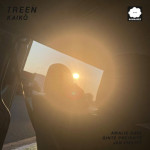
Free improvisation, when done well, has this strange capacity to make silence feel like a participant rather than an absence. Kaiko, the second album by Treen, doesn’t so much begin as it emerges - a slow unfurling of breath, friction, and tone where sound and stillness are granted equal weight. Saxophonist Amalie Dahl, pianist Ginte Preisaite, and drummer Jan Philipp have built something that feels organic not because it imitates nature, but because it behaves like it - patient, reactive, quietly unpredictable.
The trio moves through the four pieces (Hyle, Kinetic, Ridenuos, Kaiko) with a kind of spiritual pragmatism: even in abstraction, every gesture seems to listen. Dahl’s saxophone doesn’t dominate so much as hover, sketching melodic traces that dissolve into Preisaite’s weightless piano figures - and when Philipp enters, he’s not keeping time, he’s questioning it. It’s a language where rhythm is inhaled and exhaled, never measured.
What’s striking here is the restraint. This isn’t the volcanic freedom of 1960s fire music nor the sterile cool of academic improv - Kaiko operates in a softer register, where intensity hides beneath calm. Free jazz almost feels like the wrong label; “telepathic chamber music for the quietly possessed” might be closer. The textures - brushes on metal, breath through keys, piano strings dampened into murmurs - recall ECM’s more meditative corners but with a distinctly youthful curiosity, an awareness that they’re still inventing their own vocabulary.
Recorded for Sauajazz, a young label that already shows a taste for careful sound and visual aesthetics, Kaiko feels like a document of trust - between musicians, between countries, between frequencies. It’s the sound of three people refusing to fill space just because they can.
If you listen closely enough, you might realize the album title, Kaiko - meaning “harbor” or “recollection” in Japanese - is the perfect metaphor: a safe cove where turbulence can be remembered without fear of drowning.
In short, Treen have made a record that breathes - and if you let it, it might even recalibrate the way you do.
The trio moves through the four pieces (Hyle, Kinetic, Ridenuos, Kaiko) with a kind of spiritual pragmatism: even in abstraction, every gesture seems to listen. Dahl’s saxophone doesn’t dominate so much as hover, sketching melodic traces that dissolve into Preisaite’s weightless piano figures - and when Philipp enters, he’s not keeping time, he’s questioning it. It’s a language where rhythm is inhaled and exhaled, never measured.
What’s striking here is the restraint. This isn’t the volcanic freedom of 1960s fire music nor the sterile cool of academic improv - Kaiko operates in a softer register, where intensity hides beneath calm. Free jazz almost feels like the wrong label; “telepathic chamber music for the quietly possessed” might be closer. The textures - brushes on metal, breath through keys, piano strings dampened into murmurs - recall ECM’s more meditative corners but with a distinctly youthful curiosity, an awareness that they’re still inventing their own vocabulary.
Recorded for Sauajazz, a young label that already shows a taste for careful sound and visual aesthetics, Kaiko feels like a document of trust - between musicians, between countries, between frequencies. It’s the sound of three people refusing to fill space just because they can.
If you listen closely enough, you might realize the album title, Kaiko - meaning “harbor” or “recollection” in Japanese - is the perfect metaphor: a safe cove where turbulence can be remembered without fear of drowning.
In short, Treen have made a record that breathes - and if you let it, it might even recalibrate the way you do.
VV.AA.: SmåSnacks Vol. 2

Artist: VV.AA.
Title: SmåSnacks Vol. 2
Format: Download Only (MP3 + Lossless)
Label: Snick Snack Music (@)
Rated:

Title: SmåSnacks Vol. 2
Format: Download Only (MP3 + Lossless)
Label: Snick Snack Music (@)
Rated:
The Norwegians have a way of making even the word “snack” sound philosophical. "SmåSnacks Vol. 2", the latest compilation from Snick Snack Music, is exactly that - a buffet of sonic finger food, full of odd flavors, unexpected pairings, and sly humour served on shimmering house beats. It’s the kind of record that could only come from a country where club music is treated less like a lifestyle accessory and more like a form of communal daydreaming.
The label calls this a celebration of Norway’s “vibrant” electronic scene, but “vibrant” doesn’t quite do it justice. It’s more like an electric fjord: currents colliding, temperatures shifting, bioluminescent grooves bubbling up from the depths. Returning figures like Ost & Kjex, Trulz & Robin, Sex Judas feat. Ricky, and Mungolian Jet Set remind you that the Scandinavian disco gene is still mutating beautifully. Their contributions feel seasoned - confident, eccentric, maybe slightly tipsy - while newer names like Djembe Tekno, Anders Hajem, and Helene Rickhard bring an exploratory freshness that keeps the compilation from becoming an exercise in nostalgia.
Opener Mungolian Jetset’s “Bleepers n Blobs (Original demo version)” is exactly what it sounds like: a mischievous collision of cosmic house and alien hiccups, a reminder that this duo could make a car alarm sound spiritual. Ost & Kjex’s “SickSnack (2025 Resnacked)” follows with their signature mix of sleaze and sophistication - like Giorgio Moroder trying to flirt in Norwegian. Henrik Villard and Anders Hajem go deeper, layering a classic deep-house pulse with something that feels more psychological than physical, while Sex Judas feat. Ricky contribute the compilation’s dirtiest hymn, “In the Silent Night”, a kind of sleazy nocturne for the enlightened sinner.
Then there’s Trulz & Robin, still the unsung wizards of Oslo techno, delivering a track that feels like warm circuitry breathing in sync with the listener. Helene Rickhard’s “Cycle 25” is a quiet highlight - all drifting particles and melancholic voltage - while Center of the Universe’s “Who put Acker Bilk on the guestlist?” wraps things up with tongue-in-cheek lounge surrealism, proving once again that Norwegian producers have the best sense of humour in electronic music (and the worst titles, in the best possible way).
What "SmåSnacks Vol. 2" really demonstrates is how Norwegian dance music continues to resist categorization. It’s neither Berlin’s severity nor London’s cynicism - it’s something softer, stranger, perhaps more cosmic in temperament. You can hear the jazz ghosts of Smalltown Supersound, the eccentric collage energy of Tellé Records, and the slow-motion disco legacy of Full Pupp, all refracted through this new, playful generation that seems more interested in curiosity than coolness.
It’s dance music for people who think too much and smile anyway. Each track feels like a small, self-contained universe - a snack, sure, but one that lingers, like the taste of salt on your lips after a swim in cold water. Norway’s electronic scene may be ever more confident, as the label puts it, but "SmåSnacks Vol. 2" suggests it’s also gloriously unconcerned with being taken too seriously. And that, in 2025, might be the most radical attitude of all.
The label calls this a celebration of Norway’s “vibrant” electronic scene, but “vibrant” doesn’t quite do it justice. It’s more like an electric fjord: currents colliding, temperatures shifting, bioluminescent grooves bubbling up from the depths. Returning figures like Ost & Kjex, Trulz & Robin, Sex Judas feat. Ricky, and Mungolian Jet Set remind you that the Scandinavian disco gene is still mutating beautifully. Their contributions feel seasoned - confident, eccentric, maybe slightly tipsy - while newer names like Djembe Tekno, Anders Hajem, and Helene Rickhard bring an exploratory freshness that keeps the compilation from becoming an exercise in nostalgia.
Opener Mungolian Jetset’s “Bleepers n Blobs (Original demo version)” is exactly what it sounds like: a mischievous collision of cosmic house and alien hiccups, a reminder that this duo could make a car alarm sound spiritual. Ost & Kjex’s “SickSnack (2025 Resnacked)” follows with their signature mix of sleaze and sophistication - like Giorgio Moroder trying to flirt in Norwegian. Henrik Villard and Anders Hajem go deeper, layering a classic deep-house pulse with something that feels more psychological than physical, while Sex Judas feat. Ricky contribute the compilation’s dirtiest hymn, “In the Silent Night”, a kind of sleazy nocturne for the enlightened sinner.
Then there’s Trulz & Robin, still the unsung wizards of Oslo techno, delivering a track that feels like warm circuitry breathing in sync with the listener. Helene Rickhard’s “Cycle 25” is a quiet highlight - all drifting particles and melancholic voltage - while Center of the Universe’s “Who put Acker Bilk on the guestlist?” wraps things up with tongue-in-cheek lounge surrealism, proving once again that Norwegian producers have the best sense of humour in electronic music (and the worst titles, in the best possible way).
What "SmåSnacks Vol. 2" really demonstrates is how Norwegian dance music continues to resist categorization. It’s neither Berlin’s severity nor London’s cynicism - it’s something softer, stranger, perhaps more cosmic in temperament. You can hear the jazz ghosts of Smalltown Supersound, the eccentric collage energy of Tellé Records, and the slow-motion disco legacy of Full Pupp, all refracted through this new, playful generation that seems more interested in curiosity than coolness.
It’s dance music for people who think too much and smile anyway. Each track feels like a small, self-contained universe - a snack, sure, but one that lingers, like the taste of salt on your lips after a swim in cold water. Norway’s electronic scene may be ever more confident, as the label puts it, but "SmåSnacks Vol. 2" suggests it’s also gloriously unconcerned with being taken too seriously. And that, in 2025, might be the most radical attitude of all.