
Browse by Genre
Industrial Music / Industrial Metal / Aggro Industrial / Electro Metal
Industrial Noise / Power Noise / Harsh Noise
Synth Pop / Electro Pop / Synth-Electronica
Techno / Trance / Goa / Drum'n'Bass / Jungle / Tribal / Trip-Hop
Ambient / Electronica / Ethereal / Dub / Soundscapes / Abstract
Experimental / Avantgarde / Weird & Wired / Glitch / Noise / Field Recording
Dark / Gothic / Wave / New Wave / Dark Wave / Industrial Gothic
New Music / Downtown / Avantgarde Jazz / New Classical / World
Search Reviews
Music Reviews
us & sparkles: Sir Kaboom and Trippy Tweet

Artist: us & sparkles (@)
Title: Sir Kaboom and Trippy Tweet
Format: 12" + Download
Label: self-released
Rated:

Title: Sir Kaboom and Trippy Tweet
Format: 12" + Download
Label: self-released
Rated:
There’s always a moment, usually around track two or three, when a “long-form groove exploration” either reveals itself as patient craft or just very polite procrastination. "Sir Kaboom and Trippy Tweet" lands, somewhat annoyingly for cynics, on the former.
Behind "us & sparkles" is Roland Vollenweider, a figure who divides his time between electronic music and psychoanalytic psychotherapy. Which explains a lot, unfortunately. This is music that doesn’t just want you to dance, it wants to "understand why you’re dancing", possibly trace it back to childhood, and then let the rhythm do the talking instead. Surprisingly, it works.
The album extends into long-form structures without collapsing under their weight. “Songs of Navarone” opens with a kind of patient unfolding, grooves emerging not as declarations but as slow agreements between elements. Nothing rushes. You’re not pushed onto the dancefloor; you sort of drift there, like you made the decision yourself. Clever.
“Bongo Dreams” leans more explicitly into rhythm, but avoids turning into a percussive cliché. The track breathes, expanding and contracting, letting textures flicker in and out like half-remembered scenes from a night that never quite resolves into a story. There’s a warmth here that feels deliberate, not sentimental, more about presence than nostalgia.
“Contemplation” does what the title threatens, but with restraint. It doesn’t disappear into ambient vagueness. Instead, it holds a groove at a distance, like something you can approach but never fully inhabit. This tension between movement and suspension runs throughout the record, giving it a quiet internal logic.
Then “FlashyFresh” shifts the tone, not by becoming louder or faster, but by sharpening its edges. The groove tightens, details become more pronounced, and for a moment it feels like the album might tip into something more overtly club-oriented. It doesn’t. It just hints at it, then steps back again, as if aware that commitment is overrated.
“Stay Alert” introduces a subtle sense of unease beneath its rhythmic surface, a reminder that repetition can be both comforting and slightly destabilizing. Patterns loop, but small deviations keep them from settling into pure hypnosis. It’s a delicate balance, and the track walks it with surprising confidence.
“The Poem” and “It Was Already in Me” close the album by leaning into something more introspective, though not in a way that abandons the body. The grooves soften, stretch, and dissolve into something closer to atmosphere, but they never fully disappear. There’s always a pulse, faint but persistent, like a memory that refuses to fade.
What’s notable is how collaborative this record feels, despite being anchored in Vollenweider’s vision. The presence of multiple musicians, from horns to guitars to percussion, adds a tactile richness that prevents the music from becoming overly digital or sterile. Each element seems to arrive, contribute, and then quietly step aside.
There are echoes of psychedelic electronica, hints of downtempo, traces of something that could have wandered out of a late-night set in a small, overly sincere club. But "Sir Kaboom and Trippy Tweet" avoids becoming a genre exercise. It’s less about fitting into a scene and more about sustaining an endorphinic state.
Not immediate, not flashy in the way the title jokingly suggests, but persistent. The kind of album that doesn’t demand attention, yet gradually occupies it, like a thought you didn’t invite but don’t entirely mind keeping around.
Behind "us & sparkles" is Roland Vollenweider, a figure who divides his time between electronic music and psychoanalytic psychotherapy. Which explains a lot, unfortunately. This is music that doesn’t just want you to dance, it wants to "understand why you’re dancing", possibly trace it back to childhood, and then let the rhythm do the talking instead. Surprisingly, it works.
The album extends into long-form structures without collapsing under their weight. “Songs of Navarone” opens with a kind of patient unfolding, grooves emerging not as declarations but as slow agreements between elements. Nothing rushes. You’re not pushed onto the dancefloor; you sort of drift there, like you made the decision yourself. Clever.
“Bongo Dreams” leans more explicitly into rhythm, but avoids turning into a percussive cliché. The track breathes, expanding and contracting, letting textures flicker in and out like half-remembered scenes from a night that never quite resolves into a story. There’s a warmth here that feels deliberate, not sentimental, more about presence than nostalgia.
“Contemplation” does what the title threatens, but with restraint. It doesn’t disappear into ambient vagueness. Instead, it holds a groove at a distance, like something you can approach but never fully inhabit. This tension between movement and suspension runs throughout the record, giving it a quiet internal logic.
Then “FlashyFresh” shifts the tone, not by becoming louder or faster, but by sharpening its edges. The groove tightens, details become more pronounced, and for a moment it feels like the album might tip into something more overtly club-oriented. It doesn’t. It just hints at it, then steps back again, as if aware that commitment is overrated.
“Stay Alert” introduces a subtle sense of unease beneath its rhythmic surface, a reminder that repetition can be both comforting and slightly destabilizing. Patterns loop, but small deviations keep them from settling into pure hypnosis. It’s a delicate balance, and the track walks it with surprising confidence.
“The Poem” and “It Was Already in Me” close the album by leaning into something more introspective, though not in a way that abandons the body. The grooves soften, stretch, and dissolve into something closer to atmosphere, but they never fully disappear. There’s always a pulse, faint but persistent, like a memory that refuses to fade.
What’s notable is how collaborative this record feels, despite being anchored in Vollenweider’s vision. The presence of multiple musicians, from horns to guitars to percussion, adds a tactile richness that prevents the music from becoming overly digital or sterile. Each element seems to arrive, contribute, and then quietly step aside.
There are echoes of psychedelic electronica, hints of downtempo, traces of something that could have wandered out of a late-night set in a small, overly sincere club. But "Sir Kaboom and Trippy Tweet" avoids becoming a genre exercise. It’s less about fitting into a scene and more about sustaining an endorphinic state.
Not immediate, not flashy in the way the title jokingly suggests, but persistent. The kind of album that doesn’t demand attention, yet gradually occupies it, like a thought you didn’t invite but don’t entirely mind keeping around.
Chris Wood & Albert Sapsford: Pristine

Artist: Chris Wood & Albert Sapsford
Title: Pristine
Format: CD + Download
Label: Pharmafabrik (@)
Rated:

Title: Pristine
Format: CD + Download
Label: Pharmafabrik (@)
Rated:
There’s something faintly absurd about calling a record "Pristine" when it’s born out of lockdown anxiety, long-distance miscommunication, and the general psychological debris of recent history. And yet, here we are. Against expectations, Chris Wood and Albert Sapsford manage to make the title feel less like irony and more like a quiet objective: not purity as absence of noise, but clarity wrestled out of it.
This is a collaboration conducted entirely at a distance, with no spoken communication. Which sounds romantic until you remember how most human communication already fails "with" words. So perhaps they just skipped the inefficient part. What emerges is a work that feels meticulously assembled yet strangely detached from ego, as if each sound was negotiated rather than declared.
Wood, an architect as well as a musician, brings a structural sensibility that’s hard to miss. These tracks don’t simply unfold, they are built. Spaces open, close, echo, and reconfigure with a logic that feels almost spatial before it feels musical. Sapsford, working with software-based modular systems and algorithmic processes, introduces a different kind of intelligence: less about structure as form, more about structure as evolving system. Between them, "Pristine" becomes a kind of sonic architecture that is constantly recalculating itself.
“The Multiplier” sits at the center like an extended corridor you’re not entirely sure you’ll exit. At over 17 minutes, it could have collapsed under its own weight, but instead it sustains a delicate balance between drift and direction. Layers accumulate slowly, not in a grand crescendo but in subtle shifts, like light changing in a room you’ve been sitting in too long. Time stretches, not dramatically, just enough to make you question your internal clock.
Elsewhere, “The Blackness Thrown Away” leans into something heavier, almost orchestral in its density, though “orchestral” here means mass rather than melody. There are moments of near-absurdity, fragments that feel slightly out of place, like echoes of The Residents drifting through a more disciplined environment. It shouldn’t work, but it does, mostly because the album never insists on coherence as a virtue.
The presence of piano across several tracks is crucial. It introduces a human gesture that doesn’t resolve the surrounding abstraction but complicates it. Notes appear, hesitate, dissolve into the surrounding electronics. It’s less about melody than about the memory of melody, something half-recalled and then immediately obscured.
There are also traces of field recordings, voices, mechanical residues, small intrusions of reality that prevent the album from floating away entirely. They act like anchors, though unreliable ones. You think you’ve located something concrete, and then it shifts, absorbed back into the texture.
Comparisons to Tangerine Dream make a certain sense in terms of atmosphere, but "Pristine" is less interested in cosmic expansiveness than in interior space. This isn’t about traveling outward. It’s about navigating a condition, a mental architecture shaped by isolation, uncertainty, and the stubborn desire to find some form of coherence anyway.
What’s quietly impressive is how the album avoids the usual clichés of “lockdown music”. There’s no overt melancholy, no performative fragility. Instead, it operates with patience, with a kind of measured attention that feels almost defiant. It doesn’t dramatize crisis. It processes it, slowly, methodically, without promising resolution.
Calling it ambient is technically correct and emotionally insufficient. "Pristine" is less a background and more a threshold, a place where sound hovers between intention and accident, between control and surrender. It doesn’t demand immersion, but it rewards it in ways that are difficult to summarize without sounding like you’ve spent too much time alone. Which, to be fair, is exactly where this album comes from.
This is a collaboration conducted entirely at a distance, with no spoken communication. Which sounds romantic until you remember how most human communication already fails "with" words. So perhaps they just skipped the inefficient part. What emerges is a work that feels meticulously assembled yet strangely detached from ego, as if each sound was negotiated rather than declared.
Wood, an architect as well as a musician, brings a structural sensibility that’s hard to miss. These tracks don’t simply unfold, they are built. Spaces open, close, echo, and reconfigure with a logic that feels almost spatial before it feels musical. Sapsford, working with software-based modular systems and algorithmic processes, introduces a different kind of intelligence: less about structure as form, more about structure as evolving system. Between them, "Pristine" becomes a kind of sonic architecture that is constantly recalculating itself.
“The Multiplier” sits at the center like an extended corridor you’re not entirely sure you’ll exit. At over 17 minutes, it could have collapsed under its own weight, but instead it sustains a delicate balance between drift and direction. Layers accumulate slowly, not in a grand crescendo but in subtle shifts, like light changing in a room you’ve been sitting in too long. Time stretches, not dramatically, just enough to make you question your internal clock.
Elsewhere, “The Blackness Thrown Away” leans into something heavier, almost orchestral in its density, though “orchestral” here means mass rather than melody. There are moments of near-absurdity, fragments that feel slightly out of place, like echoes of The Residents drifting through a more disciplined environment. It shouldn’t work, but it does, mostly because the album never insists on coherence as a virtue.
The presence of piano across several tracks is crucial. It introduces a human gesture that doesn’t resolve the surrounding abstraction but complicates it. Notes appear, hesitate, dissolve into the surrounding electronics. It’s less about melody than about the memory of melody, something half-recalled and then immediately obscured.
There are also traces of field recordings, voices, mechanical residues, small intrusions of reality that prevent the album from floating away entirely. They act like anchors, though unreliable ones. You think you’ve located something concrete, and then it shifts, absorbed back into the texture.
Comparisons to Tangerine Dream make a certain sense in terms of atmosphere, but "Pristine" is less interested in cosmic expansiveness than in interior space. This isn’t about traveling outward. It’s about navigating a condition, a mental architecture shaped by isolation, uncertainty, and the stubborn desire to find some form of coherence anyway.
What’s quietly impressive is how the album avoids the usual clichés of “lockdown music”. There’s no overt melancholy, no performative fragility. Instead, it operates with patience, with a kind of measured attention that feels almost defiant. It doesn’t dramatize crisis. It processes it, slowly, methodically, without promising resolution.
Calling it ambient is technically correct and emotionally insufficient. "Pristine" is less a background and more a threshold, a place where sound hovers between intention and accident, between control and surrender. It doesn’t demand immersion, but it rewards it in ways that are difficult to summarize without sounding like you’ve spent too much time alone. Which, to be fair, is exactly where this album comes from.
DNA?AND? & Lampeknusekontoret: «Hot, Hot, Hot»

Artist: DNA?AND? & Lampeknusekontoret
Title: «Hot, Hot, Hot»
Format: 12" + Download
Label: Den Pene Inngang
Rated:
Title: «Hot, Hot, Hot»
Format: 12" + Download
Label: Den Pene Inngang
Rated:
“We do not come in peace.” It’s always comforting when a record opens with a statement that sounds like either a threat or a bureaucratic disclaimer gone feral. "Hot, Hot, Hot" by DNA?AND? and Lampeknusekontoret keeps that promise with admirable inconsistency, which is exactly what it should do.
This is not an album in the traditional sense. It’s a 40-minute event, a live-recorded sprawl of improvisation that refuses to behave like a “piece” and instead unfolds like a situation. You don’t follow it so much as get caught inside it, occasionally wondering who, if anyone, is in charge. The answer appears to be: no one, and that’s the design.
The backstory matters here, and not in the usual press-kit way. Lampeknusekontoret emerged from workshops involving youth with disabilities, initiated by figures like Harald Fetveit and later expanded through collaborations that included Anla Courtis of Reynols. What could have easily been framed as a “community project” in the most reductive sense instead becomes something far more interesting: a collective practice where authorship dissolves, hierarchies blur, and unpredictability isn’t a side effect but the core method.
The result, recorded in Oslo in 2024, is a dense, often disorienting collage of gestures. Fragments of speech surface and vanish. Textures collide without warning. There are moments that feel almost like accidental musique concrète, as if the room itself decided to contribute, and others that hint at pop-cultural debris drifting through the mix like half-remembered radio signals. It’s messy, obviously. If you were expecting polish, you’ve taken a wrong turn somewhere.
But within that apparent chaos, something else happens. The music breathes with a kind of collective intuition that doesn’t rely on virtuosity in the conventional sense. Instead, it leans on presence, on reaction, on the fragile act of listening while producing sound. There are passages of surprising intimacy, where the density thins and individual gestures briefly come into focus, only to be swallowed again by the group dynamic.
The “hot” in the title isn’t about tempo or energy in any predictable way. It’s more about proximity, about the friction of elements pushed too close together. At times the piece feels almost overcrowded, like a room where too many conversations are happening at once. Then suddenly it opens up, leaving a kind of sonic afterimage, a trace of what just passed through.
It would be easy, and frankly lazy, to frame this as outsider art or to romanticize its origins. That would miss the point entirely. What’s compelling here is not the context alone, but how that context produces a different relationship to sound. Control is partial, intention is distributed, and the result sits somewhere between composition and accident, between agency and drift.
Does it “work”? That depends on your tolerance for ambiguity and your willingness to abandon the idea that music should guide you somewhere. "Hot, Hot, Hot" doesn’t guide. It surrounds, interrupts, occasionally overwhelms, and then leaves you to assemble meaning from the residue.
Not peaceful, not orderly, and definitely not background listening. But alive in a way that more “refined” records often forget how to be.
This is not an album in the traditional sense. It’s a 40-minute event, a live-recorded sprawl of improvisation that refuses to behave like a “piece” and instead unfolds like a situation. You don’t follow it so much as get caught inside it, occasionally wondering who, if anyone, is in charge. The answer appears to be: no one, and that’s the design.
The backstory matters here, and not in the usual press-kit way. Lampeknusekontoret emerged from workshops involving youth with disabilities, initiated by figures like Harald Fetveit and later expanded through collaborations that included Anla Courtis of Reynols. What could have easily been framed as a “community project” in the most reductive sense instead becomes something far more interesting: a collective practice where authorship dissolves, hierarchies blur, and unpredictability isn’t a side effect but the core method.
The result, recorded in Oslo in 2024, is a dense, often disorienting collage of gestures. Fragments of speech surface and vanish. Textures collide without warning. There are moments that feel almost like accidental musique concrète, as if the room itself decided to contribute, and others that hint at pop-cultural debris drifting through the mix like half-remembered radio signals. It’s messy, obviously. If you were expecting polish, you’ve taken a wrong turn somewhere.
But within that apparent chaos, something else happens. The music breathes with a kind of collective intuition that doesn’t rely on virtuosity in the conventional sense. Instead, it leans on presence, on reaction, on the fragile act of listening while producing sound. There are passages of surprising intimacy, where the density thins and individual gestures briefly come into focus, only to be swallowed again by the group dynamic.
The “hot” in the title isn’t about tempo or energy in any predictable way. It’s more about proximity, about the friction of elements pushed too close together. At times the piece feels almost overcrowded, like a room where too many conversations are happening at once. Then suddenly it opens up, leaving a kind of sonic afterimage, a trace of what just passed through.
It would be easy, and frankly lazy, to frame this as outsider art or to romanticize its origins. That would miss the point entirely. What’s compelling here is not the context alone, but how that context produces a different relationship to sound. Control is partial, intention is distributed, and the result sits somewhere between composition and accident, between agency and drift.
Does it “work”? That depends on your tolerance for ambiguity and your willingness to abandon the idea that music should guide you somewhere. "Hot, Hot, Hot" doesn’t guide. It surrounds, interrupts, occasionally overwhelms, and then leaves you to assemble meaning from the residue.
Not peaceful, not orderly, and definitely not background listening. But alive in a way that more “refined” records often forget how to be.
T.C.O. (aka Mirco Magnani): TITLES (Special Edition)
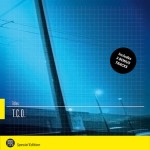
Artist: T.C.O. (aka Mirco Magnani)
Title: TITLES (Special Edition)
Format: Download Only (MP3 + Lossless)
Label: Undogmatisch (@)
Rated:
Title: TITLES (Special Edition)
Format: Download Only (MP3 + Lossless)
Label: Undogmatisch (@)
Rated:
Reissues are a strange ritual. You take something that already existed, survived, and quietly aged, then hold it up to the present like a piece of evidence and ask: "does this still speak, or are we just being sentimental?" "TITLES (Special Edition)" answers with a calm, almost indifferent yes.
Behind T.C.O. is Mirco Magnani, a figure who has long operated in that fertile in-between where electronic experimentation avoids both academic stiffness and club orthodoxy. Originally released in 2009 via a Shenzhen-based label, the album already carried a kind of geographic and aesthetic dislocation, an Italian artist filtered through a Chinese platform, working in a language of sound that didn’t particularly care about borders. Fifteen years later, that displacement feels less like a quirk and more like a quiet prediction.
What’s striking about "TITLES" is how little it tries to announce itself. No grand conceptual framing, no heavy-handed narrative. Just a sequence of pieces that behave like studies, or perhaps fragments of a larger system that never fully reveals itself. Tracks like “TITLE 2” and “PRUNE” sketch out a vocabulary built on clipped rhythms, dry textures, and a sense of motion that never quite resolves into groove. It’s not dance music, but it remembers that dance music exists somewhere else, in another room.
“METRIE” and “DESCENT” deepen that approach, working with repetition not as hypnosis but as examination. Patterns loop, but they don’t settle. There’s always a slight imbalance, a tilt that keeps the ear from relaxing. You could call it minimal, but that would imply a kind of reduction. This feels more like selective focus, as if Magnani is choosing very carefully what "not" to say.
Then there are moments like “IMLETI” and “CHAMBRE”, where the atmosphere thickens just enough to suggest space without fully constructing it. These tracks hover in a curious state, neither abstract enough to disappear nor concrete enough to hold onto. They feel like rooms sketched in outline, waiting for walls that never arrive.
The added remixes, produced shortly after the original release, don’t radically transform the material so much as refract it. The 2010 version of “METRIE” loosens the structure slightly, letting elements drift with a bit more elasticity, while “IMLETI (2010 remix)” leans into texture, emphasizing surface over form. By the time “TITLE 4 (2011 remix)” closes the set, the effect is less about variation and more about perspective, like revisiting the same object under different lighting conditions.
What’s almost irritating, in a quiet way, is how well this record holds up. You might expect some trace of datedness, a sonic fingerprint tying it too neatly to the late 2000s. Instead, it sits comfortably in the present, not because it was ahead of its time in some grand, heroic sense, but because it never aligned itself too closely with any specific moment to begin with.
There are faint resonances with the microsound and minimal techno continuum, the kind of territory mapped by artists who treat sound as material rather than message. But "TITLES" avoids the clinical detachment that sometimes plagues that scene. There’s a subtle warmth here, not emotional in any obvious way, but present in the care with which each element is placed.
Calling this reissue “necessary” might sound like label rhetoric, but in this case it’s not entirely wrong. Not because the world was desperately missing it, but because it reminds you that some works don’t expire. They just wait, patiently, for someone to notice that they never really left.
Behind T.C.O. is Mirco Magnani, a figure who has long operated in that fertile in-between where electronic experimentation avoids both academic stiffness and club orthodoxy. Originally released in 2009 via a Shenzhen-based label, the album already carried a kind of geographic and aesthetic dislocation, an Italian artist filtered through a Chinese platform, working in a language of sound that didn’t particularly care about borders. Fifteen years later, that displacement feels less like a quirk and more like a quiet prediction.
What’s striking about "TITLES" is how little it tries to announce itself. No grand conceptual framing, no heavy-handed narrative. Just a sequence of pieces that behave like studies, or perhaps fragments of a larger system that never fully reveals itself. Tracks like “TITLE 2” and “PRUNE” sketch out a vocabulary built on clipped rhythms, dry textures, and a sense of motion that never quite resolves into groove. It’s not dance music, but it remembers that dance music exists somewhere else, in another room.
“METRIE” and “DESCENT” deepen that approach, working with repetition not as hypnosis but as examination. Patterns loop, but they don’t settle. There’s always a slight imbalance, a tilt that keeps the ear from relaxing. You could call it minimal, but that would imply a kind of reduction. This feels more like selective focus, as if Magnani is choosing very carefully what "not" to say.
Then there are moments like “IMLETI” and “CHAMBRE”, where the atmosphere thickens just enough to suggest space without fully constructing it. These tracks hover in a curious state, neither abstract enough to disappear nor concrete enough to hold onto. They feel like rooms sketched in outline, waiting for walls that never arrive.
The added remixes, produced shortly after the original release, don’t radically transform the material so much as refract it. The 2010 version of “METRIE” loosens the structure slightly, letting elements drift with a bit more elasticity, while “IMLETI (2010 remix)” leans into texture, emphasizing surface over form. By the time “TITLE 4 (2011 remix)” closes the set, the effect is less about variation and more about perspective, like revisiting the same object under different lighting conditions.
What’s almost irritating, in a quiet way, is how well this record holds up. You might expect some trace of datedness, a sonic fingerprint tying it too neatly to the late 2000s. Instead, it sits comfortably in the present, not because it was ahead of its time in some grand, heroic sense, but because it never aligned itself too closely with any specific moment to begin with.
There are faint resonances with the microsound and minimal techno continuum, the kind of territory mapped by artists who treat sound as material rather than message. But "TITLES" avoids the clinical detachment that sometimes plagues that scene. There’s a subtle warmth here, not emotional in any obvious way, but present in the care with which each element is placed.
Calling this reissue “necessary” might sound like label rhetoric, but in this case it’s not entirely wrong. Not because the world was desperately missing it, but because it reminds you that some works don’t expire. They just wait, patiently, for someone to notice that they never really left.
Night Ritualz: Time Is A Thief

Artist: Night Ritualz
Title: Time Is A Thief
Format: CD & 12" + Download
Label: Metropolis (@)
Rated:
Title: Time Is A Thief
Format: CD & 12" + Download
Label: Metropolis (@)
Rated:
Time, allegedly, steals. Music, on a good day, steals it back for three minutes at a time and then spends it recklessly. "Time Is A Thief" by Night Ritualz operates exactly in that tension: urgency as both subject and method, as if standing still might count as a kind of disappearance.
Behind the project is Vincent Guerrero IV, based in San Antonio, who has been steadily building Night Ritualz from the ground up with a clarity of intent that borders on stubbornness. After a self-titled debut that already mapped his territory, this second album tightens the screws. Less introspection as atmosphere, more introspection under pressure. You can feel the live dimension baked into the structure, tracks shaped not just to be heard but to push bodies forward whether they like it or not.
The opening title track wastes no time pretending otherwise. It hits with a pulse that feels both mechanical and slightly anxious, like a clock that has developed opinions. Synths cut clean lines through the mix, while Guerrero’s voice sits somewhere between confession and command. There’s a lineage here, sure, with echoes of Depeche Mode in the melodic sensibility, but also something rougher, closer to the abrasion of At The Drive-In filtered through electronics.
“Living In This Bed” and “Watching TV” compress that tension into shorter forms, almost impatient in their brevity. These aren’t songs that linger; they arrive, state their case, and leave before you’ve had time to fully process them. It works, mostly because the album understands momentum as a narrative device. Slowing down would mean breaking the spell.
Then “Ya No Está” shifts the emotional register without softening the impact. The bilingual approach isn’t decorative, it’s structural. Spanish and English don’t alternate politely; they coexist, overlap, reshape the emotional weight of each line. It’s a subtle but important refusal to flatten identity into something easily consumable.
“Brown Skin” is the album’s most direct statement, and also its most exposed. There’s no attempt to disguise its intent behind abstraction. It speaks plainly about identity, survival, and visibility, which in a genre often obsessed with mood over meaning feels almost confrontational. Not comfortable, not meant to be.
“Un Tiro” pulls in the opposite direction sonically, leaning into a kind of early-’80s indie-pop lightness that almost feels suspicious in this context. But the contrast works. It’s not relief, exactly, more like a different shade of tension. Meanwhile, “Whoreish” dives headfirst into harsher territory, industrial textures grinding against EBM rhythms with a kind of controlled aggression that suggests the dancefloor as both release and battleground.
The shorter “Cluster” acts as a brief rupture, a fragment that resets the ear before the album’s final stretch. By the time “Cupid Is A Cuck” and “My Baby, My Love” arrive, there’s a noticeable shift toward something more vulnerable, though “vulnerable” here still wears a leather jacket and keeps its guard up. Emotion is present, but negotiated, filtered through rhythm and distortion.
What holds "Time Is A Thief" together is its sense of purpose. Guerrero’s self-described “fuck wave” tag might sound like a joke you’d regret explaining, but it captures something real: a refusal to behave, to settle neatly into darkwave, EBM, or post-punk categories. The album thrives in that friction, where genre becomes less a container and more a set of pressures acting on the music.
There are traces of Deftones in the way atmosphere and intensity blur into each other, but Night Ritualz is less interested in immersion than in propulsion. This is music that moves, insists, sometimes shoves.
Not subtle, not particularly interested in being timeless either. Ironically, that’s what might give it some staying power.
Behind the project is Vincent Guerrero IV, based in San Antonio, who has been steadily building Night Ritualz from the ground up with a clarity of intent that borders on stubbornness. After a self-titled debut that already mapped his territory, this second album tightens the screws. Less introspection as atmosphere, more introspection under pressure. You can feel the live dimension baked into the structure, tracks shaped not just to be heard but to push bodies forward whether they like it or not.
The opening title track wastes no time pretending otherwise. It hits with a pulse that feels both mechanical and slightly anxious, like a clock that has developed opinions. Synths cut clean lines through the mix, while Guerrero’s voice sits somewhere between confession and command. There’s a lineage here, sure, with echoes of Depeche Mode in the melodic sensibility, but also something rougher, closer to the abrasion of At The Drive-In filtered through electronics.
“Living In This Bed” and “Watching TV” compress that tension into shorter forms, almost impatient in their brevity. These aren’t songs that linger; they arrive, state their case, and leave before you’ve had time to fully process them. It works, mostly because the album understands momentum as a narrative device. Slowing down would mean breaking the spell.
Then “Ya No Está” shifts the emotional register without softening the impact. The bilingual approach isn’t decorative, it’s structural. Spanish and English don’t alternate politely; they coexist, overlap, reshape the emotional weight of each line. It’s a subtle but important refusal to flatten identity into something easily consumable.
“Brown Skin” is the album’s most direct statement, and also its most exposed. There’s no attempt to disguise its intent behind abstraction. It speaks plainly about identity, survival, and visibility, which in a genre often obsessed with mood over meaning feels almost confrontational. Not comfortable, not meant to be.
“Un Tiro” pulls in the opposite direction sonically, leaning into a kind of early-’80s indie-pop lightness that almost feels suspicious in this context. But the contrast works. It’s not relief, exactly, more like a different shade of tension. Meanwhile, “Whoreish” dives headfirst into harsher territory, industrial textures grinding against EBM rhythms with a kind of controlled aggression that suggests the dancefloor as both release and battleground.
The shorter “Cluster” acts as a brief rupture, a fragment that resets the ear before the album’s final stretch. By the time “Cupid Is A Cuck” and “My Baby, My Love” arrive, there’s a noticeable shift toward something more vulnerable, though “vulnerable” here still wears a leather jacket and keeps its guard up. Emotion is present, but negotiated, filtered through rhythm and distortion.
What holds "Time Is A Thief" together is its sense of purpose. Guerrero’s self-described “fuck wave” tag might sound like a joke you’d regret explaining, but it captures something real: a refusal to behave, to settle neatly into darkwave, EBM, or post-punk categories. The album thrives in that friction, where genre becomes less a container and more a set of pressures acting on the music.
There are traces of Deftones in the way atmosphere and intensity blur into each other, but Night Ritualz is less interested in immersion than in propulsion. This is music that moves, insists, sometimes shoves.
Not subtle, not particularly interested in being timeless either. Ironically, that’s what might give it some staying power.