
Browse by Genre
Industrial Music / Industrial Metal / Aggro Industrial / Electro Metal
Industrial Noise / Power Noise / Harsh Noise
Synth Pop / Electro Pop / Synth-Electronica
Techno / Trance / Goa / Drum'n'Bass / Jungle / Tribal / Trip-Hop
Ambient / Electronica / Ethereal / Dub / Soundscapes / Abstract
Experimental / Avantgarde / Weird & Wired / Glitch / Noise / Field Recording
Dark / Gothic / Wave / New Wave / Dark Wave / Industrial Gothic
New Music / Downtown / Avantgarde Jazz / New Classical / World
Search Reviews
Music Reviews
Sicker Man: Spökenkieker
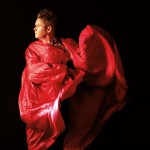
Artist: Sicker Man (http://www.sicker-man.com/) (@)
Title: Spökenkieker
Format: LP
Label: Blank Records (@)
Rated:

Title: Spökenkieker
Format: LP
Label: Blank Records (@)
Rated:
Some artists make albums. Others build elaborate time machines and then pretend it’s just a record. Sicker Man has been quietly doing the latter for years, and "Spökenkieker" feels less like a new chapter than a return to the scene of the original disturbance.
The title alone already refuses to sit still. A soothsayer cursed with foresight, condemned to see forward only by staring backward. It’s a neat metaphor, but also an uncomfortably accurate description of how this album behaves. Vethake doesn’t chase the future. He excavates it, like something buried prematurely under layers of cultural fatigue.
There’s a specific geography haunting this record. Eastern Westphalia, the Teutoburg Forest, that damp mythological undergrowth where folklore doesn’t quite die, it just waits. You can hear it in the way the music breathes: not in clean lines, but in fog, in half-remembered gestures. The past here isn’t referenced, it leaks.
Musically, "Spökenkieker" is a careful mess. Not chaotic, that would be too easy. It’s more like several centuries arguing quietly in the same room. The electric cello, Vethake’s long-time accomplice, remains the gravitational center. It hums, scratches, dissolves, reassembles. Around it orbit fragments of spiritual jazz, orchestral swing, dub-inflected low-end pressure, and ambient architectures that seem to forget their own blueprints halfway through construction.
Tracks like “Johatsu” and its reprise function as thresholds rather than statements. They don’t begin or end so much as seep in and out, like memory failing to commit to a fixed version of itself. “Stop The Gravy Train” carries a title that suggests sabotage, and to its credit, it delivers something close: rhythms that feel slightly misaligned, as if refusing to fully cooperate with the idea of forward motion. It’s music that distrusts momentum.
The spoken word samples, scattered but never intrusive, act like archival ghosts. Not nostalgic, not explanatory. Just there, insisting that time is layered and inconvenient. Meanwhile, pieces like “Glass” and “Mean Drift” operate in a more fragile register, where texture becomes narrative and the smallest sonic shift feels like a plot twist no one bothered to explain.
There’s an underlying tension running through the album: the suspicion that the future has already happened, and we somehow missed it. This is where the hauntological angle stops being theory and starts becoming mood. Vethake doesn’t illustrate lost futures, he stages their afterlife. And it’s not grand or cinematic. It’s intimate, almost domestic. A flicker in the corner of perception.
For all its conceptual weight, "Spökenkieker" avoids collapsing under its own ambition. Mostly because it never tries to resolve anything. The two parts of “Ad Finem” suggest closure, but deliver something closer to suspension. Ending, in this context, is just another form of delay.
There’s also a dry sense of defiance embedded in the whole thing. The line about either mourning the dead or picking a fight isn’t just a slogan. The album does both, often in the same breath. It mourns through texture, and it fights through structure, or the refusal of it.
After more than two decades of moving through film scores, installations, and collaborations, Vethake still sounds mildly dissatisfied with the idea of settling into a recognizable form. Which is, frankly, the only reason this works. "Spökenkieker" doesn’t offer clarity, comfort, or even a stable identity. It offers a kind of persistent unease that feels strangely honest.
And in a landscape where the future is often marketed like a recycled product with better lighting, that unease might be the closest thing to foresight we get.
The title alone already refuses to sit still. A soothsayer cursed with foresight, condemned to see forward only by staring backward. It’s a neat metaphor, but also an uncomfortably accurate description of how this album behaves. Vethake doesn’t chase the future. He excavates it, like something buried prematurely under layers of cultural fatigue.
There’s a specific geography haunting this record. Eastern Westphalia, the Teutoburg Forest, that damp mythological undergrowth where folklore doesn’t quite die, it just waits. You can hear it in the way the music breathes: not in clean lines, but in fog, in half-remembered gestures. The past here isn’t referenced, it leaks.
Musically, "Spökenkieker" is a careful mess. Not chaotic, that would be too easy. It’s more like several centuries arguing quietly in the same room. The electric cello, Vethake’s long-time accomplice, remains the gravitational center. It hums, scratches, dissolves, reassembles. Around it orbit fragments of spiritual jazz, orchestral swing, dub-inflected low-end pressure, and ambient architectures that seem to forget their own blueprints halfway through construction.
Tracks like “Johatsu” and its reprise function as thresholds rather than statements. They don’t begin or end so much as seep in and out, like memory failing to commit to a fixed version of itself. “Stop The Gravy Train” carries a title that suggests sabotage, and to its credit, it delivers something close: rhythms that feel slightly misaligned, as if refusing to fully cooperate with the idea of forward motion. It’s music that distrusts momentum.
The spoken word samples, scattered but never intrusive, act like archival ghosts. Not nostalgic, not explanatory. Just there, insisting that time is layered and inconvenient. Meanwhile, pieces like “Glass” and “Mean Drift” operate in a more fragile register, where texture becomes narrative and the smallest sonic shift feels like a plot twist no one bothered to explain.
There’s an underlying tension running through the album: the suspicion that the future has already happened, and we somehow missed it. This is where the hauntological angle stops being theory and starts becoming mood. Vethake doesn’t illustrate lost futures, he stages their afterlife. And it’s not grand or cinematic. It’s intimate, almost domestic. A flicker in the corner of perception.
For all its conceptual weight, "Spökenkieker" avoids collapsing under its own ambition. Mostly because it never tries to resolve anything. The two parts of “Ad Finem” suggest closure, but deliver something closer to suspension. Ending, in this context, is just another form of delay.
There’s also a dry sense of defiance embedded in the whole thing. The line about either mourning the dead or picking a fight isn’t just a slogan. The album does both, often in the same breath. It mourns through texture, and it fights through structure, or the refusal of it.
After more than two decades of moving through film scores, installations, and collaborations, Vethake still sounds mildly dissatisfied with the idea of settling into a recognizable form. Which is, frankly, the only reason this works. "Spökenkieker" doesn’t offer clarity, comfort, or even a stable identity. It offers a kind of persistent unease that feels strangely honest.
And in a landscape where the future is often marketed like a recycled product with better lighting, that unease might be the closest thing to foresight we get.
Arnold Dreyblatt: Descendants
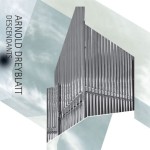
There are composers who write pieces, and then there are those who design entire acoustic ecosystems and let you wander inside, hoping you won’t get lost. Arnold Dreyblatt belongs, stubbornly, to the second category.
"Descendants" is not a composition in the usual sense. It’s a space that has been tuned until it begins to think on its own.
Commissioned for the Orgelpark in Amsterdam and released by Unsounds in collaboration with Echonance Festival, the piece unfolds across four pipe organs - each with its own historical baggage, mechanical temperament, and stubborn personality. Instead of forcing them into polite agreement, Dreyblatt lets them coexist within his custom just-intonation system, derived from harmonic overtones that behave less like notes and more like gravitational fields.
If that sounds abstract, it is. Comfortingly so.
The tuning itself - anchored to a fundamental C with A at 415 Hz - creates intervals that don’t quite align with what your ears have been trained to accept as “in tune”. Not wrong, just… differently right. Slightly skewed relationships between pitches generate beating patterns, interference, slow pulsations. The sound doesn’t sit still. It breathes, wavers, recalibrates itself in real time, like a structure constantly adjusting its own foundations.
The result is a 50-minute continuum that resists segmentation, even though it’s technically organized into five sections. You don’t hear “movements” so much as shifts in atmospheric pressure. One cluster of harmonics thickens, another recedes. Certain frequencies bloom unexpectedly, filling the hall like light filtering through uneven glass. Others withdraw, leaving behind a faint afterimage.
Dreyblatt’s background in the second wave of New York minimalism is still audible, but only in spirit. The steady pulse that once defined his early work has been dissolved into something more diffuse. Time here isn’t marked by rhythm, but by accumulation and decay. Events don’t happen; they emerge.
What makes "Descendants" particularly effective is its relationship to the instruments themselves. These are not neutral sound sources. A 15th-century organ reconstruction does not behave like a contemporary one, and Dreyblatt doesn’t pretend otherwise. He distributes his harmonic material across them in a way that highlights their differences rather than smoothing them out. The piece becomes a negotiation between architectures - wood, metal, air, history - each contributing its own resistance.
Performed by Claudio F. Baroni, Reiner van Houdt, Dreyblatt himself, and Lucie Nezri, the work maintains a remarkable balance between precision and instability. You get the sense that everything is carefully calibrated, yet always on the verge of drifting. It’s controlled, but not rigid. Structured, but not fixed.
There’s also a quiet physicality to the experience. Pipe organs don’t just produce sound; they move air. And here, that movement becomes part of the composition. Low frequencies press against the body, higher ones shimmer just out of reach, and in between there’s a constant negotiation between presence and absence. Listening becomes less about following a line and more about inhabiting a field.
As the third volume in the Echonance series, "Descendants" fits neatly into a broader exploration of spatial and perceptual listening. But it also stands on its own as a particularly uncompromising statement. It doesn’t guide you, doesn’t explain itself, doesn’t offer narrative footholds.
It simply exists, with quiet insistence.
And somewhere within that shifting lattice of harmonics, you start to notice something slightly inconvenient: your ears adjusting, your expectations recalibrating, your sense of “tuning” quietly rewritten. Not dramatically. Just enough to make everything else sound a little less certain afterward.
Which, one suspects, was the point all along.
"Descendants" is not a composition in the usual sense. It’s a space that has been tuned until it begins to think on its own.
Commissioned for the Orgelpark in Amsterdam and released by Unsounds in collaboration with Echonance Festival, the piece unfolds across four pipe organs - each with its own historical baggage, mechanical temperament, and stubborn personality. Instead of forcing them into polite agreement, Dreyblatt lets them coexist within his custom just-intonation system, derived from harmonic overtones that behave less like notes and more like gravitational fields.
If that sounds abstract, it is. Comfortingly so.
The tuning itself - anchored to a fundamental C with A at 415 Hz - creates intervals that don’t quite align with what your ears have been trained to accept as “in tune”. Not wrong, just… differently right. Slightly skewed relationships between pitches generate beating patterns, interference, slow pulsations. The sound doesn’t sit still. It breathes, wavers, recalibrates itself in real time, like a structure constantly adjusting its own foundations.
The result is a 50-minute continuum that resists segmentation, even though it’s technically organized into five sections. You don’t hear “movements” so much as shifts in atmospheric pressure. One cluster of harmonics thickens, another recedes. Certain frequencies bloom unexpectedly, filling the hall like light filtering through uneven glass. Others withdraw, leaving behind a faint afterimage.
Dreyblatt’s background in the second wave of New York minimalism is still audible, but only in spirit. The steady pulse that once defined his early work has been dissolved into something more diffuse. Time here isn’t marked by rhythm, but by accumulation and decay. Events don’t happen; they emerge.
What makes "Descendants" particularly effective is its relationship to the instruments themselves. These are not neutral sound sources. A 15th-century organ reconstruction does not behave like a contemporary one, and Dreyblatt doesn’t pretend otherwise. He distributes his harmonic material across them in a way that highlights their differences rather than smoothing them out. The piece becomes a negotiation between architectures - wood, metal, air, history - each contributing its own resistance.
Performed by Claudio F. Baroni, Reiner van Houdt, Dreyblatt himself, and Lucie Nezri, the work maintains a remarkable balance between precision and instability. You get the sense that everything is carefully calibrated, yet always on the verge of drifting. It’s controlled, but not rigid. Structured, but not fixed.
There’s also a quiet physicality to the experience. Pipe organs don’t just produce sound; they move air. And here, that movement becomes part of the composition. Low frequencies press against the body, higher ones shimmer just out of reach, and in between there’s a constant negotiation between presence and absence. Listening becomes less about following a line and more about inhabiting a field.
As the third volume in the Echonance series, "Descendants" fits neatly into a broader exploration of spatial and perceptual listening. But it also stands on its own as a particularly uncompromising statement. It doesn’t guide you, doesn’t explain itself, doesn’t offer narrative footholds.
It simply exists, with quiet insistence.
And somewhere within that shifting lattice of harmonics, you start to notice something slightly inconvenient: your ears adjusting, your expectations recalibrating, your sense of “tuning” quietly rewritten. Not dramatically. Just enough to make everything else sound a little less certain afterward.
Which, one suspects, was the point all along.
Nagløed: Everything Is In Everything Else
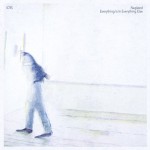
Artist: Nagløed (@)
Title: Everything Is In Everything Else
Format: CD + Download
Label: Icarus Records (@)
Rated:

Title: Everything Is In Everything Else
Format: CD + Download
Label: Icarus Records (@)
Rated:
Seven years is enough time for a band to reinvent itself, disappear, or quietly repeat the same ideas with better haircuts. Nagløed chooses a less predictable route with "Everything Is In Everything Else": it returns sounding both more grounded and more elusive, like a conversation that has matured but refuses to settle on a single conclusion.
The trio - Dillian Fevry, Andreas Lagrou and Matthias Dewilde - moves away from the denser electronic textures of their debut "NowHere" and leans into a more acoustic, breathable space. Which doesn’t mean simplicity. It means exposure. There’s less to hide behind, and they seem aware of it.
From the opening “Reality In The Dream”, the album establishes a circular logic that borders on philosophical insistence. Themes return, refract, dissolve, then reappear slightly altered, as if the music itself were testing the idea suggested by the title: that everything contains traces of everything else. It’s a bold premise, dangerously close to sounding like a slogan you’d find printed on a tote bag. Fortunately, the music does the heavier lifting.
“Myuzu” and “Ashore” drift between jazz-informed improvisation and indie-inflected songwriting without committing fully to either. Fevry’s guitar lines stretch and hesitate, occasionally brushing against lyricism before retreating into something more ambiguous. His vocals, when they surface, feel less like declarations and more like fragments of thought - unfinished, searching, unwilling to impose clarity where none exists.
The rhythm section operates with a quiet intelligence. Lagrou’s drumming avoids both rigidity and excess, shaping space rather than filling it, while Dewilde’s keys provide a shifting harmonic ground that never quite settles. There’s a constant sense of negotiation, as if each instrument is testing how far it can go without disrupting the fragile balance.
Tracks like “Dillsong” and “Anima” lean into the band’s more cinematic tendencies, but without tipping into sentimentality. The atmosphere is there, but it’s never allowed to become decorative. Instead, it functions as a kind of emotional undertow, pulling the listener inward rather than surrounding them with easy beauty.
The title track, “Everything Is In Everything Else”, sits at the conceptual center, not by offering resolution but by embodying the album’s core tension. Motifs echo, overlap, and subtly contradict each other, creating a sense of interconnectedness that feels earned rather than imposed. It’s less a statement than a demonstration.
Then there’s “Kontiki” and “Topanga/Psalming”, where the band stretches out, allowing improvisation to take a more prominent role. These longer pieces flirt with drift, occasionally risking dilution, but they also reveal the trio’s strength: an ability to sustain attention without relying on obvious markers of progression. Time expands, contracts, becomes slightly unreliable.
By the time “The Dream In Reality” closes the album, the circular structure becomes explicit. Beginning and end mirror each other, but not perfectly. Something has shifted, subtly but irreversibly. The journey hasn’t resolved anything; it has altered perception.
Mixed by Koen Gisen, the album maintains a delicate clarity, allowing each element to breathe while preserving the overall cohesion. Nothing feels overcrowded, yet nothing feels empty. It’s a careful balance, and one that suits the band’s evolving language.
There’s an underlying sincerity to "Everything Is In Everything Else" that could easily have become heavy-handed. Instead, Nagløed approaches its philosophical ambitions with restraint, letting the music suggest connections rather than insisting on them.
It doesn’t offer answers. It doesn’t even pretend to. What it does is create a space where contradictions can coexist without needing to be resolved.
Which, given the title, feels like the only honest outcome.
The trio - Dillian Fevry, Andreas Lagrou and Matthias Dewilde - moves away from the denser electronic textures of their debut "NowHere" and leans into a more acoustic, breathable space. Which doesn’t mean simplicity. It means exposure. There’s less to hide behind, and they seem aware of it.
From the opening “Reality In The Dream”, the album establishes a circular logic that borders on philosophical insistence. Themes return, refract, dissolve, then reappear slightly altered, as if the music itself were testing the idea suggested by the title: that everything contains traces of everything else. It’s a bold premise, dangerously close to sounding like a slogan you’d find printed on a tote bag. Fortunately, the music does the heavier lifting.
“Myuzu” and “Ashore” drift between jazz-informed improvisation and indie-inflected songwriting without committing fully to either. Fevry’s guitar lines stretch and hesitate, occasionally brushing against lyricism before retreating into something more ambiguous. His vocals, when they surface, feel less like declarations and more like fragments of thought - unfinished, searching, unwilling to impose clarity where none exists.
The rhythm section operates with a quiet intelligence. Lagrou’s drumming avoids both rigidity and excess, shaping space rather than filling it, while Dewilde’s keys provide a shifting harmonic ground that never quite settles. There’s a constant sense of negotiation, as if each instrument is testing how far it can go without disrupting the fragile balance.
Tracks like “Dillsong” and “Anima” lean into the band’s more cinematic tendencies, but without tipping into sentimentality. The atmosphere is there, but it’s never allowed to become decorative. Instead, it functions as a kind of emotional undertow, pulling the listener inward rather than surrounding them with easy beauty.
The title track, “Everything Is In Everything Else”, sits at the conceptual center, not by offering resolution but by embodying the album’s core tension. Motifs echo, overlap, and subtly contradict each other, creating a sense of interconnectedness that feels earned rather than imposed. It’s less a statement than a demonstration.
Then there’s “Kontiki” and “Topanga/Psalming”, where the band stretches out, allowing improvisation to take a more prominent role. These longer pieces flirt with drift, occasionally risking dilution, but they also reveal the trio’s strength: an ability to sustain attention without relying on obvious markers of progression. Time expands, contracts, becomes slightly unreliable.
By the time “The Dream In Reality” closes the album, the circular structure becomes explicit. Beginning and end mirror each other, but not perfectly. Something has shifted, subtly but irreversibly. The journey hasn’t resolved anything; it has altered perception.
Mixed by Koen Gisen, the album maintains a delicate clarity, allowing each element to breathe while preserving the overall cohesion. Nothing feels overcrowded, yet nothing feels empty. It’s a careful balance, and one that suits the band’s evolving language.
There’s an underlying sincerity to "Everything Is In Everything Else" that could easily have become heavy-handed. Instead, Nagløed approaches its philosophical ambitions with restraint, letting the music suggest connections rather than insisting on them.
It doesn’t offer answers. It doesn’t even pretend to. What it does is create a space where contradictions can coexist without needing to be resolved.
Which, given the title, feels like the only honest outcome.
Steve Roach: Sentient Being
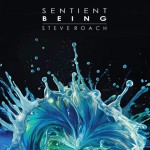
There’s a particular kind of confidence required to release an album called "Sentient Being" in 2026 without sounding like a wellness app with better reverb. Steve Roach, unfortunately for cynics, still pulls it off.
By now, Roach is less a musician than a geological formation. Decades of releases have sedimented into a language so recognizable it almost risks becoming invisible. And yet, every so often, he narrows the lens. "Sentient Being" is one of those moments: not the vast desert epics, not the tribal pulses, but a quieter inward turning, where scale is measured in breaths rather than horizons.
The premise is disarmingly simple. Consciousness, not as an abstract idea, but as something lived, felt, noticed in real time. Which sounds suspiciously like the kind of thing people say right before handing you herbal tea and asking you to “just be”. But Roach avoids that trap by doing what he has always done best: letting the sound carry the concept, instead of narrating it into submission.
“Angels in Flight” opens like a slow emergence from sleep, those familiar analog currents rising with almost embarrassing grace. There’s no rush, no need to impress. The tones expand, hover, and gently insist on your attention, like a landscape that doesn’t care whether you photograph it. By the time “I Feel You” unfolds, the emotional register becomes more explicit, though never sentimental. Roach’s gift has always been this ability to suggest warmth without collapsing into cliché, which in ambient music is basically a superpower.
“Rapt in Solitude” does exactly what the title threatens, but with a subtle twist. Solitude here isn’t isolation, it’s density. Layers of sustained sound create a space that feels inhabited, even when nothing “happens” in the conventional sense. It’s the kind of track that reveals how uncomfortable we are with stillness, which is either enlightening or mildly accusatory.
The centerpiece, “Sentient Being”, stretches close to twenty minutes and earns it. This is where Roach leans fully into duration as transformation. The piece doesn’t develop so much as deepen, like a thought that keeps unfolding without ever reaching a conclusion. Small shifts in timbre and harmonic color become events, and you find yourself tracking them with a level of attention you didn’t realize you had. It’s less listening, more participation.
By the time “Angels at Rest” and “This Place of Splendor” arrive, the album feels like it has quietly reconfigured your sense of time. Not dramatically, not in a life-changing, tell-your-friends way. More like adjusting the lighting in a room you thought you knew. Everything is the same, technically. It just looks different now.
Released on Projekt Records, a label that has long functioned as a kind of sanctuary for this strain of contemplative sound, "Sentient Being" fits neatly into Roach’s later-period work while still feeling purposeful. There’s no attempt to reinvent anything here. No sudden detours into trend-chasing relevance. Just a deepening of a vocabulary he’s been refining for decades.
And that’s the quietly radical part. In a musical landscape obsessed with novelty, Roach continues to explore continuity. He trusts that attention, sustained long enough, becomes its own form of change. Which is either profoundly wise or stubbornly unfashionable, depending on how allergic you are to patience.
It’s not an album that demands you. It waits. And if you meet it halfway, it does something rare: it makes you aware of your own listening as it happens. Not in a grand, philosophical sense. Just in that small, fleeting way where you notice you’re here, hearing this, existing in time.
Annoyingly effective.
By now, Roach is less a musician than a geological formation. Decades of releases have sedimented into a language so recognizable it almost risks becoming invisible. And yet, every so often, he narrows the lens. "Sentient Being" is one of those moments: not the vast desert epics, not the tribal pulses, but a quieter inward turning, where scale is measured in breaths rather than horizons.
The premise is disarmingly simple. Consciousness, not as an abstract idea, but as something lived, felt, noticed in real time. Which sounds suspiciously like the kind of thing people say right before handing you herbal tea and asking you to “just be”. But Roach avoids that trap by doing what he has always done best: letting the sound carry the concept, instead of narrating it into submission.
“Angels in Flight” opens like a slow emergence from sleep, those familiar analog currents rising with almost embarrassing grace. There’s no rush, no need to impress. The tones expand, hover, and gently insist on your attention, like a landscape that doesn’t care whether you photograph it. By the time “I Feel You” unfolds, the emotional register becomes more explicit, though never sentimental. Roach’s gift has always been this ability to suggest warmth without collapsing into cliché, which in ambient music is basically a superpower.
“Rapt in Solitude” does exactly what the title threatens, but with a subtle twist. Solitude here isn’t isolation, it’s density. Layers of sustained sound create a space that feels inhabited, even when nothing “happens” in the conventional sense. It’s the kind of track that reveals how uncomfortable we are with stillness, which is either enlightening or mildly accusatory.
The centerpiece, “Sentient Being”, stretches close to twenty minutes and earns it. This is where Roach leans fully into duration as transformation. The piece doesn’t develop so much as deepen, like a thought that keeps unfolding without ever reaching a conclusion. Small shifts in timbre and harmonic color become events, and you find yourself tracking them with a level of attention you didn’t realize you had. It’s less listening, more participation.
By the time “Angels at Rest” and “This Place of Splendor” arrive, the album feels like it has quietly reconfigured your sense of time. Not dramatically, not in a life-changing, tell-your-friends way. More like adjusting the lighting in a room you thought you knew. Everything is the same, technically. It just looks different now.
Released on Projekt Records, a label that has long functioned as a kind of sanctuary for this strain of contemplative sound, "Sentient Being" fits neatly into Roach’s later-period work while still feeling purposeful. There’s no attempt to reinvent anything here. No sudden detours into trend-chasing relevance. Just a deepening of a vocabulary he’s been refining for decades.
And that’s the quietly radical part. In a musical landscape obsessed with novelty, Roach continues to explore continuity. He trusts that attention, sustained long enough, becomes its own form of change. Which is either profoundly wise or stubbornly unfashionable, depending on how allergic you are to patience.
It’s not an album that demands you. It waits. And if you meet it halfway, it does something rare: it makes you aware of your own listening as it happens. Not in a grand, philosophical sense. Just in that small, fleeting way where you notice you’re here, hearing this, existing in time.
Annoyingly effective.
Jorge SolÃs Arenazas: Displacements
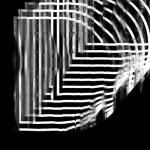
Artist: Jorge SolÃs Arenazas (@)
Title: Displacements
Format: Download Only (MP3 + Lossless)
Label: Line (@)
Rated:
Title: Displacements
Format: Download Only (MP3 + Lossless)
Label: Line (@)
Rated:
Debut albums are usually eager things. They try to explain themselves, justify their existence, maybe even win you over. "Displacements" doesn’t bother. It behaves more like a system already in motion before you arrived, and frankly, it’s not going to stop just because you pressed play.
Jorge Solís Arenazas comes to this first full-length release not as a newcomer, but as someone who has already spent years circling the problem of sound from multiple angles: composition, writing, radio, installation. You can hear that background immediately. This is not “music” in the conventional sense. It’s closer to a set of conditions under which listening becomes unstable, slightly unreliable, occasionally even suspicious of itself.
The conceptual backbone is almost annoyingly rigorous. Language, chaos, discrete systems, the way structure emerges from accident. All the things that make normal people slowly back away from the room. Yet what’s interesting is how little of that theory feels imposed. Instead, it seeps into the material, shaping it from within rather than sitting on top like a polite academic hat.
The album is organized as a kind of vertical journey, which sounds grand until you realize it mostly involves frequencies doing things your ears aren’t entirely comfortable with. “Anabasis I” opens in the upper register, built from feedback systems that feel less like instruments and more like negotiations. High frequencies flicker, stretch, threaten to disappear. It’s not aggressive, but it is insistent, like a mosquito that studied philosophy.
Then comes “Catabasis”, the descent. Brownian noise, low-end rumble, a slow gravitational pull into density. If the first piece destabilizes your sense of orientation, this one removes the ground altogether. There’s a peculiar beauty in how it accumulates weight without ever becoming static. It breathes, but heavily, like something that has learned respiration from a manual written in another language.
“Eschatia” sits in between, and predictably refuses to behave like a simple midpoint. It feels more like a border crossing where nobody checks your documents but everything still feels vaguely illicit. Synth layers drift in and out, residues of rhythm appear and dissolve, and for a brief moment you might think you’ve found something resembling form. That illusion doesn’t last. It was never meant to.
By the time “Anabasis II” arrives, the ascent has changed character. It’s not a repetition but a memory of the first movement, altered by everything that happened in between. The feedback is more fractured, less innocent. If the opening suggested exploration, this closing section feels like returning to a place that no longer exists in the same way.
What makes "Displacements" quietly compelling is its refusal to dramatize any of this. There are no climaxes, no gestures designed to reassure you that something “important” just happened. Instead, the album trusts accumulation, micro-variation, the slow imprint of sound on memory. It’s almost irritatingly patient. You keep waiting for a revelation, and it keeps offering you… process.
Which, to be fair, is the point.
The mastering by Rafael Anton Irisarri deserves a brief, reluctant nod. There’s a clarity here that prevents the material from collapsing into indistinct noise. Every frequency band feels intentional, even when it’s actively resisting your attempt to make sense of it.
Released on LINE, a label that has built an entire aesthetic out of restraint and microscopic attention, "Displacements" fits almost too well. It shares that familiar LINE quality of being simultaneously precise and elusive, like a diagram that keeps erasing itself while you study it.
There’s also something unexpectedly human beneath all this abstraction. The dedication to his brother, the long gestation of the material, the years of thinking and rethinking these structures. For all its talk of systems and randomness, the album is ultimately about attention. About how we listen, how we remember, how we impose meaning on things that don’t particularly care whether we understand them.
Not exactly background music. More like foreground uncertainty.
You won’t come out of it with answers. But you might start noticing how fragile your questions were to begin with, which is either enlightening or deeply inconvenient, depending on your tolerance for ambiguity.
Jorge Solís Arenazas comes to this first full-length release not as a newcomer, but as someone who has already spent years circling the problem of sound from multiple angles: composition, writing, radio, installation. You can hear that background immediately. This is not “music” in the conventional sense. It’s closer to a set of conditions under which listening becomes unstable, slightly unreliable, occasionally even suspicious of itself.
The conceptual backbone is almost annoyingly rigorous. Language, chaos, discrete systems, the way structure emerges from accident. All the things that make normal people slowly back away from the room. Yet what’s interesting is how little of that theory feels imposed. Instead, it seeps into the material, shaping it from within rather than sitting on top like a polite academic hat.
The album is organized as a kind of vertical journey, which sounds grand until you realize it mostly involves frequencies doing things your ears aren’t entirely comfortable with. “Anabasis I” opens in the upper register, built from feedback systems that feel less like instruments and more like negotiations. High frequencies flicker, stretch, threaten to disappear. It’s not aggressive, but it is insistent, like a mosquito that studied philosophy.
Then comes “Catabasis”, the descent. Brownian noise, low-end rumble, a slow gravitational pull into density. If the first piece destabilizes your sense of orientation, this one removes the ground altogether. There’s a peculiar beauty in how it accumulates weight without ever becoming static. It breathes, but heavily, like something that has learned respiration from a manual written in another language.
“Eschatia” sits in between, and predictably refuses to behave like a simple midpoint. It feels more like a border crossing where nobody checks your documents but everything still feels vaguely illicit. Synth layers drift in and out, residues of rhythm appear and dissolve, and for a brief moment you might think you’ve found something resembling form. That illusion doesn’t last. It was never meant to.
By the time “Anabasis II” arrives, the ascent has changed character. It’s not a repetition but a memory of the first movement, altered by everything that happened in between. The feedback is more fractured, less innocent. If the opening suggested exploration, this closing section feels like returning to a place that no longer exists in the same way.
What makes "Displacements" quietly compelling is its refusal to dramatize any of this. There are no climaxes, no gestures designed to reassure you that something “important” just happened. Instead, the album trusts accumulation, micro-variation, the slow imprint of sound on memory. It’s almost irritatingly patient. You keep waiting for a revelation, and it keeps offering you… process.
Which, to be fair, is the point.
The mastering by Rafael Anton Irisarri deserves a brief, reluctant nod. There’s a clarity here that prevents the material from collapsing into indistinct noise. Every frequency band feels intentional, even when it’s actively resisting your attempt to make sense of it.
Released on LINE, a label that has built an entire aesthetic out of restraint and microscopic attention, "Displacements" fits almost too well. It shares that familiar LINE quality of being simultaneously precise and elusive, like a diagram that keeps erasing itself while you study it.
There’s also something unexpectedly human beneath all this abstraction. The dedication to his brother, the long gestation of the material, the years of thinking and rethinking these structures. For all its talk of systems and randomness, the album is ultimately about attention. About how we listen, how we remember, how we impose meaning on things that don’t particularly care whether we understand them.
Not exactly background music. More like foreground uncertainty.
You won’t come out of it with answers. But you might start noticing how fragile your questions were to begin with, which is either enlightening or deeply inconvenient, depending on your tolerance for ambiguity.