
Browse by Genre
Industrial Music / Industrial Metal / Aggro Industrial / Electro Metal
Industrial Noise / Power Noise / Harsh Noise
Synth Pop / Electro Pop / Synth-Electronica
Techno / Trance / Goa / Drum'n'Bass / Jungle / Tribal / Trip-Hop
Ambient / Electronica / Ethereal / Dub / Soundscapes / Abstract
Experimental / Avantgarde / Weird & Wired / Glitch / Noise / Field Recording
Dark / Gothic / Wave / New Wave / Dark Wave / Industrial Gothic
New Music / Downtown / Avantgarde Jazz / New Classical / World
Search Reviews
Music Reviews
Ingebrigt Håker Flaten (Exit) Knarr: fly

Artist: Ingebrigt Håker Flaten (Exit) Knarr (@)
Title: fly
Format: CD & 12" + Download
Label: Sauajazz (@)
Rated:

Title: fly
Format: CD & 12" + Download
Label: Sauajazz (@)
Rated:
There are bands that play loud, bands that play fast, and bands that apparently regard the distinction between composition and controlled demolition as an unnecessary bureaucratic obstacle. (Exit) Knarr belongs to the third category. On "fly", recorded at Oslo's Victoria Nasjonal Jazzscene at the end of the European tour that followed "Drops", Ingebrigt Håker Flaten's sextet takes material associated with both "Drops" and "Breezy" and subjects it to the peculiar logic of a band that has spent enough time together to stop behaving like a band and start behaving like a single, mildly unstable creature.
This matters because "fly" is not simply the obligatory live album with a little extra perspiration left on the microphones. The pieces have changed. Fragments from earlier compositions have been absorbed into new structures, familiar ideas have acquired different proportions, and the musicians seem increasingly interested in what happens after a composition has stopped being something to reproduce. The result is a record that occupies an awkward and fertile territory between repertoire and improvisation.
Flaten is hardly a newcomer to awkward territories. The Norwegian bassist has spent decades moving between free jazz, improvised music and more formally organised projects, with credits that include The Thing, Atomic, School Days, Free Fall and collaborations with figures such as Joe McPhee, Evan Parker and Håkon Kornstad. His reputation as an extraordinarily active sideman might actually obscure one of his more interesting qualities: he is a composer who understands that a score doesn't necessarily have to tell musicians what to do. Sometimes it has to give them something sufficiently sturdy to attack.
(Exit) Knarr, originally assembled for Vossa Jazz in 2021, has become the ideal vehicle for that philosophy. Previous records already established a peculiar equilibrium between written material, collective freedom, rock propulsion, electronics and the abrasive possibilities of free improvisation. "Breezy" demonstrated how sharply the group could move between melody and eruption, while "Drops" pushed further into graphic-score territory and gave electronics a more prominent role without allowing them to sterilise the human component of the music.
"fly" sounds like the next logical consequence: stop treating those compositions as fixed objects and see what they become when repeatedly thrown into the air.
The opening title piece lasts nearly thirteen minutes, and it earns its duration by refusing the usual dramaturgy of “quiet bit, loud bit, enormous solo, everyone goes home”. The six musicians constantly redistribute the weight. Amalie Dahl's alto and baritone saxophones and Karl Hjalmar Nyberg's tenor occupy different parts of the horn spectrum, sometimes forming a muscular front line, sometimes behaving more like competing weather systems. Marta Warelis can make the piano sound sharply architectural before allowing it to dissolve into the ensemble. Jonathan F. Horne brings a guitar vocabulary that has never seemed particularly interested in respecting the traditional border between jazz and noise. Olaf Olsen supplies the crucial physical momentum, while Flaten's double bass is frequently less a foreground voice than the load-bearing structure on which everyone else can perform acts of vandalism.
That last distinction is important. Flaten's bass playing here is not constantly demanding attention, because he doesn't need it. He creates movement by controlling density, repetition and gravity. When the band accelerates, the acceleration feels collective rather than decorative. When it suddenly withdraws, the silence seems to have been negotiated rather than merely left behind.
Then "breezy" arrives, carrying the ghost of the earlier album but refusing to behave like a reprise. The title has an unavoidable personal resonance, since the original composition was connected to Flaten's late friend and collaborator Jaimie Branch, whose music and attitude clearly remain part of the emotional background of the project. Yet the tribute is not treated as a solemn monument. Earlier versions of "Breezy" already balanced exuberance and elegy, moving through blues-inflected passages, spiritual-jazz colours and more unruly free-jazz terrain.
On "fly", the piece feels less like remembrance carved into stone and more like memory being handled by living musicians. That difference is considerable. The music doesn't freeze Branch into a historical figure. It keeps moving, which is probably the more appropriate form of tribute for an artist whose work was so invested in motion, collision and refusal.
The thirteen-minute "austin birds" is perhaps the clearest indication that this isn't merely a concert souvenir. The title recalls Flaten's Austin environment, but the music doesn't settle into postcard territory. Instead, the ensemble builds a strange geography out of short gestures, horn exchanges, rhythmic disruptions and increasingly unstable interactions. There is melody here, but it behaves like something overheard through several walls.
The group's greatest strength is its ability to make abrupt changes feel earned. A horn figure can become a rhythmic device; a guitar attack can function almost like percussion; Warelis' piano can suddenly turn a dense passage transparent. Electronics are used not as futuristic wallpaper but as another means of damaging the edges of the acoustic instruments. This is particularly revealing given the direction "Drops" had already taken, where electronic processing and graphic notation expanded the band's possibilities without replacing its acoustic core.
And then there is "chaos pad", which has the sort of title that could either be an accurate description or something written on a sticky note five minutes before rehearsal. Here it is both.
The six musicians sound as though they have discovered that chaos is actually quite difficult to achieve properly. Randomness is easy. Genuine instability requires architecture. The piece continually approaches collapse without quite falling into it, maintaining enough rhythmic and compositional information for the listener to sense an underlying design even when the surface becomes gloriously unruly.
This is one of the reasons "fly" feels different from a generic free-jazz blowout. There is plenty of force, certainly, but force isn't the point. Flaten's compositions provide frameworks that can survive being stretched. The band can rip into them, loosen them, fragment them and apparently set fire to the furniture while still retaining a sense of where the walls are.
That balance has been recognised in reactions to both "Breezy" and "Drops": critics have repeatedly pointed to the group's capacity to combine free-jazz intensity with grooves, formal structures and moments of surprising lyricism. The electronics may roughen the picture, but they don't flatten the acoustic musicians into a homogeneous electronic mass.
The live setting makes this quality more obvious because there is nowhere for the music to hide. Studio production can create the illusion of coherence after the fact; a stage has considerably less patience. Here, the coherence is generated in real time.
There is also something almost old-fashioned about the physicality of it. You can hear musicians listening, reacting, leaving space, occupying it again and occasionally behaving as though somebody has removed the emergency brake. The sophistication comes not from restraint but from knowing exactly how much pressure the structure can take before it becomes something else.
That is perhaps the central idea of "fly": transformation without erasure. The compositions from "Breezy" and "Drops" remain somewhere inside these performances, but in much the same way that a tree remains inside a wooden table. The original material has been cut, rearranged and given another function. It is still recognisable if you know where to look, but it has acquired a different life.
Flaten's achievement as a bandleader is therefore not simply that he has assembled six exceptionally capable improvisers. Plenty of people have done that, sometimes with results resembling a meeting where everyone has been given a microphone. His achievement is giving these musicians enough structure to generate collective identity without suffocating their individual instincts.
Amalie Dahl can be fierce without merely becoming “the saxophone soloist”. Nyberg can introduce electronics without turning the group into an electronic project. Warelis can disrupt the harmonic field without abandoning it. Horne can scrape and slash at the music without making noise itself the destination. Olsen can propel the entire mechanism while knowing when not to. Flaten holds all of this together with a bassist's particular understanding of weight: what must remain solid, what can move, and what can be allowed to fall.
The title "fly" consequently feels less like an instruction than a description of what happens when the music has accumulated enough momentum to leave the ground.
It doesn't float. It doesn't glide. It takes off. And when it does, (Exit) Knarr demonstrates that sophisticated ensemble playing need not look sophisticated from a distance. Sometimes it looks like six people making an extraordinarily convincing argument for why the furniture should be moved out of the way.
"fly" is a live album, technically speaking. In practice, it is something more interesting: a snapshot of compositions in transit, caught between their previous identities and whatever they may become next. The music remembers where it came from, but it has no particular interest in going back.
That is probably why the record feels so alive. It isn't documenting a finished thing. It is documenting a band discovering, in public, that its own music is still capable of changing shape.
This matters because "fly" is not simply the obligatory live album with a little extra perspiration left on the microphones. The pieces have changed. Fragments from earlier compositions have been absorbed into new structures, familiar ideas have acquired different proportions, and the musicians seem increasingly interested in what happens after a composition has stopped being something to reproduce. The result is a record that occupies an awkward and fertile territory between repertoire and improvisation.
Flaten is hardly a newcomer to awkward territories. The Norwegian bassist has spent decades moving between free jazz, improvised music and more formally organised projects, with credits that include The Thing, Atomic, School Days, Free Fall and collaborations with figures such as Joe McPhee, Evan Parker and Håkon Kornstad. His reputation as an extraordinarily active sideman might actually obscure one of his more interesting qualities: he is a composer who understands that a score doesn't necessarily have to tell musicians what to do. Sometimes it has to give them something sufficiently sturdy to attack.
(Exit) Knarr, originally assembled for Vossa Jazz in 2021, has become the ideal vehicle for that philosophy. Previous records already established a peculiar equilibrium between written material, collective freedom, rock propulsion, electronics and the abrasive possibilities of free improvisation. "Breezy" demonstrated how sharply the group could move between melody and eruption, while "Drops" pushed further into graphic-score territory and gave electronics a more prominent role without allowing them to sterilise the human component of the music.
"fly" sounds like the next logical consequence: stop treating those compositions as fixed objects and see what they become when repeatedly thrown into the air.
The opening title piece lasts nearly thirteen minutes, and it earns its duration by refusing the usual dramaturgy of “quiet bit, loud bit, enormous solo, everyone goes home”. The six musicians constantly redistribute the weight. Amalie Dahl's alto and baritone saxophones and Karl Hjalmar Nyberg's tenor occupy different parts of the horn spectrum, sometimes forming a muscular front line, sometimes behaving more like competing weather systems. Marta Warelis can make the piano sound sharply architectural before allowing it to dissolve into the ensemble. Jonathan F. Horne brings a guitar vocabulary that has never seemed particularly interested in respecting the traditional border between jazz and noise. Olaf Olsen supplies the crucial physical momentum, while Flaten's double bass is frequently less a foreground voice than the load-bearing structure on which everyone else can perform acts of vandalism.
That last distinction is important. Flaten's bass playing here is not constantly demanding attention, because he doesn't need it. He creates movement by controlling density, repetition and gravity. When the band accelerates, the acceleration feels collective rather than decorative. When it suddenly withdraws, the silence seems to have been negotiated rather than merely left behind.
Then "breezy" arrives, carrying the ghost of the earlier album but refusing to behave like a reprise. The title has an unavoidable personal resonance, since the original composition was connected to Flaten's late friend and collaborator Jaimie Branch, whose music and attitude clearly remain part of the emotional background of the project. Yet the tribute is not treated as a solemn monument. Earlier versions of "Breezy" already balanced exuberance and elegy, moving through blues-inflected passages, spiritual-jazz colours and more unruly free-jazz terrain.
On "fly", the piece feels less like remembrance carved into stone and more like memory being handled by living musicians. That difference is considerable. The music doesn't freeze Branch into a historical figure. It keeps moving, which is probably the more appropriate form of tribute for an artist whose work was so invested in motion, collision and refusal.
The thirteen-minute "austin birds" is perhaps the clearest indication that this isn't merely a concert souvenir. The title recalls Flaten's Austin environment, but the music doesn't settle into postcard territory. Instead, the ensemble builds a strange geography out of short gestures, horn exchanges, rhythmic disruptions and increasingly unstable interactions. There is melody here, but it behaves like something overheard through several walls.
The group's greatest strength is its ability to make abrupt changes feel earned. A horn figure can become a rhythmic device; a guitar attack can function almost like percussion; Warelis' piano can suddenly turn a dense passage transparent. Electronics are used not as futuristic wallpaper but as another means of damaging the edges of the acoustic instruments. This is particularly revealing given the direction "Drops" had already taken, where electronic processing and graphic notation expanded the band's possibilities without replacing its acoustic core.
And then there is "chaos pad", which has the sort of title that could either be an accurate description or something written on a sticky note five minutes before rehearsal. Here it is both.
The six musicians sound as though they have discovered that chaos is actually quite difficult to achieve properly. Randomness is easy. Genuine instability requires architecture. The piece continually approaches collapse without quite falling into it, maintaining enough rhythmic and compositional information for the listener to sense an underlying design even when the surface becomes gloriously unruly.
This is one of the reasons "fly" feels different from a generic free-jazz blowout. There is plenty of force, certainly, but force isn't the point. Flaten's compositions provide frameworks that can survive being stretched. The band can rip into them, loosen them, fragment them and apparently set fire to the furniture while still retaining a sense of where the walls are.
That balance has been recognised in reactions to both "Breezy" and "Drops": critics have repeatedly pointed to the group's capacity to combine free-jazz intensity with grooves, formal structures and moments of surprising lyricism. The electronics may roughen the picture, but they don't flatten the acoustic musicians into a homogeneous electronic mass.
The live setting makes this quality more obvious because there is nowhere for the music to hide. Studio production can create the illusion of coherence after the fact; a stage has considerably less patience. Here, the coherence is generated in real time.
There is also something almost old-fashioned about the physicality of it. You can hear musicians listening, reacting, leaving space, occupying it again and occasionally behaving as though somebody has removed the emergency brake. The sophistication comes not from restraint but from knowing exactly how much pressure the structure can take before it becomes something else.
That is perhaps the central idea of "fly": transformation without erasure. The compositions from "Breezy" and "Drops" remain somewhere inside these performances, but in much the same way that a tree remains inside a wooden table. The original material has been cut, rearranged and given another function. It is still recognisable if you know where to look, but it has acquired a different life.
Flaten's achievement as a bandleader is therefore not simply that he has assembled six exceptionally capable improvisers. Plenty of people have done that, sometimes with results resembling a meeting where everyone has been given a microphone. His achievement is giving these musicians enough structure to generate collective identity without suffocating their individual instincts.
Amalie Dahl can be fierce without merely becoming “the saxophone soloist”. Nyberg can introduce electronics without turning the group into an electronic project. Warelis can disrupt the harmonic field without abandoning it. Horne can scrape and slash at the music without making noise itself the destination. Olsen can propel the entire mechanism while knowing when not to. Flaten holds all of this together with a bassist's particular understanding of weight: what must remain solid, what can move, and what can be allowed to fall.
The title "fly" consequently feels less like an instruction than a description of what happens when the music has accumulated enough momentum to leave the ground.
It doesn't float. It doesn't glide. It takes off. And when it does, (Exit) Knarr demonstrates that sophisticated ensemble playing need not look sophisticated from a distance. Sometimes it looks like six people making an extraordinarily convincing argument for why the furniture should be moved out of the way.
"fly" is a live album, technically speaking. In practice, it is something more interesting: a snapshot of compositions in transit, caught between their previous identities and whatever they may become next. The music remembers where it came from, but it has no particular interest in going back.
That is probably why the record feels so alive. It isn't documenting a finished thing. It is documenting a band discovering, in public, that its own music is still capable of changing shape.
Beatriz Ferreyra: A Distracted God
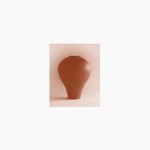
There is something appropriately mischievous about calling this record "A Distracted God". Beatriz Ferreyra has spent more than six decades treating sound as if it were a substance capable of escaping whatever container humans have designed for it, and these three pieces suggest that the gods of electroacoustic music may indeed have misplaced the instruction manual. Born in Córdoba in 1937 and based in France since the early 1960s, Ferreyra studied with Nadia Boulanger before entering the orbit of Pierre Schaeffer and the Groupe de Recherches Musicales. She later worked at the GRM, participated in the development of the "Solfège de l'objet sonore", taught electroacoustic techniques and eventually pursued an independent practice in which tape, instruments, computers, memory, spirituality and sheer sonic curiosity could coexist without asking permission from one another.
"A Distracted God" is consequently not an attempt to summarise that career, nor does it behave like a museum display in which three carefully labelled relics sit behind glass. Its three works, spanning 1976 to the later decades of Ferreyra's practice, make a rather more provocative point: the technology changes, but the ear remains recognisably the same. Earlier writing on her music has repeatedly noted precisely this peculiar continuity, with works separated by decades retaining a common fluidity and an ability to make sounds seem simultaneously physical and strangely unplaceable.
"Souffle d'un Petit Dieu Distrait" is the obvious gateway into this universe. Originally realised in the late 1980s and subsequently revisited, the piece moves through a dense constellation of electronic events, with sounds appearing, multiplying, retreating and crossing the stereo field rather than obediently lining up like soldiers waiting for inspection. There is an almost biological quality to the motion: things seem to grow, mutate, collide and disappear before the ear has quite decided what they are. Descriptions of the piece have emphasised its unusually active spatial movement and its mixture of tiny sonic details with broader, more enveloping masses.
What makes it particularly striking today is that it doesn't sound like a reconstruction of “the future” imagined by the 1980s. It sounds as though the future has simply continued without bothering to announce itself. There are crystalline fragments, electronic traces, granular disturbances and sudden shifts of perspective, but little sense of technological exhibitionism. Ferreyra is not showing us what machines can do. She is showing us how easily the ear can be fooled into believing that machines, insects, weather systems, distant transmissions and miniature planets might all belong to the same family.
Then comes "Tierra Quebrada", dating from 1976 and written for violin and fixed electroacoustic sound. Commissioned for the A.C.I.C. in France, the work was premiered in Paris by violinist Manuel Enriques, and its very premise already creates a useful tension: the recognisable physical gesture of a violin placed inside an environment that refuses to remain recognisable.
Here Ferreyra allows friction to become structure. The violin doesn't simply float above an electronic backdrop, nor does the tape behave like a polite contemporary-music accompaniment waiting for its soloist to finish. Bow, scrape, attack and resonance encounter altered sonic matter, producing contrasts between something bodily and something apparently disembodied. At times the music seems almost geological, as if the title were less metaphor than instruction: the ground has fractured, and the violin is trying to discover whether the pieces still belong to the same planet.
This is also where the age of the work becomes audible, but not necessarily as a defect. There is tape grain, physical roughness and a certain resistance in the materials that contemporary digital production often spends considerable effort pretending to possess. Ferreyra doesn't need to manufacture “organic” imperfection because the machinery has already supplied it. The result is less polished than tactile, and that tactility gives the piece a curious sense of danger.
"Sourires d'Automne" closes the record with only four minutes at its disposal, which is roughly the amount of time Ferreyra needs to remind us that brevity does not oblige a sound to behave. The piece belongs to her later exploration of fixed electronic sound and was composed for a festival context in Brussels, originally for Francis Dhomont's 80th birthday. Here the materials feel more concentrated, more elusive and perhaps more sinister. Instead of developing a large architecture, Ferreyra seems to open a small trapdoor in the floor and invite the listener to inspect whatever is moving underneath.
That sense of scale is central to "A Distracted God". Ferreyra's music repeatedly makes the microscopic feel enormous and the enormous feel intimate. A tiny change in texture can acquire the weight of an event; a broad electronic mass can suddenly reveal itself as a collection of minute particles. Earlier commentators have noted how her compositions can operate simultaneously at micro and macro levels, while maintaining a remarkably strong internal flow despite their lack of conventional musical signposts.
This is perhaps why the record feels less “experimental” than perceptual. The word experimental suggests that something is being tested, as though the composer were standing beside a laboratory bench with a clipboard. Ferreyra seems to have little interest in such bureaucracy. Her concern is what happens when sound is allowed to become unstable without becoming meaningless. Tape can become memory; a violin can become landscape; an electronic pulse can acquire something resembling weather. The source material matters, but its identity is never allowed to become a prison.
There is also a quiet philosophical dimension here. Ferreyra's work has long been associated with spirituality, alchemy, Kabbalah and the transformation of matter, but these references are most useful when understood not as decorative mysticism but as ways of thinking about change. A sound is never quite what it was a moment before. It can be stretched, layered, displaced, broken apart and recombined until its origin becomes irrelevant. In that sense, her musique concrète is not really about concrete things at all. It is about the strange moment when the familiar loses its passport.
And perhaps that is where the title finally makes sense. The distracted god is not necessarily an absent god. It may simply be one who has stopped paying attention to the categories humans invented for sound. Ferreyra's music does something similar. It refuses the tidy distinctions between analogue and digital, natural and artificial, instrument and environment, composition and accident. Her career has moved through technologies that were once futuristic and are now archaeological, yet the central question remains stubbornly contemporary: how much reality can be extracted from a sound before it stops being merely a sound?
"A Distracted God" offers no tidy answer. Thankfully. Answers are terribly overrated, particularly in experimental music, where they tend to arrive wearing black turtlenecks and carrying a press release. What Ferreyra offers instead is a listening space in which sounds can remain strange, physical, comic, threatening, beautiful and unresolved.
Six decades into a career devoted to reshaping the audible world, she still seems less interested in conquering sound than in letting it misbehave. That may be the most convincing kind of modernity there is.
"A Distracted God" is consequently not an attempt to summarise that career, nor does it behave like a museum display in which three carefully labelled relics sit behind glass. Its three works, spanning 1976 to the later decades of Ferreyra's practice, make a rather more provocative point: the technology changes, but the ear remains recognisably the same. Earlier writing on her music has repeatedly noted precisely this peculiar continuity, with works separated by decades retaining a common fluidity and an ability to make sounds seem simultaneously physical and strangely unplaceable.
"Souffle d'un Petit Dieu Distrait" is the obvious gateway into this universe. Originally realised in the late 1980s and subsequently revisited, the piece moves through a dense constellation of electronic events, with sounds appearing, multiplying, retreating and crossing the stereo field rather than obediently lining up like soldiers waiting for inspection. There is an almost biological quality to the motion: things seem to grow, mutate, collide and disappear before the ear has quite decided what they are. Descriptions of the piece have emphasised its unusually active spatial movement and its mixture of tiny sonic details with broader, more enveloping masses.
What makes it particularly striking today is that it doesn't sound like a reconstruction of “the future” imagined by the 1980s. It sounds as though the future has simply continued without bothering to announce itself. There are crystalline fragments, electronic traces, granular disturbances and sudden shifts of perspective, but little sense of technological exhibitionism. Ferreyra is not showing us what machines can do. She is showing us how easily the ear can be fooled into believing that machines, insects, weather systems, distant transmissions and miniature planets might all belong to the same family.
Then comes "Tierra Quebrada", dating from 1976 and written for violin and fixed electroacoustic sound. Commissioned for the A.C.I.C. in France, the work was premiered in Paris by violinist Manuel Enriques, and its very premise already creates a useful tension: the recognisable physical gesture of a violin placed inside an environment that refuses to remain recognisable.
Here Ferreyra allows friction to become structure. The violin doesn't simply float above an electronic backdrop, nor does the tape behave like a polite contemporary-music accompaniment waiting for its soloist to finish. Bow, scrape, attack and resonance encounter altered sonic matter, producing contrasts between something bodily and something apparently disembodied. At times the music seems almost geological, as if the title were less metaphor than instruction: the ground has fractured, and the violin is trying to discover whether the pieces still belong to the same planet.
This is also where the age of the work becomes audible, but not necessarily as a defect. There is tape grain, physical roughness and a certain resistance in the materials that contemporary digital production often spends considerable effort pretending to possess. Ferreyra doesn't need to manufacture “organic” imperfection because the machinery has already supplied it. The result is less polished than tactile, and that tactility gives the piece a curious sense of danger.
"Sourires d'Automne" closes the record with only four minutes at its disposal, which is roughly the amount of time Ferreyra needs to remind us that brevity does not oblige a sound to behave. The piece belongs to her later exploration of fixed electronic sound and was composed for a festival context in Brussels, originally for Francis Dhomont's 80th birthday. Here the materials feel more concentrated, more elusive and perhaps more sinister. Instead of developing a large architecture, Ferreyra seems to open a small trapdoor in the floor and invite the listener to inspect whatever is moving underneath.
That sense of scale is central to "A Distracted God". Ferreyra's music repeatedly makes the microscopic feel enormous and the enormous feel intimate. A tiny change in texture can acquire the weight of an event; a broad electronic mass can suddenly reveal itself as a collection of minute particles. Earlier commentators have noted how her compositions can operate simultaneously at micro and macro levels, while maintaining a remarkably strong internal flow despite their lack of conventional musical signposts.
This is perhaps why the record feels less “experimental” than perceptual. The word experimental suggests that something is being tested, as though the composer were standing beside a laboratory bench with a clipboard. Ferreyra seems to have little interest in such bureaucracy. Her concern is what happens when sound is allowed to become unstable without becoming meaningless. Tape can become memory; a violin can become landscape; an electronic pulse can acquire something resembling weather. The source material matters, but its identity is never allowed to become a prison.
There is also a quiet philosophical dimension here. Ferreyra's work has long been associated with spirituality, alchemy, Kabbalah and the transformation of matter, but these references are most useful when understood not as decorative mysticism but as ways of thinking about change. A sound is never quite what it was a moment before. It can be stretched, layered, displaced, broken apart and recombined until its origin becomes irrelevant. In that sense, her musique concrète is not really about concrete things at all. It is about the strange moment when the familiar loses its passport.
And perhaps that is where the title finally makes sense. The distracted god is not necessarily an absent god. It may simply be one who has stopped paying attention to the categories humans invented for sound. Ferreyra's music does something similar. It refuses the tidy distinctions between analogue and digital, natural and artificial, instrument and environment, composition and accident. Her career has moved through technologies that were once futuristic and are now archaeological, yet the central question remains stubbornly contemporary: how much reality can be extracted from a sound before it stops being merely a sound?
"A Distracted God" offers no tidy answer. Thankfully. Answers are terribly overrated, particularly in experimental music, where they tend to arrive wearing black turtlenecks and carrying a press release. What Ferreyra offers instead is a listening space in which sounds can remain strange, physical, comic, threatening, beautiful and unresolved.
Six decades into a career devoted to reshaping the audible world, she still seems less interested in conquering sound than in letting it misbehave. That may be the most convincing kind of modernity there is.
Halftribe: Disappear in Silent Ways

Halftribe is the solo project of Ryan Bissett, an ambient/electronic music producer and DJ, born in Northern Ireland, residing in Manchester, UK. Since 2014 he has been producing his sublime music having released a number of albums since then, of which 'Disappear in Silent Ways' appears to be the 10th. My prior experience with Halftribe is only his 2020 release on the Sound In Silence label, 'Archipelago,' which I reviewed here back in 2020. The review was mostly positive, but I felt as though there was a little something lacking, not completely realized. This album is comprised of 12 tracks of short to moderate length, noting over 5 minutes. The opener, "Listen," implores the listener to "listen and pay close attention to...," in a sampled, processed voice over some gentle, ambient synth pads. "Murmurations" employs an ambient drone pad background with loopy electronic sounds, brief melodic vocal samples and an occasional slidey bass. There is also a smattering of subtle static crunch giving the track lo-fi aura. "Dusk" offers a steady ambient drone of complex textured synth pads juxtaposed with what might be a field recording of a stream, or just light streaming noise. Later, gently accented chords are introduced- piano or guitar - it's hard to tell which. "Tyto Alba" begins with what might be described as industrial drone, although it sounds gentle, not abrasive. The sound of flowing water is also added. It is punctuated by occasional notes that could be synth or guitar, sparse, but effective. You can hear the sounds of pastoral night (possibly crickets) in "More Voices From The Past," with a dream-like looped electronic ambience and semi-submerged dialogue samples threaded through the music. There is also the sporadic sound of a backwards sample from an unidentified source. "Sanctuary" is another track that uses repeated looping of two different electronic phrases to form a completely different whole.
"Yearn" is alike a nebulous cloud floating in a bell jar. Slight as it is, it's still magnificent. I thought "Windfall" might just be a track of layered synth ambient drone but it's more than that, adding melodic components that weave their way through it. It has a real sleepy-time vibe. The title track is also the longest at five minutes and reintroduces watery field recordings with textured synth pads. Uplifting, angelic synth-vox appears halfway through. For some odd reason I'm reminded of subliminal positive message tapes I recall from the early '90s, but I cannot say there is any subliminal messaging here, except maybe to relax and let it flow. The looping on "Vernal" is obvious in the drone, but with birds chirping and other sonics introduced in the mix, you'll soon forget about loop points. "Silhouettes" is slightly darker than anything previous, and alludes to breathing as there is an impression of in and out in the ebb and flow of the noise-tinged drone. There are a number of subtle sounds here I won't go into detail describing but they only enhance the track. I don't know if there has been cliched title to a final track than "Everything Comes To An End," but it's wistful and beautiful. While I may not have been completely sold on 'Archipelago,' I am on 'Disappear in Silent Ways,' in spite of TED-talk like opening. Just an FYI- Halftribe's limited edition copies of this album on vinyl and CD have been going fast; there are only a few copies for sale remaining.
"Yearn" is alike a nebulous cloud floating in a bell jar. Slight as it is, it's still magnificent. I thought "Windfall" might just be a track of layered synth ambient drone but it's more than that, adding melodic components that weave their way through it. It has a real sleepy-time vibe. The title track is also the longest at five minutes and reintroduces watery field recordings with textured synth pads. Uplifting, angelic synth-vox appears halfway through. For some odd reason I'm reminded of subliminal positive message tapes I recall from the early '90s, but I cannot say there is any subliminal messaging here, except maybe to relax and let it flow. The looping on "Vernal" is obvious in the drone, but with birds chirping and other sonics introduced in the mix, you'll soon forget about loop points. "Silhouettes" is slightly darker than anything previous, and alludes to breathing as there is an impression of in and out in the ebb and flow of the noise-tinged drone. There are a number of subtle sounds here I won't go into detail describing but they only enhance the track. I don't know if there has been cliched title to a final track than "Everything Comes To An End," but it's wistful and beautiful. While I may not have been completely sold on 'Archipelago,' I am on 'Disappear in Silent Ways,' in spite of TED-talk like opening. Just an FYI- Halftribe's limited edition copies of this album on vinyl and CD have been going fast; there are only a few copies for sale remaining.
Christian Prommer: Rhythmique Nocturne
Artist: Christian Prommer (@)
Title: Rhythmique Nocturne
Format: 12" x 2 + Download
Label: Compost Records (@)
Rated:

Title: Rhythmique Nocturne
Format: 12" x 2 + Download
Label: Compost Records (@)
Rated:
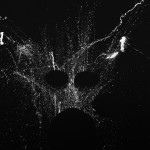
Christian Prommer has spent enough time moving between jazz, broken beat, techno and club music to make genre boundaries look less like walls than badly maintained suggestions. As a member of Fauna Flash and Trüby Trio, through Voom:Voom with Peter Kruder, and later with Drumlesson, he has repeatedly taken electronic music apart and rebuilt it with musicians who know that rhythm is not simply something you put underneath a tune. "Rhythmique Nocturne", his first solo album in more than a decade, continues that practice without sounding like a retrospective exercise. Instead, it feels like the work of somebody who has accumulated three decades of musical habits and finally decided to let them all talk at once, preferably after midnight.
The central idea is deceptively simple: make the acoustic instrument behave badly. Prommer begins with piano, drums, percussion, strings, cello and Rhodes, then subjects them to electronic procedures, amplification, preparation, sampling and rhythmic displacement until their conventional identities start becoming negotiable. The opening title track is almost a manifesto in miniature. A prepared upright piano is struck, scraped and dampened until its wooden body begins supplying percussion as much as harmony, while a restrained TB-303 pulse lurks underneath. The result does not sound like someone demonstrating what can be done to a piano. It sounds like a pianist who has discovered that the furniture has opinions.
That physical approach is one of the album’s greatest strengths. “Black Mamba” pushes the prepared piano through distortion and pedals, turning its familiar tonal organisation into something more ambiguous and abrasive. “Dark Matter” is built around live congas and drums while synthesizers gradually increase the pressure without ever quite exploding. The latter is particularly effective because Prommer understands that restraint is not the absence of energy. Sometimes the most convincing way to make a track feel dangerous is to keep refusing it the obvious climax. The kick drum waits, the synths mutate, the percussion insists, and the whole thing develops the slightly sinister patience of an animal that has noticed you are carrying food.
Prommer’s biography makes this balance between rhythmic instinct and studio construction less surprising. Born in Munich in 1969, he emerged from Germany’s early-1990s electronic scene and helped establish the jazz-inflected, broken-beat side of Compost’s catalogue through Fauna Flash and Trüby Trio. His later Drumlesson project famously reworked techno and house repertoire with an acoustic jazz ensemble, reversing the usual direction of adaptation. Rather than taking jazz and adding electronic decoration, he repeatedly asks what happens when the physicality of a jazz ensemble is allowed to invade electronic music. "Rhythmique Nocturne" sounds like a mature continuation of that question rather than another attempt to prove that genres can coexist.
“Night Society” may be the album’s most elaborate demonstration of the method. Its electronic skeleton grows out of a Juno-60 idea reinterpreted through prepared piano, then expands into eighteen strings, harmonium, cello, Mini-Moog and percussion. What could easily have become expensive-sounding wallpaper instead retains a sense of rhythmic purpose. The strings do not simply announce that this is now the sophisticated part of the record. They become another moving component inside the groove. This is where Prommer’s experience as both drummer and producer becomes especially useful: arrangement is treated as something kinetic. Every new layer has to alter the motion of the piece, not merely increase its budget.
The vocal tracks provide another kind of contrast. “I Am Falling (Falling Deep)” places Carl Justin inside a murky mixture of trip-hop, acid bass and jazz harmony, while “Struck”, featuring Leona Berlin, slows the pulse into a darker, more spacious piece in which Fender Rhodes, strings, bass and voice occupy a surprisingly smoky territory. Neither track feels bolted on to provide the album with a conventional song format. The voices become additional textures with personalities, capable of making the machinery feel suddenly intimate. “I Lost Myself in the Music”, closing the album, takes that intimacy even further, keeping the drums at a distance and allowing a soft arpeggio and vocals to suggest that the dancefloor can occasionally produce something resembling private reflection. The sentiment is potentially dangerous territory, since electronic music has already supplied humanity with enough opportunities to become embarrassingly sincere. Prommer gets away with it because the arrangement remains understated.
“Tryin’ Times” is perhaps the most politically charged piece, but its interest lies less in its message than in the act of musical memory behind it. Prommer takes Roberta Flack’s 1969 recording and reconstructs it through looping, fragmentation and a contemporary jazz-rave framework, with Justine Hoerwarth providing the vocal presence and Mosés Yoofee adding piano. The track connects protest soul to club culture without pretending that the two belong to identical historical circumstances. The inherited song remains recognisable as a source of emotional and political weight, while the production turns that inheritance into something restless rather than reverential. There is an important distinction here: Prommer is not polishing an old message for contemporary consumption; he is testing whether its urgency can survive a different rhythmic body.
Then there is “Algorhythmic”, which offers perhaps the clearest glimpse of Prommer the sound designer. Built from a chain of arpeggiators and chord resonators, with archival recordings of drummer Billy Hart incorporated into the structure, it sets programmed processes against minute human variations. The interesting part is not the familiar fantasy of “man versus machine”, which has been exhausted by approximately seventeen million electronic-music press releases. It is the opposite: the machine becomes interesting because the human material prevents its repetitions from remaining perfectly obedient. Rhythm becomes a negotiation between prediction and interruption.
“Spiral” takes this principle to an almost absurd degree, constructing its harmonic and textural material from a single cymbal. It is a wonderfully Prommer-like conceit because the source is so limited while the resulting field is not. Attack becomes tone, decay becomes atmosphere, metallic resonance becomes rhythmic information. The piece demonstrates that sampling can be more than collecting objects from the outside world. It can mean taking one physical event apart until its hidden components become an entire vocabulary. There is a small philosophical pleasure in that: nothing needs to be added if you have listened closely enough to what was already there.
“Bosss”, the tribute to Joe Zawinul, brings another strand of Prommer’s musical history into focus. Recorded live with Kelvin Sholar on piano and Rhodes, it carries the looseness of fusion without reproducing its period mannerisms. Zawinul is less a stylistic template here than a reminder of what happens when electronic thinking, improvisation and rhythmic sophistication are allowed to occupy the same room. Prommer’s own career has repeatedly operated in precisely that territory, from his work with electronic groups to Drumlesson and collaborations across jazz and dance music. His skill is not really in making unlike things resemble one another. It is in discovering which underlying principles they already share.
The album’s real achievement, then, is not that it successfully combines jazz, house, techno, trip-hop, soul and experimental electronics. That description sounds impressive until one remembers that modern music has been combining everything with everything for decades, often with the enthusiasm of a supermarket blender. "Rhythmique Nocturne" is more convincing because the connections are physical. A piano can become percussion. A cymbal can become harmony. A string section can function rhythmically. A drum recording can destabilise an algorithm. A sample from the past can become a contemporary gesture rather than a museum label. Prommer understands these relationships from the inside, as a drummer, producer and arranger who has spent years moving between rooms that supposedly belong to different musical tribes.
There is consequently very little sense of genre tourism here. The album does not visit jazz, techno or deep house as exotic neighbourhoods before returning home. These languages have clearly been part of Prommer’s musical vocabulary for years, and he uses them with the relaxed confidence of someone who no longer needs to explain why they belong together. The result is tactile without being fetishistic, sophisticated without becoming precious, and dance-oriented without treating the listener as a pair of legs requiring instructions. "Rhythmique Nocturne" ultimately proposes something rather more interesting than a fusion of styles: it suggests that rhythm itself can be a meeting place, provided we stop insisting on checking everyone’s passport at the door.
The central idea is deceptively simple: make the acoustic instrument behave badly. Prommer begins with piano, drums, percussion, strings, cello and Rhodes, then subjects them to electronic procedures, amplification, preparation, sampling and rhythmic displacement until their conventional identities start becoming negotiable. The opening title track is almost a manifesto in miniature. A prepared upright piano is struck, scraped and dampened until its wooden body begins supplying percussion as much as harmony, while a restrained TB-303 pulse lurks underneath. The result does not sound like someone demonstrating what can be done to a piano. It sounds like a pianist who has discovered that the furniture has opinions.
That physical approach is one of the album’s greatest strengths. “Black Mamba” pushes the prepared piano through distortion and pedals, turning its familiar tonal organisation into something more ambiguous and abrasive. “Dark Matter” is built around live congas and drums while synthesizers gradually increase the pressure without ever quite exploding. The latter is particularly effective because Prommer understands that restraint is not the absence of energy. Sometimes the most convincing way to make a track feel dangerous is to keep refusing it the obvious climax. The kick drum waits, the synths mutate, the percussion insists, and the whole thing develops the slightly sinister patience of an animal that has noticed you are carrying food.
Prommer’s biography makes this balance between rhythmic instinct and studio construction less surprising. Born in Munich in 1969, he emerged from Germany’s early-1990s electronic scene and helped establish the jazz-inflected, broken-beat side of Compost’s catalogue through Fauna Flash and Trüby Trio. His later Drumlesson project famously reworked techno and house repertoire with an acoustic jazz ensemble, reversing the usual direction of adaptation. Rather than taking jazz and adding electronic decoration, he repeatedly asks what happens when the physicality of a jazz ensemble is allowed to invade electronic music. "Rhythmique Nocturne" sounds like a mature continuation of that question rather than another attempt to prove that genres can coexist.
“Night Society” may be the album’s most elaborate demonstration of the method. Its electronic skeleton grows out of a Juno-60 idea reinterpreted through prepared piano, then expands into eighteen strings, harmonium, cello, Mini-Moog and percussion. What could easily have become expensive-sounding wallpaper instead retains a sense of rhythmic purpose. The strings do not simply announce that this is now the sophisticated part of the record. They become another moving component inside the groove. This is where Prommer’s experience as both drummer and producer becomes especially useful: arrangement is treated as something kinetic. Every new layer has to alter the motion of the piece, not merely increase its budget.
The vocal tracks provide another kind of contrast. “I Am Falling (Falling Deep)” places Carl Justin inside a murky mixture of trip-hop, acid bass and jazz harmony, while “Struck”, featuring Leona Berlin, slows the pulse into a darker, more spacious piece in which Fender Rhodes, strings, bass and voice occupy a surprisingly smoky territory. Neither track feels bolted on to provide the album with a conventional song format. The voices become additional textures with personalities, capable of making the machinery feel suddenly intimate. “I Lost Myself in the Music”, closing the album, takes that intimacy even further, keeping the drums at a distance and allowing a soft arpeggio and vocals to suggest that the dancefloor can occasionally produce something resembling private reflection. The sentiment is potentially dangerous territory, since electronic music has already supplied humanity with enough opportunities to become embarrassingly sincere. Prommer gets away with it because the arrangement remains understated.
“Tryin’ Times” is perhaps the most politically charged piece, but its interest lies less in its message than in the act of musical memory behind it. Prommer takes Roberta Flack’s 1969 recording and reconstructs it through looping, fragmentation and a contemporary jazz-rave framework, with Justine Hoerwarth providing the vocal presence and Mosés Yoofee adding piano. The track connects protest soul to club culture without pretending that the two belong to identical historical circumstances. The inherited song remains recognisable as a source of emotional and political weight, while the production turns that inheritance into something restless rather than reverential. There is an important distinction here: Prommer is not polishing an old message for contemporary consumption; he is testing whether its urgency can survive a different rhythmic body.
Then there is “Algorhythmic”, which offers perhaps the clearest glimpse of Prommer the sound designer. Built from a chain of arpeggiators and chord resonators, with archival recordings of drummer Billy Hart incorporated into the structure, it sets programmed processes against minute human variations. The interesting part is not the familiar fantasy of “man versus machine”, which has been exhausted by approximately seventeen million electronic-music press releases. It is the opposite: the machine becomes interesting because the human material prevents its repetitions from remaining perfectly obedient. Rhythm becomes a negotiation between prediction and interruption.
“Spiral” takes this principle to an almost absurd degree, constructing its harmonic and textural material from a single cymbal. It is a wonderfully Prommer-like conceit because the source is so limited while the resulting field is not. Attack becomes tone, decay becomes atmosphere, metallic resonance becomes rhythmic information. The piece demonstrates that sampling can be more than collecting objects from the outside world. It can mean taking one physical event apart until its hidden components become an entire vocabulary. There is a small philosophical pleasure in that: nothing needs to be added if you have listened closely enough to what was already there.
“Bosss”, the tribute to Joe Zawinul, brings another strand of Prommer’s musical history into focus. Recorded live with Kelvin Sholar on piano and Rhodes, it carries the looseness of fusion without reproducing its period mannerisms. Zawinul is less a stylistic template here than a reminder of what happens when electronic thinking, improvisation and rhythmic sophistication are allowed to occupy the same room. Prommer’s own career has repeatedly operated in precisely that territory, from his work with electronic groups to Drumlesson and collaborations across jazz and dance music. His skill is not really in making unlike things resemble one another. It is in discovering which underlying principles they already share.
The album’s real achievement, then, is not that it successfully combines jazz, house, techno, trip-hop, soul and experimental electronics. That description sounds impressive until one remembers that modern music has been combining everything with everything for decades, often with the enthusiasm of a supermarket blender. "Rhythmique Nocturne" is more convincing because the connections are physical. A piano can become percussion. A cymbal can become harmony. A string section can function rhythmically. A drum recording can destabilise an algorithm. A sample from the past can become a contemporary gesture rather than a museum label. Prommer understands these relationships from the inside, as a drummer, producer and arranger who has spent years moving between rooms that supposedly belong to different musical tribes.
There is consequently very little sense of genre tourism here. The album does not visit jazz, techno or deep house as exotic neighbourhoods before returning home. These languages have clearly been part of Prommer’s musical vocabulary for years, and he uses them with the relaxed confidence of someone who no longer needs to explain why they belong together. The result is tactile without being fetishistic, sophisticated without becoming precious, and dance-oriented without treating the listener as a pair of legs requiring instructions. "Rhythmique Nocturne" ultimately proposes something rather more interesting than a fusion of styles: it suggests that rhythm itself can be a meeting place, provided we stop insisting on checking everyone’s passport at the door.
Alexander Kowalski: Echoes (remaster)

Artist: Alexander Kowalski (@)
Title: Echoes (remaster)
Format: 12" x 2 + Download
Label: Cycles Music
Rated:
Title: Echoes (remaster)
Format: 12" x 2 + Download
Label: Cycles Music
Rated:
There is something almost suspiciously appropriate about bringing "Echoes" back in 2026. Alexander Kowalski’s debut appeared on Kanzleramt in 2001, at the point when Berlin techno was already acquiring a mythology large enough to become a nuisance, and its original artwork carried a sentence about fragments from the past following us into the future. Twenty-five years later, the line has acquired the uncomfortable accuracy of a fortune cookie written by someone who happened to understand electronic music. Yet "Echoes" does not return merely because it is old enough to qualify for anniversary treatment. Its particular combination of pressure, atmosphere and melodic darkness still has a pulse, and the new remaster makes that pulse easier to examine without polishing away the fingerprints.
Kowalski’s background matters here. Born in Greifswald in 1978 and raised in Berlin, he encountered techno during the city’s early-1990s transformation and emerged from the late-decade Tresor environment under the DisX3 alias before establishing himself through Kanzleramt. His first live performances and early hardware productions belong to a period when electronic music still involved a gratifying amount of physical negotiation with machines. "Echoes" was assembled from synthesizers, samplers and a Roland TR-909, developed through live jams and shaped through an analogue mixing desk and external effects. That method explains much of the album’s character. It is not simply that the tracks sound “analogue”, a word that has become almost meaningless after years of being applied to anything with a knob on it. There is a sense of decisions being made in real time, with sounds pushed into one another until they acquire weight, friction and consequence.
The opening “Voices” is a revealing piece of misdirection. At just under three minutes in the remastered edition, it establishes an atmosphere before "Echoes" really begins behaving like an album built for the club. “Oxygen” then introduces the deeper physicality of Kowalski’s method, while the title track settles into a denser, more propulsive territory in which the rhythm is never merely keeping time. The bass has mass, the upper frequencies keep worrying at its edges, and the melodic material is understated enough to avoid becoming sentimental. Kowalski’s great trick is that he understands melody as pressure rather than decoration. A synth line does not necessarily need to sing; sometimes it only needs to remain there long enough for the body to notice that it has become emotionally significant.
“Delicious” and “Hearing Is Believing” make that principle particularly apparent. Both have the sturdy, rolling construction expected from techno, but neither behaves like a collection of anonymous tools waiting for a DJ to provide them with a personality. There is detail in the surfaces, little shifts in emphasis and tonal colour that prevent repetition from becoming merely repetitive. The dub influence is important, too. Bass and space are treated as active compositional elements, while effects do not simply decorate the beat but alter the perceived dimensions of the room around it. This helps explain why the original album could function in a club without being exhausted by the club. You can imagine the physical setting, but the tracks retain enough internal activity to survive when the strobes are switched off and someone has to confront the terrible consequences of domestic lighting.
“Ratio” and “Patterns Of Hope” push the rhythmic side harder, with the latter especially suggesting how much Kowalski could extract from relatively economical materials. The title sounds almost indecently optimistic for early-2000s techno, yet the music does not offer easy consolation. Hope here is something mechanical and persistent, a pattern that continues because repetition itself can become a form of stubbornness. That gives the album some of its emotional depth. Its darkness is not theatrical misery, and its warmth is not softness. These tracks understand that a dancefloor can accommodate rather complicated feelings without requiring everybody to stop dancing and discuss them.
The later sequence becomes increasingly interesting precisely because it refuses to maintain a single level of intensity. “Debut (Lost Soul-Mix)” loosens the grip, “Sequential” compresses the architecture into a shorter burst, and “Silence Of Thoughts” returns to a more substantial rhythmic body. Then comes “My Dear”, whose longer duration and lower-energy profile offer something close to a comedown without turning the album into an afterthought. The digital anniversary edition also adds a remastered “Echoes (Dub Mix)”, which makes sense as an appendix because it exposes the album’s underlying logic from another angle: remove some of the obvious narrative cues and the machinery of bass, repetition and spatial manipulation becomes even more conspicuous.
What the 2026 remaster changes, then, is less interesting than what it refuses to change. The stated intention is greater depth, clarity and precision while preserving the original character, and that distinction matters. There is always a danger with remastering techno from this period that improved definition becomes a polite way of sanding off its physical roughness. "Echoes" benefits instead from hearing its layers more clearly while retaining the slightly murky relationship between machine precision and human intervention. The sounds are cleaner, but the album has not suddenly acquired a spotless personality. It still feels made rather than manufactured.
That may be the most persuasive reason to revisit "Echoes" now. The record belongs unmistakably to the period that produced it, but it does not depend entirely on nostalgia for its effect. Kowalski was already interested in the contradiction at the heart of techno: music constructed from rigid sequences that can nevertheless feel alive, repetitive structures that produce variation, machines that become expressive only because somebody keeps making imperfect choices about what they should do next. His later career would move through further forms of techno, house, melody and electronic experimentation, while Cycles Music now provides a home from which he can reconsider parts of that history on his own terms. The album therefore returns with an odd double perspective: it is both the beginning of a career and a reminder that beginnings rarely stay where we leave them.
Twenty-five years have done nothing to make "Echoes" sound young, which is probably healthier than the alternative. It sounds like a record from 2001 because it carries the technological assumptions, rhythmic vocabulary and nocturnal atmosphere of that moment. But it also demonstrates why some period-specific music survives without needing to pretend it predicted everything that came afterwards. The machines have changed, the software has multiplied, the clubs have become historical monuments in their own right, and apparently even techno now gets anniversary editions with respectable archival intentions. Yet the basic proposition remains wonderfully simple: put a kick drum in motion, give the bass enough room to become physical, introduce a few carefully chosen disturbances, and see what remains in the listener after the sequence stops. In Kowalski’s case, quite a lot.
Kowalski’s background matters here. Born in Greifswald in 1978 and raised in Berlin, he encountered techno during the city’s early-1990s transformation and emerged from the late-decade Tresor environment under the DisX3 alias before establishing himself through Kanzleramt. His first live performances and early hardware productions belong to a period when electronic music still involved a gratifying amount of physical negotiation with machines. "Echoes" was assembled from synthesizers, samplers and a Roland TR-909, developed through live jams and shaped through an analogue mixing desk and external effects. That method explains much of the album’s character. It is not simply that the tracks sound “analogue”, a word that has become almost meaningless after years of being applied to anything with a knob on it. There is a sense of decisions being made in real time, with sounds pushed into one another until they acquire weight, friction and consequence.
The opening “Voices” is a revealing piece of misdirection. At just under three minutes in the remastered edition, it establishes an atmosphere before "Echoes" really begins behaving like an album built for the club. “Oxygen” then introduces the deeper physicality of Kowalski’s method, while the title track settles into a denser, more propulsive territory in which the rhythm is never merely keeping time. The bass has mass, the upper frequencies keep worrying at its edges, and the melodic material is understated enough to avoid becoming sentimental. Kowalski’s great trick is that he understands melody as pressure rather than decoration. A synth line does not necessarily need to sing; sometimes it only needs to remain there long enough for the body to notice that it has become emotionally significant.
“Delicious” and “Hearing Is Believing” make that principle particularly apparent. Both have the sturdy, rolling construction expected from techno, but neither behaves like a collection of anonymous tools waiting for a DJ to provide them with a personality. There is detail in the surfaces, little shifts in emphasis and tonal colour that prevent repetition from becoming merely repetitive. The dub influence is important, too. Bass and space are treated as active compositional elements, while effects do not simply decorate the beat but alter the perceived dimensions of the room around it. This helps explain why the original album could function in a club without being exhausted by the club. You can imagine the physical setting, but the tracks retain enough internal activity to survive when the strobes are switched off and someone has to confront the terrible consequences of domestic lighting.
“Ratio” and “Patterns Of Hope” push the rhythmic side harder, with the latter especially suggesting how much Kowalski could extract from relatively economical materials. The title sounds almost indecently optimistic for early-2000s techno, yet the music does not offer easy consolation. Hope here is something mechanical and persistent, a pattern that continues because repetition itself can become a form of stubbornness. That gives the album some of its emotional depth. Its darkness is not theatrical misery, and its warmth is not softness. These tracks understand that a dancefloor can accommodate rather complicated feelings without requiring everybody to stop dancing and discuss them.
The later sequence becomes increasingly interesting precisely because it refuses to maintain a single level of intensity. “Debut (Lost Soul-Mix)” loosens the grip, “Sequential” compresses the architecture into a shorter burst, and “Silence Of Thoughts” returns to a more substantial rhythmic body. Then comes “My Dear”, whose longer duration and lower-energy profile offer something close to a comedown without turning the album into an afterthought. The digital anniversary edition also adds a remastered “Echoes (Dub Mix)”, which makes sense as an appendix because it exposes the album’s underlying logic from another angle: remove some of the obvious narrative cues and the machinery of bass, repetition and spatial manipulation becomes even more conspicuous.
What the 2026 remaster changes, then, is less interesting than what it refuses to change. The stated intention is greater depth, clarity and precision while preserving the original character, and that distinction matters. There is always a danger with remastering techno from this period that improved definition becomes a polite way of sanding off its physical roughness. "Echoes" benefits instead from hearing its layers more clearly while retaining the slightly murky relationship between machine precision and human intervention. The sounds are cleaner, but the album has not suddenly acquired a spotless personality. It still feels made rather than manufactured.
That may be the most persuasive reason to revisit "Echoes" now. The record belongs unmistakably to the period that produced it, but it does not depend entirely on nostalgia for its effect. Kowalski was already interested in the contradiction at the heart of techno: music constructed from rigid sequences that can nevertheless feel alive, repetitive structures that produce variation, machines that become expressive only because somebody keeps making imperfect choices about what they should do next. His later career would move through further forms of techno, house, melody and electronic experimentation, while Cycles Music now provides a home from which he can reconsider parts of that history on his own terms. The album therefore returns with an odd double perspective: it is both the beginning of a career and a reminder that beginnings rarely stay where we leave them.
Twenty-five years have done nothing to make "Echoes" sound young, which is probably healthier than the alternative. It sounds like a record from 2001 because it carries the technological assumptions, rhythmic vocabulary and nocturnal atmosphere of that moment. But it also demonstrates why some period-specific music survives without needing to pretend it predicted everything that came afterwards. The machines have changed, the software has multiplied, the clubs have become historical monuments in their own right, and apparently even techno now gets anniversary editions with respectable archival intentions. Yet the basic proposition remains wonderfully simple: put a kick drum in motion, give the bass enough room to become physical, introduce a few carefully chosen disturbances, and see what remains in the listener after the sequence stops. In Kowalski’s case, quite a lot.