
Browse by Genre
Industrial Music / Industrial Metal / Aggro Industrial / Electro Metal
Industrial Noise / Power Noise / Harsh Noise
Synth Pop / Electro Pop / Synth-Electronica
Techno / Trance / Goa / Drum'n'Bass / Jungle / Tribal / Trip-Hop
Ambient / Electronica / Ethereal / Dub / Soundscapes / Abstract
Experimental / Avantgarde / Weird & Wired / Glitch / Noise / Field Recording
Dark / Gothic / Wave / New Wave / Dark Wave / Industrial Gothic
New Music / Downtown / Avantgarde Jazz / New Classical / World
Search Reviews
Music Reviews
Thomas Peter: changing bodies

There is a curious habit among human beings: we insist on believing that objects are silent until someone decides to play them. Stones, pieces of wood, metal surfaces, empty rooms. They wait patiently while we congratulate ourselves on inventing music. Thomas Peter's "changing bodies" politely dismantles that illusion. The sounds were already there. We simply forgot how to listen.
The Zurich-based composer and sound artist has spent decades navigating the fertile territory between composition, improvisation, sound art and performance. Whether working with the Geneva-based Insub Meta Orchestra or developing interdisciplinary projects alongside dancers and visual artists, Peter has consistently treated sound as something embodied rather than abstract. His work rarely begins with melody or harmony. Instead, it begins with matter itself: surfaces, materials, resonances, movements, and the invisible conversations that physical objects conduct when nobody is paying attention.
That philosophy reaches an elegant maturity on changing bodies, his first release for Hallow Ground. Composed over four years, the album feels less like a collection of pieces than a prolonged act of observation. Field recordings gathered from urban spaces, interiors and landscapes intertwine with analogue and digital synthesizers, while recordings of wood, stone and metal dissolve into textures that are often impossible to identify. Recognition becomes secondary. Curiosity takes its place.
Peter's greatest achievement lies precisely in avoiding the familiar trap of electroacoustic composition: the temptation to display unusual sounds simply because they are unusual. Here, every sonic event serves a larger architecture. A scrape is never merely a scrape, nor is a drone simply sustained. Each gesture exists because of its relationship to silence, resonance and expectation. The record is remarkably economical, never overcrowding the listener despite the microscopic richness of its details.
The opening "drift" establishes this delicate equilibrium immediately. Tiny vibrations emerge almost tentatively before gathering enough confidence to reshape the surrounding acoustic space. The piece behaves less like a composition unfolding in time than like weather slowly reorganising itself. Nothing dramatic happens, yet everything quietly changes.
That sense of perpetual transformation continues throughout "niebla" and "bending myself", where Peter blurs the boundary between environmental recordings and synthetic sound so thoroughly that categorisation becomes irrelevant. One frequently suspects hearing footsteps, distant machinery or shifting air currents, only to realise moments later that the source may well be an oscillator, or perhaps the memory of one. The uncertainty itself becomes part of the listening experience.
The wonderfully titled "something that is there, something similar" perhaps encapsulates the album's entire aesthetic. It explores resemblance rather than identity, suggesting forms without fully revealing them. The listener constantly feels on the verge of recognition, as though memory itself were being gently edited in real time. It is a remarkably subtle psychological effect, achieved without theatrical gestures or conceptual grandstanding.
The closing title track expands this language into its most complete expression. Layers accumulate with extraordinary patience, allowing minute shifts in texture to generate emotional movement rather than conventional narrative. Peter demonstrates remarkable confidence here, resisting any urge to manufacture climaxes. Instead, he trusts that attentive listening can produce its own momentum. He is right.
There is also something quietly philosophical running beneath the album's immaculate surface. The title, changing bodies, does not merely refer to physical objects vibrating under acoustic pressure. It also hints at perception itself. By the end of the record, one begins to suspect that the body undergoing transformation may be the listener's. Hearing becomes less about identifying sources and more about inhabiting relationships between frequencies, spaces and memory. It is difficult to leave the album without becoming slightly more attentive to the unnoticed sounds of everyday life. Your kettle, your staircase and your old radiator suddenly seem suspiciously expressive.
Hallow Ground has built an enviable catalogue dedicated to artists who approach sound with patience and conceptual clarity, and Peter fits naturally within that lineage. Yet his voice remains distinctly personal. There is a rare humility in these compositions. Rather than imposing meaning onto the material, he collaborates with it, allowing objects, environments and resonances to retain their own agency. One could almost describe the album as a duet between a composer and the physical world itself.
In an age saturated with increasingly louder declarations, changing bodies proposes something far more radical: attention. Not passive relaxation, nor fashionable minimalism masquerading as profundity, but genuine concentration. Thomas Peter reminds us that listening is not a neutral act. It changes the listener as much as the sound being heard. The bodies of the title, it turns out, are all of ours.
The Zurich-based composer and sound artist has spent decades navigating the fertile territory between composition, improvisation, sound art and performance. Whether working with the Geneva-based Insub Meta Orchestra or developing interdisciplinary projects alongside dancers and visual artists, Peter has consistently treated sound as something embodied rather than abstract. His work rarely begins with melody or harmony. Instead, it begins with matter itself: surfaces, materials, resonances, movements, and the invisible conversations that physical objects conduct when nobody is paying attention.
That philosophy reaches an elegant maturity on changing bodies, his first release for Hallow Ground. Composed over four years, the album feels less like a collection of pieces than a prolonged act of observation. Field recordings gathered from urban spaces, interiors and landscapes intertwine with analogue and digital synthesizers, while recordings of wood, stone and metal dissolve into textures that are often impossible to identify. Recognition becomes secondary. Curiosity takes its place.
Peter's greatest achievement lies precisely in avoiding the familiar trap of electroacoustic composition: the temptation to display unusual sounds simply because they are unusual. Here, every sonic event serves a larger architecture. A scrape is never merely a scrape, nor is a drone simply sustained. Each gesture exists because of its relationship to silence, resonance and expectation. The record is remarkably economical, never overcrowding the listener despite the microscopic richness of its details.
The opening "drift" establishes this delicate equilibrium immediately. Tiny vibrations emerge almost tentatively before gathering enough confidence to reshape the surrounding acoustic space. The piece behaves less like a composition unfolding in time than like weather slowly reorganising itself. Nothing dramatic happens, yet everything quietly changes.
That sense of perpetual transformation continues throughout "niebla" and "bending myself", where Peter blurs the boundary between environmental recordings and synthetic sound so thoroughly that categorisation becomes irrelevant. One frequently suspects hearing footsteps, distant machinery or shifting air currents, only to realise moments later that the source may well be an oscillator, or perhaps the memory of one. The uncertainty itself becomes part of the listening experience.
The wonderfully titled "something that is there, something similar" perhaps encapsulates the album's entire aesthetic. It explores resemblance rather than identity, suggesting forms without fully revealing them. The listener constantly feels on the verge of recognition, as though memory itself were being gently edited in real time. It is a remarkably subtle psychological effect, achieved without theatrical gestures or conceptual grandstanding.
The closing title track expands this language into its most complete expression. Layers accumulate with extraordinary patience, allowing minute shifts in texture to generate emotional movement rather than conventional narrative. Peter demonstrates remarkable confidence here, resisting any urge to manufacture climaxes. Instead, he trusts that attentive listening can produce its own momentum. He is right.
There is also something quietly philosophical running beneath the album's immaculate surface. The title, changing bodies, does not merely refer to physical objects vibrating under acoustic pressure. It also hints at perception itself. By the end of the record, one begins to suspect that the body undergoing transformation may be the listener's. Hearing becomes less about identifying sources and more about inhabiting relationships between frequencies, spaces and memory. It is difficult to leave the album without becoming slightly more attentive to the unnoticed sounds of everyday life. Your kettle, your staircase and your old radiator suddenly seem suspiciously expressive.
Hallow Ground has built an enviable catalogue dedicated to artists who approach sound with patience and conceptual clarity, and Peter fits naturally within that lineage. Yet his voice remains distinctly personal. There is a rare humility in these compositions. Rather than imposing meaning onto the material, he collaborates with it, allowing objects, environments and resonances to retain their own agency. One could almost describe the album as a duet between a composer and the physical world itself.
In an age saturated with increasingly louder declarations, changing bodies proposes something far more radical: attention. Not passive relaxation, nor fashionable minimalism masquerading as profundity, but genuine concentration. Thomas Peter reminds us that listening is not a neutral act. It changes the listener as much as the sound being heard. The bodies of the title, it turns out, are all of ours.
Antoine Ferris: [KAAARST]
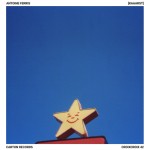
Some records introduce themselves politely. [KAAARST] kicks the door with the body of a bass guitar, then apologizes by humming a strangely beautiful melody. Humanity, as usual, is perfectly capable of making elegance out of blunt force.
French bassist Antoine Ferris has been an active presence in Toulouse's adventurous improvised music scene through projects such as Baraque à Free, Megacoaster, Feràmia and Totun, developing a vocabulary that treats the electric bass as anything but a conventional low-end instrument. Across those ensembles, and through collaborations with composers and improvisers, he has cultivated an approach where electronics, hip-hop production aesthetics, noise, and free improvisation are not competing languages but different dialects of the same conversation. [KAAARST], his first solo statement, feels less like a debut than the moment when years of accumulated experiments finally found a coherent gravitational centre.
Calling this a bass album would be technically correct in the same way calling a volcano "warm geology" would also be technically correct. Ferris continuously dismantles the identity of his instrument. Strings become percussion, feedback becomes melody, contact microphones amplify microscopic gestures, effects pedals generate unstable rhythmic companions that behave almost like stubborn improvisers rather than obedient machines. At times he attacks the instrument with his fists, elsewhere with a butter knife, turning performance into a peculiar choreography where every object seems equally qualified to become a musical tool.
Yet despite all this apparent violence, [KAAARST] never settles for noise as spectacle. The abrasive textures are consistently shadowed by melancholy. There is an emotional hesitation beneath the distortion, as though every burst of sonic aggression immediately questions itself. The album lives inside that contradiction, finding tenderness in abrasion and vulnerability inside mechanical repetition.
The sequencing reinforces this fragmented emotional geography. The miniature opener "crush" barely has time to introduce itself before dissolving, while "strange party" assembles fractured grooves from unstable rhythmic cells that flirt with electronic music without ever surrendering to predictable structures. Pieces like "hount orbe" and "coume sourde" stretch improvisation into something almost geological, allowing feedback and resonance to evolve with patient inevitability. Even the provocatively titled "electronic dance music" seems to smile ironically at genre expectations: if anyone arrives expecting club anthems, they may discover instead that dancing can also happen inside one's nervous system.
Ferris' fascination with electronic production is especially compelling because it never attempts to disguise the physicality of performance. Sampling techniques borrowed from beat-making coexist with unmistakably tactile instrumental gestures. Every scrape, strike and accidental resonance preserves the memory of hands touching wood and metal. The electronics do not erase the performer; they magnify the traces of his presence until every imperfection acquires structural importance.
The collaborative moments provide welcome shifts in perspective without interrupting the album's identity. Natacha Kanga's contribution to "shame's coming" introduces a fragile vocal dimension that contrasts beautifully with Ferris' fragmented instrumental language, while Louie Z's Occitan singing on "la nèu" anchors the record in a sense of place and cultural memory. The use of an endangered regional language feels quietly significant: amid all the digital manipulation and sonic deconstruction, an ancient voice appears, reminding us that experimentation does not require abandoning history.
There are echoes throughout the record of artists who have expanded the vocabulary of the electric bass and electroacoustic improvisation, yet Ferris avoids sounding derivative. His references to industrial music, glitch aesthetics, hip-hop production and free improvisation remain ingredients rather than destinations. The album constantly resists becoming too comfortable within any single tradition, preferring instead to occupy the unstable terrain between them.
The title itself suggests rugged landscapes shaped over immense stretches of time, and that metaphor proves surprisingly apt. These pieces often feel eroded rather than constructed. Sounds emerge like exposed mineral layers, revealing hidden colours beneath rough surfaces. Even the shortest tracks function as sedimentary deposits, each preserving tiny sonic fossils that resonate long after they disappear.
For listeners accustomed to clearly defined genres, [KAAARST] may initially resemble an elaborate puzzle whose picture never appears on the box. That is precisely its strength. Ferris trusts curiosity more than certainty, inviting repeated listening rather than immediate comprehension. The album rewards attention to detail: the unstable pulse hiding beneath distortion, the unexpected lyricism surfacing through feedback, the rhythmic intelligence concealed inside apparent chaos.
In an era where software can simulate almost any instrumental gesture with alarming efficiency, Antoine Ferris reminds us that unpredictability remains profoundly human. Sometimes all it takes is a bass guitar, a handful of pedals, questionable kitchen utensils, and the willingness to let accidents become collaborators. The result is an album that feels simultaneously raw and meticulously considered, proving that even broken signals can carry remarkably honest messages.
French bassist Antoine Ferris has been an active presence in Toulouse's adventurous improvised music scene through projects such as Baraque à Free, Megacoaster, Feràmia and Totun, developing a vocabulary that treats the electric bass as anything but a conventional low-end instrument. Across those ensembles, and through collaborations with composers and improvisers, he has cultivated an approach where electronics, hip-hop production aesthetics, noise, and free improvisation are not competing languages but different dialects of the same conversation. [KAAARST], his first solo statement, feels less like a debut than the moment when years of accumulated experiments finally found a coherent gravitational centre.
Calling this a bass album would be technically correct in the same way calling a volcano "warm geology" would also be technically correct. Ferris continuously dismantles the identity of his instrument. Strings become percussion, feedback becomes melody, contact microphones amplify microscopic gestures, effects pedals generate unstable rhythmic companions that behave almost like stubborn improvisers rather than obedient machines. At times he attacks the instrument with his fists, elsewhere with a butter knife, turning performance into a peculiar choreography where every object seems equally qualified to become a musical tool.
Yet despite all this apparent violence, [KAAARST] never settles for noise as spectacle. The abrasive textures are consistently shadowed by melancholy. There is an emotional hesitation beneath the distortion, as though every burst of sonic aggression immediately questions itself. The album lives inside that contradiction, finding tenderness in abrasion and vulnerability inside mechanical repetition.
The sequencing reinforces this fragmented emotional geography. The miniature opener "crush" barely has time to introduce itself before dissolving, while "strange party" assembles fractured grooves from unstable rhythmic cells that flirt with electronic music without ever surrendering to predictable structures. Pieces like "hount orbe" and "coume sourde" stretch improvisation into something almost geological, allowing feedback and resonance to evolve with patient inevitability. Even the provocatively titled "electronic dance music" seems to smile ironically at genre expectations: if anyone arrives expecting club anthems, they may discover instead that dancing can also happen inside one's nervous system.
Ferris' fascination with electronic production is especially compelling because it never attempts to disguise the physicality of performance. Sampling techniques borrowed from beat-making coexist with unmistakably tactile instrumental gestures. Every scrape, strike and accidental resonance preserves the memory of hands touching wood and metal. The electronics do not erase the performer; they magnify the traces of his presence until every imperfection acquires structural importance.
The collaborative moments provide welcome shifts in perspective without interrupting the album's identity. Natacha Kanga's contribution to "shame's coming" introduces a fragile vocal dimension that contrasts beautifully with Ferris' fragmented instrumental language, while Louie Z's Occitan singing on "la nèu" anchors the record in a sense of place and cultural memory. The use of an endangered regional language feels quietly significant: amid all the digital manipulation and sonic deconstruction, an ancient voice appears, reminding us that experimentation does not require abandoning history.
There are echoes throughout the record of artists who have expanded the vocabulary of the electric bass and electroacoustic improvisation, yet Ferris avoids sounding derivative. His references to industrial music, glitch aesthetics, hip-hop production and free improvisation remain ingredients rather than destinations. The album constantly resists becoming too comfortable within any single tradition, preferring instead to occupy the unstable terrain between them.
The title itself suggests rugged landscapes shaped over immense stretches of time, and that metaphor proves surprisingly apt. These pieces often feel eroded rather than constructed. Sounds emerge like exposed mineral layers, revealing hidden colours beneath rough surfaces. Even the shortest tracks function as sedimentary deposits, each preserving tiny sonic fossils that resonate long after they disappear.
For listeners accustomed to clearly defined genres, [KAAARST] may initially resemble an elaborate puzzle whose picture never appears on the box. That is precisely its strength. Ferris trusts curiosity more than certainty, inviting repeated listening rather than immediate comprehension. The album rewards attention to detail: the unstable pulse hiding beneath distortion, the unexpected lyricism surfacing through feedback, the rhythmic intelligence concealed inside apparent chaos.
In an era where software can simulate almost any instrumental gesture with alarming efficiency, Antoine Ferris reminds us that unpredictability remains profoundly human. Sometimes all it takes is a bass guitar, a handful of pedals, questionable kitchen utensils, and the willingness to let accidents become collaborators. The result is an album that feels simultaneously raw and meticulously considered, proving that even broken signals can carry remarkably honest messages.
Jim O'Rourke & Jos Smolders: Albumin

Artist: Jim O'Rourke & Jos Smolders (@)
Title: Albumin
Format: LP
Label: Moving Furniture Records (@)
Rated:

Title: Albumin
Format: LP
Label: Moving Furniture Records (@)
Rated:
There are collaborations where two artists meet halfway. Then there are collaborations where neither artist seems particularly interested in staying recognisable, preferring instead to dissolve into a third entity that belongs to neither of them. "Albumin", the second joint work by Jim O'Rourke and Jos Smolders, inhabits precisely that curious territory. It is less a conversation than a slow chemical reaction. The title itself feels appropriately biological: albumin is a protein that binds, transports and stabilises. This record does something remarkably similar with sound.
Following "Additive Inverse" (2021), O'Rourke and Smolders resumed their partnership through an almost ascetic working method. Over three years, each contributed from his own studio, exchanging material in concentrated one-day sessions. Rather than composing in a traditional sense, they seem to have cultivated an ecosystem in which sounds continuously mutate. O'Rourke initiated the process with material extracted from his Kyma system, whose sophisticated signal-processing algorithms have long fascinated composers interested in spectral transformation, while Smolders responded by granulating and reshaping those materials into ever-changing textures. The result is music that appears to be perpetually reconsidering itself.
Jim O'Rourke hardly needs introduction within experimental music. Few contemporary figures have travelled so comfortably between radically different worlds, from electroacoustic composition and free improvisation to pop songwriting, film scores, production work with Wilco and Sonic Youth, and countless collaborations across avant-garde music. Living in Japan for many years has only reinforced his tendency toward patient refinement rather than prolific spectacle. Every project seems to ask a different question.
Jos Smolders has pursued a similarly uncompromising path, albeit one less visible outside dedicated experimental circles. For decades he has been one of the quiet architects of the Dutch electroacoustic scene, not only through his own extensive catalogue but also through EARLabs, both as an online platform and mastering studio. His work consistently reveals extraordinary sensitivity toward the microscopic behaviour of sound itself, making him an ideal counterpart for O'Rourke's restless curiosity.
That compatibility becomes immediately apparent across the album's two extended pieces. Rather than presenting dramatic contrasts or obvious structural divisions, "(HP-HP)" and "r(OP-OP)" evolve through continuous internal transformation. Warm harmonic clouds gradually reveal rough mineral textures; granular particles coalesce into fleeting rhythmic suggestions before dissolving once again into shimmering ambiguity. Every apparent destination quietly becomes another point of departure.
What makes "Albumin" particularly compelling is its refusal to treat abstraction as emotional distance. Beneath the dense layers of processed sound lies an unexpectedly tactile experience. One has the impression of touching different materials rather than merely hearing frequencies: polished stone giving way to corroded metal, velvet gradually revealing hidden grains of sand, smooth surfaces unexpectedly breaking into crystalline fractures. The spectral processing never feels technological for its own sake. Instead, technology becomes an instrument for revealing the hidden physical lives of sounds.
The pacing deserves particular praise. In less confident hands, two eighteen-minute electroacoustic compositions could easily drift into self-indulgence or conceptual demonstration. O'Rourke and Smolders avoid both pitfalls through remarkable discipline. Their patience never becomes inertia. Every minute introduces subtle redistributions of energy, microscopic shifts in density, timbre or spatial perspective that reward attentive listening without demanding constant analytical effort.
Occasionally, rhythmic patterns emerge almost accidentally from the surrounding textures, only to disappear before establishing themselves. These fleeting pulses function like mirages, hinting at structure while refusing predictability. It is music that continually negotiates between organisation and entropy, between intention and emergence.
One of the album's quiet pleasures lies in its resistance to virtuosity. Despite the immense technical sophistication involved, neither artist seems interested in displaying mastery. There are no moments designed to impress through complexity alone. Instead, the technology recedes behind the listening experience itself. This humility is increasingly rare in electronic music, where software often seems determined to remind us how clever it is. Here, the algorithms simply get on with the job while the sounds remain the protagonists.
The collaboration also reveals something revealing about both musicians individually. O'Rourke's compositional instinct for long-form development and Smolders' forensic attention to sonic texture reinforce rather than overshadow one another. At no point does one sense alternating authorship or stylistic compromise. The album genuinely feels co-authored, its identity emerging from mutual trust rather than negotiated territory.
Moving Furniture Records has built an impressive catalogue dedicated to electroacoustic music that values subtlety over grand gestures, and "Albumin" fits beautifully within that tradition while remaining unmistakably its own work. It is neither austere nor comforting, neither purely academic nor conventionally expressive. Instead, it occupies the fascinating middle ground where curiosity itself becomes an emotional state.
Listening to "Albumin" feels strangely similar to watching clouds through a microscope. The image sounds absurd, because it is. Yet the album repeatedly creates precisely that impossible sensation: something simultaneously vast and microscopic, constantly changing shape while somehow remaining entirely itself. O'Rourke and Smolders remind us that the richest forms of movement are often the slowest ones, occurring patiently beneath the threshold where certainty gives way to wonder.
Following "Additive Inverse" (2021), O'Rourke and Smolders resumed their partnership through an almost ascetic working method. Over three years, each contributed from his own studio, exchanging material in concentrated one-day sessions. Rather than composing in a traditional sense, they seem to have cultivated an ecosystem in which sounds continuously mutate. O'Rourke initiated the process with material extracted from his Kyma system, whose sophisticated signal-processing algorithms have long fascinated composers interested in spectral transformation, while Smolders responded by granulating and reshaping those materials into ever-changing textures. The result is music that appears to be perpetually reconsidering itself.
Jim O'Rourke hardly needs introduction within experimental music. Few contemporary figures have travelled so comfortably between radically different worlds, from electroacoustic composition and free improvisation to pop songwriting, film scores, production work with Wilco and Sonic Youth, and countless collaborations across avant-garde music. Living in Japan for many years has only reinforced his tendency toward patient refinement rather than prolific spectacle. Every project seems to ask a different question.
Jos Smolders has pursued a similarly uncompromising path, albeit one less visible outside dedicated experimental circles. For decades he has been one of the quiet architects of the Dutch electroacoustic scene, not only through his own extensive catalogue but also through EARLabs, both as an online platform and mastering studio. His work consistently reveals extraordinary sensitivity toward the microscopic behaviour of sound itself, making him an ideal counterpart for O'Rourke's restless curiosity.
That compatibility becomes immediately apparent across the album's two extended pieces. Rather than presenting dramatic contrasts or obvious structural divisions, "(HP-HP)" and "r(OP-OP)" evolve through continuous internal transformation. Warm harmonic clouds gradually reveal rough mineral textures; granular particles coalesce into fleeting rhythmic suggestions before dissolving once again into shimmering ambiguity. Every apparent destination quietly becomes another point of departure.
What makes "Albumin" particularly compelling is its refusal to treat abstraction as emotional distance. Beneath the dense layers of processed sound lies an unexpectedly tactile experience. One has the impression of touching different materials rather than merely hearing frequencies: polished stone giving way to corroded metal, velvet gradually revealing hidden grains of sand, smooth surfaces unexpectedly breaking into crystalline fractures. The spectral processing never feels technological for its own sake. Instead, technology becomes an instrument for revealing the hidden physical lives of sounds.
The pacing deserves particular praise. In less confident hands, two eighteen-minute electroacoustic compositions could easily drift into self-indulgence or conceptual demonstration. O'Rourke and Smolders avoid both pitfalls through remarkable discipline. Their patience never becomes inertia. Every minute introduces subtle redistributions of energy, microscopic shifts in density, timbre or spatial perspective that reward attentive listening without demanding constant analytical effort.
Occasionally, rhythmic patterns emerge almost accidentally from the surrounding textures, only to disappear before establishing themselves. These fleeting pulses function like mirages, hinting at structure while refusing predictability. It is music that continually negotiates between organisation and entropy, between intention and emergence.
One of the album's quiet pleasures lies in its resistance to virtuosity. Despite the immense technical sophistication involved, neither artist seems interested in displaying mastery. There are no moments designed to impress through complexity alone. Instead, the technology recedes behind the listening experience itself. This humility is increasingly rare in electronic music, where software often seems determined to remind us how clever it is. Here, the algorithms simply get on with the job while the sounds remain the protagonists.
The collaboration also reveals something revealing about both musicians individually. O'Rourke's compositional instinct for long-form development and Smolders' forensic attention to sonic texture reinforce rather than overshadow one another. At no point does one sense alternating authorship or stylistic compromise. The album genuinely feels co-authored, its identity emerging from mutual trust rather than negotiated territory.
Moving Furniture Records has built an impressive catalogue dedicated to electroacoustic music that values subtlety over grand gestures, and "Albumin" fits beautifully within that tradition while remaining unmistakably its own work. It is neither austere nor comforting, neither purely academic nor conventionally expressive. Instead, it occupies the fascinating middle ground where curiosity itself becomes an emotional state.
Listening to "Albumin" feels strangely similar to watching clouds through a microscope. The image sounds absurd, because it is. Yet the album repeatedly creates precisely that impossible sensation: something simultaneously vast and microscopic, constantly changing shape while somehow remaining entirely itself. O'Rourke and Smolders remind us that the richest forms of movement are often the slowest ones, occurring patiently beneath the threshold where certainty gives way to wonder.
Akira Kosemura: Polaroid Piano

Some albums arrive exactly when they are supposed to. Others arrive twice. "Polaroid Piano" belongs to the latter category. First released fifteen years ago, Akira Kosemura's quiet masterpiece returns not as an exercise in nostalgia but as a reminder that genuine intimacy never really ages. Trends come and go with astonishing enthusiasm, often convinced they have invented silence from scratch. Meanwhile, this record simply continues breathing.
Japanese composer and pianist Akira Kosemura has built one of the most distinctive careers in contemporary modern classical music by consistently refusing unnecessary spectacle. Long before playlists began grouping together every softly recorded piano under the convenient label of "neo-classical", Kosemura was already cultivating a language where restraint carried emotional weight. Alongside his solo work, he has composed extensively for film, television and visual art, while his Schole Records label has become an important platform for similarly delicate and introspective voices. His music has always seemed less interested in telling stories than in preserving fleeting emotional climates before they disappear.
Originally released in 2011 through Someone Good, "Polaroid Piano" occupies a quietly significant place in the evolution of contemporary piano music. Lawrence English's observation that the album anticipated what would later become associated with the felt piano aesthetic is hardly exaggerated. Yet reducing the record to historical importance would miss the point entirely. What remains remarkable is not that it arrived early, but that it still sounds startlingly personal.
The title proves wonderfully apt. Like the instant photographs that inspired it, these twelve miniature pieces capture moments before they have time to pose. They preserve imperfections that another recording might have edited away. The subtle rustle of clothing, distant birds, the occasional intrusion of urban life, the lingering resonance of the room itself: none of these elements feel accidental. They become part of the composition, gentle reminders that music is never isolated from the world that produces it.
This porous relationship between performance and environment gives the album an unusual sense of presence. Rather than placing the listener in front of a perfectly polished instrument, Kosemura invites us to sit beside the piano, close enough to hear wood resonate, pedals move and air circulate through the room. The instrument becomes less of an object than a living body, responding to touch with extraordinary vulnerability.
The brevity of the individual compositions is another of the record's quiet strengths. Pieces such as "Hicari", "Faire" and "Look" rarely linger long enough to become declarative. Instead, they resemble fragments of memory that surface unexpectedly before dissolving again. Their emotional power comes precisely from this incompleteness. Kosemura understands that suggestion often travels further than explanation.
Elsewhere, tracks like "April", "Tyme" and the closing "Enough Grace" allow melodies a little more room to unfold, revealing his gift for harmonic clarity without ever slipping into sentimentality. His playing possesses remarkable discipline. Every note seems carefully weighed, yet nothing feels calculated. The music retains the freshness of improvisation even when its architecture is quietly meticulous.
The occasional appearance of Muneki Takasaka's guitar enriches the palette without disturbing its fragile equilibrium, while Lawrence English's field recordings drift through several pieces like distant recollections rather than explicit interventions. These sounds never function as decorative ambience. Instead, they subtly extend the acoustic space, suggesting landscapes that remain just beyond immediate perception.
Listening today, it becomes clear why "Polaroid Piano" continues to resonate while so many later imitators feel interchangeable. Countless recordings have borrowed its surface characteristics: close microphones, soft dynamics, intimate acoustics. Much fewer have understood its deeper lesson. Kosemura's minimalism is not an aesthetic filter but an ethical choice. He removes unnecessary gestures because the smallest ones already contain enough humanity.
There is also an understated optimism woven throughout the album. Even its more melancholic passages never surrender to despair. Instead, they acknowledge transience with remarkable grace. Like an old photograph discovered inside a forgotten book, these pieces carry both the tenderness of memory and the quiet acceptance that nothing remains untouched by time.
This anniversary edition therefore feels entirely justified, not because the album requires restoration, but because listeners occasionally require reminding. Some records become influential by inspiring imitation. Others become timeless because they remain impossible to replicate. "Polaroid Piano" belongs firmly to the second category. Fifteen years later, its snapshots have lost none of their colour. If anything, time has simply allowed us to notice details that were patiently waiting in the margins all along.
Japanese composer and pianist Akira Kosemura has built one of the most distinctive careers in contemporary modern classical music by consistently refusing unnecessary spectacle. Long before playlists began grouping together every softly recorded piano under the convenient label of "neo-classical", Kosemura was already cultivating a language where restraint carried emotional weight. Alongside his solo work, he has composed extensively for film, television and visual art, while his Schole Records label has become an important platform for similarly delicate and introspective voices. His music has always seemed less interested in telling stories than in preserving fleeting emotional climates before they disappear.
Originally released in 2011 through Someone Good, "Polaroid Piano" occupies a quietly significant place in the evolution of contemporary piano music. Lawrence English's observation that the album anticipated what would later become associated with the felt piano aesthetic is hardly exaggerated. Yet reducing the record to historical importance would miss the point entirely. What remains remarkable is not that it arrived early, but that it still sounds startlingly personal.
The title proves wonderfully apt. Like the instant photographs that inspired it, these twelve miniature pieces capture moments before they have time to pose. They preserve imperfections that another recording might have edited away. The subtle rustle of clothing, distant birds, the occasional intrusion of urban life, the lingering resonance of the room itself: none of these elements feel accidental. They become part of the composition, gentle reminders that music is never isolated from the world that produces it.
This porous relationship between performance and environment gives the album an unusual sense of presence. Rather than placing the listener in front of a perfectly polished instrument, Kosemura invites us to sit beside the piano, close enough to hear wood resonate, pedals move and air circulate through the room. The instrument becomes less of an object than a living body, responding to touch with extraordinary vulnerability.
The brevity of the individual compositions is another of the record's quiet strengths. Pieces such as "Hicari", "Faire" and "Look" rarely linger long enough to become declarative. Instead, they resemble fragments of memory that surface unexpectedly before dissolving again. Their emotional power comes precisely from this incompleteness. Kosemura understands that suggestion often travels further than explanation.
Elsewhere, tracks like "April", "Tyme" and the closing "Enough Grace" allow melodies a little more room to unfold, revealing his gift for harmonic clarity without ever slipping into sentimentality. His playing possesses remarkable discipline. Every note seems carefully weighed, yet nothing feels calculated. The music retains the freshness of improvisation even when its architecture is quietly meticulous.
The occasional appearance of Muneki Takasaka's guitar enriches the palette without disturbing its fragile equilibrium, while Lawrence English's field recordings drift through several pieces like distant recollections rather than explicit interventions. These sounds never function as decorative ambience. Instead, they subtly extend the acoustic space, suggesting landscapes that remain just beyond immediate perception.
Listening today, it becomes clear why "Polaroid Piano" continues to resonate while so many later imitators feel interchangeable. Countless recordings have borrowed its surface characteristics: close microphones, soft dynamics, intimate acoustics. Much fewer have understood its deeper lesson. Kosemura's minimalism is not an aesthetic filter but an ethical choice. He removes unnecessary gestures because the smallest ones already contain enough humanity.
There is also an understated optimism woven throughout the album. Even its more melancholic passages never surrender to despair. Instead, they acknowledge transience with remarkable grace. Like an old photograph discovered inside a forgotten book, these pieces carry both the tenderness of memory and the quiet acceptance that nothing remains untouched by time.
This anniversary edition therefore feels entirely justified, not because the album requires restoration, but because listeners occasionally require reminding. Some records become influential by inspiring imitation. Others become timeless because they remain impossible to replicate. "Polaroid Piano" belongs firmly to the second category. Fifteen years later, its snapshots have lost none of their colour. If anything, time has simply allowed us to notice details that were patiently waiting in the margins all along.
Federico Durand: La Manzana Mágica
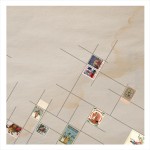
Some records ask to be understood. Others simply ask to be inhabited. Federico Durand's "La Manzana Mágica" belongs decisively to the latter category, unfolding less like a collection of compositions than like a carefully assembled cabinet of forgotten wonders. Inspired by Durand's collection of Cinderella stamps, those unofficial postage labels once dismissed as ephemera but now cherished by collectors, the Argentine composer constructs an album that shares their peculiar charm: modest in appearance, quietly enigmatic, and filled with stories that seem to exist somewhere between documented history and childhood imagination.
For anyone familiar with Durand's work on labels such as 12k, Spekk, Home Normal or Own Records, his aesthetic has always revolved around intimacy rather than spectacle. Over nearly two decades he has become one of the defining voices of lowercase ambient and electroacoustic minimalism, crafting music that often feels handmade in the most literal sense. Tape loops, fragile synthesizers, environmental recordings and tiny melodic gestures have long replaced grand orchestration in his vocabulary. While many artists working in this territory chase increasingly pristine production, Durand continues to embrace imperfections, allowing hiss, mechanical noise and accidental textures to become emotional protagonists rather than technical flaws. In an era obsessed with polishing every surface until it reflects nothing but itself, this remains a quietly radical gesture.
"La Manzana Mágica" may even be one of his most restrained works to date. The instrumentation is deliberately sparse, built from vintage synthesizers, cassette recorders, music boxes, tape echoes and an assortment of wonderfully eccentric devices that seem rescued from forgotten attics rather than music shops. Every sound appears carefully weighed before being allowed into the mix. Nothing shouts for attention. Even silence receives generous room to breathe, becoming an active participant instead of empty space.
The album's relationship with the Cinderella stamps is more than conceptual decoration. Like those tiny printed artifacts, these pieces carry the feeling of anonymous craftsmanship, objects made with care whose original contexts have partially dissolved with time. Tracks named after places, dates, children's tales or obscure references become little postcards arriving from uncertain destinations. One never quite knows whether they document memories, dreams or inventions, and that ambiguity becomes one of the record's greatest pleasures.
Throughout the twelve brief compositions, Durand resists conventional development. Melodies appear like birds briefly landing on a windowsill before disappearing again. Tape manipulation blurs temporal boundaries, making decades feel interchangeable. "God Helg 1920" and the title track seem suspended somewhere between nursery rhyme and distant transmission, while "Hansel y Gretel" transforms familiar folklore into something strangely weightless. "Jul 1948", featuring the voice of Durand's daughter María Luisa, lasts barely more than a minute, yet leaves an emotional residue disproportionate to its duration. It arrives without ceremony and departs before sentimentality has a chance to settle, like hearing children sing somewhere far beyond the garden wall.
One of the album's most touching moments comes with "Jólin 1960", itself a rediscovered recording found among old cassette boxes during a house move. Its inclusion perfectly mirrors the album's central philosophy: forgotten things are not necessarily lost. Sometimes they merely wait patiently until someone remembers where they belong.
There is something almost literary in Durand's approach. His compositions resemble the short stories of writers who trust implication over explanation, allowing tiny details to illuminate entire emotional landscapes. Listening becomes an act of gentle archaeology. Every tape flutter, every fading harmonic and every soft mechanical click feels like brushing dust away from some forgotten object whose value has little to do with rarity and everything to do with affection.
Despite its unmistakably nostalgic atmosphere, "La Manzana Mágica" never indulges in retro fetishism. Durand is not trying to recreate the past, nor to idealise it. Instead, he reminds us that memory itself is an active, imperfect instrument, continuously editing, erasing and inventing. The vintage equipment serves this idea naturally: old synthesizers do not merely imitate history, they carry it within their circuitry.
Humour also hides beneath the record's delicate exterior. There is something delightfully subversive about dedicating an entire album to unofficial stamps, elevating objects once considered second-rate into the source of profound artistic meditation. Humanity has always excelled at creating hierarchies, only to spend decades rediscovering the overlooked treasures sitting quietly beneath them. Cinderella herself would probably approve.
As with the finest releases in the 12k catalogue, "La Manzana Mágica" rewards patience without demanding solemnity. Its beauty emerges gradually, through accumulation rather than revelation. Like opening an old family album whose faces you do not recognise but somehow still feel connected to, the experience becomes strangely personal despite belonging entirely to someone else's memories.
Federico Durand has never been interested in making loud statements. Instead, he continues to prove that the smallest gestures often carry the greatest emotional weight. These miniature sonic stamps may never travel through any postal system, yet they somehow arrive exactly where they are meant to: that quiet place where memory, imagination and everyday wonder continue exchanging letters long after the world has stopped paying attention.
For anyone familiar with Durand's work on labels such as 12k, Spekk, Home Normal or Own Records, his aesthetic has always revolved around intimacy rather than spectacle. Over nearly two decades he has become one of the defining voices of lowercase ambient and electroacoustic minimalism, crafting music that often feels handmade in the most literal sense. Tape loops, fragile synthesizers, environmental recordings and tiny melodic gestures have long replaced grand orchestration in his vocabulary. While many artists working in this territory chase increasingly pristine production, Durand continues to embrace imperfections, allowing hiss, mechanical noise and accidental textures to become emotional protagonists rather than technical flaws. In an era obsessed with polishing every surface until it reflects nothing but itself, this remains a quietly radical gesture.
"La Manzana Mágica" may even be one of his most restrained works to date. The instrumentation is deliberately sparse, built from vintage synthesizers, cassette recorders, music boxes, tape echoes and an assortment of wonderfully eccentric devices that seem rescued from forgotten attics rather than music shops. Every sound appears carefully weighed before being allowed into the mix. Nothing shouts for attention. Even silence receives generous room to breathe, becoming an active participant instead of empty space.
The album's relationship with the Cinderella stamps is more than conceptual decoration. Like those tiny printed artifacts, these pieces carry the feeling of anonymous craftsmanship, objects made with care whose original contexts have partially dissolved with time. Tracks named after places, dates, children's tales or obscure references become little postcards arriving from uncertain destinations. One never quite knows whether they document memories, dreams or inventions, and that ambiguity becomes one of the record's greatest pleasures.
Throughout the twelve brief compositions, Durand resists conventional development. Melodies appear like birds briefly landing on a windowsill before disappearing again. Tape manipulation blurs temporal boundaries, making decades feel interchangeable. "God Helg 1920" and the title track seem suspended somewhere between nursery rhyme and distant transmission, while "Hansel y Gretel" transforms familiar folklore into something strangely weightless. "Jul 1948", featuring the voice of Durand's daughter María Luisa, lasts barely more than a minute, yet leaves an emotional residue disproportionate to its duration. It arrives without ceremony and departs before sentimentality has a chance to settle, like hearing children sing somewhere far beyond the garden wall.
One of the album's most touching moments comes with "Jólin 1960", itself a rediscovered recording found among old cassette boxes during a house move. Its inclusion perfectly mirrors the album's central philosophy: forgotten things are not necessarily lost. Sometimes they merely wait patiently until someone remembers where they belong.
There is something almost literary in Durand's approach. His compositions resemble the short stories of writers who trust implication over explanation, allowing tiny details to illuminate entire emotional landscapes. Listening becomes an act of gentle archaeology. Every tape flutter, every fading harmonic and every soft mechanical click feels like brushing dust away from some forgotten object whose value has little to do with rarity and everything to do with affection.
Despite its unmistakably nostalgic atmosphere, "La Manzana Mágica" never indulges in retro fetishism. Durand is not trying to recreate the past, nor to idealise it. Instead, he reminds us that memory itself is an active, imperfect instrument, continuously editing, erasing and inventing. The vintage equipment serves this idea naturally: old synthesizers do not merely imitate history, they carry it within their circuitry.
Humour also hides beneath the record's delicate exterior. There is something delightfully subversive about dedicating an entire album to unofficial stamps, elevating objects once considered second-rate into the source of profound artistic meditation. Humanity has always excelled at creating hierarchies, only to spend decades rediscovering the overlooked treasures sitting quietly beneath them. Cinderella herself would probably approve.
As with the finest releases in the 12k catalogue, "La Manzana Mágica" rewards patience without demanding solemnity. Its beauty emerges gradually, through accumulation rather than revelation. Like opening an old family album whose faces you do not recognise but somehow still feel connected to, the experience becomes strangely personal despite belonging entirely to someone else's memories.
Federico Durand has never been interested in making loud statements. Instead, he continues to prove that the smallest gestures often carry the greatest emotional weight. These miniature sonic stamps may never travel through any postal system, yet they somehow arrive exactly where they are meant to: that quiet place where memory, imagination and everyday wonder continue exchanging letters long after the world has stopped paying attention.