
Browse by Genre
Industrial Music / Industrial Metal / Aggro Industrial / Electro Metal
Industrial Noise / Power Noise / Harsh Noise
Synth Pop / Electro Pop / Synth-Electronica
Techno / Trance / Goa / Drum'n'Bass / Jungle / Tribal / Trip-Hop
Ambient / Electronica / Ethereal / Dub / Soundscapes / Abstract
Experimental / Avantgarde / Weird & Wired / Glitch / Noise / Field Recording
Dark / Gothic / Wave / New Wave / Dark Wave / Industrial Gothic
New Music / Downtown / Avantgarde Jazz / New Classical / World
Search Reviews
Music Reviews
Extrema Ratio: Vexata Quaestio

Artist: Extrema Ratio (@)
Title: Vexata Quaestio
Format: CD + Download
Label: Wave Guardian Records (@)
Rated:

Title: Vexata Quaestio
Format: CD + Download
Label: Wave Guardian Records (@)
Rated:
There are albums that flirt with rebellion, and then there are albums that treat it like a full-time occupation, with no holidays and very poor working conditions. "Vexata Quaestio" by Extrema Ratio clearly belongs to the second category. It doesn’t perform dissent. It metabolizes it, chews it into something abrasive and spits it back with interest.
The title itself hints at an unresolved problem, something historically debated and never settled. The band, a quartet from the Canavese area orbiting Ivrea, doesn’t attempt to solve anything. That would be far too polite. Instead, they stage conflict as a method, drawing from a lineage where Sun Ra’s “organized freedom” collides head-on with the industrial abrasion of Einstürzende Neubauten and the feral urgency of Peter Brötzmann. If that sounds exhausting, it is. Intentionally.
Opening track “die litanie des g.b.” drags the specter of Viennese Actionism into the room, specifically Günter Brus, not as historical reference but as vocal possession. The piece feels less like music and more like a ritual conducted in a language that resents being understood. The comparison to early Neubauten isn’t accidental, but this isn’t homage. It’s closer to an autopsy performed with industrial tools.
“Bitter Absinthe”, featuring Marina Andreeva, spirals into a dub-inflected hallucination where post-punk austerity is refracted through Soviet grayscale. The ghost of It's Hard to Be a God lingers in the background, not visually but atmospherically, as if the track itself had been dragged through mud and memory. The use of Marina Tsvetaeva’s final words doesn’t elevate the piece. It destabilizes it, stripping away any safe distance between listener and subject.
With “La recherche d’un impossible,” the band briefly assembles something resembling a groove, thanks in part to Michele Anelli. It doesn’t last. The structure feels like it’s constantly negotiating its own collapse, while the influence of Georges Bataille seeps in as a philosophical infection rather than a literary citation. The result is a tension between propulsion and disintegration that never quite resolves, which seems to be the point.
“The Anatomy of Cruelty” dives into the writings of Antonin Artaud with the subtlety of a controlled explosion. This is not theatrical in any conventional sense. It’s more like the idea of theater after it has been dismantled and repurposed as a weapon. The voice here doesn’t express. It erupts.
“Revolt” is, predictably, not subtle. But it avoids cliché by refusing to organize its anger into anything digestible. Rhythms fracture, metallic textures corrode, and the entire track limps forward like a machine that has decided to keep functioning out of spite.
“Von Protest zum Widerstand”, with Alex Spalck, channels the words of Ulrike Meinhof through interference and obstruction. The piece feels like a transmission constantly on the verge of being cut off, which, given the source material, is less an aesthetic choice and more an ethical one.
Closing track “The Anatomy of Affliction” expands into a two-part structure that brushes against the shadows of Karlheinz Stockhausen and Luigi Nono without settling into academic reverence. The first section dissects, the second descends. Somewhere in between, the idea of catharsis is proposed and then quietly sabotaged.
What holds "Vexata Quaestio" together is not cohesion in any traditional sense, but a relentless commitment to tension. The band’s non-idiomatic approach, filtered through members like xlaidox on voice and trumpet, Alessandro Cartolari on baritone sax, Diego Rosso on drums, and Pier Rot Rosso on electronics, results in a sound that feels perpetually on edge, as if stability were a moral failure.
Released by Wave Guardian Records, the album continues the trajectory set by their debut "A Dangerous Method", but with less interest in defining a sound and more interest in dismantling it.
Majakovskij’s words hover over the entire record like a warning rather than a manifesto. Art as a hammer, not a mirror. It’s a nice slogan until you actually hear what that implies. "Vexata Quaestio" doesn’t just tap at the surface. It swings, repeatedly, without checking what’s left standing.
It’s not pleasant. It’s not supposed to be. And if it occasionally feels like too much, that probably says more about the listener than the music, which remains stubbornly, almost admirably, unconcerned.
The title itself hints at an unresolved problem, something historically debated and never settled. The band, a quartet from the Canavese area orbiting Ivrea, doesn’t attempt to solve anything. That would be far too polite. Instead, they stage conflict as a method, drawing from a lineage where Sun Ra’s “organized freedom” collides head-on with the industrial abrasion of Einstürzende Neubauten and the feral urgency of Peter Brötzmann. If that sounds exhausting, it is. Intentionally.
Opening track “die litanie des g.b.” drags the specter of Viennese Actionism into the room, specifically Günter Brus, not as historical reference but as vocal possession. The piece feels less like music and more like a ritual conducted in a language that resents being understood. The comparison to early Neubauten isn’t accidental, but this isn’t homage. It’s closer to an autopsy performed with industrial tools.
“Bitter Absinthe”, featuring Marina Andreeva, spirals into a dub-inflected hallucination where post-punk austerity is refracted through Soviet grayscale. The ghost of It's Hard to Be a God lingers in the background, not visually but atmospherically, as if the track itself had been dragged through mud and memory. The use of Marina Tsvetaeva’s final words doesn’t elevate the piece. It destabilizes it, stripping away any safe distance between listener and subject.
With “La recherche d’un impossible,” the band briefly assembles something resembling a groove, thanks in part to Michele Anelli. It doesn’t last. The structure feels like it’s constantly negotiating its own collapse, while the influence of Georges Bataille seeps in as a philosophical infection rather than a literary citation. The result is a tension between propulsion and disintegration that never quite resolves, which seems to be the point.
“The Anatomy of Cruelty” dives into the writings of Antonin Artaud with the subtlety of a controlled explosion. This is not theatrical in any conventional sense. It’s more like the idea of theater after it has been dismantled and repurposed as a weapon. The voice here doesn’t express. It erupts.
“Revolt” is, predictably, not subtle. But it avoids cliché by refusing to organize its anger into anything digestible. Rhythms fracture, metallic textures corrode, and the entire track limps forward like a machine that has decided to keep functioning out of spite.
“Von Protest zum Widerstand”, with Alex Spalck, channels the words of Ulrike Meinhof through interference and obstruction. The piece feels like a transmission constantly on the verge of being cut off, which, given the source material, is less an aesthetic choice and more an ethical one.
Closing track “The Anatomy of Affliction” expands into a two-part structure that brushes against the shadows of Karlheinz Stockhausen and Luigi Nono without settling into academic reverence. The first section dissects, the second descends. Somewhere in between, the idea of catharsis is proposed and then quietly sabotaged.
What holds "Vexata Quaestio" together is not cohesion in any traditional sense, but a relentless commitment to tension. The band’s non-idiomatic approach, filtered through members like xlaidox on voice and trumpet, Alessandro Cartolari on baritone sax, Diego Rosso on drums, and Pier Rot Rosso on electronics, results in a sound that feels perpetually on edge, as if stability were a moral failure.
Released by Wave Guardian Records, the album continues the trajectory set by their debut "A Dangerous Method", but with less interest in defining a sound and more interest in dismantling it.
Majakovskij’s words hover over the entire record like a warning rather than a manifesto. Art as a hammer, not a mirror. It’s a nice slogan until you actually hear what that implies. "Vexata Quaestio" doesn’t just tap at the surface. It swings, repeatedly, without checking what’s left standing.
It’s not pleasant. It’s not supposed to be. And if it occasionally feels like too much, that probably says more about the listener than the music, which remains stubbornly, almost admirably, unconcerned.
Joe Harvey-Whyte & Geir Sundstøl: Langeleik


Some records ask for your attention. Others quietly remove it from circulation. "Langeleik" belongs to the second category, the kind that doesn’t beg but waits, watching you fidget until your need for constant stimulation starts to feel a little embarrassing.
The meeting between Joe Harvey-Whyte and Geir Sundstøl begins with an instrument that usually carries a heavy suitcase of associations: dust, Americana, emotional déjà vu. Here, the pedal steel is stripped of its usual narrative and set adrift. It doesn’t mourn, it hovers. It doesn’t resolve, it seeps.
Their origin story has that suspiciously organic charm: a chance discovery, a message sent across curiosity, years of slow correspondence, then five days in an Oslo studio that somehow crystallize into a full-length record. Five days, which in contemporary production terms sounds either reckless or liberating, depending on how much you trust accidents. "Langeleik" makes a quiet case for the latter. Nothing feels overworked; everything feels allowed.
The tracks move like waterways that insist on their names while refusing fixed identities. “Tana” and “Otra Mantra” open with a kind of suspended patience, not calm exactly, more like a held breath that never quite resolves into release. “Lea Dub” subtly bends geography, threading East London into a landscape that now speaks in glacial tones. Melodies appear only to dissolve as soon as you notice them, as if the music distrusts permanence.
The emotional fault line runs through “Rørvikelva”, where the voice of Ivar Orvedal emerges like something recovered rather than composed. His spoken word doesn’t anchor the piece; it destabilizes it in the best possible way, reframing the track as something unfinished, or perhaps something that refuses to be finished at all.
Around them, a discreet constellation of collaborators - Erland Dahlen, Jo Berger Myhre, Anders Engen - contribute without ever breaking the fragile equilibrium. No one pushes forward. No one insists. In a musical landscape addicted to presence, this kind of restraint feels almost radical.
The instrumentation, from Optigan to Moog to aging amplifiers, avoids the usual vintage fetishism. These are not nostalgic props but living, slightly unreliable bodies. They hum, they waver, they remind you that sound is a physical event with edges and decay. It’s an oddly refreshing stance in an era obsessed with frictionless perfection.
There’s also a quietly amusing undertone to the whole project: two musicians deciding to plan nothing and somehow managing to avoid producing an unstructured mess. It turns out that deep listening, that unfashionable skill, still has practical applications.
Released by Hubro, a label that has refined a particular sensitivity to Nordic sonic landscapes without turning them into aesthetic clichés, "Langeleik" sidesteps both ambient wallpaper and pastoral sentimentality. It feels closer to a weather log than an album, a record of shifting pressures and invisible currents.
This is not a record that gives. It subtracts. It removes urgency, expectation, the quiet panic of needing something to happen. For some listeners, that will register as absence. For others, it might resemble relief.
Listen casually and it evaporates. Listen properly and it does something mildly inconvenient: it slows you down. At which point the discomfort is no longer the music’s problem.
The meeting between Joe Harvey-Whyte and Geir Sundstøl begins with an instrument that usually carries a heavy suitcase of associations: dust, Americana, emotional déjà vu. Here, the pedal steel is stripped of its usual narrative and set adrift. It doesn’t mourn, it hovers. It doesn’t resolve, it seeps.
Their origin story has that suspiciously organic charm: a chance discovery, a message sent across curiosity, years of slow correspondence, then five days in an Oslo studio that somehow crystallize into a full-length record. Five days, which in contemporary production terms sounds either reckless or liberating, depending on how much you trust accidents. "Langeleik" makes a quiet case for the latter. Nothing feels overworked; everything feels allowed.
The tracks move like waterways that insist on their names while refusing fixed identities. “Tana” and “Otra Mantra” open with a kind of suspended patience, not calm exactly, more like a held breath that never quite resolves into release. “Lea Dub” subtly bends geography, threading East London into a landscape that now speaks in glacial tones. Melodies appear only to dissolve as soon as you notice them, as if the music distrusts permanence.
The emotional fault line runs through “Rørvikelva”, where the voice of Ivar Orvedal emerges like something recovered rather than composed. His spoken word doesn’t anchor the piece; it destabilizes it in the best possible way, reframing the track as something unfinished, or perhaps something that refuses to be finished at all.
Around them, a discreet constellation of collaborators - Erland Dahlen, Jo Berger Myhre, Anders Engen - contribute without ever breaking the fragile equilibrium. No one pushes forward. No one insists. In a musical landscape addicted to presence, this kind of restraint feels almost radical.
The instrumentation, from Optigan to Moog to aging amplifiers, avoids the usual vintage fetishism. These are not nostalgic props but living, slightly unreliable bodies. They hum, they waver, they remind you that sound is a physical event with edges and decay. It’s an oddly refreshing stance in an era obsessed with frictionless perfection.
There’s also a quietly amusing undertone to the whole project: two musicians deciding to plan nothing and somehow managing to avoid producing an unstructured mess. It turns out that deep listening, that unfashionable skill, still has practical applications.
Released by Hubro, a label that has refined a particular sensitivity to Nordic sonic landscapes without turning them into aesthetic clichés, "Langeleik" sidesteps both ambient wallpaper and pastoral sentimentality. It feels closer to a weather log than an album, a record of shifting pressures and invisible currents.
This is not a record that gives. It subtracts. It removes urgency, expectation, the quiet panic of needing something to happen. For some listeners, that will register as absence. For others, it might resemble relief.
Listen casually and it evaporates. Listen properly and it does something mildly inconvenient: it slows you down. At which point the discomfort is no longer the music’s problem.
Beatryz Ferreira: Huellas Entreveradas
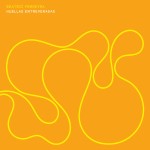
Artist: Beatryz Ferreira
Title: Huellas Entreveradas
Format: CD + Download
Label: Persistence of Sound (@)
Rated:
Title: Huellas Entreveradas
Format: CD + Download
Label: Persistence of Sound (@)
Rated:
Some artists age into refinement. Others into irrelevance. Beatriz Ferreyra seems to have taken a less convenient route: she just kept listening more closely than everyone else.
"Huellas Entreveradas" feels less like a release and more like a quiet assertion that the old laboratory of sound - tape, fragments, accidents, patience - never really closed. It just became unfashionable for a while, which is not the same thing. Ferreyra, who passed through the orbit of Pierre Schaeffer and the Groupe de Recherches Musicales in the 1960s, belongs to that rare lineage of composers who treat sound not as material to be arranged, but as something to be interrogated, coaxed, occasionally tricked into revealing its inner life.
The three pieces collected here span decades, but time behaves strangely inside them. The title work, "Huellas Entreveradas", unfolds like a cartography of memory that refuses to stabilize. Voices, percussive traces, and flickers of flute don’t so much move through space as destabilize it. You think you’re following a path, then the path dissolves, then it reappears behind you, slightly altered, as if your own listening had already contaminated it. Comparisons to Iannis Xenakis or Karlheinz Stockhausen are inevitable, but also slightly beside the point. Where they often impose structure like architecture, Ferreyra lets it emerge like weather.
Then, without warning, "La Baballe du Chien-Chien" arrives and quietly dismantles any expectation of severity. A piece dedicated, with disarming sincerity, to dogs and grandmothers should by all rights collapse into whimsy. Instead, it becomes something stranger: a study in play that takes play seriously. Sonic gestures bounce, collide, disappear, return in altered forms, like a game whose rules are never explained but somehow understood. There’s humor here, but it’s not decorative. It’s structural. You begin to suspect that curiosity, not rigor, might be the real discipline.
The closing miniature, "Deux Dents Dehors", is almost mischievous in its brevity. A nod to Bernard Parmegiani, it feels like a compressed conversation between generations: affectionate, slightly irreverent, and entirely unconcerned with monumentality. Four minutes, no grand statement, just a quick flash of teeth.
What makes this album quietly radical is not its adherence to musique concrète techniques, but its refusal to treat them as heritage. There is no sense of preservation here, no curatorial anxiety. Ferreyra doesn’t honor the tradition; she inhabits it, reshapes it, occasionally pokes fun at it. The sounds remain tactile, almost stubbornly physical, even when they drift into abstraction. You hear surfaces, frictions, tiny collisions that feel improbably alive.
In a contemporary landscape where experimental music often arrives wrapped in theory, branding, or carefully managed obscurity, "Huellas Entreveradas" does something more unsettling: it trusts listening itself. No instructions, no conceptual safety net. Just the faint suspicion that, if you pay attention long enough, the sounds might begin to recognize you back.
Not a comfortable idea, but then again, neither is memory.
"Huellas Entreveradas" feels less like a release and more like a quiet assertion that the old laboratory of sound - tape, fragments, accidents, patience - never really closed. It just became unfashionable for a while, which is not the same thing. Ferreyra, who passed through the orbit of Pierre Schaeffer and the Groupe de Recherches Musicales in the 1960s, belongs to that rare lineage of composers who treat sound not as material to be arranged, but as something to be interrogated, coaxed, occasionally tricked into revealing its inner life.
The three pieces collected here span decades, but time behaves strangely inside them. The title work, "Huellas Entreveradas", unfolds like a cartography of memory that refuses to stabilize. Voices, percussive traces, and flickers of flute don’t so much move through space as destabilize it. You think you’re following a path, then the path dissolves, then it reappears behind you, slightly altered, as if your own listening had already contaminated it. Comparisons to Iannis Xenakis or Karlheinz Stockhausen are inevitable, but also slightly beside the point. Where they often impose structure like architecture, Ferreyra lets it emerge like weather.
Then, without warning, "La Baballe du Chien-Chien" arrives and quietly dismantles any expectation of severity. A piece dedicated, with disarming sincerity, to dogs and grandmothers should by all rights collapse into whimsy. Instead, it becomes something stranger: a study in play that takes play seriously. Sonic gestures bounce, collide, disappear, return in altered forms, like a game whose rules are never explained but somehow understood. There’s humor here, but it’s not decorative. It’s structural. You begin to suspect that curiosity, not rigor, might be the real discipline.
The closing miniature, "Deux Dents Dehors", is almost mischievous in its brevity. A nod to Bernard Parmegiani, it feels like a compressed conversation between generations: affectionate, slightly irreverent, and entirely unconcerned with monumentality. Four minutes, no grand statement, just a quick flash of teeth.
What makes this album quietly radical is not its adherence to musique concrète techniques, but its refusal to treat them as heritage. There is no sense of preservation here, no curatorial anxiety. Ferreyra doesn’t honor the tradition; she inhabits it, reshapes it, occasionally pokes fun at it. The sounds remain tactile, almost stubbornly physical, even when they drift into abstraction. You hear surfaces, frictions, tiny collisions that feel improbably alive.
In a contemporary landscape where experimental music often arrives wrapped in theory, branding, or carefully managed obscurity, "Huellas Entreveradas" does something more unsettling: it trusts listening itself. No instructions, no conceptual safety net. Just the faint suspicion that, if you pay attention long enough, the sounds might begin to recognize you back.
Not a comfortable idea, but then again, neither is memory.
Hana Korneti: Demos, Late Spring 2024

Artist: Hana Korneti
Title: Demos, Late Spring 2024
Format: Download Only (MP3 + Lossless)
Label: Thanatosis Produktion (@)
Rated:
Title: Demos, Late Spring 2024
Format: Download Only (MP3 + Lossless)
Label: Thanatosis Produktion (@)
Rated:
There’s something almost suspicious about records that call themselves demos. As if they’re apologizing in advance, lowering expectations, asking you to forgive the rough edges before you’ve even heard them. Demos, Late Spring 2024 does the opposite: it quietly insists that the unfinished might actually be the point.
Hana Korneti comes from that rare category of artists who don’t treat disciplines as separate territories. Writer, musician, observer of small ecological dramas (plants that thrive or fail, like minor tragedies in slow motion), she approaches sound with the same attention she gives language: minimal, precise, and slightly allergic to excess. You can feel that here. Nothing is decorative. Even the silence seems edited.
These three pieces, recorded on a phone and later softened through tape, carry a fragile kind of authority. Not the polished confidence of a finished statement, but the stubborn clarity of something that didn’t wait to be perfected. Piano and ukulele drift out of tune like they’re testing the limits of agreement. The voice arrives late, lingers too long, disappears when it feels like it. Background noises - doors, distant traffic - aren’t intrusions; they’re witnesses. The world leaks in, and no one bothers to clean it up.
The lyrics - shared alongside the release - offer a key that is both helpful and slightly misleading, because they read with a clarity that the music itself keeps dissolving. In “Fern Flower”, she writes: “Come under my skin, I’ll carry you as long as I can, until the pain grows bigger than you… I’ll send you flowers, I’ll create whole new worlds for you, until I lose myself… in those vivid eyes that swallow me, until I become the fern flower”. It’s devotion turning slowly into disappearance, tenderness edging toward self-erasure.
“This Song is Not a Song” states its premise bluntly: “This is not a song, this is the cry of a wild beast living in an abyss without a single star… it travels through tunnels of fire, and if it reaches the surface, it will flood the world with light”. There’s something almost mythic here, but stripped of grandeur - more instinct than allegory, more urgency than structure. The closing thought - “maybe it only needs calm water to soothe it” - lands like a quiet, almost embarrassed hope.
And then “Dust”, which reduces everything to residue: “A valley carved in the chest, deep as a memory’s gaze… a desert polished in the mind… I drift and drift and drift, yet what remains is dust”. No resolution, no transformation - just persistence in another form.
Musically, these texts are never fully “performed”. They hover, fragment, dissolve into tone and breath. “Fern Flower” unfolds like a small act of devotion already aware of its own expiration date, while “This Song is Not a Song” behaves more like an emotional flare than a composition. “Dust”, meanwhile, doesn’t conclude so much as fade into a fine layer of presence you can’t quite shake off.
The quiet humor of this release - if you’re willing to look for it - lies in its refusal to perform importance. Three short tracks, lo-fi, slightly unstable, and yet more emotionally precise than many full-length albums that spent years polishing themselves into irrelevance. Korneti follows a simple rule: if there’s nothing to say, don’t speak. The unsettling implication is that, when she does speak, you should probably listen.
What Demos, Late Spring 2024 captures is not a phase, but a threshold. A moment where expression is still negotiating its own form, where imperfection isn’t a flaw but a condition of honesty. It doesn’t ask for attention. It earns it, quietly, and then leaves before you can decide whether you were ready.
Hana Korneti comes from that rare category of artists who don’t treat disciplines as separate territories. Writer, musician, observer of small ecological dramas (plants that thrive or fail, like minor tragedies in slow motion), she approaches sound with the same attention she gives language: minimal, precise, and slightly allergic to excess. You can feel that here. Nothing is decorative. Even the silence seems edited.
These three pieces, recorded on a phone and later softened through tape, carry a fragile kind of authority. Not the polished confidence of a finished statement, but the stubborn clarity of something that didn’t wait to be perfected. Piano and ukulele drift out of tune like they’re testing the limits of agreement. The voice arrives late, lingers too long, disappears when it feels like it. Background noises - doors, distant traffic - aren’t intrusions; they’re witnesses. The world leaks in, and no one bothers to clean it up.
The lyrics - shared alongside the release - offer a key that is both helpful and slightly misleading, because they read with a clarity that the music itself keeps dissolving. In “Fern Flower”, she writes: “Come under my skin, I’ll carry you as long as I can, until the pain grows bigger than you… I’ll send you flowers, I’ll create whole new worlds for you, until I lose myself… in those vivid eyes that swallow me, until I become the fern flower”. It’s devotion turning slowly into disappearance, tenderness edging toward self-erasure.
“This Song is Not a Song” states its premise bluntly: “This is not a song, this is the cry of a wild beast living in an abyss without a single star… it travels through tunnels of fire, and if it reaches the surface, it will flood the world with light”. There’s something almost mythic here, but stripped of grandeur - more instinct than allegory, more urgency than structure. The closing thought - “maybe it only needs calm water to soothe it” - lands like a quiet, almost embarrassed hope.
And then “Dust”, which reduces everything to residue: “A valley carved in the chest, deep as a memory’s gaze… a desert polished in the mind… I drift and drift and drift, yet what remains is dust”. No resolution, no transformation - just persistence in another form.
Musically, these texts are never fully “performed”. They hover, fragment, dissolve into tone and breath. “Fern Flower” unfolds like a small act of devotion already aware of its own expiration date, while “This Song is Not a Song” behaves more like an emotional flare than a composition. “Dust”, meanwhile, doesn’t conclude so much as fade into a fine layer of presence you can’t quite shake off.
The quiet humor of this release - if you’re willing to look for it - lies in its refusal to perform importance. Three short tracks, lo-fi, slightly unstable, and yet more emotionally precise than many full-length albums that spent years polishing themselves into irrelevance. Korneti follows a simple rule: if there’s nothing to say, don’t speak. The unsettling implication is that, when she does speak, you should probably listen.
What Demos, Late Spring 2024 captures is not a phase, but a threshold. A moment where expression is still negotiating its own form, where imperfection isn’t a flaw but a condition of honesty. It doesn’t ask for attention. It earns it, quietly, and then leaves before you can decide whether you were ready.
Grober Unfug: Beat & Glück

There’s something mildly tragic, and therefore very human, in the idea of trying to archive joy. Not the Instagram kind, obviously, but the sweaty, slightly out-of-tune, beer-stained version that happens in basements and youth centers, where the ceiling is low and expectations are even lower. Beat & Glück by Grober Unfug arrives decades later as proof that happiness, once distorted through cheap amplifiers, doesn’t age gracefully - it ferments.
Formed in Hamburg’s Niendorf district in 1980, Grober Unfug belonged to that pre-canon moment of German punk where everything still felt provisional, almost accidental. Six friends, minimal technique, maximum velocity. They didn’t invent anything, which is precisely why they mattered. Their sound - somewhere between punk’s blunt force and rock’n’roll’s muscle memory - was less about innovation and more about impact. Songs like “OpelkapitÄn” or “Saubermann” don’t try to impress; they just show up, kick the door, and leave before anyone can ask questions.
The reissue of Beat & Glück quietly complicates the neat mythology of “fun punk” in Germany. History, as usual, picked cleaner narratives - Die Toten Hosen, Die Ärzte - bands that refined the formula, made it portable, marketable, exportable. Grober Unfug, instead, remained gloriously local, a kind of scene gravity that pulled others in without ever fully escaping its own orbit. The anecdote about Düsseldorf musicians traveling to Hamburg just to see them live feels less like legend and more like quiet confirmation: influence doesn’t always translate into legacy. Sometimes it just evaporates into other people’s success.
Musically, the album is almost aggressively straightforward. No conceptual scaffolding, no hidden architecture. Just riffs, hooks, and a rhythm section that behaves like it’s permanently late for something. And yet, beneath that apparent simplicity, there’s a peculiar intelligence at work - a sense of timing, of when to push and when to collapse into chaos. Humor plays a central role, but it’s not the smug, postmodern wink that would dominate later decades. It’s closer to a survival tactic, a way to keep things moving when meaning starts to thin out.
The inclusion of the 1981 singles and that delirious football chant - celebrating Hamburger SV’s improbable 4–3 comeback - only reinforces the album’s accidental documentary value. This isn’t just music; it’s a snapshot of a moment when subculture, sport, and cheap beer briefly aligned into something resembling collective euphoria. You can almost hear the room vibrating, not from sonic precision but from bodies packed too close together.
What’s striking, listening now, is how little of this feels nostalgic in the conventional sense. There’s no polished myth-making here, no attempt to retrofit importance. If anything, Beat & Glück resists being remembered properly. It’s too messy, too immediate, too uninterested in permanence. Which, ironically, is exactly what gives it weight now.
In a cultural landscape that endlessly recycles its own past with surgical precision, Grober Unfug sound like a glitch - an unplanned, unrepeatable event. Not quite a lost masterpiece, not quite a footnote. More like a loud, fleeting argument against the idea that everything needs to last.
And maybe that’s the closest thing to happiness this record offers: not a state, but a burst. Brief, imperfect, and already disappearing while you’re still trying to name it.
Formed in Hamburg’s Niendorf district in 1980, Grober Unfug belonged to that pre-canon moment of German punk where everything still felt provisional, almost accidental. Six friends, minimal technique, maximum velocity. They didn’t invent anything, which is precisely why they mattered. Their sound - somewhere between punk’s blunt force and rock’n’roll’s muscle memory - was less about innovation and more about impact. Songs like “OpelkapitÄn” or “Saubermann” don’t try to impress; they just show up, kick the door, and leave before anyone can ask questions.
The reissue of Beat & Glück quietly complicates the neat mythology of “fun punk” in Germany. History, as usual, picked cleaner narratives - Die Toten Hosen, Die Ärzte - bands that refined the formula, made it portable, marketable, exportable. Grober Unfug, instead, remained gloriously local, a kind of scene gravity that pulled others in without ever fully escaping its own orbit. The anecdote about Düsseldorf musicians traveling to Hamburg just to see them live feels less like legend and more like quiet confirmation: influence doesn’t always translate into legacy. Sometimes it just evaporates into other people’s success.
Musically, the album is almost aggressively straightforward. No conceptual scaffolding, no hidden architecture. Just riffs, hooks, and a rhythm section that behaves like it’s permanently late for something. And yet, beneath that apparent simplicity, there’s a peculiar intelligence at work - a sense of timing, of when to push and when to collapse into chaos. Humor plays a central role, but it’s not the smug, postmodern wink that would dominate later decades. It’s closer to a survival tactic, a way to keep things moving when meaning starts to thin out.
The inclusion of the 1981 singles and that delirious football chant - celebrating Hamburger SV’s improbable 4–3 comeback - only reinforces the album’s accidental documentary value. This isn’t just music; it’s a snapshot of a moment when subculture, sport, and cheap beer briefly aligned into something resembling collective euphoria. You can almost hear the room vibrating, not from sonic precision but from bodies packed too close together.
What’s striking, listening now, is how little of this feels nostalgic in the conventional sense. There’s no polished myth-making here, no attempt to retrofit importance. If anything, Beat & Glück resists being remembered properly. It’s too messy, too immediate, too uninterested in permanence. Which, ironically, is exactly what gives it weight now.
In a cultural landscape that endlessly recycles its own past with surgical precision, Grober Unfug sound like a glitch - an unplanned, unrepeatable event. Not quite a lost masterpiece, not quite a footnote. More like a loud, fleeting argument against the idea that everything needs to last.
And maybe that’s the closest thing to happiness this record offers: not a state, but a burst. Brief, imperfect, and already disappearing while you’re still trying to name it.