
Browse by Genre
Industrial Music / Industrial Metal / Aggro Industrial / Electro Metal
Industrial Noise / Power Noise / Harsh Noise
Synth Pop / Electro Pop / Synth-Electronica
Techno / Trance / Goa / Drum'n'Bass / Jungle / Tribal / Trip-Hop
Ambient / Electronica / Ethereal / Dub / Soundscapes / Abstract
Experimental / Avantgarde / Weird & Wired / Glitch / Noise / Field Recording
Dark / Gothic / Wave / New Wave / Dark Wave / Industrial Gothic
New Music / Downtown / Avantgarde Jazz / New Classical / World
Search Reviews
Music Reviews
Jorge SolÃs Arenazas: Displacements
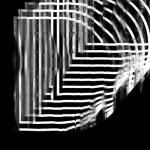
Artist: Jorge SolÃs Arenazas (@)
Title: Displacements
Format: Download Only (MP3 + Lossless)
Label: Line (@)
Rated:

Title: Displacements
Format: Download Only (MP3 + Lossless)
Label: Line (@)
Rated:
Debut albums are usually eager things. They try to explain themselves, justify their existence, maybe even win you over. "Displacements" doesn’t bother. It behaves more like a system already in motion before you arrived, and frankly, it’s not going to stop just because you pressed play.
Jorge Solís Arenazas comes to this first full-length release not as a newcomer, but as someone who has already spent years circling the problem of sound from multiple angles: composition, writing, radio, installation. You can hear that background immediately. This is not “music” in the conventional sense. It’s closer to a set of conditions under which listening becomes unstable, slightly unreliable, occasionally even suspicious of itself.
The conceptual backbone is almost annoyingly rigorous. Language, chaos, discrete systems, the way structure emerges from accident. All the things that make normal people slowly back away from the room. Yet what’s interesting is how little of that theory feels imposed. Instead, it seeps into the material, shaping it from within rather than sitting on top like a polite academic hat.
The album is organized as a kind of vertical journey, which sounds grand until you realize it mostly involves frequencies doing things your ears aren’t entirely comfortable with. “Anabasis I” opens in the upper register, built from feedback systems that feel less like instruments and more like negotiations. High frequencies flicker, stretch, threaten to disappear. It’s not aggressive, but it is insistent, like a mosquito that studied philosophy.
Then comes “Catabasis”, the descent. Brownian noise, low-end rumble, a slow gravitational pull into density. If the first piece destabilizes your sense of orientation, this one removes the ground altogether. There’s a peculiar beauty in how it accumulates weight without ever becoming static. It breathes, but heavily, like something that has learned respiration from a manual written in another language.
“Eschatia” sits in between, and predictably refuses to behave like a simple midpoint. It feels more like a border crossing where nobody checks your documents but everything still feels vaguely illicit. Synth layers drift in and out, residues of rhythm appear and dissolve, and for a brief moment you might think you’ve found something resembling form. That illusion doesn’t last. It was never meant to.
By the time “Anabasis II” arrives, the ascent has changed character. It’s not a repetition but a memory of the first movement, altered by everything that happened in between. The feedback is more fractured, less innocent. If the opening suggested exploration, this closing section feels like returning to a place that no longer exists in the same way.
What makes "Displacements" quietly compelling is its refusal to dramatize any of this. There are no climaxes, no gestures designed to reassure you that something “important” just happened. Instead, the album trusts accumulation, micro-variation, the slow imprint of sound on memory. It’s almost irritatingly patient. You keep waiting for a revelation, and it keeps offering you… process.
Which, to be fair, is the point.
The mastering by Rafael Anton Irisarri deserves a brief, reluctant nod. There’s a clarity here that prevents the material from collapsing into indistinct noise. Every frequency band feels intentional, even when it’s actively resisting your attempt to make sense of it.
Released on LINE, a label that has built an entire aesthetic out of restraint and microscopic attention, "Displacements" fits almost too well. It shares that familiar LINE quality of being simultaneously precise and elusive, like a diagram that keeps erasing itself while you study it.
There’s also something unexpectedly human beneath all this abstraction. The dedication to his brother, the long gestation of the material, the years of thinking and rethinking these structures. For all its talk of systems and randomness, the album is ultimately about attention. About how we listen, how we remember, how we impose meaning on things that don’t particularly care whether we understand them.
Not exactly background music. More like foreground uncertainty.
You won’t come out of it with answers. But you might start noticing how fragile your questions were to begin with, which is either enlightening or deeply inconvenient, depending on your tolerance for ambiguity.
Jorge Solís Arenazas comes to this first full-length release not as a newcomer, but as someone who has already spent years circling the problem of sound from multiple angles: composition, writing, radio, installation. You can hear that background immediately. This is not “music” in the conventional sense. It’s closer to a set of conditions under which listening becomes unstable, slightly unreliable, occasionally even suspicious of itself.
The conceptual backbone is almost annoyingly rigorous. Language, chaos, discrete systems, the way structure emerges from accident. All the things that make normal people slowly back away from the room. Yet what’s interesting is how little of that theory feels imposed. Instead, it seeps into the material, shaping it from within rather than sitting on top like a polite academic hat.
The album is organized as a kind of vertical journey, which sounds grand until you realize it mostly involves frequencies doing things your ears aren’t entirely comfortable with. “Anabasis I” opens in the upper register, built from feedback systems that feel less like instruments and more like negotiations. High frequencies flicker, stretch, threaten to disappear. It’s not aggressive, but it is insistent, like a mosquito that studied philosophy.
Then comes “Catabasis”, the descent. Brownian noise, low-end rumble, a slow gravitational pull into density. If the first piece destabilizes your sense of orientation, this one removes the ground altogether. There’s a peculiar beauty in how it accumulates weight without ever becoming static. It breathes, but heavily, like something that has learned respiration from a manual written in another language.
“Eschatia” sits in between, and predictably refuses to behave like a simple midpoint. It feels more like a border crossing where nobody checks your documents but everything still feels vaguely illicit. Synth layers drift in and out, residues of rhythm appear and dissolve, and for a brief moment you might think you’ve found something resembling form. That illusion doesn’t last. It was never meant to.
By the time “Anabasis II” arrives, the ascent has changed character. It’s not a repetition but a memory of the first movement, altered by everything that happened in between. The feedback is more fractured, less innocent. If the opening suggested exploration, this closing section feels like returning to a place that no longer exists in the same way.
What makes "Displacements" quietly compelling is its refusal to dramatize any of this. There are no climaxes, no gestures designed to reassure you that something “important” just happened. Instead, the album trusts accumulation, micro-variation, the slow imprint of sound on memory. It’s almost irritatingly patient. You keep waiting for a revelation, and it keeps offering you… process.
Which, to be fair, is the point.
The mastering by Rafael Anton Irisarri deserves a brief, reluctant nod. There’s a clarity here that prevents the material from collapsing into indistinct noise. Every frequency band feels intentional, even when it’s actively resisting your attempt to make sense of it.
Released on LINE, a label that has built an entire aesthetic out of restraint and microscopic attention, "Displacements" fits almost too well. It shares that familiar LINE quality of being simultaneously precise and elusive, like a diagram that keeps erasing itself while you study it.
There’s also something unexpectedly human beneath all this abstraction. The dedication to his brother, the long gestation of the material, the years of thinking and rethinking these structures. For all its talk of systems and randomness, the album is ultimately about attention. About how we listen, how we remember, how we impose meaning on things that don’t particularly care whether we understand them.
Not exactly background music. More like foreground uncertainty.
You won’t come out of it with answers. But you might start noticing how fragile your questions were to begin with, which is either enlightening or deeply inconvenient, depending on your tolerance for ambiguity.
Magda Drozd: Divided By Dusk
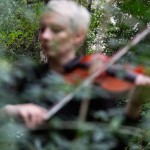
Artist: Magda Drozd (@)
Title: Divided By Dusk
Format: Tape + Download
Label: Präsens Editionen (@)
Rated:
Title: Divided By Dusk
Format: Tape + Download
Label: Präsens Editionen (@)
Rated:
Some records want to be heard. Others prefer to hover, like a presence you’re not entirely sure you imagined. "Divided By Dusk" belongs firmly to the second category, which is either admirable restraint or a polite refusal to entertain you. Depends how much patience you brought with you.
Magda Drozd has been circling this territory for a while now. From "Songs for Plants" through "Viscera", she’s built a language that avoids obvious gestures, as if melody itself were a risky commitment. A Warsaw-born composer now splitting her life between Zürich and London, she operates in that well-populated but still oddly intimate zone where sound art, folk memory, and electroacoustic composition overlap like half-erased maps. Here, though, the maps feel older, less reliable, and deliberately smudged.
The album unfolds in that suspiciously poetic time of day everyone romanticizes and nobody actually wants to navigate without a flashlight. “Eclipse” sets the tone with a kind of suspended duality, not so much light versus dark as both failing at the same time. It’s less a beginning than a soft disorientation. You’re not guided in, you’re absorbed, which is charming in theory and mildly unsettling in practice.
What makes "Divided By Dusk" quietly compelling is how it treats influence not as citation but as sediment. Drozd’s encounters with the Japanese experimental scene, particularly through collaborators like Rai Tateishi and Koshiro Hino, don’t result in postcard exoticism. Instead, they seep into the structure. On “Rounds”, the breath of the shinobue and the reedy pulse of the khaen feel less like guest appearances and more like ancient mechanisms briefly remembering how to function. Time folds in on itself, then shrugs.
At the same time, her renewed engagement with Polish folklore avoids the usual trap of reverence. “Piosenka Ludowa” doesn’t reconstruct tradition, it agitates it. The folk impulse here is restless, almost suspicious of its own past. It wants to dance, yes, but like someone who’s aware the floor might give way at any moment. This tension between invocation and erosion runs throughout the album, giving it that faintly haunted quality that experimental music loves and casual listeners tend to flee from.
There’s also a noticeable economy at work. Tracks like “Hungry Nightmares” and “Vertigo” don’t overstay their welcome, which is refreshing in a genre often addicted to duration as proof of seriousness. Drozd seems more interested in precision than immersion. She sketches states rather than building worlds, which can feel frustrating if you’re expecting narrative development, but rewarding if you’re willing to accept fragments as complete thoughts. A radical concept, apparently.
Technically, the album is immaculate without drawing attention to itself. The mixing by Glyn Maier and Nick Klein, along with Lawrence English’s mastering, gives everything a kind of tactile depth, like you could reach into the sound and come back with dust under your fingernails. Even the Lyra-8 textures, often prone to dominating whatever they touch, are kept on a short leash. No instrument is allowed to become the protagonist. Everyone gets to haunt equally.
By the time “From the Depths” closes the record, there’s no grand resolution waiting for you. Instead, Drozd offers a kind of acceptance. The past isn’t recovered, the rituals aren’t clarified, and the ghosts remain stubbornly uninterpreted. You’re left with traces, echoes, and the uncomfortable suspicion that meaning was never the point to begin with.
It’s tempting to call "Divided By Dusk" melancholic, but that feels slightly lazy. It’s more accurate to say it’s patient with ambiguity, which is a rarer and less marketable quality. The album doesn’t ask to be understood. It asks to be tolerated long enough to reveal its logic, and even then, it keeps a few doors closed out of principle.
Not exactly a crowd-pleaser. But then again, crowds rarely deserve this kind of quiet persistence.
Magda Drozd has been circling this territory for a while now. From "Songs for Plants" through "Viscera", she’s built a language that avoids obvious gestures, as if melody itself were a risky commitment. A Warsaw-born composer now splitting her life between Zürich and London, she operates in that well-populated but still oddly intimate zone where sound art, folk memory, and electroacoustic composition overlap like half-erased maps. Here, though, the maps feel older, less reliable, and deliberately smudged.
The album unfolds in that suspiciously poetic time of day everyone romanticizes and nobody actually wants to navigate without a flashlight. “Eclipse” sets the tone with a kind of suspended duality, not so much light versus dark as both failing at the same time. It’s less a beginning than a soft disorientation. You’re not guided in, you’re absorbed, which is charming in theory and mildly unsettling in practice.
What makes "Divided By Dusk" quietly compelling is how it treats influence not as citation but as sediment. Drozd’s encounters with the Japanese experimental scene, particularly through collaborators like Rai Tateishi and Koshiro Hino, don’t result in postcard exoticism. Instead, they seep into the structure. On “Rounds”, the breath of the shinobue and the reedy pulse of the khaen feel less like guest appearances and more like ancient mechanisms briefly remembering how to function. Time folds in on itself, then shrugs.
At the same time, her renewed engagement with Polish folklore avoids the usual trap of reverence. “Piosenka Ludowa” doesn’t reconstruct tradition, it agitates it. The folk impulse here is restless, almost suspicious of its own past. It wants to dance, yes, but like someone who’s aware the floor might give way at any moment. This tension between invocation and erosion runs throughout the album, giving it that faintly haunted quality that experimental music loves and casual listeners tend to flee from.
There’s also a noticeable economy at work. Tracks like “Hungry Nightmares” and “Vertigo” don’t overstay their welcome, which is refreshing in a genre often addicted to duration as proof of seriousness. Drozd seems more interested in precision than immersion. She sketches states rather than building worlds, which can feel frustrating if you’re expecting narrative development, but rewarding if you’re willing to accept fragments as complete thoughts. A radical concept, apparently.
Technically, the album is immaculate without drawing attention to itself. The mixing by Glyn Maier and Nick Klein, along with Lawrence English’s mastering, gives everything a kind of tactile depth, like you could reach into the sound and come back with dust under your fingernails. Even the Lyra-8 textures, often prone to dominating whatever they touch, are kept on a short leash. No instrument is allowed to become the protagonist. Everyone gets to haunt equally.
By the time “From the Depths” closes the record, there’s no grand resolution waiting for you. Instead, Drozd offers a kind of acceptance. The past isn’t recovered, the rituals aren’t clarified, and the ghosts remain stubbornly uninterpreted. You’re left with traces, echoes, and the uncomfortable suspicion that meaning was never the point to begin with.
It’s tempting to call "Divided By Dusk" melancholic, but that feels slightly lazy. It’s more accurate to say it’s patient with ambiguity, which is a rarer and less marketable quality. The album doesn’t ask to be understood. It asks to be tolerated long enough to reveal its logic, and even then, it keeps a few doors closed out of principle.
Not exactly a crowd-pleaser. But then again, crowds rarely deserve this kind of quiet persistence.
Daniel Szwed: Standard Cap

There’s a special category of “side projects” that artists describe as a "break", a palate cleanser, a moment of relief from more demanding work. "Standard Cap" by Daniel Szwed belongs to that category in theory. In practice, it sounds like the kind of break where you go outside to clear your head and end up shouting at the sky.
Originally released in a tiny tape edition - because of course it was - this second solo outing now resurfaces in a more accessible format via Rope Worm, still carrying the residue of its initial intention: something immediate, unfiltered, almost inconveniently direct. Conceived during sessions for the more elaborate "Sun’s Mother", it functions less as a companion piece and more as a deliberate stripping-down, like removing insulation just to see what kind of noise leaks through.
The setup is deceptively simple: drums, synths, vocals. No conceptual overload, no decorative excess. And yet, from the opening moments of “Standard Cap 1”, it’s clear that restraint here doesn’t mean minimalism in the polite sense. It means pressure. Repetition locks in quickly, rhythms hammer rather than groove, and the synth layers grind against them with a stubborn, metallic persistence.
Szwed’s approach to structure feels almost willfully blunt. Each of the six tracks sits around the same duration, titled with an efficiency that borders on indifference. No narrative cues, no emotional signposting. Just iteration. But within that repetition, small instabilities emerge - shifts in texture, slight ruptures in rhythm, moments where the system seems to falter before reasserting itself. It’s not evolution so much as controlled erosion.
The industrial and noise elements aren’t deployed as aesthetic markers so much as working conditions. This isn’t “influenced by” anything in a referential way; it’s built from the same logic: friction, density, refusal. The drums feel physical, almost claustrophobic, while the synths oscillate between drone and abrasion. Vocals, when they appear, are less communicative than symptomatic - signals of strain rather than carriers of meaning.
There’s something oddly methodical about the whole thing. Despite its rawness, "Standard Cap" never collapses into chaos. It holds its form with a kind of stubborn discipline, as if Szwed is testing how much repetition and distortion a structure can withstand before it loses coherence. The answer, apparently, is quite a lot.
The production - handled by a certain Jessica at Where is the Studio, according to release notes - maintains that balance between immediacy and control. Nothing feels overly polished, but nothing feels accidental either. It’s rough by design, not by limitation.
As a “mind refresher”, this is almost comically intense. If this is what Szwed does to relax, one can only assume the main project operates somewhere near tectonic levels of pressure. But that’s precisely what gives "Standard Cap" its peculiar clarity. By removing layers of intention, it reveals a core impulse: to push sound until it resists, then keep going.
It’s not inviting. It doesn’t pretend to be. But it is focused, consistent, and strangely honest in its refusal to offer anything beyond its own internal logic.
Six tracks, minimal variation, maximum insistence. A break, apparently.
Originally released in a tiny tape edition - because of course it was - this second solo outing now resurfaces in a more accessible format via Rope Worm, still carrying the residue of its initial intention: something immediate, unfiltered, almost inconveniently direct. Conceived during sessions for the more elaborate "Sun’s Mother", it functions less as a companion piece and more as a deliberate stripping-down, like removing insulation just to see what kind of noise leaks through.
The setup is deceptively simple: drums, synths, vocals. No conceptual overload, no decorative excess. And yet, from the opening moments of “Standard Cap 1”, it’s clear that restraint here doesn’t mean minimalism in the polite sense. It means pressure. Repetition locks in quickly, rhythms hammer rather than groove, and the synth layers grind against them with a stubborn, metallic persistence.
Szwed’s approach to structure feels almost willfully blunt. Each of the six tracks sits around the same duration, titled with an efficiency that borders on indifference. No narrative cues, no emotional signposting. Just iteration. But within that repetition, small instabilities emerge - shifts in texture, slight ruptures in rhythm, moments where the system seems to falter before reasserting itself. It’s not evolution so much as controlled erosion.
The industrial and noise elements aren’t deployed as aesthetic markers so much as working conditions. This isn’t “influenced by” anything in a referential way; it’s built from the same logic: friction, density, refusal. The drums feel physical, almost claustrophobic, while the synths oscillate between drone and abrasion. Vocals, when they appear, are less communicative than symptomatic - signals of strain rather than carriers of meaning.
There’s something oddly methodical about the whole thing. Despite its rawness, "Standard Cap" never collapses into chaos. It holds its form with a kind of stubborn discipline, as if Szwed is testing how much repetition and distortion a structure can withstand before it loses coherence. The answer, apparently, is quite a lot.
The production - handled by a certain Jessica at Where is the Studio, according to release notes - maintains that balance between immediacy and control. Nothing feels overly polished, but nothing feels accidental either. It’s rough by design, not by limitation.
As a “mind refresher”, this is almost comically intense. If this is what Szwed does to relax, one can only assume the main project operates somewhere near tectonic levels of pressure. But that’s precisely what gives "Standard Cap" its peculiar clarity. By removing layers of intention, it reveals a core impulse: to push sound until it resists, then keep going.
It’s not inviting. It doesn’t pretend to be. But it is focused, consistent, and strangely honest in its refusal to offer anything beyond its own internal logic.
Six tracks, minimal variation, maximum insistence. A break, apparently.
The Future Sound of Koyaanis Naqoy: Ancient Impulses of a Paranoid Idol
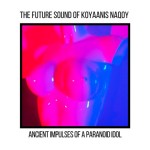
Artist: The Future Sound of Koyaanis Naqoy (@)
Title: Ancient Impulses of a Paranoid Idol
Format: Download Only (MP3 + Lossless)
Label: self-released
Rated:
Title: Ancient Impulses of a Paranoid Idol
Format: Download Only (MP3 + Lossless)
Label: self-released
Rated:
Naming your project "The Future Sound of Koyaanis Naqoy" is already a commitment. It suggests collapse, imbalance, cinema, philosophy, and at least a mild distrust of comfort. Delivering on that without collapsing into self-parody is another matter. "Ancient Impulses of a Paranoid Idol" manages, somewhat stubbornly, to do both: it takes itself seriously and survives the attempt.
The duo - Andrea Doro and Antonio Vessa - operates along a fault line between density and rupture. Doro, emerging from a background in poetry and experimental electronics, brings a kind of narrative obsession even when no words are spoken. Vessa, younger and rhythmically restless, injects a drumming language that refuses to behave like a mere structural support. Together, they construct something that feels less like a collaboration and more like a controlled imbalance.
The album unfolds as a single arc divided into five chapters, tracing the trajectory of a nameless figure swallowed by the city, slowly reduced to routine, and finally pushed toward a late, catastrophic awakening. It’s a storyline that could easily become heavy-handed. Instead, it dissolves into gesture, texture, pressure. The narrative is there, but it behaves like a shadow: visible, shifting, never fully graspable.
“Open the Door, Your Uncle Is There To Greet You” begins with a deceptive stillness, the kind that suggests anticipation but delivers unease. Electronics stretch out like fog over a landscape you’re not entirely sure you want to enter. Then Vessa’s drums arrive - not as a beat, but as an event. They fracture the space rather than organize it.
“We Believe In Werner Herzog” carries a title that feels like a manifesto and a warning. The track leans into a kind of existential weight, where each rhythmic gesture feels burdened, as if the act of moving forward required justification. There’s a faint cinematic quality here, though not in the polished sense. More like a film reel left out in the rain.
The central pieces - “Under The Pressure Of Giada’s Eyes” and “I Flatten Myself Like A Biscuit, One Day, On Tuesday” - extend into longer forms where time becomes elastic. Repetition appears, but it doesn’t stabilize. Instead, it tightens, like a loop that gradually becomes a constraint. Vessa’s drumming is particularly striking here: fluid, unpredictable, occasionally almost groove-like before veering off into something more fragmented, more anxious.
By the time “Look Mum, The Blue Monsters Are Coming” arrives, the album has accumulated enough tension to justify its own collapse. And collapse it does, though not in a dramatic explosion. It’s more of a dissolution, a slow erasure of boundaries where sound loses its coordinates. The “end of horizons” promised in the concept doesn’t arrive as spectacle. It arrives as absence.
The fact that the entire record was captured live at Goldmine Records in Cilento gives it a certain raw coherence. There’s no safety net here, no post-production smoothing of edges. The imperfections remain, and they matter. They anchor the work in a physical reality that balances its more abstract ambitions.
Stylistically, the album sits somewhere between dark ambient, noise, and a kind of destabilized jazz logic, but those labels feel increasingly irrelevant as the record progresses. What matters is the interaction: electronics that expand and suffocate, drums that resist containment, and a constant sense that the structure could give way at any moment.
Self-released, which feels appropriate, "Ancient Impulses of a Paranoid Idol" doesn’t attempt to position itself within a scene. It operates on its own terms, for better or worse. At times, it risks excess - too much tension, too little release - but that imbalance is also its defining trait.
It’s not an easy listen, and it doesn’t pretend to be. But it does something quietly compelling: it turns narrative into pressure, rhythm into instability, and space into something that can, at any moment, disappear.
Not bad for a debut that sounds like it’s already dismantling its own foundations.
The duo - Andrea Doro and Antonio Vessa - operates along a fault line between density and rupture. Doro, emerging from a background in poetry and experimental electronics, brings a kind of narrative obsession even when no words are spoken. Vessa, younger and rhythmically restless, injects a drumming language that refuses to behave like a mere structural support. Together, they construct something that feels less like a collaboration and more like a controlled imbalance.
The album unfolds as a single arc divided into five chapters, tracing the trajectory of a nameless figure swallowed by the city, slowly reduced to routine, and finally pushed toward a late, catastrophic awakening. It’s a storyline that could easily become heavy-handed. Instead, it dissolves into gesture, texture, pressure. The narrative is there, but it behaves like a shadow: visible, shifting, never fully graspable.
“Open the Door, Your Uncle Is There To Greet You” begins with a deceptive stillness, the kind that suggests anticipation but delivers unease. Electronics stretch out like fog over a landscape you’re not entirely sure you want to enter. Then Vessa’s drums arrive - not as a beat, but as an event. They fracture the space rather than organize it.
“We Believe In Werner Herzog” carries a title that feels like a manifesto and a warning. The track leans into a kind of existential weight, where each rhythmic gesture feels burdened, as if the act of moving forward required justification. There’s a faint cinematic quality here, though not in the polished sense. More like a film reel left out in the rain.
The central pieces - “Under The Pressure Of Giada’s Eyes” and “I Flatten Myself Like A Biscuit, One Day, On Tuesday” - extend into longer forms where time becomes elastic. Repetition appears, but it doesn’t stabilize. Instead, it tightens, like a loop that gradually becomes a constraint. Vessa’s drumming is particularly striking here: fluid, unpredictable, occasionally almost groove-like before veering off into something more fragmented, more anxious.
By the time “Look Mum, The Blue Monsters Are Coming” arrives, the album has accumulated enough tension to justify its own collapse. And collapse it does, though not in a dramatic explosion. It’s more of a dissolution, a slow erasure of boundaries where sound loses its coordinates. The “end of horizons” promised in the concept doesn’t arrive as spectacle. It arrives as absence.
The fact that the entire record was captured live at Goldmine Records in Cilento gives it a certain raw coherence. There’s no safety net here, no post-production smoothing of edges. The imperfections remain, and they matter. They anchor the work in a physical reality that balances its more abstract ambitions.
Stylistically, the album sits somewhere between dark ambient, noise, and a kind of destabilized jazz logic, but those labels feel increasingly irrelevant as the record progresses. What matters is the interaction: electronics that expand and suffocate, drums that resist containment, and a constant sense that the structure could give way at any moment.
Self-released, which feels appropriate, "Ancient Impulses of a Paranoid Idol" doesn’t attempt to position itself within a scene. It operates on its own terms, for better or worse. At times, it risks excess - too much tension, too little release - but that imbalance is also its defining trait.
It’s not an easy listen, and it doesn’t pretend to be. But it does something quietly compelling: it turns narrative into pressure, rhythm into instability, and space into something that can, at any moment, disappear.
Not bad for a debut that sounds like it’s already dismantling its own foundations.
Propan & Stina Stjern: Shrew
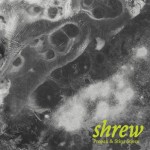
Artist: Propan & Stina Stjern (@)
Title: Shrew
Format: Tape + Download
Label: SusannaSonata (@)
Rated:

Title: Shrew
Format: Tape + Download
Label: SusannaSonata (@)
Rated:
It helps, occasionally, when an album decides to hand you its inner logic in plain text. Not to simplify things - don’t worry, that would be too easy - but to confirm that what you’re hearing is, in fact, as tactile, messy, and quietly unsettling as it feels.
"Shrew" by Propan and Stina Stjern already suggested a world of bodies, substances, and slow transformations. The lyrics make it explicit: this is not abstraction. This is labor. This is ritual. This is the long choreography of hands doing things that stain.
“We lift carry cucumbers on our backs… it seeps into us, we seep into it”.
That line alone dismantles any safe distance between subject and material. The boundary dissolves early: the workers become the work, the process becomes identity. What initially sounds like domestic routine - washing vegetables, kneading dough, pressing fruit - gradually mutates into something more ambiguous. The gestures accumulate weight. Repetition becomes incantation.
Musically, that’s exactly what happens. Voices layer, thicken, lose their individuality, much like the bodies described in the text. In “Fern”, the slow build mirrors the preparation phase: gathering, washing, kneading. But nothing is innocent here. Even the pastoral imagery carries a faint unease. Grapes crushed underfoot, butter melting into surfaces, fluids seeping everywhere. It’s sensual, but not comfortably so. There’s always a hint that something is being transformed beyond recognition.
Then comes the pivot. The chicken, suddenly present, headless, dripping. Plucked. Reassembled into “feather knickers”, which is either dark humor or something more ritualistic, depending on how charitable you’re feeling. The album doesn’t clarify. It just keeps going.
“Maret” expands the scene into a collective act. Cooking becomes communal, almost ceremonial. Ingredients are coated, chopped, mixed into something that resembles a feast but behaves like a rite. “We assemble this night”, they say, as if time itself were an ingredient to be handled. The table is set with obsessive care - flowers, candles, glasses in different shapes - yet the atmosphere is unstable. Celebration and tension coexist without resolving.
The music follows suit. The density increases, the layering becomes more insistent, but never chaotic. There’s control in the repetition, a discipline that keeps the ritual from dissolving into noise. It’s not about explosion. It’s about sustained pressure.
And then “Sybil”, where the aftermath unfolds. Eating, drinking, talking - then silence. The ritual completes its cycle not with a climax, but with cleaning. Washing, rinsing, brushing away crumbs “from the minds and from time itself”. It’s almost absurdly literal and strangely profound at the same time. As if the entire event - this feast of bodies, labor, and shared space - must be erased to exist properly.
“We own this time. all time”.
A bold claim, delivered without emphasis, which makes it land harder. Ownership here isn’t about control. It’s about inhabiting the moment so fully that it temporarily suspends everything else.
The music mirrors this dissolution. By the end, the layers feel less constructed and more residual, like traces left after something has already happened. The final gesture - burning leftovers, pulling the plug, leaving - feels less like closure and more like withdrawal. The space empties, but something lingers.
What the lyrics clarify is that "Shrew" isn’t just exploring voice as sound, but voice as collective body, as laboring force, as something deeply entangled with material processes. The “shrew”, in this context, isn’t a stereotype to be reclaimed politely. It’s a figure that absorbs, transforms, and ultimately outlasts the structures meant to contain it.
The mixing and mastering by Lasse Marhaug keeps everything grounded in a thick, immersive field without smoothing over its roughness. Nothing feels decorative. Even the more beautiful passages carry a residue of something slightly off, slightly too physical to be comfortably aesthetic
Released by SusannaSonata, the album maintains its refusal to be easily categorized. With the textual layer fully visible, it becomes even clearer that this is less a collection of pieces and more a sustained enactment: preparation, gathering, consumption, erasure.
A cycle. Messy, repetitive, oddly precise.
And, against all odds, completely controlled.
"Shrew" by Propan and Stina Stjern already suggested a world of bodies, substances, and slow transformations. The lyrics make it explicit: this is not abstraction. This is labor. This is ritual. This is the long choreography of hands doing things that stain.
“We lift carry cucumbers on our backs… it seeps into us, we seep into it”.
That line alone dismantles any safe distance between subject and material. The boundary dissolves early: the workers become the work, the process becomes identity. What initially sounds like domestic routine - washing vegetables, kneading dough, pressing fruit - gradually mutates into something more ambiguous. The gestures accumulate weight. Repetition becomes incantation.
Musically, that’s exactly what happens. Voices layer, thicken, lose their individuality, much like the bodies described in the text. In “Fern”, the slow build mirrors the preparation phase: gathering, washing, kneading. But nothing is innocent here. Even the pastoral imagery carries a faint unease. Grapes crushed underfoot, butter melting into surfaces, fluids seeping everywhere. It’s sensual, but not comfortably so. There’s always a hint that something is being transformed beyond recognition.
Then comes the pivot. The chicken, suddenly present, headless, dripping. Plucked. Reassembled into “feather knickers”, which is either dark humor or something more ritualistic, depending on how charitable you’re feeling. The album doesn’t clarify. It just keeps going.
“Maret” expands the scene into a collective act. Cooking becomes communal, almost ceremonial. Ingredients are coated, chopped, mixed into something that resembles a feast but behaves like a rite. “We assemble this night”, they say, as if time itself were an ingredient to be handled. The table is set with obsessive care - flowers, candles, glasses in different shapes - yet the atmosphere is unstable. Celebration and tension coexist without resolving.
The music follows suit. The density increases, the layering becomes more insistent, but never chaotic. There’s control in the repetition, a discipline that keeps the ritual from dissolving into noise. It’s not about explosion. It’s about sustained pressure.
And then “Sybil”, where the aftermath unfolds. Eating, drinking, talking - then silence. The ritual completes its cycle not with a climax, but with cleaning. Washing, rinsing, brushing away crumbs “from the minds and from time itself”. It’s almost absurdly literal and strangely profound at the same time. As if the entire event - this feast of bodies, labor, and shared space - must be erased to exist properly.
“We own this time. all time”.
A bold claim, delivered without emphasis, which makes it land harder. Ownership here isn’t about control. It’s about inhabiting the moment so fully that it temporarily suspends everything else.
The music mirrors this dissolution. By the end, the layers feel less constructed and more residual, like traces left after something has already happened. The final gesture - burning leftovers, pulling the plug, leaving - feels less like closure and more like withdrawal. The space empties, but something lingers.
What the lyrics clarify is that "Shrew" isn’t just exploring voice as sound, but voice as collective body, as laboring force, as something deeply entangled with material processes. The “shrew”, in this context, isn’t a stereotype to be reclaimed politely. It’s a figure that absorbs, transforms, and ultimately outlasts the structures meant to contain it.
The mixing and mastering by Lasse Marhaug keeps everything grounded in a thick, immersive field without smoothing over its roughness. Nothing feels decorative. Even the more beautiful passages carry a residue of something slightly off, slightly too physical to be comfortably aesthetic
Released by SusannaSonata, the album maintains its refusal to be easily categorized. With the textual layer fully visible, it becomes even clearer that this is less a collection of pieces and more a sustained enactment: preparation, gathering, consumption, erasure.
A cycle. Messy, repetitive, oddly precise.
And, against all odds, completely controlled.