
Saturday, August 29, 2026
Browse by Genre
Industrial Music / Industrial Metal / Aggro Industrial / Electro Metal
Industrial Noise / Power Noise / Harsh Noise
Synth Pop / Electro Pop / Synth-Electronica
Techno / Trance / Goa / Drum'n'Bass / Jungle / Tribal / Trip-Hop
Ambient / Electronica / Ethereal / Dub / Soundscapes / Abstract
Experimental / Avantgarde / Weird & Wired / Glitch / Noise / Field Recording
Dark / Gothic / Wave / New Wave / Dark Wave / Industrial Gothic
New Music / Downtown / Avantgarde Jazz / New Classical / World
Search Reviews
Music Reviews
Alex Zhang Hungtai: Dras
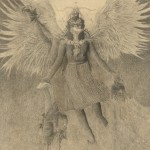
A saxophone is usually expected to do certain things. It can sing, howl, swing, whisper, shriek, seduce, irritate the neighbours. It can be virtuosic, lyrical, vulgar, majestic. Alex Zhang Hungtai takes the instrument and appears to ask a considerably less sociable question: what happens if the saxophone forgets it was ever supposed to be a saxophone? "Dras" is the answer.
The nine pieces collected here originated in 2019, recorded inside Montreal's Saint Joseph Oratory during late-night sessions, with the vast church providing the initial acoustic environment. They then sat on Hungtai's hard drive through the pandemic before being completed during lockdown in Los Angeles. The delay is more than an interesting piece of chronology. It seems to have given the recordings time to lose their original identity. What emerged years later is not a document of a saxophonist playing inside a church, but a work assembled from the memory of that event, with digital manipulation pushing the instrument into unfamiliar territory while preserving the physical evidence of breath and pressure.
Hungtai, of course, has been doing this sort of disappearing act with musical identity for a long time. Best known initially as the force behind Dirty Beaches, he developed a deliberately elusive relationship with genre, moving through lo-fi rock'n'roll, experimental composition, free improvisation, jazz-adjacent work and increasingly abstract instrumental music. His earlier solo releases already demonstrated an interest in stripping away the recognisable functions of an instrument until something more elemental remained. On "Dras", that process becomes almost forensic.
“Erg”, the opening track, is an excellent example. There is saxophone here, but its conventional vocabulary has already begun to dissolve. Repeated figures appear and recede, tones are stretched into resonance, and the acoustic source seems to hover somewhere between instrument and environment. The piece does not announce itself with the usual gesture of a soloist entering a room. It feels as if the room was already making the sound and Hungtai merely discovered how to disturb it. The effect is strangely intimate despite the scale. This is partly because the saxophone's breath remains audible. However much the sound is processed, there is still a human body somewhere behind the electronics. The instrument strains, exhales, cracks and resonates. The digital treatment does not sterilise these qualities. Instead, it enlarges them.
“Dras” itself is considerably more severe. Tones appear to be pulled apart from within, creating metallic edges and dense resonant masses. The sound can be abrasive, but its aggression is oddly restrained. Nothing here feels like an attempt to overpower the listener. The physical force comes from the tension between recognisable instrumental origin and increasingly alien result. You know there is a saxophone in there. You just aren't sure whether it knows. That uncertainty becomes one of the album's central pleasures.
“El Khela” works through fractured gestures and spectral responses, allowing sounds to appear as though they are arriving from different depths of the same enormous acoustic chamber. The church is no longer simply an echoing venue. It becomes an invisible participant, a kind of acoustic memory that has been carried forward into the digital processing.
This is where the Saint Joseph Oratory recordings acquire their real significance. The building is enormous, with a famously resonant interior, and Hungtai recorded there under conditions designed to minimise outside noise. The resulting material contains an extraordinary amount of spatial information, but "Dras" does not behave like a field recording. Hungtai takes that spatial residue and rearranges it until physical location becomes psychological atmosphere. “Xilitla” and “Estado” make this transformation especially clear. The former seems to float away from its instrumental source almost completely, settling into sustained tones that could be mistaken for electronic composition if one did not know where they originated. “Estado” is subtler, with barely perceptible rhythmic movement giving the music a sense of direction without turning it into anything resembling a beat.
These pieces are among the album's most convincing because they demonstrate that Hungtai is not interested in hiding the saxophone. He is interested in changing the conditions under which we hear it. That is a different proposition. The distinction matters because experimental music can sometimes become obsessed with disguising its sources. Here the opposite happens. The further the sound travels from the conventional saxophone, the more one becomes aware of the instrument's physical characteristics: the vibration of metal, the pressure of air, the instability of pitch, the human effort necessary to make the sound exist. The machine does not erase the body. It puts the body under a magnifying glass.
The track titles add another layer of geographical and material suggestion. “Rub' Al Khali”, named after the vast Arabian Empty Quarter, and “Pulque”, referring to the traditional Mexican fermented drink, seem to open doors onto places and sensations without turning the music into literal travelogue. “White Dwarf” shifts the scale completely, moving from geography to astrophysics. These names are useful precisely because they refuse to explain the sounds. They provide coordinates, not destinations. And then there is “White Dwarf” itself, one of the album's most luminous moments. Its progression has a rare sense of warmth, with tones gradually revealing harmonic relationships beneath the apparent abstraction. After so much erosion, the emergence of something recognisably melodic feels almost startling. But Hungtai does not let melody settle comfortably. The tonal material remains surrounded by grain, distortion and spatial ambiguity. Beauty appears, but it arrives with its fingerprints still dirty.
This is perhaps where "Dras" differs from the more purely austere traditions of drone and electroacoustic music. Hungtai's work retains a sense of song even when the song has been almost entirely dismantled. There is an instinct for melody underneath the abstraction, a memory of phrasing that keeps resurfacing. The record never becomes purely textural because the saxophone continues to suggest a human voice.
That voice becomes most powerful on “Mazil”, the closing piece. Low, guttural tones emerge beneath thinner melodic traces, creating the sensation of something enormous moving underneath the music. The piece does not build toward a conventional climax. Instead, it gradually reveals the full physical character of the instrument. After all the processing, fragmentation and spectral manipulation, the saxophone finally seems to stand in front of us rather than behind layers of transformation. It is almost like meeting the suspect after spending an hour interviewing the fingerprints. The emotional effect is surprisingly strong.
There is loneliness in "Dras", but not the theatrical loneliness of an empty landscape. It feels more like the solitude of somebody listening carefully to their own thoughts and discovering that the thoughts have echoes. The album's repetitions and transformations suggest memory without ever becoming nostalgic. A phrase returns altered. A tone loses its original shape. Something familiar becomes difficult to recognise and then, suddenly, familiar again.
The pandemic history inevitably casts a shadow over the record, but "Dras" is fortunate enough not to sound like a “pandemic album”. There are no obvious attempts to document a particular historical moment. Instead, the long gap between recording and completion becomes part of the music's character. The sounds were captured in 2019, but their final form emerged through a period in which ordinary relationships with space, silence and physical presence were radically disrupted. That may help explain why the album feels simultaneously solitary and communal.
Hungtai made the original recordings alone with his instrument, yet the finished work is concerned with space, resonance and the sensation of sound occupying a place. It is intimate music that nevertheless seems to require a room around it.
This is also why the vinyl format makes sense. "Dras" is not background music. Its details depend on volume, physical space and the listener's willingness to remain inside sounds that do not immediately resolve themselves. The record rewards attention, but it does not demand analytical concentration. One can simply allow the textures to accumulate until the distinction between listening to music and listening to a room begins to disappear.
There is a paradox here that Hungtai handles remarkably well. The album is constructed from a very limited palette: essentially one saxophone, extensively processed. Yet it feels enormous. Conversely, the recordings were made inside one of Montreal's great architectural spaces, but the finished music often feels intensely internal.
Exterior becomes interior. Architecture becomes memory. Breath becomes electricity. And the saxophone becomes something that could almost be mistaken for a machine until the human body suddenly returns through a single cracked note.
That is the real achievement of "Dras". It does not simply demonstrate that one instrument can produce unconventional sounds. Plenty of experimental musicians have established that fact, and humanity has been dismantling musical instruments with commendable determination for decades. Hungtai goes further. He makes the transformation emotionally meaningful.
The unfamiliar noises are not trophies of technique. They are stages in a process of searching. Melodies fracture because they are being examined. Repetitions accumulate because they are trying to find a way through. Distortion becomes less an aesthetic effect than a method of seeing what remains when the familiar surface has been disturbed.
The album consequently feels less like a collection of compositions than nine examinations of resonance, each asking how much identity a sound can lose before it becomes something else. The answer, intriguingly, is: quite a lot. But not everything. The breath remains. That is enough.
"Dras" is austere without being cold, abstract without abandoning melody, and imposing without ever becoming merely loud. Its strange beauty lies in the contradiction between the enormous spaces suggested by the recordings and the unmistakably human effort contained inside every sound.
The saxophone does not disappear. It dreams itself into another form.
The nine pieces collected here originated in 2019, recorded inside Montreal's Saint Joseph Oratory during late-night sessions, with the vast church providing the initial acoustic environment. They then sat on Hungtai's hard drive through the pandemic before being completed during lockdown in Los Angeles. The delay is more than an interesting piece of chronology. It seems to have given the recordings time to lose their original identity. What emerged years later is not a document of a saxophonist playing inside a church, but a work assembled from the memory of that event, with digital manipulation pushing the instrument into unfamiliar territory while preserving the physical evidence of breath and pressure.
Hungtai, of course, has been doing this sort of disappearing act with musical identity for a long time. Best known initially as the force behind Dirty Beaches, he developed a deliberately elusive relationship with genre, moving through lo-fi rock'n'roll, experimental composition, free improvisation, jazz-adjacent work and increasingly abstract instrumental music. His earlier solo releases already demonstrated an interest in stripping away the recognisable functions of an instrument until something more elemental remained. On "Dras", that process becomes almost forensic.
“Erg”, the opening track, is an excellent example. There is saxophone here, but its conventional vocabulary has already begun to dissolve. Repeated figures appear and recede, tones are stretched into resonance, and the acoustic source seems to hover somewhere between instrument and environment. The piece does not announce itself with the usual gesture of a soloist entering a room. It feels as if the room was already making the sound and Hungtai merely discovered how to disturb it. The effect is strangely intimate despite the scale. This is partly because the saxophone's breath remains audible. However much the sound is processed, there is still a human body somewhere behind the electronics. The instrument strains, exhales, cracks and resonates. The digital treatment does not sterilise these qualities. Instead, it enlarges them.
“Dras” itself is considerably more severe. Tones appear to be pulled apart from within, creating metallic edges and dense resonant masses. The sound can be abrasive, but its aggression is oddly restrained. Nothing here feels like an attempt to overpower the listener. The physical force comes from the tension between recognisable instrumental origin and increasingly alien result. You know there is a saxophone in there. You just aren't sure whether it knows. That uncertainty becomes one of the album's central pleasures.
“El Khela” works through fractured gestures and spectral responses, allowing sounds to appear as though they are arriving from different depths of the same enormous acoustic chamber. The church is no longer simply an echoing venue. It becomes an invisible participant, a kind of acoustic memory that has been carried forward into the digital processing.
This is where the Saint Joseph Oratory recordings acquire their real significance. The building is enormous, with a famously resonant interior, and Hungtai recorded there under conditions designed to minimise outside noise. The resulting material contains an extraordinary amount of spatial information, but "Dras" does not behave like a field recording. Hungtai takes that spatial residue and rearranges it until physical location becomes psychological atmosphere. “Xilitla” and “Estado” make this transformation especially clear. The former seems to float away from its instrumental source almost completely, settling into sustained tones that could be mistaken for electronic composition if one did not know where they originated. “Estado” is subtler, with barely perceptible rhythmic movement giving the music a sense of direction without turning it into anything resembling a beat.
These pieces are among the album's most convincing because they demonstrate that Hungtai is not interested in hiding the saxophone. He is interested in changing the conditions under which we hear it. That is a different proposition. The distinction matters because experimental music can sometimes become obsessed with disguising its sources. Here the opposite happens. The further the sound travels from the conventional saxophone, the more one becomes aware of the instrument's physical characteristics: the vibration of metal, the pressure of air, the instability of pitch, the human effort necessary to make the sound exist. The machine does not erase the body. It puts the body under a magnifying glass.
The track titles add another layer of geographical and material suggestion. “Rub' Al Khali”, named after the vast Arabian Empty Quarter, and “Pulque”, referring to the traditional Mexican fermented drink, seem to open doors onto places and sensations without turning the music into literal travelogue. “White Dwarf” shifts the scale completely, moving from geography to astrophysics. These names are useful precisely because they refuse to explain the sounds. They provide coordinates, not destinations. And then there is “White Dwarf” itself, one of the album's most luminous moments. Its progression has a rare sense of warmth, with tones gradually revealing harmonic relationships beneath the apparent abstraction. After so much erosion, the emergence of something recognisably melodic feels almost startling. But Hungtai does not let melody settle comfortably. The tonal material remains surrounded by grain, distortion and spatial ambiguity. Beauty appears, but it arrives with its fingerprints still dirty.
This is perhaps where "Dras" differs from the more purely austere traditions of drone and electroacoustic music. Hungtai's work retains a sense of song even when the song has been almost entirely dismantled. There is an instinct for melody underneath the abstraction, a memory of phrasing that keeps resurfacing. The record never becomes purely textural because the saxophone continues to suggest a human voice.
That voice becomes most powerful on “Mazil”, the closing piece. Low, guttural tones emerge beneath thinner melodic traces, creating the sensation of something enormous moving underneath the music. The piece does not build toward a conventional climax. Instead, it gradually reveals the full physical character of the instrument. After all the processing, fragmentation and spectral manipulation, the saxophone finally seems to stand in front of us rather than behind layers of transformation. It is almost like meeting the suspect after spending an hour interviewing the fingerprints. The emotional effect is surprisingly strong.
There is loneliness in "Dras", but not the theatrical loneliness of an empty landscape. It feels more like the solitude of somebody listening carefully to their own thoughts and discovering that the thoughts have echoes. The album's repetitions and transformations suggest memory without ever becoming nostalgic. A phrase returns altered. A tone loses its original shape. Something familiar becomes difficult to recognise and then, suddenly, familiar again.
The pandemic history inevitably casts a shadow over the record, but "Dras" is fortunate enough not to sound like a “pandemic album”. There are no obvious attempts to document a particular historical moment. Instead, the long gap between recording and completion becomes part of the music's character. The sounds were captured in 2019, but their final form emerged through a period in which ordinary relationships with space, silence and physical presence were radically disrupted. That may help explain why the album feels simultaneously solitary and communal.
Hungtai made the original recordings alone with his instrument, yet the finished work is concerned with space, resonance and the sensation of sound occupying a place. It is intimate music that nevertheless seems to require a room around it.
This is also why the vinyl format makes sense. "Dras" is not background music. Its details depend on volume, physical space and the listener's willingness to remain inside sounds that do not immediately resolve themselves. The record rewards attention, but it does not demand analytical concentration. One can simply allow the textures to accumulate until the distinction between listening to music and listening to a room begins to disappear.
There is a paradox here that Hungtai handles remarkably well. The album is constructed from a very limited palette: essentially one saxophone, extensively processed. Yet it feels enormous. Conversely, the recordings were made inside one of Montreal's great architectural spaces, but the finished music often feels intensely internal.
Exterior becomes interior. Architecture becomes memory. Breath becomes electricity. And the saxophone becomes something that could almost be mistaken for a machine until the human body suddenly returns through a single cracked note.
That is the real achievement of "Dras". It does not simply demonstrate that one instrument can produce unconventional sounds. Plenty of experimental musicians have established that fact, and humanity has been dismantling musical instruments with commendable determination for decades. Hungtai goes further. He makes the transformation emotionally meaningful.
The unfamiliar noises are not trophies of technique. They are stages in a process of searching. Melodies fracture because they are being examined. Repetitions accumulate because they are trying to find a way through. Distortion becomes less an aesthetic effect than a method of seeing what remains when the familiar surface has been disturbed.
The album consequently feels less like a collection of compositions than nine examinations of resonance, each asking how much identity a sound can lose before it becomes something else. The answer, intriguingly, is: quite a lot. But not everything. The breath remains. That is enough.
"Dras" is austere without being cold, abstract without abandoning melody, and imposing without ever becoming merely loud. Its strange beauty lies in the contradiction between the enormous spaces suggested by the recordings and the unmistakably human effort contained inside every sound.
The saxophone does not disappear. It dreams itself into another form.
Mr.Vast: Upping The Ante
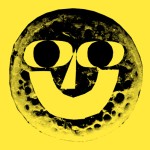
The problem with Mr.Vast is that he makes it extremely difficult to behave like a respectable music reviewer.
One can begin with genre. There is electronic music here, certainly. There are rave rhythms, drum'n'bass, acid-adjacent twitching, synth-pop, ambient passages, folk gestures, spoken word and things that appear to have wandered in from a children's television programme being broadcast from a parallel universe. One can mention absurdism, English eccentricity, cabaret, music hall, post-punk, techno and Wevie Stonder. All of these descriptions are technically defensible. None of them survives contact with the album for very long.
"Upping The Ante" is the third solo album by Henry Sargeant's Mr.Vast persona, following "Grievous Bodily Charm" and "Touch & Go". Sargeant's background as an actor and “dark clown”, together with his long-standing role as vocalist and frontman of Wevie Stonder, goes some way towards explaining why his relationship with the conventional idea of a song remains so cheerfully dysfunctional. Working with Al Boorman, who provides the music, production and mixing, Sargeant treats the pop song less as a fixed structure than as a piece of furniture that can be dismantled and rebuilt while somebody is still sitting on it. The remarkable thing is that "Upping The Ante" is not actually as chaotic as it first appears.
Its opening, “What's Difficult About Being Stupid?”, lasts twenty-eight seconds and immediately establishes that conventional introductions are not going to survive the afternoon. “Scatterbrain” follows with a miniature burst of warped, pseudo-medieval absurdity before “This And That” suddenly launches into a dance track that could, under different circumstances and with substantially less personality, have been mistaken for an actual club record. This is where Mr.Vast becomes particularly cunning.
The music is often genuinely catchy. That fact is easy to overlook because Sargeant fills it with linguistic detours, character voices, surreal observations and the general sensation that somebody has misplaced the instruction manual for human behaviour. Yet Boorman's productions are carefully constructed. Rhythmic transitions, synth figures, bass movements and abrupt changes of atmosphere are not random interruptions. They provide a stable framework against which the verbal nonsense can ricochet.
The absurdity works because the music underneath it works. “This And That” is perhaps the clearest example. It begins with enough dancefloor propulsion to make the listener suspect that Mr.Vast has finally agreed to behave, before the arrangement starts expanding into rave melodrama and rhythmic excess. The track becomes a kind of damaged celebration, simultaneously inviting the body to move and the brain to question why it is doing so.
This tension between genuine musical pleasure and comic disruption runs throughout the album.
“The Bench” takes a gentler route. Its softer electronic setting gives Sargeant room to occupy a more conversational space, creating the impression of a strange little monologue that has accidentally acquired accompaniment. It is almost conventional, which in the Mr.Vast universe means that something is probably about to go wrong.
“Neural Preening” supplies the expected malfunction. Nervous electronic figures, clipped rhythms and an animated vocal performance create a miniature nervous system operating at slightly too high a voltage. The influence of early electronic pop is audible without becoming imitation. There is something of the mechanical twitch of early-80s synth music, but the track is too self-aware to settle comfortably into retro territory.
That is important because "Upping The Ante" is not really interested in nostalgia.
It borrows historical materials the way a magpie steals shiny objects: because they look useful, not because it wishes to preserve them. A rave rhythm from one decade, a folk cadence from another, a lounge-piano gesture, a synth-pop texture, a documentary-music cliché: everything becomes available.
Then “Ants” arrives and demonstrates just how far the album can travel while apparently remaining in the same room.
A wandering vocal narrative is placed over a more relaxed musical setting, producing something halfway between a pub conversation, a spoken-word performance and a song that has forgotten what its chorus was supposed to be. The deliberately skewed imagery is funny, but the real pleasure comes from the way Sargeant's delivery keeps shifting the listener's understanding of what is happening. Is he telling a story? Performing a character? Improvising? Making fun of storytelling itself? Probably all four.
And this is where the connection to his theatrical background becomes more significant than the word “comedy” might suggest. Mr.Vast is not simply a musician who tells jokes between tracks. The voice is a dramatic instrument. Characters appear through changes of diction, accent, rhythm and attitude. The songs behave almost like miniature scenes in which the protagonist is never quite stable.
The album consequently has more in common with theatre than a superficial listen might suggest.
But it is theatre that has been fed through a malfunctioning jukebox.
“I Can't Help It” moves back toward rave and drum'n'bass territory, but the energy is constantly interrupted by vocal and narrative diversions. “Guess Who” provides one of the album's most convincing moments of relative simplicity, allowing the songwriting itself to emerge more clearly. It is a useful reminder that Sargeant and Boorman could presumably make something much more conventional if they were ever seized by an unfortunate lapse in judgement.
They simply don't seem interested. “Crumpet Man” is perhaps the record's great absurdist centrepiece. The music gradually adopts the proportions of an overly serious documentary soundtrack while the subject matter heads in a considerably less respectable direction. The contrast is exquisite. Grand electronic gestures promise historical significance; the vocal supplies something much closer to breakfast.
This is a recurring trick throughout the album: inflate something ridiculous until it becomes strangely majestic. It works because Boorman takes the musical arrangements seriously even when Sargeant refuses to take the subject matter seriously. The result is not novelty music in the disposable sense. The jokes have structural consequences. The music changes around them, accommodates them, contradicts them and occasionally makes them funnier by treating them with complete solemnity.
That solemnity is essential. If the production were merely goofy, the album would become exhausting very quickly. Instead, Boorman gives these songs enough musical weight to survive repeated listening. There are genuine textures, effective hooks, carefully chosen timbres and convincing rhythmic constructions underneath the nonsense. The humour is therefore sitting on top of actual composition rather than being used to conceal its absence.
The title track, “Upping The Ante”, pushes this approach into a kind of mock-anthemic territory. There is a sense of escalation, but also a recognition that escalation itself has become absurd. The album keeps raising its own stakes without ever explaining what game we are playing.
By the time “The End” arrives, the joke is almost philosophical.
Almost.
The record has spent forty-something minutes refusing to settle into a stable identity, and now it reaches a track called “The End”. Even that promise is treated with suspicion. Of course the ending is not quite an ending. With Mr.Vast, closure would probably require a permit.
What makes "Upping The Ante" more than a collection of eccentric sketches is its attitude toward sincerity.
Sargeant's performance is funny, but there is something vulnerable underneath it. The characters, voices and absurd situations are not simply exercises in distancing himself from the audience. They create a way of communicating that bypasses the embarrassment normally attached to direct emotional expression. He can be ridiculous without becoming emotionally empty.
That distinction matters.
There is a long tradition of British eccentricity in which silliness becomes a method for examining social behaviour. Mr.Vast belongs to that lineage, but "Upping The Ante" updates it through electronic music and rave culture. The music is not simply a soundtrack for eccentricity. It provides the contemporary machinery through which the eccentricity moves.
The result is a strange portrait of England assembled from fragments: pub speech, rave culture, music-hall exaggeration, absurd bureaucracy, overheard conversations, old-fashioned characters, contemporary electronic production and the peculiar national ability to discuss complete nonsense as though it were a matter of urgent public policy.
The record's apparent randomness is therefore deceptive. Its subject is actually quite coherent: the instability of identity and language in a culture saturated with performance.
Everyone is playing a role.
Mr.Vast simply refuses to hide the costume.
That refusal gives "Upping The Ante" an oddly liberating quality. The album does not ask the listener to admire its cleverness. It asks them to participate in the confusion. You can dance to it, laugh at it, wonder whether you have misunderstood it, or occasionally discover that a supposedly ridiculous passage has lodged itself in your head with alarming permanence.
The danger is that the sheer density of ideas can occasionally become exhausting. There are moments when Sargeant's verbal energy competes with Boorman's production rather than complementing it, and some of the jokes are sufficiently committed to their own absurdity that they risk wearing out their welcome.
But even that excess is part of the record's character.
"Upping The Ante" does not believe that restraint is automatically a virtue. It would rather throw another idea into the room and see what happens.
In that sense, Mr.Vast's third album is surprisingly serious about being unserious.
It understands that humour can be a form of musical structure, that nonsense can expose things literal language conceals, and that a dance track can be both ridiculous and genuinely exhilarating. Beneath the costumes and comic voices, there is an unusually precise collaboration between Sargeant and Boorman: one supplying a restless stream of language and persona, the other constructing musical environments capable of absorbing almost anything thrown at them.
So perhaps the most useful way to approach "Upping The Ante" is not to ask what genre it belongs to.
Ask instead what happens when somebody stops respecting the borders between genres long enough to discover that they were mostly imaginary anyway.
The answer is eleven tracks of warped pop, rave, theatre, nonsense, melody and electronic mischief.
It is funny.
It is occasionally beautiful.
It is frequently ridiculous.
And, rather inconveniently for anyone hoping to dismiss it as a joke, it is very well made.
One can begin with genre. There is electronic music here, certainly. There are rave rhythms, drum'n'bass, acid-adjacent twitching, synth-pop, ambient passages, folk gestures, spoken word and things that appear to have wandered in from a children's television programme being broadcast from a parallel universe. One can mention absurdism, English eccentricity, cabaret, music hall, post-punk, techno and Wevie Stonder. All of these descriptions are technically defensible. None of them survives contact with the album for very long.
"Upping The Ante" is the third solo album by Henry Sargeant's Mr.Vast persona, following "Grievous Bodily Charm" and "Touch & Go". Sargeant's background as an actor and “dark clown”, together with his long-standing role as vocalist and frontman of Wevie Stonder, goes some way towards explaining why his relationship with the conventional idea of a song remains so cheerfully dysfunctional. Working with Al Boorman, who provides the music, production and mixing, Sargeant treats the pop song less as a fixed structure than as a piece of furniture that can be dismantled and rebuilt while somebody is still sitting on it. The remarkable thing is that "Upping The Ante" is not actually as chaotic as it first appears.
Its opening, “What's Difficult About Being Stupid?”, lasts twenty-eight seconds and immediately establishes that conventional introductions are not going to survive the afternoon. “Scatterbrain” follows with a miniature burst of warped, pseudo-medieval absurdity before “This And That” suddenly launches into a dance track that could, under different circumstances and with substantially less personality, have been mistaken for an actual club record. This is where Mr.Vast becomes particularly cunning.
The music is often genuinely catchy. That fact is easy to overlook because Sargeant fills it with linguistic detours, character voices, surreal observations and the general sensation that somebody has misplaced the instruction manual for human behaviour. Yet Boorman's productions are carefully constructed. Rhythmic transitions, synth figures, bass movements and abrupt changes of atmosphere are not random interruptions. They provide a stable framework against which the verbal nonsense can ricochet.
The absurdity works because the music underneath it works. “This And That” is perhaps the clearest example. It begins with enough dancefloor propulsion to make the listener suspect that Mr.Vast has finally agreed to behave, before the arrangement starts expanding into rave melodrama and rhythmic excess. The track becomes a kind of damaged celebration, simultaneously inviting the body to move and the brain to question why it is doing so.
This tension between genuine musical pleasure and comic disruption runs throughout the album.
“The Bench” takes a gentler route. Its softer electronic setting gives Sargeant room to occupy a more conversational space, creating the impression of a strange little monologue that has accidentally acquired accompaniment. It is almost conventional, which in the Mr.Vast universe means that something is probably about to go wrong.
“Neural Preening” supplies the expected malfunction. Nervous electronic figures, clipped rhythms and an animated vocal performance create a miniature nervous system operating at slightly too high a voltage. The influence of early electronic pop is audible without becoming imitation. There is something of the mechanical twitch of early-80s synth music, but the track is too self-aware to settle comfortably into retro territory.
That is important because "Upping The Ante" is not really interested in nostalgia.
It borrows historical materials the way a magpie steals shiny objects: because they look useful, not because it wishes to preserve them. A rave rhythm from one decade, a folk cadence from another, a lounge-piano gesture, a synth-pop texture, a documentary-music cliché: everything becomes available.
Then “Ants” arrives and demonstrates just how far the album can travel while apparently remaining in the same room.
A wandering vocal narrative is placed over a more relaxed musical setting, producing something halfway between a pub conversation, a spoken-word performance and a song that has forgotten what its chorus was supposed to be. The deliberately skewed imagery is funny, but the real pleasure comes from the way Sargeant's delivery keeps shifting the listener's understanding of what is happening. Is he telling a story? Performing a character? Improvising? Making fun of storytelling itself? Probably all four.
And this is where the connection to his theatrical background becomes more significant than the word “comedy” might suggest. Mr.Vast is not simply a musician who tells jokes between tracks. The voice is a dramatic instrument. Characters appear through changes of diction, accent, rhythm and attitude. The songs behave almost like miniature scenes in which the protagonist is never quite stable.
The album consequently has more in common with theatre than a superficial listen might suggest.
But it is theatre that has been fed through a malfunctioning jukebox.
“I Can't Help It” moves back toward rave and drum'n'bass territory, but the energy is constantly interrupted by vocal and narrative diversions. “Guess Who” provides one of the album's most convincing moments of relative simplicity, allowing the songwriting itself to emerge more clearly. It is a useful reminder that Sargeant and Boorman could presumably make something much more conventional if they were ever seized by an unfortunate lapse in judgement.
They simply don't seem interested. “Crumpet Man” is perhaps the record's great absurdist centrepiece. The music gradually adopts the proportions of an overly serious documentary soundtrack while the subject matter heads in a considerably less respectable direction. The contrast is exquisite. Grand electronic gestures promise historical significance; the vocal supplies something much closer to breakfast.
This is a recurring trick throughout the album: inflate something ridiculous until it becomes strangely majestic. It works because Boorman takes the musical arrangements seriously even when Sargeant refuses to take the subject matter seriously. The result is not novelty music in the disposable sense. The jokes have structural consequences. The music changes around them, accommodates them, contradicts them and occasionally makes them funnier by treating them with complete solemnity.
That solemnity is essential. If the production were merely goofy, the album would become exhausting very quickly. Instead, Boorman gives these songs enough musical weight to survive repeated listening. There are genuine textures, effective hooks, carefully chosen timbres and convincing rhythmic constructions underneath the nonsense. The humour is therefore sitting on top of actual composition rather than being used to conceal its absence.
The title track, “Upping The Ante”, pushes this approach into a kind of mock-anthemic territory. There is a sense of escalation, but also a recognition that escalation itself has become absurd. The album keeps raising its own stakes without ever explaining what game we are playing.
By the time “The End” arrives, the joke is almost philosophical.
Almost.
The record has spent forty-something minutes refusing to settle into a stable identity, and now it reaches a track called “The End”. Even that promise is treated with suspicion. Of course the ending is not quite an ending. With Mr.Vast, closure would probably require a permit.
What makes "Upping The Ante" more than a collection of eccentric sketches is its attitude toward sincerity.
Sargeant's performance is funny, but there is something vulnerable underneath it. The characters, voices and absurd situations are not simply exercises in distancing himself from the audience. They create a way of communicating that bypasses the embarrassment normally attached to direct emotional expression. He can be ridiculous without becoming emotionally empty.
That distinction matters.
There is a long tradition of British eccentricity in which silliness becomes a method for examining social behaviour. Mr.Vast belongs to that lineage, but "Upping The Ante" updates it through electronic music and rave culture. The music is not simply a soundtrack for eccentricity. It provides the contemporary machinery through which the eccentricity moves.
The result is a strange portrait of England assembled from fragments: pub speech, rave culture, music-hall exaggeration, absurd bureaucracy, overheard conversations, old-fashioned characters, contemporary electronic production and the peculiar national ability to discuss complete nonsense as though it were a matter of urgent public policy.
The record's apparent randomness is therefore deceptive. Its subject is actually quite coherent: the instability of identity and language in a culture saturated with performance.
Everyone is playing a role.
Mr.Vast simply refuses to hide the costume.
That refusal gives "Upping The Ante" an oddly liberating quality. The album does not ask the listener to admire its cleverness. It asks them to participate in the confusion. You can dance to it, laugh at it, wonder whether you have misunderstood it, or occasionally discover that a supposedly ridiculous passage has lodged itself in your head with alarming permanence.
The danger is that the sheer density of ideas can occasionally become exhausting. There are moments when Sargeant's verbal energy competes with Boorman's production rather than complementing it, and some of the jokes are sufficiently committed to their own absurdity that they risk wearing out their welcome.
But even that excess is part of the record's character.
"Upping The Ante" does not believe that restraint is automatically a virtue. It would rather throw another idea into the room and see what happens.
In that sense, Mr.Vast's third album is surprisingly serious about being unserious.
It understands that humour can be a form of musical structure, that nonsense can expose things literal language conceals, and that a dance track can be both ridiculous and genuinely exhilarating. Beneath the costumes and comic voices, there is an unusually precise collaboration between Sargeant and Boorman: one supplying a restless stream of language and persona, the other constructing musical environments capable of absorbing almost anything thrown at them.
So perhaps the most useful way to approach "Upping The Ante" is not to ask what genre it belongs to.
Ask instead what happens when somebody stops respecting the borders between genres long enough to discover that they were mostly imaginary anyway.
The answer is eleven tracks of warped pop, rave, theatre, nonsense, melody and electronic mischief.
It is funny.
It is occasionally beautiful.
It is frequently ridiculous.
And, rather inconveniently for anyone hoping to dismiss it as a joke, it is very well made.
Mick Harris & Martyn Bates: Murder Ballads [Incest Songs]

Artist: Mick Harris & Martyn Bates (@)
Title: Murder Ballads [Incest Songs]
Format: 12" x 2 + Download
Label: Sub Rosa (@)
Rated:

Title: Murder Ballads [Incest Songs]
Format: 12" x 2 + Download
Label: Sub Rosa (@)
Rated:
There are family reunions one should probably avoid.
The four stories collected on "Murder Ballads [Incest Songs]" involve forbidden desire, murder, betrayal, accidental incest and the sort of inherited misery that makes even the Brothers Grimm seem like candidates for family therapy. Yet the remarkable thing about Mick Harris and Martyn Bates is that they do not treat these old songs as lurid curiosities. They strip away almost everything that could make them conventionally entertaining and leave behind something far stranger: voices suspended in darkness, surrounded by sound so sparse and deep that the traditional ballad begins to feel less like folklore than a memory someone is trying unsuccessfully to forget.
Originally recorded as the third part of the "Murder Ballads" trilogy, "Incest Songs" completes a project Harris and Bates developed across the 1990s, following "Drift" and "Passages". The trilogy drew on the old European and Anglo-American tradition of murder ballads, those cheerfully catastrophic songs in which betrayal, incest, drowning and homicide tend to turn up before the second verse has properly introduced everyone. The original trilogy was later gathered into a complete collection, and its place in the histories of dark ambient, industrial music and experimental folk has become increasingly evident with time.
The partnership itself is an unlikely but remarkably coherent one. Mick Harris emerged from the extreme end of British music, most famously through Napalm Death, before developing his Lull project into a form of deep, glacial ambient music in which rhythm was stretched until it became almost geological. Martyn Bates, meanwhile, came from Eyeless in Gaza, bringing with him a very different history of post-punk, experimental pop, poetry and intensely idiosyncratic vocal work. Put them together and you get neither conventional folk nor conventional ambient music, but a strange third thing in which the song seems to have been left outside in the snow until only its skeleton returned.
"Incest Songs" is the most radical expression of that idea. The previous volumes often relied on the tension between Bates' voice and a relatively isolated instrumental presence. Here, that separation disappears. Bates effectively multiplies himself. Voices overlap, answer one another, retreat into the background and reappear at different distances. There is no longer one singer delivering a narrative to an audience. There are several versions of the same consciousness occupying the same haunted room. That changes everything.
In “The Bonny Hind”, the traditional story is already disturbing enough, but Harris refuses to underline the horror with theatrical accompaniment. Instead, the music seems to suspend the song inside an enormous, slow-moving darkness. Bates' vocal lines are fragile but never weak. They carry the peculiar authority of someone reciting something that has been remembered for so long that the distinction between personal memory and inherited story has vanished. The effect is hypnotic rather than dramatic.
This is important because "Murder Ballads" could very easily have become gothic theatre. The titles alone provide enough ammunition for an entire wardrobe of black lace, candles and questionable life choices. Harris and Bates wisely resist all of that. Their darkness is not decorative. It comes from subtraction.
“Sheaf and Knife” deepens the sense of unease. The narrative contains the sort of moral catastrophe that old ballads routinely handled with astonishing efficiency, but the music slows everything down until the consequences seem to lose their chronological order. Voices emerge from voices. Words become fragments of sound. The story is still there, but it is no longer the only thing happening. This is where Bates becomes particularly extraordinary.
His voice has always possessed an unusual relationship with fragility. He can sound intimate without sounding confessional, theatrical without sounding mannered. Here, the extensive layering produces something almost choral, except that the choir consists of one person repeatedly confronting himself. The resulting harmonies are not lush in the conventional sense. They are blurred, imperfect, slightly unstable, as if several memories were trying to occupy the same sentence. Harris supplies the environment in which this can happen. His contribution is less a backdrop than a gravitational field. The low frequencies move slowly, sometimes almost imperceptibly, creating an acoustic pressure that gives Bates' voice somewhere to float. There is a remarkable amount of empty space, but it never feels vacant. The silence has weight. The bass seems to extend beyond the audible boundaries of the music, turning the listening space into something larger and darker than the physical room.
This is where Harris' history as Lull becomes relevant. His ambient work has often depended on extremely slow processes, but here the drone does not simply induce contemplation. It destabilises the narrative. You begin listening for the story and gradually find yourself listening to the space around it.
“The Two Brothers”, at seventeen minutes, takes this strategy to its furthest point. The extended duration allows the piece to become almost architectural. Bates' voices appear at different depths, creating the sensation of figures moving behind one another rather than a singer standing in front of a microphone.
The result is profoundly strange. Not frightening in the conventional horror-film sense. There are no cheap shocks, no monstrous noises suddenly appearing from the darkness. Instead, the music creates the much more uncomfortable sensation that something human has become slightly unfamiliar.
The ballad itself concerns jealousy and fratricide, but the emotional centre of the performance is not simply violence. It is the way intimacy becomes corrupted. Brothers, lovers, parents and children are supposed to occupy certain emotional categories, and the traditional ballads are full of stories in which those categories collapse catastrophically. Harris and Bates understand that the real horror lies there.
The fourth and longest piece, “Edward”, lasts almost eighteen minutes and functions almost like a final descent. The repeated questioning of the traditional ballad becomes fragmented and spectral, while the vocal layers increasingly blur the distinction between narrator, witness and perpetrator. By this point, the lyrics almost cease to behave as lyrics. Their phonetic qualities become as important as their narrative meaning.
This is one of the album's most impressive achievements: the words never disappear, but they stop being entirely trustworthy. You understand enough to know something terrible has happened. You do not necessarily feel that understanding is helping.
The relationship between the music and the old folk material is consequently more sophisticated than a simple dark-ambient adaptation of traditional songs. Harris and Bates are not modernising the ballads. They are excavating them. What they uncover is not some quaint image of rural superstition but a brutal psychological landscape in which social rules, desire, guilt and violence repeatedly collide.
The old songs were already strange. This music merely removes the daylight.
That is also why the title "Incest Songs" should not be mistaken for an attempt to shock. The taboo is already embedded in the source tradition. What Harris and Bates investigate is what happens when such material is deprived of the narrative speed that normally carries a ballad forward. Slow it down enough, repeat it, layer the voice, surround it with almost immobile electronic tones, and the story begins to feel less like something that happened once and more like something that is happening eternally.
A curse without supernatural machinery.
The current vinyl edition makes that quality particularly apt. Spread over two records, with four lengthy pieces occupying a physical object rather than an abstract stream, "Incest Songs" becomes almost ritualistic. The textured sleeve and marbled vinyl are not merely collector's decoration. They suit a work whose appeal has always involved atmosphere, tactility and the sense of encountering an artefact from somewhere outside ordinary musical time. There is, inevitably, a question about whether a record this slow and austere can remain compelling after several decades. The answer is yes, although it does demand something increasingly unfashionable from the listener: patience.
Nothing here is engineered for instant gratification. There is no obvious “moment”. The music accumulates through tiny shifts in vocal position, harmonic pressure and density. The longer you remain inside it, the more distinctions become audible. A voice that seemed distant becomes intimate. A background layer suddenly takes on melodic significance. A drone that initially appeared static reveals a slow internal movement.
It is not music that rewards impatient sampling.
Humanity has invented the skip button and then spent the next twenty years complaining that nothing has depth anymore. "Incest Songs" would probably find this amusing. What makes the album remarkable, ultimately, is the precision of its restraint. Harris could have made it heavier. Bates could have made the singing more theatrical. The arrangements could have been busier, the electronics more obviously ominous, the production more demonstrative. They chose not to.
Instead, they create a peculiar suspension in which folk memory, voice and electronic resonance become inseparable. The songs are neither preserved nor destroyed. They are transformed into something that feels almost outside historical time. And perhaps that is why the final chapter of the trilogy still sounds so singular.
The project began with murder ballads, but its deepest subject is not murder. It is memory: how stories survive, how violence becomes folklore, how voices carry events across generations, and how the meaning of an old song changes when someone decides to slow it down enough for all its shadows to catch up.
"Incest Songs" is not beautiful in any comfortable sense.
It is beautiful in the way a ruined church can be beautiful at dusk, when the architecture remains but the original purpose has become difficult to recover. It is music haunted by its own source material, but also by the knowledge that some stories refuse to die simply because they are unpleasant. Harris and Bates do not exorcise those stories. They give them somewhere to remain.
The four stories collected on "Murder Ballads [Incest Songs]" involve forbidden desire, murder, betrayal, accidental incest and the sort of inherited misery that makes even the Brothers Grimm seem like candidates for family therapy. Yet the remarkable thing about Mick Harris and Martyn Bates is that they do not treat these old songs as lurid curiosities. They strip away almost everything that could make them conventionally entertaining and leave behind something far stranger: voices suspended in darkness, surrounded by sound so sparse and deep that the traditional ballad begins to feel less like folklore than a memory someone is trying unsuccessfully to forget.
Originally recorded as the third part of the "Murder Ballads" trilogy, "Incest Songs" completes a project Harris and Bates developed across the 1990s, following "Drift" and "Passages". The trilogy drew on the old European and Anglo-American tradition of murder ballads, those cheerfully catastrophic songs in which betrayal, incest, drowning and homicide tend to turn up before the second verse has properly introduced everyone. The original trilogy was later gathered into a complete collection, and its place in the histories of dark ambient, industrial music and experimental folk has become increasingly evident with time.
The partnership itself is an unlikely but remarkably coherent one. Mick Harris emerged from the extreme end of British music, most famously through Napalm Death, before developing his Lull project into a form of deep, glacial ambient music in which rhythm was stretched until it became almost geological. Martyn Bates, meanwhile, came from Eyeless in Gaza, bringing with him a very different history of post-punk, experimental pop, poetry and intensely idiosyncratic vocal work. Put them together and you get neither conventional folk nor conventional ambient music, but a strange third thing in which the song seems to have been left outside in the snow until only its skeleton returned.
"Incest Songs" is the most radical expression of that idea. The previous volumes often relied on the tension between Bates' voice and a relatively isolated instrumental presence. Here, that separation disappears. Bates effectively multiplies himself. Voices overlap, answer one another, retreat into the background and reappear at different distances. There is no longer one singer delivering a narrative to an audience. There are several versions of the same consciousness occupying the same haunted room. That changes everything.
In “The Bonny Hind”, the traditional story is already disturbing enough, but Harris refuses to underline the horror with theatrical accompaniment. Instead, the music seems to suspend the song inside an enormous, slow-moving darkness. Bates' vocal lines are fragile but never weak. They carry the peculiar authority of someone reciting something that has been remembered for so long that the distinction between personal memory and inherited story has vanished. The effect is hypnotic rather than dramatic.
This is important because "Murder Ballads" could very easily have become gothic theatre. The titles alone provide enough ammunition for an entire wardrobe of black lace, candles and questionable life choices. Harris and Bates wisely resist all of that. Their darkness is not decorative. It comes from subtraction.
“Sheaf and Knife” deepens the sense of unease. The narrative contains the sort of moral catastrophe that old ballads routinely handled with astonishing efficiency, but the music slows everything down until the consequences seem to lose their chronological order. Voices emerge from voices. Words become fragments of sound. The story is still there, but it is no longer the only thing happening. This is where Bates becomes particularly extraordinary.
His voice has always possessed an unusual relationship with fragility. He can sound intimate without sounding confessional, theatrical without sounding mannered. Here, the extensive layering produces something almost choral, except that the choir consists of one person repeatedly confronting himself. The resulting harmonies are not lush in the conventional sense. They are blurred, imperfect, slightly unstable, as if several memories were trying to occupy the same sentence. Harris supplies the environment in which this can happen. His contribution is less a backdrop than a gravitational field. The low frequencies move slowly, sometimes almost imperceptibly, creating an acoustic pressure that gives Bates' voice somewhere to float. There is a remarkable amount of empty space, but it never feels vacant. The silence has weight. The bass seems to extend beyond the audible boundaries of the music, turning the listening space into something larger and darker than the physical room.
This is where Harris' history as Lull becomes relevant. His ambient work has often depended on extremely slow processes, but here the drone does not simply induce contemplation. It destabilises the narrative. You begin listening for the story and gradually find yourself listening to the space around it.
“The Two Brothers”, at seventeen minutes, takes this strategy to its furthest point. The extended duration allows the piece to become almost architectural. Bates' voices appear at different depths, creating the sensation of figures moving behind one another rather than a singer standing in front of a microphone.
The result is profoundly strange. Not frightening in the conventional horror-film sense. There are no cheap shocks, no monstrous noises suddenly appearing from the darkness. Instead, the music creates the much more uncomfortable sensation that something human has become slightly unfamiliar.
The ballad itself concerns jealousy and fratricide, but the emotional centre of the performance is not simply violence. It is the way intimacy becomes corrupted. Brothers, lovers, parents and children are supposed to occupy certain emotional categories, and the traditional ballads are full of stories in which those categories collapse catastrophically. Harris and Bates understand that the real horror lies there.
The fourth and longest piece, “Edward”, lasts almost eighteen minutes and functions almost like a final descent. The repeated questioning of the traditional ballad becomes fragmented and spectral, while the vocal layers increasingly blur the distinction between narrator, witness and perpetrator. By this point, the lyrics almost cease to behave as lyrics. Their phonetic qualities become as important as their narrative meaning.
This is one of the album's most impressive achievements: the words never disappear, but they stop being entirely trustworthy. You understand enough to know something terrible has happened. You do not necessarily feel that understanding is helping.
The relationship between the music and the old folk material is consequently more sophisticated than a simple dark-ambient adaptation of traditional songs. Harris and Bates are not modernising the ballads. They are excavating them. What they uncover is not some quaint image of rural superstition but a brutal psychological landscape in which social rules, desire, guilt and violence repeatedly collide.
The old songs were already strange. This music merely removes the daylight.
That is also why the title "Incest Songs" should not be mistaken for an attempt to shock. The taboo is already embedded in the source tradition. What Harris and Bates investigate is what happens when such material is deprived of the narrative speed that normally carries a ballad forward. Slow it down enough, repeat it, layer the voice, surround it with almost immobile electronic tones, and the story begins to feel less like something that happened once and more like something that is happening eternally.
A curse without supernatural machinery.
The current vinyl edition makes that quality particularly apt. Spread over two records, with four lengthy pieces occupying a physical object rather than an abstract stream, "Incest Songs" becomes almost ritualistic. The textured sleeve and marbled vinyl are not merely collector's decoration. They suit a work whose appeal has always involved atmosphere, tactility and the sense of encountering an artefact from somewhere outside ordinary musical time. There is, inevitably, a question about whether a record this slow and austere can remain compelling after several decades. The answer is yes, although it does demand something increasingly unfashionable from the listener: patience.
Nothing here is engineered for instant gratification. There is no obvious “moment”. The music accumulates through tiny shifts in vocal position, harmonic pressure and density. The longer you remain inside it, the more distinctions become audible. A voice that seemed distant becomes intimate. A background layer suddenly takes on melodic significance. A drone that initially appeared static reveals a slow internal movement.
It is not music that rewards impatient sampling.
Humanity has invented the skip button and then spent the next twenty years complaining that nothing has depth anymore. "Incest Songs" would probably find this amusing. What makes the album remarkable, ultimately, is the precision of its restraint. Harris could have made it heavier. Bates could have made the singing more theatrical. The arrangements could have been busier, the electronics more obviously ominous, the production more demonstrative. They chose not to.
Instead, they create a peculiar suspension in which folk memory, voice and electronic resonance become inseparable. The songs are neither preserved nor destroyed. They are transformed into something that feels almost outside historical time. And perhaps that is why the final chapter of the trilogy still sounds so singular.
The project began with murder ballads, but its deepest subject is not murder. It is memory: how stories survive, how violence becomes folklore, how voices carry events across generations, and how the meaning of an old song changes when someone decides to slow it down enough for all its shadows to catch up.
"Incest Songs" is not beautiful in any comfortable sense.
It is beautiful in the way a ruined church can be beautiful at dusk, when the architecture remains but the original purpose has become difficult to recover. It is music haunted by its own source material, but also by the knowledge that some stories refuse to die simply because they are unpleasant. Harris and Bates do not exorcise those stories. They give them somewhere to remain.
Ian Williams: Soundtracks For Weaving
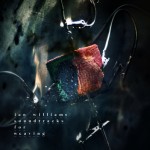
Artist: Ian Williams
Title: Soundtracks For Weaving
Format: Download Only (MP3 + Lossless)
Label: Slaughterback
Rated:

Title: Soundtracks For Weaving
Format: Download Only (MP3 + Lossless)
Label: Slaughterback
Rated:
Some music is made because somebody has a deadline. Some is made because somebody has a record contract. And occasionally, apparently, somebody makes five electronic improvisations to help a group of art students weave tapestries, only to discover that the weavers would rather listen to Radio 1. Thirty-nine years later, the tapes have escaped.
"Soundtracks For Weaving" is one of those releases whose backstory is almost too charmingly modest for the music it contains. Recorded by Ian Williams in Edinburgh in 1986 as an improvised accompaniment for friends studying tapestry at the city's art college, these five pieces were never really intended to become an album. They were practical music, or at least music aspiring to practical usefulness. The practical part failed. The music survived.
Williams has now recovered the original four-track cassette masters, digitised them and carefully reconstructed the recordings without adding contemporary production. The result is therefore not a modern musician attempting to recreate an imaginary 1986, but something much more valuable: 1986 itself, cleaned up just enough to let it breathe.
The equipment tells much of the story. A Roland SH-101 supplies the synthesizers, a Roland TR-707 handles the programmed percussion, and guitar appears here and there, with basic digital delay helping the elements occupy their slightly blurred, suspended spaces. There is nothing extravagant about the ingredients. The remarkable thing is what Williams manages to suggest with them.
The opening “The Vase” immediately reveals an artist already fascinated by the meeting point between melody and atmosphere. Its sequenced elements do not insist on becoming a conventional electronic composition. Instead, they seem to hover between soundtrack, song fragment and private experiment. This is particularly appropriate given that the piece eventually became the backing track for a Beautiful Pea Green Boat song, first appearing on Third Mind's "Future Tense" compilation in 1986 before being reworked for the band's "Get Religion".
That connection is useful because Beautiful Pea Green Boat was an important part of Williams' early trajectory. Founded in Edinburgh in the mid-1980s, the group combined electronic textures, ethereal vocals and melodic material in ways that anticipated some of the later dream-pop vocabulary. Their recordings occupied an appealingly ambiguous territory between synth music, gothic melancholy and something much softer and stranger. Contemporary retrospectives still struggle to put a clean label on them, which is probably a sign that the band was doing something right.
But "Soundtracks For Weaving" is less concerned with songs than with duration. “The Wee Red” and “The Horse” stretch patiently across ten and thirteen minutes, respectively, allowing Williams' primitive electronic machinery to reveal its character through repetition. The programmed drums are unmistakably products of their period, but their mechanical regularity gives the softer synthesizer tones something to push against. Rather than sounding dated in the pejorative sense, the technology becomes part of the emotional identity of the music. There is something wonderfully honest about that. The SH-101 does not pretend to be an orchestra. The TR-707 does not pretend to be a human drummer. The four-track does not pretend to be a pristine digital workstation. Everything sounds like what it is, and precisely because of that, the recordings develop an unusual warmth. Their limitations become compositional parameters.
“The Horse” is perhaps the clearest example. Its long-form development allows Williams to explore the tension between programmed rhythm and slowly shifting harmonic material without needing to manufacture a climax. The piece seems to move by accumulation rather than destination. A pattern settles into place, another element appears, the texture changes almost imperceptibly, and suddenly several minutes have disappeared.
This is music that understands that a loop does not have to be a prison. It can be a room. And perhaps the weaving connection is less accidental than it initially seems. Tapestry is fundamentally an art of repetition, incremental variation and accumulated detail. A thread passes through a structure again and again, apparently doing the same thing, until enough repetitions have occurred for an image to emerge. Williams' electronic constructions operate according to a surprisingly similar principle. Small sonic units recur, overlap and gradually acquire meaning through their relationships.
The students may have ignored the soundtrack, but the soundtrack was quietly learning from the activity around it. “The Etruscans” introduces a slightly more enigmatic character. The title alone suggests archaeology, fragments and buried histories, and the music has an appropriately distant quality. Williams does not attempt literal antiquity, of course. Instead, the piece creates the sensation of something half-remembered, with synthetic tones and programmed movement occupying a space that feels strangely detached from its technological origins.
Then comes “Flight”, the shortest piece at just over four minutes, and its brevity changes the perspective of the entire record. After the patient development of the preceding works, this final miniature feels almost like a departure scene. The album does not resolve so much as lift away. That lack of conventional resolution is one reason the record remains compelling as a contemporary listen.
It would be easy to treat "Soundtracks For Weaving" as an archaeological curiosity: here are some Roland instruments, here is a cassette from 1986, here is a forgotten branch of the electronic family tree. But that would undersell it considerably. Archival music becomes interesting when it stops behaving like evidence and starts behaving like music. These pieces do. They also reveal an early version of qualities that would become increasingly prominent in Williams' later work. His subsequent solo releases have moved through dark electronic compositions, cinematic soundtracks and minimalist ambient music, while his work for contemporary dance and documentary film has further developed his instinct for atmosphere and visual suggestion. His 2021 "All Becomes Desert", for example, returned to older analogue improvisations and used gradual change to evoke vast, inhospitable spaces. The connection is striking. Even when the scale changes, Williams seems drawn to music that creates environments without needing to describe them.
"Soundtracks For Weaving" is therefore an early document of a sensibility rather than merely an early document of technology. There is also an appealing absence of ambition here. These recordings were not apparently conceived as statements about electronic music, nor as attempts to predict the future. They were made for a practical purpose that nobody actually used them for. Williams kept the cassette because he liked what he heard. Decades later, he returned to it, repaired the technical problems and resisted the temptation to make it more contemporary. That decision matters. There is always a peculiar danger in revisiting old recordings with modern technology. Restoration can easily become revision. A musician can polish away the very imperfections that made the original material distinctive. Williams instead seems to have treated the old four-track like an archaeological object that deserved cleaning but not reconstruction according to present-day standards.
The music still sounds like 1986. It simply sounds like 1986 without a layer of dust over the speakers. And that gives the album an unexpected emotional quality. There is nostalgia here, certainly, but it is not the aggressively curated nostalgia of synthwave or retro culture. There are no neon signs, no artificial VHS haze, no desperate attempts to convince us that the past was cooler than the present. These recordings belong to their time because they were actually made then.
That distinction makes them strangely moving. The synthesizers have no idea that they will one day become historical objects. The drum machine has no idea that people will eventually find its sound charming. The guitarist certainly did not know that somebody would be listening to these tracks nearly forty years later while contemplating the absurd fate of music intended to accompany tapestry.
That is perhaps the quiet beauty of the record. We often imagine music history as a procession of major works, influential scenes and important names. In reality, there are countless little experiments happening in bedrooms, studios, art schools and borrowed rooms, most of which disappear. "Soundtracks For Weaving" is one of the fortunate survivors. Its original purpose has vanished, its context has changed, and its intended audience never showed up. Yet the music remains. The tapestries were never woven to it. That is almost beside the point now. Williams' five pieces have acquired their own pattern, one made not from wool and coloured thread but from analogue oscillators, primitive drum programming, delay, repetition and time. Nearly forty years later, they have finally found a listener.
Perhaps the weavers were wrong. Or perhaps they were simply listening to Radio 1 while Williams was quietly making something they would need much longer to catch up with.
"Soundtracks For Weaving" is one of those releases whose backstory is almost too charmingly modest for the music it contains. Recorded by Ian Williams in Edinburgh in 1986 as an improvised accompaniment for friends studying tapestry at the city's art college, these five pieces were never really intended to become an album. They were practical music, or at least music aspiring to practical usefulness. The practical part failed. The music survived.
Williams has now recovered the original four-track cassette masters, digitised them and carefully reconstructed the recordings without adding contemporary production. The result is therefore not a modern musician attempting to recreate an imaginary 1986, but something much more valuable: 1986 itself, cleaned up just enough to let it breathe.
The equipment tells much of the story. A Roland SH-101 supplies the synthesizers, a Roland TR-707 handles the programmed percussion, and guitar appears here and there, with basic digital delay helping the elements occupy their slightly blurred, suspended spaces. There is nothing extravagant about the ingredients. The remarkable thing is what Williams manages to suggest with them.
The opening “The Vase” immediately reveals an artist already fascinated by the meeting point between melody and atmosphere. Its sequenced elements do not insist on becoming a conventional electronic composition. Instead, they seem to hover between soundtrack, song fragment and private experiment. This is particularly appropriate given that the piece eventually became the backing track for a Beautiful Pea Green Boat song, first appearing on Third Mind's "Future Tense" compilation in 1986 before being reworked for the band's "Get Religion".
That connection is useful because Beautiful Pea Green Boat was an important part of Williams' early trajectory. Founded in Edinburgh in the mid-1980s, the group combined electronic textures, ethereal vocals and melodic material in ways that anticipated some of the later dream-pop vocabulary. Their recordings occupied an appealingly ambiguous territory between synth music, gothic melancholy and something much softer and stranger. Contemporary retrospectives still struggle to put a clean label on them, which is probably a sign that the band was doing something right.
But "Soundtracks For Weaving" is less concerned with songs than with duration. “The Wee Red” and “The Horse” stretch patiently across ten and thirteen minutes, respectively, allowing Williams' primitive electronic machinery to reveal its character through repetition. The programmed drums are unmistakably products of their period, but their mechanical regularity gives the softer synthesizer tones something to push against. Rather than sounding dated in the pejorative sense, the technology becomes part of the emotional identity of the music. There is something wonderfully honest about that. The SH-101 does not pretend to be an orchestra. The TR-707 does not pretend to be a human drummer. The four-track does not pretend to be a pristine digital workstation. Everything sounds like what it is, and precisely because of that, the recordings develop an unusual warmth. Their limitations become compositional parameters.
“The Horse” is perhaps the clearest example. Its long-form development allows Williams to explore the tension between programmed rhythm and slowly shifting harmonic material without needing to manufacture a climax. The piece seems to move by accumulation rather than destination. A pattern settles into place, another element appears, the texture changes almost imperceptibly, and suddenly several minutes have disappeared.
This is music that understands that a loop does not have to be a prison. It can be a room. And perhaps the weaving connection is less accidental than it initially seems. Tapestry is fundamentally an art of repetition, incremental variation and accumulated detail. A thread passes through a structure again and again, apparently doing the same thing, until enough repetitions have occurred for an image to emerge. Williams' electronic constructions operate according to a surprisingly similar principle. Small sonic units recur, overlap and gradually acquire meaning through their relationships.
The students may have ignored the soundtrack, but the soundtrack was quietly learning from the activity around it. “The Etruscans” introduces a slightly more enigmatic character. The title alone suggests archaeology, fragments and buried histories, and the music has an appropriately distant quality. Williams does not attempt literal antiquity, of course. Instead, the piece creates the sensation of something half-remembered, with synthetic tones and programmed movement occupying a space that feels strangely detached from its technological origins.
Then comes “Flight”, the shortest piece at just over four minutes, and its brevity changes the perspective of the entire record. After the patient development of the preceding works, this final miniature feels almost like a departure scene. The album does not resolve so much as lift away. That lack of conventional resolution is one reason the record remains compelling as a contemporary listen.
It would be easy to treat "Soundtracks For Weaving" as an archaeological curiosity: here are some Roland instruments, here is a cassette from 1986, here is a forgotten branch of the electronic family tree. But that would undersell it considerably. Archival music becomes interesting when it stops behaving like evidence and starts behaving like music. These pieces do. They also reveal an early version of qualities that would become increasingly prominent in Williams' later work. His subsequent solo releases have moved through dark electronic compositions, cinematic soundtracks and minimalist ambient music, while his work for contemporary dance and documentary film has further developed his instinct for atmosphere and visual suggestion. His 2021 "All Becomes Desert", for example, returned to older analogue improvisations and used gradual change to evoke vast, inhospitable spaces. The connection is striking. Even when the scale changes, Williams seems drawn to music that creates environments without needing to describe them.
"Soundtracks For Weaving" is therefore an early document of a sensibility rather than merely an early document of technology. There is also an appealing absence of ambition here. These recordings were not apparently conceived as statements about electronic music, nor as attempts to predict the future. They were made for a practical purpose that nobody actually used them for. Williams kept the cassette because he liked what he heard. Decades later, he returned to it, repaired the technical problems and resisted the temptation to make it more contemporary. That decision matters. There is always a peculiar danger in revisiting old recordings with modern technology. Restoration can easily become revision. A musician can polish away the very imperfections that made the original material distinctive. Williams instead seems to have treated the old four-track like an archaeological object that deserved cleaning but not reconstruction according to present-day standards.
The music still sounds like 1986. It simply sounds like 1986 without a layer of dust over the speakers. And that gives the album an unexpected emotional quality. There is nostalgia here, certainly, but it is not the aggressively curated nostalgia of synthwave or retro culture. There are no neon signs, no artificial VHS haze, no desperate attempts to convince us that the past was cooler than the present. These recordings belong to their time because they were actually made then.
That distinction makes them strangely moving. The synthesizers have no idea that they will one day become historical objects. The drum machine has no idea that people will eventually find its sound charming. The guitarist certainly did not know that somebody would be listening to these tracks nearly forty years later while contemplating the absurd fate of music intended to accompany tapestry.
That is perhaps the quiet beauty of the record. We often imagine music history as a procession of major works, influential scenes and important names. In reality, there are countless little experiments happening in bedrooms, studios, art schools and borrowed rooms, most of which disappear. "Soundtracks For Weaving" is one of the fortunate survivors. Its original purpose has vanished, its context has changed, and its intended audience never showed up. Yet the music remains. The tapestries were never woven to it. That is almost beside the point now. Williams' five pieces have acquired their own pattern, one made not from wool and coloured thread but from analogue oscillators, primitive drum programming, delay, repetition and time. Nearly forty years later, they have finally found a listener.
Perhaps the weavers were wrong. Or perhaps they were simply listening to Radio 1 while Williams was quietly making something they would need much longer to catch up with.
Lawrence English: The Rest Is My Ghost

Nostalgia usually arrives wearing flattering clothes. It brings old photographs, familiar songs, warm lighting and the reassuring suggestion that things were somehow more coherent before we came along and ruined them. "The Rest Is My Ghost", Lawrence English's latest album, is considerably less polite. It looks at nostalgia and finds something corrosive underneath the sepia.
That idea, which English calls “Acid Nostalgia”, provides the conceptual trigger for the record, but the music is too restless and physically detailed to function as a mere soundtrack to a theory. Instead, "The Rest Is My Ghost" turns memory into unstable material. Things shimmer, buckle, recur in altered forms and occasionally seem to be disappearing while they are still being heard.
This is fitting territory for an artist who has spent more than two decades investigating the politics of perception. Brisbane-based English is a composer, sound artist, curator and the founder of Room40, the Australian label that has become one of the important international homes for experimental sound. His practice has repeatedly explored the relationship between listening, place, memory and embodiment, whether through field recordings, electronic composition, installation or collaboration.
On "The Rest Is My Ghost", however, the outside world does not simply enter through recordings of distant environments. English constructs an unusually crowded acoustic environment from musicians whose individual identities are already associated with very different corners of experimental music.
Mats Gustafsson brings saxophone; Tony Buck contributes drums, percussion and gongs; Thor Harris supplies hammer dulcimer, vibes and gongs; Chuck Johnson adds pedal steel; Peter Knight trumpet; Norman Westberg guitar; Rully Shabara and Madeleine Cocolas voice; The Australian Voices choir; Lena Ito and Vanessa Tomlinson gamelan. There are trombones, piano, electronics and further guitar. It is less an ensemble than a small municipal infrastructure project.
The remarkable thing is how coherent the result remains.
A track titled as the pinyin character for 'da' (meaning "great", "wide", "huge") opens the record with a brief, enigmatic gesture before “Acid Nostalgia” arrives with considerably greater force. Low frequencies churn beneath distorted brass and percussion while Gustafsson's saxophone seems to inhabit the upper atmosphere of a building whose foundations are already giving way. The music is ominous, but not in the simplistic cinematic sense. It does not tell us that something terrible is about to happen. It creates the uncomfortable impression that something has already happened and that we have arrived slightly too late to understand it. This distinction matters throughout the album.
English has often worked with density and distortion, but here heaviness is repeatedly interrupted by details that refuse to settle into a single emotional register. A metallic resonance appears inside the drone. A brass tone bends unexpectedly. A voice seems to emerge from behind the instrumentation only to dissolve again. The effect is closer to archaeological excavation than conventional composition: layers are uncovered, but none can be trusted to remain intact.
“Eclosion” changes the temperature without abandoning the album's central unease. Its title suggests emergence, and the music indeed feels as though something is attempting to break through a compressed surface. The movement is not towards resolution, however. It is towards greater permeability. Electronic and acoustic elements begin to bleed into one another until distinctions between instrument, texture and atmosphere become increasingly difficult to maintain.
Then “Sodium Vapour Halo” offers one of the record's most evocative images. The title refers to the orange-yellow street lighting once characteristic of many cities, a technology now displaced in countless places by more efficient forms of illumination. English turns that vanished urban colour into sound. The piece glows rather than shines, with a bruised warmth that carries a strange mixture of beauty and decay. This is where the album's treatment of nostalgia becomes particularly convincing.
English is not nostalgic for sodium-vapour lamps. He is interested in what happens when a technological object becomes a memory and that memory subsequently gets simplified into an aesthetic. The old streetlight can become an image of a supposedly better city, stripped of everything inconvenient that actually surrounded it. Nostalgia turns history into décor. The music refuses to do that. Its memories remain noisy.
“Grey's Shadow”, featuring gamelan, creates another kind of temporal ambiguity. The metallic resonance of the instruments introduces a sense of ritual, but the surrounding textures prevent the music from settling into any picturesque idea of “tradition”. The past is not being displayed behind glass. It is colliding with the present.
That collision becomes more pronounced in “One Line Sky”, whose title references the compressed horizon of Hong Kong's urban environment. Here English's fascination with architecture becomes almost palpable. The music feels vertical, crowded and pressurised, as though the listener were looking upwards through a canyon of buildings rather than across an open landscape.
It is one of the album's strongest qualities that its architectural references remain sonic rather than illustrative. English does not attempt to imitate a city. He extracts a sensation from it: density, acceleration, obstruction, scale.
“Metabolic City”, at under two minutes, is almost a fragment of a larger thought. Its brevity is useful. After several pieces of substantial duration, the sudden contraction feels like a cut in film stock. The Japanese Metabolist movement, which imagined cities as structures capable of growth and transformation, provides another of the album's reference points. English's music seems to take that idea and turn it inside out: what happens when the infrastructure designed to accommodate the future becomes itself a ruin? The answer is not necessarily despair.
That is what makes "The Rest Is My Ghost" more interesting than a dystopian album. It does not simply say that the future has been destroyed. It asks why we have become so willing to imagine it as destroyed in the first place.
“Aerial Cable” and “Hack” continue to play with this tension. The former has an almost suspended quality, its sounds stretched between weight and lift, while the latter is more abrupt and fractured. The sequence feels deliberately unstable. English keeps changing the scale at which we are expected to listen. And then comes “GhostType”. The title is almost too perfect for an album concerned with memories that survive after their original contexts have vanished. The music itself seems to behave like a residue. Piano, electronics and voice occupy a space that is intimate but strangely impersonal, as though we were hearing somebody's recollection without knowing whose memory it was.
This is where Chris Abrahams' piano and Madeleine Cocolas' voice become particularly important. Their presence introduces something vulnerable into a record otherwise dominated by larger forces. The human element does not sentimentalise the music; it makes its abstractions more difficult to dismiss.
The final two pieces, “One Line Sky (alone)” and “Sodium Vapour Halo (alone)”, are especially revealing. By presenting stripped versions of earlier material, English effectively turns memory against itself. We hear something we already know, but without the same surrounding density. Familiarity becomes difference.
That gesture provides a quiet answer to the album's central concern.
If weaponised nostalgia flattens history into a single image, then "The Rest Is My Ghost" does the opposite. It keeps reopening the image. It shows us several versions of the same thing, with different textures, different contexts and different emotional temperatures. Nothing is allowed to become definitive.
This is also why the album's extensive list of intellectual and cultural references never feels entirely academic. English draws inspiration from writers and thinkers including J.G. Ballard, Mark Fisher, Franco Berardi, Kate Crawford, Katsuhiro Otomo and Alexei Yurchak, alongside architectural and civic phenomena ranging from Japanese Metabolism to Hong Kong's urban skyline and Los Angeles' obsolete street lighting. These references might sound formidable on paper, but the music does not require the listener to complete a reading list before pressing play. Thankfully. Nobody needs another album that comes with homework.
Instead, the ideas become pressure points.
Memory becomes density. Architecture becomes rhythm. Technological obsolescence becomes timbre. Political anxiety becomes low-frequency vibration. The future is not represented as a shiny destination but as a space whose shape is still uncertain.
English's earlier work has frequently explored bleakness, isolation and the physical impact of sound, from "Kiri No Oto" through "Wilderness of Mirrors", "Cruel Optimism" and his more recent projects. "The Rest Is My Ghost" continues that lineage but seems less interested in portraying catastrophe than in examining the mental habits that make catastrophe feel inevitable. That is a subtle but significant difference.
The album is dark, certainly. “Acid Nostalgia” alone could probably make an abandoned shopping centre feel emotionally inadequate. Yet darkness here is not the final destination. English repeatedly leaves cracks in it. The gamelan, piano, voices, pedal steel and brass introduce possibilities that the drones never entirely manage to suppress. Failure, consequently, becomes productive.
A structure can collapse and still leave materials behind. A city can disappear and leave traces. A technology can become obsolete and acquire another life in memory. A failed future does not necessarily prove that futures are impossible.
Perhaps that is what the ghost in the title represents. Not simply something dead haunting the present, but something unfinished.
"The Rest Is My Ghost" is therefore an album about ruins that refuses to romanticise ruins. It understands that decay can be beautiful without becoming desirable, that memories can be powerful without being reliable, and that looking backwards can either illuminate the road ahead or cover it in fog. Its most valuable gesture is ultimately an act of resistance against simplification.
The past remains complicated. The present remains unstable. The future remains irritatingly unavailable for advance review. Good. That uncertainty is where imagination begins.
That idea, which English calls “Acid Nostalgia”, provides the conceptual trigger for the record, but the music is too restless and physically detailed to function as a mere soundtrack to a theory. Instead, "The Rest Is My Ghost" turns memory into unstable material. Things shimmer, buckle, recur in altered forms and occasionally seem to be disappearing while they are still being heard.
This is fitting territory for an artist who has spent more than two decades investigating the politics of perception. Brisbane-based English is a composer, sound artist, curator and the founder of Room40, the Australian label that has become one of the important international homes for experimental sound. His practice has repeatedly explored the relationship between listening, place, memory and embodiment, whether through field recordings, electronic composition, installation or collaboration.
On "The Rest Is My Ghost", however, the outside world does not simply enter through recordings of distant environments. English constructs an unusually crowded acoustic environment from musicians whose individual identities are already associated with very different corners of experimental music.
Mats Gustafsson brings saxophone; Tony Buck contributes drums, percussion and gongs; Thor Harris supplies hammer dulcimer, vibes and gongs; Chuck Johnson adds pedal steel; Peter Knight trumpet; Norman Westberg guitar; Rully Shabara and Madeleine Cocolas voice; The Australian Voices choir; Lena Ito and Vanessa Tomlinson gamelan. There are trombones, piano, electronics and further guitar. It is less an ensemble than a small municipal infrastructure project.
The remarkable thing is how coherent the result remains.
A track titled as the pinyin character for 'da' (meaning "great", "wide", "huge") opens the record with a brief, enigmatic gesture before “Acid Nostalgia” arrives with considerably greater force. Low frequencies churn beneath distorted brass and percussion while Gustafsson's saxophone seems to inhabit the upper atmosphere of a building whose foundations are already giving way. The music is ominous, but not in the simplistic cinematic sense. It does not tell us that something terrible is about to happen. It creates the uncomfortable impression that something has already happened and that we have arrived slightly too late to understand it. This distinction matters throughout the album.
English has often worked with density and distortion, but here heaviness is repeatedly interrupted by details that refuse to settle into a single emotional register. A metallic resonance appears inside the drone. A brass tone bends unexpectedly. A voice seems to emerge from behind the instrumentation only to dissolve again. The effect is closer to archaeological excavation than conventional composition: layers are uncovered, but none can be trusted to remain intact.
“Eclosion” changes the temperature without abandoning the album's central unease. Its title suggests emergence, and the music indeed feels as though something is attempting to break through a compressed surface. The movement is not towards resolution, however. It is towards greater permeability. Electronic and acoustic elements begin to bleed into one another until distinctions between instrument, texture and atmosphere become increasingly difficult to maintain.
Then “Sodium Vapour Halo” offers one of the record's most evocative images. The title refers to the orange-yellow street lighting once characteristic of many cities, a technology now displaced in countless places by more efficient forms of illumination. English turns that vanished urban colour into sound. The piece glows rather than shines, with a bruised warmth that carries a strange mixture of beauty and decay. This is where the album's treatment of nostalgia becomes particularly convincing.
English is not nostalgic for sodium-vapour lamps. He is interested in what happens when a technological object becomes a memory and that memory subsequently gets simplified into an aesthetic. The old streetlight can become an image of a supposedly better city, stripped of everything inconvenient that actually surrounded it. Nostalgia turns history into décor. The music refuses to do that. Its memories remain noisy.
“Grey's Shadow”, featuring gamelan, creates another kind of temporal ambiguity. The metallic resonance of the instruments introduces a sense of ritual, but the surrounding textures prevent the music from settling into any picturesque idea of “tradition”. The past is not being displayed behind glass. It is colliding with the present.
That collision becomes more pronounced in “One Line Sky”, whose title references the compressed horizon of Hong Kong's urban environment. Here English's fascination with architecture becomes almost palpable. The music feels vertical, crowded and pressurised, as though the listener were looking upwards through a canyon of buildings rather than across an open landscape.
It is one of the album's strongest qualities that its architectural references remain sonic rather than illustrative. English does not attempt to imitate a city. He extracts a sensation from it: density, acceleration, obstruction, scale.
“Metabolic City”, at under two minutes, is almost a fragment of a larger thought. Its brevity is useful. After several pieces of substantial duration, the sudden contraction feels like a cut in film stock. The Japanese Metabolist movement, which imagined cities as structures capable of growth and transformation, provides another of the album's reference points. English's music seems to take that idea and turn it inside out: what happens when the infrastructure designed to accommodate the future becomes itself a ruin? The answer is not necessarily despair.
That is what makes "The Rest Is My Ghost" more interesting than a dystopian album. It does not simply say that the future has been destroyed. It asks why we have become so willing to imagine it as destroyed in the first place.
“Aerial Cable” and “Hack” continue to play with this tension. The former has an almost suspended quality, its sounds stretched between weight and lift, while the latter is more abrupt and fractured. The sequence feels deliberately unstable. English keeps changing the scale at which we are expected to listen. And then comes “GhostType”. The title is almost too perfect for an album concerned with memories that survive after their original contexts have vanished. The music itself seems to behave like a residue. Piano, electronics and voice occupy a space that is intimate but strangely impersonal, as though we were hearing somebody's recollection without knowing whose memory it was.
This is where Chris Abrahams' piano and Madeleine Cocolas' voice become particularly important. Their presence introduces something vulnerable into a record otherwise dominated by larger forces. The human element does not sentimentalise the music; it makes its abstractions more difficult to dismiss.
The final two pieces, “One Line Sky (alone)” and “Sodium Vapour Halo (alone)”, are especially revealing. By presenting stripped versions of earlier material, English effectively turns memory against itself. We hear something we already know, but without the same surrounding density. Familiarity becomes difference.
That gesture provides a quiet answer to the album's central concern.
If weaponised nostalgia flattens history into a single image, then "The Rest Is My Ghost" does the opposite. It keeps reopening the image. It shows us several versions of the same thing, with different textures, different contexts and different emotional temperatures. Nothing is allowed to become definitive.
This is also why the album's extensive list of intellectual and cultural references never feels entirely academic. English draws inspiration from writers and thinkers including J.G. Ballard, Mark Fisher, Franco Berardi, Kate Crawford, Katsuhiro Otomo and Alexei Yurchak, alongside architectural and civic phenomena ranging from Japanese Metabolism to Hong Kong's urban skyline and Los Angeles' obsolete street lighting. These references might sound formidable on paper, but the music does not require the listener to complete a reading list before pressing play. Thankfully. Nobody needs another album that comes with homework.
Instead, the ideas become pressure points.
Memory becomes density. Architecture becomes rhythm. Technological obsolescence becomes timbre. Political anxiety becomes low-frequency vibration. The future is not represented as a shiny destination but as a space whose shape is still uncertain.
English's earlier work has frequently explored bleakness, isolation and the physical impact of sound, from "Kiri No Oto" through "Wilderness of Mirrors", "Cruel Optimism" and his more recent projects. "The Rest Is My Ghost" continues that lineage but seems less interested in portraying catastrophe than in examining the mental habits that make catastrophe feel inevitable. That is a subtle but significant difference.
The album is dark, certainly. “Acid Nostalgia” alone could probably make an abandoned shopping centre feel emotionally inadequate. Yet darkness here is not the final destination. English repeatedly leaves cracks in it. The gamelan, piano, voices, pedal steel and brass introduce possibilities that the drones never entirely manage to suppress. Failure, consequently, becomes productive.
A structure can collapse and still leave materials behind. A city can disappear and leave traces. A technology can become obsolete and acquire another life in memory. A failed future does not necessarily prove that futures are impossible.
Perhaps that is what the ghost in the title represents. Not simply something dead haunting the present, but something unfinished.
"The Rest Is My Ghost" is therefore an album about ruins that refuses to romanticise ruins. It understands that decay can be beautiful without becoming desirable, that memories can be powerful without being reliable, and that looking backwards can either illuminate the road ahead or cover it in fog. Its most valuable gesture is ultimately an act of resistance against simplification.
The past remains complicated. The present remains unstable. The future remains irritatingly unavailable for advance review. Good. That uncertainty is where imagination begins.