
Browse by Genre
Industrial Music / Industrial Metal / Aggro Industrial / Electro Metal
Industrial Noise / Power Noise / Harsh Noise
Synth Pop / Electro Pop / Synth-Electronica
Techno / Trance / Goa / Drum'n'Bass / Jungle / Tribal / Trip-Hop
Ambient / Electronica / Ethereal / Dub / Soundscapes / Abstract
Experimental / Avantgarde / Weird & Wired / Glitch / Noise / Field Recording
Dark / Gothic / Wave / New Wave / Dark Wave / Industrial Gothic
New Music / Downtown / Avantgarde Jazz / New Classical / World
Search Reviews
Music Reviews
Claudio F Baroni: Re-Genetic
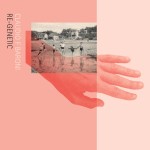


There is something almost suspiciously humble about "Re-Genetic". Two pieces, modest forces, a CD that does not scream for attention. And yet Claudio F. Baroni is doing something quietly radical here: he listens so intensely to speech that he turns listening itself into composition.
Baroni, an Argentine composer based in the Netherlands and a long-time collaborator of Unsounds, has made the spoken voice his laboratory. Trained in Rosario and later at the Royal Conservatory in The Hague with figures such as Louis Andriessen, he operates in a lineage where structure matters, but so does doubt. He is also deeply indebted to Robert Ashley, the patron saint of musical speech, and here that influence becomes both method and homage.
The premise sounds almost clinical: digitally analyse recorded speech, detect where Western scale pitches hide inside natural intonation, assign those pitches to instruments, align them precisely to syllables. Performers listen to the voice and “shadow” it in real time. It is as if language were placed under a microscope and the harmonic skeleton revealed. You could imagine this turning into a dry conceptual exercise. It does not.
In "J’ai connu", drawn from a pandemic-era text by Géraldine Schwarz, the whispered narration hovers between confession and analysis. The voice of Isabelle Vigier sits extremely close to the ear, almost ASMR in its intimacy. Around it, electric guitar, piano, bass and electronics do not decorate the words. They trace them. They lean into their pitch curves like careful archivists of breath. The effect is uncanny: meaning remains intact, but it is gently loosened from its throne. Words become events in time, small melodic arcs that bloom and vanish. When the instruments slip into brief interludes, replaying pitch constellations from the last phrase, the memory of speech lingers like a harmonic afterimage.
Then comes "Re-Genetic Mutation", built around the full original recording of Ashley’s 1991 solo voice piece. This is not a remix, not a reinterpretation in the fashionable sense. It is more like an act of devotion conducted with surgical tools. Ashley’s inner-monologue style, full of looping thoughts and refrains, already resists tidy comprehension. Baroni refuses to clarify it. He does not illustrate the text, does not underline it, does not tell us what it means. Instead, he extracts its tonal DNA and lets piano and electronics orbit it.
Reinier van Houdt’s piano playing is so precisely aligned with Ashley’s speech contours that, at times, the instrument seems to anticipate the voice. It creates a subtle perceptual glitch: who is leading whom? Is the voice casting the harmonic shadow, or is the piano quietly steering the narrative? That ambiguity becomes the real drama of the piece.
What makes "Re-Genetic" compelling is that it treats speech neither as message nor as raw sound, but as a fragile interface between the two. Baroni does not vandalise semantics. He simply shifts the spotlight. Meaning, sonority and music momentarily drift apart, then snap back into alignment. The listener is asked to give up the lazy habit of “understanding” and to enter a more exposed state of attention. Not mystical, not sentimental. Just alert.
There is a certain irony in using digital analysis to reveal something profoundly human: the micro-inflections that make a voice unique. In an era where voices are flattened into podcasts, voice notes and algorithmic clones, Baroni insists on the grain, the breath, the uneven curve of a syllable. He composes not from ideas about speech, but from speech itself.
This is not background music. It will not soundtrack your dinner. It asks for focus, and in return it offers a strange generosity: the chance to hear language as if it were happening for the first time. For a release that outwardly looks restrained, "Re-Genetic" carries a quietly subversive message. Listening, when taken seriously, is already a form of creation.
Baroni, an Argentine composer based in the Netherlands and a long-time collaborator of Unsounds, has made the spoken voice his laboratory. Trained in Rosario and later at the Royal Conservatory in The Hague with figures such as Louis Andriessen, he operates in a lineage where structure matters, but so does doubt. He is also deeply indebted to Robert Ashley, the patron saint of musical speech, and here that influence becomes both method and homage.
The premise sounds almost clinical: digitally analyse recorded speech, detect where Western scale pitches hide inside natural intonation, assign those pitches to instruments, align them precisely to syllables. Performers listen to the voice and “shadow” it in real time. It is as if language were placed under a microscope and the harmonic skeleton revealed. You could imagine this turning into a dry conceptual exercise. It does not.
In "J’ai connu", drawn from a pandemic-era text by Géraldine Schwarz, the whispered narration hovers between confession and analysis. The voice of Isabelle Vigier sits extremely close to the ear, almost ASMR in its intimacy. Around it, electric guitar, piano, bass and electronics do not decorate the words. They trace them. They lean into their pitch curves like careful archivists of breath. The effect is uncanny: meaning remains intact, but it is gently loosened from its throne. Words become events in time, small melodic arcs that bloom and vanish. When the instruments slip into brief interludes, replaying pitch constellations from the last phrase, the memory of speech lingers like a harmonic afterimage.
Then comes "Re-Genetic Mutation", built around the full original recording of Ashley’s 1991 solo voice piece. This is not a remix, not a reinterpretation in the fashionable sense. It is more like an act of devotion conducted with surgical tools. Ashley’s inner-monologue style, full of looping thoughts and refrains, already resists tidy comprehension. Baroni refuses to clarify it. He does not illustrate the text, does not underline it, does not tell us what it means. Instead, he extracts its tonal DNA and lets piano and electronics orbit it.
Reinier van Houdt’s piano playing is so precisely aligned with Ashley’s speech contours that, at times, the instrument seems to anticipate the voice. It creates a subtle perceptual glitch: who is leading whom? Is the voice casting the harmonic shadow, or is the piano quietly steering the narrative? That ambiguity becomes the real drama of the piece.
What makes "Re-Genetic" compelling is that it treats speech neither as message nor as raw sound, but as a fragile interface between the two. Baroni does not vandalise semantics. He simply shifts the spotlight. Meaning, sonority and music momentarily drift apart, then snap back into alignment. The listener is asked to give up the lazy habit of “understanding” and to enter a more exposed state of attention. Not mystical, not sentimental. Just alert.
There is a certain irony in using digital analysis to reveal something profoundly human: the micro-inflections that make a voice unique. In an era where voices are flattened into podcasts, voice notes and algorithmic clones, Baroni insists on the grain, the breath, the uneven curve of a syllable. He composes not from ideas about speech, but from speech itself.
This is not background music. It will not soundtrack your dinner. It asks for focus, and in return it offers a strange generosity: the chance to hear language as if it were happening for the first time. For a release that outwardly looks restrained, "Re-Genetic" carries a quietly subversive message. Listening, when taken seriously, is already a form of creation.
KMFDM: Enemy

Forty-two years in, most bands are content to sell anniversary box sets and pretend the revolution was a phase. KMFDM instead release their 24th studio album and declare war. Again.
"Enemy", out February 6th, 2026 via Metropolis Records, arrives with the subtlety of a steel-toed boot through a television screen. The Ultra Heavy Beat, that long-running slogan and rhythmic doctrine coined by Sascha Konietzko, remains intact: mechanical, militant, danceable in a way that makes you question your moral alignment while you move.
Konietzko, still steering the ship with Lucia Cifarelli at his side and Andy Selway hammering percussion like a factory foreman with no patience for excuses, now adds guitarist Tidor Nieddu to the frontline. The effect is not reinvention so much as reinforcement. KMFDM have never been shy about their aesthetic: distortion as architecture, slogans as hooks, politics as percussion.
The title track “ENEMY” opens the album in full manifesto mode. It does not ask for nuance. It demands allegiance. The production is crisp, heavy, unapologetically synthetic. You can trace a line back to the Wax Trax! era, when the band relocated from Hamburg to the United States and embedded themselves in the 90s industrial boom. That was the decade when “Juke Joint Jezebel” stormed charts and found its way into soundtracks for films like Mortal Kombat and Bad Boys. KMFDM learned early that confrontation sells, especially if you can dance to it.
“OUBLIETTE” leans into melody without surrendering weight. It has that polished, arena-ready sheen the band have honed over decades, with Cifarelli’s voice cutting through layers of programmed density. In contrast, “L’ETAT” is sharper, more metallic, a reminder that industrial metal is not meant to soothe. It grinds.
“VAMPYR” injects a funky pulse into the machinery. The groove is almost playful, though the lyrics never quite allow comfort. KMFDM’s long-standing strength lies in this balance: the ability to make satire sound like a rallying cry. “OUTERNATIONAL INTERVENTION” channels thrash energy into something deliberately hyperbolic, bordering on self-parody but never tipping into irrelevance. They know exactly how loud they are being.
The sequel “STRAY BULLET 2.0” is both self-reference and update. It nods to their own catalog without becoming trapped by it. After four decades, nostalgia would be easy. Instead, the band reframe their past through contemporary production, as if reminding listeners that history is not a museum piece but an active weapon.
“YOÜ”, featuring Annabella Konietzko, introduces a generational shift. Her songwriting debut with the group is explosive yet controlled, suggesting that the Ultra Heavy Beat might outlive even its founding captain. There is something almost pragmatic in that realization. Revolutions require succession planning.
KMFDM have always treated sociopolitical commentary not as garnish but as core material. From their early German recordings through their American ascendancy and eventual return to Hamburg in 2008, the band have maintained a consistent stance: confront hypocrisy, amplify dissent, reject complacency.
On "Enemy", that posture feels less rhetorical and more weary in its urgency. The world they critique is not abstract. The album’s tone oscillates between defiance and something closer to exasperation. “CATCH & KILL” and “GUN QUARTER SUE” carry a darkened groove that feels less like celebration and more like diagnosis.
“The Second Coming” closes the record with cinematic heft. Layers stack, rhythms tighten, and the band sound as though they are summarizing a thesis they have been refining since 1984. Industrial rock as continuity project. As warning system. As endurance test.
Technically, "Enemy" is immaculately produced. The guitars slash cleanly through programmed beats, synths occupy their own frequency territories, and the low end remains muscular without collapsing into mud. For a band this seasoned, discipline matters. The aggression is calibrated.
KMFDM’s longevity is not an accident. They have survived genre shifts, hiatuses, lineup changes, and the awkward aging of industrial aesthetics. Where peers softened or dissolved, they doubled down. There is something almost admirable in that stubbornness.
"Enemy" does not attempt subtlety. It does not apologize. It does not pretend the past forty years were rehearsal. Instead, it insists that the machinery still functions, the slogans still sting, and the dance floor can remain a site of resistance.
In an era that often confuses noise with impact, KMFDM remind us that impact requires structure. And possibly a very large amplifier.
"Enemy", out February 6th, 2026 via Metropolis Records, arrives with the subtlety of a steel-toed boot through a television screen. The Ultra Heavy Beat, that long-running slogan and rhythmic doctrine coined by Sascha Konietzko, remains intact: mechanical, militant, danceable in a way that makes you question your moral alignment while you move.
Konietzko, still steering the ship with Lucia Cifarelli at his side and Andy Selway hammering percussion like a factory foreman with no patience for excuses, now adds guitarist Tidor Nieddu to the frontline. The effect is not reinvention so much as reinforcement. KMFDM have never been shy about their aesthetic: distortion as architecture, slogans as hooks, politics as percussion.
The title track “ENEMY” opens the album in full manifesto mode. It does not ask for nuance. It demands allegiance. The production is crisp, heavy, unapologetically synthetic. You can trace a line back to the Wax Trax! era, when the band relocated from Hamburg to the United States and embedded themselves in the 90s industrial boom. That was the decade when “Juke Joint Jezebel” stormed charts and found its way into soundtracks for films like Mortal Kombat and Bad Boys. KMFDM learned early that confrontation sells, especially if you can dance to it.
“OUBLIETTE” leans into melody without surrendering weight. It has that polished, arena-ready sheen the band have honed over decades, with Cifarelli’s voice cutting through layers of programmed density. In contrast, “L’ETAT” is sharper, more metallic, a reminder that industrial metal is not meant to soothe. It grinds.
“VAMPYR” injects a funky pulse into the machinery. The groove is almost playful, though the lyrics never quite allow comfort. KMFDM’s long-standing strength lies in this balance: the ability to make satire sound like a rallying cry. “OUTERNATIONAL INTERVENTION” channels thrash energy into something deliberately hyperbolic, bordering on self-parody but never tipping into irrelevance. They know exactly how loud they are being.
The sequel “STRAY BULLET 2.0” is both self-reference and update. It nods to their own catalog without becoming trapped by it. After four decades, nostalgia would be easy. Instead, the band reframe their past through contemporary production, as if reminding listeners that history is not a museum piece but an active weapon.
“YOÜ”, featuring Annabella Konietzko, introduces a generational shift. Her songwriting debut with the group is explosive yet controlled, suggesting that the Ultra Heavy Beat might outlive even its founding captain. There is something almost pragmatic in that realization. Revolutions require succession planning.
KMFDM have always treated sociopolitical commentary not as garnish but as core material. From their early German recordings through their American ascendancy and eventual return to Hamburg in 2008, the band have maintained a consistent stance: confront hypocrisy, amplify dissent, reject complacency.
On "Enemy", that posture feels less rhetorical and more weary in its urgency. The world they critique is not abstract. The album’s tone oscillates between defiance and something closer to exasperation. “CATCH & KILL” and “GUN QUARTER SUE” carry a darkened groove that feels less like celebration and more like diagnosis.
“The Second Coming” closes the record with cinematic heft. Layers stack, rhythms tighten, and the band sound as though they are summarizing a thesis they have been refining since 1984. Industrial rock as continuity project. As warning system. As endurance test.
Technically, "Enemy" is immaculately produced. The guitars slash cleanly through programmed beats, synths occupy their own frequency territories, and the low end remains muscular without collapsing into mud. For a band this seasoned, discipline matters. The aggression is calibrated.
KMFDM’s longevity is not an accident. They have survived genre shifts, hiatuses, lineup changes, and the awkward aging of industrial aesthetics. Where peers softened or dissolved, they doubled down. There is something almost admirable in that stubbornness.
"Enemy" does not attempt subtlety. It does not apologize. It does not pretend the past forty years were rehearsal. Instead, it insists that the machinery still functions, the slogans still sting, and the dance floor can remain a site of resistance.
In an era that often confuses noise with impact, KMFDM remind us that impact requires structure. And possibly a very large amplifier.
Richard Francis: Combinations 4

There are musicians who play instruments. Then there are musicians who build a machine, wire it to misbehave, and call that the instrument. Richard Francis belongs firmly in the second category.
With "Combinations 4", Francis continues a practice he has refined since 2010: live, improvised takes recorded straight to stereo, barely edited, occasionally layered, and otherwise left to stand or fall on their own unstable circuitry.
He calls his setup the “fugue system”, which sounds faintly academic until you hear it operate. Built from digital and analogue components, the system merges found sound, feedback loops, generative channels, and hands-on control into a dense electronic ecology. The key detail is that he once intended it to replicate the complexity of studio composition in real time. Then he discovered he preferred the accidents. Sensible choice.
The pieces on "Combinations 4" do not unfold like linear compositions. They accumulate. Multiple signals drift toward each other, tangle, lock into patterns, then dissolve. The “combinations” of the title are not decorative overlays; they are interactions, small negotiations between forces that were never meant to coexist politely.
“Four A” opens with a cautious layering of textures, faint pulses nudging against grainy washes. It feels like stepping into a room where several machines are already humming and deciding not to turn any of them off. “Leave it all alone for months (edit)” suggests patience as a compositional method. Loops emerge as if they have been fermenting. The edit in the title hints at restraint, but the sound itself remains porous, raw at the edges.
“Parehuia” and “Phase effect on wet road” play with movement and reflection. Tones flicker and smear, as though light were refracting through damp asphalt at night. The music does not chase drama. It studies motion. Subtle shifts in phase create rhythmic illusions that appear and vanish before you can fully name them.
Then there are the titles that sound like marginal notes in a notebook: “The alphabet is a sampler”, “My instrument is a systems diagram”. Francis has a dry sense of humor about his own practice. He is not pretending this is mystical revelation. It is circuitry. It is process. It is an architecture of signal flow that occasionally stumbles into something unexpectedly lyrical.
“My fuel! Love it!” injects a jittery propulsion, feedback skittering like nervous energy trapped in a grid. “Like a forest” offers a brief, almost meditative clearing - thin strands of sound spaced with unusual generosity. Even here, however, nothing resolves into comfort. There is always a faint hiss of instability.
Francis’ biography reads like a map of serious experimental credentials: releases on labels such as Senufo Editions and Entr’acte, collaborations with figures including Ralf Wehowsky and Francisco Lopez, performances at institutions from ZKM Karlsruhe to Issue Project Room in New York. The pedigree is formidable. The music, however, resists prestige. It sounds provisional, alive, occasionally on the brink of short-circuit.
What distinguishes "Combinations 4" is its quiet confidence in process. The layering feels more deliberate than chaotic, suggesting that the system has matured. Patterns recur, semi-complex rhythms crystallize, and motifs reappear just long enough to imply structure without locking into it. You sense Francis guiding rather than commanding, adjusting parameters in real time while the network responds with its own stubborn logic.
There is something almost ecological about it. Feedback behaves like weather. Noise pools and evaporates. Signals migrate.
Despite its technological underpinnings, the album never feels sterile. The stereo field carries depth and air. Imperfections are not corrected; they are acknowledged. Trimmed beginnings and endings retain the sense that you are hearing a slice of an ongoing continuum, not a polished artifact.
Room40’s catalog has long embraced works that blur composition and improvisation, environment and abstraction. "Combinations 4" sits comfortably in that lineage while asserting its own temperament: less concerned with spectacle, more invested in the slow choreography of interaction.
In the end, this is not music that demands emotional confession. It invites attention. It rewards close listening with subtle shifts in pattern and density. It treats sound as a living diagram, lines crossing and recrossing until meaning emerges from friction.
Plenty of artists talk about systems. Richard Francis lets his system talk back.
With "Combinations 4", Francis continues a practice he has refined since 2010: live, improvised takes recorded straight to stereo, barely edited, occasionally layered, and otherwise left to stand or fall on their own unstable circuitry.
He calls his setup the “fugue system”, which sounds faintly academic until you hear it operate. Built from digital and analogue components, the system merges found sound, feedback loops, generative channels, and hands-on control into a dense electronic ecology. The key detail is that he once intended it to replicate the complexity of studio composition in real time. Then he discovered he preferred the accidents. Sensible choice.
The pieces on "Combinations 4" do not unfold like linear compositions. They accumulate. Multiple signals drift toward each other, tangle, lock into patterns, then dissolve. The “combinations” of the title are not decorative overlays; they are interactions, small negotiations between forces that were never meant to coexist politely.
“Four A” opens with a cautious layering of textures, faint pulses nudging against grainy washes. It feels like stepping into a room where several machines are already humming and deciding not to turn any of them off. “Leave it all alone for months (edit)” suggests patience as a compositional method. Loops emerge as if they have been fermenting. The edit in the title hints at restraint, but the sound itself remains porous, raw at the edges.
“Parehuia” and “Phase effect on wet road” play with movement and reflection. Tones flicker and smear, as though light were refracting through damp asphalt at night. The music does not chase drama. It studies motion. Subtle shifts in phase create rhythmic illusions that appear and vanish before you can fully name them.
Then there are the titles that sound like marginal notes in a notebook: “The alphabet is a sampler”, “My instrument is a systems diagram”. Francis has a dry sense of humor about his own practice. He is not pretending this is mystical revelation. It is circuitry. It is process. It is an architecture of signal flow that occasionally stumbles into something unexpectedly lyrical.
“My fuel! Love it!” injects a jittery propulsion, feedback skittering like nervous energy trapped in a grid. “Like a forest” offers a brief, almost meditative clearing - thin strands of sound spaced with unusual generosity. Even here, however, nothing resolves into comfort. There is always a faint hiss of instability.
Francis’ biography reads like a map of serious experimental credentials: releases on labels such as Senufo Editions and Entr’acte, collaborations with figures including Ralf Wehowsky and Francisco Lopez, performances at institutions from ZKM Karlsruhe to Issue Project Room in New York. The pedigree is formidable. The music, however, resists prestige. It sounds provisional, alive, occasionally on the brink of short-circuit.
What distinguishes "Combinations 4" is its quiet confidence in process. The layering feels more deliberate than chaotic, suggesting that the system has matured. Patterns recur, semi-complex rhythms crystallize, and motifs reappear just long enough to imply structure without locking into it. You sense Francis guiding rather than commanding, adjusting parameters in real time while the network responds with its own stubborn logic.
There is something almost ecological about it. Feedback behaves like weather. Noise pools and evaporates. Signals migrate.
Despite its technological underpinnings, the album never feels sterile. The stereo field carries depth and air. Imperfections are not corrected; they are acknowledged. Trimmed beginnings and endings retain the sense that you are hearing a slice of an ongoing continuum, not a polished artifact.
Room40’s catalog has long embraced works that blur composition and improvisation, environment and abstraction. "Combinations 4" sits comfortably in that lineage while asserting its own temperament: less concerned with spectacle, more invested in the slow choreography of interaction.
In the end, this is not music that demands emotional confession. It invites attention. It rewards close listening with subtle shifts in pattern and density. It treats sound as a living diagram, lines crossing and recrossing until meaning emerges from friction.
Plenty of artists talk about systems. Richard Francis lets his system talk back.
Split Apex: Thoughts In 3D

Eighty percent of the ocean floor is unmapped. Most bands can barely map a rehearsal room. Split Apex, naturally, choose the Mariana Trench.
With "Thoughts In 3D", the duo of Jussi Palmusaari and Peter Blundell deliver a vinyl debut that behaves less like an album and more like a deep-sea expedition log written under crushing pressure.
Palmusaari, who cut his teeth in Finland with Preesens in the late 90s and early 2000s, arrives in South London carrying a particular northern severity: guitar lines that feel chiseled rather than strummed. Blundell’s lineage runs through the angular, literate sprawl of Mosquitoes, and onward to Komare. His voice has that distinctly British quality of sounding observational and slightly detached even when the ground is splitting open beneath it. Together, they formed Split Apex in autumn 2024, rehearsed obsessively in Croydon, and apparently decided that subtlety was for people who enjoy breathable air.
Across five extended tracks, the record moves like a submersible lowering itself past sunlight.
“Peninsula” is the descent. Bass pulses like sonar. Guitar clangs and scrapes as if testing the hull integrity of the song itself. There’s a mechanical patience to it. You don’t get riffs; you get tectonic adjustments.
“Crux Machine” settles into something heavier, more sedimentary. A solitary guitar figure repeats with stubborn clarity while low-end loops throb underneath, like an engine that might be failing or might be achieving transcendence. It’s hard to tell. That ambiguity is part of the thrill.
On “Cast In Light”, the duo veer into what could be described as laboratory rock. If The Shadow Ring had abandoned literary introspection for surgical experimentation, this might be the result. Blundell’s vocal delivery sounds almost clinical, as if he’s documenting specimens rather than performing songs. Yet there’s tension in that restraint. You sense awe and dread occupying the same narrow corridor.
The title track, “Thoughts In 3D”, slithers rather than strides. Synth lines glow faintly, like bioluminescent organisms drifting just out of reach. The music feels dimensional not because it is busy, but because it has depth. Layers move independently, intersecting without resolving neatly. It refuses the easy climax.
“People, Nerves” completes the arc, rising toward the surface but carrying pressure scars. The guitars shimmer, the rhythm section tightens, and Blundell’s voice hovers between witness statement and existential report. The ascent is not triumphant. It is informed.
Reviews circulating online have pointed to the album’s balance between abrasion and atmosphere, its refusal to flatten intensity into mere noise. That assessment holds. What’s striking is the discipline. Split Apex do not indulge in chaos for its own sake. Every scrape, loop, and bass surge feels positioned with intent, as though the duo are charting coordinates rather than improvising freely.
The production keeps edges intact. Nothing is softened for comfort. The LP format suits it: five substantial tracks, each given space to breathe and to weigh on the listener. This is not background music. It insists on attention. It rewards patience.
If "Thoughts In 3D" has a central thesis, it is that pressure clarifies. Under enough weight, superficial gestures collapse. What remains is structure. Tone. Nerve.
Most bands write songs. Split Apex conduct sound pressure tests on the psyche and press the results to vinyl.
It turns out the ocean was not the dangerous part. The dangerous part is how calmly they guide you through it.
With "Thoughts In 3D", the duo of Jussi Palmusaari and Peter Blundell deliver a vinyl debut that behaves less like an album and more like a deep-sea expedition log written under crushing pressure.
Palmusaari, who cut his teeth in Finland with Preesens in the late 90s and early 2000s, arrives in South London carrying a particular northern severity: guitar lines that feel chiseled rather than strummed. Blundell’s lineage runs through the angular, literate sprawl of Mosquitoes, and onward to Komare. His voice has that distinctly British quality of sounding observational and slightly detached even when the ground is splitting open beneath it. Together, they formed Split Apex in autumn 2024, rehearsed obsessively in Croydon, and apparently decided that subtlety was for people who enjoy breathable air.
Across five extended tracks, the record moves like a submersible lowering itself past sunlight.
“Peninsula” is the descent. Bass pulses like sonar. Guitar clangs and scrapes as if testing the hull integrity of the song itself. There’s a mechanical patience to it. You don’t get riffs; you get tectonic adjustments.
“Crux Machine” settles into something heavier, more sedimentary. A solitary guitar figure repeats with stubborn clarity while low-end loops throb underneath, like an engine that might be failing or might be achieving transcendence. It’s hard to tell. That ambiguity is part of the thrill.
On “Cast In Light”, the duo veer into what could be described as laboratory rock. If The Shadow Ring had abandoned literary introspection for surgical experimentation, this might be the result. Blundell’s vocal delivery sounds almost clinical, as if he’s documenting specimens rather than performing songs. Yet there’s tension in that restraint. You sense awe and dread occupying the same narrow corridor.
The title track, “Thoughts In 3D”, slithers rather than strides. Synth lines glow faintly, like bioluminescent organisms drifting just out of reach. The music feels dimensional not because it is busy, but because it has depth. Layers move independently, intersecting without resolving neatly. It refuses the easy climax.
“People, Nerves” completes the arc, rising toward the surface but carrying pressure scars. The guitars shimmer, the rhythm section tightens, and Blundell’s voice hovers between witness statement and existential report. The ascent is not triumphant. It is informed.
Reviews circulating online have pointed to the album’s balance between abrasion and atmosphere, its refusal to flatten intensity into mere noise. That assessment holds. What’s striking is the discipline. Split Apex do not indulge in chaos for its own sake. Every scrape, loop, and bass surge feels positioned with intent, as though the duo are charting coordinates rather than improvising freely.
The production keeps edges intact. Nothing is softened for comfort. The LP format suits it: five substantial tracks, each given space to breathe and to weigh on the listener. This is not background music. It insists on attention. It rewards patience.
If "Thoughts In 3D" has a central thesis, it is that pressure clarifies. Under enough weight, superficial gestures collapse. What remains is structure. Tone. Nerve.
Most bands write songs. Split Apex conduct sound pressure tests on the psyche and press the results to vinyl.
It turns out the ocean was not the dangerous part. The dangerous part is how calmly they guide you through it.
CoH & Wladimir Schall: Covers
There are albums that revisit the past. And then there are albums that take the past apart with a jeweller’s screwdriver, lay its gears on a velvet cloth, and ask: "so, how exactly does this thing tick?"
With "Covers", released by Hallow Ground (H2509) on December 21st, 2025, CoH and Wladimir Schall offer not a tribute record, not a nostalgic mixtape, but something closer to a philosophical experiment pressed on vinyl.
Ivan Pavlov - known for decades as CoH, a restless explorer of digital signal, conceptual rigor and elegant reduction - has long treated sound as both sculpture and proposition. His earlier detours into homage (including his austere engagement with John Everall) already suggested that influence for him is less about admiration and more about interrogation. Schall, equally elusive, previously stretched Erik Satie’s "Vexations" into a looping temporal labyrinth. Neither artist is interested in faithful reproduction. They are interested in exposure.
And here, exposure is the operative word.
The seven pieces on "Covers" begin with piano material - but what begins as ivory soon becomes circuitry. The album opens with “Merry Xmas Mr Erik”, an oblique triangulation between Erik Satie and Ryuichi Sakamoto. It’s not a mash-up; it’s a slow dissolving of stylistic fingerprints. Satie’s dry wit and Sakamoto’s fragile lyricism are nudged into a shared acoustic twilight, where melody feels less like narrative and more like residue.
Elsewhere, a four-note cell associated with Sergei Rachmaninoff is inflated into a thick, hovering mass - like a Romantic ghost caught inside a server rack. The gesture is almost mischievous: what was once pianistic drama becomes a field of granular tension. Rachmaninoff’s emotive surge is rendered as a kind of architectural hum.
“Kohtakt” and “Okolo Kolokola” nod toward Soviet animation - particularly the 1978 short Kontakt and the cult series Nu, pogodi! - but instead of cartoonish exuberance, we encounter suspended atmospheres. Childhood memory here is neither sweet nor ironic; it is filtered, slowed, refracted. Like trying to recall a dream through frosted glass.
“SOII BLANC” revisits Pavlov’s own earlier work through the distant, hovering sensibility of Morton Feldman - that master of time stretched thin as tracing paper. The result is not imitation but displacement: tones seem to hesitate before existing, as if unsure whether memory deserves to solidify.
And then there is “Snowflakes”, a cover of something that never existed. A delicious paradox. A melody without ancestry. A wink at Immanuel Kant and the idea that meaning can emerge without semantic scaffolding. The track floats - light, crystalline, faintly absurd. It smiles without showing teeth.
If there is a unifying thread, it is the ambiguity of nostalgia. Not the syrupy variety, but the kind that tastes slightly metallic. The closing track, “Starost ne radost”, invokes a Russian proverb - old age is not joy - and the album indeed circles around that friction between tenderness and erosion. Joy and sadness are not opposites here; they are phase-shifted versions of the same waveform.
What makes "Covers" compelling is its refusal to romanticize memory. Pavlov and Schall treat recollection as unstable hardware. The “faults” of traditional instruments and compositions - those imperfections we often forgive because we love them - are not corrected. They are highlighted. Amplified. Turned into structural features.
This is electronic music with a scalpel: calm, exacting, faintly amused. It asks uncomfortable questions. What are we really hearing when we hear a “classic”? Where does authenticity reside - inside the score, the instrument, the ear, or the cultural myth wrapped around it?
As a limited art edition LP with handcrafted covers, the release reinforces the paradox: a tactile artifact dedicated to deconstructing tradition. Mastered by Andreas Lupo Lubich, the vinyl breathes with clarity; its quiet passages feel architectural rather than decorative.
In the end, "Covers" is not about covering songs. It is about uncovering mechanisms. About peeling varnish from melody. About placing memory under laboratory light and discovering that it flickers.
You don’t hum these tracks in the shower. You ponder them at 2 a.m., wondering whether the piano was ever innocent to begin with.
With "Covers", released by Hallow Ground (H2509) on December 21st, 2025, CoH and Wladimir Schall offer not a tribute record, not a nostalgic mixtape, but something closer to a philosophical experiment pressed on vinyl.
Ivan Pavlov - known for decades as CoH, a restless explorer of digital signal, conceptual rigor and elegant reduction - has long treated sound as both sculpture and proposition. His earlier detours into homage (including his austere engagement with John Everall) already suggested that influence for him is less about admiration and more about interrogation. Schall, equally elusive, previously stretched Erik Satie’s "Vexations" into a looping temporal labyrinth. Neither artist is interested in faithful reproduction. They are interested in exposure.
And here, exposure is the operative word.
The seven pieces on "Covers" begin with piano material - but what begins as ivory soon becomes circuitry. The album opens with “Merry Xmas Mr Erik”, an oblique triangulation between Erik Satie and Ryuichi Sakamoto. It’s not a mash-up; it’s a slow dissolving of stylistic fingerprints. Satie’s dry wit and Sakamoto’s fragile lyricism are nudged into a shared acoustic twilight, where melody feels less like narrative and more like residue.
Elsewhere, a four-note cell associated with Sergei Rachmaninoff is inflated into a thick, hovering mass - like a Romantic ghost caught inside a server rack. The gesture is almost mischievous: what was once pianistic drama becomes a field of granular tension. Rachmaninoff’s emotive surge is rendered as a kind of architectural hum.
“Kohtakt” and “Okolo Kolokola” nod toward Soviet animation - particularly the 1978 short Kontakt and the cult series Nu, pogodi! - but instead of cartoonish exuberance, we encounter suspended atmospheres. Childhood memory here is neither sweet nor ironic; it is filtered, slowed, refracted. Like trying to recall a dream through frosted glass.
“SOII BLANC” revisits Pavlov’s own earlier work through the distant, hovering sensibility of Morton Feldman - that master of time stretched thin as tracing paper. The result is not imitation but displacement: tones seem to hesitate before existing, as if unsure whether memory deserves to solidify.
And then there is “Snowflakes”, a cover of something that never existed. A delicious paradox. A melody without ancestry. A wink at Immanuel Kant and the idea that meaning can emerge without semantic scaffolding. The track floats - light, crystalline, faintly absurd. It smiles without showing teeth.
If there is a unifying thread, it is the ambiguity of nostalgia. Not the syrupy variety, but the kind that tastes slightly metallic. The closing track, “Starost ne radost”, invokes a Russian proverb - old age is not joy - and the album indeed circles around that friction between tenderness and erosion. Joy and sadness are not opposites here; they are phase-shifted versions of the same waveform.
What makes "Covers" compelling is its refusal to romanticize memory. Pavlov and Schall treat recollection as unstable hardware. The “faults” of traditional instruments and compositions - those imperfections we often forgive because we love them - are not corrected. They are highlighted. Amplified. Turned into structural features.
This is electronic music with a scalpel: calm, exacting, faintly amused. It asks uncomfortable questions. What are we really hearing when we hear a “classic”? Where does authenticity reside - inside the score, the instrument, the ear, or the cultural myth wrapped around it?
As a limited art edition LP with handcrafted covers, the release reinforces the paradox: a tactile artifact dedicated to deconstructing tradition. Mastered by Andreas Lupo Lubich, the vinyl breathes with clarity; its quiet passages feel architectural rather than decorative.
In the end, "Covers" is not about covering songs. It is about uncovering mechanisms. About peeling varnish from melody. About placing memory under laboratory light and discovering that it flickers.
You don’t hum these tracks in the shower. You ponder them at 2 a.m., wondering whether the piano was ever innocent to begin with.