
Browse by Genre
Industrial Music / Industrial Metal / Aggro Industrial / Electro Metal
Industrial Noise / Power Noise / Harsh Noise
Synth Pop / Electro Pop / Synth-Electronica
Techno / Trance / Goa / Drum'n'Bass / Jungle / Tribal / Trip-Hop
Ambient / Electronica / Ethereal / Dub / Soundscapes / Abstract
Experimental / Avantgarde / Weird & Wired / Glitch / Noise / Field Recording
Dark / Gothic / Wave / New Wave / Dark Wave / Industrial Gothic
New Music / Downtown / Avantgarde Jazz / New Classical / World
Search Reviews
Music Reviews
Andreas Tschopp: What If We Align Our Breath
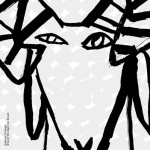
Artist: Andreas Tschopp
Title: What If We Align Our Breath
Format: 12" + Download
Label: Kit Records (@)
Rated:

Title: What If We Align Our Breath
Format: 12" + Download
Label: Kit Records (@)
Rated:
There is a particular kind of album that does not merely ask you to listen, but quietly adjusts your breathing while you are not paying attention. By the time you notice, you are already inside its atmosphere, walking slower, hearing differently, wondering why the world outside suddenly feels louder and more ridiculous than usual. Human civilization has built entire economies around stress and notifications, so naturally an album like this arrives almost as an act of resistance.
For listeners familiar with Andreas Tschopp through projects like Skyjack, Le Rex, or the Indonesian-inspired textures of Bubaran, this first solo release may initially seem surprisingly restrained. Yet restraint is precisely the point. Rather than showcasing virtuosity in the conventional jazz sense, Tschopp constructs a porous sonic ecology where horns, flutes, tape loops, percussion, and electronics breathe alongside one another with unusual patience. The album feels less “performed” than inhabited.
The central presence of the kudu horns gives the record its emotional and physical gravity. Their tones are ancient, unstable, mournful, and strangely intimate, carrying a graininess that modern brass instruments often smooth away. Tschopp does not attempt to tame them into polished melodic tools. Instead, he listens to their imperfections, their hesitations, their rough edges. The result is music that feels startlingly alive, as though every note arrives carrying weather, dust, distance, and memory within it.
What makes the album remarkable is the way it balances spiritual openness with compositional precision. There are traces of ambient jazz here, certainly, but also echoes of indigenous ceremonial music, electroacoustic minimalism, and post-classical texture work. Yet none of these references dominate. The record refuses easy categorization with admirable calm. It simply exists in its own liminal terrain, where improvisation becomes philosophy and resonance becomes political language.
Tracks like “The Poetry of the In-Between” and “I Am Because You Are” embody the album’s core concern: interconnectedness not as slogan, but as lived condition. The influence of ubuntu philosophy is palpable throughout, though never didactic. Instead, collaboration itself becomes the message. South African musicians Shane Cooper and Gontse Makhene contribute with remarkable subtlety, while poet Koleka Putuma brings an incantatory depth to “Sounding the Voice.” Even the electronics behave communally. Synths and tape manipulations do not dominate the acoustic instruments but drift around them like companions sharing the same road at dusk.
The production deserves particular praise. Co-produced and mixed by Cooper alongside Tschopp, the album maintains an extraordinary sense of space. Sounds emerge softly from the edges of perception, overlap gently, then dissolve before they become fixed objects. The mix itself seems committed to coexistence. Nothing fights for dominance. In lesser hands this approach could easily become vague or overly precious, the sort of “healing music” sold to exhausted executives next to Himalayan salt lamps and artisanal regret. Instead, the record remains grounded in tactile detail and emotional ambiguity.
There is also an understated courage in how openly hopeful the album feels. Contemporary experimental music often mistakes emotional detachment for sophistication, as though sincerity might somehow contaminate the conceptual framework. Tschopp avoids that trap entirely. "What If We Align Our Breath" dares to suggest that gentleness may itself be radical in an era increasingly organized around spectacle, division, and algorithmic agitation. Not naïve optimism, but attentive presence.
At moments, the record recalls the spiritual jazz lineage of Don Cherry or the transcultural curiosity of Jon Hassell, particularly in its blending of geographical and sonic identities. Yet Tschopp’s approach feels less cosmopolitan in the fashionable sense and more rooted in genuine encounter. You hear someone trying to build relationships with sound rather than merely collecting influences like stamps in a passport.
The closing pieces leave behind a lingering sensation difficult to articulate. Not transcendence exactly. More like recalibration. As though the album has temporarily restored forgotten frequencies in the listener’s nervous system. Breathing, after all, is both individual and collective: utterly personal, yet shared by every living thing. Tschopp understands this deeply, and the album’s title stops feeling metaphorical after a while. It becomes instruction. Or invitation.
A quietly luminous record. One that trusts silence, trusts listeners, and trusts that music can still create forms of connection more meaningful than the endless digital shouting match humans now mistake for public discourse. An increasingly rare kind of intelligence.
For listeners familiar with Andreas Tschopp through projects like Skyjack, Le Rex, or the Indonesian-inspired textures of Bubaran, this first solo release may initially seem surprisingly restrained. Yet restraint is precisely the point. Rather than showcasing virtuosity in the conventional jazz sense, Tschopp constructs a porous sonic ecology where horns, flutes, tape loops, percussion, and electronics breathe alongside one another with unusual patience. The album feels less “performed” than inhabited.
The central presence of the kudu horns gives the record its emotional and physical gravity. Their tones are ancient, unstable, mournful, and strangely intimate, carrying a graininess that modern brass instruments often smooth away. Tschopp does not attempt to tame them into polished melodic tools. Instead, he listens to their imperfections, their hesitations, their rough edges. The result is music that feels startlingly alive, as though every note arrives carrying weather, dust, distance, and memory within it.
What makes the album remarkable is the way it balances spiritual openness with compositional precision. There are traces of ambient jazz here, certainly, but also echoes of indigenous ceremonial music, electroacoustic minimalism, and post-classical texture work. Yet none of these references dominate. The record refuses easy categorization with admirable calm. It simply exists in its own liminal terrain, where improvisation becomes philosophy and resonance becomes political language.
Tracks like “The Poetry of the In-Between” and “I Am Because You Are” embody the album’s core concern: interconnectedness not as slogan, but as lived condition. The influence of ubuntu philosophy is palpable throughout, though never didactic. Instead, collaboration itself becomes the message. South African musicians Shane Cooper and Gontse Makhene contribute with remarkable subtlety, while poet Koleka Putuma brings an incantatory depth to “Sounding the Voice.” Even the electronics behave communally. Synths and tape manipulations do not dominate the acoustic instruments but drift around them like companions sharing the same road at dusk.
The production deserves particular praise. Co-produced and mixed by Cooper alongside Tschopp, the album maintains an extraordinary sense of space. Sounds emerge softly from the edges of perception, overlap gently, then dissolve before they become fixed objects. The mix itself seems committed to coexistence. Nothing fights for dominance. In lesser hands this approach could easily become vague or overly precious, the sort of “healing music” sold to exhausted executives next to Himalayan salt lamps and artisanal regret. Instead, the record remains grounded in tactile detail and emotional ambiguity.
There is also an understated courage in how openly hopeful the album feels. Contemporary experimental music often mistakes emotional detachment for sophistication, as though sincerity might somehow contaminate the conceptual framework. Tschopp avoids that trap entirely. "What If We Align Our Breath" dares to suggest that gentleness may itself be radical in an era increasingly organized around spectacle, division, and algorithmic agitation. Not naïve optimism, but attentive presence.
At moments, the record recalls the spiritual jazz lineage of Don Cherry or the transcultural curiosity of Jon Hassell, particularly in its blending of geographical and sonic identities. Yet Tschopp’s approach feels less cosmopolitan in the fashionable sense and more rooted in genuine encounter. You hear someone trying to build relationships with sound rather than merely collecting influences like stamps in a passport.
The closing pieces leave behind a lingering sensation difficult to articulate. Not transcendence exactly. More like recalibration. As though the album has temporarily restored forgotten frequencies in the listener’s nervous system. Breathing, after all, is both individual and collective: utterly personal, yet shared by every living thing. Tschopp understands this deeply, and the album’s title stops feeling metaphorical after a while. It becomes instruction. Or invitation.
A quietly luminous record. One that trusts silence, trusts listeners, and trusts that music can still create forms of connection more meaningful than the endless digital shouting match humans now mistake for public discourse. An increasingly rare kind of intelligence.
Hiroshi Ebina: On Solitude
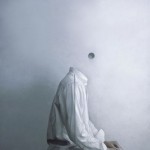
There was probably a time when solitude meant forests, mountains, monks, maybe a lighthouse keeper staring heroically into Atlantic storms. In 2026 solitude mostly means turning your phone face down for eleven minutes and pretending not to hear civilization vibrating inside your pocket. Into this exhausted condition arrives "On Solitude" by Hiroshi Ebina, a record that does not romanticize isolation so much as rehabilitate it. Not loneliness as punishment, but solitude as recovery protocol for nervous systems damaged by permanent connectivity.
Released by KITCHEN. LABEL, Ebina’s third album for the imprint continues his gradual movement toward what might loosely be called post-digital ambient music. Yet that term barely captures the emotional delicacy of the work. Across thirteen tracks, Ebina builds a sound world suspended somewhere between dream techno, environmental composition, ambient minimalism, and faded memory architecture. The album feels less like a sequence of songs than a carefully lit interior space designed for listening to one’s own thoughts without immediately panicking about them.
The influence of Perfect Days hangs gently over the album, not through imitation but through temperament. Like Wenders’ film, "On Solitude" finds quiet dignity in repetition, routine, and attentive observation. Ebina seems fascinated by small internal shifts rather than dramatic gestures. A synth pattern subtly mutates. A field recording drifts through the edge of perception. A piano chord lingers slightly longer than expected. Tiny movements become emotionally seismic because the music leaves enough space for the listener to notice them.
“The Village in the Sky”, featuring Hinako Omori, opens the album with a kind of restrained radiance. Omori’s presence feels almost evaporative, her voice less a lead performance than a soft atmospheric current threading through the arrangement. The track establishes the album’s central emotional paradox immediately: the music feels deeply melancholic without becoming despairing. Ebina understands that sadness and calm are not opposites. Sometimes they share the same room quietly for years.
Elsewhere, “Your Mind Is Like the Ocean” and its mirrored counterpart “My Mind Is Like the Ocean” function almost like emotional weather systems. Low-end pulses drift beneath shimmering synth textures that never fully settle into rhythmic certainty. The tracks evoke internal turbulence rendered at a distance, as though observing one’s own anxiety from the shoreline rather than drowning inside it. Dream techno is an accurate descriptor here, but only partially. These rhythms do not propel bodies toward ecstasy so much as guide consciousness toward stillness.
Ebina’s compositional restraint is crucial to the album’s success. Lesser artists working within ambient-adjacent territories often confuse softness with emotional depth, producing endless washes of decorative melancholy fit mainly for expensive cafés where everyone is typing emails about “creative alignment”. "On Solitude" avoids this fate because it remains attentive to detail. “Saudade da Memória Perdida,” with its delicate music-box motifs, could easily have collapsed into sentimentality. Instead, it feels strangely unresolved, like remembering a childhood place incorrectly yet emotionally accurately.
The shorter interludes, particularly “For Brief Moment” and “Hush”, function almost as breathing spaces between emotional states. Ebina appears less interested in traditional narrative progression than in creating fluctuating conditions of attention. Listening becomes less about anticipation and more about inhabitation. Which sounds suspiciously close to mindfulness culture, admittedly, but the album thankfully avoids the smug therapeutic optimism that often infects music marketed as healing. Ebina does not promise enlightenment. He merely offers a temporary refuge from overstimulation.
Side B drifts even further inward. “Transience/Permanence” and “Quiescence” dissolve rhythmic structure almost entirely, allowing spectral piano tones and suspended harmonics to hover in ambiguous emotional territory. The influence of post-classical minimalism emerges here, though Ebina filters it through electronic atmospheres warm enough to avoid academic coldness. “Hokokuji Bamboo Forest” subtly integrates environmental recordings into the music, transforming natural ambience into part of the harmonic ecology rather than exotic decoration. The piece breathes rather than performs nature.
The closing “A Silent Room”, featuring marucoporoporo, is among the album’s quietest and most affecting moments. The vocals barely insist upon themselves, arriving like traces of human presence inside a room already filled with memory. By this point, the album has abandoned any distinction between external landscape and internal consciousness. Solitude becomes not absence but permeability, a state in which thoughts, sounds, memories, and environments intermingle without hierarchy.
What makes "On Solitude" particularly compelling is its resistance to spectacle. Contemporary electronic music often feels trapped between maximalist stimulation and carefully branded introspection. Ebina chooses neither route. His music unfolds patiently, trusting listeners enough not to constantly demand attention. In a culture optimized for interruption, this patience feels quietly radical.
Mastering engineer Joseph Branciforte preserves the album’s fragile spatial qualities beautifully, while the artwork by Chizuru Masumura complements the music’s understated emotional architecture without overstating its themes. Everything about the release suggests careful attention without preciousness.
By the end, "On Solitude" does not necessarily make the listener feel better. It does something more interesting. It restores sensitivity to small emotional textures modern life continuously erodes. The faint ache beneath routine. The warmth hidden inside repetition. The strange relief of becoming temporarily unreachable.
Humanity spent decades inventing technologies meant to eliminate distance, silence, and waiting. Now entire generations are desperately buying ambient records to simulate the psychological conditions those technologies destroyed. Ebina, at least, understands the irony well enough to turn it into something genuinely beautiful.
Released by KITCHEN. LABEL, Ebina’s third album for the imprint continues his gradual movement toward what might loosely be called post-digital ambient music. Yet that term barely captures the emotional delicacy of the work. Across thirteen tracks, Ebina builds a sound world suspended somewhere between dream techno, environmental composition, ambient minimalism, and faded memory architecture. The album feels less like a sequence of songs than a carefully lit interior space designed for listening to one’s own thoughts without immediately panicking about them.
The influence of Perfect Days hangs gently over the album, not through imitation but through temperament. Like Wenders’ film, "On Solitude" finds quiet dignity in repetition, routine, and attentive observation. Ebina seems fascinated by small internal shifts rather than dramatic gestures. A synth pattern subtly mutates. A field recording drifts through the edge of perception. A piano chord lingers slightly longer than expected. Tiny movements become emotionally seismic because the music leaves enough space for the listener to notice them.
“The Village in the Sky”, featuring Hinako Omori, opens the album with a kind of restrained radiance. Omori’s presence feels almost evaporative, her voice less a lead performance than a soft atmospheric current threading through the arrangement. The track establishes the album’s central emotional paradox immediately: the music feels deeply melancholic without becoming despairing. Ebina understands that sadness and calm are not opposites. Sometimes they share the same room quietly for years.
Elsewhere, “Your Mind Is Like the Ocean” and its mirrored counterpart “My Mind Is Like the Ocean” function almost like emotional weather systems. Low-end pulses drift beneath shimmering synth textures that never fully settle into rhythmic certainty. The tracks evoke internal turbulence rendered at a distance, as though observing one’s own anxiety from the shoreline rather than drowning inside it. Dream techno is an accurate descriptor here, but only partially. These rhythms do not propel bodies toward ecstasy so much as guide consciousness toward stillness.
Ebina’s compositional restraint is crucial to the album’s success. Lesser artists working within ambient-adjacent territories often confuse softness with emotional depth, producing endless washes of decorative melancholy fit mainly for expensive cafés where everyone is typing emails about “creative alignment”. "On Solitude" avoids this fate because it remains attentive to detail. “Saudade da Memória Perdida,” with its delicate music-box motifs, could easily have collapsed into sentimentality. Instead, it feels strangely unresolved, like remembering a childhood place incorrectly yet emotionally accurately.
The shorter interludes, particularly “For Brief Moment” and “Hush”, function almost as breathing spaces between emotional states. Ebina appears less interested in traditional narrative progression than in creating fluctuating conditions of attention. Listening becomes less about anticipation and more about inhabitation. Which sounds suspiciously close to mindfulness culture, admittedly, but the album thankfully avoids the smug therapeutic optimism that often infects music marketed as healing. Ebina does not promise enlightenment. He merely offers a temporary refuge from overstimulation.
Side B drifts even further inward. “Transience/Permanence” and “Quiescence” dissolve rhythmic structure almost entirely, allowing spectral piano tones and suspended harmonics to hover in ambiguous emotional territory. The influence of post-classical minimalism emerges here, though Ebina filters it through electronic atmospheres warm enough to avoid academic coldness. “Hokokuji Bamboo Forest” subtly integrates environmental recordings into the music, transforming natural ambience into part of the harmonic ecology rather than exotic decoration. The piece breathes rather than performs nature.
The closing “A Silent Room”, featuring marucoporoporo, is among the album’s quietest and most affecting moments. The vocals barely insist upon themselves, arriving like traces of human presence inside a room already filled with memory. By this point, the album has abandoned any distinction between external landscape and internal consciousness. Solitude becomes not absence but permeability, a state in which thoughts, sounds, memories, and environments intermingle without hierarchy.
What makes "On Solitude" particularly compelling is its resistance to spectacle. Contemporary electronic music often feels trapped between maximalist stimulation and carefully branded introspection. Ebina chooses neither route. His music unfolds patiently, trusting listeners enough not to constantly demand attention. In a culture optimized for interruption, this patience feels quietly radical.
Mastering engineer Joseph Branciforte preserves the album’s fragile spatial qualities beautifully, while the artwork by Chizuru Masumura complements the music’s understated emotional architecture without overstating its themes. Everything about the release suggests careful attention without preciousness.
By the end, "On Solitude" does not necessarily make the listener feel better. It does something more interesting. It restores sensitivity to small emotional textures modern life continuously erodes. The faint ache beneath routine. The warmth hidden inside repetition. The strange relief of becoming temporarily unreachable.
Humanity spent decades inventing technologies meant to eliminate distance, silence, and waiting. Now entire generations are desperately buying ambient records to simulate the psychological conditions those technologies destroyed. Ebina, at least, understands the irony well enough to turn it into something genuinely beautiful.
Denman Maroney: Mean Times
Artist: Denman Maroney (@)
Title: Mean Times
Format: Download Only (MP3 + Lossless)
Label: Cuneiform (http://www.cuneiformrecords.com/) (@)
Rated:

Title: Mean Times
Format: Download Only (MP3 + Lossless)
Label: Cuneiform (http://www.cuneiformrecords.com/) (@)
Rated:
There is something beautifully stubborn about releasing a live recording from 1995 in 2026 and calling it "Mean Times". Like opening a forgotten drawer and discovering that the future has already been there, smoking nervously and muttering about temporal harmony. Denman Maroney’s long-shelved performance, now finally unearthed by Cuneiform Records, does not sound like archival nostalgia. It sounds like a system malfunctioning intelligently. Which, frankly, is rarer than functioning intelligently these days.
Maroney has long occupied one of those strange coordinates in experimental jazz where academia, improvisation, and outright sonic mischief intersect. His “hyperpiano” concept, involving digitally manipulated and sampled piano textures, was never merely a technical gimmick. It was a philosophical irritation directed at the piano itself, almost as if he wanted to ask the instrument whether it still deserved to survive modernity. On "Mean Times", that question becomes a six-part suite performed by a quintet that reads like a summit meeting of downtown New York improvisation: the late Herb Robertson on trumpet, Ellery Eskelin on tenor saxophone, Mark Dresser on bass, and Phil Haynes on drums. A lineup capable of turning abstraction into something oddly physical, like architecture built out of cigarette smoke and probability theory.
The album’s title turns out to be a semantic trap. Maroney clarifies that “mean” refers not to cruelty but to intermediary temporal structures, to rhythmic relationships suspended between fixed points. Yet hearing this record thirty years after its performance inevitably bends that meaning. These "are" mean times now, just not in the mathematically elegant sense he intended. The music seems aware of this accidental prophecy, stumbling through fractured rhythms and unstable melodic fragments with the uneasy grace of a city trying to remember its own street map after an earthquake.
What immediately strikes the listener is how alive the instability feels. So much experimental jazz from the mid-1990s can sound trapped inside its own cleverness, like graduate students arguing inside a boiler room. "Mean Times" avoids that fate because its complexity sweats. Robertson’s trumpet arrives in eruptions that feel simultaneously comic and apocalyptic, while Eskelin’s tenor often snakes through the arrangements like somebody trying to escape a building whose exits keep rearranging themselves. Dresser and Haynes operate less as rhythm section than as tectonic activity. Their playing shifts underneath the music constantly, causing the entire structure to tilt without collapsing.
Meanwhile, Maroney’s sampled hyperpiano functions almost like a ghost version of the acoustic instrument. The digital fragments flicker around the ensemble with an uncanny presence, neither fully synthetic nor recognizably human. At moments, the record resembles an argument between player pianos possessed by Morton Feldman and malfunctioning jazz clubs haunted by Conlon Nancarrow. Which sounds unbearable written down, admittedly. Yet the music itself carries an oddly joyous momentum, as though everyone involved understood that experimentation without playfulness quickly turns into homework.
The low fidelity of the recording, rather than diminishing the experience, becomes strangely essential. There is grit everywhere. Instruments blur at the edges. Frequencies crowd each other. The performance occasionally feels as if it were rescued from a damaged transmission orbiting somewhere between free jazz and electroacoustic composition. Clean production would probably have sterilized its nervous energy. Instead, the roughness preserves the sensation of discovery, of musicians collectively feeling their way through an unstable sonic landscape in real time.
What makes "Mean Times" especially compelling in retrospect is how little it cares about genre loyalty. The record does not treat jazz as tradition to preserve, nor as rubble to destroy. Maroney approaches it more like a mutable physics engine. Monk-like angularity appears briefly, then dissolves into algorithmic repetition. Swing emerges for a few seconds before getting folded into digital abstraction. Even the silences feel engineered rather than merely absent. Time itself becomes elastic, stretched and compressed until chronology starts behaving like another instrument in the ensemble.
There is also something unexpectedly moving about hearing Herb Robertson here. His playing carried a rare mixture of aggression and vulnerability, as though every note were both confrontation and plea. Knowing he is gone now lends the recording a quiet emotional gravity without turning it into memorial music. The band sounds too alive for mourning. If anything, the album argues against artistic expiration altogether. Ideas abandoned for decades can still return breathing heavily, covered in dust, demanding relevance.
Maroney ends his liner notes by disagreeing with Oscar Wilde’s famous claim that all art is useless. Listening to "Mean Times", one begins to understand his objection. Useful art does not necessarily solve problems. Sometimes its usefulness lies in destabilizing certainty, in reminding listeners that sound can still reorganize perception rather than merely decorate existence. This record does exactly that. It bends time, mocks categories, and leaves the listener pleasantly disoriented, like waking from a dream in which mathematics learned how to improvise.
Humanity keeps inventing algorithms to predict behavior, flatten emotion, optimize attention spans. Meanwhile a forgotten 1995 concert arrives decades late to demonstrate that unpredictability remains the more interesting machine.
Maroney has long occupied one of those strange coordinates in experimental jazz where academia, improvisation, and outright sonic mischief intersect. His “hyperpiano” concept, involving digitally manipulated and sampled piano textures, was never merely a technical gimmick. It was a philosophical irritation directed at the piano itself, almost as if he wanted to ask the instrument whether it still deserved to survive modernity. On "Mean Times", that question becomes a six-part suite performed by a quintet that reads like a summit meeting of downtown New York improvisation: the late Herb Robertson on trumpet, Ellery Eskelin on tenor saxophone, Mark Dresser on bass, and Phil Haynes on drums. A lineup capable of turning abstraction into something oddly physical, like architecture built out of cigarette smoke and probability theory.
The album’s title turns out to be a semantic trap. Maroney clarifies that “mean” refers not to cruelty but to intermediary temporal structures, to rhythmic relationships suspended between fixed points. Yet hearing this record thirty years after its performance inevitably bends that meaning. These "are" mean times now, just not in the mathematically elegant sense he intended. The music seems aware of this accidental prophecy, stumbling through fractured rhythms and unstable melodic fragments with the uneasy grace of a city trying to remember its own street map after an earthquake.
What immediately strikes the listener is how alive the instability feels. So much experimental jazz from the mid-1990s can sound trapped inside its own cleverness, like graduate students arguing inside a boiler room. "Mean Times" avoids that fate because its complexity sweats. Robertson’s trumpet arrives in eruptions that feel simultaneously comic and apocalyptic, while Eskelin’s tenor often snakes through the arrangements like somebody trying to escape a building whose exits keep rearranging themselves. Dresser and Haynes operate less as rhythm section than as tectonic activity. Their playing shifts underneath the music constantly, causing the entire structure to tilt without collapsing.
Meanwhile, Maroney’s sampled hyperpiano functions almost like a ghost version of the acoustic instrument. The digital fragments flicker around the ensemble with an uncanny presence, neither fully synthetic nor recognizably human. At moments, the record resembles an argument between player pianos possessed by Morton Feldman and malfunctioning jazz clubs haunted by Conlon Nancarrow. Which sounds unbearable written down, admittedly. Yet the music itself carries an oddly joyous momentum, as though everyone involved understood that experimentation without playfulness quickly turns into homework.
The low fidelity of the recording, rather than diminishing the experience, becomes strangely essential. There is grit everywhere. Instruments blur at the edges. Frequencies crowd each other. The performance occasionally feels as if it were rescued from a damaged transmission orbiting somewhere between free jazz and electroacoustic composition. Clean production would probably have sterilized its nervous energy. Instead, the roughness preserves the sensation of discovery, of musicians collectively feeling their way through an unstable sonic landscape in real time.
What makes "Mean Times" especially compelling in retrospect is how little it cares about genre loyalty. The record does not treat jazz as tradition to preserve, nor as rubble to destroy. Maroney approaches it more like a mutable physics engine. Monk-like angularity appears briefly, then dissolves into algorithmic repetition. Swing emerges for a few seconds before getting folded into digital abstraction. Even the silences feel engineered rather than merely absent. Time itself becomes elastic, stretched and compressed until chronology starts behaving like another instrument in the ensemble.
There is also something unexpectedly moving about hearing Herb Robertson here. His playing carried a rare mixture of aggression and vulnerability, as though every note were both confrontation and plea. Knowing he is gone now lends the recording a quiet emotional gravity without turning it into memorial music. The band sounds too alive for mourning. If anything, the album argues against artistic expiration altogether. Ideas abandoned for decades can still return breathing heavily, covered in dust, demanding relevance.
Maroney ends his liner notes by disagreeing with Oscar Wilde’s famous claim that all art is useless. Listening to "Mean Times", one begins to understand his objection. Useful art does not necessarily solve problems. Sometimes its usefulness lies in destabilizing certainty, in reminding listeners that sound can still reorganize perception rather than merely decorate existence. This record does exactly that. It bends time, mocks categories, and leaves the listener pleasantly disoriented, like waking from a dream in which mathematics learned how to improvise.
Humanity keeps inventing algorithms to predict behavior, flatten emotion, optimize attention spans. Meanwhile a forgotten 1995 concert arrives decades late to demonstrate that unpredictability remains the more interesting machine.
Taxology: A Deep Dive In The Colourful And Mysterious Garden Of Mr. Taxology
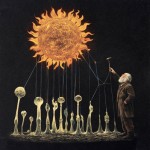
Artist: Taxology
Title: A Deep Dive In The Colourful And Mysterious Garden Of Mr. Taxology
Format: CD + Download
Label: NOS Records (@)
Rated:
Title: A Deep Dive In The Colourful And Mysterious Garden Of Mr. Taxology
Format: CD + Download
Label: NOS Records (@)
Rated:
There’s something mildly encouraging about two musicians barely out of high school deciding not to form yet another interchangeable indie-rock band about emotional confusion and cheap beer, but instead building a psychedelic concept album around botanical taxonomy, hypnagogic narration, and orchestral arrangements. Humanity occasionally stumbles into grace by accident.
Taxology’s debut, "A Deep Dive In The Colourful And Mysterious Garden Of Mr. Taxology", arrives with the kind of absurdly elaborate title that practically dares listeners to take it seriously. The surprising thing is that it earns that seriousness. Emerging from Taranto, the southern Italian duo of Andrea Rizzi and Giuseppe Bitonte construct an album that feels less like a conventional debut and more like a carefully cultivated ecosystem: a surreal greenhouse where progressive pop, psychedelic chamber music, cinematic spoken-word interludes, and faded dream logic all coexist under strange artificial sunlight.
The concept itself could have collapsed under its own decorative ambitions. Taxonomy as a metaphor for consciousness is exactly the sort of premise that can become unbearable after twelve minutes if handled without restraint. Yet Taxology avoid turning the record into a university lecture disguised as psychedelia. Instead, the scientific nomenclature becomes an organizing principle for mood and transformation. Tracks behave like living organisms, each possessing its own texture, temperature, and emotional metabolism. The garden is not ornamental. It breathes.
Musically, the album occupies a fascinating liminal space between vintage Italian progressive traditions and contemporary psych-pop sensibilities. One can hear faint echoes of the theatrical surrealism of Italian progressive rock from the 1970s, but filtered through a younger generation raised equally on streaming-era eclecticism, soundtrack culture, and bedroom-production intimacy. There are moments where the album seems to wander through abandoned libraries of library music, only to suddenly stumble into kaleidoscopic folk passages, dreamy orchestral detours, or grooves that briefly flirt with funk before dissolving into mist again.
The instrumentation deserves particular attention because it never feels included merely for prestige or ornament. Sitar, clarinet, flute, cello, timpani, viola, mandolin: these elements move through the album organically, like strange plants intertwining rather than guest appearances politely waiting for applause. Andrea Rizzi’s production is especially impressive given the home-studio context. The arrangements possess an expansive, almost cinematic depth without losing the handmade quality that keeps the album emotionally approachable. You can hear curiosity inside the production choices, which is increasingly rare in an era where so much “psychedelic” music sounds generated by algorithms trained exclusively on vintage pedal advertisements.
The narrated sections by Bruno Vergani function as portals more than explanations. They guide the listener without reducing the mystery. That restraint becomes one of the album’s strongest qualities: "A Deep Dive In The Colourful And Mysterious Garden Of Mr. Taxology" never fully explains itself because dreams do not issue instruction manuals. The listener is invited to drift through associations rather than decode hidden meanings like a bored detective in a prog-rock escape room.
Tracks such as “Mandragora Caulescens” and “Daphne Mezereum” reveal the duo’s talent for balancing melodic warmth with subtle disorientation. Elsewhere, pieces like “The Garden” and “Clara Lunaris” unfold with a cinematic patience that recalls the peculiar emotional logic of waking up from a vivid dream and temporarily forgetting which century you belong to. Even the shorter interstitial pieces contribute to the album’s architecture, creating the sensation of moving through rooms within a larger imagined structure.
What makes the record particularly compelling is its refusal to become cynical. Many contemporary psychedelic releases hide behind irony or retro fetishism, terrified of sincerity. Taxology instead embrace wonder openly, which is much harder and infinitely riskier. The album believes in imagination without needing to posture as “important”. That innocence, combined with the sophistication of the arrangements, gives the music a peculiar luminosity.
There is also something quietly moving about hearing such young musicians create work so unconcerned with immediacy or commercial pragmatism. These are compositions built around atmosphere, patience, symbolic resonance, and internal coherence. In an attention economy optimized for interruption, Taxology made an album that asks listeners to wander slowly through an imaginary garden and contemplate the possibility that classification itself might become poetry. A reckless decision, financially speaking. Artistically, however, it works remarkably well.
By the time “Pieris Japonica” closes the journey, the garden no longer feels imaginary at all. It has become psychological terrain: half sanctuary, half hallucination, populated by fragile melodies and shifting identities. "A Deep Dive In The Colourful And Mysterious Garden Of Mr. Taxology" is not merely an impressive debut. It is the sound of two young artists discovering that music can still function as world-building, ritual, and transformation rather than background decoration for scrolling through advertisements for ergonomic socks. A comforting thought, however temporary.
Taxology’s debut, "A Deep Dive In The Colourful And Mysterious Garden Of Mr. Taxology", arrives with the kind of absurdly elaborate title that practically dares listeners to take it seriously. The surprising thing is that it earns that seriousness. Emerging from Taranto, the southern Italian duo of Andrea Rizzi and Giuseppe Bitonte construct an album that feels less like a conventional debut and more like a carefully cultivated ecosystem: a surreal greenhouse where progressive pop, psychedelic chamber music, cinematic spoken-word interludes, and faded dream logic all coexist under strange artificial sunlight.
The concept itself could have collapsed under its own decorative ambitions. Taxonomy as a metaphor for consciousness is exactly the sort of premise that can become unbearable after twelve minutes if handled without restraint. Yet Taxology avoid turning the record into a university lecture disguised as psychedelia. Instead, the scientific nomenclature becomes an organizing principle for mood and transformation. Tracks behave like living organisms, each possessing its own texture, temperature, and emotional metabolism. The garden is not ornamental. It breathes.
Musically, the album occupies a fascinating liminal space between vintage Italian progressive traditions and contemporary psych-pop sensibilities. One can hear faint echoes of the theatrical surrealism of Italian progressive rock from the 1970s, but filtered through a younger generation raised equally on streaming-era eclecticism, soundtrack culture, and bedroom-production intimacy. There are moments where the album seems to wander through abandoned libraries of library music, only to suddenly stumble into kaleidoscopic folk passages, dreamy orchestral detours, or grooves that briefly flirt with funk before dissolving into mist again.
The instrumentation deserves particular attention because it never feels included merely for prestige or ornament. Sitar, clarinet, flute, cello, timpani, viola, mandolin: these elements move through the album organically, like strange plants intertwining rather than guest appearances politely waiting for applause. Andrea Rizzi’s production is especially impressive given the home-studio context. The arrangements possess an expansive, almost cinematic depth without losing the handmade quality that keeps the album emotionally approachable. You can hear curiosity inside the production choices, which is increasingly rare in an era where so much “psychedelic” music sounds generated by algorithms trained exclusively on vintage pedal advertisements.
The narrated sections by Bruno Vergani function as portals more than explanations. They guide the listener without reducing the mystery. That restraint becomes one of the album’s strongest qualities: "A Deep Dive In The Colourful And Mysterious Garden Of Mr. Taxology" never fully explains itself because dreams do not issue instruction manuals. The listener is invited to drift through associations rather than decode hidden meanings like a bored detective in a prog-rock escape room.
Tracks such as “Mandragora Caulescens” and “Daphne Mezereum” reveal the duo’s talent for balancing melodic warmth with subtle disorientation. Elsewhere, pieces like “The Garden” and “Clara Lunaris” unfold with a cinematic patience that recalls the peculiar emotional logic of waking up from a vivid dream and temporarily forgetting which century you belong to. Even the shorter interstitial pieces contribute to the album’s architecture, creating the sensation of moving through rooms within a larger imagined structure.
What makes the record particularly compelling is its refusal to become cynical. Many contemporary psychedelic releases hide behind irony or retro fetishism, terrified of sincerity. Taxology instead embrace wonder openly, which is much harder and infinitely riskier. The album believes in imagination without needing to posture as “important”. That innocence, combined with the sophistication of the arrangements, gives the music a peculiar luminosity.
There is also something quietly moving about hearing such young musicians create work so unconcerned with immediacy or commercial pragmatism. These are compositions built around atmosphere, patience, symbolic resonance, and internal coherence. In an attention economy optimized for interruption, Taxology made an album that asks listeners to wander slowly through an imaginary garden and contemplate the possibility that classification itself might become poetry. A reckless decision, financially speaking. Artistically, however, it works remarkably well.
By the time “Pieris Japonica” closes the journey, the garden no longer feels imaginary at all. It has become psychological terrain: half sanctuary, half hallucination, populated by fragile melodies and shifting identities. "A Deep Dive In The Colourful And Mysterious Garden Of Mr. Taxology" is not merely an impressive debut. It is the sound of two young artists discovering that music can still function as world-building, ritual, and transformation rather than background decoration for scrolling through advertisements for ergonomic socks. A comforting thought, however temporary.
Palmer Generator: Corpo Celeste

Artist: Palmer Generator (@)
Title: Corpo Celeste
Format: CD + Download
Label: Bloody Sound (@)
Rated:
Title: Corpo Celeste
Format: CD + Download
Label: Bloody Sound (@)
Rated:
Family bands often carry an unavoidable mythology around them. Audiences instinctively search for inherited chemistry, shared blood translated into shared rhythm, as if surnames themselves might function as instruments. Sometimes this produces unbearable sentimentalism. Other times, as with by Palmer Generator, it produces something far stranger and more compelling: music that feels less “played” than collectively inhabited, like three people dreaming inside the same gravitational field.
Active since 2010, the Jesi-based trio of Michele, Mattia, and Tommaso Palmieri, father, son, and uncle respectively, have gradually carved out a distinctive place within the Italian experimental rock landscape. Across earlier releases like "Shapes", "Discipline", "Natura", and "Ventre", Palmer Generator refined a language built from post-rock architecture, psychedelic repetition, noise-rock abrasion, and ritualistic pacing. But "Corpo Celeste" feels less like another chapter than a condensation of everything they have been circling for years: the transformation of instrumental rock into something almost cosmological.
Structured as a four-part suite, the album unfolds with the patience of a celestial event unconcerned with human attention spans. Which is refreshing, honestly. Contemporary culture treats every eight-second distraction like a moral victory. Palmer Generator instead ask listeners to surrender to duration, repetition, and gradual mutation. They trust tension. They trust accumulation. They trust that sound can still alter physical perception if given enough room to breathe.
The references cited in the press materials are accurate but maybe incomplete. You can certainly hear traces of Glenn Branca in the orchestrated mass of overtones, echoes of Mogwai in the emotional surges, and the angular nervous system of Slint lurking beneath the quieter passages. The hypnotic propulsion of Neu! also runs deep throughout the record, particularly in the cyclical drumming patterns that seem designed to bypass cognition entirely and communicate directly with the spinal cord.
Yet the album never feels derivative. Palmer Generator absorb these influences into a sound that is unmistakably their own: dense but spacious, ritualistic without becoming pompous, emotionally expansive without collapsing into cinematic cliché. The bass is particularly crucial here. Rather than functioning merely as support, it acts almost tectonically, shaping and deforming the music’s terrain in real time. At moments it growls with noise-rock aggression; elsewhere it opens sudden melodic clearings inside the distortion, like discovering a chapel hidden inside an industrial ruin.
The guitar work avoids the obvious post-rock temptation toward endless crescendos for their own sake. Instead, tones stretch, erode, and reform continuously, generating drones and harmonic halos that feel almost liturgical. Meanwhile the drums maintain the album’s sense of bodily movement. Not flashy, not technical in the self-congratulatory prog sense, but deeply physical. The rhythms breathe. They pulse with the logic of tides, machinery, and heartbeat simultaneously.
The album’s conceptual framework around “cosmic vibration” could easily have become insufferable in lesser hands. There is always a thin line between metaphysical ambition and sounding like a man in a linen shirt trying to sell crystals beside a motorway service station. But Palmer Generator approach spirituality with enough seriousness and ambiguity to avoid easy caricature. The influence of Anna Maria Ortese’s thought, especially the notion of the sacredness permeating all existence, lingers beneath the surface without ever becoming dogmatic.
What emerges is an album deeply concerned with interconnectedness: between family members, between instruments, between repetition and transformation, between the terrestrial and the celestial. The title "Corpo Celeste" ultimately feels less astronomical than corporeal. These are cosmic ideas experienced physically through amplifiers, vibration, sweat, and collective momentum.
There is also something distinctly Italian about the record’s sense of drama and texture, though not in the operatic sense outsiders often imagine. More in its relationship with space, ruins, mysticism, and emotional intensity. The music feels connected to landscapes both geological and spiritual, equally capable of evoking abandoned factories, Adriatic coastlines at dusk, or medieval cathedrals vibrating under feedback.
Most importantly, "Corpo Celeste" succeeds because it understands that repetition is never truly repetition. Every cycle returns altered by memory, by resonance, by microscopic shifts in pressure and intent. Palmer Generator build their music around this principle with remarkable discipline and instinct. By the time the closing “Coda” dissolves, the listener has not so much finished an album as emerged from an environment.
A powerful and deeply immersive work. Post-rock not as genre exercise, but as ritual architecture for uncertain times. Humans, against all evidence, occasionally still manage to build cathedrals out of noise.
Active since 2010, the Jesi-based trio of Michele, Mattia, and Tommaso Palmieri, father, son, and uncle respectively, have gradually carved out a distinctive place within the Italian experimental rock landscape. Across earlier releases like "Shapes", "Discipline", "Natura", and "Ventre", Palmer Generator refined a language built from post-rock architecture, psychedelic repetition, noise-rock abrasion, and ritualistic pacing. But "Corpo Celeste" feels less like another chapter than a condensation of everything they have been circling for years: the transformation of instrumental rock into something almost cosmological.
Structured as a four-part suite, the album unfolds with the patience of a celestial event unconcerned with human attention spans. Which is refreshing, honestly. Contemporary culture treats every eight-second distraction like a moral victory. Palmer Generator instead ask listeners to surrender to duration, repetition, and gradual mutation. They trust tension. They trust accumulation. They trust that sound can still alter physical perception if given enough room to breathe.
The references cited in the press materials are accurate but maybe incomplete. You can certainly hear traces of Glenn Branca in the orchestrated mass of overtones, echoes of Mogwai in the emotional surges, and the angular nervous system of Slint lurking beneath the quieter passages. The hypnotic propulsion of Neu! also runs deep throughout the record, particularly in the cyclical drumming patterns that seem designed to bypass cognition entirely and communicate directly with the spinal cord.
Yet the album never feels derivative. Palmer Generator absorb these influences into a sound that is unmistakably their own: dense but spacious, ritualistic without becoming pompous, emotionally expansive without collapsing into cinematic cliché. The bass is particularly crucial here. Rather than functioning merely as support, it acts almost tectonically, shaping and deforming the music’s terrain in real time. At moments it growls with noise-rock aggression; elsewhere it opens sudden melodic clearings inside the distortion, like discovering a chapel hidden inside an industrial ruin.
The guitar work avoids the obvious post-rock temptation toward endless crescendos for their own sake. Instead, tones stretch, erode, and reform continuously, generating drones and harmonic halos that feel almost liturgical. Meanwhile the drums maintain the album’s sense of bodily movement. Not flashy, not technical in the self-congratulatory prog sense, but deeply physical. The rhythms breathe. They pulse with the logic of tides, machinery, and heartbeat simultaneously.
The album’s conceptual framework around “cosmic vibration” could easily have become insufferable in lesser hands. There is always a thin line between metaphysical ambition and sounding like a man in a linen shirt trying to sell crystals beside a motorway service station. But Palmer Generator approach spirituality with enough seriousness and ambiguity to avoid easy caricature. The influence of Anna Maria Ortese’s thought, especially the notion of the sacredness permeating all existence, lingers beneath the surface without ever becoming dogmatic.
What emerges is an album deeply concerned with interconnectedness: between family members, between instruments, between repetition and transformation, between the terrestrial and the celestial. The title "Corpo Celeste" ultimately feels less astronomical than corporeal. These are cosmic ideas experienced physically through amplifiers, vibration, sweat, and collective momentum.
There is also something distinctly Italian about the record’s sense of drama and texture, though not in the operatic sense outsiders often imagine. More in its relationship with space, ruins, mysticism, and emotional intensity. The music feels connected to landscapes both geological and spiritual, equally capable of evoking abandoned factories, Adriatic coastlines at dusk, or medieval cathedrals vibrating under feedback.
Most importantly, "Corpo Celeste" succeeds because it understands that repetition is never truly repetition. Every cycle returns altered by memory, by resonance, by microscopic shifts in pressure and intent. Palmer Generator build their music around this principle with remarkable discipline and instinct. By the time the closing “Coda” dissolves, the listener has not so much finished an album as emerged from an environment.
A powerful and deeply immersive work. Post-rock not as genre exercise, but as ritual architecture for uncertain times. Humans, against all evidence, occasionally still manage to build cathedrals out of noise.