
Browse by Genre
Industrial Music / Industrial Metal / Aggro Industrial / Electro Metal
Industrial Noise / Power Noise / Harsh Noise
Synth Pop / Electro Pop / Synth-Electronica
Techno / Trance / Goa / Drum'n'Bass / Jungle / Tribal / Trip-Hop
Ambient / Electronica / Ethereal / Dub / Soundscapes / Abstract
Experimental / Avantgarde / Weird & Wired / Glitch / Noise / Field Recording
Dark / Gothic / Wave / New Wave / Dark Wave / Industrial Gothic
New Music / Downtown / Avantgarde Jazz / New Classical / World
Search Reviews
Music Reviews
Camila Nebbia, Gonçalo Almeida, Sylvain Darrifourcq: Hypomaniac
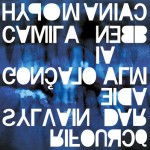
Artist: Camila Nebbia, Gonçalo Almeida, Sylvain Darrifourcq (@)
Title: Hypomaniac
Format: 12" + Download
Label: Defkaz (@)
Rated:

Title: Hypomaniac
Format: 12" + Download
Label: Defkaz (@)
Rated:
There are records that knock politely. "Hypomaniac" kicks the door, apologises mid-riot, then asks if you noticed how beautifully the walls vibrated while falling. This debut by Nebbia, Almeida, and Darrifourq is free jazz in a state of productive overstimulation: not chaos for chaos’ sake, but a nervous system pushed just far enough to start telling the truth.
Recorded live in Thessaloniki during defkaz’s "Take 2" festival, the album carries that specific electricity only festivals generate: the sense that something might derail at any second, and that everyone involved secretly hopes it will. Hypomania, after all, is not madness but acceleration - ideas arriving faster than etiquette allows. This trio doesn’t cure it; they ride it like a stolen motorcycle.
Camila Nebbia’s saxophone is the album’s unstable narrator. Her lines don’t declaim; they test the air, bending tradition without snapping it. There’s free jazz lineage in her phrasing, yes, but also a contemporary clarity - she’s not trying to escape history, she’s dragging it into the present by the collar and asking it to breathe faster. Her sound can be tender, then suddenly serrated, as if lyricism itself had a caffeine problem.
Gonçalo Almeida treats the double bass less as an instrument and more as a fault line. He oscillates between deep groove and abrasive density, making the bass throb, grind, protest. At times it feels amplified beyond physics, flirting with noise yet never abandoning pulse. This is important: "Hypomaniac" grooves. Hard. Even when it’s tearing itself apart, it taps its foot.
Sylvain Darrifourq, meanwhile, operates like a nervous system with sticks. His drumming is in constant motion, always alert, always threatening to combust - but it never does. Instead, it hypnotises. He understands restraint as a form of violence: sudden silences, brittle textures, rhythmic feints that keep the music hovering at red alert without tipping into collapse.
The four tracks - titled only by their durations, a small but telling refusal of narrative comfort - unfold like weather systems. They don’t develop so much as "accumulate". Motifs appear, vanish, mutate. Collective improvisation here isn’t polite conversation; it’s three minds overlapping, interrupting, finishing each other’s sentences badly and brilliantly.
There’s something refreshing, even darkly funny, about how seriously this trio takes intensity. No spiritual platitudes, no heroic poses - just three musicians trusting that excess, when handled with skill, can still be precise. "Hypomaniac" doesn’t offer catharsis; it offers momentum. You don’t come out calmer. You come out sharper.
Recorded live in Thessaloniki during defkaz’s "Take 2" festival, the album carries that specific electricity only festivals generate: the sense that something might derail at any second, and that everyone involved secretly hopes it will. Hypomania, after all, is not madness but acceleration - ideas arriving faster than etiquette allows. This trio doesn’t cure it; they ride it like a stolen motorcycle.
Camila Nebbia’s saxophone is the album’s unstable narrator. Her lines don’t declaim; they test the air, bending tradition without snapping it. There’s free jazz lineage in her phrasing, yes, but also a contemporary clarity - she’s not trying to escape history, she’s dragging it into the present by the collar and asking it to breathe faster. Her sound can be tender, then suddenly serrated, as if lyricism itself had a caffeine problem.
Gonçalo Almeida treats the double bass less as an instrument and more as a fault line. He oscillates between deep groove and abrasive density, making the bass throb, grind, protest. At times it feels amplified beyond physics, flirting with noise yet never abandoning pulse. This is important: "Hypomaniac" grooves. Hard. Even when it’s tearing itself apart, it taps its foot.
Sylvain Darrifourq, meanwhile, operates like a nervous system with sticks. His drumming is in constant motion, always alert, always threatening to combust - but it never does. Instead, it hypnotises. He understands restraint as a form of violence: sudden silences, brittle textures, rhythmic feints that keep the music hovering at red alert without tipping into collapse.
The four tracks - titled only by their durations, a small but telling refusal of narrative comfort - unfold like weather systems. They don’t develop so much as "accumulate". Motifs appear, vanish, mutate. Collective improvisation here isn’t polite conversation; it’s three minds overlapping, interrupting, finishing each other’s sentences badly and brilliantly.
There’s something refreshing, even darkly funny, about how seriously this trio takes intensity. No spiritual platitudes, no heroic poses - just three musicians trusting that excess, when handled with skill, can still be precise. "Hypomaniac" doesn’t offer catharsis; it offers momentum. You don’t come out calmer. You come out sharper.
Alister Spence: Within Without
Alister Spence’s "Within Without" feels less like an album and more like a long, attentive conversation with an old friend who has finally stopped pretending to be polite. The Fender Rhodes here is not a nostalgic prop, nor a jazz museum piece dusted off for tasteful reverence; it’s a stubborn, metallic animal, coaxed, prodded, occasionally irritated into speaking in clicks, hums, shivers, and half-formed thoughts.
Spence’s history with the instrument matters, but not in a sentimental “once upon a time” way. You can hear decades of lived friction embedded in these sounds: the Rhodes as a youthful burden (“portable” only if you redefine the word), then as a survivor of technological fashion cycles, and finally as a site of excavation. By the time "Within Without" was recorded - quietly, at home, during the suspended animation of pandemic isolation - the instrument had ceased to be a keyboard at all. It had become a field of objects, resonant points, and reluctant surfaces, each one waiting to be persuaded into sound.
The record unfolds in short, sharply focused pieces, like notebook entries written directly onto vibrating metal. Titles such as "Hungry Machine", "Delicate Industry", or "Growl, Warble, Strike" aren’t metaphors so much as instructions, or perhaps warnings. Spence works in miniature, but never feels slight: these fragments are dense with attention. Notes are less important than textures; rhythm is often implied rather than declared. A prepared tine buzzes, a pedal smears harmonics into fog, percussion taps the instrument as if checking whether it’s still alive. It is.
There’s a quiet humor running through the album too, the kind that comes from deep familiarity. "Cheery Buzzy" and its later companion "Friend of Cheery Buzzy" sound like private jokes shared between musician and machine, moments where the Rhodes briefly agrees to behave before immediately misbehaving again. Elsewhere, pieces like "Metal Spectral" or "Nest of Shimmers" drift into near-acousmatic territory, where it becomes difficult - and refreshingly irrelevant - to identify the source of the sound at all.
What anchors "Within Without" is patience. Spence listens harder than he plays. This is music shaped by restraint, by waiting for accidents rather than forcing conclusions. The pandemic birds outside his Sydney home aren’t just a poetic footnote; their presence feels conceptually aligned with the record’s ethos. Less human noise, more space for small, peripheral events to come forward. The album thrives in that margin, where intention loosens its grip and sound is allowed to wobble, resist, and occasionally refuse.
Mastered by Lawrence English, whose Room40 catalogue has long championed this kind of attentive sonic practice, "Within Without" sits comfortably among contemporary explorations of reduction and materiality. But it never feels academic. It’s tactile, slightly unruly, and deeply personal without ever becoming confessional. Spence isn’t telling a story so much as documenting a relationship - one built on weight, resistance, memory, and the quiet thrill of discovering that an old instrument still has plenty to argue about.
Spence’s history with the instrument matters, but not in a sentimental “once upon a time” way. You can hear decades of lived friction embedded in these sounds: the Rhodes as a youthful burden (“portable” only if you redefine the word), then as a survivor of technological fashion cycles, and finally as a site of excavation. By the time "Within Without" was recorded - quietly, at home, during the suspended animation of pandemic isolation - the instrument had ceased to be a keyboard at all. It had become a field of objects, resonant points, and reluctant surfaces, each one waiting to be persuaded into sound.
The record unfolds in short, sharply focused pieces, like notebook entries written directly onto vibrating metal. Titles such as "Hungry Machine", "Delicate Industry", or "Growl, Warble, Strike" aren’t metaphors so much as instructions, or perhaps warnings. Spence works in miniature, but never feels slight: these fragments are dense with attention. Notes are less important than textures; rhythm is often implied rather than declared. A prepared tine buzzes, a pedal smears harmonics into fog, percussion taps the instrument as if checking whether it’s still alive. It is.
There’s a quiet humor running through the album too, the kind that comes from deep familiarity. "Cheery Buzzy" and its later companion "Friend of Cheery Buzzy" sound like private jokes shared between musician and machine, moments where the Rhodes briefly agrees to behave before immediately misbehaving again. Elsewhere, pieces like "Metal Spectral" or "Nest of Shimmers" drift into near-acousmatic territory, where it becomes difficult - and refreshingly irrelevant - to identify the source of the sound at all.
What anchors "Within Without" is patience. Spence listens harder than he plays. This is music shaped by restraint, by waiting for accidents rather than forcing conclusions. The pandemic birds outside his Sydney home aren’t just a poetic footnote; their presence feels conceptually aligned with the record’s ethos. Less human noise, more space for small, peripheral events to come forward. The album thrives in that margin, where intention loosens its grip and sound is allowed to wobble, resist, and occasionally refuse.
Mastered by Lawrence English, whose Room40 catalogue has long championed this kind of attentive sonic practice, "Within Without" sits comfortably among contemporary explorations of reduction and materiality. But it never feels academic. It’s tactile, slightly unruly, and deeply personal without ever becoming confessional. Spence isn’t telling a story so much as documenting a relationship - one built on weight, resistance, memory, and the quiet thrill of discovering that an old instrument still has plenty to argue about.
Drexciya: Fusion Flats
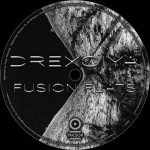
With "Fusion Flats", Drexciya resurface not as a nostalgia act embalmed in wax, but as a living pressure system - still leaking electricity, still bending timelines. This reissue feels less like an archival gesture and more like reopening a submerged hatch: the water rushes in, the lights flicker, and suddenly Detroit techno is once again an alien ecology rather than a genre tag.
Originally orbiting the gravitational pull of "Neptune’s Lair", "Fusion Flats" has always been a curious object in the Drexciyan universe. Not a manifesto, not a deep mythological chapter, but a working engine: stripped, propulsive, functional in the best sense. It moves forward with that unmistakable Drexciya gait - elastic, slightly hostile, deeply physical - where electro rhythms snap like tendons and synth lines feel engineered rather than composed. This is music that doesn’t express emotion so much as generate conditions: pressure, velocity, submersion.
Hearing it now, remastered and newly contextualized, the track’s economy is striking. No excess mythology, no ornamental sci-fi gloss - just a lean, hydrodynamic groove that seems designed to test how much motion can be extracted from minimal information. Drexciya were always masters of this paradox: sounding futuristic by being brutally efficient. The future, here, is not shiny - it’s optimized.
The remixes expand the perimeter without breaking the seal. Octave One’s version treats "Fusion Flats" like a living organism, stretching it into something more muscular and panoramic, without sanding down its edges. Kaotic Spatial Rhythms lean into abstraction, letting the track fray and destabilize, while 043 Chaos push it closer to electro’s nervous system - jagged, uncompromising, slightly unwell (in a good way). None of them attempt to “improve” the original; they orbit it, respectfully aware that Drexciya is not material to be fixed, only refracted.
The new artwork by Matthew Angelo Harrison fits perfectly into this logic: not illustration, not homage, but a contemporary echo - suggesting that Drexciya’s ideas are still metabolizing inside current artistic practice. Which is perhaps the quiet revelation of this reissue. Twenty-five years on, "Fusion Flats" doesn’t sound prophetic or dated; it sounds operational. Like a tool that was built correctly the first time.
There’s a temptation, with Drexciya, to drown everything in lore. But "Fusion Flats" reminds us that beneath the myth was always a ruthless clarity of design. This is techno that doesn’t ask you to believe in Atlantis - it simply drops you underwater and checks whether you can still move. Spoiler: you can. And it still feels incredible.
Originally orbiting the gravitational pull of "Neptune’s Lair", "Fusion Flats" has always been a curious object in the Drexciyan universe. Not a manifesto, not a deep mythological chapter, but a working engine: stripped, propulsive, functional in the best sense. It moves forward with that unmistakable Drexciya gait - elastic, slightly hostile, deeply physical - where electro rhythms snap like tendons and synth lines feel engineered rather than composed. This is music that doesn’t express emotion so much as generate conditions: pressure, velocity, submersion.
Hearing it now, remastered and newly contextualized, the track’s economy is striking. No excess mythology, no ornamental sci-fi gloss - just a lean, hydrodynamic groove that seems designed to test how much motion can be extracted from minimal information. Drexciya were always masters of this paradox: sounding futuristic by being brutally efficient. The future, here, is not shiny - it’s optimized.
The remixes expand the perimeter without breaking the seal. Octave One’s version treats "Fusion Flats" like a living organism, stretching it into something more muscular and panoramic, without sanding down its edges. Kaotic Spatial Rhythms lean into abstraction, letting the track fray and destabilize, while 043 Chaos push it closer to electro’s nervous system - jagged, uncompromising, slightly unwell (in a good way). None of them attempt to “improve” the original; they orbit it, respectfully aware that Drexciya is not material to be fixed, only refracted.
The new artwork by Matthew Angelo Harrison fits perfectly into this logic: not illustration, not homage, but a contemporary echo - suggesting that Drexciya’s ideas are still metabolizing inside current artistic practice. Which is perhaps the quiet revelation of this reissue. Twenty-five years on, "Fusion Flats" doesn’t sound prophetic or dated; it sounds operational. Like a tool that was built correctly the first time.
There’s a temptation, with Drexciya, to drown everything in lore. But "Fusion Flats" reminds us that beneath the myth was always a ruthless clarity of design. This is techno that doesn’t ask you to believe in Atlantis - it simply drops you underwater and checks whether you can still move. Spoiler: you can. And it still feels incredible.
Cie: Adventures II Remixes

Artist: Cie
Title: Adventures II Remixes
Format: Download Only (MP3 + Lossless)
Label: Form & Terra Records (http://www.formnterra.com/) (@)
Rated:

Title: Adventures II Remixes
Format: Download Only (MP3 + Lossless)
Label: Form & Terra Records (http://www.formnterra.com/) (@)
Rated:
If "Adventures" was Cie’s map, "Adventures II Remixes" is what happens when you hand that map to four travelers who refuse to follow the dotted line. They keep the names of the mountains and valleys, sure, but the paths shift, the weather changes, and suddenly you’re somewhere both recognizable and oddly dislocated - which is exactly how a good remix record should behave.
Cie has always worked in that fertile zone where techno isn’t just functional architecture but a narrative space: clean structures, yes, but with an ear for atmosphere, memory, and slow transformation. The original "Adventures" hinted at landscapes rather than declaring them outright. This second chapter asks what happens when others start digging under those surfaces, tapping different fault lines.
Andrey Sirotkin opens with “Reichenstein” and immediately leans into propulsion. His version feels like the moment when a hike turns into a run: acid lines coil and uncoil with a grin that’s half-discipline, half-mischief. It’s grounded, muscular, and knows exactly when to push - not flashy, just confidently kinetic, like a machine that’s learned how to smile.
Georg Neufeld’s take on “Der Turm” is pure dub techno hypnosis, but without the sleepwalking cliché. The pulse is steady, almost stubborn, as if refusing to resolve. Sounds drift in and out like fog wrapping itself around concrete. It’s immersive in the literal sense: you don’t listen to it so much as find yourself inside it, checking your watch only to realize time has quietly slipped away.
Granlab’s “Stenzelberg” remix is where things start to sparkle and crack. Percussion ricochets, stabs glow briefly and vanish, strings hover like mist over a ravine. There’s a sense of playful danger here - not chaos, but the thrill of not quite knowing what’s around the next bend. It’s the most scenic stop on the journey, and the one that rewards repeated listens.
Chris Baumann closes the loop by returning to “Reichenstein”, but this is no nostalgic glance backward. His version is leaner, faster, more insistent - a night-drive remix that strips things down to nerve and momentum. It doesn’t ask permission, it just keeps going, eyes fixed on the vanishing point, daring you to keep up until morning arrives.
What makes "Adventures II Remixes" work is its restraint. No one tries to “improve” Cie’s material by overdecorating it. Instead, each remix acts like a different light source, revealing textures that were already there but easy to miss. It’s techno as conversation rather than competition - four voices speaking clearly, never shouting.
In the end, this isn’t a victory lap or an add-on for completists. It’s a reminder that electronic music, at its best, is a living terrain: shared, reinterpreted, and constantly in motion. Put this on, start walking, and don’t worry too much about where you’ll end up. The detours are the point.
Cie has always worked in that fertile zone where techno isn’t just functional architecture but a narrative space: clean structures, yes, but with an ear for atmosphere, memory, and slow transformation. The original "Adventures" hinted at landscapes rather than declaring them outright. This second chapter asks what happens when others start digging under those surfaces, tapping different fault lines.
Andrey Sirotkin opens with “Reichenstein” and immediately leans into propulsion. His version feels like the moment when a hike turns into a run: acid lines coil and uncoil with a grin that’s half-discipline, half-mischief. It’s grounded, muscular, and knows exactly when to push - not flashy, just confidently kinetic, like a machine that’s learned how to smile.
Georg Neufeld’s take on “Der Turm” is pure dub techno hypnosis, but without the sleepwalking cliché. The pulse is steady, almost stubborn, as if refusing to resolve. Sounds drift in and out like fog wrapping itself around concrete. It’s immersive in the literal sense: you don’t listen to it so much as find yourself inside it, checking your watch only to realize time has quietly slipped away.
Granlab’s “Stenzelberg” remix is where things start to sparkle and crack. Percussion ricochets, stabs glow briefly and vanish, strings hover like mist over a ravine. There’s a sense of playful danger here - not chaos, but the thrill of not quite knowing what’s around the next bend. It’s the most scenic stop on the journey, and the one that rewards repeated listens.
Chris Baumann closes the loop by returning to “Reichenstein”, but this is no nostalgic glance backward. His version is leaner, faster, more insistent - a night-drive remix that strips things down to nerve and momentum. It doesn’t ask permission, it just keeps going, eyes fixed on the vanishing point, daring you to keep up until morning arrives.
What makes "Adventures II Remixes" work is its restraint. No one tries to “improve” Cie’s material by overdecorating it. Instead, each remix acts like a different light source, revealing textures that were already there but easy to miss. It’s techno as conversation rather than competition - four voices speaking clearly, never shouting.
In the end, this isn’t a victory lap or an add-on for completists. It’s a reminder that electronic music, at its best, is a living terrain: shared, reinterpreted, and constantly in motion. Put this on, start walking, and don’t worry too much about where you’ll end up. The detours are the point.
Nadja: cut
With "cut", Nadja return not so much with an album as with a pressure chamber. After the monolithic, instrumental sprawl of "Nalepa", Aidan Baker and Leah Buckareff reopen the mouth of the band and allow voices back in - but not in any conventional, song-oriented sense. These are not vocals that explain. They hover, fracture, bleed into the grain of the sound. Words are present, but meaning arrives mostly through weight, duration, and abrasion.
Released as a four-track double LP - each piece occupying an entire vinyl side - "cut" unfolds at Nadja’s preferred geological pace. Time stretches, nerves adjust, expectations erode. The band’s signature doomgaze mass is intact: guitars and bass form vast, fog-thick planes, drones grind slowly against themselves, distortion becomes a climate rather than an effect. Yet something is different here. The walls are still immense, but they breathe. Sometimes they even step back, revealing quieter, unsettling clearings.
Vocals, both from Baker and Buckareff and from an extended cast of guests, function less as narrative agents and more as structural material. They are layered, submerged, blurred into the soundwalls like half-remembered thoughts or intrusive memories that refuse to stay buried. This approach aligns closely with the album’s thematic core: trauma, psychological stress, and the fragile mechanisms we build to survive them. The voices don’t comfort. They testify - often indistinctly, sometimes painfully.
One of "cut"’s most striking developments is its expanded instrumentation. Harp, French horn, and saxophone drift in and out of the mix, not as decorative gestures but as destabilizing forces. The harp glints like a nervous system exposed to cold air; the horn adds a funereal gravity; the saxophone - played by Baker himself - emerges as a wounded, human breath amid the machinery. These elements don’t soften Nadja’s sound. They complicate it, adding emotional grain to an already abrasive surface.
The album’s structure rewards physical listening. The vinyl-only extended versions allow the pieces to fully exhaust themselves, to linger past comfort and into revelation. Digital editions, trimmed for practicality, feel almost polite by comparison. On vinyl, "cut" insists on presence: you sit with it, or it sits on you.
Despite its bleak emotional terrain, "cut" never indulges in melodrama. Nadja’s restraint remains crucial. The band understands that real heaviness isn’t about volume alone - it’s about accumulation, about the slow realization that something has been pressing on you for a long time. There is even, in a grim way, a hint of dark humor in the album’s excesses: titles that read like emotional autopsies, stretches of sound so prolonged they dare you to blink first.
Ultimately, "cut" feels like an album about endurance rather than resolution. It doesn’t offer healing so much as acknowledgement. The music doesn’t close wounds; it traces their edges, again and again, until the act of listening itself becomes a form of sonic sublimation - an imperfect tool, but sometimes the only one available.
Nadja have never been a band for quick relief. With "cut", they remind us that some experiences cannot be shortened, summarized, or safely processed. They must be entered slowly, lived through, and carried - like a scar you don’t hide, because hiding would take more energy than you have left.
Released as a four-track double LP - each piece occupying an entire vinyl side - "cut" unfolds at Nadja’s preferred geological pace. Time stretches, nerves adjust, expectations erode. The band’s signature doomgaze mass is intact: guitars and bass form vast, fog-thick planes, drones grind slowly against themselves, distortion becomes a climate rather than an effect. Yet something is different here. The walls are still immense, but they breathe. Sometimes they even step back, revealing quieter, unsettling clearings.
Vocals, both from Baker and Buckareff and from an extended cast of guests, function less as narrative agents and more as structural material. They are layered, submerged, blurred into the soundwalls like half-remembered thoughts or intrusive memories that refuse to stay buried. This approach aligns closely with the album’s thematic core: trauma, psychological stress, and the fragile mechanisms we build to survive them. The voices don’t comfort. They testify - often indistinctly, sometimes painfully.
One of "cut"’s most striking developments is its expanded instrumentation. Harp, French horn, and saxophone drift in and out of the mix, not as decorative gestures but as destabilizing forces. The harp glints like a nervous system exposed to cold air; the horn adds a funereal gravity; the saxophone - played by Baker himself - emerges as a wounded, human breath amid the machinery. These elements don’t soften Nadja’s sound. They complicate it, adding emotional grain to an already abrasive surface.
The album’s structure rewards physical listening. The vinyl-only extended versions allow the pieces to fully exhaust themselves, to linger past comfort and into revelation. Digital editions, trimmed for practicality, feel almost polite by comparison. On vinyl, "cut" insists on presence: you sit with it, or it sits on you.
Despite its bleak emotional terrain, "cut" never indulges in melodrama. Nadja’s restraint remains crucial. The band understands that real heaviness isn’t about volume alone - it’s about accumulation, about the slow realization that something has been pressing on you for a long time. There is even, in a grim way, a hint of dark humor in the album’s excesses: titles that read like emotional autopsies, stretches of sound so prolonged they dare you to blink first.
Ultimately, "cut" feels like an album about endurance rather than resolution. It doesn’t offer healing so much as acknowledgement. The music doesn’t close wounds; it traces their edges, again and again, until the act of listening itself becomes a form of sonic sublimation - an imperfect tool, but sometimes the only one available.
Nadja have never been a band for quick relief. With "cut", they remind us that some experiences cannot be shortened, summarized, or safely processed. They must be entered slowly, lived through, and carried - like a scar you don’t hide, because hiding would take more energy than you have left.