
Browse by Genre
Industrial Music / Industrial Metal / Aggro Industrial / Electro Metal
Industrial Noise / Power Noise / Harsh Noise
Synth Pop / Electro Pop / Synth-Electronica
Techno / Trance / Goa / Drum'n'Bass / Jungle / Tribal / Trip-Hop
Ambient / Electronica / Ethereal / Dub / Soundscapes / Abstract
Experimental / Avantgarde / Weird & Wired / Glitch / Noise / Field Recording
Dark / Gothic / Wave / New Wave / Dark Wave / Industrial Gothic
New Music / Downtown / Avantgarde Jazz / New Classical / World
Search Reviews
Music Reviews
Otto Lindholm: Shall the Days Float Through Our Eyes
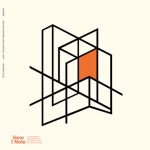
Artist: Otto Lindholm (@)
Title: Shall the Days Float Through Our Eyes
Format: 7"
Label: Skew Note
Rated:

Title: Shall the Days Float Through Our Eyes
Format: 7"
Label: Skew Note
Rated:
There’s something almost mischievous about releasing a 7” like "Shall the Days Float Through Our Eyes" in an age of endless files and infinite scroll. Otto Lindholm - alias of Brussels-based double bassist and composer Cyrille de Haes - opts for brevity, tactility, and restraint, as if to say: you don’t need a cathedral to feel the weight of stone, sometimes a well-placed brick will do. These two short pieces feel less like tracks and more like apertures: moments where sound opens, looks around, and then quietly withdraws before it explains itself too much.
“Lissitzky” arrives with an almost architectural confidence. The prepared double bass is multiplied, delayed, folded back onto itself through desynchronised loopers, creating planes of tension that feel drawn rather than played. You can sense the industrial space breathing along with the music - walls listening, balconies humming back. It’s a piece that doesn’t move forward so much as it assembles itself in mid-air, all angles and pressure points, a reminder that abstraction can still sweat. “Skelton”, on the flip side, loosens its grip. Grainier, slower, and emotionally exposed, it feels like the echo after an argument you’ve already lost: not dramatic, just honest. The bass here doesn’t assert; it hesitates, allowing silence and decay to finish its sentences.
What makes this release quietly compelling is how it compresses Lindholm’s broader practice into miniature form. His long-standing interest in resonance, density, and embodied listening is fully intact, but reframed through scarcity and impermanence. Each lathe-cut copy is made in real time, slightly different, imperfect by design - an elegant contradiction in a culture obsessed with identical reproduction. There’s no grand statement here, no manifesto shouted from the rooftops. Instead, "Shall the Days Float Through Our Eyes" offers two fleeting immersions that linger longer than expected, like light caught in dust. It doesn’t demand your attention; it earns it, briefly, and then lets the days keep floating.
“Lissitzky” arrives with an almost architectural confidence. The prepared double bass is multiplied, delayed, folded back onto itself through desynchronised loopers, creating planes of tension that feel drawn rather than played. You can sense the industrial space breathing along with the music - walls listening, balconies humming back. It’s a piece that doesn’t move forward so much as it assembles itself in mid-air, all angles and pressure points, a reminder that abstraction can still sweat. “Skelton”, on the flip side, loosens its grip. Grainier, slower, and emotionally exposed, it feels like the echo after an argument you’ve already lost: not dramatic, just honest. The bass here doesn’t assert; it hesitates, allowing silence and decay to finish its sentences.
What makes this release quietly compelling is how it compresses Lindholm’s broader practice into miniature form. His long-standing interest in resonance, density, and embodied listening is fully intact, but reframed through scarcity and impermanence. Each lathe-cut copy is made in real time, slightly different, imperfect by design - an elegant contradiction in a culture obsessed with identical reproduction. There’s no grand statement here, no manifesto shouted from the rooftops. Instead, "Shall the Days Float Through Our Eyes" offers two fleeting immersions that linger longer than expected, like light caught in dust. It doesn’t demand your attention; it earns it, briefly, and then lets the days keep floating.
Mark Harwood: or, Urim


Mark Harwood’s "or, Urim" is one of those records that doesn’t knock politely. It kicks the door, apologises halfway through, then steals your coat on the way out - and somehow you thank it for the experience. Released on his own Penultimate Press, the album continues Harwood’s long-standing obsession with fractured authorship, cultural debris, and the uneasy romance between human memory and machine logic.
Harwood, born in the early ’70s, belongs to that awkward in-between generation: old enough to remember when sound was scarce, physical, and stubbornly slow; young enough to witness its collapse into infinite, frictionless data. "or, Urim" lives exactly in that crack. It’s plunderphonic in spirit but not nostalgic, gleefully irresponsible yet oddly reflective - like rifling through an abandoned archive while wondering who will own the ruins.
Musically, the album behaves like a hallucination with a filing system. Psychedelia rubs shoulders with progressive electronics, avant-classical gestures appear and vanish, and extreme digital abrasion keeps reminding you that comfort is not on the menu. Harwood doesn’t collage for shock value alone; he rearranges pre-existing forms until they start asking uncomfortable questions about authorship, ownership, and power. This is less “sampling culture” and more “sampling as civil disobedience”.
Tracks stretch and compress time in unpredictable ways. "Tarshish" unfolds like a slow, ceremonial data breach, while "Treuer Atem" breathes with an uncanny, half-organic pulse - intimate, then suddenly alien. On the flip side, "The Hunt (Pathetic Study)" feels deliberately awkward, as if testing how much absurdity a structure can tolerate before collapsing. And the closing "Hesychasm or Urim and Thummim" is a long, murmuring descent: part ritual, part corrupted firmware update, hovering between meditation and menace.
There’s humour here, but it’s dry, sideways, and occasionally cruel - the kind that laughs not because things are funny, but because the alternative is screaming. Harwood seems acutely aware of the irony of living in an era where a child can be punished for recontextualising a few seconds of sound, while vast systems ingest entire cultural histories without blinking. "or, Urim" doesn’t resolve this contradiction; it sharpens it, presses it to the ear, and listens for feedback.
In the end, this is not a comforting record, nor does it pretend to be. It’s dusty and futuristic at once, a head trip that acknowledges both the thrill and the dread of our synthetic present. "or, Urim" delights in theft, yes - but also in the fragile hope that meaning can still leak through the cracks. A record for those who enjoy their electronics unstable, their philosophy unresolved, and their questions left deliciously unanswered.
Harwood, born in the early ’70s, belongs to that awkward in-between generation: old enough to remember when sound was scarce, physical, and stubbornly slow; young enough to witness its collapse into infinite, frictionless data. "or, Urim" lives exactly in that crack. It’s plunderphonic in spirit but not nostalgic, gleefully irresponsible yet oddly reflective - like rifling through an abandoned archive while wondering who will own the ruins.
Musically, the album behaves like a hallucination with a filing system. Psychedelia rubs shoulders with progressive electronics, avant-classical gestures appear and vanish, and extreme digital abrasion keeps reminding you that comfort is not on the menu. Harwood doesn’t collage for shock value alone; he rearranges pre-existing forms until they start asking uncomfortable questions about authorship, ownership, and power. This is less “sampling culture” and more “sampling as civil disobedience”.
Tracks stretch and compress time in unpredictable ways. "Tarshish" unfolds like a slow, ceremonial data breach, while "Treuer Atem" breathes with an uncanny, half-organic pulse - intimate, then suddenly alien. On the flip side, "The Hunt (Pathetic Study)" feels deliberately awkward, as if testing how much absurdity a structure can tolerate before collapsing. And the closing "Hesychasm or Urim and Thummim" is a long, murmuring descent: part ritual, part corrupted firmware update, hovering between meditation and menace.
There’s humour here, but it’s dry, sideways, and occasionally cruel - the kind that laughs not because things are funny, but because the alternative is screaming. Harwood seems acutely aware of the irony of living in an era where a child can be punished for recontextualising a few seconds of sound, while vast systems ingest entire cultural histories without blinking. "or, Urim" doesn’t resolve this contradiction; it sharpens it, presses it to the ear, and listens for feedback.
In the end, this is not a comforting record, nor does it pretend to be. It’s dusty and futuristic at once, a head trip that acknowledges both the thrill and the dread of our synthetic present. "or, Urim" delights in theft, yes - but also in the fragile hope that meaning can still leak through the cracks. A record for those who enjoy their electronics unstable, their philosophy unresolved, and their questions left deliciously unanswered.
Malo Moray: Embrace
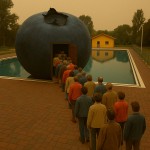
Artist: Malo Moray (@)
Title: Embrace
Format: CD & 12" + Download
Label: Possibly Sam Records (http://www.possiblysam.com/) (@)
Rated:
Title: Embrace
Format: CD & 12" + Download
Label: Possibly Sam Records (http://www.possiblysam.com/) (@)
Rated:
Malo Moray (aka Malo Moray & His Inflatable Knee) is a bassist, composer and performer from Leipzig, Germany and his latest release, 'Embrace,' was recorded live in front of a small audience of about two dozen people and recorded directly to vinyl completely in real-time, no overdubs. Using double bass, tapes, electronics and live processing, Malo explores a fragile and immersive sound world, somewhere between ambient, krautrock and jazz, inspired by Brian Eno. Laurie Anderson, David Sylvian, Swans and Soundwalk Collective. Malo says 'Embrace' is about presence- celebrating slowness and trust.
Malo's inspiration influences are certainly commendable, but don't expect the album to sound like any of them in particular. The album is only four tracks of varying lengths in about 41 minutes. First track, "Over The Mountain Range" begins with a background ambient drone (sustained synth chord) and incidental electronic crackle/static and then bass improvisation, later with bowed and processed bass background (possibly on tape), and after the bowed bass becomes the soloing instrument. With solo bowed stringed instruments there is often a degree of melancholy and that is not absent here. About 10:40 into the piece Malo begins his vocal recitation, a sort of speak-singing- not dissimilar to Laurie Anderson's style; a sort of anecdotal dream sequence that is visceral in an unexpected way. The story-like dialogue draws you in compelling your attention. It blends into track 2, "Himiko" with ethereal wordless vocals borne on an ambient cloud. More bowed bass follows. Track 3, "I Am Here Now" sounds like spring with ambient natural sounds (a stream, birds) and orchestral synth strings. A couple minutes into the piece Malo beings another vocal recitation There is applause at the end of this one, just to let you know that it's live and Malo addresses the audience in his native Deutsche, while all of his recitations have been in English. Final track, "Vanishing Act" conjures Leonard Cohen vocally, and the combination of bass and the ambient background is just gorgeous. I am truly impressed. More applause and a final brief address in German follows.
All things considered, this is a remarkable recording, a magical experience that transcends many of the live albums I've ever heard. While the deluxe limited editions are sold out, the Blueberry Translucent vinyl with 12-page booklet, OBI, poster and postcard (limited edition of 70) and Lemon Popsicle Translucent vinyl with 12-page booklet and OBI (limited edition of 200) and Blueberry Cake CD (limited edition of 100) are still available. You really need to hear this. Highly recommended!
Malo's inspiration influences are certainly commendable, but don't expect the album to sound like any of them in particular. The album is only four tracks of varying lengths in about 41 minutes. First track, "Over The Mountain Range" begins with a background ambient drone (sustained synth chord) and incidental electronic crackle/static and then bass improvisation, later with bowed and processed bass background (possibly on tape), and after the bowed bass becomes the soloing instrument. With solo bowed stringed instruments there is often a degree of melancholy and that is not absent here. About 10:40 into the piece Malo begins his vocal recitation, a sort of speak-singing- not dissimilar to Laurie Anderson's style; a sort of anecdotal dream sequence that is visceral in an unexpected way. The story-like dialogue draws you in compelling your attention. It blends into track 2, "Himiko" with ethereal wordless vocals borne on an ambient cloud. More bowed bass follows. Track 3, "I Am Here Now" sounds like spring with ambient natural sounds (a stream, birds) and orchestral synth strings. A couple minutes into the piece Malo beings another vocal recitation There is applause at the end of this one, just to let you know that it's live and Malo addresses the audience in his native Deutsche, while all of his recitations have been in English. Final track, "Vanishing Act" conjures Leonard Cohen vocally, and the combination of bass and the ambient background is just gorgeous. I am truly impressed. More applause and a final brief address in German follows.
All things considered, this is a remarkable recording, a magical experience that transcends many of the live albums I've ever heard. While the deluxe limited editions are sold out, the Blueberry Translucent vinyl with 12-page booklet, OBI, poster and postcard (limited edition of 70) and Lemon Popsicle Translucent vinyl with 12-page booklet and OBI (limited edition of 200) and Blueberry Cake CD (limited edition of 100) are still available. You really need to hear this. Highly recommended!
Peter Knight: For a Moment the Sky Knew My Name
Artist: Peter Knight (@)
Title: For a Moment the Sky Knew My Name
Format: CD + Download
Label: Room40 (@)
Rated:
Title: For a Moment the Sky Knew My Name
Format: CD + Download
Label: Room40 (@)
Rated:
Peter Knight’s "For a Moment the Sky Knew My Name" feels less like an album and more like a long, attentive walk where sound keeps stopping you by the sleeve, pointing at things you might otherwise miss. Released on Room40, it sits comfortably in that lineage of records that don’t hurry, don’t explain themselves too much, and quietly insist that listening is a bodily act, not just a cerebral one.
Knight is best known to many as a trumpeter with a fierce improvisational streak - from free jazz contexts to large ensemble work and electroacoustic explorations - but here the trumpet is only one limb of a larger organism. Breath, electronics, voice, environmental resonance: everything is woven into a porous fabric where music and place blur into one another. The presence of Lawrence English, both as producer and sonic co-conspirator, is crucial - not as a stylistic overlay, but as a kind of weather system in which Knight’s sounds are allowed to circulate, condense, and occasionally evaporate.
What strikes first is the album’s patience. "The Coiling of the Tide and Leaf and Shadow" unfolds like field notes written in slow ink: small gestures, restrained tones, silences that are doing real work rather than posing as concept. Trumpet lines emerge tentatively, sometimes fragile enough to feel like they might snap if stared at too hard. Electronics hum, smear, and breathe, never dominating, more like a second nervous system running quietly beneath the skin.
The title track is the album’s gravitational center. At nearly twenty minutes, it resists any obvious arc, preferring accumulation over drama. Sounds hover, recur, erode. There’s a strong sense of memory at play - not nostalgia, but the way places imprint themselves on the body. You don’t listen to this piece so much as inside it, as if the music were a temporary architecture built out of wind, heat, and half-remembered gestures. If it has a melody, it’s the kind you recognize only after it’s gone.
There’s also something quietly funny about the album, though it never cracks a smile outright. The humor lies in its refusal to perform urgency, in its calm confidence that slowness is not a flaw. In a world addicted to instant payoff, Knight is content to let a single tone wobble, decay, and fail beautifully. It’s the sonic equivalent of watching insects collide with the air and call it choreography.
The closing "The Night Tremors, So It Begs the Dawn" deepens this nocturnal intimacy, with subtle rhythmic pulses and distant echoes suggesting both unease and renewal. It doesn’t resolve anything - thankfully - but leaves the listener suspended in that ambiguous zone between rest and alertness, where thought softens and perception sharpens.
"For a Moment the Sky Knew My Name" is not a record for multitasking. It asks for time, attention, and a willingness to let sound ask questions without answering them. In return, it offers something increasingly rare: a sense of being gently reoriented in the world, reminded that listening - real listening - is a way of belonging, even if only for a moment.
Knight is best known to many as a trumpeter with a fierce improvisational streak - from free jazz contexts to large ensemble work and electroacoustic explorations - but here the trumpet is only one limb of a larger organism. Breath, electronics, voice, environmental resonance: everything is woven into a porous fabric where music and place blur into one another. The presence of Lawrence English, both as producer and sonic co-conspirator, is crucial - not as a stylistic overlay, but as a kind of weather system in which Knight’s sounds are allowed to circulate, condense, and occasionally evaporate.
What strikes first is the album’s patience. "The Coiling of the Tide and Leaf and Shadow" unfolds like field notes written in slow ink: small gestures, restrained tones, silences that are doing real work rather than posing as concept. Trumpet lines emerge tentatively, sometimes fragile enough to feel like they might snap if stared at too hard. Electronics hum, smear, and breathe, never dominating, more like a second nervous system running quietly beneath the skin.
The title track is the album’s gravitational center. At nearly twenty minutes, it resists any obvious arc, preferring accumulation over drama. Sounds hover, recur, erode. There’s a strong sense of memory at play - not nostalgia, but the way places imprint themselves on the body. You don’t listen to this piece so much as inside it, as if the music were a temporary architecture built out of wind, heat, and half-remembered gestures. If it has a melody, it’s the kind you recognize only after it’s gone.
There’s also something quietly funny about the album, though it never cracks a smile outright. The humor lies in its refusal to perform urgency, in its calm confidence that slowness is not a flaw. In a world addicted to instant payoff, Knight is content to let a single tone wobble, decay, and fail beautifully. It’s the sonic equivalent of watching insects collide with the air and call it choreography.
The closing "The Night Tremors, So It Begs the Dawn" deepens this nocturnal intimacy, with subtle rhythmic pulses and distant echoes suggesting both unease and renewal. It doesn’t resolve anything - thankfully - but leaves the listener suspended in that ambiguous zone between rest and alertness, where thought softens and perception sharpens.
"For a Moment the Sky Knew My Name" is not a record for multitasking. It asks for time, attention, and a willingness to let sound ask questions without answering them. In return, it offers something increasingly rare: a sense of being gently reoriented in the world, reminded that listening - real listening - is a way of belonging, even if only for a moment.
Mark Harwood: Two Actors

Mark Harwood has always had a talent for making the room feel slightly unstable, as if the furniture might start talking back. On "Two Actors", released via Akti Records, he doesn’t just lean into that quality - he sets it up as the central dramaturgy. This is not an album in the traditional sense so much as a muttering play performed by unreliable narrators, some human, some digital, all vaguely suspicious.
Harwood, best known as the quiet mastermind behind Penultimate Press, has long occupied a peculiar corner of experimental music where collage, musique concrète, spoken fragments and emotional ambushes coexist. Here, he splits himself in two - or perhaps admits that the split has always been there. The title is literal and metaphorical: voices argue, overlap, contradict, derail. One actor speaks, the other interrupts. Sometimes the machine takes a line; sometimes it forgets it entirely.
Musically, "Two Actors" thrives on productive clumsiness. Beats limp rather than march, melodies appear briefly and then seem embarrassed by their own presence. There’s a sense of form beneath the chaos - Harwood is far too composed to be merely messy - but it’s a form that enjoys tripping over its shoelaces. Think of a waltz that’s had one drink too many, or a radio play broadcast from a half-flooded basement.
What makes the album compelling is its emotional ambiguity. It’s funny, but not in a punchline way; funny like realizing too late that you’ve been talking to yourself in public. Tracks flicker between irony and sincerity, often within the same minute. A warped vocal line might sound mocking until it suddenly feels exposed, almost tender. Harwood has a knack for letting vulnerability leak through the cracks of digital processing, like warmth escaping from a poorly insulated room.
There’s also a strange theatrical intimacy at play. Listening to "Two Actors" can feel like eavesdropping on a rehearsal that was never meant to be heard, where the script is constantly rewritten by interference, feedback, and second thoughts. The references - to classical structure, to absurdism, to the ghost of radio art - are there, but they’re worn lightly, with a grin rather than a manifesto.
In the end, "Two Actors" doesn’t resolve its internal dialogue, and that’s precisely the point. It leaves you suspended between laughter and unease, wondering whether the album is poking fun at you, comforting you, or quietly stealing your lines. Harwood remains a master of this unstable theatre: mischievous, oddly humane, and fully aware that sometimes the most honest conversation is the one that never quite makes sense.
Harwood, best known as the quiet mastermind behind Penultimate Press, has long occupied a peculiar corner of experimental music where collage, musique concrète, spoken fragments and emotional ambushes coexist. Here, he splits himself in two - or perhaps admits that the split has always been there. The title is literal and metaphorical: voices argue, overlap, contradict, derail. One actor speaks, the other interrupts. Sometimes the machine takes a line; sometimes it forgets it entirely.
Musically, "Two Actors" thrives on productive clumsiness. Beats limp rather than march, melodies appear briefly and then seem embarrassed by their own presence. There’s a sense of form beneath the chaos - Harwood is far too composed to be merely messy - but it’s a form that enjoys tripping over its shoelaces. Think of a waltz that’s had one drink too many, or a radio play broadcast from a half-flooded basement.
What makes the album compelling is its emotional ambiguity. It’s funny, but not in a punchline way; funny like realizing too late that you’ve been talking to yourself in public. Tracks flicker between irony and sincerity, often within the same minute. A warped vocal line might sound mocking until it suddenly feels exposed, almost tender. Harwood has a knack for letting vulnerability leak through the cracks of digital processing, like warmth escaping from a poorly insulated room.
There’s also a strange theatrical intimacy at play. Listening to "Two Actors" can feel like eavesdropping on a rehearsal that was never meant to be heard, where the script is constantly rewritten by interference, feedback, and second thoughts. The references - to classical structure, to absurdism, to the ghost of radio art - are there, but they’re worn lightly, with a grin rather than a manifesto.
In the end, "Two Actors" doesn’t resolve its internal dialogue, and that’s precisely the point. It leaves you suspended between laughter and unease, wondering whether the album is poking fun at you, comforting you, or quietly stealing your lines. Harwood remains a master of this unstable theatre: mischievous, oddly humane, and fully aware that sometimes the most honest conversation is the one that never quite makes sense.