
Tuesday, September 8, 2026
Browse by Genre
Industrial Music / Industrial Metal / Aggro Industrial / Electro Metal
Industrial Noise / Power Noise / Harsh Noise
Synth Pop / Electro Pop / Synth-Electronica
Techno / Trance / Goa / Drum'n'Bass / Jungle / Tribal / Trip-Hop
Ambient / Electronica / Ethereal / Dub / Soundscapes / Abstract
Experimental / Avantgarde / Weird & Wired / Glitch / Noise / Field Recording
Dark / Gothic / Wave / New Wave / Dark Wave / Industrial Gothic
New Music / Downtown / Avantgarde Jazz / New Classical / World
Search Reviews
Music Reviews
Peter Gall: Drum Seeds

Artist: Peter Gall (@)
Title: Drum Seeds
Format: CD & 12" + Download
Label: Compost Records (@)
Rated:

Title: Drum Seeds
Format: CD & 12" + Download
Label: Compost Records (@)
Rated:
There is a small but important trap hidden inside the title "Drum Seeds". It makes you expect percussion. Lots of percussion. Perhaps an hour of Peter Gall hitting things with the increasingly alarming conviction of a man who has just discovered that furniture can produce resonance. There are certainly plenty of drums here. But "Drum Seeds" is not really an album about drums. It is an album about what happens when rhythm is allowed to grow roots.
Peter Gall arrives at this record from a rather inconvenient position for anyone attempting to write a conventional career narrative. His previous solo album, "Love Avatar", won the German Jazz Prize for Album of the Year in 2025, while his work as drummer, composer and producer has taken him through contemporary jazz, improvisation, pop and electronic projects, including the spiritual-jazz collective WEB WEB. He could therefore have made the sensible decision to repeat the formula, assemble another impressive ensemble and enjoy the pleasant afterglow of an award-winning record. Instead, he decided to lock himself in the studio and make an album almost entirely by himself. Humanity occasionally does produce evidence that curiosity is not completely extinct.
The original idea was apparently much simpler: a drum album. Gall and Compost founder Michael Reinboth began with that premise, working at Jan Krause's studio and generating a considerable amount of rhythmic material, from grooves and layered kits to larger percussion arrangements. Then Gall's affection for vintage analogue synthesizers interfered with the plan, as good obsessions tend to do. The drums remained the gravitational centre, but suddenly there were synthesizers, harmonic structures, melodies and electronic textures competing for admission. The result is considerably more interesting than the proposed concept.
"Groove Receiver" opens with the sort of rhythmic insistence that immediately makes the word “groove” sound less like a marketing category and more like a physical phenomenon. Two drum kits occupy the stereo field while Mellotron colours float above them, creating a strange collision between Krautrock propulsion and the slightly mystical atmosphere of a forgotten 1970s studio. It is muscular without being macho, which is more difficult to achieve than drummers would probably admit.
Gall's greatest strength throughout the album is that he does not confuse complexity with intelligence. His playing can be extraordinarily intricate, but "Drum Seeds" is rarely interested in the athletic spectacle of percussion. The groove is the protagonist, not the drummer's ego. This distinction is explicitly important to Gall's approach: the simple groove, rather than virtuoso display, is where feeling and narrative reside.
That philosophy becomes clearer with "Super Truth", a short, turbulent burst that feels less like a complete composition than a launch sequence. Then "Prophet Juno" takes the idea somewhere more mischievous, placing a polyrhythmic Afro-derived groove against the synthetic pulse of a Juno-style arpeggiator. The track eventually erupts into a synthesizer solo, as though the machines have finally decided they have tolerated enough discipline from the drummer. This is one of the album's most appealing characteristics: Gall allows acoustic and electronic rhythm to behave as equals. The synthesizers do not merely decorate the drums, and the drums do not merely provide a human counterweight to the machines. They constantly modify each other's behaviour.
"You And Me" is where the record starts flirting openly with the dancefloor, but without surrendering its compositional intelligence. The title might suggest a conventional love song, yet Gall's romance is conducted through pulse, repetition and timbral friction. The track feels intimate without becoming sentimental, which is probably the closest a drum machine and a jazz drummer are ever going to get to couples therapy.
Then comes "It Is Happening Again", whose title could belong to a David Lynch film, and whose musical atmosphere does little to discourage the comparison. A dreamlike surface sits over a distinctly jazz-informed triplet pulse, recalling the elastic propulsion associated with Elvin Jones without simply imitating it. The past is not reproduced here; it is placed inside a contemporary electronic frame and allowed to mutate.
This relationship between memory and technology runs through the whole album. Gall has absorbed a formidable amount of musical history, but he does not seem particularly interested in displaying his record collection as a series of references. Jazz of the 1960s and '70s, Krautrock, hip-hop, ambient electronics, R&B, breakbeats and club music appear less as quotations than as materials that have been metabolised. The album's stylistic vocabulary is broad, but its syntax is surprisingly coherent.
"Core" is perhaps the clearest example. Its melody has a wistful quality while the rhythm leans towards Dilla-inspired R&B, producing that curious sensation of something simultaneously familiar and slightly displaced. Gall understands that groove does not necessarily mean simplicity. A rhythm can be sophisticated without announcing its sophistication every thirty seconds.
"Hello Future Us" pushes the physicality further. Jungle-inflected drumming meets the raw bass presence of an MS-20, and the track acquires the nervous energy of a machine that has been given far too much coffee. Yet again, the complexity remains functional. The rhythm does not exist to demonstrate that Gall can play fast. It exists to create momentum.
The miniature "Seeds" is almost comically concise by comparison. At under two minutes, it returns to the album's original premise and concentrates on percussion itself. It feels less like an interlude than a reminder of the root system beneath everything else: before the synths, before the harmonic ideas, before the cinematic associations, there was the beat.
And then "Glow" does something unexpectedly beautiful. The drums and percussion settle into an interlocking pattern while electronic layers gather above them, creating one of the album's most emotionally open moments. Rather than building towards a conventional climax, the track seems to illuminate itself gradually. It is a rare example of electronic music achieving warmth without coating everything in sentimental fog. The track's slow-burning quality has already attracted attention as one of the record's more atmospheric pieces.
"Zombie Satellite" is shorter and stranger, with analogue synthesizer brutality meeting Gall's lineage of drum heroes. The title alone sounds like something that should be orbiting Earth under a NASA classification nobody wants to discuss. Musically, however, the track is less interested in science fiction than in friction: organic percussion and electronic timbre occupying the same unstable territory.
"Disco Orbit" compresses that idea even further, becoming a brief excursion into club territory before "Love Lost Bits" closes the album with a considerably softer emotional register. Dreamy, funky and touched by trip-hop, it feels like the lights coming back on after a long night, except that some of the furniture has moved and nobody is entirely sure whether the sun is actually rising or whether the synthesizer is merely pretending.
What makes the album work as a whole is precisely this refusal to remain in one rhythmic state. Gall is clearly fascinated by repetition, but he understands that repetition becomes interesting only when something inside it changes. A groove can be looped endlessly, yet its emotional meaning shifts according to what is placed around it. That is the fundamental compositional idea of "Drum Seeds": rhythm is not a fixed object but an ecosystem.
The album's title therefore becomes increasingly apt. These are not drum tracks in the narrow sense. They are rhythmic seeds planted into different musical soils. Some grow into jazz, some into electronics, some into club music, some into ambient territories, and some seem to have wandered into the soundtrack department of a particularly intelligent science-fiction film. The remarkable thing is that they still belong to the same garden.
Gall's decision to record all instruments himself also changes the character of the music. There is no ensemble negotiation in the conventional sense, no spontaneous argument between five musicians whose egos must be accommodated before lunch. Instead, the interaction happens between Gall's different musical identities: drummer, composer, producer, programmer and synthesizer enthusiast. The album becomes a conversation between versions of the same musician.
That solitary method could easily have produced something hermetic. It does not. "Drum Seeds" remains remarkably communicative because Gall builds the music around movement rather than technical display. The grooves invite the listener in before the arrangements begin revealing their architecture.
There is also a subtle tension between its organic title and its technological sound. Seeds imply patience, growth, soil, seasons. Synthesizers imply circuits, electricity, buttons that somebody eventually has to label. Gall brings the two together without trying to make them philosophically reconcile. The analogue machines sound almost tactile, while the percussion repeatedly acquires electronic qualities through processing and layering.
In that sense, "Drum Seeds" belongs to a long tradition of musicians using technology not to escape physicality but to exaggerate it. The machine becomes another percussionist, another resonant body, another surface against which the human gesture can bounce. And perhaps that is why the album avoids becoming a mere showcase for an exceptionally accomplished drummer. Gall has nothing left to prove in that department. His biography already contains enough prestigious collaborators, international touring and awards to make another demonstration of technical competence rather redundant.
Instead, "Drum Seeds" asks a more interesting question: what can a drummer do when nobody tells him where the rhythm is supposed to belong?
The answer is twelve tracks that move between jazz, electronics, groove, ambient music, breakbeats and club culture without behaving like a stylistic catalogue. There are echoes of Aphex Twin, Boards of Canada, Caribou, The Streets and cinematic electronics, but the references never quite become destinations. They are passing signals picked up by Gall's rhythmic radar. That makes the album feel less like a genre exercise than a private laboratory whose doors have accidentally been left open.
The final impression is surprisingly simple. "Drum Seeds" is about rhythm as memory, rhythm as movement, rhythm as atmosphere, rhythm as a form of thought. Gall starts with drums and discovers that drums are capable of growing almost anything if you give them enough time, electronics and slightly unreasonable curiosity.
The beat is only the seed. Everything else is what happens when you let it grow.
Peter Gall arrives at this record from a rather inconvenient position for anyone attempting to write a conventional career narrative. His previous solo album, "Love Avatar", won the German Jazz Prize for Album of the Year in 2025, while his work as drummer, composer and producer has taken him through contemporary jazz, improvisation, pop and electronic projects, including the spiritual-jazz collective WEB WEB. He could therefore have made the sensible decision to repeat the formula, assemble another impressive ensemble and enjoy the pleasant afterglow of an award-winning record. Instead, he decided to lock himself in the studio and make an album almost entirely by himself. Humanity occasionally does produce evidence that curiosity is not completely extinct.
The original idea was apparently much simpler: a drum album. Gall and Compost founder Michael Reinboth began with that premise, working at Jan Krause's studio and generating a considerable amount of rhythmic material, from grooves and layered kits to larger percussion arrangements. Then Gall's affection for vintage analogue synthesizers interfered with the plan, as good obsessions tend to do. The drums remained the gravitational centre, but suddenly there were synthesizers, harmonic structures, melodies and electronic textures competing for admission. The result is considerably more interesting than the proposed concept.
"Groove Receiver" opens with the sort of rhythmic insistence that immediately makes the word “groove” sound less like a marketing category and more like a physical phenomenon. Two drum kits occupy the stereo field while Mellotron colours float above them, creating a strange collision between Krautrock propulsion and the slightly mystical atmosphere of a forgotten 1970s studio. It is muscular without being macho, which is more difficult to achieve than drummers would probably admit.
Gall's greatest strength throughout the album is that he does not confuse complexity with intelligence. His playing can be extraordinarily intricate, but "Drum Seeds" is rarely interested in the athletic spectacle of percussion. The groove is the protagonist, not the drummer's ego. This distinction is explicitly important to Gall's approach: the simple groove, rather than virtuoso display, is where feeling and narrative reside.
That philosophy becomes clearer with "Super Truth", a short, turbulent burst that feels less like a complete composition than a launch sequence. Then "Prophet Juno" takes the idea somewhere more mischievous, placing a polyrhythmic Afro-derived groove against the synthetic pulse of a Juno-style arpeggiator. The track eventually erupts into a synthesizer solo, as though the machines have finally decided they have tolerated enough discipline from the drummer. This is one of the album's most appealing characteristics: Gall allows acoustic and electronic rhythm to behave as equals. The synthesizers do not merely decorate the drums, and the drums do not merely provide a human counterweight to the machines. They constantly modify each other's behaviour.
"You And Me" is where the record starts flirting openly with the dancefloor, but without surrendering its compositional intelligence. The title might suggest a conventional love song, yet Gall's romance is conducted through pulse, repetition and timbral friction. The track feels intimate without becoming sentimental, which is probably the closest a drum machine and a jazz drummer are ever going to get to couples therapy.
Then comes "It Is Happening Again", whose title could belong to a David Lynch film, and whose musical atmosphere does little to discourage the comparison. A dreamlike surface sits over a distinctly jazz-informed triplet pulse, recalling the elastic propulsion associated with Elvin Jones without simply imitating it. The past is not reproduced here; it is placed inside a contemporary electronic frame and allowed to mutate.
This relationship between memory and technology runs through the whole album. Gall has absorbed a formidable amount of musical history, but he does not seem particularly interested in displaying his record collection as a series of references. Jazz of the 1960s and '70s, Krautrock, hip-hop, ambient electronics, R&B, breakbeats and club music appear less as quotations than as materials that have been metabolised. The album's stylistic vocabulary is broad, but its syntax is surprisingly coherent.
"Core" is perhaps the clearest example. Its melody has a wistful quality while the rhythm leans towards Dilla-inspired R&B, producing that curious sensation of something simultaneously familiar and slightly displaced. Gall understands that groove does not necessarily mean simplicity. A rhythm can be sophisticated without announcing its sophistication every thirty seconds.
"Hello Future Us" pushes the physicality further. Jungle-inflected drumming meets the raw bass presence of an MS-20, and the track acquires the nervous energy of a machine that has been given far too much coffee. Yet again, the complexity remains functional. The rhythm does not exist to demonstrate that Gall can play fast. It exists to create momentum.
The miniature "Seeds" is almost comically concise by comparison. At under two minutes, it returns to the album's original premise and concentrates on percussion itself. It feels less like an interlude than a reminder of the root system beneath everything else: before the synths, before the harmonic ideas, before the cinematic associations, there was the beat.
And then "Glow" does something unexpectedly beautiful. The drums and percussion settle into an interlocking pattern while electronic layers gather above them, creating one of the album's most emotionally open moments. Rather than building towards a conventional climax, the track seems to illuminate itself gradually. It is a rare example of electronic music achieving warmth without coating everything in sentimental fog. The track's slow-burning quality has already attracted attention as one of the record's more atmospheric pieces.
"Zombie Satellite" is shorter and stranger, with analogue synthesizer brutality meeting Gall's lineage of drum heroes. The title alone sounds like something that should be orbiting Earth under a NASA classification nobody wants to discuss. Musically, however, the track is less interested in science fiction than in friction: organic percussion and electronic timbre occupying the same unstable territory.
"Disco Orbit" compresses that idea even further, becoming a brief excursion into club territory before "Love Lost Bits" closes the album with a considerably softer emotional register. Dreamy, funky and touched by trip-hop, it feels like the lights coming back on after a long night, except that some of the furniture has moved and nobody is entirely sure whether the sun is actually rising or whether the synthesizer is merely pretending.
What makes the album work as a whole is precisely this refusal to remain in one rhythmic state. Gall is clearly fascinated by repetition, but he understands that repetition becomes interesting only when something inside it changes. A groove can be looped endlessly, yet its emotional meaning shifts according to what is placed around it. That is the fundamental compositional idea of "Drum Seeds": rhythm is not a fixed object but an ecosystem.
The album's title therefore becomes increasingly apt. These are not drum tracks in the narrow sense. They are rhythmic seeds planted into different musical soils. Some grow into jazz, some into electronics, some into club music, some into ambient territories, and some seem to have wandered into the soundtrack department of a particularly intelligent science-fiction film. The remarkable thing is that they still belong to the same garden.
Gall's decision to record all instruments himself also changes the character of the music. There is no ensemble negotiation in the conventional sense, no spontaneous argument between five musicians whose egos must be accommodated before lunch. Instead, the interaction happens between Gall's different musical identities: drummer, composer, producer, programmer and synthesizer enthusiast. The album becomes a conversation between versions of the same musician.
That solitary method could easily have produced something hermetic. It does not. "Drum Seeds" remains remarkably communicative because Gall builds the music around movement rather than technical display. The grooves invite the listener in before the arrangements begin revealing their architecture.
There is also a subtle tension between its organic title and its technological sound. Seeds imply patience, growth, soil, seasons. Synthesizers imply circuits, electricity, buttons that somebody eventually has to label. Gall brings the two together without trying to make them philosophically reconcile. The analogue machines sound almost tactile, while the percussion repeatedly acquires electronic qualities through processing and layering.
In that sense, "Drum Seeds" belongs to a long tradition of musicians using technology not to escape physicality but to exaggerate it. The machine becomes another percussionist, another resonant body, another surface against which the human gesture can bounce. And perhaps that is why the album avoids becoming a mere showcase for an exceptionally accomplished drummer. Gall has nothing left to prove in that department. His biography already contains enough prestigious collaborators, international touring and awards to make another demonstration of technical competence rather redundant.
Instead, "Drum Seeds" asks a more interesting question: what can a drummer do when nobody tells him where the rhythm is supposed to belong?
The answer is twelve tracks that move between jazz, electronics, groove, ambient music, breakbeats and club culture without behaving like a stylistic catalogue. There are echoes of Aphex Twin, Boards of Canada, Caribou, The Streets and cinematic electronics, but the references never quite become destinations. They are passing signals picked up by Gall's rhythmic radar. That makes the album feel less like a genre exercise than a private laboratory whose doors have accidentally been left open.
The final impression is surprisingly simple. "Drum Seeds" is about rhythm as memory, rhythm as movement, rhythm as atmosphere, rhythm as a form of thought. Gall starts with drums and discovers that drums are capable of growing almost anything if you give them enough time, electronics and slightly unreasonable curiosity.
The beat is only the seed. Everything else is what happens when you let it grow.
Mike Cooper: The Dream Island of Birds

Artist: Mike Cooper
Title: The Dream Island of Birds
Format: 12" + Download
Label: Discrepant (@)
Rated:

Title: The Dream Island of Birds
Format: 12" + Download
Label: Discrepant (@)
Rated:
There are musicians who travel the world looking for sounds, and there are musicians who eventually realise that the world has been recording itself all along. Mike Cooper belongs firmly to the second category. After more than six decades of musical activity, moving from country blues and folk through free improvisation, Hawaiian music, exotica, ambient electronics and field recording, Cooper has become less a genre-crossing musician than a particularly persistent refusal to recognise that genres are supposed to stop you somewhere.
"The Dream Island of Birds" is another consequence of that refusal, but it is also one of his more delicate propositions. Its starting point is deceptively simple: during an artist residency on Pulau Ubin, an island between Singapore and Malaysia, Cooper recorded birds and insects. The island hosts hundreds of resident and migratory bird species, and those recordings eventually became raw material for an album in which the natural sounds are processed, rearranged and joined by electronics. The titles name actual birds, but the music does not attempt to reproduce them literally. One piece, "Avianics", does not originate from birds at all. The bird is sometimes present, sometimes remembered, sometimes invented. Humanity has spent centuries doing this with animals, although usually by putting them in zoos; Cooper has found a considerably more interesting method.
The result is neither field recording in the strict documentary sense nor abstract electronic music pretending nature never existed. It occupies the awkward and fertile territory between the two. Discrepant describes it as an island heard through time and circuitry, which is essentially the conceptual key: "The Dream Island of Birds" is less a recording of Pulau Ubin than a reconstruction of how a place survives inside memory after the microphone has been switched off.
"Oriental Pied Hornbill" immediately establishes that ambiguity. What might have been presented as a zoological postcard instead becomes something more unstable: fragments of avian presence drift through electronic space, losing their documentary identity as they acquire another kind of physicality. The sounds are recognisable enough to suggest an environment, yet sufficiently manipulated to prevent the listener from settling into the comfortable role of tourist. There is no polite little plaque saying "Hornbill, approximately twelve metres away". The island keeps moving.
"Ruby Cheeked Sunbird" stretches this sensation into a more suspended form. Cooper's electronic treatment does not simply beautify the recordings; it alters their temporal behaviour. Natural sounds become gestures, traces and colours rather than evidence. The distinction matters. Field recording often carries an implicit promise of authenticity: this happened, here, at this moment. Cooper seems considerably less interested in making that promise than in asking what happens to reality once it has entered the imagination.
And that is where the album becomes quietly philosophical.
A field recording is already a memory the instant it is captured. The microphone removes a sound from its environment and freezes it into an object. Digital processing then gives the musician permission to make that object misbehave. Cooper takes advantage of the contradiction. The birds are real, but the island on this record is not. It is a Pulau Ubin filtered through recollection, technology, listening habits and the strange psychological process by which places become more vivid after we have left them.
"Red Jungle Fowl" and "White Throated Laughing Thrush" deepen this impression, creating sound environments in which acoustic traces and electronic shadows seem to coexist without either claiming ownership. Cooper has been developing this approach for decades. His ambient field-recording work has long involved collecting sounds from the Pacific, Southeast Asia, Australia and New Zealand, then sampling, looping and electronically transforming them into what he has called virtual soundscapes. "The Dream Island of Birds" therefore feels less like an isolated experiment than another chapter in an unusually coherent investigation into how landscape can become music.
There is also something wonderfully mischievous about the track titles. "Greater Racket-Tailed Drone" sounds like the name of an obscure electronic musician who plays Berlin basements at 3 a.m. and refuses to provide a biography. Here it is an actual bird, or rather the name of an actual bird whose identity Cooper uses as a doorway into abstraction. The joke becomes even better because “drone” is precisely the musical territory the title seems to promise. Nature, apparently, has been producing experimental electronica without waiting for humans to invent modular synthesis.
Yet "Greater Racket-Tailed Drone" is not merely a conceptual punchline. Its extended duration allows Cooper to work with gradual transformations, making the distinction between organic sound and electronic construction progressively harder to maintain. The music seems to hover between recognition and hallucination. One hears something alive, but cannot quite determine whether it is singing, vibrating, resonating or being electronically persuaded to reconsider its career choices.
"Scarlet Backed Flowerpecker" continues the process without offering a conventional resolution. By this point, the listener has learned not to expect a literal ornithological portrait. The named species are coordinates rather than subjects. They locate the imagination geographically while the music deliberately refuses to remain there.
Then comes "Avianics", the album's sly conceptual trapdoor. The title sounds like an obscure branch of aerospace engineering, but the piece is entirely imagined through electronics. It therefore exposes the album's central mechanism by removing its natural source altogether. If the preceding pieces asked how much invention can be introduced into a field recording before it stops being a field recording, "Avianics" asks the inverse question: how much imagined nature can exist in music before we begin to hear it as real? Quite a lot, apparently.
This is also why "The Dream Island of Birds" is more intriguing than an album built simply around environmental recordings. Cooper is not presenting pristine nature as something that modern technology must respectfully avoid touching. He does the opposite. He allows technology to become part of the ecology. Electronics do not contaminate the landscape; they become another way of remembering it.
The album's title comes from another layer of memory. Cooper had encountered illustrator and writer Charles van Sandwyk in Fiji in the early 1990s. Years later, Cooper learned that van Sandwyk had experienced vivid dreams during recovery from a serious accident, one of which became an illustrated book called "The Dream Island of Birds". A postcard from that book remained in Cooper's studio. The connection is almost too perfect: an island encountered physically, transformed into an artwork, then remembered by another artist decades later and transformed again into sound.
It makes the record feel less like an album about birds than an album about the afterlife of encounters.
Cooper's great skill here is restraint. He does not need to fill every available space with information. The tracks breathe. Sounds emerge, overlap and recede without being forced into climaxes designed to reassure listeners that something Important Is Happening. The music trusts duration, texture and uncertainty. That is increasingly rare in an era in which even silence apparently needs a content strategy.
There is something almost tender in that refusal to explain. The island remains partly inaccessible. We are allowed to hear its traces without being granted possession of it.
That seems particularly appropriate for Cooper, whose career has repeatedly moved between musical cultures without treating them as exotic trophies. His longstanding engagement with Pacific music, Hawaiian lap steel, improvisation and electronic sound has produced a body of work where travel is not simply a subject but a method of listening.
"The Dream Island of Birds" consequently feels like a mature work not because it sounds restrained or “late”, but because it no longer needs to prove how much territory it can cover. Cooper has spent decades travelling across styles and actual geographical distances. Here he does something more elusive: he stays with one place long enough for it to stop being a place and become a memory.
The birds are there, but they are also elsewhere. The island is real, but it has already become imaginary. The field recording is authentic, but authenticity is no longer the point. Between microphone and recollection, between Pulau Ubin and the circuitry of the studio, Cooper finds a strange little archipelago where documentary and dream stop arguing about who gets to be called real.
Perhaps that is what makes the album so quietly beautiful. It does not preserve a landscape. It lets the landscape change. And somewhere inside that transformation, a bird begins to sound like electronics, electronics begin to sound like weather, and memory begins to behave suspiciously like music.
"The Dream Island of Birds" is another consequence of that refusal, but it is also one of his more delicate propositions. Its starting point is deceptively simple: during an artist residency on Pulau Ubin, an island between Singapore and Malaysia, Cooper recorded birds and insects. The island hosts hundreds of resident and migratory bird species, and those recordings eventually became raw material for an album in which the natural sounds are processed, rearranged and joined by electronics. The titles name actual birds, but the music does not attempt to reproduce them literally. One piece, "Avianics", does not originate from birds at all. The bird is sometimes present, sometimes remembered, sometimes invented. Humanity has spent centuries doing this with animals, although usually by putting them in zoos; Cooper has found a considerably more interesting method.
The result is neither field recording in the strict documentary sense nor abstract electronic music pretending nature never existed. It occupies the awkward and fertile territory between the two. Discrepant describes it as an island heard through time and circuitry, which is essentially the conceptual key: "The Dream Island of Birds" is less a recording of Pulau Ubin than a reconstruction of how a place survives inside memory after the microphone has been switched off.
"Oriental Pied Hornbill" immediately establishes that ambiguity. What might have been presented as a zoological postcard instead becomes something more unstable: fragments of avian presence drift through electronic space, losing their documentary identity as they acquire another kind of physicality. The sounds are recognisable enough to suggest an environment, yet sufficiently manipulated to prevent the listener from settling into the comfortable role of tourist. There is no polite little plaque saying "Hornbill, approximately twelve metres away". The island keeps moving.
"Ruby Cheeked Sunbird" stretches this sensation into a more suspended form. Cooper's electronic treatment does not simply beautify the recordings; it alters their temporal behaviour. Natural sounds become gestures, traces and colours rather than evidence. The distinction matters. Field recording often carries an implicit promise of authenticity: this happened, here, at this moment. Cooper seems considerably less interested in making that promise than in asking what happens to reality once it has entered the imagination.
And that is where the album becomes quietly philosophical.
A field recording is already a memory the instant it is captured. The microphone removes a sound from its environment and freezes it into an object. Digital processing then gives the musician permission to make that object misbehave. Cooper takes advantage of the contradiction. The birds are real, but the island on this record is not. It is a Pulau Ubin filtered through recollection, technology, listening habits and the strange psychological process by which places become more vivid after we have left them.
"Red Jungle Fowl" and "White Throated Laughing Thrush" deepen this impression, creating sound environments in which acoustic traces and electronic shadows seem to coexist without either claiming ownership. Cooper has been developing this approach for decades. His ambient field-recording work has long involved collecting sounds from the Pacific, Southeast Asia, Australia and New Zealand, then sampling, looping and electronically transforming them into what he has called virtual soundscapes. "The Dream Island of Birds" therefore feels less like an isolated experiment than another chapter in an unusually coherent investigation into how landscape can become music.
There is also something wonderfully mischievous about the track titles. "Greater Racket-Tailed Drone" sounds like the name of an obscure electronic musician who plays Berlin basements at 3 a.m. and refuses to provide a biography. Here it is an actual bird, or rather the name of an actual bird whose identity Cooper uses as a doorway into abstraction. The joke becomes even better because “drone” is precisely the musical territory the title seems to promise. Nature, apparently, has been producing experimental electronica without waiting for humans to invent modular synthesis.
Yet "Greater Racket-Tailed Drone" is not merely a conceptual punchline. Its extended duration allows Cooper to work with gradual transformations, making the distinction between organic sound and electronic construction progressively harder to maintain. The music seems to hover between recognition and hallucination. One hears something alive, but cannot quite determine whether it is singing, vibrating, resonating or being electronically persuaded to reconsider its career choices.
"Scarlet Backed Flowerpecker" continues the process without offering a conventional resolution. By this point, the listener has learned not to expect a literal ornithological portrait. The named species are coordinates rather than subjects. They locate the imagination geographically while the music deliberately refuses to remain there.
Then comes "Avianics", the album's sly conceptual trapdoor. The title sounds like an obscure branch of aerospace engineering, but the piece is entirely imagined through electronics. It therefore exposes the album's central mechanism by removing its natural source altogether. If the preceding pieces asked how much invention can be introduced into a field recording before it stops being a field recording, "Avianics" asks the inverse question: how much imagined nature can exist in music before we begin to hear it as real? Quite a lot, apparently.
This is also why "The Dream Island of Birds" is more intriguing than an album built simply around environmental recordings. Cooper is not presenting pristine nature as something that modern technology must respectfully avoid touching. He does the opposite. He allows technology to become part of the ecology. Electronics do not contaminate the landscape; they become another way of remembering it.
The album's title comes from another layer of memory. Cooper had encountered illustrator and writer Charles van Sandwyk in Fiji in the early 1990s. Years later, Cooper learned that van Sandwyk had experienced vivid dreams during recovery from a serious accident, one of which became an illustrated book called "The Dream Island of Birds". A postcard from that book remained in Cooper's studio. The connection is almost too perfect: an island encountered physically, transformed into an artwork, then remembered by another artist decades later and transformed again into sound.
It makes the record feel less like an album about birds than an album about the afterlife of encounters.
Cooper's great skill here is restraint. He does not need to fill every available space with information. The tracks breathe. Sounds emerge, overlap and recede without being forced into climaxes designed to reassure listeners that something Important Is Happening. The music trusts duration, texture and uncertainty. That is increasingly rare in an era in which even silence apparently needs a content strategy.
There is something almost tender in that refusal to explain. The island remains partly inaccessible. We are allowed to hear its traces without being granted possession of it.
That seems particularly appropriate for Cooper, whose career has repeatedly moved between musical cultures without treating them as exotic trophies. His longstanding engagement with Pacific music, Hawaiian lap steel, improvisation and electronic sound has produced a body of work where travel is not simply a subject but a method of listening.
"The Dream Island of Birds" consequently feels like a mature work not because it sounds restrained or “late”, but because it no longer needs to prove how much territory it can cover. Cooper has spent decades travelling across styles and actual geographical distances. Here he does something more elusive: he stays with one place long enough for it to stop being a place and become a memory.
The birds are there, but they are also elsewhere. The island is real, but it has already become imaginary. The field recording is authentic, but authenticity is no longer the point. Between microphone and recollection, between Pulau Ubin and the circuitry of the studio, Cooper finds a strange little archipelago where documentary and dream stop arguing about who gets to be called real.
Perhaps that is what makes the album so quietly beautiful. It does not preserve a landscape. It lets the landscape change. And somewhere inside that transformation, a bird begins to sound like electronics, electronics begin to sound like weather, and memory begins to behave suspiciously like music.
hackedpicciotto: Lichtung

There is something almost suspicious about an album called "Lichtung" arriving after fourteen years of wandering. A clearing, after all, is not simply a piece of land where the trees happen to be missing. It is a place made visible by an interruption: the forest opens, the horizon returns, and for once nobody has to keep walking. For hackedepicciotto, that distinction matters. Danielle de Picciotto and Alexander Hacke have spent much of their shared artistic life in motion, allowing churches, cities, recording studios and temporary homes to become part of their music. Now they have returned to Berlin, settled on its outer edge, and apparently discovered the radical avant-garde potential of having an address.
"Lichtung" is therefore a homecoming record, but not a cosy one. The forest has been cleared, not domesticated.
The title track establishes this beautifully. Piano, violin, electronics and Hacke's low-frequency presence create an atmosphere that feels neither ambient nor traditionally song-based. There is an almost ritual quality to it, but without the usual incense-and-new-age baggage. The German lyrics move through amethyst, opal, berries, pomegranates, animals, flowers and fire before arriving at the album's central opposition: outside, storms; inside, a place where fear temporarily loses its jurisdiction. The imagery is elemental without becoming decorative. It feels less like a description of nature than an attempt to construct a small protective mythology around it.
That distinction becomes important because "Lichtung" is not really an album about tranquillity. It is an album about what makes tranquillity possible.
"Vogelfrei" introduces a more restless side of the record, its title suggesting freedom from social or legal constraint, but the lyrics are considerably more complicated than a simple liberation anthem. Rivers have to dry up, bars have to be broken, the crowd has to be abandoned, desire and greed have to be escaped. Freedom here is not a picturesque meadow waiting at the end of the road. It requires severance. One has to leave something behind before one can discover what remains.
That idea leads naturally into "Wiederbelebung", perhaps the album's most revealing title. The word means resurrection or revival, but the song is less interested in miraculous rebirth than in the friction involved in becoming alive again. “You want visibility / I want opposition” is the basic tension, and it is a remarkably good description of hackedepicciotto themselves: two radically different artistic temperaments negotiating a common language without sanding down their differences. The lyrics eventually move from solitude into togetherness, which could almost serve as a manifesto for the entire project.
Musically, this is where the album starts to reveal its real development. hackedepicciotto have always been capable of creating vast, dark atmospheres, but "Lichtung" is less content to let repetition do all the heavy lifting. Electronics are no longer merely an atmospheric coating. They become active participants, sometimes mechanical, sometimes spectral, sometimes surprisingly physical. Hacke's bass provides weight and propulsion while de Picciotto's piano, violin and hurdy-gurdy introduce textures that seem to have wandered into the studio from several centuries at once. The resulting collision is neither folk nor industrial, neither chamber music nor electronica, but a peculiar third territory where those categories become increasingly unhelpful.
"Erntedank" pushes this synthesis further. Its imagery of roots, horses, planets, stars and tides makes existence itself sound like some enormous agricultural ceremony conducted by a slightly distracted cosmos. The title, literally connected to harvest thanksgiving, turns the natural cycle into something almost metaphysical: roots grow, stars cast shadows, tides harvest us. Humanity is not harvesting the world here. The world is harvesting humanity.
Then comes "Zeitenwende", and the record stops pretending that the outside world can be kept outside forever. The German word has become particularly loaded in recent years, describing a historical turning point, and the song approaches that idea without resorting to the usual grandstanding. Time, finitude, wars, fate, fire: the vocabulary is stark. Most strikingly, the past follows like a cat dragging tin cans behind its tail. It is a wonderfully strange image because it turns historical trauma into something both absurd and unavoidable. We do not simply remember the past; we hear it rattling behind us whenever we move.
The music responds accordingly. What might have become an obvious political statement instead develops into something more ambiguous and emotionally durable. There is melancholy, tension and a sense of irreversible movement, but also a strange tenderness. The album's turning point is not the discovery of an answer. It is the acceptance that nothing will return exactly to what it was.
That is perhaps where hackedepicciotto's long nomadic history becomes most relevant. After fourteen years of movement, settling down is itself a radical gesture. Not because staying put is inherently virtuous, but because stopping changes one's relationship with time. A traveller accumulates places; a resident accumulates layers. "Lichtung" sounds like a record made at the moment those two forms of memory collide.
The instrumental "Draussen" consequently feels like the album's great paradox. “Outside” should be the expansive counterpart to the protected clearing, yet the music makes the exterior world feel unstable, immense and physically present. Bass, strings, electronics and percussion gradually gather into something more insistent, almost threatening, before the tension begins to dissolve. The clearing is not a bunker. Its walls are imaginary.
"Einig" offers a different possibility. Conflict does not disappear; it transforms. The lyrics describe the stubborn spark of disagreement becoming something lighter when the force of unity creates a bond stronger than discord. It is an unusually mature proposition because it does not demand harmony at all costs. Difference remains. What changes is its function.
And then "Der Marschall" closes the record instrumentally, leaving the listener with no lyrical conclusion, no neatly packaged wisdom, no musical equivalent of a therapist handing over a certificate saying Congratulations, You Have Processed Your Feelings. Instead, there is atmosphere, repetition and an unresolved sense of watchfulness.
The decision to write the album entirely in German is crucial. For de Picciotto, an American who has spent decades in Berlin, this is more than a linguistic experiment. It is an act of belonging, but also of confronting the cultural and historical weight carried by the language. English had offered a certain freedom; German imposes different contours. Rather than disguising that constraint, "Lichtung" uses it as a compositional tool. The words become denser, stranger and more physical. Even without understanding every syllable, their cadence becomes part of the architecture.
That makes "Lichtung" feel less like a departure from hackedepicciotto's previous work than like a reorganisation of it. The nomadic years are still here. So are the darkness, the experimental instincts, the ritual atmosphere, the cinematic scale and the fascination with the border between acoustic and electronic sound. What has changed is the centre of gravity. The duo no longer seems compelled to search for somewhere else.
Perhaps that is the quiet achievement of the record. "Lichtung" does not celebrate arrival as the end of movement. It treats arrival as a new form of movement, one that happens inwardly rather than geographically. The clearing is temporary, the storms are still there, history keeps rattling its absurd tin cans, and the world outside remains perfectly capable of losing its mind. But for a while there is a garden, a piano, a few strange electronic noises, two voices negotiating the same piece of darkness, and enough light to see where the trees end.
After fourteen years on the road, that may be as close to a revolution as one reasonably gets: staying somewhere long enough to hear it change.
"Lichtung" is therefore a homecoming record, but not a cosy one. The forest has been cleared, not domesticated.
The title track establishes this beautifully. Piano, violin, electronics and Hacke's low-frequency presence create an atmosphere that feels neither ambient nor traditionally song-based. There is an almost ritual quality to it, but without the usual incense-and-new-age baggage. The German lyrics move through amethyst, opal, berries, pomegranates, animals, flowers and fire before arriving at the album's central opposition: outside, storms; inside, a place where fear temporarily loses its jurisdiction. The imagery is elemental without becoming decorative. It feels less like a description of nature than an attempt to construct a small protective mythology around it.
That distinction becomes important because "Lichtung" is not really an album about tranquillity. It is an album about what makes tranquillity possible.
"Vogelfrei" introduces a more restless side of the record, its title suggesting freedom from social or legal constraint, but the lyrics are considerably more complicated than a simple liberation anthem. Rivers have to dry up, bars have to be broken, the crowd has to be abandoned, desire and greed have to be escaped. Freedom here is not a picturesque meadow waiting at the end of the road. It requires severance. One has to leave something behind before one can discover what remains.
That idea leads naturally into "Wiederbelebung", perhaps the album's most revealing title. The word means resurrection or revival, but the song is less interested in miraculous rebirth than in the friction involved in becoming alive again. “You want visibility / I want opposition” is the basic tension, and it is a remarkably good description of hackedepicciotto themselves: two radically different artistic temperaments negotiating a common language without sanding down their differences. The lyrics eventually move from solitude into togetherness, which could almost serve as a manifesto for the entire project.
Musically, this is where the album starts to reveal its real development. hackedepicciotto have always been capable of creating vast, dark atmospheres, but "Lichtung" is less content to let repetition do all the heavy lifting. Electronics are no longer merely an atmospheric coating. They become active participants, sometimes mechanical, sometimes spectral, sometimes surprisingly physical. Hacke's bass provides weight and propulsion while de Picciotto's piano, violin and hurdy-gurdy introduce textures that seem to have wandered into the studio from several centuries at once. The resulting collision is neither folk nor industrial, neither chamber music nor electronica, but a peculiar third territory where those categories become increasingly unhelpful.
"Erntedank" pushes this synthesis further. Its imagery of roots, horses, planets, stars and tides makes existence itself sound like some enormous agricultural ceremony conducted by a slightly distracted cosmos. The title, literally connected to harvest thanksgiving, turns the natural cycle into something almost metaphysical: roots grow, stars cast shadows, tides harvest us. Humanity is not harvesting the world here. The world is harvesting humanity.
Then comes "Zeitenwende", and the record stops pretending that the outside world can be kept outside forever. The German word has become particularly loaded in recent years, describing a historical turning point, and the song approaches that idea without resorting to the usual grandstanding. Time, finitude, wars, fate, fire: the vocabulary is stark. Most strikingly, the past follows like a cat dragging tin cans behind its tail. It is a wonderfully strange image because it turns historical trauma into something both absurd and unavoidable. We do not simply remember the past; we hear it rattling behind us whenever we move.
The music responds accordingly. What might have become an obvious political statement instead develops into something more ambiguous and emotionally durable. There is melancholy, tension and a sense of irreversible movement, but also a strange tenderness. The album's turning point is not the discovery of an answer. It is the acceptance that nothing will return exactly to what it was.
That is perhaps where hackedepicciotto's long nomadic history becomes most relevant. After fourteen years of movement, settling down is itself a radical gesture. Not because staying put is inherently virtuous, but because stopping changes one's relationship with time. A traveller accumulates places; a resident accumulates layers. "Lichtung" sounds like a record made at the moment those two forms of memory collide.
The instrumental "Draussen" consequently feels like the album's great paradox. “Outside” should be the expansive counterpart to the protected clearing, yet the music makes the exterior world feel unstable, immense and physically present. Bass, strings, electronics and percussion gradually gather into something more insistent, almost threatening, before the tension begins to dissolve. The clearing is not a bunker. Its walls are imaginary.
"Einig" offers a different possibility. Conflict does not disappear; it transforms. The lyrics describe the stubborn spark of disagreement becoming something lighter when the force of unity creates a bond stronger than discord. It is an unusually mature proposition because it does not demand harmony at all costs. Difference remains. What changes is its function.
And then "Der Marschall" closes the record instrumentally, leaving the listener with no lyrical conclusion, no neatly packaged wisdom, no musical equivalent of a therapist handing over a certificate saying Congratulations, You Have Processed Your Feelings. Instead, there is atmosphere, repetition and an unresolved sense of watchfulness.
The decision to write the album entirely in German is crucial. For de Picciotto, an American who has spent decades in Berlin, this is more than a linguistic experiment. It is an act of belonging, but also of confronting the cultural and historical weight carried by the language. English had offered a certain freedom; German imposes different contours. Rather than disguising that constraint, "Lichtung" uses it as a compositional tool. The words become denser, stranger and more physical. Even without understanding every syllable, their cadence becomes part of the architecture.
That makes "Lichtung" feel less like a departure from hackedepicciotto's previous work than like a reorganisation of it. The nomadic years are still here. So are the darkness, the experimental instincts, the ritual atmosphere, the cinematic scale and the fascination with the border between acoustic and electronic sound. What has changed is the centre of gravity. The duo no longer seems compelled to search for somewhere else.
Perhaps that is the quiet achievement of the record. "Lichtung" does not celebrate arrival as the end of movement. It treats arrival as a new form of movement, one that happens inwardly rather than geographically. The clearing is temporary, the storms are still there, history keeps rattling its absurd tin cans, and the world outside remains perfectly capable of losing its mind. But for a while there is a garden, a piano, a few strange electronic noises, two voices negotiating the same piece of darkness, and enough light to see where the trees end.
After fourteen years on the road, that may be as close to a revolution as one reasonably gets: staying somewhere long enough to hear it change.
Morten Qvenild: Lokalt Piano

Artist: Morten Qvenild (@)
Title: Lokalt Piano
Format: 12" + Download
Label: SusannaSonata (@)
Rated:
Title: Lokalt Piano
Format: 12" + Download
Label: SusannaSonata (@)
Rated:
There is something faintly suspicious about an album called "Lokalt Piano" by a musician who has spent roughly a quarter of a century travelling around the world making music. After years of Kongsberg, Japan and countless intermediate destinations, Morten Qvenild has apparently discovered the radical proposition that home is also somewhere. This time, the somewhere is Nesodden, where he recorded the album in Ugla Lyd, the green studio in his garden. The title sounds modest. The music is considerably less so.
Qvenild has been one of the more difficult Norwegian musicians to put in a single box. His work has crossed jazz, improvisation, electronics and pop, from In the Country and Susanna and the Magical Orchestra to collaborations with Susanne Sundfør, Arve Henriksen, Nils Petter Molvær and, rather unexpectedly for anyone who insists on keeping musical genres in separate drawers, A-ha. His 2015 "Personal Piano" explored what happens when the acoustic piano is technologically altered and treated almost as a compositional instrument in its own right. "Lokalt Piano" continues that fascination, but turns its attention from what the piano can become to what it means to make music from one particular patch of the world.
The result is an album of eight songs that sounds intimate without becoming cosy. Piano, electronics, programming and Qvenild's deliberately processed voice coexist in arrangements that are often spare but rarely plain. The opening "The Flame" establishes the contradiction immediately: personal responsibility, domestic life and environmental anxiety are placed alongside the image of fire, with the warmth of home increasingly difficult to separate from the consequences of what surrounds it. The song does not need to turn into an ecological sermon. Its unease is already embedded in the music.
That unease becomes more complicated on "Være Lære". The Norwegian title plays on the relationship between “being” and “learning”, and the song circles around the difficulty of remaining present when remaining can itself become a burden. Qvenild's voice is not conventionally polished, and that works in its favour. It sounds like somebody thinking aloud rather than somebody delivering a perfectly rehearsed emotional statement. The electronics give the piano a slightly unstable halo, keeping the supposedly familiar instrument from becoming reassuring furniture.
Then comes "Out of Blue Comes Green", Qvenild's highly personal reworking of the song by Paul Waaktaar-Savoy. Given his history with A-ha, the choice is more than a curious cover. The original belongs to a very different musical universe, yet Qvenild slows its emotional machinery down until its melody seems to have been left outside in the Norwegian climate for several years. His relationship with A-ha is hardly incidental: he joined the group's live band for the 2017 MTV Unplugged concerts and later tours, making this one of those rare covers in which biography actually changes what you hear.
"Stay Alive" moves further into ambiguity. Love, responsibility, fear and the urge to withdraw keep colliding, while the song's understated arrangement refuses to provide the kind of cathartic release pop music normally owes us. Qvenild seems more interested in the uncomfortable middle ground where conflicting impulses simply continue to coexist. It is a recurring quality throughout the album: things are rarely resolved because real life has the irritating habit of continuing after the chorus.
The most obvious emotional centre arrives with "Boys of Summer", where Solveig Slettahjell takes the vocal. The Don Henley cover could easily have become an exercise in tasteful Scandinavian melancholy, a genre with enough practitioners to require its own municipal authority. Instead, Qvenild strips away much of the original's polished nostalgia and lets Slettahjell bring a worn, reflective quality to the song. In this setting, its themes of ageing, absence and the inability to return to an earlier version of oneself acquire a strangely local gravity.
"Ghettoblaster" disrupts the introspection with something much more primitive and insistent. Its repeated central image turns the portable speaker into a kind of unwanted local monument, simultaneously banal and threatening. Qvenild understands that the environment is not merely trees, rain and picturesque oak forests. It also contains noise, technology, neighbours, human intrusion and the various ways we insist on announcing our existence to everyone within earshot.
That tension is central to the album's idea of locality. "Lokalt Piano" was developed alongside the Nesodden art collective Lang Omvei, with visual artist Jon Benjamin Tallerås photographing nearby natural areas and writer Lars Mørch Finborud contributing a text about Nesodden. The project has also been presented through small concerts in churches, forests, museums, mines and other local sites before arriving at the Nesodden Jazz Festival. The music therefore belongs to a broader artistic experiment about attachment to place, rather than simply providing an attractive soundtrack to somebody's garden.
"Relativisme" and "After the Rain" bring that argument towards its quieter conclusions. Things disappear, people change, everything remains provisional. Rain becomes less a picturesque Norwegian accessory than an event capable of changing how the world looks afterwards. Qvenild's music has enough electronic intervention to prevent these songs from becoming straightforward singer-songwriter fare, yet enough melodic instinct to keep the experimentation human-sized.
What makes "Lokalt Piano" particularly interesting is its refusal to romanticise staying put. The album is about locality, but it is also about the complications of belonging to somewhere. A place can nourish you, constrain you, irritate you and become part of your identity without ever becoming entirely yours. Nature can be cherished while simultaneously being altered by the people doing the cherishing. Even the idea of “home” turns out to be less stable than the word suggests.
For a musician whose career has involved so much movement, Qvenild's decision to look nearby is therefore not a retreat. It is another experiment. The piano remains recognisably his, but the scale has changed: fewer airports, more trees; less elsewhere, more here. And perhaps the most convincing thing about "Lokalt Piano" is that “here” proves to be anything but simple.
Sometimes you have to travel for twenty-five years to discover that the interesting material was sitting in the garden all along.
Qvenild has been one of the more difficult Norwegian musicians to put in a single box. His work has crossed jazz, improvisation, electronics and pop, from In the Country and Susanna and the Magical Orchestra to collaborations with Susanne Sundfør, Arve Henriksen, Nils Petter Molvær and, rather unexpectedly for anyone who insists on keeping musical genres in separate drawers, A-ha. His 2015 "Personal Piano" explored what happens when the acoustic piano is technologically altered and treated almost as a compositional instrument in its own right. "Lokalt Piano" continues that fascination, but turns its attention from what the piano can become to what it means to make music from one particular patch of the world.
The result is an album of eight songs that sounds intimate without becoming cosy. Piano, electronics, programming and Qvenild's deliberately processed voice coexist in arrangements that are often spare but rarely plain. The opening "The Flame" establishes the contradiction immediately: personal responsibility, domestic life and environmental anxiety are placed alongside the image of fire, with the warmth of home increasingly difficult to separate from the consequences of what surrounds it. The song does not need to turn into an ecological sermon. Its unease is already embedded in the music.
That unease becomes more complicated on "Være Lære". The Norwegian title plays on the relationship between “being” and “learning”, and the song circles around the difficulty of remaining present when remaining can itself become a burden. Qvenild's voice is not conventionally polished, and that works in its favour. It sounds like somebody thinking aloud rather than somebody delivering a perfectly rehearsed emotional statement. The electronics give the piano a slightly unstable halo, keeping the supposedly familiar instrument from becoming reassuring furniture.
Then comes "Out of Blue Comes Green", Qvenild's highly personal reworking of the song by Paul Waaktaar-Savoy. Given his history with A-ha, the choice is more than a curious cover. The original belongs to a very different musical universe, yet Qvenild slows its emotional machinery down until its melody seems to have been left outside in the Norwegian climate for several years. His relationship with A-ha is hardly incidental: he joined the group's live band for the 2017 MTV Unplugged concerts and later tours, making this one of those rare covers in which biography actually changes what you hear.
"Stay Alive" moves further into ambiguity. Love, responsibility, fear and the urge to withdraw keep colliding, while the song's understated arrangement refuses to provide the kind of cathartic release pop music normally owes us. Qvenild seems more interested in the uncomfortable middle ground where conflicting impulses simply continue to coexist. It is a recurring quality throughout the album: things are rarely resolved because real life has the irritating habit of continuing after the chorus.
The most obvious emotional centre arrives with "Boys of Summer", where Solveig Slettahjell takes the vocal. The Don Henley cover could easily have become an exercise in tasteful Scandinavian melancholy, a genre with enough practitioners to require its own municipal authority. Instead, Qvenild strips away much of the original's polished nostalgia and lets Slettahjell bring a worn, reflective quality to the song. In this setting, its themes of ageing, absence and the inability to return to an earlier version of oneself acquire a strangely local gravity.
"Ghettoblaster" disrupts the introspection with something much more primitive and insistent. Its repeated central image turns the portable speaker into a kind of unwanted local monument, simultaneously banal and threatening. Qvenild understands that the environment is not merely trees, rain and picturesque oak forests. It also contains noise, technology, neighbours, human intrusion and the various ways we insist on announcing our existence to everyone within earshot.
That tension is central to the album's idea of locality. "Lokalt Piano" was developed alongside the Nesodden art collective Lang Omvei, with visual artist Jon Benjamin Tallerås photographing nearby natural areas and writer Lars Mørch Finborud contributing a text about Nesodden. The project has also been presented through small concerts in churches, forests, museums, mines and other local sites before arriving at the Nesodden Jazz Festival. The music therefore belongs to a broader artistic experiment about attachment to place, rather than simply providing an attractive soundtrack to somebody's garden.
"Relativisme" and "After the Rain" bring that argument towards its quieter conclusions. Things disappear, people change, everything remains provisional. Rain becomes less a picturesque Norwegian accessory than an event capable of changing how the world looks afterwards. Qvenild's music has enough electronic intervention to prevent these songs from becoming straightforward singer-songwriter fare, yet enough melodic instinct to keep the experimentation human-sized.
What makes "Lokalt Piano" particularly interesting is its refusal to romanticise staying put. The album is about locality, but it is also about the complications of belonging to somewhere. A place can nourish you, constrain you, irritate you and become part of your identity without ever becoming entirely yours. Nature can be cherished while simultaneously being altered by the people doing the cherishing. Even the idea of “home” turns out to be less stable than the word suggests.
For a musician whose career has involved so much movement, Qvenild's decision to look nearby is therefore not a retreat. It is another experiment. The piano remains recognisably his, but the scale has changed: fewer airports, more trees; less elsewhere, more here. And perhaps the most convincing thing about "Lokalt Piano" is that “here” proves to be anything but simple.
Sometimes you have to travel for twenty-five years to discover that the interesting material was sitting in the garden all along.
Frankie Rose: Hila
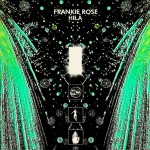
Artist: Frankie Rose (@)
Title: Hila
Format: CD & 12" + Download
Label: Born Losers / Night School (@)
Rated:
Title: Hila
Format: CD & 12" + Download
Label: Born Losers / Night School (@)
Rated:
I get a lot of promo emails from PR agencies, bands, indie artists, labels, etc., etc. all fishing for reviews, of course. Many (maybe even most) are not worthwhile pursuing because either the music does not conform to Chain D.L.K.'s genre parameters or just isn't very good. Every once in a while, though, something slips through worth telling Chain D.L.K.'s readers about. Frankie Rose is just such a case. She's from Brooklyn, New York and has been around for years. She was an original member of Crystal Stilts, Dum Dum Girls, Vivian Girls and Beverly. 'Hila' seems to be Rose's sixth solo album, self-produced at her home studio featuring collaborations with drummer Justin Welch (Elastica/Lush). Other players on 'Hila' include: Ian Campbell and Chris Rager (guitars); Jeff Tobias and Matthew Friedlander (saxophones); and Jake Vest (bass). It's assumed that Frankie handled all the keyboard/synth work, because after all, this is synth-pop.
The album is 10 tracks of quality modern synth-pop, any my first impression is - Strawberry Switchblade meets the Cocteau Twins, sounding like both of them and yet neither. That description is nowhere near the sum total of 'Hila.' While she says that this is an album of loss, there also seems to be hope. It's an album of dichotomies - innocence vs. worldliness; light vs. darkness; the past vs. the future; sweetness against the bitter. The opener, "Olo" sounds like what Lush would be doing now if they were still together. "Can't Be Wrong" is one of those tunes that would fit comfortably on any Britpop radio station in the '80s or '90s. Frankie's vocals are just so perfect for this type of music- absolutely charming! In fact, the song construction, arrangement and recording leaves little to be desired. The commercial appeal is off the charts without sounding like whatever the flavor of the week is currently. While no particular track stands out above the rest (they're all good, really), a favorite of mine is "TV Star," reminiscent of the Cocteau's 'Blue Bell Knoll.' 'Hila' is an absolute winner and since Frankie is on tour NOW until September 26, you might be lucky enough to catch her live if you live in a major city between LA and New York. 'Hila' drops on September 18. Buy it. You won't regret it.
The album is 10 tracks of quality modern synth-pop, any my first impression is - Strawberry Switchblade meets the Cocteau Twins, sounding like both of them and yet neither. That description is nowhere near the sum total of 'Hila.' While she says that this is an album of loss, there also seems to be hope. It's an album of dichotomies - innocence vs. worldliness; light vs. darkness; the past vs. the future; sweetness against the bitter. The opener, "Olo" sounds like what Lush would be doing now if they were still together. "Can't Be Wrong" is one of those tunes that would fit comfortably on any Britpop radio station in the '80s or '90s. Frankie's vocals are just so perfect for this type of music- absolutely charming! In fact, the song construction, arrangement and recording leaves little to be desired. The commercial appeal is off the charts without sounding like whatever the flavor of the week is currently. While no particular track stands out above the rest (they're all good, really), a favorite of mine is "TV Star," reminiscent of the Cocteau's 'Blue Bell Knoll.' 'Hila' is an absolute winner and since Frankie is on tour NOW until September 26, you might be lucky enough to catch her live if you live in a major city between LA and New York. 'Hila' drops on September 18. Buy it. You won't regret it.