
Browse by Genre
Industrial Music / Industrial Metal / Aggro Industrial / Electro Metal
Industrial Noise / Power Noise / Harsh Noise
Synth Pop / Electro Pop / Synth-Electronica
Techno / Trance / Goa / Drum'n'Bass / Jungle / Tribal / Trip-Hop
Ambient / Electronica / Ethereal / Dub / Soundscapes / Abstract
Experimental / Avantgarde / Weird & Wired / Glitch / Noise / Field Recording
Dark / Gothic / Wave / New Wave / Dark Wave / Industrial Gothic
New Music / Downtown / Avantgarde Jazz / New Classical / World
Search Reviews
Music Reviews
Lost Signal: Light Of Other Days
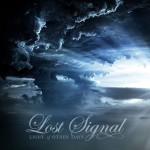
Artist: Lost Signal (@)
Title: Light Of Other Days
Format: CD + Download
Label: Metropolis (@)
Rated:

Title: Light Of Other Days
Format: CD + Download
Label: Metropolis (@)
Rated:
There’s something quietly defiant about "Light Of Other Days". Not loud-defiant, not leather-jacket-on-a-motorbike defiant - more the kind that shows up on time, switches on the synths, and insists that emotional depth still has a place in electronic music without needing to cosplay nostalgia or irony. Charles Rehill, operating once again under the Lost Signal moniker, sounds less interested in proving a comeback than in continuing a conversation he never quite finished.
This is his fourth album, and the second after a long silence broken by "Anatomy Of Melancholy". If that record felt like reopening a sealed room, "Light Of Other Days" is what happens once the dust has settled and you start noticing what’s actually inside. Framed by the aptly named "Departure" and "Return", the album moves like a slow arc rather than a collection of singles - an old-fashioned idea, perhaps, but one that suits Rehill’s instincts perfectly.
Musically, the record leans into melody with an almost stubborn sincerity. Rehill’s background as a sound designer and hardware devotee is audible everywhere: the synths breathe, swell, and shimmer with a tactility that feels earned rather than fetishized. You can sense the lineage - traces of classic electronic romanticism, a cinematic glow that occasionally nods toward Vangelis, paired with a modern restraint that avoids bombast. Nothing here screams; everything speaks at a measured volume.
The songs themselves wrestle openly with big themes - memory, mortality, resilience - but without theatrical despair. "Dream Within A Dream" floats on a melancholic pulse that feels suspended between acceptance and doubt, while "Before Today" stretches its runtime to let emotion accumulate gradually, like a thought you didn’t plan to have but can’t shake. Even "Fear Of Death", which could have collapsed under its own title, remains surprisingly grounded, more contemplative than dramatic.
"Entropy" stands at the album’s gravitational center, expanding the emotional scope outward, from personal loss to cosmic inevitability. Yet it never feels cold or abstract; there’s a human ache running through it, as if the universe itself were slightly uneasy about its own conclusions. That this track has already lived multiple lives through remixes makes sense - its structure invites reinterpretation without losing its core.
What’s refreshing is how little irony there is here. "Light Of Other Days" doesn’t wink at the listener or undercut its own emotions. It accepts vulnerability as part of the deal, and trusts melody to carry meaning without footnotes. In an era where electronic music often hides behind concept or texture alone, Rehill is unafraid to write songs that remember what songs are supposed to do.
This is not an album chasing trends, nor one trapped by its creator’s past. It feels more like a careful alignment: experience meeting craft, technology serving feeling, memory being shaped into sound without trying to freeze it. "Light Of Other Days" understands that nostalgia is a dangerous fuel - powerful, volatile - and handles it with steady hands.
In the end, it’s a record about time passing and not apologizing for it. No grand resolutions, no false optimism. Just the quiet insistence that even as things fade, they can still glow - briefly, beautifully - before the return.
This is his fourth album, and the second after a long silence broken by "Anatomy Of Melancholy". If that record felt like reopening a sealed room, "Light Of Other Days" is what happens once the dust has settled and you start noticing what’s actually inside. Framed by the aptly named "Departure" and "Return", the album moves like a slow arc rather than a collection of singles - an old-fashioned idea, perhaps, but one that suits Rehill’s instincts perfectly.
Musically, the record leans into melody with an almost stubborn sincerity. Rehill’s background as a sound designer and hardware devotee is audible everywhere: the synths breathe, swell, and shimmer with a tactility that feels earned rather than fetishized. You can sense the lineage - traces of classic electronic romanticism, a cinematic glow that occasionally nods toward Vangelis, paired with a modern restraint that avoids bombast. Nothing here screams; everything speaks at a measured volume.
The songs themselves wrestle openly with big themes - memory, mortality, resilience - but without theatrical despair. "Dream Within A Dream" floats on a melancholic pulse that feels suspended between acceptance and doubt, while "Before Today" stretches its runtime to let emotion accumulate gradually, like a thought you didn’t plan to have but can’t shake. Even "Fear Of Death", which could have collapsed under its own title, remains surprisingly grounded, more contemplative than dramatic.
"Entropy" stands at the album’s gravitational center, expanding the emotional scope outward, from personal loss to cosmic inevitability. Yet it never feels cold or abstract; there’s a human ache running through it, as if the universe itself were slightly uneasy about its own conclusions. That this track has already lived multiple lives through remixes makes sense - its structure invites reinterpretation without losing its core.
What’s refreshing is how little irony there is here. "Light Of Other Days" doesn’t wink at the listener or undercut its own emotions. It accepts vulnerability as part of the deal, and trusts melody to carry meaning without footnotes. In an era where electronic music often hides behind concept or texture alone, Rehill is unafraid to write songs that remember what songs are supposed to do.
This is not an album chasing trends, nor one trapped by its creator’s past. It feels more like a careful alignment: experience meeting craft, technology serving feeling, memory being shaped into sound without trying to freeze it. "Light Of Other Days" understands that nostalgia is a dangerous fuel - powerful, volatile - and handles it with steady hands.
In the end, it’s a record about time passing and not apologizing for it. No grand resolutions, no false optimism. Just the quiet insistence that even as things fade, they can still glow - briefly, beautifully - before the return.
Moljebka Pvlse: An Expression Of A Poetry That Was Lost
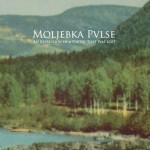
Artist: Moljebka Pvlse (@)
Title: An Expression Of A Poetry That Was Lost
Format: CD & 12" + Download
Label: Zoharum (http://zoharum.com/) (@)
Rated:
Title: An Expression Of A Poetry That Was Lost
Format: CD & 12" + Download
Label: Zoharum (http://zoharum.com/) (@)
Rated:
Some records don’t arrive shouting their relevance. They drift in quietly, take off their shoes, and sit with you until the room changes temperature. "An Expression Of A Poetry That Was Lost" is very much that kind of presence: unassuming, patient, and stubbornly uninterested in spectacle. It doesn’t chase your attention. It waits for it to ripen.
Moljebka Pvlse - the long-running Swedish-German project - has always worked in this slow, deliberate register. Their music has never been about narrative in the conventional sense, but about states: suspended moods, half-lit emotional rooms, the sensation of memory being gently rearranged while you’re not looking. Here, with a four-piece lineup once again in play, they refine that approach rather than reinvent it, and the confidence shows.
The album consists of two extended compositions, "Memories" and "Dreams", which is already a small manifesto. No fragmentation, no playlist logic, no rush. Each piece unfolds like a long breath held underwater - electronics and live instruments entwined until their borders blur. Drones hum with a warmth that feels almost physical, while melodic fragments appear, dissolve, and reappear altered, as if they’ve aged a few years in the meantime.
What’s striking is the balance between light and shadow. There are darker undercurrents here - moments where the sound thickens, where harmonies cloud over - but they never curdle into despair. Instead, they act as contrast, making the more exotic tones and reflective passages glow brighter. The “exotic” element, often abused as a lazy descriptor, is handled with restraint: not postcard imagery, but fleeting scents, distant textures, suggestions rather than statements. Think less airport souvenir, more half-remembered place you’re no longer sure you’ve actually visited.
There’s also a peculiar clarity to the record. Despite the density of the drones, nothing feels overloaded. Each sound seems to know exactly why it’s there - no spiritual wallpaper, no ambient filler politely pretending to be profound. The title speaks of a poetry that was lost, but the music doesn’t mourn it. It reconstructs it from fragments, accepting gaps, silences, and ambiguity as part of the sonic language.
If there’s humor here, it’s of the driest kind: the quiet audacity of releasing a 45-minute album in 2025 that asks you to stop multitasking and simply listen. No hooks, no climaxes, no algorithm-friendly moments. Just time, stretched and treated with care.
"An Expression Of A Poetry That Was Lost" doesn’t try to dazzle or convert. It offers continuity - proof that Moljebka Pvlse still has something precise and personal to articulate, and that subtlety, when practiced with conviction, remains a radical gesture. This is music that doesn’t insist on meaning, but leaves space for it to emerge on its own terms. And once it does, it tends to linger, like a sentence you didn’t fully understand at first, but keep returning to anyway.
Moljebka Pvlse - the long-running Swedish-German project - has always worked in this slow, deliberate register. Their music has never been about narrative in the conventional sense, but about states: suspended moods, half-lit emotional rooms, the sensation of memory being gently rearranged while you’re not looking. Here, with a four-piece lineup once again in play, they refine that approach rather than reinvent it, and the confidence shows.
The album consists of two extended compositions, "Memories" and "Dreams", which is already a small manifesto. No fragmentation, no playlist logic, no rush. Each piece unfolds like a long breath held underwater - electronics and live instruments entwined until their borders blur. Drones hum with a warmth that feels almost physical, while melodic fragments appear, dissolve, and reappear altered, as if they’ve aged a few years in the meantime.
What’s striking is the balance between light and shadow. There are darker undercurrents here - moments where the sound thickens, where harmonies cloud over - but they never curdle into despair. Instead, they act as contrast, making the more exotic tones and reflective passages glow brighter. The “exotic” element, often abused as a lazy descriptor, is handled with restraint: not postcard imagery, but fleeting scents, distant textures, suggestions rather than statements. Think less airport souvenir, more half-remembered place you’re no longer sure you’ve actually visited.
There’s also a peculiar clarity to the record. Despite the density of the drones, nothing feels overloaded. Each sound seems to know exactly why it’s there - no spiritual wallpaper, no ambient filler politely pretending to be profound. The title speaks of a poetry that was lost, but the music doesn’t mourn it. It reconstructs it from fragments, accepting gaps, silences, and ambiguity as part of the sonic language.
If there’s humor here, it’s of the driest kind: the quiet audacity of releasing a 45-minute album in 2025 that asks you to stop multitasking and simply listen. No hooks, no climaxes, no algorithm-friendly moments. Just time, stretched and treated with care.
"An Expression Of A Poetry That Was Lost" doesn’t try to dazzle or convert. It offers continuity - proof that Moljebka Pvlse still has something precise and personal to articulate, and that subtlety, when practiced with conviction, remains a radical gesture. This is music that doesn’t insist on meaning, but leaves space for it to emerge on its own terms. And once it does, it tends to linger, like a sentence you didn’t fully understand at first, but keep returning to anyway.
Saagara: 3 The Shackleton Versions

Artist: Saagara (@)
Title: 3 The Shackleton Versions
Format: 12" + Download
Label: Glitterbeat / tak:til (@)
Rated:

Title: 3 The Shackleton Versions
Format: 12" + Download
Label: Glitterbeat / tak:til (@)
Rated:
There are remixes that act like polite guests - they compliment the furniture, move a cushion, then quietly leave. And then there are remixes like "3 The Shackleton Versions", which arrive unannounced, turn the lights down, open a window to let the weather in, and start rearranging the room according to some half-remembered ritual diagram. This is very much the second case.
Saagara’s "3" was already a small marvel: a slow-burning convergence of South Indian Carnatic percussion, jazz winds, and finely grained electronics, hovering somewhere between devotional music and future archaeology. At its core stands Wacaw Zimpel, a musician who long ago refused to choose between traditions, scenes, or tools. Once a key figure in Poland’s adventurous jazz underground, Zimpel has steadily migrated toward a broader, stranger horizon, where clarinets coexist with modular synths and the studio becomes less a place of documentation than one of transformation.
Inviting Shackleton into this ecosystem was, on paper, a risk. His name still carries the echo of early dubstep’s dark architecture, but his more recent work has drifted into murkier, ritualistic zones where rhythm loosens and atmosphere takes command. What was meant to be a single remix quietly mutated into a full album - not a revisionist exercise, but a parallel reality. Same constellation, different gravity.
Rather than dismantling Saagara’s material, Shackleton seems to stalk it. The Carnatic percussion is no longer foregrounded as virtuosity but reframed as pulse-memory, something half-buried and insistently alive. Basslines move like weather fronts, not grooves. Echoes don’t decorate; they corrode, blur edges, create depth by subtraction. If the original "3" felt sunlit and expansive, these versions lean nocturnal: less dust and heat, more damp soil and fogged glass.
What’s striking is how respectful the dialogue remains, even when the mood darkens. Tracks like “Northern Wind Brings Redemption” and “Where Is That Blossom” retain their melodic DNA, but Shackleton stretches them into longer shadows, allowing tension to breathe. This is not club music pretending to be spiritual, nor “world music” flattened for electronic consumption. It’s closer to a shared meditation, occasionally uneasy, occasionally ecstatic, always alert.
There’s also a quiet humor in the way these versions behave. Rhythms threaten to lock into something danceable, then think better of it. Grooves circle themselves like suspicious cats. The record doesn’t demand movement, but it wouldn’t object if your body started responding against your better judgment.
In the end, "3 The Shackleton Versions" works precisely because it doesn’t try to replace the original. It stands beside it, slightly behind and to the left, whispering alternative interpretations. Two records, same source, different weather systems. Owning both feels less like redundancy and more like binocular vision - depth perception restored.
Not a remix album, then, but a shadow companion: darker, wetter, and deeply attentive. The kind of release that reminds you that collaboration, when done right, isn’t about compromise. It’s about trust - and the courage to let someone else walk your paths at night.
Saagara’s "3" was already a small marvel: a slow-burning convergence of South Indian Carnatic percussion, jazz winds, and finely grained electronics, hovering somewhere between devotional music and future archaeology. At its core stands Wacaw Zimpel, a musician who long ago refused to choose between traditions, scenes, or tools. Once a key figure in Poland’s adventurous jazz underground, Zimpel has steadily migrated toward a broader, stranger horizon, where clarinets coexist with modular synths and the studio becomes less a place of documentation than one of transformation.
Inviting Shackleton into this ecosystem was, on paper, a risk. His name still carries the echo of early dubstep’s dark architecture, but his more recent work has drifted into murkier, ritualistic zones where rhythm loosens and atmosphere takes command. What was meant to be a single remix quietly mutated into a full album - not a revisionist exercise, but a parallel reality. Same constellation, different gravity.
Rather than dismantling Saagara’s material, Shackleton seems to stalk it. The Carnatic percussion is no longer foregrounded as virtuosity but reframed as pulse-memory, something half-buried and insistently alive. Basslines move like weather fronts, not grooves. Echoes don’t decorate; they corrode, blur edges, create depth by subtraction. If the original "3" felt sunlit and expansive, these versions lean nocturnal: less dust and heat, more damp soil and fogged glass.
What’s striking is how respectful the dialogue remains, even when the mood darkens. Tracks like “Northern Wind Brings Redemption” and “Where Is That Blossom” retain their melodic DNA, but Shackleton stretches them into longer shadows, allowing tension to breathe. This is not club music pretending to be spiritual, nor “world music” flattened for electronic consumption. It’s closer to a shared meditation, occasionally uneasy, occasionally ecstatic, always alert.
There’s also a quiet humor in the way these versions behave. Rhythms threaten to lock into something danceable, then think better of it. Grooves circle themselves like suspicious cats. The record doesn’t demand movement, but it wouldn’t object if your body started responding against your better judgment.
In the end, "3 The Shackleton Versions" works precisely because it doesn’t try to replace the original. It stands beside it, slightly behind and to the left, whispering alternative interpretations. Two records, same source, different weather systems. Owning both feels less like redundancy and more like binocular vision - depth perception restored.
Not a remix album, then, but a shadow companion: darker, wetter, and deeply attentive. The kind of release that reminds you that collaboration, when done right, isn’t about compromise. It’s about trust - and the courage to let someone else walk your paths at night.
Matthias Puech: La Traversée
Matthias Puech has always struck me as the kind of composer who doesn’t use electronics so much as interrogate them - politely, but with persistence. With "La Traversée", his second outing for Hallow Ground, that interrogation turns into a journey in the old-fashioned sense: not a sightseeing tour, but a crossing where you’re changed simply by staying afloat.
Loosely inspired by "The Odyssey", this is not one of those records that announces its classical reference with a laurel wreath and a footnote. Homer is here less as a narrative blueprint than as a gravitational field. Longing, fear, repetition, the seduction of detours, the exhaustion of returning - these ideas seep into the music the way salt creeps into wood. You don’t hear Cyclopes or sirens; you feel the instability that makes such figures necessary.
Puech’s Eurorack modular system is the sole vessel for this voyage, but the results are strikingly human. These four pieces are among his most emotionally direct works to date, and that’s saying something for an artist often associated with density, abstraction, and a certain ascetic rigor. Here, complexity doesn’t posture. It breathes. Gestures emerge, hesitate, loop back on themselves. Systems are set in motion, then gently sabotaged from within.
The shorter pieces - "Ennosigaios", "Polyphármakos", "Nekuia" - feel like episodes rather than tracks: self-contained yet incomplete, as if they’re aware they belong to a larger arc. There’s a sense of narrative recursion at play, motifs resurfacing not as repetition but as memory. Puech has spoken about forgetting the technical processes behind these compositions when revisiting them later, and that amnesia turns out to be a gift. What remains is intention stripped of mechanism, affect divorced from instruction manual.
Then there’s "Ithákê", an 18-minute slow burn that earns every second of its duration. It unfolds with the patience of someone who knows the destination matters less than the act of moving toward it. Tensions accumulate, dissolve, reappear slightly altered - like recognizing a coastline from a distance and realizing it’s not the one you left. It’s immersive without being engulfing, demanding attention without punishing distraction. A rare balance.
What’s quietly remarkable about "La Traversée" is how intuitive it feels despite its technical underpinnings. This isn’t modular synthesis flexing its muscles; it’s modular synthesis learning to walk barefoot. Puech’s background as an instrument designer and scholar is evident, but never didactic. He knows exactly what the machine can do - and more importantly, when to let it drift.
There’s a faint irony in framing such a record around "The Odyssey" while releasing it on vinyl in 2025, a format that requires you to physically get up, flip sides, re-engage. But perhaps that’s the point. "La Traversée" resists frictionless consumption. It asks for presence. It invites you to cross something - not necessarily an ocean, but maybe a stretch of inner weather you’ve been avoiding.
In a musical landscape obsessed with arrival, Puech dares to linger in transit. And in doing so, he reminds us that the crossing itself is the story.
Loosely inspired by "The Odyssey", this is not one of those records that announces its classical reference with a laurel wreath and a footnote. Homer is here less as a narrative blueprint than as a gravitational field. Longing, fear, repetition, the seduction of detours, the exhaustion of returning - these ideas seep into the music the way salt creeps into wood. You don’t hear Cyclopes or sirens; you feel the instability that makes such figures necessary.
Puech’s Eurorack modular system is the sole vessel for this voyage, but the results are strikingly human. These four pieces are among his most emotionally direct works to date, and that’s saying something for an artist often associated with density, abstraction, and a certain ascetic rigor. Here, complexity doesn’t posture. It breathes. Gestures emerge, hesitate, loop back on themselves. Systems are set in motion, then gently sabotaged from within.
The shorter pieces - "Ennosigaios", "Polyphármakos", "Nekuia" - feel like episodes rather than tracks: self-contained yet incomplete, as if they’re aware they belong to a larger arc. There’s a sense of narrative recursion at play, motifs resurfacing not as repetition but as memory. Puech has spoken about forgetting the technical processes behind these compositions when revisiting them later, and that amnesia turns out to be a gift. What remains is intention stripped of mechanism, affect divorced from instruction manual.
Then there’s "Ithákê", an 18-minute slow burn that earns every second of its duration. It unfolds with the patience of someone who knows the destination matters less than the act of moving toward it. Tensions accumulate, dissolve, reappear slightly altered - like recognizing a coastline from a distance and realizing it’s not the one you left. It’s immersive without being engulfing, demanding attention without punishing distraction. A rare balance.
What’s quietly remarkable about "La Traversée" is how intuitive it feels despite its technical underpinnings. This isn’t modular synthesis flexing its muscles; it’s modular synthesis learning to walk barefoot. Puech’s background as an instrument designer and scholar is evident, but never didactic. He knows exactly what the machine can do - and more importantly, when to let it drift.
There’s a faint irony in framing such a record around "The Odyssey" while releasing it on vinyl in 2025, a format that requires you to physically get up, flip sides, re-engage. But perhaps that’s the point. "La Traversée" resists frictionless consumption. It asks for presence. It invites you to cross something - not necessarily an ocean, but maybe a stretch of inner weather you’ve been avoiding.
In a musical landscape obsessed with arrival, Puech dares to linger in transit. And in doing so, he reminds us that the crossing itself is the story.
The Stargazer's Assistant: Modular Fields

Artist: The Stargazer's Assistant
Title: Modular Fields
Format: CD + Download
Label: Zoharum (http://zoharum.com/) (@)
Rated:
Title: Modular Fields
Format: CD + Download
Label: Zoharum (http://zoharum.com/) (@)
Rated:
There’s a particular kind of patience that "Modular Fields" quietly demands. Not the clenched-jaw, stopwatch kind, but the looser, lunar patience of staring at the sky until your sense of scale gives up and wanders off for a cigarette. This diptych by The Stargazer’s Assistant doesn’t rush, doesn’t flatter, and certainly doesn’t explain itself. It unfolds instead like a nocturnal terrain you cross slowly, guided less by landmarks than by subtle shifts in gravity.
Comprised of four long-form pieces, "Modular Fields" situates itself firmly within the lineage of British experimental ambient that values atmosphere over assertion and duration over drama. Think less “statement record” and more “environment you accidentally move into and then decide to stay”. The music breathes through modular synthesis, but avoids the usual techno-fetish of patch cables and voltage gymnastics. These are not demonstrations; they’re conditions.
The ensemble behind the project reads like a quiet roll call of underground pedigree: David J. Smith (Guapo, The Holy Family), David J. Knight (UnicaZurn), Michael J. York (formerly of Coil), and Antti J. Uusimaki (Uzu Noir). That lineage matters - not as a badge, but as a shared sensibility. You can hear it in the way the sound resists resolution, in how tension is allowed to remain unresolved, hovering like mist rather than snapping into form.
Each “Field” functions less as a composition than as a zone. Tones drift, cluster, recede. Harmonics appear and dissolve without ceremony. There’s a faintly esoteric undertone throughout, but it’s closer to quiet ritual than grand occult theatre - no capes, no candles, just a low hum suggesting that something older than melody is at work. The Coil connection, often invoked lazily in this territory, feels earned here not through mimicry but through a shared respect for ambiguity and psychic space.
What "Modular Fields" does particularly well is sidestep the ambient trap of becoming wallpaper. This is music that seems static at first glance, yet subtly reconfigures itself the longer you listen. Small movements accrue meaning over time; repetition becomes variation by stealth. It rewards attention, but never scolds you for drifting - an increasingly rare courtesy.
There’s a gentle irony in how grounded this cosmic music feels. Despite its astral leanings and lunar associations, "Modular Fields" is deeply physical: vibrations felt more than heard, pressure changes in the room, sound as weather. It’s less about escape than recalibration, a reminder that stillness can be active and darkness can be generous.
In the end, "Modular Fields" isn’t trying to guide you anywhere specific. It offers no map, only a compass that spins slowly, thoughtfully, refusing to settle. Whether you hear it as a ritual, a landscape, or a long conversation with the night depends entirely on how long you’re willing to stay. Patience, after all, is the real instrument being played here.
Comprised of four long-form pieces, "Modular Fields" situates itself firmly within the lineage of British experimental ambient that values atmosphere over assertion and duration over drama. Think less “statement record” and more “environment you accidentally move into and then decide to stay”. The music breathes through modular synthesis, but avoids the usual techno-fetish of patch cables and voltage gymnastics. These are not demonstrations; they’re conditions.
The ensemble behind the project reads like a quiet roll call of underground pedigree: David J. Smith (Guapo, The Holy Family), David J. Knight (UnicaZurn), Michael J. York (formerly of Coil), and Antti J. Uusimaki (Uzu Noir). That lineage matters - not as a badge, but as a shared sensibility. You can hear it in the way the sound resists resolution, in how tension is allowed to remain unresolved, hovering like mist rather than snapping into form.
Each “Field” functions less as a composition than as a zone. Tones drift, cluster, recede. Harmonics appear and dissolve without ceremony. There’s a faintly esoteric undertone throughout, but it’s closer to quiet ritual than grand occult theatre - no capes, no candles, just a low hum suggesting that something older than melody is at work. The Coil connection, often invoked lazily in this territory, feels earned here not through mimicry but through a shared respect for ambiguity and psychic space.
What "Modular Fields" does particularly well is sidestep the ambient trap of becoming wallpaper. This is music that seems static at first glance, yet subtly reconfigures itself the longer you listen. Small movements accrue meaning over time; repetition becomes variation by stealth. It rewards attention, but never scolds you for drifting - an increasingly rare courtesy.
There’s a gentle irony in how grounded this cosmic music feels. Despite its astral leanings and lunar associations, "Modular Fields" is deeply physical: vibrations felt more than heard, pressure changes in the room, sound as weather. It’s less about escape than recalibration, a reminder that stillness can be active and darkness can be generous.
In the end, "Modular Fields" isn’t trying to guide you anywhere specific. It offers no map, only a compass that spins slowly, thoughtfully, refusing to settle. Whether you hear it as a ritual, a landscape, or a long conversation with the night depends entirely on how long you’re willing to stay. Patience, after all, is the real instrument being played here.