
Browse by Genre
Industrial Music / Industrial Metal / Aggro Industrial / Electro Metal
Industrial Noise / Power Noise / Harsh Noise
Synth Pop / Electro Pop / Synth-Electronica
Techno / Trance / Goa / Drum'n'Bass / Jungle / Tribal / Trip-Hop
Ambient / Electronica / Ethereal / Dub / Soundscapes / Abstract
Experimental / Avantgarde / Weird & Wired / Glitch / Noise / Field Recording
Dark / Gothic / Wave / New Wave / Dark Wave / Industrial Gothic
New Music / Downtown / Avantgarde Jazz / New Classical / World
Search Reviews
Music Reviews
Ran Slavin: Neon Swans
Artist: Ran Slavin (@)
Title: Neon Swans
Format: Download Only (MP3 + Lossless)
Label: Nocturnal Rainbow Recordings
Rated:


Title: Neon Swans
Format: Download Only (MP3 + Lossless)
Label: Nocturnal Rainbow Recordings
Rated:
With "Neon Swans", Ran Slavin doesn’t just release an album - he releases a climate. Nearly two hours long and articulated across thirty tracks, this is less a record than a slow-moving weather system, the kind that rolls in quietly and then refuses to leave your internal forecast unchanged. It’s ambitious, indulgent at times, and deliberately so: Slavin has never been interested in polite listening.
Slavin, long active at the intersection of electronic composition, sound art, and audiovisual practice, has spent years dissolving genre boundaries rather than decorating them. From his work on labels like Mille Plateaux, Sub Rosa, and Cronica to the ongoing curatorial logic of his own Nocturnal Rainbow imprint, his music often behaves like a system under test - stable enough to function, unstable enough to reveal its cracks. "Neon Swans" feels like the most vocal (literally and conceptually) chapter of that trajectory.
The album’s scale is immediately disarming. Thirty tracks could easily become a dumping ground, but here the abundance feels intentional: fragments, near-songs, instrumentals, vocal apparitions, and digital debris are arranged like a long corridor of interconnected rooms. You don’t remember every room distinctly, but you remember the way the building breathes. Slavin leans into fractured song forms, letting melody emerge briefly before dissolving back into texture, like a face glimpsed in a glitch and never fully recovered.
Vocals are everywhere, yet rarely behave like traditional lead performances. They flicker, loop, stretch, and blur - sometimes intimate, sometimes synthetic, sometimes hovering somewhere between human presence and interface residue. The repeated collaborators give the album a shifting sense of identity, as if "Neon Swans" were speaking in borrowed voices, testing emotional registers the way software tests beta features. Love, exhaustion, longing, and digital melancholy recur, but never settle into slogans.
Sonically, the record balances shimmer and erosion. Pads glow, rhythms stutter, high frequencies feel airbrushed while low-end pulses hint at systems under strain. Slavin’s production is meticulous without being sterile: even the cleanest moments feel slightly overheated, as if the circuits are enjoying themselves a bit too much. Tracks like “meant 2b” or “we--were” flirt with pop gravity, only to quietly sabotage it, pulling sentiment sideways instead of letting it land cleanly.
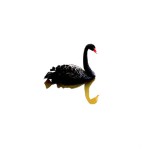
The swan metaphor at the heart of the album works precisely because it’s allowed to glitch. This is not elegance as surface beauty, but transformation as process - the white swan of harmony constantly shadowed by its darker, rarer twin. Beauty appears, yes, but it’s unstable, sometimes interrupted by errors, dropouts, or deliberate awkwardness. Slavin seems less interested in transcendence than in prolonged suspension: hovering between genres, moods, and states of attention.
The decision to release "Neon Swans" as a digital-only project with multiple alternate artworks feels aligned with its logic. This is music that resists singular framing. One cover would be a lie. One definitive version would miss the point. The album exists as a fluid object, adapting to how - and how long - you’re willing to listen.
"Neon Swans" is not an album you finish so much as one you inhabit temporarily. It asks for time, tolerance, and a willingness to get slightly lost. Not every moment demands your full attention, but over time the accumulation works its quiet spell. Like its title creatures, the music glides, glitches, and occasionally startles - reminding you that even in digital waters, elegance can still behave strangely. And that, frankly, is where it becomes interesting.
Slavin, long active at the intersection of electronic composition, sound art, and audiovisual practice, has spent years dissolving genre boundaries rather than decorating them. From his work on labels like Mille Plateaux, Sub Rosa, and Cronica to the ongoing curatorial logic of his own Nocturnal Rainbow imprint, his music often behaves like a system under test - stable enough to function, unstable enough to reveal its cracks. "Neon Swans" feels like the most vocal (literally and conceptually) chapter of that trajectory.
The album’s scale is immediately disarming. Thirty tracks could easily become a dumping ground, but here the abundance feels intentional: fragments, near-songs, instrumentals, vocal apparitions, and digital debris are arranged like a long corridor of interconnected rooms. You don’t remember every room distinctly, but you remember the way the building breathes. Slavin leans into fractured song forms, letting melody emerge briefly before dissolving back into texture, like a face glimpsed in a glitch and never fully recovered.
Vocals are everywhere, yet rarely behave like traditional lead performances. They flicker, loop, stretch, and blur - sometimes intimate, sometimes synthetic, sometimes hovering somewhere between human presence and interface residue. The repeated collaborators give the album a shifting sense of identity, as if "Neon Swans" were speaking in borrowed voices, testing emotional registers the way software tests beta features. Love, exhaustion, longing, and digital melancholy recur, but never settle into slogans.
Sonically, the record balances shimmer and erosion. Pads glow, rhythms stutter, high frequencies feel airbrushed while low-end pulses hint at systems under strain. Slavin’s production is meticulous without being sterile: even the cleanest moments feel slightly overheated, as if the circuits are enjoying themselves a bit too much. Tracks like “meant 2b” or “we--were” flirt with pop gravity, only to quietly sabotage it, pulling sentiment sideways instead of letting it land cleanly.
The swan metaphor at the heart of the album works precisely because it’s allowed to glitch. This is not elegance as surface beauty, but transformation as process - the white swan of harmony constantly shadowed by its darker, rarer twin. Beauty appears, yes, but it’s unstable, sometimes interrupted by errors, dropouts, or deliberate awkwardness. Slavin seems less interested in transcendence than in prolonged suspension: hovering between genres, moods, and states of attention.
The decision to release "Neon Swans" as a digital-only project with multiple alternate artworks feels aligned with its logic. This is music that resists singular framing. One cover would be a lie. One definitive version would miss the point. The album exists as a fluid object, adapting to how - and how long - you’re willing to listen.
"Neon Swans" is not an album you finish so much as one you inhabit temporarily. It asks for time, tolerance, and a willingness to get slightly lost. Not every moment demands your full attention, but over time the accumulation works its quiet spell. Like its title creatures, the music glides, glitches, and occasionally startles - reminding you that even in digital waters, elegance can still behave strangely. And that, frankly, is where it becomes interesting.
Assemblage 23: Null
After five years of radio silence, Tom Shear resurfaces with "Null", a title that sounds like a shrug but behaves more like a loaded pause. Zero, nothing, reset - pick your poison. This is Assemblage 23 looking at the void and deciding it’s still worth singing into it, preferably with a four-on-the-floor pulse and a keyboard line sharp enough to cut through fog.
Shear has always been a strange case in electro-industrial history: an American who elbowed his way into a scene long dominated by European aesthetics, and then stayed there by being unapologetically earnest. "Null" doesn’t reinvent that wheel, nor does it pretend to. Instead, it polishes it, tightens the bolts, and sends it rolling straight over the anxieties of mid-life, disillusionment, endurance, and the weary optimism of someone who has survived himself more than once.
Musically, the album sits comfortably in the Assemblage 23 continuum: clean, muscular synth lines, disciplined structures, and beats that know exactly when to push and when to step back. There’s a clarity here that feels intentional - not sterile, but focused. Tracks like “Believe” and “Tolerate” aren’t designed to surprise so much as to hold: they loop emotional states the way club music loops rhythm, letting repetition do the psychological work. It’s future pop stripped of its chrome excess, less neon apocalypse, more fluorescent-lit honesty.
What still sets Shear apart is his relationship with language. His lyrics have never hidden behind abstraction, and "Null" continues that tradition with almost stubborn directness. These are songs that talk about limits, exhaustion, compromise, and persistence without theatrical despair. When he sings about absence, it’s not romanticized emptiness; it’s the practical kind - emotional balances checked at 3 a.m., relationships reduced to their remainder. Zero, again, depending on context.
There’s a subtle tension throughout the record between control and collapse. The production is precise, even sleek, while the themes gnaw from the inside. “Normal” and “Last” in particular feel like internal monologues disguised as club tracks - music you can dance to while quietly realizing you might not be fine, but you’re still here. In Assemblage 23 terms, that’s practically a love letter.
"Null" may not shock longtime listeners, but it doesn’t need to. It’s an album that understands its own legacy and refuses to cosplay youth or despair. Instead, it documents the sound of someone standing in the middle of nothing and choosing to articulate it anyway. In a genre that often fetishizes extremes, there’s something almost radical about that restraint.
Zero can mean failure, or it can mean a clean slate. "Null" lives in that uncomfortable overlap - not a comeback record, not a farewell, but a steady signal saying: I’m still transmitting. And sometimes, that’s more than enough.
Shear has always been a strange case in electro-industrial history: an American who elbowed his way into a scene long dominated by European aesthetics, and then stayed there by being unapologetically earnest. "Null" doesn’t reinvent that wheel, nor does it pretend to. Instead, it polishes it, tightens the bolts, and sends it rolling straight over the anxieties of mid-life, disillusionment, endurance, and the weary optimism of someone who has survived himself more than once.
Musically, the album sits comfortably in the Assemblage 23 continuum: clean, muscular synth lines, disciplined structures, and beats that know exactly when to push and when to step back. There’s a clarity here that feels intentional - not sterile, but focused. Tracks like “Believe” and “Tolerate” aren’t designed to surprise so much as to hold: they loop emotional states the way club music loops rhythm, letting repetition do the psychological work. It’s future pop stripped of its chrome excess, less neon apocalypse, more fluorescent-lit honesty.
What still sets Shear apart is his relationship with language. His lyrics have never hidden behind abstraction, and "Null" continues that tradition with almost stubborn directness. These are songs that talk about limits, exhaustion, compromise, and persistence without theatrical despair. When he sings about absence, it’s not romanticized emptiness; it’s the practical kind - emotional balances checked at 3 a.m., relationships reduced to their remainder. Zero, again, depending on context.
There’s a subtle tension throughout the record between control and collapse. The production is precise, even sleek, while the themes gnaw from the inside. “Normal” and “Last” in particular feel like internal monologues disguised as club tracks - music you can dance to while quietly realizing you might not be fine, but you’re still here. In Assemblage 23 terms, that’s practically a love letter.
"Null" may not shock longtime listeners, but it doesn’t need to. It’s an album that understands its own legacy and refuses to cosplay youth or despair. Instead, it documents the sound of someone standing in the middle of nothing and choosing to articulate it anyway. In a genre that often fetishizes extremes, there’s something almost radical about that restraint.
Zero can mean failure, or it can mean a clean slate. "Null" lives in that uncomfortable overlap - not a comeback record, not a farewell, but a steady signal saying: I’m still transmitting. And sometimes, that’s more than enough.
Stephen Vitiello and Edwin Torres: sublingual infinities

Artist: Stephen Vitiello and Edwin Torres (@)
Title: sublingual infinities
Format: Download Only (MP3 + Lossless)
Label: Room40 (@)
Rated:
Title: sublingual infinities
Format: Download Only (MP3 + Lossless)
Label: Room40 (@)
Rated:
There’s a particular kind of collaboration that doesn’t feel like a meeting, but like two radio frequencies accidentally locking into each other at 3 a.m. "sublingual infinities" lives exactly there: not in dialogue, not in hierarchy, but in a zone of mutual interference where voice and sound keep stealing each other’s clothes.
Stephen Vitiello, long-time cartographer of barely-there acoustics and environmental ghosts, has always treated sound as something porous - leaking, folding, refusing to sit still. Edwin Torres, poet, performer, linguistic saboteur, approaches language with similar suspicion: words are not containers of meaning, but volatile materials, best chewed, dissolved, or held under the tongue until they mutate. Put them together and you don’t get songs, poems, or soundscapes. You get events. Small, unstable weather systems.
What’s striking is how often the voice refuses to behave like a voice. Sometimes it leads, sometimes it dissolves into rhythm, sometimes it becomes raw material - grain, pulse, residue. Vitiello doesn’t set Torres’ words; he lets them leak into the circuitry, where syllables stretch, blur, refract. In return, Torres’ delivery never settles into recitation. It stutters, hovers, presses against silence, as if testing how much language the air can hold before it collapses.
Tracks like “travels in the not seeing world” and “the boy made of glass”, with Samita Sinha’s presence, widen the frame further. Her voice and ektara don’t add ornament - they bend the gravity of the whole piece. Suddenly there’s a sense of ritual, but one that refuses any fixed tradition. It feels ancient and improvised at once, like something remembered incorrectly on purpose. The body becomes audible here: breath as architecture, vibration as geography.
Elsewhere, pieces like “immigrant earthling (the euclidean barrio)” and “georgiana” lean into density. Layers pile up, meanings overlap, phonetics smear into texture. You don’t follow these tracks so much as inhabit them. It’s not always comfortable, and that’s part of the point. This is music that distrusts smooth comprehension. It prefers friction, the productive confusion where listening becomes physical.
There’s also an unexpected tenderness running through the record. For all its conceptual rigor, "sublingual infinities" never feels academic. It’s playful in a sly, sideways way - like watching language trip over itself and then pretend it meant to do that. The humor isn’t punchline-based; it’s the quiet absurdity of realizing that meaning keeps escaping, and that maybe that’s where it’s most alive.
In the end, this isn’t a record you memorize. It’s one you return to, knowing it won’t behave the same way twice. Voice becomes space, space becomes skin, and sound settles somewhere just below conscious parsing - right where the tongue rests. "sublingual infinities" doesn’t ask to be understood. It asks to be felt, misheard, and carried around like a secret you can’t quite translate, but wouldn’t want to lose.
Stephen Vitiello, long-time cartographer of barely-there acoustics and environmental ghosts, has always treated sound as something porous - leaking, folding, refusing to sit still. Edwin Torres, poet, performer, linguistic saboteur, approaches language with similar suspicion: words are not containers of meaning, but volatile materials, best chewed, dissolved, or held under the tongue until they mutate. Put them together and you don’t get songs, poems, or soundscapes. You get events. Small, unstable weather systems.
What’s striking is how often the voice refuses to behave like a voice. Sometimes it leads, sometimes it dissolves into rhythm, sometimes it becomes raw material - grain, pulse, residue. Vitiello doesn’t set Torres’ words; he lets them leak into the circuitry, where syllables stretch, blur, refract. In return, Torres’ delivery never settles into recitation. It stutters, hovers, presses against silence, as if testing how much language the air can hold before it collapses.
Tracks like “travels in the not seeing world” and “the boy made of glass”, with Samita Sinha’s presence, widen the frame further. Her voice and ektara don’t add ornament - they bend the gravity of the whole piece. Suddenly there’s a sense of ritual, but one that refuses any fixed tradition. It feels ancient and improvised at once, like something remembered incorrectly on purpose. The body becomes audible here: breath as architecture, vibration as geography.
Elsewhere, pieces like “immigrant earthling (the euclidean barrio)” and “georgiana” lean into density. Layers pile up, meanings overlap, phonetics smear into texture. You don’t follow these tracks so much as inhabit them. It’s not always comfortable, and that’s part of the point. This is music that distrusts smooth comprehension. It prefers friction, the productive confusion where listening becomes physical.
There’s also an unexpected tenderness running through the record. For all its conceptual rigor, "sublingual infinities" never feels academic. It’s playful in a sly, sideways way - like watching language trip over itself and then pretend it meant to do that. The humor isn’t punchline-based; it’s the quiet absurdity of realizing that meaning keeps escaping, and that maybe that’s where it’s most alive.
In the end, this isn’t a record you memorize. It’s one you return to, knowing it won’t behave the same way twice. Voice becomes space, space becomes skin, and sound settles somewhere just below conscious parsing - right where the tongue rests. "sublingual infinities" doesn’t ask to be understood. It asks to be felt, misheard, and carried around like a secret you can’t quite translate, but wouldn’t want to lose.
PRAED orchestra!: The Dictionary of Lost Meanings

Artist: PRAED orchestra! (http://www.paed.ch/praed/) (@)
Title: The Dictionary of Lost Meanings
Format: 12" x 2 + Download
Label: Discrepant (@)
Rated:
Title: The Dictionary of Lost Meanings
Format: 12" x 2 + Download
Label: Discrepant (@)
Rated:
With "The Dictionary of Lost Meanings", PRAED orchestra! pull off something rare: they widen the field without thinning it out. On the contrary - every new musician entering the room makes the air heavier. This is a record that doesn’t ask for permission and doesn’t hand out easy explanations, but takes you by the hand the way certain oral tales do: you start from one story, end up in another, and somewhere in between you get lost - which, really, is the whole point.
Raed Yassin and Paed Conca, the shifting core of the PRAED project, have spent years cultivating a fertile friction: urban Arab tradition (shaabi, popular melodies, collective memory) rubbing up against radical improvisation, free jazz, and crooked electronics. Here, though, the duo step into the role of architects. The orchestra is neither ornament nor power display, but a living organism that breathes, stumbles, dances. The result doesn’t sound big in a symphonic sense; it sounds crowded - like a market, a radio picking up several stations at once, a party that’s about to derail but never quite does.
The pieces swing between rigorous composition and improvisation that always seems on the verge of escaping the fence. Reeds argue among themselves, percussion sparks microrhythms that smell of street and ritual, while synthesizers and filtered voices tear open temporal rifts. This is music that understands repetition but uses it as a spell, not as comfort. Every theme returns altered, slightly warped, like a word you’ve used for years and suddenly aren’t sure you understand anymore.
The title isn’t a conceptual flourish: this record really is a dictionary, but one with torn pages and scribbles in the margins. The “lost meanings” aren’t recovered - they’re set loose. Tradition and avant-garde don’t quarrel; they eye each other warily, then end up dancing together. At times it feels like listening to a brass band that studied Sun Ra; at others, to a ceremony that hacked European free jazz. There’s irony, yes, but no sarcasm - an intelligent lightness that coexists with stubborn depth.
The international ensemble is deployed with surgical intelligence: no one steals the spotlight, everyone bends it. Electronics don’t sterilize, roots never harden into folklore, improvisation doesn’t lapse into muscular display. It’s an unstable balance, deliberately so. As if PRAED were saying: memory isn’t an archive, it’s a minefield - and walking across it can be unexpectedly joyful.
"The Dictionary of Lost Meanings" isn’t a record to understand, but to pass through. It leaves you with the feeling that something slipped past you - and that this is perfectly fine. After all, some words work best once they stop obeying us.
Raed Yassin and Paed Conca, the shifting core of the PRAED project, have spent years cultivating a fertile friction: urban Arab tradition (shaabi, popular melodies, collective memory) rubbing up against radical improvisation, free jazz, and crooked electronics. Here, though, the duo step into the role of architects. The orchestra is neither ornament nor power display, but a living organism that breathes, stumbles, dances. The result doesn’t sound big in a symphonic sense; it sounds crowded - like a market, a radio picking up several stations at once, a party that’s about to derail but never quite does.
The pieces swing between rigorous composition and improvisation that always seems on the verge of escaping the fence. Reeds argue among themselves, percussion sparks microrhythms that smell of street and ritual, while synthesizers and filtered voices tear open temporal rifts. This is music that understands repetition but uses it as a spell, not as comfort. Every theme returns altered, slightly warped, like a word you’ve used for years and suddenly aren’t sure you understand anymore.
The title isn’t a conceptual flourish: this record really is a dictionary, but one with torn pages and scribbles in the margins. The “lost meanings” aren’t recovered - they’re set loose. Tradition and avant-garde don’t quarrel; they eye each other warily, then end up dancing together. At times it feels like listening to a brass band that studied Sun Ra; at others, to a ceremony that hacked European free jazz. There’s irony, yes, but no sarcasm - an intelligent lightness that coexists with stubborn depth.
The international ensemble is deployed with surgical intelligence: no one steals the spotlight, everyone bends it. Electronics don’t sterilize, roots never harden into folklore, improvisation doesn’t lapse into muscular display. It’s an unstable balance, deliberately so. As if PRAED were saying: memory isn’t an archive, it’s a minefield - and walking across it can be unexpectedly joyful.
"The Dictionary of Lost Meanings" isn’t a record to understand, but to pass through. It leaves you with the feeling that something slipped past you - and that this is perfectly fine. After all, some words work best once they stop obeying us.
Derision Cult: Flyover Noise
Artist: Derision Cult (@)
Title: Flyover Noise
Format: Download Only (MP3 + Lossless)
Label: self-released
Rated:
Title: Flyover Noise
Format: Download Only (MP3 + Lossless)
Label: self-released
Rated:
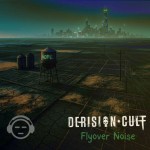
There’s something refreshingly unpretentious about Flyover Noise: a title that already shrugs, smirks, and lights a cigarette under a buzzing highway lamp. Derision Cult don’t come bearing grand manifestos or shiny futurisms here; instead, they roll up with two covers, a sense of lineage, and the kind of affection that only comes from having your DNA scrambled by someone else’s songs years ago.
Derision Cult, long-time operators in the American underground with roots tangled in industrial rock, EBM grit, and post-punk abrasion, have always understood that influence isn’t a museum piece. It’s a living, dented thing. On this short EP they turn their attention to two Illinois acts that clearly left bruises worth revisiting, and they do so without irony, pastiche, or cosplay. This isn’t karaoke with distortion pedals - it’s translation.
“Rocket Science” (originally by The Goodyear Pimps) comes out sounding like a confession shouted into an empty Midwestern parking lot. The song’s wounded romanticism - equal parts bravado and self-loathing - fits Derision Cult like a thrift-store jacket already broken in. They lean into the vulnerability without sanding down the rough edges, letting the repeated mantras spiral into something obsessive, almost claustrophobic. It’s love as fixation, identity as something you trip over rather than build. Not pretty, but honest in that unflattering way mirrors tend to be.
“Better Than Me”, pulled from Sister Machine Gun’s canon, shifts the EP into darker industrial territory. The nihilism here is blunt, almost weaponized: self-erasure as freedom, desire as the only remaining law. Derision Cult amplify the track’s fatalistic swagger, making it feel less like rebellion and more like a tired truth muttered through clenched teeth. The groove burns steadily, not explosively - controlled combustion, the kind that keeps you warm while everything else goes cold.
What makes Flyover Noise work isn’t nostalgia, but proximity. These songs aren’t treated as relics from a “golden age” of industrial or alt rock; they’re dragged into the present and scuffed up accordingly. Derision Cult understand that the so-called flyover states have always produced music heavy with contradiction: aggression and vulnerability, arrogance and defeat, movement without escape. This EP hums with that tension.
It’s short, sure. It doesn’t pretend to reinvent anything. But Flyover Noise knows exactly what it is: a nod between bands across time, a reminder that influence isn’t about geography or prestige, but about which songs lodged themselves in your nervous system and never quite left. Two covers, zero filler, and a lot of feeling packed into under eight minutes. Sometimes that’s all you need - just enough noise to remember where you came from, and why you’re still here.
Derision Cult, long-time operators in the American underground with roots tangled in industrial rock, EBM grit, and post-punk abrasion, have always understood that influence isn’t a museum piece. It’s a living, dented thing. On this short EP they turn their attention to two Illinois acts that clearly left bruises worth revisiting, and they do so without irony, pastiche, or cosplay. This isn’t karaoke with distortion pedals - it’s translation.
“Rocket Science” (originally by The Goodyear Pimps) comes out sounding like a confession shouted into an empty Midwestern parking lot. The song’s wounded romanticism - equal parts bravado and self-loathing - fits Derision Cult like a thrift-store jacket already broken in. They lean into the vulnerability without sanding down the rough edges, letting the repeated mantras spiral into something obsessive, almost claustrophobic. It’s love as fixation, identity as something you trip over rather than build. Not pretty, but honest in that unflattering way mirrors tend to be.
“Better Than Me”, pulled from Sister Machine Gun’s canon, shifts the EP into darker industrial territory. The nihilism here is blunt, almost weaponized: self-erasure as freedom, desire as the only remaining law. Derision Cult amplify the track’s fatalistic swagger, making it feel less like rebellion and more like a tired truth muttered through clenched teeth. The groove burns steadily, not explosively - controlled combustion, the kind that keeps you warm while everything else goes cold.
What makes Flyover Noise work isn’t nostalgia, but proximity. These songs aren’t treated as relics from a “golden age” of industrial or alt rock; they’re dragged into the present and scuffed up accordingly. Derision Cult understand that the so-called flyover states have always produced music heavy with contradiction: aggression and vulnerability, arrogance and defeat, movement without escape. This EP hums with that tension.
It’s short, sure. It doesn’t pretend to reinvent anything. But Flyover Noise knows exactly what it is: a nod between bands across time, a reminder that influence isn’t about geography or prestige, but about which songs lodged themselves in your nervous system and never quite left. Two covers, zero filler, and a lot of feeling packed into under eight minutes. Sometimes that’s all you need - just enough noise to remember where you came from, and why you’re still here.