
Browse by Genre
Industrial Music / Industrial Metal / Aggro Industrial / Electro Metal
Industrial Noise / Power Noise / Harsh Noise
Synth Pop / Electro Pop / Synth-Electronica
Techno / Trance / Goa / Drum'n'Bass / Jungle / Tribal / Trip-Hop
Ambient / Electronica / Ethereal / Dub / Soundscapes / Abstract
Experimental / Avantgarde / Weird & Wired / Glitch / Noise / Field Recording
Dark / Gothic / Wave / New Wave / Dark Wave / Industrial Gothic
New Music / Downtown / Avantgarde Jazz / New Classical / World
Search Reviews
Music Reviews
Lovelorn Dolls: True Crimes EP

Artist: Lovelorn Dolls (@)
Title: True Crimes EP
Format: Download Only (MP3 + Lossless)
Label: Alfa Matrix (@)
Rated:


Title: True Crimes EP
Format: Download Only (MP3 + Lossless)
Label: Alfa Matrix (@)
Rated:
There’s a particular kind of chill that "True Crimes" traffics in: not the cheap jump-scare kind, but the slow, adhesive unease that sticks to your clothes and follows you home. With this four-track EP, Lovelorn Dolls take a sharp left turn into the alleyways of true crime lore, and somehow manage not to slip on the ethical banana peel that usually waits there, grinning.
Active for over a decade now, the Belgian duo - fronted by the unmistakable presence of Kristell - have always thrived on contrasts: sweetness laced with poison, pop hooks framed by gothic gloom, innocence flirting shamelessly with the abyss. Here, that duality becomes the concept itself. "True Crimes" is obsessed with voices that were silenced too early, stories mangled by time, media, and myth. The EP doesn’t reenact these tragedies so much as listen to them, ears pressed against the wall, trying to catch what still murmurs.
Musically, the formula is familiar but sharpened. Guitars arrive muscular and slightly theatrical, synths glow with a cold neon patience, and industrial touches rumble like distant machinery in an abandoned warehouse. Kristell’s vocals remain the emotional pivot: capable of sounding like a wounded child, a vengeful narrator, or an unreliable witness - sometimes all within the same song. She doesn’t so much sing "about" these crimes as inhabit their afterimages.
“Dahlia Bleeds” opens the file folder with cinematic confidence, balancing melodrama and restraint - never quite tipping into camp, though it flirts dangerously close, like it knows the line is there and enjoys the tension. “The Boy in the Box” is more restrained, almost devotional, its sadness carried not by bombast but by repetition and space. “Call Me Your Ghost” leans into menace with a smirk, letting menace seep rather than shout. And “Velvet Little Voice” closes things with a discomforting tenderness, the kind that makes you wonder whether lullabies were always a little terrifying.
What keeps "True Crimes" from feeling exploitative is its self-awareness. The EP knows it is dealing with stories already over-documented, over-consumed, turned into content. Lovelorn Dolls don’t claim revelation; instead, they stage a séance where pop, goth, and industrial tropes are used as candles - flickering, imperfect, human. The recent addition of guitarist and sound engineer Eric Renwart subtly deepens the sound, adding weight and polish without sanding down the rough emotional edges.
Is it catchy? Yes. Is it tasteful? Mostly. Is it slightly unsettling that you find yourself humming along to songs about unresolved murders? Absolutely - and that’s kind of the point. "True Crimes" mirrors our own morbid curiosity back at us, mascara smudged, smiling politely.
Four tracks, four ghosts, no closure. Lovelorn Dolls don’t solve the crimes - they leave the tape running, and let the silence do the accusing.
Active for over a decade now, the Belgian duo - fronted by the unmistakable presence of Kristell - have always thrived on contrasts: sweetness laced with poison, pop hooks framed by gothic gloom, innocence flirting shamelessly with the abyss. Here, that duality becomes the concept itself. "True Crimes" is obsessed with voices that were silenced too early, stories mangled by time, media, and myth. The EP doesn’t reenact these tragedies so much as listen to them, ears pressed against the wall, trying to catch what still murmurs.
Musically, the formula is familiar but sharpened. Guitars arrive muscular and slightly theatrical, synths glow with a cold neon patience, and industrial touches rumble like distant machinery in an abandoned warehouse. Kristell’s vocals remain the emotional pivot: capable of sounding like a wounded child, a vengeful narrator, or an unreliable witness - sometimes all within the same song. She doesn’t so much sing "about" these crimes as inhabit their afterimages.
“Dahlia Bleeds” opens the file folder with cinematic confidence, balancing melodrama and restraint - never quite tipping into camp, though it flirts dangerously close, like it knows the line is there and enjoys the tension. “The Boy in the Box” is more restrained, almost devotional, its sadness carried not by bombast but by repetition and space. “Call Me Your Ghost” leans into menace with a smirk, letting menace seep rather than shout. And “Velvet Little Voice” closes things with a discomforting tenderness, the kind that makes you wonder whether lullabies were always a little terrifying.
What keeps "True Crimes" from feeling exploitative is its self-awareness. The EP knows it is dealing with stories already over-documented, over-consumed, turned into content. Lovelorn Dolls don’t claim revelation; instead, they stage a séance where pop, goth, and industrial tropes are used as candles - flickering, imperfect, human. The recent addition of guitarist and sound engineer Eric Renwart subtly deepens the sound, adding weight and polish without sanding down the rough emotional edges.
Is it catchy? Yes. Is it tasteful? Mostly. Is it slightly unsettling that you find yourself humming along to songs about unresolved murders? Absolutely - and that’s kind of the point. "True Crimes" mirrors our own morbid curiosity back at us, mascara smudged, smiling politely.
Four tracks, four ghosts, no closure. Lovelorn Dolls don’t solve the crimes - they leave the tape running, and let the silence do the accusing.
Galati & Gri: Drift
"Drift" is one of those records that doesn’t knock on the door. It simply opens a window and lets the room slowly fill with air you didn’t know you were missing.
The collaboration between Roberto Galati and Francis Gri feels less like a meeting of two egos and more like a shared state of suspension. Different backgrounds, yes, but aligned temperaments: both artists seem far more interested in what sound leaves behind than in what it loudly declares. Guitars hover rather than riff, electronics breathe instead of pulse, and everything moves with the calm inevitability of something carried by water, not driven by will.
The title is not metaphorical decoration - it’s a method. "Drift" unfolds as a sequence of slow calibrations, where tones blur at the edges and direction is deliberately deferred. This isn’t ambient as wallpaper, nor post-rock chasing catharsis. It’s music that accepts instability as a given condition, and then gently explores its textures. Tracks like "Haze" and "Void" feel less composed than weathered into being, while "Fear" quietly resists its own name, choosing restraint over drama. Nothing collapses, nothing explodes. Things simply thin out, rearrange, and persist.
What makes the album quietly compelling is its refusal to dramatize fragility. In lesser hands, this kind of material might drown in its own seriousness. Here, instead, there’s a subtle elegance - even a dry, unspoken humor - in how little the music insists. Galati’s guitar work often sounds like it’s remembering itself mid-note, while Gri’s electronic treatments act as soft distortions of perspective, like looking through fogged glass rather than a filter.
The production favors space over density, but not emptiness. Silence is treated as a collaborator, not a gap to be filled. "Wane", closing the record, doesn’t resolve anything; it simply loosens the final knot and steps aside. The effect is less “ending” than gradual disappearance - a quality that feels honest, and oddly comforting.
"Drift" doesn’t offer answers, directions, or safe ground. It doesn’t even pretend to. What it offers instead is attention: to small shifts, to unstable balances, to the beauty that survives precisely because it isn’t fixed. It’s music for listening without urgency, for accepting motion without destination. A record that doesn’t ask where you’re going - only whether you’re willing to float for a while.
The collaboration between Roberto Galati and Francis Gri feels less like a meeting of two egos and more like a shared state of suspension. Different backgrounds, yes, but aligned temperaments: both artists seem far more interested in what sound leaves behind than in what it loudly declares. Guitars hover rather than riff, electronics breathe instead of pulse, and everything moves with the calm inevitability of something carried by water, not driven by will.
The title is not metaphorical decoration - it’s a method. "Drift" unfolds as a sequence of slow calibrations, where tones blur at the edges and direction is deliberately deferred. This isn’t ambient as wallpaper, nor post-rock chasing catharsis. It’s music that accepts instability as a given condition, and then gently explores its textures. Tracks like "Haze" and "Void" feel less composed than weathered into being, while "Fear" quietly resists its own name, choosing restraint over drama. Nothing collapses, nothing explodes. Things simply thin out, rearrange, and persist.
What makes the album quietly compelling is its refusal to dramatize fragility. In lesser hands, this kind of material might drown in its own seriousness. Here, instead, there’s a subtle elegance - even a dry, unspoken humor - in how little the music insists. Galati’s guitar work often sounds like it’s remembering itself mid-note, while Gri’s electronic treatments act as soft distortions of perspective, like looking through fogged glass rather than a filter.
The production favors space over density, but not emptiness. Silence is treated as a collaborator, not a gap to be filled. "Wane", closing the record, doesn’t resolve anything; it simply loosens the final knot and steps aside. The effect is less “ending” than gradual disappearance - a quality that feels honest, and oddly comforting.
"Drift" doesn’t offer answers, directions, or safe ground. It doesn’t even pretend to. What it offers instead is attention: to small shifts, to unstable balances, to the beauty that survives precisely because it isn’t fixed. It’s music for listening without urgency, for accepting motion without destination. A record that doesn’t ask where you’re going - only whether you’re willing to float for a while.
Franz Scala: Cafe Futuro
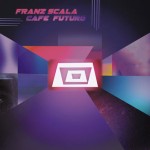
Artist: Franz Scala (@)
Title: Cafe Futuro
Format: LP
Label: Slow Motion Music (@)
Distributor: Word and Sound
Rated:
Title: Cafe Futuro
Format: LP
Label: Slow Motion Music (@)
Distributor: Word and Sound
Rated:
Franz Scala’s "Cafe Futuro" is not just an album, it’s a place you stumble into at the wrong hour and end up staying until the lights come on and your nostalgia has mascara running down its face. Released on Slow Motion, the record feels like a love letter written directly onto the dancefloor tiles of a Neukölln bar where history, sweat, eyeliner and synthesizers have soaked into the walls and refuse to leave.
Scala, Italian by birth and cosmic by vocation, has always had a rare talent: he understands that dance music is less about movement than memory. With "Cafe Futuro", he sharpens that instinct, pushing deeper into the emotional archaeology of Italo, New Beat and proto-house, not as revivalist cosplay but as lived language. These tracks don’t quote the past; they remember it, the way you remember a voice from another room.
The album opens with “New Look”, which hits like a confident stride across a smoke-filled floor. The bass is thick, the pulse assured, and the vocal presence carries that glamorous detachment that only works when it’s sincere. Scala knows exactly how much drama to allow before it tips into parody, and he never crosses the line - though he dances on it, smiling. “Echoes of Love” slows the heartbeat slightly, letting melody and vocoder blur into something tender but unresolved, like an unfinished confession whispered over a synthesizer that’s seen better nights.
Elsewhere, "Cafe Futuro" shows its range without losing cohesion. “Telephone Boy” crackles with nervous energy, while “Light Year Run” gives the album room to breathe, pads stretching out like neon reflections on wet pavement. Collaborations are used wisely, not as name-dropping but as character entrances in a carefully staged scene: Local Suicide bring bite and attitude to “Saxon Rebel”, while Charlie’s presence on “Crush Test” adds a sultry ambiguity that feels both intimate and distant. No one overstays their welcome.
One of the album’s quiet triumphs is “BIT99”, a track that doubles as both homage and self-portrait. Scala’s love for vintage Italian synthesis isn’t fetishistic; it’s personal. You can hear the circuitry thinking, aging, dreaming. It’s music aware of its own material body, humming proudly despite the years.
By the time "Cafe Futuro" reaches its closing stretch, culminating in “Fase Lunare”, the feeling is less of an ending than of drifting outside just before dawn, cigarette between fingers, unsure whether you’re exhausted or euphoric. Scala doesn’t offer resolution. He offers atmosphere, continuity, the sense that this world keeps spinning whether you’re on the floor or leaning against the bar.
There’s humor here, too - not jokes, but a knowing wink. "Cafe Futuro" understands the absurdity of taking nostalgia seriously, and does it anyway, with elegance and grit. It’s a record that respects the dancefloor as a site of emotional truth, where past and future briefly agree to share the same beat.
Franz Scala isn’t chasing trends, and he’s not embalming history. He’s keeping a place alive. Pull up a chair. The music’s already started.
Scala, Italian by birth and cosmic by vocation, has always had a rare talent: he understands that dance music is less about movement than memory. With "Cafe Futuro", he sharpens that instinct, pushing deeper into the emotional archaeology of Italo, New Beat and proto-house, not as revivalist cosplay but as lived language. These tracks don’t quote the past; they remember it, the way you remember a voice from another room.
The album opens with “New Look”, which hits like a confident stride across a smoke-filled floor. The bass is thick, the pulse assured, and the vocal presence carries that glamorous detachment that only works when it’s sincere. Scala knows exactly how much drama to allow before it tips into parody, and he never crosses the line - though he dances on it, smiling. “Echoes of Love” slows the heartbeat slightly, letting melody and vocoder blur into something tender but unresolved, like an unfinished confession whispered over a synthesizer that’s seen better nights.
Elsewhere, "Cafe Futuro" shows its range without losing cohesion. “Telephone Boy” crackles with nervous energy, while “Light Year Run” gives the album room to breathe, pads stretching out like neon reflections on wet pavement. Collaborations are used wisely, not as name-dropping but as character entrances in a carefully staged scene: Local Suicide bring bite and attitude to “Saxon Rebel”, while Charlie’s presence on “Crush Test” adds a sultry ambiguity that feels both intimate and distant. No one overstays their welcome.
One of the album’s quiet triumphs is “BIT99”, a track that doubles as both homage and self-portrait. Scala’s love for vintage Italian synthesis isn’t fetishistic; it’s personal. You can hear the circuitry thinking, aging, dreaming. It’s music aware of its own material body, humming proudly despite the years.
By the time "Cafe Futuro" reaches its closing stretch, culminating in “Fase Lunare”, the feeling is less of an ending than of drifting outside just before dawn, cigarette between fingers, unsure whether you’re exhausted or euphoric. Scala doesn’t offer resolution. He offers atmosphere, continuity, the sense that this world keeps spinning whether you’re on the floor or leaning against the bar.
There’s humor here, too - not jokes, but a knowing wink. "Cafe Futuro" understands the absurdity of taking nostalgia seriously, and does it anyway, with elegance and grit. It’s a record that respects the dancefloor as a site of emotional truth, where past and future briefly agree to share the same beat.
Franz Scala isn’t chasing trends, and he’s not embalming history. He’s keeping a place alive. Pull up a chair. The music’s already started.
Jo Montgomerie: Ephemeral Rituals

Artist: Jo Montgomerie
Title: Ephemeral Rituals
Format: CD + Download
Label: The Helen Scarsdale Agency (@)
Rated:
Title: Ephemeral Rituals
Format: CD + Download
Label: The Helen Scarsdale Agency (@)
Rated:
Jo Montgomerie’s "Ephemeral Rituals" doesn’t so much invite you in as quietly rearrange the room while you’re standing in it. When you finally notice, the walls have moved, the light has changed temperature, and something intimate is humming where silence used to be. This is not music that explains itself; it insinuates, repeats, insists - like habits we swear we don’t have, until we do.
Based in Manchester, Montgomerie has been patiently refining a language of abstraction where sound behaves less like narrative and more like weather, residue, muscle memory. Her materials are deliberately oblique: clacks, drones, frictions, tones that feel sourced from somewhere familiar but refuse to show their passport. The opening piece immediately sets the tone with a percussive insistence that feels mechanical yet oddly human, a rhythm that could be labor, ritual, or simply time tapping its fingers on the desk. From this apparent austerity, something unexpectedly luminous blooms - dark, yes, but glowing, like a bruise that remembers sunlight.
What distinguishes "Ephemeral Rituals" is Montgomerie’s refusal to treat texture as an end in itself. These pieces are dense, sometimes industrial in weight, but they breathe. There’s a devotional quality here, not in the religious sense, but in the way repetition becomes care, and care becomes meaning. Tracks unfold slowly, with a confidence that doesn’t rush the listener, trusting that attention will catch up eventually. And if it doesn’t - well, that’s on you.
There are moments where the album brushes against familiar coordinates of experimental music history - post-industrial dub shadows, spectral drones, the cinematic patience of sound-as-environment - but nothing feels derivative. Instead, Montgomerie seems to treat those references like half-remembered dreams: useful, evocative, and slightly unreliable. Her sound design often feels photographic, which makes sense given her parallel visual practice. You can almost hear layers being superimposed, images bleeding into each other, grain becoming emotion.
The emotional core of the record lies in its focus on small, human compulsions: breathing, running, waiting, leaving. These aren’t grand gestures; they’re the quiet rituals that structure ordinary life, magnified until they become strange again. By the time the closing tracks roll around, the music feels less like something you’re listening to and more like something you’re inside - an atmosphere where stillness isn’t empty, just attentive.
"Ephemeral Rituals" is not a record that begs for interpretation, nor does it reward casual consumption. It’s stern but generous, austere but strangely tender. Think of it as a set of private ceremonies conducted in public sound, where noise becomes memory and repetition turns into care. No veil is lifted, no secret revealed - but somehow, you leave feeling seen.
Based in Manchester, Montgomerie has been patiently refining a language of abstraction where sound behaves less like narrative and more like weather, residue, muscle memory. Her materials are deliberately oblique: clacks, drones, frictions, tones that feel sourced from somewhere familiar but refuse to show their passport. The opening piece immediately sets the tone with a percussive insistence that feels mechanical yet oddly human, a rhythm that could be labor, ritual, or simply time tapping its fingers on the desk. From this apparent austerity, something unexpectedly luminous blooms - dark, yes, but glowing, like a bruise that remembers sunlight.
What distinguishes "Ephemeral Rituals" is Montgomerie’s refusal to treat texture as an end in itself. These pieces are dense, sometimes industrial in weight, but they breathe. There’s a devotional quality here, not in the religious sense, but in the way repetition becomes care, and care becomes meaning. Tracks unfold slowly, with a confidence that doesn’t rush the listener, trusting that attention will catch up eventually. And if it doesn’t - well, that’s on you.
There are moments where the album brushes against familiar coordinates of experimental music history - post-industrial dub shadows, spectral drones, the cinematic patience of sound-as-environment - but nothing feels derivative. Instead, Montgomerie seems to treat those references like half-remembered dreams: useful, evocative, and slightly unreliable. Her sound design often feels photographic, which makes sense given her parallel visual practice. You can almost hear layers being superimposed, images bleeding into each other, grain becoming emotion.
The emotional core of the record lies in its focus on small, human compulsions: breathing, running, waiting, leaving. These aren’t grand gestures; they’re the quiet rituals that structure ordinary life, magnified until they become strange again. By the time the closing tracks roll around, the music feels less like something you’re listening to and more like something you’re inside - an atmosphere where stillness isn’t empty, just attentive.
"Ephemeral Rituals" is not a record that begs for interpretation, nor does it reward casual consumption. It’s stern but generous, austere but strangely tender. Think of it as a set of private ceremonies conducted in public sound, where noise becomes memory and repetition turns into care. No veil is lifted, no secret revealed - but somehow, you leave feeling seen.
Otto Lindholm: Shall the Days Float Through Our Eyes
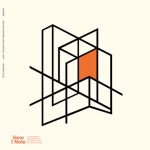
Artist: Otto Lindholm (@)
Title: Shall the Days Float Through Our Eyes
Format: 7"
Label: Skew Note
Rated:
Title: Shall the Days Float Through Our Eyes
Format: 7"
Label: Skew Note
Rated:
There’s something almost mischievous about releasing a 7” like "Shall the Days Float Through Our Eyes" in an age of endless files and infinite scroll. Otto Lindholm - alias of Brussels-based double bassist and composer Cyrille de Haes - opts for brevity, tactility, and restraint, as if to say: you don’t need a cathedral to feel the weight of stone, sometimes a well-placed brick will do. These two short pieces feel less like tracks and more like apertures: moments where sound opens, looks around, and then quietly withdraws before it explains itself too much.
“Lissitzky” arrives with an almost architectural confidence. The prepared double bass is multiplied, delayed, folded back onto itself through desynchronised loopers, creating planes of tension that feel drawn rather than played. You can sense the industrial space breathing along with the music - walls listening, balconies humming back. It’s a piece that doesn’t move forward so much as it assembles itself in mid-air, all angles and pressure points, a reminder that abstraction can still sweat. “Skelton”, on the flip side, loosens its grip. Grainier, slower, and emotionally exposed, it feels like the echo after an argument you’ve already lost: not dramatic, just honest. The bass here doesn’t assert; it hesitates, allowing silence and decay to finish its sentences.
What makes this release quietly compelling is how it compresses Lindholm’s broader practice into miniature form. His long-standing interest in resonance, density, and embodied listening is fully intact, but reframed through scarcity and impermanence. Each lathe-cut copy is made in real time, slightly different, imperfect by design - an elegant contradiction in a culture obsessed with identical reproduction. There’s no grand statement here, no manifesto shouted from the rooftops. Instead, "Shall the Days Float Through Our Eyes" offers two fleeting immersions that linger longer than expected, like light caught in dust. It doesn’t demand your attention; it earns it, briefly, and then lets the days keep floating.
“Lissitzky” arrives with an almost architectural confidence. The prepared double bass is multiplied, delayed, folded back onto itself through desynchronised loopers, creating planes of tension that feel drawn rather than played. You can sense the industrial space breathing along with the music - walls listening, balconies humming back. It’s a piece that doesn’t move forward so much as it assembles itself in mid-air, all angles and pressure points, a reminder that abstraction can still sweat. “Skelton”, on the flip side, loosens its grip. Grainier, slower, and emotionally exposed, it feels like the echo after an argument you’ve already lost: not dramatic, just honest. The bass here doesn’t assert; it hesitates, allowing silence and decay to finish its sentences.
What makes this release quietly compelling is how it compresses Lindholm’s broader practice into miniature form. His long-standing interest in resonance, density, and embodied listening is fully intact, but reframed through scarcity and impermanence. Each lathe-cut copy is made in real time, slightly different, imperfect by design - an elegant contradiction in a culture obsessed with identical reproduction. There’s no grand statement here, no manifesto shouted from the rooftops. Instead, "Shall the Days Float Through Our Eyes" offers two fleeting immersions that linger longer than expected, like light caught in dust. It doesn’t demand your attention; it earns it, briefly, and then lets the days keep floating.