
Browse by Genre
Industrial Music / Industrial Metal / Aggro Industrial / Electro Metal
Industrial Noise / Power Noise / Harsh Noise
Synth Pop / Electro Pop / Synth-Electronica
Techno / Trance / Goa / Drum'n'Bass / Jungle / Tribal / Trip-Hop
Ambient / Electronica / Ethereal / Dub / Soundscapes / Abstract
Experimental / Avantgarde / Weird & Wired / Glitch / Noise / Field Recording
Dark / Gothic / Wave / New Wave / Dark Wave / Industrial Gothic
New Music / Downtown / Avantgarde Jazz / New Classical / World
Search Reviews
Music Reviews
CYLiX: Beta Life

Titles matter. They’re the first small lie or truth a record tells you. Calling an album "Beta Life" suggests transition, instability, a version not quite finished. Which is either refreshingly honest or a clever way to excuse your flaws in advance. Fortunately, CYLiX don’t hide behind the concept. They lean into it.
Based in Athens, the trio - Harry G on vocals, plasmaG on keyboards, Elias C. on drums - arrive here after a debut that already positioned them within the darker corners of synthpop and EBM. Their trajectory isn’t accidental. Collaborations, remixes, festival appearances, the slow accumulation of credibility within a scene that tends to remember everything and forgive very little. "Beta Life" feels like the moment where that groundwork either crystallizes or collapses. Thankfully, it chooses the former.
“Devotion” opens with a familiar grammar: pulsing electronics, melodic restraint, a voice that balances between detachment and longing. It doesn’t try to reinvent the genre, which is probably wise. Instead, it sharpens it. There’s a clarity in the production that suggests lessons learned from the lineage of bands orbiting Front 242, particularly in how rhythm and atmosphere negotiate space.
“End Of Decay” and “As if I Had Your Wings” deepen that approach, layering emotional directness over structured electronic frameworks. CYLiX understand something crucial: in this territory, excess kills tension. So they hold back just enough. Melodies are present but not overindulgent, hooks emerge but don’t insist on being remembered forever. It’s a controlled burn.
“In this Prison” and “A Dying Love” lean more heavily into the thematic core. There’s a persistent sense of confinement, emotional and psychological, that runs through the album. Not in a theatrical, gothic way, but in something closer to quiet endurance. The kind of sadness that doesn’t perform, it just stays.
“Distorted Memories” and “Broken” play with texture and structure, introducing subtle variations that prevent the album from flattening into uniformity. These are not radical departures, but small shifts in tone and pacing that suggest a band aware of its own boundaries and willing to test them without breaking the frame entirely.
By the time “Endless Skies” arrives, there’s a hint of expansion, a slight opening in what has been a fairly enclosed emotional landscape. It doesn’t resolve anything, but it offers perspective, which is sometimes the closest thing to relief this kind of music allows.
The closing stretch - “Always never”, “Spent”, “Down the Drain” - returns to a more introspective space, though by now the album’s logic is clear. This is not about transformation in a dramatic sense. It’s about persistence, about continuing within a state rather than escaping it.
What "Beta Life" does well is avoid the trap of nostalgia as mere imitation. Yes, the DNA of classic synthpop and EBM is present, unavoidable even. But CYLiX treat it as a framework, not a script. There are echoes of the past, but they’re filtered through a contemporary sensibility that favors precision over excess.
Is it groundbreaking? Not particularly. But it doesn’t need to be. It’s coherent, focused, and emotionally consistent, which in a genre often caught between homage and stagnation is already a small achievement.
“Beta” implies something unfinished. Here, it feels more like a state of becoming. Not quite resolved, not entirely stable, but moving forward anyway. Which, if we’re being honest, is about as accurate a description of life as you’re going to get from a synthpop record.
Based in Athens, the trio - Harry G on vocals, plasmaG on keyboards, Elias C. on drums - arrive here after a debut that already positioned them within the darker corners of synthpop and EBM. Their trajectory isn’t accidental. Collaborations, remixes, festival appearances, the slow accumulation of credibility within a scene that tends to remember everything and forgive very little. "Beta Life" feels like the moment where that groundwork either crystallizes or collapses. Thankfully, it chooses the former.
“Devotion” opens with a familiar grammar: pulsing electronics, melodic restraint, a voice that balances between detachment and longing. It doesn’t try to reinvent the genre, which is probably wise. Instead, it sharpens it. There’s a clarity in the production that suggests lessons learned from the lineage of bands orbiting Front 242, particularly in how rhythm and atmosphere negotiate space.
“End Of Decay” and “As if I Had Your Wings” deepen that approach, layering emotional directness over structured electronic frameworks. CYLiX understand something crucial: in this territory, excess kills tension. So they hold back just enough. Melodies are present but not overindulgent, hooks emerge but don’t insist on being remembered forever. It’s a controlled burn.
“In this Prison” and “A Dying Love” lean more heavily into the thematic core. There’s a persistent sense of confinement, emotional and psychological, that runs through the album. Not in a theatrical, gothic way, but in something closer to quiet endurance. The kind of sadness that doesn’t perform, it just stays.
“Distorted Memories” and “Broken” play with texture and structure, introducing subtle variations that prevent the album from flattening into uniformity. These are not radical departures, but small shifts in tone and pacing that suggest a band aware of its own boundaries and willing to test them without breaking the frame entirely.
By the time “Endless Skies” arrives, there’s a hint of expansion, a slight opening in what has been a fairly enclosed emotional landscape. It doesn’t resolve anything, but it offers perspective, which is sometimes the closest thing to relief this kind of music allows.
The closing stretch - “Always never”, “Spent”, “Down the Drain” - returns to a more introspective space, though by now the album’s logic is clear. This is not about transformation in a dramatic sense. It’s about persistence, about continuing within a state rather than escaping it.
What "Beta Life" does well is avoid the trap of nostalgia as mere imitation. Yes, the DNA of classic synthpop and EBM is present, unavoidable even. But CYLiX treat it as a framework, not a script. There are echoes of the past, but they’re filtered through a contemporary sensibility that favors precision over excess.
Is it groundbreaking? Not particularly. But it doesn’t need to be. It’s coherent, focused, and emotionally consistent, which in a genre often caught between homage and stagnation is already a small achievement.
“Beta” implies something unfinished. Here, it feels more like a state of becoming. Not quite resolved, not entirely stable, but moving forward anyway. Which, if we’re being honest, is about as accurate a description of life as you’re going to get from a synthpop record.
Jah Wobble & Jon Klein: Automated Paradise

Artist: Jah Wobble & Jon Klein (@)
Title: Automated Paradise
Format: LP
Label: Dimple Discs (@)
Rated:
Title: Automated Paradise
Format: LP
Label: Dimple Discs (@)
Rated:
There are musicians who age into irrelevance, and then there are those who simply change the room they’re standing in while everyone else is still arguing about the furniture. Jah Wobble belongs firmly to the second category. On "Automated Paradise", alongside Jon Klein, he sounds less like a legacy act and more like someone who never accepted the premise of nostalgia in the first place.
Which is slightly inconvenient if you were hoping for a comfortable return to the ghost of Public Image Ltd and the looming shadow of "Metal Box". That DNA is still there, obviously. Wobble’s bass remains what it has always been: not accompaniment, but axis. It doesn’t support the track, it "is" the track, everything else negotiating its existence around it.
What’s different here is the way Klein’s guitar operates. Rather than competing for space, it slips between roles, sometimes textural, sometimes abrasive, occasionally almost melodic before retreating again. Having passed through the orbit of Siouxsie and the Banshees, Klein brings a sense of drama that never quite tips into excess. He knows when to withdraw, which is a rarer skill than most guitarists would like to admit.
“Fading Away” opens the album with a kind of understated inevitability. The groove is there, but it’s not trying to seduce you. It just exists, steady and slightly ominous, as if it has somewhere to be and you’re welcome to follow if you can keep up. “Make It Stop” sharpens the tone, introducing a more confrontational edge, though even here the aggression feels controlled, almost observational rather than explosive.
“Who Wins” and “Read Between The Lines” continue this balancing act between dub-inflected spaciousness and post-punk tension. There’s a sense of restraint running through the album, as if both musicians are deliberately avoiding the obvious move at every turn. It makes the listening experience slightly unpredictable in a low-key way. Not chaotic, just unwilling to settle.
The title track, brief and almost skeletal, feels like a conceptual hinge. “Automated Paradise” doesn’t expand, it compresses, reducing the album’s concerns to a kind of distilled gesture. After that, “Terminal Terminal The End” sounds like it might deliver some kind of conclusion, but of course it doesn’t. Titles lie. Music shrugs.
“Endless Sky” opens things up again, offering a rare moment of something close to release, though even here it’s tempered by a lingering ambiguity. By the time “Brockwell Lido” closes the record, there’s a faint sense of return, not to a specific place, but to a mood. Urban, reflective, slightly detached. The kind of ending that doesn’t resolve anything but feels appropriate anyway.
What makes "Automated Paradise" work is its refusal to dramatize its own relevance. Wobble’s long history, from collaborations with figures like Brian Eno to his genre-blurring solo work, could easily become a burden. Instead, it functions as a kind of background radiation, present but not overwhelming. Klein, with his equally varied trajectory, meets that energy with a quiet adaptability.
The result is an album that feels deliberate without being rigid, exploratory without pretending to reinvent the wheel. It doesn’t chase modernity, doesn’t retreat into past formulas. It just occupies its own space, calmly, almost stubbornly.
Not exactly paradise, automated or otherwise. But something more interesting: a system that still allows for human interference.
Which is slightly inconvenient if you were hoping for a comfortable return to the ghost of Public Image Ltd and the looming shadow of "Metal Box". That DNA is still there, obviously. Wobble’s bass remains what it has always been: not accompaniment, but axis. It doesn’t support the track, it "is" the track, everything else negotiating its existence around it.
What’s different here is the way Klein’s guitar operates. Rather than competing for space, it slips between roles, sometimes textural, sometimes abrasive, occasionally almost melodic before retreating again. Having passed through the orbit of Siouxsie and the Banshees, Klein brings a sense of drama that never quite tips into excess. He knows when to withdraw, which is a rarer skill than most guitarists would like to admit.
“Fading Away” opens the album with a kind of understated inevitability. The groove is there, but it’s not trying to seduce you. It just exists, steady and slightly ominous, as if it has somewhere to be and you’re welcome to follow if you can keep up. “Make It Stop” sharpens the tone, introducing a more confrontational edge, though even here the aggression feels controlled, almost observational rather than explosive.
“Who Wins” and “Read Between The Lines” continue this balancing act between dub-inflected spaciousness and post-punk tension. There’s a sense of restraint running through the album, as if both musicians are deliberately avoiding the obvious move at every turn. It makes the listening experience slightly unpredictable in a low-key way. Not chaotic, just unwilling to settle.
The title track, brief and almost skeletal, feels like a conceptual hinge. “Automated Paradise” doesn’t expand, it compresses, reducing the album’s concerns to a kind of distilled gesture. After that, “Terminal Terminal The End” sounds like it might deliver some kind of conclusion, but of course it doesn’t. Titles lie. Music shrugs.
“Endless Sky” opens things up again, offering a rare moment of something close to release, though even here it’s tempered by a lingering ambiguity. By the time “Brockwell Lido” closes the record, there’s a faint sense of return, not to a specific place, but to a mood. Urban, reflective, slightly detached. The kind of ending that doesn’t resolve anything but feels appropriate anyway.
What makes "Automated Paradise" work is its refusal to dramatize its own relevance. Wobble’s long history, from collaborations with figures like Brian Eno to his genre-blurring solo work, could easily become a burden. Instead, it functions as a kind of background radiation, present but not overwhelming. Klein, with his equally varied trajectory, meets that energy with a quiet adaptability.
The result is an album that feels deliberate without being rigid, exploratory without pretending to reinvent the wheel. It doesn’t chase modernity, doesn’t retreat into past formulas. It just occupies its own space, calmly, almost stubbornly.
Not exactly paradise, automated or otherwise. But something more interesting: a system that still allows for human interference.
us & sparkles: Sir Kaboom and Trippy Tweet

Artist: us & sparkles (@)
Title: Sir Kaboom and Trippy Tweet
Format: 12" + Download
Label: self-released
Rated:

Title: Sir Kaboom and Trippy Tweet
Format: 12" + Download
Label: self-released
Rated:
There’s always a moment, usually around track two or three, when a “long-form groove exploration” either reveals itself as patient craft or just very polite procrastination. "Sir Kaboom and Trippy Tweet" lands, somewhat annoyingly for cynics, on the former.
Behind "us & sparkles" is Roland Vollenweider, a figure who divides his time between electronic music and psychoanalytic psychotherapy. Which explains a lot, unfortunately. This is music that doesn’t just want you to dance, it wants to "understand why you’re dancing", possibly trace it back to childhood, and then let the rhythm do the talking instead. Surprisingly, it works.
The album extends into long-form structures without collapsing under their weight. “Songs of Navarone” opens with a kind of patient unfolding, grooves emerging not as declarations but as slow agreements between elements. Nothing rushes. You’re not pushed onto the dancefloor; you sort of drift there, like you made the decision yourself. Clever.
“Bongo Dreams” leans more explicitly into rhythm, but avoids turning into a percussive cliché. The track breathes, expanding and contracting, letting textures flicker in and out like half-remembered scenes from a night that never quite resolves into a story. There’s a warmth here that feels deliberate, not sentimental, more about presence than nostalgia.
“Contemplation” does what the title threatens, but with restraint. It doesn’t disappear into ambient vagueness. Instead, it holds a groove at a distance, like something you can approach but never fully inhabit. This tension between movement and suspension runs throughout the record, giving it a quiet internal logic.
Then “FlashyFresh” shifts the tone, not by becoming louder or faster, but by sharpening its edges. The groove tightens, details become more pronounced, and for a moment it feels like the album might tip into something more overtly club-oriented. It doesn’t. It just hints at it, then steps back again, as if aware that commitment is overrated.
“Stay Alert” introduces a subtle sense of unease beneath its rhythmic surface, a reminder that repetition can be both comforting and slightly destabilizing. Patterns loop, but small deviations keep them from settling into pure hypnosis. It’s a delicate balance, and the track walks it with surprising confidence.
“The Poem” and “It Was Already in Me” close the album by leaning into something more introspective, though not in a way that abandons the body. The grooves soften, stretch, and dissolve into something closer to atmosphere, but they never fully disappear. There’s always a pulse, faint but persistent, like a memory that refuses to fade.
What’s notable is how collaborative this record feels, despite being anchored in Vollenweider’s vision. The presence of multiple musicians, from horns to guitars to percussion, adds a tactile richness that prevents the music from becoming overly digital or sterile. Each element seems to arrive, contribute, and then quietly step aside.
There are echoes of psychedelic electronica, hints of downtempo, traces of something that could have wandered out of a late-night set in a small, overly sincere club. But "Sir Kaboom and Trippy Tweet" avoids becoming a genre exercise. It’s less about fitting into a scene and more about sustaining an endorphinic state.
Not immediate, not flashy in the way the title jokingly suggests, but persistent. The kind of album that doesn’t demand attention, yet gradually occupies it, like a thought you didn’t invite but don’t entirely mind keeping around.
Behind "us & sparkles" is Roland Vollenweider, a figure who divides his time between electronic music and psychoanalytic psychotherapy. Which explains a lot, unfortunately. This is music that doesn’t just want you to dance, it wants to "understand why you’re dancing", possibly trace it back to childhood, and then let the rhythm do the talking instead. Surprisingly, it works.
The album extends into long-form structures without collapsing under their weight. “Songs of Navarone” opens with a kind of patient unfolding, grooves emerging not as declarations but as slow agreements between elements. Nothing rushes. You’re not pushed onto the dancefloor; you sort of drift there, like you made the decision yourself. Clever.
“Bongo Dreams” leans more explicitly into rhythm, but avoids turning into a percussive cliché. The track breathes, expanding and contracting, letting textures flicker in and out like half-remembered scenes from a night that never quite resolves into a story. There’s a warmth here that feels deliberate, not sentimental, more about presence than nostalgia.
“Contemplation” does what the title threatens, but with restraint. It doesn’t disappear into ambient vagueness. Instead, it holds a groove at a distance, like something you can approach but never fully inhabit. This tension between movement and suspension runs throughout the record, giving it a quiet internal logic.
Then “FlashyFresh” shifts the tone, not by becoming louder or faster, but by sharpening its edges. The groove tightens, details become more pronounced, and for a moment it feels like the album might tip into something more overtly club-oriented. It doesn’t. It just hints at it, then steps back again, as if aware that commitment is overrated.
“Stay Alert” introduces a subtle sense of unease beneath its rhythmic surface, a reminder that repetition can be both comforting and slightly destabilizing. Patterns loop, but small deviations keep them from settling into pure hypnosis. It’s a delicate balance, and the track walks it with surprising confidence.
“The Poem” and “It Was Already in Me” close the album by leaning into something more introspective, though not in a way that abandons the body. The grooves soften, stretch, and dissolve into something closer to atmosphere, but they never fully disappear. There’s always a pulse, faint but persistent, like a memory that refuses to fade.
What’s notable is how collaborative this record feels, despite being anchored in Vollenweider’s vision. The presence of multiple musicians, from horns to guitars to percussion, adds a tactile richness that prevents the music from becoming overly digital or sterile. Each element seems to arrive, contribute, and then quietly step aside.
There are echoes of psychedelic electronica, hints of downtempo, traces of something that could have wandered out of a late-night set in a small, overly sincere club. But "Sir Kaboom and Trippy Tweet" avoids becoming a genre exercise. It’s less about fitting into a scene and more about sustaining an endorphinic state.
Not immediate, not flashy in the way the title jokingly suggests, but persistent. The kind of album that doesn’t demand attention, yet gradually occupies it, like a thought you didn’t invite but don’t entirely mind keeping around.
Chris Wood & Albert Sapsford: Pristine
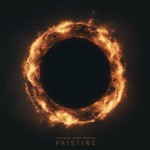
Artist: Chris Wood & Albert Sapsford
Title: Pristine
Format: CD + Download
Label: Pharmafabrik (@)
Rated:

Title: Pristine
Format: CD + Download
Label: Pharmafabrik (@)
Rated:
There’s something faintly absurd about calling a record "Pristine" when it’s born out of lockdown anxiety, long-distance miscommunication, and the general psychological debris of recent history. And yet, here we are. Against expectations, Chris Wood and Albert Sapsford manage to make the title feel less like irony and more like a quiet objective: not purity as absence of noise, but clarity wrestled out of it.
This is a collaboration conducted entirely at a distance, with no spoken communication. Which sounds romantic until you remember how most human communication already fails "with" words. So perhaps they just skipped the inefficient part. What emerges is a work that feels meticulously assembled yet strangely detached from ego, as if each sound was negotiated rather than declared.
Wood, an architect as well as a musician, brings a structural sensibility that’s hard to miss. These tracks don’t simply unfold, they are built. Spaces open, close, echo, and reconfigure with a logic that feels almost spatial before it feels musical. Sapsford, working with software-based modular systems and algorithmic processes, introduces a different kind of intelligence: less about structure as form, more about structure as evolving system. Between them, "Pristine" becomes a kind of sonic architecture that is constantly recalculating itself.
“The Multiplier” sits at the center like an extended corridor you’re not entirely sure you’ll exit. At over 17 minutes, it could have collapsed under its own weight, but instead it sustains a delicate balance between drift and direction. Layers accumulate slowly, not in a grand crescendo but in subtle shifts, like light changing in a room you’ve been sitting in too long. Time stretches, not dramatically, just enough to make you question your internal clock.
Elsewhere, “The Blackness Thrown Away” leans into something heavier, almost orchestral in its density, though “orchestral” here means mass rather than melody. There are moments of near-absurdity, fragments that feel slightly out of place, like echoes of The Residents drifting through a more disciplined environment. It shouldn’t work, but it does, mostly because the album never insists on coherence as a virtue.
The presence of piano across several tracks is crucial. It introduces a human gesture that doesn’t resolve the surrounding abstraction but complicates it. Notes appear, hesitate, dissolve into the surrounding electronics. It’s less about melody than about the memory of melody, something half-recalled and then immediately obscured.
There are also traces of field recordings, voices, mechanical residues, small intrusions of reality that prevent the album from floating away entirely. They act like anchors, though unreliable ones. You think you’ve located something concrete, and then it shifts, absorbed back into the texture.
Comparisons to Tangerine Dream make a certain sense in terms of atmosphere, but "Pristine" is less interested in cosmic expansiveness than in interior space. This isn’t about traveling outward. It’s about navigating a condition, a mental architecture shaped by isolation, uncertainty, and the stubborn desire to find some form of coherence anyway.
What’s quietly impressive is how the album avoids the usual clichés of “lockdown music”. There’s no overt melancholy, no performative fragility. Instead, it operates with patience, with a kind of measured attention that feels almost defiant. It doesn’t dramatize crisis. It processes it, slowly, methodically, without promising resolution.
Calling it ambient is technically correct and emotionally insufficient. "Pristine" is less a background and more a threshold, a place where sound hovers between intention and accident, between control and surrender. It doesn’t demand immersion, but it rewards it in ways that are difficult to summarize without sounding like you’ve spent too much time alone. Which, to be fair, is exactly where this album comes from.
This is a collaboration conducted entirely at a distance, with no spoken communication. Which sounds romantic until you remember how most human communication already fails "with" words. So perhaps they just skipped the inefficient part. What emerges is a work that feels meticulously assembled yet strangely detached from ego, as if each sound was negotiated rather than declared.
Wood, an architect as well as a musician, brings a structural sensibility that’s hard to miss. These tracks don’t simply unfold, they are built. Spaces open, close, echo, and reconfigure with a logic that feels almost spatial before it feels musical. Sapsford, working with software-based modular systems and algorithmic processes, introduces a different kind of intelligence: less about structure as form, more about structure as evolving system. Between them, "Pristine" becomes a kind of sonic architecture that is constantly recalculating itself.
“The Multiplier” sits at the center like an extended corridor you’re not entirely sure you’ll exit. At over 17 minutes, it could have collapsed under its own weight, but instead it sustains a delicate balance between drift and direction. Layers accumulate slowly, not in a grand crescendo but in subtle shifts, like light changing in a room you’ve been sitting in too long. Time stretches, not dramatically, just enough to make you question your internal clock.
Elsewhere, “The Blackness Thrown Away” leans into something heavier, almost orchestral in its density, though “orchestral” here means mass rather than melody. There are moments of near-absurdity, fragments that feel slightly out of place, like echoes of The Residents drifting through a more disciplined environment. It shouldn’t work, but it does, mostly because the album never insists on coherence as a virtue.
The presence of piano across several tracks is crucial. It introduces a human gesture that doesn’t resolve the surrounding abstraction but complicates it. Notes appear, hesitate, dissolve into the surrounding electronics. It’s less about melody than about the memory of melody, something half-recalled and then immediately obscured.
There are also traces of field recordings, voices, mechanical residues, small intrusions of reality that prevent the album from floating away entirely. They act like anchors, though unreliable ones. You think you’ve located something concrete, and then it shifts, absorbed back into the texture.
Comparisons to Tangerine Dream make a certain sense in terms of atmosphere, but "Pristine" is less interested in cosmic expansiveness than in interior space. This isn’t about traveling outward. It’s about navigating a condition, a mental architecture shaped by isolation, uncertainty, and the stubborn desire to find some form of coherence anyway.
What’s quietly impressive is how the album avoids the usual clichés of “lockdown music”. There’s no overt melancholy, no performative fragility. Instead, it operates with patience, with a kind of measured attention that feels almost defiant. It doesn’t dramatize crisis. It processes it, slowly, methodically, without promising resolution.
Calling it ambient is technically correct and emotionally insufficient. "Pristine" is less a background and more a threshold, a place where sound hovers between intention and accident, between control and surrender. It doesn’t demand immersion, but it rewards it in ways that are difficult to summarize without sounding like you’ve spent too much time alone. Which, to be fair, is exactly where this album comes from.
DNA?AND? & Lampeknusekontoret: «Hot, Hot, Hot»
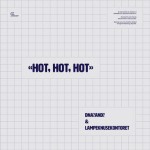
Artist: DNA?AND? & Lampeknusekontoret
Title: «Hot, Hot, Hot»
Format: 12" + Download
Label: Den Pene Inngang
Rated:
Title: «Hot, Hot, Hot»
Format: 12" + Download
Label: Den Pene Inngang
Rated:
“We do not come in peace.” It’s always comforting when a record opens with a statement that sounds like either a threat or a bureaucratic disclaimer gone feral. "Hot, Hot, Hot" by DNA?AND? and Lampeknusekontoret keeps that promise with admirable inconsistency, which is exactly what it should do.
This is not an album in the traditional sense. It’s a 40-minute event, a live-recorded sprawl of improvisation that refuses to behave like a “piece” and instead unfolds like a situation. You don’t follow it so much as get caught inside it, occasionally wondering who, if anyone, is in charge. The answer appears to be: no one, and that’s the design.
The backstory matters here, and not in the usual press-kit way. Lampeknusekontoret emerged from workshops involving youth with disabilities, initiated by figures like Harald Fetveit and later expanded through collaborations that included Anla Courtis of Reynols. What could have easily been framed as a “community project” in the most reductive sense instead becomes something far more interesting: a collective practice where authorship dissolves, hierarchies blur, and unpredictability isn’t a side effect but the core method.
The result, recorded in Oslo in 2024, is a dense, often disorienting collage of gestures. Fragments of speech surface and vanish. Textures collide without warning. There are moments that feel almost like accidental musique concrète, as if the room itself decided to contribute, and others that hint at pop-cultural debris drifting through the mix like half-remembered radio signals. It’s messy, obviously. If you were expecting polish, you’ve taken a wrong turn somewhere.
But within that apparent chaos, something else happens. The music breathes with a kind of collective intuition that doesn’t rely on virtuosity in the conventional sense. Instead, it leans on presence, on reaction, on the fragile act of listening while producing sound. There are passages of surprising intimacy, where the density thins and individual gestures briefly come into focus, only to be swallowed again by the group dynamic.
The “hot” in the title isn’t about tempo or energy in any predictable way. It’s more about proximity, about the friction of elements pushed too close together. At times the piece feels almost overcrowded, like a room where too many conversations are happening at once. Then suddenly it opens up, leaving a kind of sonic afterimage, a trace of what just passed through.
It would be easy, and frankly lazy, to frame this as outsider art or to romanticize its origins. That would miss the point entirely. What’s compelling here is not the context alone, but how that context produces a different relationship to sound. Control is partial, intention is distributed, and the result sits somewhere between composition and accident, between agency and drift.
Does it “work”? That depends on your tolerance for ambiguity and your willingness to abandon the idea that music should guide you somewhere. "Hot, Hot, Hot" doesn’t guide. It surrounds, interrupts, occasionally overwhelms, and then leaves you to assemble meaning from the residue.
Not peaceful, not orderly, and definitely not background listening. But alive in a way that more “refined” records often forget how to be.
This is not an album in the traditional sense. It’s a 40-minute event, a live-recorded sprawl of improvisation that refuses to behave like a “piece” and instead unfolds like a situation. You don’t follow it so much as get caught inside it, occasionally wondering who, if anyone, is in charge. The answer appears to be: no one, and that’s the design.
The backstory matters here, and not in the usual press-kit way. Lampeknusekontoret emerged from workshops involving youth with disabilities, initiated by figures like Harald Fetveit and later expanded through collaborations that included Anla Courtis of Reynols. What could have easily been framed as a “community project” in the most reductive sense instead becomes something far more interesting: a collective practice where authorship dissolves, hierarchies blur, and unpredictability isn’t a side effect but the core method.
The result, recorded in Oslo in 2024, is a dense, often disorienting collage of gestures. Fragments of speech surface and vanish. Textures collide without warning. There are moments that feel almost like accidental musique concrète, as if the room itself decided to contribute, and others that hint at pop-cultural debris drifting through the mix like half-remembered radio signals. It’s messy, obviously. If you were expecting polish, you’ve taken a wrong turn somewhere.
But within that apparent chaos, something else happens. The music breathes with a kind of collective intuition that doesn’t rely on virtuosity in the conventional sense. Instead, it leans on presence, on reaction, on the fragile act of listening while producing sound. There are passages of surprising intimacy, where the density thins and individual gestures briefly come into focus, only to be swallowed again by the group dynamic.
The “hot” in the title isn’t about tempo or energy in any predictable way. It’s more about proximity, about the friction of elements pushed too close together. At times the piece feels almost overcrowded, like a room where too many conversations are happening at once. Then suddenly it opens up, leaving a kind of sonic afterimage, a trace of what just passed through.
It would be easy, and frankly lazy, to frame this as outsider art or to romanticize its origins. That would miss the point entirely. What’s compelling here is not the context alone, but how that context produces a different relationship to sound. Control is partial, intention is distributed, and the result sits somewhere between composition and accident, between agency and drift.
Does it “work”? That depends on your tolerance for ambiguity and your willingness to abandon the idea that music should guide you somewhere. "Hot, Hot, Hot" doesn’t guide. It surrounds, interrupts, occasionally overwhelms, and then leaves you to assemble meaning from the residue.
Not peaceful, not orderly, and definitely not background listening. But alive in a way that more “refined” records often forget how to be.