
Wednesday, October 28, 2026
Browse by Genre
Industrial Music / Industrial Metal / Aggro Industrial / Electro Metal
Industrial Noise / Power Noise / Harsh Noise
Synth Pop / Electro Pop / Synth-Electronica
Techno / Trance / Goa / Drum'n'Bass / Jungle / Tribal / Trip-Hop
Ambient / Electronica / Ethereal / Dub / Soundscapes / Abstract
Experimental / Avantgarde / Weird & Wired / Glitch / Noise / Field Recording
Dark / Gothic / Wave / New Wave / Dark Wave / Industrial Gothic
New Music / Downtown / Avantgarde Jazz / New Classical / World
Search Reviews
Music Reviews
Nonturn: Repeating Town


A traffic signal changes. Someone crosses the street. An air conditioner hums away with the dedication of a civil servant approaching retirement. Cars pass, footsteps accumulate, machinery grumbles, and conversations dissolve into the general babble of urban existence. Most of us experience this as background noise, occasionally interrupted by a particularly obnoxious motorist. On "Repeating Town", however, these ordinary events become the entire musical vocabulary. Across seven tracks, Nonturn constructs a quietly propulsive electronic work from recordings made in and around Koenji, Tokyo, without using conventional instruments. The city supplies the raw material; editing supplies the composition.
Nonturn is the project of Nozom Yoneda, a Kanazawa-born composer based in Tokyo whose professional work spans film, television and commercial scoring alongside experimental music. He began releasing music in the British drum'n'bass scene in 2004 before gradually developing a sampling-based practice that places environmental recordings at its centre. His earlier Audiobulb releases, "Territory" (2018) and "Jellybeans" (2023), mark different stages in this exploration. "Territory" was constructed from environmental recordings made across Tokyo, while "Jellybeans" drew on extensive sound-library material. The new album returns to the physical city, but approaches it through a more tightly defined compositional framework. Rather than attempting to reproduce the experience of walking through a particular neighbourhood, Yoneda extracts sounds from their original circumstances and gives them new musical responsibilities.
The crucial decision is to organise all seven tracks around a tempo of 96 beats per minute. This provides a common temporal structure without forcing the music into the familiar architecture of dance-floor electronics. There is no obligatory four-on-the-floor kick drum, no synthesised bass line announcing that the weekend has officially begun. Instead, the rhythm emerges from the peculiar properties of recorded reality. A footstep can become a percussive accent; a mechanical hum can supply a sustained tonal layer; a signal or fragment of speech can acquire the function of a repeating motif. Once these sounds are cut, repositioned and layered, their original identities become less important than the relationships they establish.
This is where "Repeating Town" moves beyond the familiar appeal of field recordings. The simple act of capturing interesting noises can certainly produce compelling sound art, but a collection of unusual sounds is not automatically a composition. Yoneda's achievement lies in the grammar he develops from them. His material retains the roughness and irregularity of the environment, yet the fixed pulse gives it a sense of direction. Repetition becomes a means of discovering order without pretending that the world is naturally tidy. The music is neither a documentary soundtrack nor an ambient postcard of Tokyo. It is an alternative version of the city, one assembled according to rules that make its everyday activities audible in a new way.
The opening "Indicate" establishes this approach through the interplay of small sonic events and the album's measured rhythmic flow. The title suggests a signal, an instruction or a prompt to move, and the piece fits a work in which sounds acquire significance through their placement. "Atonement" continues the process, while "Repetition" makes the governing principle explicit. Yet repetition here is not simply the duplication of a sound until everyone involved has lost the will to object. Each recurrence changes the context in which a fragment is heard. What initially registers as a mechanical detail can become a rhythmic anchor; what seems incidental can gradually assume the importance of a musical phrase. Familiarity alters perception, and the repeated sound becomes different without necessarily changing very much at all.
"Stagnant" introduces an especially suggestive title into a record whose underlying pulse never stops. The apparent contradiction is productive: movement and inertia can coexist, just as a person can remain physically stationary while the city carries on around them. A constant tempo does not guarantee forward motion in the conventional dramatic sense. Instead, it establishes a stable reference against which small changes become more noticeable. The album's rhythm resembles the experience of travelling through a familiar district, where the route remains broadly predictable but the details never repeat in precisely the same way. There is a quiet tension between the regularity of the musical grid and the accidental character of the sounds placed upon it.
With "Fathom", the listener is invited to consider how much can be extracted from material that initially seems mundane. Yoneda's process depends on selection, but also on a willingness to let the recordings resist their original meanings. A sound can retain some trace of its source without continuing to function as evidence of a specific event. In this respect, the album occupies an interesting position between musique concrète and post-club electronics. It inherits the former's interest in treating recorded sound as compositional material, while borrowing from club culture an awareness of pulse, repetition and continuity. Neither tradition entirely explains the result. The music has a physical rhythmic presence, but its source material refuses the clean, predictable surfaces usually associated with electronic dance production.
"Disrupt" suggests a disturbance in the established pattern, although the album's deeper interest is not in manufacturing dramatic breakdowns for their own sake. Its organising principle remains consistent, allowing irregularities and changes of density to register against the shared tempo. The music can suggest a city in motion without resorting to a cinematic montage of sirens, horns and exaggerated urban menace. There is no need to make Tokyo sound like a dystopian metropolis whose inhabitants have been sentenced to perpetual overtime. The everyday is strange enough already, provided it receives a little attention.
The closing "Perpetual", the longest track at six minutes and forty-five seconds, gives the album a fitting final perspective. Its title points towards continuation rather than resolution, reinforcing the impression that the seven tracks form parts of a larger process. Each piece can be heard individually, but the common tempo allows them to connect as a continuous environment. This is more than a technical convenience: it suggests a city whose separate locations and activities participate in a shared temporal structure. The listener moves from one arrangement to the next while the pulse persists, much as urban life continues regardless of whether we happen to be paying attention.
Yoneda's visual work extends this way of thinking beyond sound. The cover uses one of his close-up photographs of Tokyo's surfaces, focusing on details such as walls, textures and peeling paint. Seen from a distance, these belong to a recognisable urban environment; framed tightly enough, they become abstract arrangements of colour and form. The method mirrors the music. In both cases, the city is not simply represented but broken down into components whose relationships can be reconsidered. The photographs suggest that abstraction is not necessarily something imposed on reality from outside. Sometimes it begins by looking, or listening, more closely than ordinary habits encourage.
The accompanying video project takes the idea further. Yoneda recorded footage at the same time as capturing the sounds, then developed a custom Ableton-to-video application, A2MVE, to reconstruct the footage according to the arrangement of the musical session. As sounds overlap, the image divides; when the music repeats, the corresponding visual material repeats too. The footage itself remains real, while artificial intelligence helped design editing rules and extend the process to a level of complexity that would be impractical to assemble manually. This is a thoughtful application of technology: not an attempt to manufacture a synthetic city, but a way of making the relationship between recorded sound, editing and visual perception more explicit. The software effectively turns the arrangement into a set of instructions for looking.
There is something quietly subversive about this project. Contemporary urban life is saturated with sounds that are functional before they are aesthetic. Signals tell us when to cross, machines keep buildings operating, footsteps carry people towards their destinations, and passing conversations vanish before we can make sense of them. We are trained to interpret these events quickly and move on. Yoneda interrupts that process by giving the sounds a different purpose. The signal no longer needs to direct a pedestrian; the machine no longer needs to perform its practical duty. Each becomes part of a composition whose meaning depends on how it relates to everything else.
The result is not necessarily music that makes one long to dance, although its pulse provides a gentle bodily invitation. Nor is it ambient music in the sense of a passive backdrop intended to make a room feel sophisticated while somebody chooses a takeaway. "Repeating Town" asks for active listening, but it does not demand solemn concentration. Its pleasures come from noticing how the pieces fit together, how an apparently unmusical sound can acquire a recognisable role, and how the fixed tempo allows disparate recordings to coexist. The concept is rigorous, yet the music remains approachable because its raw materials belong to experiences most listeners already know.
There are limits to the approach. A consistent tempo and a shared sampling method inevitably impose a degree of uniformity, and listeners looking for strong melodic development or dramatic structural contrasts may find the album's restrained progression too even. The same process that produces coherence can also soften the distinctions between individual tracks. But this tension is intrinsic to the project: Yoneda is not trying to create seven unrelated showcases of technique. He is examining the repetitions that bind a place together, and the continuity of the music is part of the argument.
"Repeating Town" ultimately demonstrates that the boundary between noise and music is less stable than everyday listening assumes. The city does not need to be made beautiful through sentimental orchestration, nor does its sound have to be preserved untouched to retain documentary value. Yoneda takes the middle route, editing reality until its ordinary details reveal another order. The work is precise without feeling sterile, rhythmic without surrendering to conventional club formulas, and experimental without treating obscurity as a badge of honour.
After listening, the most noticeable change may occur outside the album. A crossing signal, the rhythm of someone walking, a ventilation unit rattling above a shop: these sounds may briefly seem less like interruptions and more like parts of an arrangement nobody has quite finished composing. The city has not suddenly become more musical. The listener has simply acquired a different way of hearing it. Given how much noise modern life produces, that is a rather useful skill to take home.
Maciek Szymczuk: Gandobendy
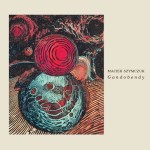
After nearly nine years away from releasing new material, Maciek Szymczuk returns with "Gandobendy", an album whose title sounds like the name of an obscure medicinal herb, a forgotten civilisation or, possibly, a particularly unsuccessful Polish Eurovision entry. Fortunately, the music is more convincing than any of these possibilities. Across seven tracks, Szymczuk constructs a colourful electronic environment in which ambient drift, dub-inflected rhythms, melodic suggestions and psychedelic oddities coexist without the need to establish diplomatic relations. The result is a record that feels less like a conventional collection of compositions than a place with its own curious climate, where familiar sounds occasionally behave in unfamiliar ways.
Szymczuk has spent much of his career exploring the borderlands between ambient, experimental electronics and music informed by traditions beyond the Western electronic canon. His earlier albums, including "Dilmun", "Echoes" and "Ways", establish a continuing interest in atmospheric sound and the uncertain territory between conscious attention and reverie. His other projects have taken different routes, from the energetic electronic excursions of Another One to the more dance-oriented explorations of Terminus. "Gandobendy" brings some of these interests into the same room, though nobody seems particularly interested in deciding who sits where. Ambient provides the underlying framework, but rhythm, melody and a discreetly psychedelic sensibility repeatedly interrupt any temptation to file the record under one convenient heading.
The opening "Ompek" establishes the album's peculiar balance. Rather than dissolving into an undifferentiated wash of sound, the piece develops through interacting electronic layers, with movement emerging from the spaces between them. There is an underlying sense of pulse, but it does not insist on becoming a conventional beat. Szymczuk seems interested in the moment when a sound begins to suggest a recognisable musical function, only to drift elsewhere before that function becomes fixed. The effect is absorbing without being excessively solemn. This is electronic music with enough internal activity to reward close listening, but without the nervous compulsion to demonstrate every idea before the listener has had time to process the previous one.
"Machomor" develops the rhythmic dimension further, bringing the album closer to dub's fascination with repetition, space and the expressive possibilities of sound treated as something physical. Dub is not simply a stylistic garnish here. Its influence can be felt in the way elements seem to recede, return and occupy different positions within the arrangement. Echo and spatial separation become compositional tools, making the music feel less like a stack of sounds than a system of relationships. The groove remains loose enough to resist the machinery of conventional dance music, while retaining a bodily quality that prevents the album from floating away into pure abstraction. One could imagine dancing to it, provided the dance floor were populated by people who had agreed in advance to abandon all concern for looking normal.
The shorter "Hundangola" changes the proportions, offering a compact episode within the album's broader exploratory design. Its brevity matters because "Gandobendy" is not built around a single continuous mood. The tracks differ in duration and emphasis, and the music's identity emerges from those variations rather than from a rigidly repeated formula. "Gaganis" continues the process of combining atmospheric depth with more definite musical gestures, allowing its electronic elements to suggest a structure without spelling everything out. The melodies are not necessarily intended to be remembered or hummed afterwards; they function more like temporary landmarks in a landscape whose geography keeps changing.
Then comes the title track, "Gandobendy", which occupies a central position both in the running order and in the album's overall character. Its name may be impossible to pronounce confidently after two drinks, but the music needs no such assistance. Here, the combination of rhythmic motion and hazy electronic colour becomes particularly persuasive. Szymczuk avoids the easy route of turning psychedelia into a procession of extravagant effects. Instead, the unusual details emerge from the interaction of elements that are, individually, relatively familiar. There is a sense of expansion, but it is generated through arrangement and timbral variation rather than through a succession of grand gestures. The music feels strange without making strangeness its only selling point, a distinction that many supposedly adventurous records seem to regard as optional.
"Elektronytek" brings another change of scale and emphasis. Its title suggests a laboratory apparatus designed by someone who has misplaced the instruction manual, yet the music is less concerned with technological spectacle than with the possibilities of electronic sound as a flexible material. Across the album, Szymczuk allows rhythmic patterns, atmospheric layers and melodic fragments to coexist without forcing them into a standard hierarchy. The result is neither ambient in the purely passive sense nor electronic pop in disguise. There is too much unpredictability for the former and too little interest in conventional hooks for the latter. Instead, the music inhabits an intermediate territory where structure and uncertainty can be useful allies.
The closing "Nerlon", the album's longest track at just over eleven minutes, provides room for the record's different tendencies to linger together. Its extended duration suits a work whose appeal depends on gradual development rather than immediate impact. Sounds acquire meaning through their placement and recurrence, while the overall atmosphere remains open enough to accommodate different interpretations. The piece does not need to deliver a climactic revelation to justify its length. Its function is closer to that of a final passage through a place the listener has already visited, now recognisable but not entirely understood. The journey ends, although the territory itself remains stubbornly resistant to explanation.
The recommendation to hear "Gandobendy" in semi-darkness is sensible, if slightly unfair to people whose domestic lighting arrangements consist of one aggressively white ceiling bulb. Reduced visual distraction may indeed help reveal the relationships between the album's many layers, but the music is not dependent on a prescribed ritual. Its dreamlike quality comes from the way sounds seem to shift in significance as the arrangements unfold. At one moment, a rhythmic pattern may feel reassuringly familiar; a little later, a change in texture can make the same passage seem faintly alien. Such transformations are part of the album's appeal, although listeners who prefer their electronic music to announce its intentions clearly may find the constant negotiation between atmosphere and structure frustrating.
That uncertainty is also where "Gandobendy" avoids becoming merely decorative. Its richness is not just a matter of adding more sounds, more effects or more layers until the result resembles an expensive dessert. The individual elements have room to interact, and the rhythmic components give the music a sense of direction even when the destination remains unclear. The psychedelic character, meanwhile, comes less from theatrical excess than from the gradual alteration of perspective. Szymczuk makes familiar musical ingredients behave in ways that are just unusual enough to refresh the ear without rendering the whole experience incomprehensible.
There is a broader point to be made about the album's return after such a long interval. Nearly nine years is a substantial gap in a musical culture that treats regular output as evidence of continued existence. Artists are expected to maintain a steady stream of releases, announcements and digital reminders that they have not quietly wandered into the woods. Szymczuk's reappearance offers a useful counterexample to this production-line mentality. "Gandobendy" does not sound like an attempt to chase current trends or compensate for the missing years with an overloaded statement of intent. It simply presents seven pieces that reflect a continuing interest in the fluid relationship between rhythm, atmosphere and imagination.
The album is not without its challenges. Its abundance of detail can occasionally make it difficult to identify a clear centre of gravity, and the same fluidity that gives the music its sense of possibility may leave some passages feeling less distinctive than others. But these are limitations associated with the approach itself rather than signs of a project that has run out of ideas. Szymczuk is more interested in maintaining an active, changing environment than in producing seven neatly differentiated demonstrations of compositional technique.
"Gandobendy" ultimately succeeds by treating electronic music as a space for exploration rather than a set of rules to be followed. Ambient, dub and psychedelia are present, but none is allowed to become a comfortable resting place. The music moves between them with an unforced curiosity, occasionally inviting the body to respond while leaving the imagination free to invent its own explanations. It is a welcome return from an artist who seems perfectly content to let the sounds do their work without attaching a lengthy instruction leaflet to every turn.
The best approach may be to listen without demanding that every passage reveal what it means. Not every record needs to provide a thesis, a moral or a downloadable certificate confirming that the listener has experienced something profound. Sometimes it is enough for music to make the familiar feel slightly unfamiliar, to give rhythm a different complexion and to leave a few unanswered questions behind. "Gandobendy" offers precisely that kind of experience: a richly textured electronic excursion whose oddities are not obstacles to its pleasures, but an essential part of them.
Kevin Tomkins: Insomnia

There are few experiences less conducive to rational thought than lying awake at an unreasonable hour while the brain stages an emergency meeting about every mistake, embarrassment and unfinished task accumulated over the years. The body requests a ceasefire; the mind responds by reopening old cases. Somewhere outside, a bird may already be preparing for morning, displaying the sort of unearned optimism that makes one question the entire natural order. Kevin Tomkins’s "Insomnia" takes this peculiar state of existence as its subject, approaching it through eleven extended excursions into drone and ambient music. The result is not a conventional attempt to lull the listener into oblivion, but a study of what happens when consciousness refuses to follow the usual timetable.
Tomkins is best known for his work with Sutcliffe Jugend and its successor, Sutcliffe No More, projects associated with the more confrontational reaches of industrial music and power electronics. That background makes "Insomnia" an intriguing departure, although the change in volume and pace should not be mistaken for a complete abandonment of psychological intensity. Rather than assaulting the senses, Tomkins allows sound to accumulate, linger and subtly alter its character. The tension is less immediate, but no less pertinent: here, unease can emerge from a sustained tone, a shift in texture or the suspicion that something has changed without one's quite knowing what. It is a different method of occupying the listener's attention, one that replaces blunt impact with prolonged exposure.
The album was recorded during sessions between half past midnight and half past four in the morning, a detail that matters beyond its biographical interest. These are not simply compositions about sleeplessness conceived in the reassuring light of day. Their origins lie within the very hours they attempt to describe, when perception can become strangely magnified and the distinction between calm and agitation grows unreliable. A quiet room may feel oppressive; a passing noise may acquire the significance of a coded message. Tomkins translates something of this unstable inner weather into sound, using gradual developments and changes in timbre rather than a succession of clearly defined dramatic events.
Across the eleven pieces, duration becomes an essential part of the experience. The opening "Night I", lasting just under seven minutes, introduces the listener to the album's measured pace, while the longer second, third and fourth instalments allow the material to develop without rushing towards obvious conclusions. The shift from one section to the next is less like moving through a sequence of songs than remaining in the same room while one's relationship with it changes. The walls have not moved, the furniture is where it was, and yet something about the place has become unfamiliar. It is a useful analogy for drone music at its most effective: repetition does not necessarily mean that nothing happens, only that change operates at a scale easily overlooked by anyone expecting conventional musical signposts.
The second disc contains the album's longest piece, "Night VI", which extends beyond twenty-one minutes. Its proportions suggest a particularly sustained encounter with the record's central condition, though the point is not simply to make the listener endure a test of patience. Long-form drone asks for a different kind of attention, one less concerned with tracking a melody than with noticing how a sound occupies space, how its edges soften or sharpen, and how the listener's own concentration fluctuates around it. The shorter "Night VII" and "Night IX", both a little over five minutes, provide contrasting measures within the larger sequence, while the closing "Night XI" ends the album after just over four minutes. The unequal lengths give the eleven sessions a loose internal rhythm without imposing the tidy architecture of a conventional song cycle.
What makes "Insomnia" compelling as a concept is the uneasy relationship between its subject and its musical language. Drone and ambient music are often associated with relaxation, contemplation and the cultivation of inner quiet. Yet stillness is not always comforting. When sleep remains out of reach, a lack of external activity can make internal disturbances more conspicuous. A sustained sound may offer a point of concentration, but it can also resemble the persistence of a thought that refuses to be dismissed. Tomkins works within this ambiguity rather than resolving it with an easy promise of serenity. The music can be immersive without being uniformly soothing, and its slower pace does not guarantee emotional tranquillity.
There is also an appealing irony in the possibility that a record documenting sleeplessness might help some listeners drift off. Such an outcome would hardly invalidate the work; it would simply demonstrate that music does not always obey the intentions of its creator. One person may hear an invitation to settle, another may find that the same gradual textures give restless thoughts more room to wander. Neither response needs to be declared the correct one. "Insomnia" is not a medical intervention disguised as an album, and its value does not depend on whether the listener eventually falls asleep. Its more interesting achievement is to make an often frustrating private experience available for attentive listening, without pretending that understanding a problem is the same as solving it.
Across nearly two hours, Tomkins also asks a practical question about attention itself. How much can we hear when we stop expecting music to keep entertaining us at regular intervals? How does our perception change when the familiar rewards of melody, rhythm and dramatic progression become less important? These questions are particularly relevant to an artist whose earlier work has explored sound through more extreme means. On "Insomnia", intensity is not measured by sheer force but by the persistence of a mood and the subtle shifts that occur within it. The quieter approach does not erase Tomkins's interest in the psychological potential of sound; it brings that interest into a more spacious, less immediately confrontational setting.
The double-CD format suits the material, even if committing to the full journey requires a degree of patience that modern life seems determined to treat as a technical malfunction. The eleven tracks offer different spans of time within a shared framework, allowing the album to be approached as one extended listening experience or in smaller portions. Either way, it benefits from being heard without too much distraction. This is music concerned with the details that ordinary listening tends to filter out, and it needs a little room in which to reveal them.
Ultimately, "Insomnia" is an understated but revealing addition to Kevin Tomkins's catalogue. It takes a condition commonly experienced as wasted time and turns it into an occasion for close observation. There is no need to romanticise sleeplessness, which remains considerably less charming when one has to function the following morning. Tomkins's achievement lies instead in recognising that even an uncomfortable mental state can contain shifts of feeling, strange pockets of clarity and material worth exploring. The night may not provide answers, but under the right conditions it can become something more than a long, unproductive argument with oneself.
And if the album happens to accompany a listener into sleep, that is a welcome side effect. If it does not, at least the hours have acquired a shape, and the mind has something more substantial to do than calculate how little time remains before the alarm.
VV.AA.: SIIIX Vol.3

Artist: VV.AA.
Title: SIIIX Vol.3
Format: Download Only (MP3 + Lossless)
Label: Maloca Records (@)
Rated:

Title: SIIIX Vol.3
Format: Download Only (MP3 + Lossless)
Label: Maloca Records (@)
Rated:
Percussion has a public-relations problem. Ask most people to imagine an orchestra of percussionists and they will probably picture a room full of musicians hitting things, ideally in time and preferably without damaging the furniture. HIIIT, the experimental percussion ensemble based in The Hague, has spent years demonstrating how inadequate this description is. A struck surface can contain pitch, texture, resonance, friction, decay and an entire history of the material that produced it. Under the right circumstances, even a wooden block can become more expressive than a synthesiser with an expensive personality disorder. "SIIIX EP, Vol. 3" takes this principle into experimental electronic music, inviting six producers to work with HIIIT’s extensive archive of percussion recordings and transform it into six very different rhythmic environments.
The ensemble was formerly known as Slagwerk Den Haag, a name that made its percussion-centred mission relatively easy to identify, if slightly less convenient for international conversations. As HIIIT, it continues to explore contemporary percussion through traditional instruments, custom-built objects, electronics and interdisciplinary collaborations. Its activities range from commissioned compositions to performances involving choreography, theatre and visual art. The important point is that percussion here is not simply a supporting department responsible for keeping everyone else in time. It is the subject, the raw material and the source of new compositional possibilities. The "SIIIX" series, curated and initiated by ensemble member Frank Wienk, also known as Binkbeats, extends this philosophy into the studio by allowing electronic musicians to work with specially recorded percussion tailored to their individual pieces. The results are neither straightforward remixes nor conventional collaborations in which one party supplies the ingredients and another adds the seasoning. They are exchanges in which the source material itself changes the music being made.
The third instalment brings together Lemna, 33EMYBW, Jung An Tagen, Slikback, Konduku and Toumba, six artists whose approaches to rhythm and electronic texture differ considerably. The common thread is not a uniform sound but a shared physical vocabulary. Acoustic strikes can be stretched, fragmented, distorted, buried beneath bass or made to behave like components of an unfamiliar machine. The EP’s underlying achievement is to make these transformations feel less like demonstrations of studio technique than encounters between distinct musical imaginations. HIIIT supplies a vocabulary, but nobody is required to speak with the same accent.
Lemna opens with “Waltz of the Fossils”, a title that suggests prehistoric creatures attempting ballroom etiquette after several million years of involuntary retirement. The music is considerably more persuasive than that image deserves. Rolling percussion emerges gradually, surrounded by dubbed-out bell tones and a fluid, almost ceremonial atmosphere. There is a sense of motion without a rigidly defined destination, as if the track were reconstructing an ecosystem from fragments of an extinct civilisation. The waltz is less about dancing in three-quarter time than about discovering an underlying order within sounds that initially seem scattered. Lemna allows the track to breathe, letting the acoustic detail retain its grain even as electronic processing moves it toward an uncanny, half-organic environment.
33EMYBW’s “The Disorientation of Dagobert” takes the opposite approach. The Shanghai-born producer and visual artist is known for electronic compositions that combine intricate rhythms with unusual timbres and unstable, often disquieting structures. Here, percussion becomes an erratic swarm of sharply articulated gestures. The track skitters, breaks apart and recombines, while rougher drones and sudden pockets of sound disrupt any expectation of a stable groove. Its short duration works in its favour: rather than explaining the disorientation, it puts the listener inside it and leaves before the experience can become comfortable. Dagobert, whoever he may be, does not appear to have received adequate navigational assistance.
Jung An Tagen’s “Jaw” is more severe. Built around a dense, metallic sense of weight, it seems to drag rhythm through a series of increasingly hostile transformations. The percussion has an almost industrial physicality, but the piece avoids the predictable pleasure of simply piling on distortion until everything resembles a factory having a particularly bad Monday. Its force comes from the organisation of its components: sounds seem to lock together, grind against one another and then shift position, creating a relentless descent whose internal mechanics remain fascinatingly unstable. Where Lemna suggests an imagined natural order, Jung An Tagen presents a system that appears to be operating according to rules nobody sensible would volunteer to learn.
Slikback’s “Anvil” pushes the material into even more saturated territory. The Kenyan producer has developed a distinctive approach to bass-heavy electronic music, drawing on club rhythms while subjecting them to aggressive sound design and abrupt structural changes. Here, HIIIT’s acoustic recordings are submerged in metallic abrasion, compressed percussion and ruptured low-end. The result feels both bodily and synthetic, as though a collection of physical objects had been fed into a machine that was not designed to return them intact. Yet the percussion never becomes irrelevant beneath the processing. Its original impact continues to haunt the sound, a reminder that even the most alien electronic texture may begin with something as ordinary as a hand striking a surface. Anvil does not merely hit hard; it makes the act of hitting sound strangely unstable.
Konduku’s “Basibos” introduces a more spacious, finely detailed form of rhythmic exploration. The Dutch producer has established a reputation for patient electronic constructions in which subtle changes of timbre and timing can matter more than obvious climaxes. His contribution develops from a subdued pulse into a network of delicate clicks, translucent chimes and slowly shifting patterns. Rather than using space as an empty background, Konduku makes it part of the composition: each sound seems to occupy a precise position, and the gaps between events become almost as significant as the events themselves. The title’s sense of being unrestrained or wandering suits a track that remains meticulously controlled while giving the impression of drifting without a fixed itinerary. Its freedom is carefully engineered, which is perhaps the most reliable kind available to musicians.
Toumba closes the EP with “Amwaj”, bringing the collection closer to the meeting point between experimental sound design and club functionality. The Jordanian-Palestinian producer has explored the possibilities of regional rhythmic influences within contemporary electronic music, and his contribution balances intricate percussion with a deeper, more insistent low end. Footwork-informed momentum gives the track a physical urgency, but the rhythmic pattern is too finely articulated to settle into mere utility. Transient resonances flicker around the beat, creating a sensation of propulsion continually complicated by small shifts in emphasis. It is the most obvious reminder here that experimental music and dance music need not occupy opposing camps. A rhythm can be intricate without becoming academic, and a club track can be intellectually curious without requiring the audience to stop moving and consult the programme notes.
Taken as a whole, "SIIIX EP, Vol. 3" is remarkably coherent for a release whose contributors have such distinct sonic identities. That coherence comes from the percussion itself, but also from the collaborative method: each producer receives material that becomes an active participant in the composition rather than a decorative layer added after the main ideas have been settled. The resulting music spans hypnotic ambient textures, fractured electronics, industrial weight and club-oriented propulsion, yet the tracks share a tactile quality that keeps them connected. The EP’s six pieces feel like different responses to the same practical question: what happens when sound is treated as a physical object that can be handled, rearranged and made to reveal properties nobody noticed before?
There is, inevitably, a limitation to this kind of project. The shared source material gives the EP its identity, but it also creates a risk of overemphasising texture at the expense of memorable musical development. Some listeners may find the more abstract passages remote, while the shorter, denser pieces can feel as though they end just as their internal logic becomes clear. Still, the variety of approaches prevents the concept from becoming a technical exercise in which six producers demonstrate six different ways to process a drum recording. The personalities remain audible, and the differences matter.
Ultimately, HIIIT’s "SIIIX EP, Vol. 3" offers a persuasive argument for collaboration as a compositional tool rather than a promotional strategy. Its musicians do not simply share a release; they allow one another’s materials and methods to alter what they make. The percussion archive becomes a meeting place between bodies, machines and musical traditions, and the resulting tracks preserve the productive tension between something struck in a room and something assembled on a screen. There is no need to choose between the human hand and the electronic circuit, as though one were morally superior to the other. Sometimes a drum is a drum, sometimes it is a fragment of a machine, and sometimes it is the beginning of a sound nobody involved could have imagined alone. That is a more interesting use of technology than making everything louder and then congratulating ourselves for progress.
Jeff Mills: The Trip To Vega

Humanity has survived volcanic eruptions, pandemics, wars, shortages, electrical collapse and the usual assortment of disasters that make civilisation look like a badly managed group project. In Jeff Mills’s "The Trip To Vega", however, the final straw is sound itself. Set on September 23, 2097, the album imagines a planet whose shifting tectonic plates generate a destructive harmonic frequency, gradually robbing living beings of their senses and cognitive abilities. Earth has become uninhabitable, and the only remaining option is to pack a few million people into enormous spacecraft and head for Vega, a star system 25.3 light-years away. There is no last-minute scientific breakthrough, no heroic attempt to save the old home, no inspirational speech about humanity pulling together. The decision has been made. All that remains is the journey.
It is a premise that suits Mills remarkably well. Since emerging from Detroit’s techno scene in the late 1980s, first as the formidable DJ known as The Wizard and then as a founding member of Underground Resistance, he has treated electronic music as more than a mechanism for moving bodies around a room. His work has repeatedly ventured into science fiction, cinema, astronomy and speculative futures, with projects inspired by Fritz Lang’s "Metropolis" and the continuing exploration of outer space in releases such as "The Trip: Enter The Black Hole". Through Axis Records, the label he founded in 1992, Mills has cultivated a musical universe in which techno can function as a narrative instrument, a form of abstract storytelling that does not require actors to explain what the audience should feel. "The Trip To Vega" continues this trajectory, but its imagined catastrophe gives the cosmic fascination a distinctly terrestrial sting. Space is no longer simply somewhere to explore. It is the emergency exit.
The album’s most intriguing conceptual decision is that the catastrophe arrives through a physical phenomenon that music itself might seem uniquely equipped to represent. A harmful frequency is eroding the senses, yet Mills responds not with an obvious wall of punishing noise, but with a carefully shaped electronic environment. The production reportedly avoids drum machines altogether, arranging individual percussion sounds to suggest the presence of a rhythmic instrument without relying on one. It also places much of its emphasis on mid, low and subsonic frequencies, deliberately reducing the prominence of the high end in keeping with the fictional damage inflicted on human hearing. This is not merely an album with a science-fiction story attached to it; the story informs the way the music has been constructed. The distinction matters. Plenty of electronic records borrow the vocabulary of space, adding a few synthesiser bleeps and an evocative title before returning to familiar business. Mills makes the premise part of the sound’s internal logic.
“Destination Bright Star” establishes the departure with a sense of measured purpose. There is no need for a frantic launch sequence or the cinematic equivalent of a countdown shouted by someone wearing a headset. The music advances with a restrained, deliberate quality, suggesting a voyage whose necessity has already settled every argument. “Ten Cycles” develops the sense of movement through repetition and subtle shifts in the electronic texture. Here, cycles need not mean a dance floor’s reassuring return to the downbeat; they can suggest the mechanics of a vast machine carrying an entire species away from its place of origin. The pulse is present, but its function is less celebratory than navigational.
“Omega Dust Rings” and “Lyra” extend the journey into more elusive territory. Rather than painting a postcard of the cosmos, Mills evokes distance through spacious arrangements, suspended tones and small changes in sonic density. The music often feels as though it is withholding information, leaving the listener to imagine the enormous, indifferent geography beyond the spacecraft’s windows. “Lyra”, approaching ten minutes, has room to unfold without being obliged to produce a dramatic event every thirty seconds. That patience is essential to the album’s atmosphere: the universe is not a theme park designed to keep passengers entertained, and even an interstellar migration will contain stretches when nothing happens except the passage of time and the faint suspicion that the destination may be no more hospitable than the place left behind.
“Equinox” and “Twenty-Five Light Years Away” bring the concept’s human scale into focus. The latter title makes the distance brutally tangible. Twenty-five light-years is not a scenic detour, and a population fleeing ecological collapse cannot exactly pull over at a service station if the trip becomes uncomfortable. Mills’s music treats this expanse less as an opportunity for heroic spectacle than as an exercise in suspension and endurance. There is a curious emotional restraint here. The departure of millions of people from Earth could inspire a grandiose orchestral lament, complete with strings straining under the weight of human destiny. Instead, Mills leaves much of the drama implicit, allowing the spaces between sounds to carry some of the emotional burden. The absence of overt sentiment does not make the scenario less bleak; it makes it harder to escape.
The album’s most imposing statement arrives with “March Of The Purple Orbs”, which stretches across more than fourteen minutes. Its title sounds like an expedition designed by an especially eccentric planetary cartographer, but the extended duration gives Mills the opportunity to work on a broader scale. Repetition becomes a means of establishing mass and momentum, while the track’s gradual development suggests movement through an environment that cannot be comprehended in a single glance. The march is less a military parade than a procession of objects whose purpose and destination remain obscure. It also provides a useful counterweight to the more delicate passages: the voyage is not exclusively contemplative, and the machinery of survival has a weight of its own.
“Terraform” introduces the possibility of making a new home, though the word carries its own uncomfortable implication. Humanity has already transformed Earth into a place where life can no longer comfortably exist; now it must attempt to alter another world, presumably with the conviction that this time things will turn out differently. The optimism is understandable, but not entirely reassuring. “Alpha Quadrant” returns to the navigational language of science fiction, its electronic structures suggesting systems and coordinates rather than a conventional destination song. By “Orbiting The Star”, the expedition appears to have reached the threshold of its objective, yet arrival does not necessarily equal resolution. “Circumstellar Debris”, the brief final track, leaves the album with the residue of movement: fragments, remnants and the material left over after a long passage through space. It is a fittingly ambiguous ending for a story that offers no guarantee that escape will lead to salvation.
Across its eleven tracks and three vinyl discs, "The Trip To Vega" occupies the territory between ambient electronics, experimental techno and cinematic composition. Those approaching Mills primarily for the relentless physicality of his classic club work may find little here that resembles a conventional floor-filler. That is not a failure to deliver the expected goods so much as a reminder that Mills has never been content to remain within one definition of techno. His more abstract projects have consistently explored how electronic sound can carry ideas beyond the club, and this album belongs to that longer inquiry.
The approach does have its limitations. The album’s restrained pacing and carefully maintained atmosphere can occasionally make individual pieces feel like sections of one long composition rather than sharply differentiated songs. The concept supplies a strong framework, but it can also encourage the music to remain at a similar emotional altitude for extended stretches. Listeners who require frequent rhythmic payoffs or unmistakable melodic landmarks may find the journey somewhat uneventful. Yet this relative lack of incident also reflects the album’s central idea: a voyage lasting decades cannot be reduced to a succession of spectacular discoveries, and the psychological reality of leaving an entire planet behind is unlikely to resolve itself through a satisfying drop.
There is a final irony in Mills’s scenario. Humanity escapes a world rendered hostile by an uncontrollable natural process, but the album never promises that the new home will provide a clean beginning. Vega is a destination, not a moral lesson, and the story is explicitly framed as a consequence rather than a cautionary tale. That refusal to deliver a reassuring message gives the music an unusual seriousness. The future is not presented as a puzzle that technological ingenuity will inevitably solve; it is a condition people must endure, with whatever remains of their senses, memories and capacity for hope.
"The Trip To Vega" is therefore less a soundtrack to triumphant space exploration than a meditation on displacement, adaptation and the uneasy difference between survival and rescue. Mills builds a world in which rhythm can suggest propulsion, silence can imply distance, and low frequencies become the acoustic footprint of a civilisation losing its grip on the familiar. The stars may be beautiful, but beauty has never guaranteed hospitality. After all, even the most advanced spacecraft cannot promise that its passengers have learned anything from the planet they abandoned. It can only carry them onward, through the dark, toward whatever happens next.