
Saturday, November 28, 2026
Browse by Genre
Industrial Music / Industrial Metal / Aggro Industrial / Electro Metal
Industrial Noise / Power Noise / Harsh Noise
Synth Pop / Electro Pop / Synth-Electronica
Techno / Trance / Goa / Drum'n'Bass / Jungle / Tribal / Trip-Hop
Ambient / Electronica / Ethereal / Dub / Soundscapes / Abstract
Experimental / Avantgarde / Weird & Wired / Glitch / Noise / Field Recording
Dark / Gothic / Wave / New Wave / Dark Wave / Industrial Gothic
New Music / Downtown / Avantgarde Jazz / New Classical / World
Search Reviews
Music Reviews
Light Conductor: Sequence Three
Artist: Light Conductor
Title: Sequence Three
Format: CD & 12" + Download
Label: Constellation Records (@)
Rated:

Title: Sequence Three
Format: CD & 12" + Download
Label: Constellation Records (@)
Rated:
There is something rather peculiar about making music that sounds as though it has travelled several million light-years, only to discover that its creators might have been watching an ice hockey match while producing it. Yet this is precisely the sort of delightful contradiction that makes Light Conductor such an intriguing proposition. The Montréal-based duo of Jace Lasek and Stephen Ramsay have always approached electronic music with a mixture of cosmic ambition and disarming pragmatism, transforming hands-on experimentation with analogue equipment into expansive, slow-moving compositions. With "Sequence Three", they bring their initial trilogy to a conclusion, five years after the release of its predecessor, without appearing particularly interested in providing the listener with anything resembling a conventional farewell.
The project brings together two musicians whose respective backgrounds might initially suggest rather different territories. Lasek, co-founder of The Besnard Lakes alongside Olga Goreas, has established himself as one of Canada's most accomplished producers and recording engineers, having worked with artists including Wolf Parade, Suuns, Patrick Watson and Godspeed You! Black Emperor. Ramsay, meanwhile, co-founded Young Galaxy with Catherine McCandless, developing a distinctive approach to melodic indie electronics before the group's indefinite hiatus in 2018. Their collaboration under the Light Conductor name, with Goreas contributing vocals and other elements, offers an opportunity to dispense with the usual machinery of songwriting and band dynamics. In an interview published ahead of this album, Ramsay described a largely improvised, process-oriented working method in which the musicians set their machines communicating with one another, manipulate their controls and listen to what emerges. Apparently, this can happen while an ice hockey game plays silently in the background. One suspects that few other musical projects could turn such an unpromising domestic arrangement into something that sounds like a message from a civilisation beyond the observable universe.
This apparently casual relationship with composition is deceptive, however. The music may originate in spontaneous interaction, but the subsequent production is anything but incidental. Lasek and Ramsay understand that the difference between an interesting collection of synthesizer experiments and a genuinely immersive album often lies in the treatment of sound itself. Their carefully sculpted textures, analogue saturation, unstable frequencies and subtly manipulated rhythmic elements give these five pieces an extraordinary physical presence. Rather than pursuing the immaculate sterility sometimes associated with electronic minimalism, they favour a slightly weathered, almost organic sonic environment, where every frequency seems to have accumulated a certain amount of dust, humidity and existential uncertainty.
The opening "She Glitters The Dust" establishes the album's particular atmosphere with admirable patience. Intertwining synthesizer patterns gradually emerge from a hazy background, their slightly detuned character producing an effect somewhere between celestial harmony and an electrical installation developing a personality of its own. A restrained beat eventually enters, introducing a gentle rhythmic anchor without disturbing the track's floating disposition. Melodic fragments gradually become more pronounced, suggesting that something resembling a song is attempting to materialise beneath the electronic sediment. The effect is quietly captivating: instead of building towards an obvious climax, the composition seems to discover its own emotional vocabulary as it unfolds.
"Omenize" introduces the human voice, a recurring but deliberately limited presence throughout the trilogy. Olga Goreas provides layered vocals, joined by Lasek, creating a delicate harmonic structure that lends the piece an almost devotional quality. There is something particularly effective about the contrast between the warmth of these voices and the surrounding electronic landscape. They seem to belong to another dimension, neither entirely human nor completely synthetic, as though a distant congregation were attempting to communicate through an increasingly unreliable transmission system. The accompanying percussion maintains a restrained pulse, while the synthesizers gradually distort the apparent serenity of the arrangement. The result is beautiful without becoming sentimental, a distinction that ambient music occasionally struggles to maintain when left unattended for too long.
Then comes "Ghost City Radio", arguably the album's most unsettling moment. Its relatively straightforward bass line and minimal percussion initially suggest a more conventional rhythmic structure, but the introduction of an extended spoken-word recording changes the entire psychological temperature. The voice, belonging to an apocalyptic-minded preacher or survivalist, delivers its ominous message against a background that seems to be slowly losing its structural integrity. The juxtaposition is particularly effective because Light Conductor resist the temptation to turn the material into an overtly dramatic exercise. Instead, the music remains strangely composed, allowing the growing tension to emerge from the relationship between the monotonous rhythm, the processed electronic textures and the increasingly disturbing human presence. There is an unmistakable connection with the darker, documentary-like interventions that have occasionally appeared in the work of Godspeed You! Black Emperor, although Light Conductor approach the subject from a more restrained and psychologically ambiguous perspective. In an age when everyone seems to have discovered an impending catastrophe to announce, the track sounds less like a warning than an exhausted broadcast from a civilisation that has already received the news.
If "Ghost City Radio" is the album's most recognisably terrestrial moment, "High In The Orange Air" seems determined to leave the planet altogether. Its bubbling, beatless electronic pattern develops with an almost geological patience, gradually revealing subtle variations in texture and harmonic density. There is no need for dramatic gestures here: the track's appeal rests on the peculiar sensation that something is constantly happening even when apparently nothing is changing. Its undulating frequencies suggest an enormous natural process taking place beyond human observation, perhaps the slow formation of an atmosphere on a planet that has not yet decided whether it wishes to support life. It is also a reminder that Light Conductor understand the importance of restraint. They know when to introduce another layer and, equally importantly, when to leave a sound alone.
The fourteen-minute "Supercontinent" provides an appropriately expansive conclusion. Initially inhabiting a similarly suspended environment, the composition gradually develops a more pronounced rhythmic dimension, with submerged, almost reversed techno pulses emerging beneath the increasingly distorted synthesizer layers. What begins as a relatively contemplative exercise slowly acquires an insistent, hypnotic momentum. There is a strange tension between the track's apparent immobility and its internal agitation, as if an enormous tectonic structure were shifting beneath an otherwise undisturbed landscape. The longer it progresses, the more difficult it becomes to distinguish between its rhythmic components and the surrounding drones. Eventually, the music seems to be operating according to its own peculiar physical laws, somewhere between ambient meditation and a subterranean electronic ritual. It is an excellent closing statement, not least because it refuses to provide the reassuring sense of resolution that listeners might reasonably expect from the final chapter of a trilogy.
One particularly interesting aspect of "Sequence Three" is the way its darker disposition emerges without any apparent attempt to impose a specific narrative. Ramsay has suggested that the group does not consciously compose around external themes, instead allowing the material to reveal whatever emotional characteristics it happens to contain. This is consistent with the album's unusual balance between serenity and unease. Its beauty is never entirely reassuring, and its more disturbing moments are rarely aggressive. Even the most threatening elements seem to belong to the same ecosystem as the gentler passages. Perhaps this is where the album finds its strongest connection with the present: not through explicit political commentary or fashionable dystopian imagery, but through an underlying sense of instability that gradually infiltrates an otherwise seductive environment. The world might be falling apart, but the synthesizers are still functioning. For the moment, at least.
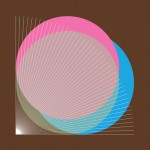
There is also a satisfying sense of continuity between the three "Sequence" albums, not simply in their musical vocabulary but in the conceptual and visual identity of the project. The titles themselves draw inspiration from vintage science and technology publications collected by Lasek and Goreas, while Ian Ilavsky's geometric artwork gives the trilogy a coherent visual framework. This attention to the physical presentation is particularly appropriate for a project so concerned with the tactile possibilities of electronic instruments. In an era when music increasingly exists as an intangible collection of files floating somewhere between streaming platforms and forgotten hard drives, Light Conductor clearly appreciate the appeal of an actual record as an object.
Ultimately, "Sequence Three" succeeds because it understands that atmosphere is not merely a question of creating beautiful sounds and allowing them to linger indefinitely. It requires architecture, tension, contrast and, above all, a sense of direction. Light Conductor have refined their approach considerably over the course of this trilogy, finding an increasingly distinctive relationship between improvisational freedom and meticulous studio craftsmanship. The result is music that can be simultaneously comforting and disquieting, familiar and alien, emotionally accessible and stubbornly resistant to conventional interpretation.
Five years have passed since "Sequence Two", but the intervening period seems to have done little to diminish the duo's fascination with the possibilities of analogue sound. If anything, they have become more confident in allowing their compositions to develop without unnecessary interference. There are no spectacular revelations here, no desperate attempts to reinvent a formula that was already working, and certainly no obligation to provide the listener with a convenient emotional conclusion. Instead, "Sequence Three" completes its intended cycle with considerable intelligence and a welcome refusal to confuse grandeur with bombast.
A trilogy ends, the machines fall silent, and somewhere in Montréal two musicians presumably switch the hockey back on. Meanwhile, five pieces of carefully organised cosmic uncertainty remain available for the rest of us. Not the worst possible outcome for an afternoon spent contemplating the eventual heat death of the universe.
Tilman Kanitz: Tiere

The transformation is not merely a technical stunt. Kanitz preserves the temporal order of the processed material, removing selected sections but refraining from rearranging or looping it, with one exception at the beginning of the second side. This decision gives the two pieces a particular kind of internal logic: rather than composing through conventional repetition or development, he allows the consequences of the algorithms to unfold according to their own chronology. The source recording is stretched, layered and filtered, while frequencies originally outside the range of human hearing or ordinary playback are shifted into an audible register. What emerges is a peculiar form of magnification, although the metaphor of a microscope is perhaps insufficient. A microscope enlarges what is already there; "Tiere" also changes the conditions under which its subject can be perceived.
The opening question, then, is not whether we can recognise the ibex. We cannot, at least not in any straightforward sense. Its whistle has been reduced to a distant point of departure, buried beneath granular deposits, spectral fluctuations and digital irregularities. The animal is no longer represented through an identifiable call, but through the consequences of that call passing into a technological system. This raises an interesting problem of authorship. The original sound belongs to a non-human creature, the algorithms determine much of its subsequent behaviour, and Kanitz decides which results to retain and how to present them. The finished work belongs to none of these participants exclusively. It occupies the rather uncomfortable territory where natural occurrence, technological intervention and human aesthetic judgement overlap.
That territory is familiar to Kanitz, whose professional background is unusually well suited to this kind of investigation. A trained cellist, he studied in Lübeck, Freiburg and Cologne before completing his studies at the University of Southern California. He subsequently performed in opera orchestras in Germany and Switzerland, before becoming artistic director of Berlin's Solistenensemble Kaleidoskop, a position he held until 2019. His work with the ensemble involved exploring relationships between classical repertoire, contemporary composition, improvisation and electronic music, often incorporating choreography, lighting and spatial installation. His interest in the conditions of performance and listening therefore predates this solo recording. "Tiere" simply removes the performers, the stage and most of the recognisable musical instruments, leaving a single acoustic event to undergo an almost geological process of alteration.
The two sides, “Tiere I” and “Tiere II”, are presented as separate algorithmic versions rather than conventional compositions with contrasting themes. Their relationship is consequently more procedural than narrative. The listener is invited to compare different outcomes generated from the same fragment, paying attention to changes in density, frequency distribution and texture. There is a certain irony in the fact that the source is so brief while the resulting pieces demand such extended attention. A goat, or more precisely an ibex, contributes a tenth of a second of vocal activity; the human response requires more than forty minutes and a considerable tolerance for sounds that refuse to behave like music in any familiar sense. The animal, meanwhile, presumably has other things to do.
The setting of the original recording adds another layer to the work. The whistle was captured in the high Alps, beneath a melting glacier. That detail might invite an ecological reading, particularly given the environmental implications of a changing alpine landscape, but Kanitz wisely avoids turning the recording into an illustrative soundtrack for climate anxiety. The glacier is not presented as a dramatic symbol, nor does the animal become a convenient spokesperson for nature. Instead, the location establishes a physical context for a sound that subsequently loses almost every recognisable geographical feature. The result is not a portrait of an endangered environment, but an examination of how little of the original event may survive once it enters the machinery of artistic interpretation.
There is also a productive tension between the album's conceptual precision and its sensory opacity. Knowing that everything originates from a single whistle provides a fascinating framework, but it does not necessarily make the listening experience easier. The transformations can become difficult to distinguish from one another, and the absence of conventional rhythmic or melodic reference points places considerable weight on the listener's willingness to follow minute changes in texture. At times, the procedural premise threatens to become more compelling than the audible material itself. This is a genuine limitation, especially for anyone expecting the extended duration to produce a clear dramatic arc. The record offers no such reassurance. Its development is largely a matter of microscopic variation, and patience is not merely recommended; it is practically part of the equipment.
Yet "Tiere" succeeds precisely because it does not attempt to turn its conceptual foundation into an explanatory lecture. Its most interesting proposition concerns the instability of listening itself. The sound we hear is neither the original animal call nor a neutral record of what an algorithm has done to it. It is the product of successive decisions about what can be amplified, retained, removed and considered significant. Even the apparently objective act of magnification becomes an artistic intervention. The technology reveals information, but it also produces a new object that never existed in nature in quite this form.
There is something quietly unsettling about that transformation. We begin with an animal making a brief sound in a specific place, and end with two lengthy electroacoustic works whose connection to the original event is almost entirely dependent on our knowledge of their origin. "Tiere" asks us to consider whether listening is an act of discovery or a process of construction, and whether the distinction can ever be maintained. Kanitz does not offer a reassuring answer. Instead, he gives a tiny animal utterance an extraordinarily long afterlife, one in which the creature itself has almost disappeared. It is a strange monument to a sound that was never intended to become one.
Håvard Wiik Trio: Hic Sunt Leones
Artist: Håvard Wiik Trio
Title: Hic Sunt Leones
Format: LP
Label: Sonic Transmissions Records (@)
Rated:

Title: Hic Sunt Leones
Format: LP
Label: Sonic Transmissions Records (@)
Rated:
There is a particular pleasure in hearing a piano trio that knows exactly how much trouble it can cause without ever losing its manners. On "Hic Sunt Leones", Norwegian pianist Håvard Wiik, double bassist Ole Morten Vågan and drummer Håkon Mjåset Johansen demonstrate an unusually close musical understanding, but familiarity has done little to make them predictable. Their compositions provide recognisable points of departure, often with the elegance and harmonic vocabulary associated with modern post-bop, before the three musicians begin altering the proportions, redirecting the rhythmic emphasis and introducing complications that seem to arrive with suspiciously impeccable timing. The music is energetic, sophisticated and frequently mischievous, with the sort of rhythmic intelligence that makes some apparently straightforward passages feel like elaborate practical jokes.
The trio's history stretches back to the mid-2000s, when this particular combination of musicians began developing its own repertoire. "The Arcades Project" appeared in 2007, followed by "This Is Not a Waltz" in 2018. The long interval between those releases might suggest an occasional undertaking, but the musical relationship has continued through years of performances and other collaborations. Wiik, born in Kristiansund in 1975, has been an important figure in Norwegian jazz since his late teens. He first attracted attention at Moldejazz in 1992, subsequently studying at the Trondheim Conservatory before becoming a founding member of Element and, later, the celebrated Norwegian-Swedish ensemble Atomic. His work with musicians such as Ken Vandermark, Ingebrigt Håker Flaten and Paal Nilssen-Love has placed him in the more adventurous reaches of contemporary jazz, although his own compositions have consistently retained a strong melodic and structural awareness. Vågan and Mjåset Johansen are equally substantial figures in the Norwegian scene, both with extensive experience in improvising groups and larger ensembles. Their collective history gives this trio a depth that cannot be acquired through a few enthusiastic rehearsals and a shared hotel breakfast.
The opening “Pentimento” makes a persuasive case for the album's approach. Wiik begins with a graceful, almost lyrical piano figure, supported by Vågan's economical bass and Johansen's fluid drumming. The apparent ease is deceptive. The harmony gradually darkens, the bass introduces a more unsettled movement and the drums increase the pressure without resorting to brute force. Rather than developing into an extended display of instrumental aggression, the piece repeatedly changes its relationship with the opening material. Its four minutes contain a remarkable amount of structural activity, yet nothing feels hurried or unnecessarily demonstrated. The trio understands that tension is often more effective when it is allowed to accumulate rather than announced with a cymbal crash and a press release.
Five short piano solos, each titled “Uncharted” and numbered consecutively, interrupt the larger ensemble pieces. They are not simply decorative pauses or opportunities for Wiik to remind everyone that he can play without assistance. Their placement gives the album a distinctive rhythm of its own, alternating the trio's dense collective activity with more exposed passages. The first is brief and animated, with quick figures that gradually loosen their initial momentum. Later instalments offer different shades of introspection and abstraction, providing a useful counterweight to the ensemble's more turbulent episodes. These interludes also reveal how much Wiik's playing depends on touch, articulation and an acute awareness of silence. His technique is formidable, but the most interesting details often occur when he chooses not to fill every available space.
“A Parliament of Owls” is one of the album's more engaging ensemble pieces, with a playful relationship between its melodic material and the shifting rhythmic patterns beneath it. The title might suggest a gathering of dignified nocturnal philosophers, but the music is considerably less solemn. Its phrases bend, collide and briefly assume unexpected directions, while the rhythm section keeps the whole affair moving with remarkable precision. “Radar KL” is similarly alert, its shifting accents and sharply defined piano figures creating a sense of constant adjustment. The trio's rhythmic language is complex without becoming an exercise in arithmetic. There is a genuine physical pleasure in the way the musicians negotiate these changes, and the listener does not need to count every beat to appreciate the intelligence behind them. Those who insist on doing so are welcome to bring a calculator, although it may not help.
“Omnistrain” brings a more forceful energy, with the piano and drums pushing against one another while Vågan provides a bass foundation that is anything but passive. His playing is particularly important throughout the album. Rather than functioning as a discreet harmonic support, the double bass frequently redirects the music, introducing rhythmic suggestions and melodic details that alter the character of the piano's phrases. Johansen, meanwhile, is a wonderfully responsive drummer, capable of shifting from buoyant propulsion to intricate accents without making the transitions feel mechanical. The three musicians are sufficiently familiar with one another to anticipate possibilities, but they also leave room for genuine surprise.
“From the Haptic to the Optic K” is the album's most reflective piece, with a more linear development and a gentler approach to melodic expression. Its title hints at a conceptual dimension, but the music does not require an explanatory manual. The trio allows the composition to breathe, giving Wiik's piano more room to develop its ideas without the usual rhythmic complications. It is an important moment of contrast, particularly because the surrounding material is so animated. “Baudelaire's Cat” returns to a more elusive character, with a title that seems to promise literary elegance and feline inscrutability in roughly equal measure. The music offers both, though perhaps with a little more mischief than the poet might have anticipated.
The closing “The Ballad of Toshi and Yoko K” is another substantial piece, and its title invites an obvious but misleading association with John Lennon and Yoko Ono. The reference is instead connected to Japanese composer and pianist Toshi Ichiyanagi, who was once married to Ono and studied with John Cage. The distinction is worth making, if only to prevent the listener from expecting a Norwegian jazz interpretation of a familiar Beatles anecdote. Musically, the piece provides a fitting conclusion, bringing together the trio's interest in melodic form, rhythmic flexibility and collective improvisation. It has the scope of a ballad without being constrained by the conventions of one.
The album's central achievement is the balance it maintains between compositional discipline and spontaneous interaction. The music is certainly demanding, but its complexity is never presented as a qualification test for the audience. Wiik's writing gives the trio enough material to work with, while the musicians' long-standing rapport allows them to move beyond the obvious possibilities of each theme. There are occasional moments when the density of rhythmic and harmonic activity threatens to make individual pieces feel slightly overpopulated, but the short piano interludes and more spacious passages prevent the album from becoming an uninterrupted demonstration of technical capability.
"Hic Sunt Leones" is a confident statement from a trio whose members have little left to prove individually, yet still seem genuinely interested in discovering what happens when they play together. Its intelligence is matched by a sense of humour, its virtuosity by a willingness to leave things unresolved, and its more adventurous passages by a strong affection for melody. The lions in the title are not particularly interested in frightening anyone. They are simply keeping the musicians alert, which is probably a more useful arrangement. After all, even the most accomplished pianist occasionally needs something to keep him on his toes.
David J: Postcards From The Afterlife
Artist: David J (@)
Title: Postcards From The Afterlife
Format: CD & 12" + Download
Label: Label 51 Recordings (@)
Rated:
Title: Postcards From The Afterlife
Format: CD & 12" + Download
Label: Label 51 Recordings (@)
Rated:
There is something rather revealing about the fact that David J has chosen to call this album "Postcards From The Afterlife". A postcard is a modest object, usually sent to reassure someone that you are still around, even when you have temporarily disappeared from their immediate surroundings. The afterlife, on the other hand, is not generally associated with reliable postal services. Yet the title captures the record’s central preoccupation with the persistence of relationships beyond physical presence, and with the peculiar ways in which people continue to inhabit our thoughts long after circumstances, distance or death have intervened. It is an album about absence, certainly, but also about the stubbornly human habit of maintaining correspondence with it.
David J, born David John Haskins in Northampton, has spent much of his career writing from the darker and more theatrical corners of popular music. As bassist and co-songwriter in Bauhaus, he helped establish one of post-punk’s most enduring vocabularies; with Love and Rockets, he moved towards a more expansive and melodic form of alternative rock. His subsequent solo work, theatrical projects, collaborations and 2014 memoir, "Who Killed Mister Moonlight?", have revealed an artist whose interests extend well beyond the familiar territory of either band. There is also a literary quality to his songwriting, a taste for character, anecdote and the slightly disreputable detail that can turn a personal recollection into something resembling a short story. "Postcards From The Afterlife" draws heavily on that ability.
The opening “The Lonesome Death Of Cole Berlin” establishes the album’s fascination with people whose lives have acquired an afterlife of their own. Its subject is Jobriath, the flamboyant American musician and actor whose career was marked by extravagant ambition, public indifference and a tragic final chapter. J wrote the song while staying at New York’s Chelsea Hotel, reflecting on the building that once housed Jobriath’s apartment and the strange transformation of its surroundings. The detail of the former residence becoming an upscale gym, where the ghost of Jobriath might conceivably appreciate the new occupants, gives the story a typically irreverent twist. It is an appropriately theatrical opening, and one that makes clear that remembrance need not be solemn to be sincere.
The album then moves through a remarkably varied collection of emotional registers. “Hurt You”, produced by Robert Margouleff and co-written with Julian Shah-Tayler, addresses the difficulties of leaving one relationship and entering another without pretending that such transitions can be conducted with the efficiency of a change of address. “Heart Beneath My Hand” is dedicated to J’s partner Darenzia, while “Laid That Gold Band Down” and “Where Did Our Rainbows All Go?” approach the end of a marriage from different angles, the former particularly candid about the awkward compromises and lingering tenderness that can survive separation. These songs are personal without being sealed inside private experience. Their subject is not simply the mechanics of romantic attachment, but the complicated business of caring for people while accepting that the shape of a life has changed.
Elsewhere, the past becomes less intimate and more communal. “After-Hours In The Aftermath” and “Quelle Tristesse” concern the late Pat Fish, David J’s friend and former colleague in The Jazz Butcher. The latter brings together several musicians from Fish’s earlier circle, including Max Eider, Rolo McGinty and Owen Jones, turning the act of tribute into a gathering of people who shared some portion of the same history. The football reference to Danny Blanchflower, Tottenham Hotspur’s celebrated captain, is another of those small, wonderfully specific details that make grief feel lived rather than ceremonially presented. Fish apparently carried a framed photograph of Blanchflower wherever he went; such an object can say more about a friendship than a paragraph of solemn adjectives ever could. The title track’s central idea emerges here in its most tangible form: the dead occasionally return through dreams, old letters and objects that surface unexpectedly from the accumulated debris of everyday life.
Northampton also makes an appearance in “Halcyon Haven In Blue”, a lament for Midsummer Meadow and the destruction of places once considered beautiful or sacred. The subject broadens into a criticism of redevelopment driven by greed, and of the casual demolition of collective memory in the name of progress. It is a familiar theme, but one with particular weight in an album so concerned with what remains after something has been lost. “Her Name Was Yesterday”, meanwhile, takes a more dreamlike route, expanding a musical sketch by Richard Ellis with spoken-word contributions from Vanessa Matic, piano by the late Gregg Foreman, trumpet from Dan Clucas and string arrangements by Gregory Allison. Its late-sixties orchestral-pop references, with Scott Walker among the more explicit points of reference, suggest an artist still interested in the expressive possibilities of elaborate arrangement rather than treating nostalgia as a decorative finish.
The record is not confined to private histories. “Tag On The Toe” addresses the rupture of an old friendship after a dramatic political shift, a subject that has become painfully common in an age when ideological divisions increasingly invade family gatherings and personal relationships. “Requiem For The Rose Garden” is more openly confrontational, using the White House garden as both a literal site of destruction and a symbol of the political damage David J associates with the Trump administration. The song was first conceived during Trump's earlier term and subsequently revised in response to the current climate. Backed by Detroit musicians Duende, it brings the album’s political concerns into direct focus. “Morose”, which emerged spontaneously during sessions for "Tracks From The Attic Revisited", continues that critical thread. There is a certain value in allowing political anger into a record otherwise occupied with intimate recollection: the personal and the public are not separate territories, however much contemporary discourse would prefer to keep them in conveniently labelled compartments.
The closing “Walking With The Angels” provides the album with its largest gesture. Recorded in Prague with musicians drawn from the city’s Symphony and Philharmonic Orchestras, and arranged and conducted by Jan Valta, it brings together the orchestral ambitions that surface elsewhere on the record. Its origins are unusually spontaneous: the sessions had originally been booked for another project that collapsed, leaving an orchestra available and an artist with a night to turn frustration into a song. The result, according to the account of its making, was written almost overnight, with the vocal recorded in a single take. It is a fittingly improbable ending for a record built around the unpredictable ways in which experience becomes material.
There is an obvious risk in an album assembled from so many autobiographical episodes and musical approaches. Fourteen songs can easily become a crowded collection of footnotes, each one demanding that the listener understand the circumstances behind it. David J largely avoids that trap by allowing the songs to retain their individual identities while returning to a common concern: the ties that survive change, the people who remain present through memory, and the places whose disappearance alters our sense of belonging. The stylistic variety, from soul and alternative rock to chanson and orchestral pop, reflects the range of the stories rather than an attempt to demonstrate versatility for its own sake. His eclecticism has roots in a long career, but here it serves a clear emotional purpose.
The album’s title might suggest a collection of messages from beyond the grave, but its real subject is the living, and the strange persistence of attachment in the face of endings. David J does not present remembrance as a clean or comforting process. It is sometimes funny, sometimes awkward, occasionally angry, and often inseparable from the less flattering details of ordinary life. That makes "Postcards From The Afterlife" more interesting than a conventional exercise in nostalgia. Its ghosts have personalities, football loyalties, political opinions and unfinished business. Some are missed, some are mourned, some are argued with, and a few might still have something to say about the state of the world. The post is clearly unreliable, but the messages keep arriving.
Juliana Venter: Home Galactic
Artist: Juliana Venter
Title: Home Galactic
Format: CD + Download
Label: Sonic Transmissions Records (@)
Rated:
Title: Home Galactic
Format: CD + Download
Label: Sonic Transmissions Records (@)
Rated:
There is something rather audacious about making a solo album for voice alone. It removes almost every familiar means of musical camouflage: no rhythm section to provide momentum, no harmonic instrument to offer shelter, no production trickery to turn uncertainty into atmosphere. Juliana Venter takes this exposure a step further by recording "Home Galactic" inside a water tower on Nesodden, Norway, relying entirely on the natural acoustics of the building. No added effects, no electronic treatments, just the voice and the sound of the space responding to it. The result is an unusually intimate yet physically expansive work, in which a single performer seems capable of occupying several dimensions at once.
Venter is hardly a newcomer to adventurous music. Born in Pretoria and raised in South Africa and Namibia, she studied opera before becoming involved with The Mud Ensemble, the politically outspoken Johannesburg collective that helped shape South Africa's avant-garde performance scene during the 1990s. Her subsequent career has moved through contemporary composition, free improvisation, jazz, theatre and experimental music, with collaborations including Paal Nilssen-Love Circus and saxophonist Rolf-Erik Nystrøm. Her classical training is evident in the control and range of her vocal technique, but it has never confined her to conventional ideas of singing. She can move from an almost operatic clarity to fractured utterances, guttural sounds, breath-driven gestures and passages that seem to emerge from a place considerably older than formal musical education. The voice here is not simply delivering a melody; it is an entire physical vocabulary.
The album's central concern is the meaning of home, a subject that becomes less straightforward the more countries one has lived in. Venter's reflections on immigration are neither sentimental nor particularly interested in the usual rhetoric of cultural exchange. She describes the experience of feeling invisible, unwelcome or somehow out of place in Europe, while finding that a return to Johannesburg in 2011 offered no simple restoration of the world she remembered. What remained were smells, weather, animals, languages, landscapes and the warmth of human encounters. These details matter because they prevent the album's international references from becoming a decorative catalogue of exotic influences. Venter is not collecting cultural souvenirs. She is trying to understand how the music and traditions encountered throughout her life have become part of her own identity, even when the idea of belonging to a single society has grown increasingly elusive.
The opening “Rev It Again” establishes the album's confrontational side. Its repeated vocal gestures evoke the mechanical insistence of propaganda, but the piece also carries a political demand not to let historical atrocities become comfortably distant. The title track, a substantial fifteen-minute composition, is the album's most ambitious statement. Venter moves between languages, vocal styles and references to different musical traditions, including the Central Asian practice of shashmaqam and the rhythmic articulation of konnakol. Afrikaans poetry by N.P. van Wyk Louw and material derived from Eugène Marais enter a work that confronts antisemitism, censorship and the contradictions of political rhetoric. Its scale is not merely a question of duration: the piece feels like a compressed personal history, with the voice repeatedly changing its manner of address as though trying to find a language adequate to the world it describes.
The short “Shaban al-Dalou” is among the album's most painful moments. Sung in Arabic, it remembers the nineteen-year-old Palestinian who was burned alive during an Israeli attack on Al-Aqsa hospital in Gaza. Venter frames the piece as a plea for forgiveness from a world that abandoned him. There is no attempt to turn this tragedy into an abstract symbol or to soften its political implications through musical prettiness. The brevity of the track makes its impact particularly severe. “The Scream Inside” follows with a more instinctive vocal expression, while “Bebop Suicide” takes a sharply different route, treating the life of a jazz musician with mordant humour. Breath, spit and sweat become the essential materials of performance, and the piece's irreverence suggests that artistic defiance need not always wear a solemn expression. Sometimes it can arrive looking rather dishevelled.
“Du Må Ikke Sove”, based on the Norwegian poet Arnulf Øverland's warning against indifference in the face of injustice, gives the album another direct political dimension. Written in 1937, the poem acquired particular significance during the resistance to Nazi occupation, but Venter's decision to revisit it is clearly directed towards the present as well. The warning has not become obsolete; humanity has simply developed an impressive capacity for ignoring familiar lessons. “My Dream Goes Wandering” is more elusive, incorporating haiku by Matsuo Bash in Japanese alongside Zulu material. Its reflections on mortality eventually give way to a distinctly South African expression of defiance, an irreverent dismissal of death that prevents the piece from becoming an exercise in solemn spiritual contemplation.
The traditional instruments used on the album are introduced with considerable restraint. On “Jeg Venter Her”, Venter plays the Umrhubhe, the musical bow associated with the AmaXhosa people, while “My Dream Goes Wandering” features the Makhoyane bow from Eswatini. A water bowl and bell also appear, subtly altering the acoustic character without displacing the voice as the central presence. “Krimanchuli”, meanwhile, draws on a traditional Georgian folk song and introduces a water-bowl accompaniment, bringing another cultural reference into the album without treating it as an ornamental interlude. These instruments feel integral to the work's conception: they are not there to demonstrate the breadth of Venter's research, but to make audible some of the musical relationships that have shaped her life.
The closing sequence is particularly affecting. Rilke's “Ende des Herbstes” turns towards the passage of time and the continuing renewal of nature, before “The Return Home” concludes the album with a field recording made during a trip to Mozambique. Crickets and frogs provide the music of a swamp, accompanied by the memory of a journey shared with a lover. After the intensity of the preceding material, this ending feels almost disarmingly ordinary. No grand conclusion is required; the natural world is already performing its own composition, apparently without needing a grant application or a press release.
There are risks in an undertaking of this kind. A voice-led album that moves through so many languages, literary references and political concerns could easily become overburdened by its own intentions. At times, the succession of ideas is so dense that individual pieces seem to carry more contextual weight than their musical development can fully accommodate. The natural reverberation of the tower also creates a distinctive acoustic environment that, while central to the album's identity, can occasionally make the material feel more unified in texture than in dramatic shape. Yet these reservations are inseparable from the work's ambition. Venter is not trying to construct a conventional song cycle, and the album's shifts between lyricism, improvisation, ritual, satire and protest reflect a life that has never followed a particularly tidy narrative.
What makes "Home Galactic" compelling is the refusal to separate personal experience from political awareness, or musical curiosity from the responsibilities of remembering. Venter's voice can be tender, abrasive, playful, wounded and fiercely direct, sometimes within the same piece. It carries poetry from several continents, but also the marks of a particular biography, one shaped by displacement, historical violence and the continuing search for a place in which one can feel at ease. The title may suggest that home is somewhere beyond the limits of geography, but the album arrives at a more complicated proposition: perhaps home is not a territory one can reclaim, but something one continues to make from the languages, sounds and people that have entered one's life. In Venter's case, the resulting universe happens to fit inside a water tower. It is a remarkably crowded place, and not one that needs additional furniture.