
Wednesday, October 28, 2026
Browse by Genre
Industrial Music / Industrial Metal / Aggro Industrial / Electro Metal
Industrial Noise / Power Noise / Harsh Noise
Synth Pop / Electro Pop / Synth-Electronica
Techno / Trance / Goa / Drum'n'Bass / Jungle / Tribal / Trip-Hop
Ambient / Electronica / Ethereal / Dub / Soundscapes / Abstract
Experimental / Avantgarde / Weird & Wired / Glitch / Noise / Field Recording
Dark / Gothic / Wave / New Wave / Dark Wave / Industrial Gothic
New Music / Downtown / Avantgarde Jazz / New Classical / World
Search Reviews
Music Reviews
Marie Delprat: What Remains After Desire

Artist: Marie Delprat
Title: What Remains After Desire
Format: Download Only (MP3 + Lossless)
Label: -OUS (@)
Rated:


Title: What Remains After Desire
Format: Download Only (MP3 + Lossless)
Label: -OUS (@)
Rated:
Desire gets a disproportionate amount of cultural attention. It has inspired operas, pop songs, bad decisions, excellent novels and an alarming number of messages sent after midnight. What happens afterwards receives considerably less publicity. Once the fever subsides, the object of longing loses its supernatural powers, and the emotional machinery that kept us moving begins to wind down, we are left with fatigue, uncertainty and the rather inconvenient task of living with ourselves. French musician and performer Marie Delprat makes this aftermath the subject of "What Remains After Desire", a three-track EP whose brief duration conceals a surprisingly substantial set of questions. Its electronic pop inhabits the territory between intimacy and estrangement, drawing on Baroque music, synthetic voices, bass synthesizers and minimal rhythmic structures to investigate the unstable relationship between feeling and its representation.
Delprat's background helps explain why this combination feels considered rather than decorative. Trained in recorder and early music at the Centre de musique baroque de Versailles and the Bern University of the Arts, she subsequently moved away from the relative certainties of structured musical systems towards improvisation, composition and performance. Her work has since explored the intersections of electronic sound, theatrical identity and the visual arts. The solo album "Life Is Sick", released on Unvague in 2023, established a practice attentive to literary and psychological material, while her project "Ethereal Realms – all fiction is metaphor" (2024) drew on Ursula K. Le Guin's "The Left Hand of Darkness" to develop a symbolic figure through which questions of identity and difference could be approached. Selected for the SHAPE+ platform in 2025, Delprat has continued to explore these concerns through hybrid performance formats, including her audiovisual collaboration with Tom Lane, "I Dreamt of Fire". On the present EP, her classical education supplies a particularly useful point of departure: Baroque music understood not as a museum exhibit, but as an art of making emotions legible through elaborate forms.
The comparison with pop is more revealing than it might initially appear. Both the Baroque aria and the contemporary song can concentrate an extravagant emotional situation into a relatively short span, using repetition, ornament and a carefully shaped vocal line to make an experience feel immediate. Delprat takes this principle into electronic territory, where the voice can be intimate and artificial at once. Synthetic layering complicates the familiar association between a human voice and a stable, knowable identity. What sounds personal may also be constructed; what feels fragile may owe its effect to meticulous technical decisions. The artifice does not necessarily diminish the emotion. It exposes the strange fact that emotional expression has always depended on some kind of staging, whether that means an operatic costume, a microphone, an autotuned vocal or the carefully rehearsed declaration that one is absolutely fine.
"Haboob" opens with a title referring to a powerful dust storm, and the music seems to take its cue from the instability of such a phenomenon. Inspired by the writing of Ariana Reines, Delprat considers exposure as both danger and an opportunity for transformation. The track's compact two-minute form does not attempt a literal sonic depiction of wind or sand. Instead, its electronic textures and vocal elements create an impression of vulnerability under pressure, a sensation of being caught in forces that cannot be controlled simply by naming them. There is an interesting contradiction here: the music is carefully shaped, yet its atmosphere suggests a loss of control. That tension makes the piece more compelling than an uncomplicated meditation on fragility. The storm is not merely an obstacle to be endured; it alters the conditions under which survival becomes possible.
The short duration also gives "Haboob" a quality of concentrated exposure. It arrives, establishes its emotional climate and withdraws before the listener can settle comfortably into it. There is no grand catharsis, no cinematic scene in which the clouds part at precisely the right moment. Delprat seems more interested in the moment when the self can no longer maintain its usual protective arrangements. Vulnerability, in this setting, becomes a form of attention: an awareness of one's surroundings and limitations rather than a performance of helplessness. It is a quietly political idea, especially in a culture that routinely treats invulnerability as proof of competence and exhaustion as a personal failure.
"Dust in my veins" turns towards fatigue, drawing on philosopher Éric Fiat's reflections on weariness as a consequence of caring, creating and participating fully in life. The title supplies a pleasingly uneasy image. Dust suggests what accumulates when movement slows, but veins imply circulation, vitality and the stubborn continuation of biological processes. The body is simultaneously depleted and alive, with no neat boundary between the two conditions. Delprat's electronic treatment reinforces this friction, placing the voice within a synthetic environment that can feel both supportive and oppressive. The resulting atmosphere is not simply mournful. There is energy in the music, but it seems to be energy spent rather than freshly generated, like the last electrical flicker of a device that has been left running long after everyone has gone home.
The subject could easily invite a familiar romanticisation of burnout, that fashionable idea that exhaustion is evidence of having lived more intensely than everyone else. Delprat's approach is subtler. Weariness emerges as the cost of involvement, and the possibility of recovery depends on recognising that cost rather than turning it into a badge of honour. The track's relationship between organic voice and electronic manipulation gives this idea a musical dimension: the voice remains expressive while being fractured and reshaped by the technology surrounding it. Its vulnerability is therefore neither wholly natural nor entirely simulated. It occupies the uneasy space where actual feeling meets the means by which feeling becomes audible. The title's dust is not just the residue of something finished. It is also part of the substance through which life continues.
With "Yous", Delprat approaches identity through the poetry of Kae Tempest, whose work frequently examines the self as something mutable, contradictory and shaped by relationships. The pluralised title is an effective little disturbance. A single self would be easier to catalogue, introduce at parties and maintain across social media accounts. Several selves complicate the administrative process. Yet the track treats this multiplicity as a condition of human connection rather than a defect requiring correction. Its longer running time, three minutes and forty-three seconds, allows the EP to move towards a more sustained consideration of voice, intimacy and transformation. Layers of synthetic sound create an environment in which the voice can seem to multiply, blur or slip away from any singular identity.
The emotional implication is not that identity is meaningless, but that it is continually negotiated. We change according to circumstance, encounter and memory, and the person we recognise as ourselves is partly assembled from these successive versions. Delprat's electronic treatment makes this fluidity audible without reducing it to a tidy conceptual illustration. The voice is at once a means of communication and a sound object, something that can reach another person while remaining difficult to pin down. There is tenderness in this ambiguity, although it is not the soft-focus tenderness of a reassuring conclusion. Connection requires a willingness to encounter people whose identities cannot be reduced to a convenient summary, including the versions of ourselves that we might prefer to disown.
Across its three pieces, "What Remains After Desire" is united by a concern with the distance between an emotion and the form through which it becomes perceptible. Delprat's Baroque inheritance matters here because ornament and structure are not simply historical references; they offer a way to think about how feeling is shaped, intensified and sometimes concealed. Her electronic palette introduces a further complication, making the voice feel both bodily and manufactured. Noémi Büchi's mixing and Maurizio Borgna's mastering help define the recorded space in which these elements interact, while Delprat retains a strong sense of authorship through her writing and production.
At just over eight minutes, the EP is too brief to exhaust its subject, but that brevity is appropriate to music concerned with what survives an intense experience. These tracks do not offer three stages of a therapeutic programme, complete with a worksheet and a certificate of emotional resilience. Instead, they leave their questions partially open. What remains after desire may be fatigue, but fatigue can testify to care; exposure can be frightening, but it may also loosen the defences that prevent contact; the self may change repeatedly without losing its capacity for intimacy. Delprat's achievement lies in allowing these ideas to inhabit the music without forcing every sound to behave like a philosophical footnote. The result is a delicate, sometimes disquieting piece of electronic avant-pop, in which artificial voices carry recognisably human uncertainties. Desire may be an excellent publicist, but Delprat gives the aftermath a voice of its own.
Kr-Krr (Nathalie Forget & Gilles Aubry): Nebulage

Artist: Kr-Krr (Nathalie Forget & Gilles Aubry) (@)
Title: Nebulage
Format: Tape + Download
Label: Sirr Records
Rated:
Title: Nebulage
Format: Tape + Download
Label: Sirr Records
Rated:
There is something wonderfully unsettling about the Ondes Martenot, an electronic instrument whose gliding tones can sound like a human voice remembering a language it never learned. Created by Maurice Martenot in 1928, it emerged from an era when electricity still carried the promise of genuinely alien musical possibilities. Nearly a century later, it remains capable of making the familiar world seem faintly supernatural. On "Nebulage", Nathalie Forget and Gilles Aubry put this peculiar instrument into conversation with its own digital double, creating six improvisations in which physical performance and computer modelling continually blur the distinction between an original and its imitation. The result is a shifting, occasionally disquieting sound world in which electronic signals seem to acquire their own forms of life, as if the machinery had begun dreaming while its operators were briefly distracted.
The duo's name, Kr-Krr, already suggests a small collision between language and noise: a syllable trying to emerge from static, perhaps, or a frog with an unfortunate electrical problem. That impression fits the music rather well. Forget plays the Ondes Martenot, while Aubry works with computer and modular synthesizer, using a virtual reconstruction of the instrument developed through physical modelling in Max/MSP. The software can reproduce aspects of the Ondes' characteristic sound while also stretching its possibilities beyond the behaviour of the physical instrument. The two performers therefore share a common sonic vocabulary without necessarily speaking the same dialect. One works through the tactile decisions of a player; the other can manipulate the instrument's electronic identity at a more fundamental level.
Forget is exceptionally well placed to explore this relationship. A leading exponent of the Ondes Martenot, she studied at the Conservatoire National Supérieur de Musique et de Danse de Paris, where she received its highest distinction for the instrument, and has performed with major orchestras and conductors across the international classical circuit. Her repertoire encompasses composers such as Olivier Messiaen, Edgar Varèse, Arthur Honegger and Tristan Murail, while her collaborations also extend into improvisation and rock, including work connected with Faust and Radiohead. Since 2016, she has taught the Ondes Martenot at the Paris Conservatoire. Aubry approaches the same territory from a different direction: a sound artist and musician associated with Berlin's noise collective MONNO, he works with field recordings, computer programming and electronic manipulation, across music, installation, film and radio. His broader practice is concerned with how sound acquires meaning through technology, environment and cultural context. Their meeting feels less like a stylistic compromise than a productive collision between two distinct ways of thinking electronically.
The opening "Acousmatic Frog" introduces an atmosphere in which the biological and the synthetic become difficult to separate. Its title suggests an animal heard without being seen, a useful description of music that invites the imagination to identify sources while withholding enough information to make identification unreliable. Chirps, wavering tones and unstable textures suggest a world populated by creatures whose anatomy might consist of sine waves and electrical components. The effect is playful without becoming whimsical, and eerie without resorting to the predictable vocabulary of horror sound design. There is no need for a soundtrack composer to add a sudden bass impact and announce that something terrible is approaching. The sounds themselves are strange enough, particularly when they appear to imitate one another without quite agreeing on the rules.
Then comes "Cross voltage", the album's twenty-two-minute centre of gravity. Its extended duration allows the duo to explore the tension between sustained tones and abrupt changes, between passages of near-stasis and sudden surges of activity. The Ondes Martenot's gliding pitches and expressive vibrato can suggest breath, vocalisation or the cry of an animal, but Aubry's digital counterpart unsettles these associations. A sound may appear to have a physical source, only to become more abstract as its electronic properties are altered. Conversely, an unfamiliar texture can acquire a curiously organic quality through the way it bends, trembles or interacts with another sound. The music repeatedly moves across this boundary, resisting the comfort of knowing whether one is listening to an instrument, an imitation or something that has emerged from the friction between them.
This is where "Nebulage" becomes more than a demonstration of the Ondes Martenot's distinctive timbre. The virtual instrument is not simply a convenient substitute for an expensive piece of historical equipment, and the physical instrument is not merely a nostalgic object being preserved for future generations of electronic-music enthusiasts. Their coexistence raises a more interesting question: how much of an instrument's identity resides in its material construction, and how much can survive transformation into software? A digital reconstruction can preserve recognisable features while opening new possibilities for distortion and control. Meanwhile, the physical instrument brings the irregularities of touch and performance, the small decisions that make a gesture feel immediate. Neither side has a monopoly on authenticity. The music gains its character from the uncertainty between them.
"Radio animal" shifts attention towards the suggestion of distant transmissions and biological calls. Its title evokes a creature communicating across an invisible network, or a radio receiver that has accidentally tuned into a form of life previously omitted from the scientific literature. Aubry's experience with sound processing and experimental electronics makes this territory particularly appropriate, while Forget's instrument provides an expressive counterweight to the more abstract electronic textures. Their interaction creates a sense of communication without a stable message. Sounds answer one another, overlap and break apart, but the listener is left to imagine what, if anything, is being exchanged. This is music that encourages a little imaginative paranoia, though preferably the harmless kind involving extraterrestrial frogs rather than one's neighbours.
"Blissement" continues the album's exploration of unstable sonic identities. The music's improvisational character is important here: its developments feel discovered through interaction rather than imposed according to a predetermined dramatic plan. A delicate texture may persist long enough to establish an expectation, then be interrupted by a more jagged gesture that changes the perceived scale of the surrounding sound. These contrasts give the album a sense of movement without requiring conventional rhythmic propulsion. Listening becomes an exercise in following relationships as they form and dissolve, with the ear continually adjusting its sense of what belongs together.
On "Boreal Control", the language of systems and environments becomes particularly suggestive. The title might imply an attempt to manage an inhospitable landscape, perhaps through some remote scientific station where the equipment has begun reporting weather conditions that do not exist. The music's abstract, spatial character supports such imaginary narratives without insisting on any single interpretation. The sounds seem to inhabit a place with its own rules, although those rules remain difficult to establish. One of the album's strengths is that it can suggest an environment without reducing the listening experience to a sequence of cinematic illustrations. Its textures are evocative, but they retain enough independence to be heard as sound in its own right.
The closing "Microbells" provides a particularly meaningful conclusion through its engagement with Olivier Messiaen. The piece revisits the soaring melody associated with the Ondes Martenot in his "Quatuor pour la fin du temps" ("Quartet for the End of Time"), a work composed during the Second World War and premiered in a German prisoner-of-war camp in 1941. Messiaen's music gives the instrument a history that is inseparable from its capacity for extraordinary lyrical expression. In Kr-Krr's hands, that melodic inheritance emerges through a more diffuse electronic atmosphere, suspended between recognition and transformation. The melody retains its emotional resonance, yet its surroundings make it feel as though it has travelled a considerable distance from its original setting. What was once a distinctly human gesture now appears to arrive through a medium whose origins and destination are uncertain.
This final encounter with Messiaen also gives the album's technological experiment a broader historical dimension. The Ondes Martenot was once a symbol of modernity, an instrument capable of extending musical expression beyond the limitations of conventional acoustic design. Today, its virtual reconstruction allows the same sonic vocabulary to be re-examined through a different set of possibilities. The future has not simply replaced the past; it has returned to it, borrowed its voice and altered its accent. The closing tribute captures that circular movement particularly well, making the old melody feel both remembered and newly unfamiliar.
There are moments when the album's abstract language may test listeners who prefer more clearly articulated musical structures. The long middle piece, in particular, demands patience, and the movement between delicacy and jagged activity does not always provide an obvious narrative thread. Yet the absence of conventional signposts is central to the experience. "Nebulage" asks the listener to attend to changes in texture, timbre and perceived source, rather than wait for a melody or beat to explain what should happen next. It rewards curiosity more than passive absorption, although it can also be enjoyed as an unusually vivid collection of electronic apparitions.
Released by Sirr Records, "Nebulage" is a compelling debut for Kr-Krr because its central idea generates genuine musical consequences. The dialogue between the physical Ondes Martenot and its digital reconstruction creates uncertainty, but also a surprising degree of expressive freedom. Forget and Aubry do not merely place two technologies side by side; they explore what becomes possible when each changes the way the other is heard. The resulting music occupies a shifting territory between instrumental performance, electroacoustic improvisation and electronic abstraction, with occasional flashes of lyrical beauty emerging from its more unsettling passages.
Ultimately, "Nebulage" leaves the impression of a communication system that has developed an independent imagination. Its signals seem to contain traces of voices, animals and distant environments, although none can be confidently identified. The Ondes Martenot breathes, the software answers, and somewhere between them a third presence begins to take shape. Whether this is a creature, a memory or simply electricity becoming unusually eloquent is left unresolved. The sensible response is to keep listening, preferably without attempting to contact the authorities.
Joa Joys: Alivie
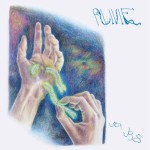
Pain has an extraordinary talent for ruining the schedule. It interrupts sleep, complicates the simplest movements and makes everyday obligations seem designed by somebody with a personal grudge against the human body. It can also turn a perfectly ordinary trip to the supermarket into an expedition requiring courage, logistics and perhaps a small diplomatic mission. On "Alivie", Argentine musician and visual artist Joaquín Ledesma, better known as Joa Joys, approaches this inconvenient companion through eight compact compositions that move between experimental electronics, ambient atmospheres, acoustic instrumentation and unexpected flashes of energy. The subject is physical suffering, but the album avoids the familiar trap of treating it as an automatic invitation to solemnity. There is room here for discomfort, certainly, but also for curiosity, absurdity and the small pleasures that make an imperfect day worth getting through.
Born in Santa Fe and now based in Buenos Aires, Ledesma has been developing his musical language since the mid-2010s through solo releases, collaborations, visual projects and compositions for documentary film and installations. His earlier albums, including "Cueva transparente" (2019) and "Meditadores del sótano" (2021), reflect an interest in ambient music as an imaginative environment, somewhere between a soundtrack to an unwritten film and an illustration of a dream whose plot has become impossible to reconstruct. His work as a visual artist is integral to this approach: sound and image appear less like separate disciplines than different ways of arranging perceptions. On "Alivie", that sensibility meets a more explicitly physical subject, with the music moving through sensations that are difficult to describe directly but easy to recognise in their effects.
The album's palette combines analogue synthesizers, including instruments Ledesma has built himself, with flute, mandolin, guitar and other textures. This mixture gives the music a pleasantly unstable character. Acoustic sounds can suggest the familiarity of folk music, while electronic treatments loosen their connection to any recognisable tradition. Atmospheric passages coexist with more energetic episodes, and the shifts are part of the album's meaning. Living with pain often involves a similarly uneven rhythm: periods of enforced rest interrupted by the need to get things done, moments of resignation followed by stubborn activity, and occasional stretches when the body briefly stops demanding to be the centre of attention. There is rarely a clean progression from difficulty to resolution. The calendar continues regardless.
The opening "Tityus Trivittatus" takes its name from a species of South American scorpion, a choice that establishes an intriguing association between the album's subject and the natural world's less accommodating inhabitants. Pain can arrive as a sudden intrusion, but it can also settle into daily life, changing the way familiar surroundings are perceived. The track's short duration introduces the record without requiring a grand declaration of intent. Its title carries a faintly scientific precision, as though the experience might become more manageable if it could be identified, classified and filed under the correct Latin name. Anyone who has ever searched the internet for an explanation of a mysterious ache will appreciate the questionable comfort of this procedure.
"Asfalto" shifts the imagery towards the city and its hard surfaces. The title means asphalt, an apt word for the material environment of Buenos Aires, where movement and activity can feel compulsory even when one's physical condition suggests otherwise. The urban landscape has a particular relationship with discomfort: pavements demand walking, public transport demands standing, work demands concentration, and everybody else seems to have received a memo explaining how to do all of this without complaint. Ledesma's interest lies in translating these pressures into musical form rather than narrating a sequence of personal incidents. The city becomes an atmosphere, an external condition that interacts with the body without needing to be described literally.
The title track, "Alivie", sits at the centre of the album's conceptual and emotional concerns. The word evokes relief, the lifting of a burden, but Ledesma's altered form of the Spanish "alivio" also gives the title the character of a wish or an invocation. It feels directed outward, extending beyond the artist's own experience. That distinction matters. The album does not ask the listener to inspect somebody else's suffering as if it were an exhibition, complete with explanatory labels. Instead, it offers an imaginative space in which personal sensations can be translated into something less private and more open to interpretation. The music's shifts between electronic abstraction and more familiar instrumental colours support that openness, allowing the listener to form associations without being handed a prescribed emotional response.
Then comes "Analgesia", a brief interlude whose title refers to the absence or reduction of pain. Its position in the sequence suggests a pause, although relief is rarely as straightforward as the word implies. The absence of pain can be its own kind of unfamiliar sensation, especially when discomfort has been present long enough to become part of the day's mental furniture. One begins to wonder what to do with the newly available space. Should one rest? Catch up on neglected tasks? Celebrate by making several ambitious plans that will be regretted by the following morning? The human capacity to turn recovery into another workload is almost impressive.
"Salida de la Cripta" offers a more dramatic image. Its title, roughly translated as an exit from the crypt, suggests emergence from confinement, whether that confinement is physical, emotional or imagined. The track's placement after "Analgesia" creates a loose narrative movement from numbness towards renewed contact with the outside world. Ledesma does not need to turn this into a conventional recovery story, complete with a triumphant final scene and a swelling orchestral cue. His broader musical language is better suited to ambiguity, where a change of atmosphere can suggest movement without guaranteeing that the difficult part has ended. Even the idea of leaving a crypt carries a certain comic uncertainty: one may have escaped the tomb, only to discover that the stairs are steep and the world outside expects a prompt return to work.
The short "Afuera", meaning outside, follows with an economical change of perspective. After the inward associations of the preceding titles, the word points towards renewed contact with the world beyond the self. Yet being outside is not necessarily the same as feeling free. The body travels with us, bringing its requirements and limitations along regardless of the scenery. Ledesma's use of brief pieces within a varied sequence allows these shifts to register without overexplaining them. Each track becomes a different angle on the album's central concern, and the shorter durations prevent the concept from becoming an extended exercise in solemn introspection.
With "Ebulición!", whose title evokes boiling or bubbling over, the album's playful side comes into sharper focus. The exclamation mark is a useful warning against the assumption that music about pain must remain decorous. Physical discomfort can produce irritation, impatience and absurdly disproportionate reactions to trivial events. Sometimes the only available response is laughter, not because the situation is funny in any objective sense, but because the alternative is to spend the afternoon arguing with a chair. Ledesma's stated enjoyment of the recording process is important here. The album's humour does not trivialise its subject; it acknowledges that pleasure and difficulty can occupy the same experience. A work can emerge from a difficult theme without reproducing its burdens in every moment.
The closing "Levanta" means to lift, raise or get up, depending on context. It is a fitting final title for a record concerned with the effort required to resume ordinary life. The phrase may suggest encouragement, but it also leaves room for the less heroic realities of getting out of bed, negotiating the first few steps and discovering that the day's ambitions need to be revised. Ledesma's approach resists the neatness of a therapeutic narrative. Relief is not necessarily permanent, and getting up does not mean that everything has been resolved. The important thing is the possibility of movement, however provisional, and the recognition that an altered state can still contain energy, imagination and even delight.
The cover artwork deepens this perspective. Ledesma based it on a dream in which a ghostly worm emerged from his hand, bringing him a feeling of relief. It is an image that could easily belong to an unsettling body-horror film, yet its emotional meaning runs in the opposite direction. The disturbing creature becomes the agent of release; the body produces something strange, and the strange thing somehow makes the situation easier. The flowers shown on the back cover offer another small contradiction: they grow along the artist's route to work, blooming in the city and opening only at night. Both images reveal the artist's visual sensibility, attentive to phenomena that are easy to overlook until they acquire an unexpected significance. The ordinary world contains its own surrealism, and sometimes the mind needs only a slight adjustment to recognise it.
Musically, "Alivie" benefits from this refusal to keep its materials in separate compartments. The handmade synthesizers connect the record to the tactile world of instruments and sound design, while the flute, mandolin and guitar introduce associations that are more organic and historically familiar. Their coexistence produces an identity that is difficult to reduce to a single genre. Ambient provides an important atmospheric foundation, but the folk-like passages, changes of energy and more abstract moments keep the music in motion. There is a cinematic quality to the sequencing, although the film remains unwritten and the viewer is free to supply the images. A body moving through a crowded street, an unfamiliar landscape glimpsed in a feverish dream, or a small creature appearing from an impossible place might all find a home here.
The album's relative brevity is another advantage. At around half an hour, its eight tracks have enough space to establish their individual moods without stretching the central idea beyond its natural limits. The compact interludes are particularly useful in giving the longer pieces context, while the recurring movement between atmosphere and energy prevents the subject from dictating a single emotional register. A record about pain could easily become exhausting if every musical decision were designed to underline the same feeling. Ledesma instead allows contrasts to carry part of the argument. A lighter passage does not cancel a darker one; it demonstrates that the experience contains more than one possible response.
There is also something quietly generous in the album's title and intention. The wish for relief is not presented as a private achievement or a universal prescription. It is extended to anyone who might find something meaningful in the music, regardless of whether their own discomfort resembles the artist's experience. That openness avoids the pitfalls of both confession and self-help. "Alivie" does not expose personal details for the listener's consumption, nor does it offer the suspiciously tidy promise that suffering can be transformed into wisdom if one adopts the correct attitude. Sometimes a difficult experience remains difficult. Art can still make room around it.
Joa Joys has made a work that treats physical pain as a complex, changing experience rather than a single emotional destination. Its electronic and acoustic elements create a shifting environment in which discomfort, fantasy, humour and renewed energy can coexist. The surreal imagery does not disguise the subject so much as free it from the limits of literal description, while the music's changes of pace resist the idea that suffering must be represented through unbroken gloom. "Alivie" is at its most persuasive when it allows these contrasts to remain unresolved, trusting the listener to recognise something of their own experience without being told exactly what to feel.
Relief, after all, is rarely a grand revelation. Sometimes it is a better afternoon, an unexpected laugh, a flower growing in an unlikely place, or a few minutes in which the body stops issuing complaints in triplicate. Ledesma's album makes room for these small reprieves without pretending they are permanent. Its final gesture is neither a cure nor a victory parade. It is an invitation to keep going, with a little more imagination and considerably less obligation to look dignified while doing so.
Nonturn: Repeating Town
A traffic signal changes. Someone crosses the street. An air conditioner hums away with the dedication of a civil servant approaching retirement. Cars pass, footsteps accumulate, machinery grumbles, and conversations dissolve into the general babble of urban existence. Most of us experience this as background noise, occasionally interrupted by a particularly obnoxious motorist. On "Repeating Town", however, these ordinary events become the entire musical vocabulary. Across seven tracks, Nonturn constructs a quietly propulsive electronic work from recordings made in and around Koenji, Tokyo, without using conventional instruments. The city supplies the raw material; editing supplies the composition.
Nonturn is the project of Nozom Yoneda, a Kanazawa-born composer based in Tokyo whose professional work spans film, television and commercial scoring alongside experimental music. He began releasing music in the British drum'n'bass scene in 2004 before gradually developing a sampling-based practice that places environmental recordings at its centre. His earlier Audiobulb releases, "Territory" (2018) and "Jellybeans" (2023), mark different stages in this exploration. "Territory" was constructed from environmental recordings made across Tokyo, while "Jellybeans" drew on extensive sound-library material. The new album returns to the physical city, but approaches it through a more tightly defined compositional framework. Rather than attempting to reproduce the experience of walking through a particular neighbourhood, Yoneda extracts sounds from their original circumstances and gives them new musical responsibilities.
The crucial decision is to organise all seven tracks around a tempo of 96 beats per minute. This provides a common temporal structure without forcing the music into the familiar architecture of dance-floor electronics. There is no obligatory four-on-the-floor kick drum, no synthesised bass line announcing that the weekend has officially begun. Instead, the rhythm emerges from the peculiar properties of recorded reality. A footstep can become a percussive accent; a mechanical hum can supply a sustained tonal layer; a signal or fragment of speech can acquire the function of a repeating motif. Once these sounds are cut, repositioned and layered, their original identities become less important than the relationships they establish.
This is where "Repeating Town" moves beyond the familiar appeal of field recordings. The simple act of capturing interesting noises can certainly produce compelling sound art, but a collection of unusual sounds is not automatically a composition. Yoneda's achievement lies in the grammar he develops from them. His material retains the roughness and irregularity of the environment, yet the fixed pulse gives it a sense of direction. Repetition becomes a means of discovering order without pretending that the world is naturally tidy. The music is neither a documentary soundtrack nor an ambient postcard of Tokyo. It is an alternative version of the city, one assembled according to rules that make its everyday activities audible in a new way.
The opening "Indicate" establishes this approach through the interplay of small sonic events and the album's measured rhythmic flow. The title suggests a signal, an instruction or a prompt to move, and the piece fits a work in which sounds acquire significance through their placement. "Atonement" continues the process, while "Repetition" makes the governing principle explicit. Yet repetition here is not simply the duplication of a sound until everyone involved has lost the will to object. Each recurrence changes the context in which a fragment is heard. What initially registers as a mechanical detail can become a rhythmic anchor; what seems incidental can gradually assume the importance of a musical phrase. Familiarity alters perception, and the repeated sound becomes different without necessarily changing very much at all.
"Stagnant" introduces an especially suggestive title into a record whose underlying pulse never stops. The apparent contradiction is productive: movement and inertia can coexist, just as a person can remain physically stationary while the city carries on around them. A constant tempo does not guarantee forward motion in the conventional dramatic sense. Instead, it establishes a stable reference against which small changes become more noticeable. The album's rhythm resembles the experience of travelling through a familiar district, where the route remains broadly predictable but the details never repeat in precisely the same way. There is a quiet tension between the regularity of the musical grid and the accidental character of the sounds placed upon it.
With "Fathom", the listener is invited to consider how much can be extracted from material that initially seems mundane. Yoneda's process depends on selection, but also on a willingness to let the recordings resist their original meanings. A sound can retain some trace of its source without continuing to function as evidence of a specific event. In this respect, the album occupies an interesting position between musique concrète and post-club electronics. It inherits the former's interest in treating recorded sound as compositional material, while borrowing from club culture an awareness of pulse, repetition and continuity. Neither tradition entirely explains the result. The music has a physical rhythmic presence, but its source material refuses the clean, predictable surfaces usually associated with electronic dance production.
"Disrupt" suggests a disturbance in the established pattern, although the album's deeper interest is not in manufacturing dramatic breakdowns for their own sake. Its organising principle remains consistent, allowing irregularities and changes of density to register against the shared tempo. The music can suggest a city in motion without resorting to a cinematic montage of sirens, horns and exaggerated urban menace. There is no need to make Tokyo sound like a dystopian metropolis whose inhabitants have been sentenced to perpetual overtime. The everyday is strange enough already, provided it receives a little attention.
The closing "Perpetual", the longest track at six minutes and forty-five seconds, gives the album a fitting final perspective. Its title points towards continuation rather than resolution, reinforcing the impression that the seven tracks form parts of a larger process. Each piece can be heard individually, but the common tempo allows them to connect as a continuous environment. This is more than a technical convenience: it suggests a city whose separate locations and activities participate in a shared temporal structure. The listener moves from one arrangement to the next while the pulse persists, much as urban life continues regardless of whether we happen to be paying attention.
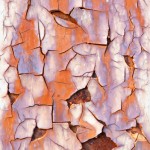
Yoneda's visual work extends this way of thinking beyond sound. The cover uses one of his close-up photographs of Tokyo's surfaces, focusing on details such as walls, textures and peeling paint. Seen from a distance, these belong to a recognisable urban environment; framed tightly enough, they become abstract arrangements of colour and form. The method mirrors the music. In both cases, the city is not simply represented but broken down into components whose relationships can be reconsidered. The photographs suggest that abstraction is not necessarily something imposed on reality from outside. Sometimes it begins by looking, or listening, more closely than ordinary habits encourage.
The accompanying video project takes the idea further. Yoneda recorded footage at the same time as capturing the sounds, then developed a custom Ableton-to-video application, A2MVE, to reconstruct the footage according to the arrangement of the musical session. As sounds overlap, the image divides; when the music repeats, the corresponding visual material repeats too. The footage itself remains real, while artificial intelligence helped design editing rules and extend the process to a level of complexity that would be impractical to assemble manually. This is a thoughtful application of technology: not an attempt to manufacture a synthetic city, but a way of making the relationship between recorded sound, editing and visual perception more explicit. The software effectively turns the arrangement into a set of instructions for looking.
There is something quietly subversive about this project. Contemporary urban life is saturated with sounds that are functional before they are aesthetic. Signals tell us when to cross, machines keep buildings operating, footsteps carry people towards their destinations, and passing conversations vanish before we can make sense of them. We are trained to interpret these events quickly and move on. Yoneda interrupts that process by giving the sounds a different purpose. The signal no longer needs to direct a pedestrian; the machine no longer needs to perform its practical duty. Each becomes part of a composition whose meaning depends on how it relates to everything else.
The result is not necessarily music that makes one long to dance, although its pulse provides a gentle bodily invitation. Nor is it ambient music in the sense of a passive backdrop intended to make a room feel sophisticated while somebody chooses a takeaway. "Repeating Town" asks for active listening, but it does not demand solemn concentration. Its pleasures come from noticing how the pieces fit together, how an apparently unmusical sound can acquire a recognisable role, and how the fixed tempo allows disparate recordings to coexist. The concept is rigorous, yet the music remains approachable because its raw materials belong to experiences most listeners already know.
There are limits to the approach. A consistent tempo and a shared sampling method inevitably impose a degree of uniformity, and listeners looking for strong melodic development or dramatic structural contrasts may find the album's restrained progression too even. The same process that produces coherence can also soften the distinctions between individual tracks. But this tension is intrinsic to the project: Yoneda is not trying to create seven unrelated showcases of technique. He is examining the repetitions that bind a place together, and the continuity of the music is part of the argument.
"Repeating Town" ultimately demonstrates that the boundary between noise and music is less stable than everyday listening assumes. The city does not need to be made beautiful through sentimental orchestration, nor does its sound have to be preserved untouched to retain documentary value. Yoneda takes the middle route, editing reality until its ordinary details reveal another order. The work is precise without feeling sterile, rhythmic without surrendering to conventional club formulas, and experimental without treating obscurity as a badge of honour.
After listening, the most noticeable change may occur outside the album. A crossing signal, the rhythm of someone walking, a ventilation unit rattling above a shop: these sounds may briefly seem less like interruptions and more like parts of an arrangement nobody has quite finished composing. The city has not suddenly become more musical. The listener has simply acquired a different way of hearing it. Given how much noise modern life produces, that is a rather useful skill to take home.
Maciek Szymczuk: Gandobendy
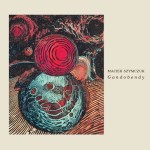
After nearly nine years away from releasing new material, Maciek Szymczuk returns with "Gandobendy", an album whose title sounds like the name of an obscure medicinal herb, a forgotten civilisation or, possibly, a particularly unsuccessful Polish Eurovision entry. Fortunately, the music is more convincing than any of these possibilities. Across seven tracks, Szymczuk constructs a colourful electronic environment in which ambient drift, dub-inflected rhythms, melodic suggestions and psychedelic oddities coexist without the need to establish diplomatic relations. The result is a record that feels less like a conventional collection of compositions than a place with its own curious climate, where familiar sounds occasionally behave in unfamiliar ways.
Szymczuk has spent much of his career exploring the borderlands between ambient, experimental electronics and music informed by traditions beyond the Western electronic canon. His earlier albums, including "Dilmun", "Echoes" and "Ways", establish a continuing interest in atmospheric sound and the uncertain territory between conscious attention and reverie. His other projects have taken different routes, from the energetic electronic excursions of Another One to the more dance-oriented explorations of Terminus. "Gandobendy" brings some of these interests into the same room, though nobody seems particularly interested in deciding who sits where. Ambient provides the underlying framework, but rhythm, melody and a discreetly psychedelic sensibility repeatedly interrupt any temptation to file the record under one convenient heading.
The opening "Ompek" establishes the album's peculiar balance. Rather than dissolving into an undifferentiated wash of sound, the piece develops through interacting electronic layers, with movement emerging from the spaces between them. There is an underlying sense of pulse, but it does not insist on becoming a conventional beat. Szymczuk seems interested in the moment when a sound begins to suggest a recognisable musical function, only to drift elsewhere before that function becomes fixed. The effect is absorbing without being excessively solemn. This is electronic music with enough internal activity to reward close listening, but without the nervous compulsion to demonstrate every idea before the listener has had time to process the previous one.
"Machomor" develops the rhythmic dimension further, bringing the album closer to dub's fascination with repetition, space and the expressive possibilities of sound treated as something physical. Dub is not simply a stylistic garnish here. Its influence can be felt in the way elements seem to recede, return and occupy different positions within the arrangement. Echo and spatial separation become compositional tools, making the music feel less like a stack of sounds than a system of relationships. The groove remains loose enough to resist the machinery of conventional dance music, while retaining a bodily quality that prevents the album from floating away into pure abstraction. One could imagine dancing to it, provided the dance floor were populated by people who had agreed in advance to abandon all concern for looking normal.
The shorter "Hundangola" changes the proportions, offering a compact episode within the album's broader exploratory design. Its brevity matters because "Gandobendy" is not built around a single continuous mood. The tracks differ in duration and emphasis, and the music's identity emerges from those variations rather than from a rigidly repeated formula. "Gaganis" continues the process of combining atmospheric depth with more definite musical gestures, allowing its electronic elements to suggest a structure without spelling everything out. The melodies are not necessarily intended to be remembered or hummed afterwards; they function more like temporary landmarks in a landscape whose geography keeps changing.
Then comes the title track, "Gandobendy", which occupies a central position both in the running order and in the album's overall character. Its name may be impossible to pronounce confidently after two drinks, but the music needs no such assistance. Here, the combination of rhythmic motion and hazy electronic colour becomes particularly persuasive. Szymczuk avoids the easy route of turning psychedelia into a procession of extravagant effects. Instead, the unusual details emerge from the interaction of elements that are, individually, relatively familiar. There is a sense of expansion, but it is generated through arrangement and timbral variation rather than through a succession of grand gestures. The music feels strange without making strangeness its only selling point, a distinction that many supposedly adventurous records seem to regard as optional.
"Elektronytek" brings another change of scale and emphasis. Its title suggests a laboratory apparatus designed by someone who has misplaced the instruction manual, yet the music is less concerned with technological spectacle than with the possibilities of electronic sound as a flexible material. Across the album, Szymczuk allows rhythmic patterns, atmospheric layers and melodic fragments to coexist without forcing them into a standard hierarchy. The result is neither ambient in the purely passive sense nor electronic pop in disguise. There is too much unpredictability for the former and too little interest in conventional hooks for the latter. Instead, the music inhabits an intermediate territory where structure and uncertainty can be useful allies.
The closing "Nerlon", the album's longest track at just over eleven minutes, provides room for the record's different tendencies to linger together. Its extended duration suits a work whose appeal depends on gradual development rather than immediate impact. Sounds acquire meaning through their placement and recurrence, while the overall atmosphere remains open enough to accommodate different interpretations. The piece does not need to deliver a climactic revelation to justify its length. Its function is closer to that of a final passage through a place the listener has already visited, now recognisable but not entirely understood. The journey ends, although the territory itself remains stubbornly resistant to explanation.
The recommendation to hear "Gandobendy" in semi-darkness is sensible, if slightly unfair to people whose domestic lighting arrangements consist of one aggressively white ceiling bulb. Reduced visual distraction may indeed help reveal the relationships between the album's many layers, but the music is not dependent on a prescribed ritual. Its dreamlike quality comes from the way sounds seem to shift in significance as the arrangements unfold. At one moment, a rhythmic pattern may feel reassuringly familiar; a little later, a change in texture can make the same passage seem faintly alien. Such transformations are part of the album's appeal, although listeners who prefer their electronic music to announce its intentions clearly may find the constant negotiation between atmosphere and structure frustrating.
That uncertainty is also where "Gandobendy" avoids becoming merely decorative. Its richness is not just a matter of adding more sounds, more effects or more layers until the result resembles an expensive dessert. The individual elements have room to interact, and the rhythmic components give the music a sense of direction even when the destination remains unclear. The psychedelic character, meanwhile, comes less from theatrical excess than from the gradual alteration of perspective. Szymczuk makes familiar musical ingredients behave in ways that are just unusual enough to refresh the ear without rendering the whole experience incomprehensible.
There is a broader point to be made about the album's return after such a long interval. Nearly nine years is a substantial gap in a musical culture that treats regular output as evidence of continued existence. Artists are expected to maintain a steady stream of releases, announcements and digital reminders that they have not quietly wandered into the woods. Szymczuk's reappearance offers a useful counterexample to this production-line mentality. "Gandobendy" does not sound like an attempt to chase current trends or compensate for the missing years with an overloaded statement of intent. It simply presents seven pieces that reflect a continuing interest in the fluid relationship between rhythm, atmosphere and imagination.
The album is not without its challenges. Its abundance of detail can occasionally make it difficult to identify a clear centre of gravity, and the same fluidity that gives the music its sense of possibility may leave some passages feeling less distinctive than others. But these are limitations associated with the approach itself rather than signs of a project that has run out of ideas. Szymczuk is more interested in maintaining an active, changing environment than in producing seven neatly differentiated demonstrations of compositional technique.
"Gandobendy" ultimately succeeds by treating electronic music as a space for exploration rather than a set of rules to be followed. Ambient, dub and psychedelia are present, but none is allowed to become a comfortable resting place. The music moves between them with an unforced curiosity, occasionally inviting the body to respond while leaving the imagination free to invent its own explanations. It is a welcome return from an artist who seems perfectly content to let the sounds do their work without attaching a lengthy instruction leaflet to every turn.
The best approach may be to listen without demanding that every passage reveal what it means. Not every record needs to provide a thesis, a moral or a downloadable certificate confirming that the listener has experienced something profound. Sometimes it is enough for music to make the familiar feel slightly unfamiliar, to give rhythm a different complexion and to leave a few unanswered questions behind. "Gandobendy" offers precisely that kind of experience: a richly textured electronic excursion whose oddities are not obstacles to its pleasures, but an essential part of them.