
Thursday, October 15, 2026
Browse by Genre
Industrial Music / Industrial Metal / Aggro Industrial / Electro Metal
Industrial Noise / Power Noise / Harsh Noise
Synth Pop / Electro Pop / Synth-Electronica
Techno / Trance / Goa / Drum'n'Bass / Jungle / Tribal / Trip-Hop
Ambient / Electronica / Ethereal / Dub / Soundscapes / Abstract
Experimental / Avantgarde / Weird & Wired / Glitch / Noise / Field Recording
Dark / Gothic / Wave / New Wave / Dark Wave / Industrial Gothic
New Music / Downtown / Avantgarde Jazz / New Classical / World
Search Reviews
Music Reviews
Gianmaria Aprile: Rain, Ghosts, One Dog and Empty Woodland
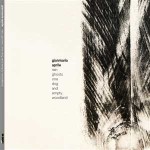
Artist: Gianmaria Aprile
Title: Rain, Ghosts, One Dog and Empty Woodland
Format: 10"
Label: We Insist! Records (http://weinsistrecords.com)
Title: Rain, Ghosts, One Dog and Empty Woodland
Format: 10"
Label: We Insist! Records (http://weinsistrecords.com)
After a history of working in groups on drone and psychadelic works, this is Gianmaria Aprile’s first solo album. It’s built from just two instruments, a guitar and a guqin (a Chinese seven-string plucked instrument), but bathed and washed with atmospheric effects. The result is expressive and very personal-sounding, but also polished.
Across eight numbered parts, we get a series of vignettes that adopt several different tones and moods, though not necessarily styles. There’s outright drone, such as that heard in Part I, and more melodic gentle pieces as heard in Part II. More prog-familiar guitar effects are audible in Part III. Part IV feels like a culmination of the first three points, a little smattering of each, but with a somewhat sinister tension underneath- a tension which is writ much larger in the slow, alien backwards reverbs of Part VI.
Although it was recorded in 2017, you would be forgiven for thinking this release had something of a covid-19 lockdown ennui about it, as it does feel staid and static at times. Each piece feels like a compact little experiment, almost born of boredom sometimes, such as with the heavy delay effect work in Part V. The Eastern ‘ethnicity’ (with apologies for the vulgarity of the word) associated with the guqin sometimes peeks through, such as in Part VII, but there’s no sense of any overt adherence to a particular musical culture here.
To be honest, I still don’t know whether the extremely abrupt end to Part VIII is a very bold move, or a technical fault with the promo bundle I was sent!
If this is the story of a walk, as it’s described to be, it’s a mildly uncomfortable walk across unfamiliar territory. It’s an unusual blend of textures, neither wholly dramatic nor wholly chilled, and that’s what makes it quite an intriguing short album.
Across eight numbered parts, we get a series of vignettes that adopt several different tones and moods, though not necessarily styles. There’s outright drone, such as that heard in Part I, and more melodic gentle pieces as heard in Part II. More prog-familiar guitar effects are audible in Part III. Part IV feels like a culmination of the first three points, a little smattering of each, but with a somewhat sinister tension underneath- a tension which is writ much larger in the slow, alien backwards reverbs of Part VI.
Although it was recorded in 2017, you would be forgiven for thinking this release had something of a covid-19 lockdown ennui about it, as it does feel staid and static at times. Each piece feels like a compact little experiment, almost born of boredom sometimes, such as with the heavy delay effect work in Part V. The Eastern ‘ethnicity’ (with apologies for the vulgarity of the word) associated with the guqin sometimes peeks through, such as in Part VII, but there’s no sense of any overt adherence to a particular musical culture here.
To be honest, I still don’t know whether the extremely abrupt end to Part VIII is a very bold move, or a technical fault with the promo bundle I was sent!
If this is the story of a walk, as it’s described to be, it’s a mildly uncomfortable walk across unfamiliar territory. It’s an unusual blend of textures, neither wholly dramatic nor wholly chilled, and that’s what makes it quite an intriguing short album.
Anma: Kick 'em All & Kick 'em All Remixes

Artist: Anma
Title: Kick 'em All & Kick 'em All Remixes
Format: 10" x 2
Label: Syncopathic Recordings
Title: Kick 'em All & Kick 'em All Remixes
Format: 10" x 2
Label: Syncopathic Recordings
Originally cutting his teeth on drum’n’bass production with the alias ‘Sub’, Anma’s style has evolved over time into deeper and more experimental territory. However he acknowledges that “Kick ‘Em All”, as an EP, has shades of the former styles in the melting pot as well- certainly not in the tempo, but absolutely in the crisp subbass and sharp production that pervades through the 4-track EP.
The title track is a rolling 87bpm behemoth driven by a relentless non-4/4 but steady kick pattern, with tense alarming atmospherics over the top. “60Hz Stomp” is about 10bpm slower, making it feel like a d’n’b track at halfspeed, with a similar kick-centric tone and slightly more complex pattern, but essentially more of the same.
“Witchdrum” takes the balance a little differently, still subbass-rich but concentrating more on the sinister, soundtrack ebbs and flows of minor synth chords, a modern-day witches-chanting-around-the-cauldron theme for the post-rave generation. “Diode Chatter” is slower again and has a slightly more upbeat robotic swagger to it, with shades of grime, and a really bold, 90-degree turn in its later breakdown.
The package is backed by a couple of real d&b remixes that are bundled separately. Fre4knc’s take on the title track is a straight-laced and energetic take that adds in the rest of the percussion around the original kick and revels in the more fun side of the robotic and electronic sounds. Double 0’s take on “Witchdrum” is far darker, twisting the pulsing atmospherics of the original quite a lot and giving a more aggressive form of menace.
There’s an irony, or a deliberate idiosyncrasy to the imagery of the delicate flower used in the artwork. There’s nothing fragile about this release. This is beefy dark kick-heavy electronica with bite- more of a venus fly trap than a rare orchid.
The title track is a rolling 87bpm behemoth driven by a relentless non-4/4 but steady kick pattern, with tense alarming atmospherics over the top. “60Hz Stomp” is about 10bpm slower, making it feel like a d’n’b track at halfspeed, with a similar kick-centric tone and slightly more complex pattern, but essentially more of the same.
“Witchdrum” takes the balance a little differently, still subbass-rich but concentrating more on the sinister, soundtrack ebbs and flows of minor synth chords, a modern-day witches-chanting-around-the-cauldron theme for the post-rave generation. “Diode Chatter” is slower again and has a slightly more upbeat robotic swagger to it, with shades of grime, and a really bold, 90-degree turn in its later breakdown.
The package is backed by a couple of real d&b remixes that are bundled separately. Fre4knc’s take on the title track is a straight-laced and energetic take that adds in the rest of the percussion around the original kick and revels in the more fun side of the robotic and electronic sounds. Double 0’s take on “Witchdrum” is far darker, twisting the pulsing atmospherics of the original quite a lot and giving a more aggressive form of menace.
There’s an irony, or a deliberate idiosyncrasy to the imagery of the delicate flower used in the artwork. There’s nothing fragile about this release. This is beefy dark kick-heavy electronica with bite- more of a venus fly trap than a rare orchid.
Oliver Leith: Balloon / Slide

This short 10” release from London-based composer Oliver Leith was originally commissioned by the London Sinfonietta as an acoustic piece, performed at the Sound Unbound festival in 2019. This arrangement, however, has been reworked for “synthesizers of many tunings”.
Over the course of three parts, each a little under five minutes, it’s an interesting and somewhat pointed exercise in obtuse melodic tuning. Vaguely “ethnic-sounding” synth notes are played with some leisure, but also a fixed sense of discord, or if not discord, then at least something slightly ‘off’. The third part in particular feels like an odd pastiche of the Chinese pentatonic scale somehow.
Bonus piece “Slide” uses a similar source palette of Eastern-sounding notes and plucks. It’s one of Leith’s first purely electronic pieces and grew out of his discovery that on his old software, tweaking parameters with both a mouse and trackpad at the same time would cause jumps and glitches. Apparently a software update has put paid to this ‘feature’, which is certainly a shame, as the additional post-production trickery, and a few extra ambient noises, elevate it a level of interest above “Balloon”.
It’s a curious and compact little release, though it doesn’t bewitch either melodically or sonically.
Over the course of three parts, each a little under five minutes, it’s an interesting and somewhat pointed exercise in obtuse melodic tuning. Vaguely “ethnic-sounding” synth notes are played with some leisure, but also a fixed sense of discord, or if not discord, then at least something slightly ‘off’. The third part in particular feels like an odd pastiche of the Chinese pentatonic scale somehow.
Bonus piece “Slide” uses a similar source palette of Eastern-sounding notes and plucks. It’s one of Leith’s first purely electronic pieces and grew out of his discovery that on his old software, tweaking parameters with both a mouse and trackpad at the same time would cause jumps and glitches. Apparently a software update has put paid to this ‘feature’, which is certainly a shame, as the additional post-production trickery, and a few extra ambient noises, elevate it a level of interest above “Balloon”.
It’s a curious and compact little release, though it doesn’t bewitch either melodically or sonically.
Sparkle Division: To Feel Embraced

Artist: Sparkle Division
Title: To Feel Embraced
Format: CD & 12"
Label: Temporary Residence
Title: To Feel Embraced
Format: CD & 12"
Label: Temporary Residence
In the electronica boom of the late ‘90’s, genre-smashing was everywhere, sampling was ubiquitous, and with the boom in popularity of the remix, every corner of labels’ back catalogues were mined. This led to some fascinating, and often quite underrated, remix compilations- “Electro Lounge”, “Motown Remixed”, the “Verve Remixed” series, and of course electro swing which blew up into a genre that’s still going strong (divisively) to this day.
In their debut album as a duo, ambient tape loop experimenter William Basinski and his former-assistant-now-collaborator Preston Wendel have managed to create their own original compositions that feel like one of those remixed compilations. Basinski’s saxophone offers up the centrepiece for the jazz and lounge side, supplemented by extra jazz samples and the occasional guest.
Meanwhile on the electronica side, it’s often a fairly familiar array of light beats, simple acoustic-sounding bass tones and a few appropriate digital sparkles. A few choice glitches and loops offer up referential interference, breaking up the jazz sounds in mostly non-invasive ways on tracks like “To The Stars Major Tom” (which given that the album was recorded in 2016, is presumably a Bowie tribute in its title, though there’s nothing musically to indicate it).
It knits together very nicely, many times. The soft, almost belearic loungey long sax notes of “For Gato” play nicely against a slightly stuttering light rhythm. Odd time signatures nibble at the edges of the spectacularly named “10 Mmmmkayy I'm Goin' Out Now and I Don't Want Any Trouble From You!”. Final piece “No Exit” is also a highlight.
It’s not all fun and games, far from it. It lacks the playfulness and cheekiness of some of the aforementioned remix albums- it seems the novelty has worn off, as it were. Tracks like “Oh, Henry!”, with upright bass and violin from Henry Grimes, is evocative noir, with the more urgent rhythm pulling in interesting ways against the late-night seedy jazz vibe. There are definite playful moments though- Leonora Russo’s bizarre scat singing on “Queenie Got Her Blues” being one.
Longest track “To Feel” is notable as a decidedly ambient piece that adds a substantial hiatus in the middle of the album, and which leads on to the husky title track, with Xeli Grana on sparse vocals.
It’s a really interesting fresh take on “jazztronica” (if I’m allowed to use that word), with the emphasis more on the jazz part. It’s rich in quality and has an authentic feel that blends the retro and the modern, and it’s an album with a lot of character.
In their debut album as a duo, ambient tape loop experimenter William Basinski and his former-assistant-now-collaborator Preston Wendel have managed to create their own original compositions that feel like one of those remixed compilations. Basinski’s saxophone offers up the centrepiece for the jazz and lounge side, supplemented by extra jazz samples and the occasional guest.
Meanwhile on the electronica side, it’s often a fairly familiar array of light beats, simple acoustic-sounding bass tones and a few appropriate digital sparkles. A few choice glitches and loops offer up referential interference, breaking up the jazz sounds in mostly non-invasive ways on tracks like “To The Stars Major Tom” (which given that the album was recorded in 2016, is presumably a Bowie tribute in its title, though there’s nothing musically to indicate it).
It knits together very nicely, many times. The soft, almost belearic loungey long sax notes of “For Gato” play nicely against a slightly stuttering light rhythm. Odd time signatures nibble at the edges of the spectacularly named “10 Mmmmkayy I'm Goin' Out Now and I Don't Want Any Trouble From You!”. Final piece “No Exit” is also a highlight.
It’s not all fun and games, far from it. It lacks the playfulness and cheekiness of some of the aforementioned remix albums- it seems the novelty has worn off, as it were. Tracks like “Oh, Henry!”, with upright bass and violin from Henry Grimes, is evocative noir, with the more urgent rhythm pulling in interesting ways against the late-night seedy jazz vibe. There are definite playful moments though- Leonora Russo’s bizarre scat singing on “Queenie Got Her Blues” being one.
Longest track “To Feel” is notable as a decidedly ambient piece that adds a substantial hiatus in the middle of the album, and which leads on to the husky title track, with Xeli Grana on sparse vocals.
It’s a really interesting fresh take on “jazztronica” (if I’m allowed to use that word), with the emphasis more on the jazz part. It’s rich in quality and has an authentic feel that blends the retro and the modern, and it’s an album with a lot of character.
James Rushford: Música Callada / See the Welter

Artist: James Rushford
Title: Música Callada / See the Welter
Format: CD x 2 (double CD)
Label: Unseen Worlds
Title: Música Callada / See the Welter
Format: CD x 2 (double CD)
Label: Unseen Worlds
James Rushford offers up a solo piano performance of Catalan composer Federico Mompou’s four-part work “Música Callada” (“Silent music” or “Voices of silence”) put side-by-side with an original composition and ‘companion piece’ to the Mompou work, named “See The Welter”.
“Música Callada” comprises four books, originally published several years apart between 1959 and 1967, with each book split into individual movements and phrases, almost all of which are under three minutes long. This succinctness and frequent stopping gives something of a vignetted feel, with individual chord and arpeggiated explorations allowed to unfold loosely and individually. It’s undeniably sweet, and Rushford’s playing is light and romantic, though at times there’s a slight shortage of the sense of a larger structure at work- it can feel more like a series of thoughtful interludes in sequence. Book I has something of the post-war reclusion into traditional romanticism about it, while Book III was a form of reluctant calm and a touch more avantgardeism. Dynamic moments do appear, such as in Book II’s jumpy “Allegretto”, but often it feels like a musical diary- individual bite-sized introspective chunks of expressive musical mood, with no planned overriding narrative.
“See The Welter” is structurally quite different, comprising seven long ‘pages’, averaging over ten minutes each. Instead of the compact chapters of the Mompou work, this is more meandering, long sustained-note melodic wanderings that are allowed to breathe and roam freely- especially as most pages roll directly into the next, with reverb inbetween, so almost no pauses at all. There’s a definite commonality though, which is found in the mood and tone- that same sense of introspection and space. It isn’t the traditional melancholy that sparse solo piano works sometimes adopt as a kind of default- there’s a certain positivity threaded through it too.
It’s a sweet bit of piano portraiture and Rushford has done an excellent job of presenting and replying to Mompou’s original works. The result is an indulgent two and a half hours of captivatingly small, space-driven solo piano that is very much worth losing yourself in.
“Música Callada” comprises four books, originally published several years apart between 1959 and 1967, with each book split into individual movements and phrases, almost all of which are under three minutes long. This succinctness and frequent stopping gives something of a vignetted feel, with individual chord and arpeggiated explorations allowed to unfold loosely and individually. It’s undeniably sweet, and Rushford’s playing is light and romantic, though at times there’s a slight shortage of the sense of a larger structure at work- it can feel more like a series of thoughtful interludes in sequence. Book I has something of the post-war reclusion into traditional romanticism about it, while Book III was a form of reluctant calm and a touch more avantgardeism. Dynamic moments do appear, such as in Book II’s jumpy “Allegretto”, but often it feels like a musical diary- individual bite-sized introspective chunks of expressive musical mood, with no planned overriding narrative.
“See The Welter” is structurally quite different, comprising seven long ‘pages’, averaging over ten minutes each. Instead of the compact chapters of the Mompou work, this is more meandering, long sustained-note melodic wanderings that are allowed to breathe and roam freely- especially as most pages roll directly into the next, with reverb inbetween, so almost no pauses at all. There’s a definite commonality though, which is found in the mood and tone- that same sense of introspection and space. It isn’t the traditional melancholy that sparse solo piano works sometimes adopt as a kind of default- there’s a certain positivity threaded through it too.
It’s a sweet bit of piano portraiture and Rushford has done an excellent job of presenting and replying to Mompou’s original works. The result is an indulgent two and a half hours of captivatingly small, space-driven solo piano that is very much worth losing yourself in.