
Monday, September 14, 2026
Browse by Genre
Industrial Music / Industrial Metal / Aggro Industrial / Electro Metal
Industrial Noise / Power Noise / Harsh Noise
Synth Pop / Electro Pop / Synth-Electronica
Techno / Trance / Goa / Drum'n'Bass / Jungle / Tribal / Trip-Hop
Ambient / Electronica / Ethereal / Dub / Soundscapes / Abstract
Experimental / Avantgarde / Weird & Wired / Glitch / Noise / Field Recording
Dark / Gothic / Wave / New Wave / Dark Wave / Industrial Gothic
New Music / Downtown / Avantgarde Jazz / New Classical / World
Search Reviews
Music Reviews
Ensemble Pamplemousse: Raana Jedaku
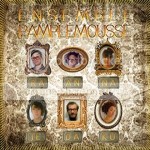
Ensemble Pamplemousse, a collective of composers and performers, are exploring the blasted landscape of 21st century landscape, that has been napalmed by the likes of Stockhausen, John Cage, Varese, Luigi Russolo; musical anarchists who introduced the concepts of randomness and improvisation, field recordings and tone generators to the acceptable palette available to the modern composer. On 'Raana Jedaku', EP are looking for new rules, new techniques, investigating unlikely combinations of sounds, instruments, and techniques.
The seven pieces of Raana Jedaku are split between two discs, the first being dedicated to symbiosis, the interplay and exchange between performers, sonics, experimental electronics, and the second disc given over to absurd limitations, but the two halves seem of a whole, not that dissimilar. What you can expect to find is classical instruments stretched and strained into unfamiliar dimensions, slurring gasping flutes, gasps, barbed-wire cello, detached electronic clicks & chirps.
With their intricate, flow-chart like musical scores and conceptually intriguing sound edits, Ensemble Pamplemousse are making some hyper-minimalism; moving parts, interlocking and precise, like some crystalline Swiss watch, they seem to be commenting on the hypertextual reality which surrounds us, becoming machine-like themselves. The problem with emulating machines, is that binary logic is by definition cold and devoid of feeling, it is clinical and analytical. 'Raana Jedaku' seems like a series of interesting algorithms, that has produced some curious sonic anomalies.
'Raana Jedaku' works best when they embrace the electronics and make them more of a part of the whole, like on 'Nest' with its skittering geiger-counter textures, or on 'Symbiosis II' with its insect larvae fluttering. I dig the interplay between the electronics and the classical instruments, and i feel like these tracks will appeal to the more adventurous noise-heads and neo-classical connoisseurs out there. The more straight-ahead classical material, like album opener 'On Structure II' are too cartoon-like and spastic of me, with their slide whistles and clip-clop woodblocks. Seeing as how their press release speaks of, "skitters of hyper action, and masses of absurdity into impeccable structures of unified beauty," it shows me that this is intentional, and i can be a bit serious for my own good.
The liner notes for this record, the way they describe their music and the theories behind it, have lured me in, made me want to pay closer attention, and has rewired my hearing a bit. This is not music to listen to in passing, it requires engagement, repeated investigations. It asks the listener to stop for a moment and consider, to think for yrself and draw yr own conclusions. A lot of the moments on 'Raana Jedaku's seven tracks are supremely interesting, i love to listen to different combinations of instruments and sounds, spread out through-out the stereo field. I would just like to see them reel it in, a bit, refine their approach, and make it more approachable, more heart-felt. Saying something.
The problem with modern classical music, and much of the current experimental avant-garde, is that they have jettisoned the whole of musical history, starting all over from scratch. But our nervous systems are wired to respond to pitch and rhythm and dynamics, and this machine music ends up sounding dead and unemotional. A sonic experiment, that yields some interesting result, like a generative synthesizer, or La Monte Young's Dream House, something that you walked in on, a chance encounter.
Ensemble Pamplemousse are clearly dedicated composers and performers, they've been playing together since 2002, and judging from the elaborate ribbon-tied packaging on 'Raana Jedaku' they clearly care about their craft. On top of this, the performances are dialed in and the recording is crystalline, meaning that if you are a person who attends the New Music series at yr local university or art gallery, than this may yield some auditory treasures, but for those looking for such pop sensibilities as melody, harmony, or rhythm, you won't find them here.
The seven pieces of Raana Jedaku are split between two discs, the first being dedicated to symbiosis, the interplay and exchange between performers, sonics, experimental electronics, and the second disc given over to absurd limitations, but the two halves seem of a whole, not that dissimilar. What you can expect to find is classical instruments stretched and strained into unfamiliar dimensions, slurring gasping flutes, gasps, barbed-wire cello, detached electronic clicks & chirps.
With their intricate, flow-chart like musical scores and conceptually intriguing sound edits, Ensemble Pamplemousse are making some hyper-minimalism; moving parts, interlocking and precise, like some crystalline Swiss watch, they seem to be commenting on the hypertextual reality which surrounds us, becoming machine-like themselves. The problem with emulating machines, is that binary logic is by definition cold and devoid of feeling, it is clinical and analytical. 'Raana Jedaku' seems like a series of interesting algorithms, that has produced some curious sonic anomalies.
'Raana Jedaku' works best when they embrace the electronics and make them more of a part of the whole, like on 'Nest' with its skittering geiger-counter textures, or on 'Symbiosis II' with its insect larvae fluttering. I dig the interplay between the electronics and the classical instruments, and i feel like these tracks will appeal to the more adventurous noise-heads and neo-classical connoisseurs out there. The more straight-ahead classical material, like album opener 'On Structure II' are too cartoon-like and spastic of me, with their slide whistles and clip-clop woodblocks. Seeing as how their press release speaks of, "skitters of hyper action, and masses of absurdity into impeccable structures of unified beauty," it shows me that this is intentional, and i can be a bit serious for my own good.
The liner notes for this record, the way they describe their music and the theories behind it, have lured me in, made me want to pay closer attention, and has rewired my hearing a bit. This is not music to listen to in passing, it requires engagement, repeated investigations. It asks the listener to stop for a moment and consider, to think for yrself and draw yr own conclusions. A lot of the moments on 'Raana Jedaku's seven tracks are supremely interesting, i love to listen to different combinations of instruments and sounds, spread out through-out the stereo field. I would just like to see them reel it in, a bit, refine their approach, and make it more approachable, more heart-felt. Saying something.
The problem with modern classical music, and much of the current experimental avant-garde, is that they have jettisoned the whole of musical history, starting all over from scratch. But our nervous systems are wired to respond to pitch and rhythm and dynamics, and this machine music ends up sounding dead and unemotional. A sonic experiment, that yields some interesting result, like a generative synthesizer, or La Monte Young's Dream House, something that you walked in on, a chance encounter.
Ensemble Pamplemousse are clearly dedicated composers and performers, they've been playing together since 2002, and judging from the elaborate ribbon-tied packaging on 'Raana Jedaku' they clearly care about their craft. On top of this, the performances are dialed in and the recording is crystalline, meaning that if you are a person who attends the New Music series at yr local university or art gallery, than this may yield some auditory treasures, but for those looking for such pop sensibilities as melody, harmony, or rhythm, you won't find them here.
Belbury Poly: The Belbury Tales

The new album from Belbury Poly; the alchemical organ by which Jim Jupp, head of Ghost Box Records, releases his distinctive brand of pastoral weirdness. The music of Belbury Poly is at times joyous and naive and at times shot through with terror or supernatural wonder, Jim Jupp is striving to create the idea world of his childhood, an Interzone that exists everywhere and nowhere, located somewhere in the vicinity of 1953 and 1978.
'The Belbury Tales finds Belbury Poly expanding their palette of harpsichords and Chappell Records samples, even going so far as to collaborate for the first time, like on the italian prog journey, 'The Pilgrim's Path'; this record seems far looser and more organic, more 'jammy' than the previous, 'From An Ancient Star'. It seems like Jim Jupp is getting into Italian soundtracks and 70s groove compilations, maybe he's been hanging out with Johnny Trunk more often. Its seems less fussy, funkier; Its still got the classic Ghost Box fanatical obsession with detailed re-creation, the rinky-dink roller rink are tight and crisp, and although eccentric, Jupp's dancey trancey synths are really quite catchy, its actually quite good electronic music, but rather than trying to sound 'of the moment', rave's usual pre-occupation with the present and the future, Jim Jupp is only interested in investigating the sounds that he likes, which involve Radiophonic music, musty children's soundtracks, and apparently now, prog rock and Bollywood boot sale tapes. He is resurrecting the lost, the forgotten; a true crate digger, Belbury Poly is digging the past, refining the strengths, creating a better yesterday.
'The Belbury Tales' design is impeccable, with artwork by in-house graphic designer and Ghost Box's co-founder Juian House, from The Focus Group. Ghost Box is all about the details, the presentation; from the production, like the way that Jim Jupp baked the backing tapes on the track 'Goat Foot' to give more of an authentic Turkish psychedelic quality, to Julian House's signature style, which has been recognizable and fully-realized from Ghost Box's first release. 'The Belbury Tales' is available on CD, on scrumptious vinyl, and digitally, and comes with a short story by Rob Young, author of 'Electric Eden', printed on nice paper in the booklet.
Ghost Box have created a whole world, a sub-continent, that never was and always will be. Their music makes the world a stranger, more adventuresome place, and 'The Belbury Tales' has something for the long-term Ghost Box devotee, and for somebody stumbling on to their late-night transmissions for the first time. Jim Jupp is continually refining his meticulous, archaeological re-creation, but 'The Belbury Tales', is unlocking new revolving doors and showing a glimpse of the future, proving, yet again, that Belbury Poly, and the whole Ghost Box roster, are not a two trick slowpony, but rather, an abundant fountain of some of the most interesting sounds, ideas, and aesthetic, that are happening right now.
Top shelf. Must hear.
'The Belbury Tales finds Belbury Poly expanding their palette of harpsichords and Chappell Records samples, even going so far as to collaborate for the first time, like on the italian prog journey, 'The Pilgrim's Path'; this record seems far looser and more organic, more 'jammy' than the previous, 'From An Ancient Star'. It seems like Jim Jupp is getting into Italian soundtracks and 70s groove compilations, maybe he's been hanging out with Johnny Trunk more often. Its seems less fussy, funkier; Its still got the classic Ghost Box fanatical obsession with detailed re-creation, the rinky-dink roller rink are tight and crisp, and although eccentric, Jupp's dancey trancey synths are really quite catchy, its actually quite good electronic music, but rather than trying to sound 'of the moment', rave's usual pre-occupation with the present and the future, Jim Jupp is only interested in investigating the sounds that he likes, which involve Radiophonic music, musty children's soundtracks, and apparently now, prog rock and Bollywood boot sale tapes. He is resurrecting the lost, the forgotten; a true crate digger, Belbury Poly is digging the past, refining the strengths, creating a better yesterday.
'The Belbury Tales' design is impeccable, with artwork by in-house graphic designer and Ghost Box's co-founder Juian House, from The Focus Group. Ghost Box is all about the details, the presentation; from the production, like the way that Jim Jupp baked the backing tapes on the track 'Goat Foot' to give more of an authentic Turkish psychedelic quality, to Julian House's signature style, which has been recognizable and fully-realized from Ghost Box's first release. 'The Belbury Tales' is available on CD, on scrumptious vinyl, and digitally, and comes with a short story by Rob Young, author of 'Electric Eden', printed on nice paper in the booklet.
Ghost Box have created a whole world, a sub-continent, that never was and always will be. Their music makes the world a stranger, more adventuresome place, and 'The Belbury Tales' has something for the long-term Ghost Box devotee, and for somebody stumbling on to their late-night transmissions for the first time. Jim Jupp is continually refining his meticulous, archaeological re-creation, but 'The Belbury Tales', is unlocking new revolving doors and showing a glimpse of the future, proving, yet again, that Belbury Poly, and the whole Ghost Box roster, are not a two trick slowpony, but rather, an abundant fountain of some of the most interesting sounds, ideas, and aesthetic, that are happening right now.
Top shelf. Must hear.
Ericm & Michael Doneda: Razine

Velmir Khlebnikov was a famous Russian Futurist poet, active at the beginning of the twentieth century; Razine by electronic manipulator Ericm and saxophonist Michel Doneda calls upon the spirit of zaum, Khlebnikov's transrational language, which sought to 'liberate words, of parts of words, letters and sounds from their accepted meaning, so that they could take on new meanings within a higher system of logic that literally transcends reason. Where Khlebnikov sought to liberate the poem, splashing words and letters across the page, Ericm and Doneda liberate the sound of a saxophone, via live electronic manipulation and sampling, creating grainy delays and sheets of sound, like Coltrane getting together with Keith Rowe, to listen in-between radio stations.
I am always somewhat surprised when i actually like a free-jazz fire skronk electroacoustic improv record; i mean, i LIKE Albert Ayler and Don Cherry, i own a couple Otomo Yoshiide albums - but this music is FIERCE, clawing up and down the side of yr skull. Noise music and free-jazz work best when they're sort of aggressive, not too polite, pandering to the crowds, its a little militant. The three tracks on Razine sound like they took place in some white-walled gallery someplace (actually the Journees Electroniques in March of 2009), perhaps with snacks and discussion afterwards. However, the music is not so easily caged - i feel like proper avant garde-ists only need the slightest provocation to freak the fuck out. Just give 'em some time and a place to do it in, and they will exorcise their demons, for all to see.
Razine whiffs of the art gallery or the lecture hall, but it also has an after-scent of the vaudeville, or cabaret; sweat and booze and greasepaint. There's a hint of the carnival-esque, reminiscent of Mingus' bump-and-grind, in Michel Doneda's sax playing. These two don't take themselves too seriously, but they make some pretty serious music. 2 of the tracks on Razine are over 20 minutes long, the second one, 'Rain', had me up and boxing in the basement, this is fire jazz, with minimal onkyo textures, crackles and hums. The intimacy of a duo, how quickly and fluidly they can respond and play off of each other, matched with their combined skill and deft wit, makes for a quicksilver sparring match, between two adept improvisers.
If you don't like skronk jazz exploration, stay the hell away from this record, but if you dig adventuresome leftfield improvisations, look no further. Ericm and Michel Doneda are breaking new ground in electroacoustic improvisation, they are bring worlds together, the conceptual worlds of theory and performance art, with the hot-blooded burlesque of jazz. Packaged in an attractive flat-black digipack, slick presentation on the part of Monotype Records, and Razine is a document worth checking out and spending some time with.
I am always somewhat surprised when i actually like a free-jazz fire skronk electroacoustic improv record; i mean, i LIKE Albert Ayler and Don Cherry, i own a couple Otomo Yoshiide albums - but this music is FIERCE, clawing up and down the side of yr skull. Noise music and free-jazz work best when they're sort of aggressive, not too polite, pandering to the crowds, its a little militant. The three tracks on Razine sound like they took place in some white-walled gallery someplace (actually the Journees Electroniques in March of 2009), perhaps with snacks and discussion afterwards. However, the music is not so easily caged - i feel like proper avant garde-ists only need the slightest provocation to freak the fuck out. Just give 'em some time and a place to do it in, and they will exorcise their demons, for all to see.
Razine whiffs of the art gallery or the lecture hall, but it also has an after-scent of the vaudeville, or cabaret; sweat and booze and greasepaint. There's a hint of the carnival-esque, reminiscent of Mingus' bump-and-grind, in Michel Doneda's sax playing. These two don't take themselves too seriously, but they make some pretty serious music. 2 of the tracks on Razine are over 20 minutes long, the second one, 'Rain', had me up and boxing in the basement, this is fire jazz, with minimal onkyo textures, crackles and hums. The intimacy of a duo, how quickly and fluidly they can respond and play off of each other, matched with their combined skill and deft wit, makes for a quicksilver sparring match, between two adept improvisers.
If you don't like skronk jazz exploration, stay the hell away from this record, but if you dig adventuresome leftfield improvisations, look no further. Ericm and Michel Doneda are breaking new ground in electroacoustic improvisation, they are bring worlds together, the conceptual worlds of theory and performance art, with the hot-blooded burlesque of jazz. Packaged in an attractive flat-black digipack, slick presentation on the part of Monotype Records, and Razine is a document worth checking out and spending some time with.
Regis: Collected Works 1997 - 1998

Artist: Regis (http://downwards.tumblr.com/)
Title: Collected Works 1997 - 1998
Format: CD
Label: Downwards Records (http://downwards.tumblr.com/)
Rated:


Title: Collected Works 1997 - 1998
Format: CD
Label: Downwards Records (http://downwards.tumblr.com/)
Rated:
Regis has been churning out stripped down deadly post-industrial Techno since 1994. As one of the co-founders of the Downwards Label, along with Surgeon aka Anthony Child, operating out of the Birmingham borough of Halesowen in the UK, he imported Detroit's rust-belt futurism, splicing it together with the recessive Throbbing Gristle mutant gene, to create a distinctive brand of lean, mean EDM that borders on Harcore, with Cabaret Voltaire electronics strobing in the margins; the soundtrack to some possessed warehouse party.
Karl O' Connor, the birth name of Regis, has just cherry-picked his output from the Golden Age Of Techno, between the years of 1994 - 2001, and compiled them into three volumes. The second, 'Collected Work 1997 - 1998', draws its source material from the 'Delivered Into The Hands Of Indifference' album and a series of 12"s, with a number of these tracks being made available on CD and digitally for the first time. One of them, album opener, 'A Necklace of Bites', sets the tone for the 13 tracks to come: VICIOUS trash-bin kick drums and disembodied flickers of amorphous electronics; churning insectile synths, planting their larvae at the bass of yr neck, rising up to masticate all thinking. Forsaking any pop trappings, such as melody or traditional structure, Regis' music is like a bio-mechanoid killing machine; a Terminator shark, rushing at you.
Most of 'Collected Works 1997 - 1998' continues along this trajectory, forcing the listener to listen closely to notice the nuances. With a nice pair of headphones on, you can really notice Karl O' Connor's progression as a producer, like time-lapsed photography, starting with track 6, 'Guiltless'. Its still the same format: monolith kick drums and swarms of synth, but there's a bit of a shimmer to it, it seems friendlier, more dance-floor accessible. There is even some slight syncopation and hand claps to compliment the 4/4 pulse that runs through 'Collected Works 1997 - 1998', but then disintegrates into puffs of static and blackboard scribbling; Karl O' Connor will not be pigeonholed or compartmentalized.
'Collected Works 1997 - 1998' finishes off with 'The Right Side of Reason, parts 1 and 2', Regis' collaboration with Robert Görl, from influential Neue Deutsche Welle misanthropes D.A.F. Amazingly enough, considering the experimental and antagonistic nature of both artist's back-catalog, 'The Right Side of Reason' brings out the best for both, to create something polished, perfected, revealing O' Connor and Görl at work, and the whole Downwards Record posse, to truly be a force to be reckoned with; masters of their machines.
These 'Collected Works' volumes are a real god send to help navigate the labyrinth of pseudonyms, collaborations, singles, EPs, and albums that Karl O' Connor has produced over the years. He has done a lovely job sequencing the 'Collected Works' series; these records are a nice introduction to his work, showing himself to be ahead of the game, but the world is starting to be ready for his dystopian daydream. For those that like stripped down, aggressive Hard Techno, this is essential listening, a wormhole into Regis' mouldering universe.
Karl O' Connor, the birth name of Regis, has just cherry-picked his output from the Golden Age Of Techno, between the years of 1994 - 2001, and compiled them into three volumes. The second, 'Collected Work 1997 - 1998', draws its source material from the 'Delivered Into The Hands Of Indifference' album and a series of 12"s, with a number of these tracks being made available on CD and digitally for the first time. One of them, album opener, 'A Necklace of Bites', sets the tone for the 13 tracks to come: VICIOUS trash-bin kick drums and disembodied flickers of amorphous electronics; churning insectile synths, planting their larvae at the bass of yr neck, rising up to masticate all thinking. Forsaking any pop trappings, such as melody or traditional structure, Regis' music is like a bio-mechanoid killing machine; a Terminator shark, rushing at you.
Most of 'Collected Works 1997 - 1998' continues along this trajectory, forcing the listener to listen closely to notice the nuances. With a nice pair of headphones on, you can really notice Karl O' Connor's progression as a producer, like time-lapsed photography, starting with track 6, 'Guiltless'. Its still the same format: monolith kick drums and swarms of synth, but there's a bit of a shimmer to it, it seems friendlier, more dance-floor accessible. There is even some slight syncopation and hand claps to compliment the 4/4 pulse that runs through 'Collected Works 1997 - 1998', but then disintegrates into puffs of static and blackboard scribbling; Karl O' Connor will not be pigeonholed or compartmentalized.
'Collected Works 1997 - 1998' finishes off with 'The Right Side of Reason, parts 1 and 2', Regis' collaboration with Robert Görl, from influential Neue Deutsche Welle misanthropes D.A.F. Amazingly enough, considering the experimental and antagonistic nature of both artist's back-catalog, 'The Right Side of Reason' brings out the best for both, to create something polished, perfected, revealing O' Connor and Görl at work, and the whole Downwards Record posse, to truly be a force to be reckoned with; masters of their machines.
These 'Collected Works' volumes are a real god send to help navigate the labyrinth of pseudonyms, collaborations, singles, EPs, and albums that Karl O' Connor has produced over the years. He has done a lovely job sequencing the 'Collected Works' series; these records are a nice introduction to his work, showing himself to be ahead of the game, but the world is starting to be ready for his dystopian daydream. For those that like stripped down, aggressive Hard Techno, this is essential listening, a wormhole into Regis' mouldering universe.
Sunn O))) meets Nurse With Wound: The Iron Soul of Nothing

Artist: Sunn O))) meets Nurse With Wound (http://brainwashed.com/nww) (@)
Title: The Iron Soul of Nothing
Format: 12" x 2
Label: Ideologic Organ (@)
Distributor: Editions Mego
Rated:
Title: The Iron Soul of Nothing
Format: 12" x 2
Label: Ideologic Organ (@)
Distributor: Editions Mego
Rated:
The Iron Soul of Nothing finds two titans of the dronescape getting together, not to battle but to conjure; an unholy rite on a blank, featureless plain, two robed figures joined by two mad hatters, trailing broken clockworks and unraveling spools of tape. Originally released in 2008, famed experimentalist Stephen Stapleton, this time joined by Colin Potter to form Nurse With Wound, re-envisioned the source material from Sunn O)))'s second record, ÃÃVOID (that's pronounced double zero void, if you were curious), pulling the rumbles scrapes hisses and howls straight from the baked 2" reels. TISON is now given a respectable 2 LP treatment that it so richly deserves, on Stephen O' Malley's Ideologic Organ imprint: you could get lost in the umber forest of the gatefold sleeve and the luscious frequencies locked in the grooves will have you levitating, drooling, and chanting!
Nurse With Wound take Sunn O)))'s patented paleolithic death march, which Stephen O' Malley and Greg Anderson were still perfecting on ÃÃVOID, rips out the conceptual skeleton and makes it dance like some necromantic marionette. On 'Dysnstaxis (a chance meeting with somnus)' NWW re-invents the track 'Richard', ripping it apart to a gaseous purr, a single repetitive guitar hit, what sounds like an armenian duduk, to create the feeling of some alien race, watching holo-reels of gypsy priests from their basalt pyramid spaceship.
'Ash on the Trees (The Sudden Ebb of a Diatribe' could be a lost Coil out-take and it reminds me of Julian Cope's druidry off of Sunn O))'s White One, with Pete Stahl from DC hardcore band Scream leading the ceremony, a slow guitar dirge suddenly washed out in shards of digital glass and then grinded down with a belt sander.
'Ra At Dawn (Rapture, At Last, Numbered By Her Light' sounds more like Sunn O)))'s more recent material, like something off of Monoliths and Dimensions, 25 minutes and 25 seconds of ominous modern classical music; gothic strings and floating tones. Gavin Bryar's Sinking of the Titanic, Philip Jeck's crackle, Ligeti's sorrow. Here's where the quartet's black light really shines, and they show that the avant-garde, in all its forms, be they metal, noise, drone, or electronic, have passed the spark from one acolyte to another, and they unwittingly show how utterly fucking brilliant that they are. Honest to god modern composition, sub-bass slow motion Black Sabbath guitars with oscillators flickering like ghost lights and unquiet spirits, dancing around the standing stones. Heavy, brutal, intelligent... yet these guys are still regarded head-bangers, knuckle-draggers. Add to this ceremonial brew Stephen O' Malley's wicked sense of graphic design, and here you have the sights and sounds of the future. True Art.
Nurse With Wound take Sunn O)))'s patented paleolithic death march, which Stephen O' Malley and Greg Anderson were still perfecting on ÃÃVOID, rips out the conceptual skeleton and makes it dance like some necromantic marionette. On 'Dysnstaxis (a chance meeting with somnus)' NWW re-invents the track 'Richard', ripping it apart to a gaseous purr, a single repetitive guitar hit, what sounds like an armenian duduk, to create the feeling of some alien race, watching holo-reels of gypsy priests from their basalt pyramid spaceship.
'Ash on the Trees (The Sudden Ebb of a Diatribe' could be a lost Coil out-take and it reminds me of Julian Cope's druidry off of Sunn O))'s White One, with Pete Stahl from DC hardcore band Scream leading the ceremony, a slow guitar dirge suddenly washed out in shards of digital glass and then grinded down with a belt sander.
'Ra At Dawn (Rapture, At Last, Numbered By Her Light' sounds more like Sunn O)))'s more recent material, like something off of Monoliths and Dimensions, 25 minutes and 25 seconds of ominous modern classical music; gothic strings and floating tones. Gavin Bryar's Sinking of the Titanic, Philip Jeck's crackle, Ligeti's sorrow. Here's where the quartet's black light really shines, and they show that the avant-garde, in all its forms, be they metal, noise, drone, or electronic, have passed the spark from one acolyte to another, and they unwittingly show how utterly fucking brilliant that they are. Honest to god modern composition, sub-bass slow motion Black Sabbath guitars with oscillators flickering like ghost lights and unquiet spirits, dancing around the standing stones. Heavy, brutal, intelligent... yet these guys are still regarded head-bangers, knuckle-draggers. Add to this ceremonial brew Stephen O' Malley's wicked sense of graphic design, and here you have the sights and sounds of the future. True Art.