
Wednesday, September 2, 2026
Browse by Genre
Industrial Music / Industrial Metal / Aggro Industrial / Electro Metal
Industrial Noise / Power Noise / Harsh Noise
Synth Pop / Electro Pop / Synth-Electronica
Techno / Trance / Goa / Drum'n'Bass / Jungle / Tribal / Trip-Hop
Ambient / Electronica / Ethereal / Dub / Soundscapes / Abstract
Experimental / Avantgarde / Weird & Wired / Glitch / Noise / Field Recording
Dark / Gothic / Wave / New Wave / Dark Wave / Industrial Gothic
New Music / Downtown / Avantgarde Jazz / New Classical / World
Search Reviews
Music Reviews
Y. G. Hanedan: The Voyage
Artist: Y. G. Hanedan (@)
Title: The Voyage
Format: Download Only (MP3 + Lossless)
Label: self-released
Distributor: CDbaby
Rated:

Title: The Voyage
Format: Download Only (MP3 + Lossless)
Label: self-released
Distributor: CDbaby
Rated:
The voyage to which this album's title refers is, its description elaborates, "an imaginary post-modern vehicle journey". Its ten stages are clearly titled as references to various stages on this adventure. For instance, 'The Dark Forest', 'Barren, Damp Hilltops' and 'Stopped to See a Distant Storm' conjure images of tangible landmarks, while 'Faint Images of the Past' or 'Curtain Flap over Anxiety' seem to tell more of the emotional state of the traveller. The tinge of noir is enhanced by the cover image: the lights of a solitary vehicle (difficult to make out, but I reckon it's a metro train) vanishing into darkness.
Hanedan's palette of sounds is highly consistent thoughout The Voyage; from many instances of similar effects to the recurrence of the same melodies and loops over multiple pieces, it all feels tightly woven together from the same fabric. Slow and somewhat aimless, each piece is simply structured but texturally dense and, occasionally, very peculiar. The first six tracks are all buffeted by similar layers of thick, rapid shudders. On 'Curtain Flap over Anxiety', these are mixed with a high-pitch beeping that filters in and out of range, a lonesome guitar section, an occasional synth wail and several other textures. These unrelated elements produce a disorientating narrative; at once sophisticated, naive, atmospheric, elegant and awkward.
That the ten pieces are self-contained rather that mixed, and that each has an ambient structure rather than conveying much movement, seem to be obstructions to the notion of the album overall as a journey. But seen as vignettes, as moments languished at the stations or bus stops punctuating the journey, as well as on long, unchanging roads protracted by tedium, by exhaustion and by the night; watching passers-by and overhearing conversations - then they begin to make sense. If it were possible to make field recordings of someone's subjective experience of a half-remembered night of noisy, gritty transportation and gloomy reverie, they might very well sound like the remarkable chapters of this album.
Hanedan's palette of sounds is highly consistent thoughout The Voyage; from many instances of similar effects to the recurrence of the same melodies and loops over multiple pieces, it all feels tightly woven together from the same fabric. Slow and somewhat aimless, each piece is simply structured but texturally dense and, occasionally, very peculiar. The first six tracks are all buffeted by similar layers of thick, rapid shudders. On 'Curtain Flap over Anxiety', these are mixed with a high-pitch beeping that filters in and out of range, a lonesome guitar section, an occasional synth wail and several other textures. These unrelated elements produce a disorientating narrative; at once sophisticated, naive, atmospheric, elegant and awkward.
That the ten pieces are self-contained rather that mixed, and that each has an ambient structure rather than conveying much movement, seem to be obstructions to the notion of the album overall as a journey. But seen as vignettes, as moments languished at the stations or bus stops punctuating the journey, as well as on long, unchanging roads protracted by tedium, by exhaustion and by the night; watching passers-by and overhearing conversations - then they begin to make sense. If it were possible to make field recordings of someone's subjective experience of a half-remembered night of noisy, gritty transportation and gloomy reverie, they might very well sound like the remarkable chapters of this album.
Gaëtan Gromer: Noise Level
The term "Noise Level", as it appears here, has to do with reclaiming originality. Habit, arising over time out of ritual, dialogue, study, is a point of orientation for thought, and in particular in this case, creativity. The more habituated, the less open-minded and penetrating; the less original. From basic thematic associations to outright prejudices, the cultural linkages of habit interfere with creativity; they streamline it, stifle it, render it less radical and interesting. So, conducive to better creativity and ideas could be processes of association that have nothing to do with troublesome paradigms, in which the novel potential of juxtaposing unrelated concepts is explored.
So much for Noise Level the concept, as it was pondered over by Raymond F. Jones in his eponymous 1952 short story. As for Noise Level the album, Strasbourg sound artist Gaëtan Gromer is here found attempting to apply theory in practice, unleashing creativity by embracing the sheer heterogeny of his work's various contents. As a starting point, all the sound material present originates from field recordings made inside libraries. This is a nod to the short story, but it also serves the wry function of making the institution of the library, typically associated with quietness, Gromer's first object of examination; his goal is perhaps to reduce the 'noise level' that makes the library quiet in the first place.
For, of course, a library is really as rich with sound as anywhere else. Silence, wrote Salome Voegelin, is the start of listening. Gromer interprets the idea of silence in the library in this way, listening, capturing source material and eventually finding ways to manipulate it. He keeps things sparse, most of the time declining to mix more than a handful of channels together at a time. The first piece, 'The Shadow Out Of Time', couples harmonious drones with treated passages of hushed speech - the sotto voce of the library-goer - and ticking clockwork; perhaps a grandfather pendulum, judging from the woody grain. 'Mémoires du Futur' is centred around what sounds like a field recording contorted by an arpeggiator sequence; it has that slightly misshapen, mis-pitched texture to it exhibited by complex frequencies put through heavy processing. 'La Tour d'Aer', with subtle kicks and re-pitched, unidentified source material, is a little like some of the darker moments of Wolfgang Voigt's Gas works. What sounds like the low hum of a vending machine in 'La Bibliotheque De Babel' bellows in the foreground; louder than life and out of context, it gains a sinister presence among other creeping textures.
This premise of this album hints that if its concept has been successfully applied, we are in for something of unusual originality. Exactly where this originality finds itself, whether it applies to this genre, compositional approach, to Gromer's individual creative development as an artist or to some other dimension of the work, isn't specified. But in terms of overall style, Noise Level doesn't substantially overpower the tropes of today's dark ambient/drone and electro-acoustic music. Nor do structures greatly vary throughout. What we generally encounter with all six tracks are several layers of drones, some light and some intense, which roll beneath various textural structures. Sometimes it's very compelling, sometimes a bit mundane.
My view is that Gromer is comfortable in this style of music and not trying to develop it radically. Instead, I think his application of the noise level theory is twofold. First, by restricting available source material, he forces himself to re-examine the way in which he uses creative music technology, as well as the ways in which he is accustomed to hearing and thinking about the sounds captured on the recordings. Second, by telling us where these sounds came from, he has us listeners perform similar re-examinations. These are doctored combinations of sounds with which we're all quite familiar, but to which, in libraries if not in most other spaces, we are accustomed not to paying special attention. So hearing them with their contexts combined and rewritten unrealistically makes the material on these tracks disorientating and disjointed. And that's exactly our chance to think differently about habitually overlooked phenomena. Noise Level may have something to do with the creativity of technological sound manipulation, but most of all it deals with the creativity of listening itself.
So much for Noise Level the concept, as it was pondered over by Raymond F. Jones in his eponymous 1952 short story. As for Noise Level the album, Strasbourg sound artist Gaëtan Gromer is here found attempting to apply theory in practice, unleashing creativity by embracing the sheer heterogeny of his work's various contents. As a starting point, all the sound material present originates from field recordings made inside libraries. This is a nod to the short story, but it also serves the wry function of making the institution of the library, typically associated with quietness, Gromer's first object of examination; his goal is perhaps to reduce the 'noise level' that makes the library quiet in the first place.
For, of course, a library is really as rich with sound as anywhere else. Silence, wrote Salome Voegelin, is the start of listening. Gromer interprets the idea of silence in the library in this way, listening, capturing source material and eventually finding ways to manipulate it. He keeps things sparse, most of the time declining to mix more than a handful of channels together at a time. The first piece, 'The Shadow Out Of Time', couples harmonious drones with treated passages of hushed speech - the sotto voce of the library-goer - and ticking clockwork; perhaps a grandfather pendulum, judging from the woody grain. 'Mémoires du Futur' is centred around what sounds like a field recording contorted by an arpeggiator sequence; it has that slightly misshapen, mis-pitched texture to it exhibited by complex frequencies put through heavy processing. 'La Tour d'Aer', with subtle kicks and re-pitched, unidentified source material, is a little like some of the darker moments of Wolfgang Voigt's Gas works. What sounds like the low hum of a vending machine in 'La Bibliotheque De Babel' bellows in the foreground; louder than life and out of context, it gains a sinister presence among other creeping textures.
This premise of this album hints that if its concept has been successfully applied, we are in for something of unusual originality. Exactly where this originality finds itself, whether it applies to this genre, compositional approach, to Gromer's individual creative development as an artist or to some other dimension of the work, isn't specified. But in terms of overall style, Noise Level doesn't substantially overpower the tropes of today's dark ambient/drone and electro-acoustic music. Nor do structures greatly vary throughout. What we generally encounter with all six tracks are several layers of drones, some light and some intense, which roll beneath various textural structures. Sometimes it's very compelling, sometimes a bit mundane.
My view is that Gromer is comfortable in this style of music and not trying to develop it radically. Instead, I think his application of the noise level theory is twofold. First, by restricting available source material, he forces himself to re-examine the way in which he uses creative music technology, as well as the ways in which he is accustomed to hearing and thinking about the sounds captured on the recordings. Second, by telling us where these sounds came from, he has us listeners perform similar re-examinations. These are doctored combinations of sounds with which we're all quite familiar, but to which, in libraries if not in most other spaces, we are accustomed not to paying special attention. So hearing them with their contexts combined and rewritten unrealistically makes the material on these tracks disorientating and disjointed. And that's exactly our chance to think differently about habitually overlooked phenomena. Noise Level may have something to do with the creativity of technological sound manipulation, but most of all it deals with the creativity of listening itself.
Pram: Helium
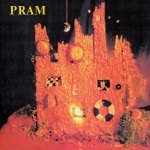
My better-late-than-never journey into the discography of Pram continues with their second reissue on Medical Records: 1994's Helium. This time around, the deluxe reissue is on yellow wax. Like the previous reissue (The Stars Are So Big, The Earth Is So Small, Stay As You Are) there has been no remaster. Again as before, it's a welcome decision, for music exuding a similarly dynamic, low-fi mixture of mild aloofness, humour and instrumental experimentation.
'Gravity' seems to begin the album in a similar vein to The Stars Are So Big..., with a tense atmosphere somewhat analogous to that of its opener 'Loco'. There's clearer audio this time, which brings out and bumps up across the spectrum the rapid drumming and dramatic, quick motifs of the keys. Between them wavers a similarly climactic, fraught cello line that eventually descends into pulsing lows and upper squeals.
But with the second number, 'Dancing on a Star', the band find a much more satisfying balance between accessible songwriting and odd, exploratory experimentation. The strange, rather improbable mix of sounds makes plausible the idea of many different potential versions of the song; of a kind of arbitrariness. Yet at the same time, these individual elements really complement one another surprisingly well. The thin bubbles of the ascending bassline, the bold and varied synth play ranging from Radiophonic Workshop-esque spacey wobbles and bloops (an MS-20 perhaps? I'm no expert) to the stop-start tinkling of miniature bells; the characteristically restless drumming; Rosie Cuckson's usual bashful, dreamy vocals. Overall, it's bewildering, but also captivatingly energetic and warm. The other outstanding songs are 'My Father the Clown', with its uneasy waltz and smokey, beatless, instrumental final section; the handsome, protracted, jazzy "Blue" and the closer "Shadows", which blends verses of synthesised traditional folk with a fidgeting, instrumental chorus of metallic rhythms, brass and synth.
In the liner notes to the vinyl reissue of The Stars Are So Big, Cuckson recalls that the music of the band was "democratic" in the sense of representing every member's individual interests to the point of compromise, with nobody completely satisfied at the end. This explanation undoubtedly applies to Helium as well. It's the sound of multiple interpretations and interests wrestling over the songs' themes. The result is ambiguity; like the kind associated with shoegaze, only expressed in complex, ineffable, proggy nuance rather than an arresting overload of output. The fabulously queasy 'Little Angel, Little Monkey', which resembles some demented, speedy descendant of lounge lizard music, is the most impressive example of this.
In spite of all the supposed tension, there's something about the predominantly gentle, wry messiness of this unpredictable, ambitious and lovely music that convinces me the band were probably having a great deal of fun.
'Gravity' seems to begin the album in a similar vein to The Stars Are So Big..., with a tense atmosphere somewhat analogous to that of its opener 'Loco'. There's clearer audio this time, which brings out and bumps up across the spectrum the rapid drumming and dramatic, quick motifs of the keys. Between them wavers a similarly climactic, fraught cello line that eventually descends into pulsing lows and upper squeals.
But with the second number, 'Dancing on a Star', the band find a much more satisfying balance between accessible songwriting and odd, exploratory experimentation. The strange, rather improbable mix of sounds makes plausible the idea of many different potential versions of the song; of a kind of arbitrariness. Yet at the same time, these individual elements really complement one another surprisingly well. The thin bubbles of the ascending bassline, the bold and varied synth play ranging from Radiophonic Workshop-esque spacey wobbles and bloops (an MS-20 perhaps? I'm no expert) to the stop-start tinkling of miniature bells; the characteristically restless drumming; Rosie Cuckson's usual bashful, dreamy vocals. Overall, it's bewildering, but also captivatingly energetic and warm. The other outstanding songs are 'My Father the Clown', with its uneasy waltz and smokey, beatless, instrumental final section; the handsome, protracted, jazzy "Blue" and the closer "Shadows", which blends verses of synthesised traditional folk with a fidgeting, instrumental chorus of metallic rhythms, brass and synth.
In the liner notes to the vinyl reissue of The Stars Are So Big, Cuckson recalls that the music of the band was "democratic" in the sense of representing every member's individual interests to the point of compromise, with nobody completely satisfied at the end. This explanation undoubtedly applies to Helium as well. It's the sound of multiple interpretations and interests wrestling over the songs' themes. The result is ambiguity; like the kind associated with shoegaze, only expressed in complex, ineffable, proggy nuance rather than an arresting overload of output. The fabulously queasy 'Little Angel, Little Monkey', which resembles some demented, speedy descendant of lounge lizard music, is the most impressive example of this.
In spite of all the supposed tension, there's something about the predominantly gentle, wry messiness of this unpredictable, ambitious and lovely music that convinces me the band were probably having a great deal of fun.
Pram: The Stars Are So Big... The Earth Is So Small... Stay As You Are

Artist: Pram
Title: The Stars Are So Big... The Earth Is So Small... Stay As You Are
Format: 12"
Label: Medical Records
Title: The Stars Are So Big... The Earth Is So Small... Stay As You Are
Format: 12"
Label: Medical Records
I missed this album the first time around, being four years old, and managed never in the years since to come into contact with the works of Pram at all. Now, thanks to present circumstances, I can at last get to know and enjoy this English band, who have turned out to be pretty superb.
First released in 1993 by Too Pure (also home to Stereolab and PJ Harvey), The Stars Are So Big... The Earth Is So Small... Stay As You Are was Pram's second LP. It's the first of two to have been reissued this year by Seattle's Medical Records, as part of a continuing project by the label to celebrate "seminal works" put out by Too Pure in the 1990s. In the case of The Stars Are So Big..., this reissue project takes the form of a red 180g vinyl repress, which I have not yet seen, but expect is a worthy labour of love.
Immediately evident when listening to this reissue is that it has not been remastered. This is distinct from some of Medical Records' other reissues, whose remasters have even been laudably restrained and clearly sensitive to the production of the original audio - showing taste and trustworthiness on the part of the label.
However, in this case, somebody involved decided a remaster wasn't necessary. The timbre of The Stars Are So Big... sounds soft and dated, muffled and a bit flat. It's possible that this sound was intentional even at the time, and that retaining it now is a conscious goal of the band's. I must agree, in any case, that there is no need to modernise these recordings. And this is likely true in most cases of reissuing music, however it was supposed to sound originally, unless we admit to participating in this period's fetishism for loudness and reappropriation, or devoting excessive energy to our commercial interests (if there's a difference). There is no 'right' way at all to do these things. But a listener's active acclimatisation to different kinds of recording and production styles, with their distinct historical and other kinds of grain, can be of great significance to the basic analyses and pleasures of musical experience. Both the process and any respect for it carry with them aesthetic as well as ethical importance.
To get to a more pertinent matter - the music itself - this album feels like a faintly twee, but rather opaque, mixture of dreamy art rock, kraut-like psychedelia and a little shoegaze. Through a filter of what sounds like no-budget, living-room production, the band's attention to detail and sonic experimentation are quite evident. Most generally, the album comprises distinct articulations of bass, guitar, electronics and drums, as well as the voice of Rosie Cuckson. On the opener 'Loco', she is nearly drowned out by noisy guitar and a throbbing, stop-start bassline. For the next tune, 'Radio Freak in a Storm', she spends the verses competing with a brilliant, metallic mallet synth motif; the guitar, this time, manifests as muted plucking. The sixteen-minute "In Dreams You Too Can Fly" is a splendid, relaxed jam. It falls quietly somewhere between jazzy stoner rock and what would later become known as post-rock, with horns provided by a guest musician known only as Verdigris. 'Milky' and the final piece 'Cape St. Vincent' are sweet and dreamy numbers, with Cuckson accompanied by cute melodies on glockenspiel, sprightly sinewave synth and, in the latter track, furry filtered piano.
Cuckson is often quite low in the mix on this record, a feature vaguely reminiscent of Belinder Butcher on MBV's Loveless. Another similarity is a prevalent emotional ambiguity, which at times Pram seem to take into outright obfuscation. Cuckson sings with an airy, aloof and shy manner, as if murmuring absently to herself. Particularly on 'Loredo Venus' and 'Dorothy', she conspires with the rest of the instrumentation to produce a beguiling, awkward and unsettling tone. It all feels fun and heartfelt, but also wry and quite uneasy. Somehow impenetrable, but deeply varied and enjoyable altogether.
First released in 1993 by Too Pure (also home to Stereolab and PJ Harvey), The Stars Are So Big... The Earth Is So Small... Stay As You Are was Pram's second LP. It's the first of two to have been reissued this year by Seattle's Medical Records, as part of a continuing project by the label to celebrate "seminal works" put out by Too Pure in the 1990s. In the case of The Stars Are So Big..., this reissue project takes the form of a red 180g vinyl repress, which I have not yet seen, but expect is a worthy labour of love.
Immediately evident when listening to this reissue is that it has not been remastered. This is distinct from some of Medical Records' other reissues, whose remasters have even been laudably restrained and clearly sensitive to the production of the original audio - showing taste and trustworthiness on the part of the label.
However, in this case, somebody involved decided a remaster wasn't necessary. The timbre of The Stars Are So Big... sounds soft and dated, muffled and a bit flat. It's possible that this sound was intentional even at the time, and that retaining it now is a conscious goal of the band's. I must agree, in any case, that there is no need to modernise these recordings. And this is likely true in most cases of reissuing music, however it was supposed to sound originally, unless we admit to participating in this period's fetishism for loudness and reappropriation, or devoting excessive energy to our commercial interests (if there's a difference). There is no 'right' way at all to do these things. But a listener's active acclimatisation to different kinds of recording and production styles, with their distinct historical and other kinds of grain, can be of great significance to the basic analyses and pleasures of musical experience. Both the process and any respect for it carry with them aesthetic as well as ethical importance.
To get to a more pertinent matter - the music itself - this album feels like a faintly twee, but rather opaque, mixture of dreamy art rock, kraut-like psychedelia and a little shoegaze. Through a filter of what sounds like no-budget, living-room production, the band's attention to detail and sonic experimentation are quite evident. Most generally, the album comprises distinct articulations of bass, guitar, electronics and drums, as well as the voice of Rosie Cuckson. On the opener 'Loco', she is nearly drowned out by noisy guitar and a throbbing, stop-start bassline. For the next tune, 'Radio Freak in a Storm', she spends the verses competing with a brilliant, metallic mallet synth motif; the guitar, this time, manifests as muted plucking. The sixteen-minute "In Dreams You Too Can Fly" is a splendid, relaxed jam. It falls quietly somewhere between jazzy stoner rock and what would later become known as post-rock, with horns provided by a guest musician known only as Verdigris. 'Milky' and the final piece 'Cape St. Vincent' are sweet and dreamy numbers, with Cuckson accompanied by cute melodies on glockenspiel, sprightly sinewave synth and, in the latter track, furry filtered piano.
Cuckson is often quite low in the mix on this record, a feature vaguely reminiscent of Belinder Butcher on MBV's Loveless. Another similarity is a prevalent emotional ambiguity, which at times Pram seem to take into outright obfuscation. Cuckson sings with an airy, aloof and shy manner, as if murmuring absently to herself. Particularly on 'Loredo Venus' and 'Dorothy', she conspires with the rest of the instrumentation to produce a beguiling, awkward and unsettling tone. It all feels fun and heartfelt, but also wry and quite uneasy. Somehow impenetrable, but deeply varied and enjoyable altogether.
Geneva Jacuzzi: Technophelia

A contemporary of the likes of Nite Jewel and Ariel Pink on the productive and cultish LA art-pop scene, Geneva Jacuzzi here presents a new collection of brazen, leftfield synthwave numbers called Technophelia. With the deliberately muddy, lo-fi fad now out of fashion for 80s appropriators, Geneva follows suit with most of the scene's continuing practitioners on their recent efforts, turning up the cutoff on her authentic analogue hardware and investigating the clarity of the upper spectrum.
In contrast with something like the rather straight-faced role-play of Nite Jewel's One Second of Love, Technophelia is less even, more lyrically and sonically adventurous and wackier in general. Take the lead single and album centrepiece 'Cannibal Babies'. The rhythm is an Italo strut, over which Geneva lays a very potent, jagged synth lead riff and a lot of delayed vocal play beneath the main lines. She makes lively lyrical references to vorarephilic hookups, apparently complete with absurd suggestions of starting a cannibal bloodline. "Try to remember / You're dancing with your dinner / You don't wanna get me thinner", she warns. A couple of lines later, as a brilliantly lush chorus prepares to drop, she exclaims "I'm gonna eat your - eat your sex. Ugh!" It's loopy, and great fun from the start. As a single, it's delivered complete with a decent video that brings together fitness dancing, revolting black teeth and nifty datamoshing.
Unlike 'Cannibal Babies', which passes five minutes, most of the album consists of short tracks. There are grimy, flattened motifs that could've been lifted from tacky slasher films, as in 'Technophelia (Intro)' and 'Technophelia' (naturally, the intro is longer than the main song). There's flirtation with darkwave, such as in 'Casket' and 'Squid Hunter'. There's a decent noodling vignette with the delicate title 'Biogasms in Babyland', as well as a more straightforward pop diversion in 'Macho Island'. 'I'm a TV' either draws parallels between voyeurism, objectification and physical manipulation/touch, or indulges in a retro sci-fi narrative about machine sentience - or perhaps combines the two.
Altogether, as with most synthwave, there's nothing especially surprising on the record, and a few of the tunes don't really stick. More inclusions on the spectacular level of 'Cannibal Babies' would have been nice. That said, Technophelia is a very confident effort, and gleefully, irresistibly tacky.
In contrast with something like the rather straight-faced role-play of Nite Jewel's One Second of Love, Technophelia is less even, more lyrically and sonically adventurous and wackier in general. Take the lead single and album centrepiece 'Cannibal Babies'. The rhythm is an Italo strut, over which Geneva lays a very potent, jagged synth lead riff and a lot of delayed vocal play beneath the main lines. She makes lively lyrical references to vorarephilic hookups, apparently complete with absurd suggestions of starting a cannibal bloodline. "Try to remember / You're dancing with your dinner / You don't wanna get me thinner", she warns. A couple of lines later, as a brilliantly lush chorus prepares to drop, she exclaims "I'm gonna eat your - eat your sex. Ugh!" It's loopy, and great fun from the start. As a single, it's delivered complete with a decent video that brings together fitness dancing, revolting black teeth and nifty datamoshing.
Unlike 'Cannibal Babies', which passes five minutes, most of the album consists of short tracks. There are grimy, flattened motifs that could've been lifted from tacky slasher films, as in 'Technophelia (Intro)' and 'Technophelia' (naturally, the intro is longer than the main song). There's flirtation with darkwave, such as in 'Casket' and 'Squid Hunter'. There's a decent noodling vignette with the delicate title 'Biogasms in Babyland', as well as a more straightforward pop diversion in 'Macho Island'. 'I'm a TV' either draws parallels between voyeurism, objectification and physical manipulation/touch, or indulges in a retro sci-fi narrative about machine sentience - or perhaps combines the two.
Altogether, as with most synthwave, there's nothing especially surprising on the record, and a few of the tunes don't really stick. More inclusions on the spectacular level of 'Cannibal Babies' would have been nice. That said, Technophelia is a very confident effort, and gleefully, irresistibly tacky.