
Thursday, October 8, 2026
Browse by Genre
Industrial Music / Industrial Metal / Aggro Industrial / Electro Metal
Industrial Noise / Power Noise / Harsh Noise
Synth Pop / Electro Pop / Synth-Electronica
Techno / Trance / Goa / Drum'n'Bass / Jungle / Tribal / Trip-Hop
Ambient / Electronica / Ethereal / Dub / Soundscapes / Abstract
Experimental / Avantgarde / Weird & Wired / Glitch / Noise / Field Recording
Dark / Gothic / Wave / New Wave / Dark Wave / Industrial Gothic
New Music / Downtown / Avantgarde Jazz / New Classical / World
Search Reviews
Music Reviews
Caustic Reverie: Ablation Sequence

Artist: Caustic Reverie (@)
Title: Ablation Sequence
Format: Download Only (MP3 + Lossless)
Label: self-released
Rated:

Title: Ablation Sequence
Format: Download Only (MP3 + Lossless)
Label: self-released
Rated:
After a three-year hiatus, Caustic Reverie returns with Ablation Sequence, six soundscapes arranged as an operation upon whatever part of consciousness still believes it possesses an intact border. Hardware synthesizers and symphonic instruments are sutured to field recordings and disembodied voices, producing slow-moving nightmares informed by Adam L.G. Nevill, Joe Hill, Cullen Bunn, Laird Barron, and the audio dramas Gutter and Push the Roll with Ross Bryant. Yet these influences feel less quoted than metabolized. Their horrors circulate in the album’s bloodstream as untraceable compounds, preparing the listener for ablation: the deliberate destruction of tissue so that a larger body might continue, altered by the violence of its cure.
“Augur” begins with diagnostic mapping. Before an instrument can enter, the hidden lesion must be persuaded to announce its borders, and the track searches by repetition, sounding a chasm whose echo erases the language used to measure it. Memory provides the only tactile surface. Each cycle lowers another filament into the dark until doom becomes less an emotion than a coordinate, the cold point around which the body drafts its own anatomical diagram. Caustic Reverie makes self-knowledge feel invasive. To locate the diseased region is already to injure it, and the patient slowly discovers that the chart beneath the skin was drawn by the wound.
With “Foxfire,” diagnosis gives way to access. The psychic cavity is opened, red curtains stirring among trees while unseen owls supervise from an intelligence older than sight. Its Lynchian menace never settles into homage because the voices that approach speech are arrested at the threshold, suspended inside an anesthesia that numbs meaning while leaving dread exquisitely awake. Breath supplants starlight inside a vast mouth, and the incision seems to pass through the world rather than the body. The operating chamber expands beyond architecture, revealing every forest as a potential interior organ.
“The Visitation” administers sedation, though oblivion refuses to arrive. Liquid fear enters the bloodstream; fatality rises to the surface as a signature seeking the document that authorized existence. Chanting gathers at the edge of perception without producing ritual or communal purpose. The voices recede over an impossible precipice, falling backward and never reaching impact, so consciousness remains caught between surrender and alarm. Here anesthesia becomes a metaphysical error: sensation loosens from the flesh but continues elsewhere, an abandoned nerve dreaming the person it once served.
The title track undertakes the ablation itself. Across more than 24 minutes, procedural pain acquires an almost judicial patience. Hidden corridors of vessels spread beneath the music, vacant of any creature that might justify their design. Amniotic fluid becomes a troubled refuge against sleep, while rhythm survives only as archaeological evidence of motion. Then air enters from an origin the piece refuses to disclose, crossing a body that has misplaced its heartbeat. The sound burns without flame, cauterizing the diseased signal while preserving its outline in scar tissue. Removal becomes a form of inscription: what has been destroyed achieves a terrible precision, because absence now hones its own edges.
“Calling Elwood Hondo” begins irrigation and hemostasis. Spent chords ooze through the cavity as relics rinsed from a civilization whose ruins have forgotten the civilization itself. Rather than stabilize identity, the track lets these remnants bleed into an experiment without a hypothesis. Feeling intensifies while comprehension contracts. Every attempt to recognize the self merely washes another fragment loose, suggesting that consciousness may be the residue produced by its own repeated cleansing. The procedure controls the bleeding, but control carries an unnerving implication. Perhaps the blood had been the only thing preventing the void from entering circulation.
Closure arrives through “Redstone Crossroads,” though no seam can restore the original anatomy. A boundless room offers the visual grammar of escape while quietly withholding its possibility. The music approaches song, then withdraws into a motherless lullaby whose recurring promise of sleep is never fulfilled. This is scar formation rendered audible, tissue knitting across an opening while retaining the memory of separation in every new bond. Where this album’s predecessor, Transit Signals, permitted glimmers of hope, Ablation Sequence regards hope as material excised during surgery, perhaps accidentally, perhaps because survival required its removal.
That severity gives the album its deepest ethical disturbance. Ablation cures by deciding that one portion of the body has forfeited its right to remain, and every such decision contains a miniature theology of sacrifice. Caustic Reverie leaves us inside that verdict, where healing and mutilation share an instrument but cannot share an alibi. The final scar therefore becomes more than evidence of damage. It is a border drawn by survival across its former country, declaring that the self who entered the procedure has become foreign territory. What persists afterward is neither patient nor disease, but the incision’s private idea of a person.
“Augur” begins with diagnostic mapping. Before an instrument can enter, the hidden lesion must be persuaded to announce its borders, and the track searches by repetition, sounding a chasm whose echo erases the language used to measure it. Memory provides the only tactile surface. Each cycle lowers another filament into the dark until doom becomes less an emotion than a coordinate, the cold point around which the body drafts its own anatomical diagram. Caustic Reverie makes self-knowledge feel invasive. To locate the diseased region is already to injure it, and the patient slowly discovers that the chart beneath the skin was drawn by the wound.
With “Foxfire,” diagnosis gives way to access. The psychic cavity is opened, red curtains stirring among trees while unseen owls supervise from an intelligence older than sight. Its Lynchian menace never settles into homage because the voices that approach speech are arrested at the threshold, suspended inside an anesthesia that numbs meaning while leaving dread exquisitely awake. Breath supplants starlight inside a vast mouth, and the incision seems to pass through the world rather than the body. The operating chamber expands beyond architecture, revealing every forest as a potential interior organ.
“The Visitation” administers sedation, though oblivion refuses to arrive. Liquid fear enters the bloodstream; fatality rises to the surface as a signature seeking the document that authorized existence. Chanting gathers at the edge of perception without producing ritual or communal purpose. The voices recede over an impossible precipice, falling backward and never reaching impact, so consciousness remains caught between surrender and alarm. Here anesthesia becomes a metaphysical error: sensation loosens from the flesh but continues elsewhere, an abandoned nerve dreaming the person it once served.
The title track undertakes the ablation itself. Across more than 24 minutes, procedural pain acquires an almost judicial patience. Hidden corridors of vessels spread beneath the music, vacant of any creature that might justify their design. Amniotic fluid becomes a troubled refuge against sleep, while rhythm survives only as archaeological evidence of motion. Then air enters from an origin the piece refuses to disclose, crossing a body that has misplaced its heartbeat. The sound burns without flame, cauterizing the diseased signal while preserving its outline in scar tissue. Removal becomes a form of inscription: what has been destroyed achieves a terrible precision, because absence now hones its own edges.
“Calling Elwood Hondo” begins irrigation and hemostasis. Spent chords ooze through the cavity as relics rinsed from a civilization whose ruins have forgotten the civilization itself. Rather than stabilize identity, the track lets these remnants bleed into an experiment without a hypothesis. Feeling intensifies while comprehension contracts. Every attempt to recognize the self merely washes another fragment loose, suggesting that consciousness may be the residue produced by its own repeated cleansing. The procedure controls the bleeding, but control carries an unnerving implication. Perhaps the blood had been the only thing preventing the void from entering circulation.
Closure arrives through “Redstone Crossroads,” though no seam can restore the original anatomy. A boundless room offers the visual grammar of escape while quietly withholding its possibility. The music approaches song, then withdraws into a motherless lullaby whose recurring promise of sleep is never fulfilled. This is scar formation rendered audible, tissue knitting across an opening while retaining the memory of separation in every new bond. Where this album’s predecessor, Transit Signals, permitted glimmers of hope, Ablation Sequence regards hope as material excised during surgery, perhaps accidentally, perhaps because survival required its removal.
That severity gives the album its deepest ethical disturbance. Ablation cures by deciding that one portion of the body has forfeited its right to remain, and every such decision contains a miniature theology of sacrifice. Caustic Reverie leaves us inside that verdict, where healing and mutilation share an instrument but cannot share an alibi. The final scar therefore becomes more than evidence of damage. It is a border drawn by survival across its former country, declaring that the self who entered the procedure has become foreign territory. What persists afterward is neither patient nor disease, but the incision’s private idea of a person.
Ka Baird/Chris Ryan Williams: Enthalpy

Artist: Ka Baird/Chris Ryan Williams
Title: Enthalpy
Format: 12" + Download
Label: Outside Time (@)
Rated:

Title: Enthalpy
Format: 12" + Download
Label: Outside Time (@)
Rated:
The body fractures first at the mouth. Breath escapes through that soft wound and enters metal, where pressure teaches it to grow a second skeleton. Inside Ka Baird’s flute and Chris Ryan Williams’s trumpet, air becomes vibration and is hurled against the skin as evidence of an internal crime. Enthalpy, their first album as a duo, begins inside this rupture and keeps widening it. Tongue flutters swarm beneath glass; sustained tones split open, exposing electronic tissue under the instrumental disguise. Production magnifies each gesture until the musicians seem to play inside a colossal organ wired with circuits. The horns sometimes gleam with surgical cruelty, then dissolve into murk. Along the way, the listener’s skull becomes an unauthorized extension of the mixing desk, and the body envelope reveals itself as a frightened hypothesis.
Thermodynamics defines enthalpy as the energy contained within a system, though Baird and Williams treat containment as anatomical vanity. Recorded through complete improvisation, these pieces generate bones faster than any stable creature could house them. A pulse grows cartilage. Feedback sprouts an inner ear and listens to itself. Sub-bass pushes through the floor while high frequencies slip needles between the teeth. The musicians give this mutation a terrifying equilibrium, as every threatened collapse creates another load-bearing surface. Acoustic gestures enter circuitry and return without fingerprints. Listening becomes involuntary disassembly, with flesh assuming the work of amplification.
“Spirit” closes a circle before its opening can be found. Guttural utterances inhabit boundaries that electronic distortions repeatedly puncture, while digital effluvia impersonate expectations long enough to disfigure them. Rebuilding these fragments into overarching beauty soon feels vain. Beauty resides in decomposition, in form choosing to rot publicly. The piece devours its remains and regurgitates them until an internal structure emerges, a nervous system inventing the creature whose pain it already conducts.
“Target Practice” drives this corporeal confusion into the listener’s taxonomic reflexes. Its expectorations and tongue-flicked flute tempt us to assign the piece a stable body, then congratulate ourselves for solving its existence. Baird and Williams answer classification with sabotage. Breath becomes percussion without surrendering intimacy; vocal matter crawls toward language, then bites through the leash. The electronics expose how foreign the acoustic source already was. Trumpet depends upon saliva conspiring with metal, while flute persuades a tube to dream through expelled air. “Shapeshifting” and “Visible Ghosts” miniaturize the process, allowing brief gestures to touch without turning contact into romance. Their intimacy remains cellular and faintly hostile.
Even the tender passages refuse innocence. “Vapour Trails” and “Out of Breath” gather around ethereal melody, yet their tones already admit the noise that will erase them. White noise becomes the exposed tissue beneath melody’s cosmetic surface. Baird and Williams let delicacy approach extinction without intervening, making tenderness physically credible. Anything incapable of damage is décor, and these pieces decline to hang politely on the wall of cultivated sensitivity.
“Fail Better” opens the album’s procedures to scrutiny while withholding a reassuring outcome. Near-language approaches meaning, though it offers interpretation no purchase. Beckett’s exhausted imperative hovers over the title, but failure becomes muscular here, forcing sound beyond the competent decisions that domesticate it. Effects worry the performance until it confesses that no pristine entity waits beneath the processing.
The title track enlarges the ethics of transplantation to grotesque proportions. Echo becomes a mechanism of self-cancellation, returning each detail with enough force to injure its source. Everyday life is pulsed into grayness seething with compressed difference. Repetition elicits bodily revision; each recurrence carries scar tissue. Beneath the sonic density, the horns persist as damaged evidence, apertures through which the performers enter the machinery.
“Spirit II” returns us to the circle, or so it seems, as we have actually been trapped inside it since the first inhalation. Throaty cackles merge with subterranean growls as human utterance and manufactured signal lose their border. These sounds are turned inward, acquiring unauthorized voices and reducing consciousness to a minor administrative office within the body. Breath has never belonged to us. It passes through, borrows platelets, then carries microscopic proof of our existence into another system.
Enthalpy locates transcendence inside that transfer, stripped of celestial upholstery. Energy changes residence, enters matter, and leaves with matter’s accent lodged inside it. The self survives as a distortion imposed upon whatever passes through. We endure as alterations in the medium, minute damages carried forward by air that has learned to imitate the voice we hear when reading these words.
Thermodynamics defines enthalpy as the energy contained within a system, though Baird and Williams treat containment as anatomical vanity. Recorded through complete improvisation, these pieces generate bones faster than any stable creature could house them. A pulse grows cartilage. Feedback sprouts an inner ear and listens to itself. Sub-bass pushes through the floor while high frequencies slip needles between the teeth. The musicians give this mutation a terrifying equilibrium, as every threatened collapse creates another load-bearing surface. Acoustic gestures enter circuitry and return without fingerprints. Listening becomes involuntary disassembly, with flesh assuming the work of amplification.
“Spirit” closes a circle before its opening can be found. Guttural utterances inhabit boundaries that electronic distortions repeatedly puncture, while digital effluvia impersonate expectations long enough to disfigure them. Rebuilding these fragments into overarching beauty soon feels vain. Beauty resides in decomposition, in form choosing to rot publicly. The piece devours its remains and regurgitates them until an internal structure emerges, a nervous system inventing the creature whose pain it already conducts.
“Target Practice” drives this corporeal confusion into the listener’s taxonomic reflexes. Its expectorations and tongue-flicked flute tempt us to assign the piece a stable body, then congratulate ourselves for solving its existence. Baird and Williams answer classification with sabotage. Breath becomes percussion without surrendering intimacy; vocal matter crawls toward language, then bites through the leash. The electronics expose how foreign the acoustic source already was. Trumpet depends upon saliva conspiring with metal, while flute persuades a tube to dream through expelled air. “Shapeshifting” and “Visible Ghosts” miniaturize the process, allowing brief gestures to touch without turning contact into romance. Their intimacy remains cellular and faintly hostile.
Even the tender passages refuse innocence. “Vapour Trails” and “Out of Breath” gather around ethereal melody, yet their tones already admit the noise that will erase them. White noise becomes the exposed tissue beneath melody’s cosmetic surface. Baird and Williams let delicacy approach extinction without intervening, making tenderness physically credible. Anything incapable of damage is décor, and these pieces decline to hang politely on the wall of cultivated sensitivity.
“Fail Better” opens the album’s procedures to scrutiny while withholding a reassuring outcome. Near-language approaches meaning, though it offers interpretation no purchase. Beckett’s exhausted imperative hovers over the title, but failure becomes muscular here, forcing sound beyond the competent decisions that domesticate it. Effects worry the performance until it confesses that no pristine entity waits beneath the processing.
The title track enlarges the ethics of transplantation to grotesque proportions. Echo becomes a mechanism of self-cancellation, returning each detail with enough force to injure its source. Everyday life is pulsed into grayness seething with compressed difference. Repetition elicits bodily revision; each recurrence carries scar tissue. Beneath the sonic density, the horns persist as damaged evidence, apertures through which the performers enter the machinery.
“Spirit II” returns us to the circle, or so it seems, as we have actually been trapped inside it since the first inhalation. Throaty cackles merge with subterranean growls as human utterance and manufactured signal lose their border. These sounds are turned inward, acquiring unauthorized voices and reducing consciousness to a minor administrative office within the body. Breath has never belonged to us. It passes through, borrows platelets, then carries microscopic proof of our existence into another system.
Enthalpy locates transcendence inside that transfer, stripped of celestial upholstery. Energy changes residence, enters matter, and leaves with matter’s accent lodged inside it. The self survives as a distortion imposed upon whatever passes through. We endure as alterations in the medium, minute damages carried forward by air that has learned to imitate the voice we hear when reading these words.
Josh Mason: Kicking A Dark Horse
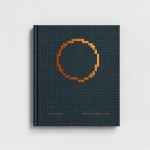
Some records emerge from a place. Kicking A Dark Horse seems to have been trapped inside one, breathing through limestone while the road above repeats its insistent Morse code. The third volume in Greyfade's FOLIO series binds a full-length recording in hardcover form, pairing nine modular-synthesizer pieces by sound artist Josh Mason with his book-length A Temporally Untethered Travelogue of the State(s) of Florida. The parenthetical plural opens beneath the state as a grammatical sinkhole, hovering somewhere between drainage problem and family archive. Sound and language do not accompany one another so much as exchange organs. Between them lies a creature whose dreams glow behind fever-laden curtains.
Mason constructs the music from systems designed to resist mastery: streams of binary information tangled with oscillators pushed beyond their intended behavior, mismatched converters rubbing against delay lines built to strike. Chance supplies the abrasion, while Mason shapes its consequences with severe tenderness. The opening piece, “Unincorporated Community Fight Song,” gathers minute electronic gestures into a fragile social body. Its title promises ceremony, yet the music offers a municipality too dispersed for marching, each tone carrying a small lantern through the bloodstream. “Traumahawk (Volunteer Corps.)” brings that current closer to the skin.
The book teaches us to distrust illumination. Florida's brightness bleaches evidence and gives catastrophe a devotional sheen, turning parking lots into immaculate alibis. Mason watches radiance glance from hotel pools, sodium lamps, bridge pavement, television windows, and the blind terminus of travel. History and hallucination occupy the same overexposed frame. Water initially proposes another grammar, carrying childhood behind the engineering required to keep tenderness above sea level. Every beautiful image drags behind it a permit or pipe, some buried cost still accruing interest. Within this contaminated radiance, “Would Go” reads as a message recovered after its senders have vanished into their own machinery. “A Tomb” receives the signal and folds it inward. Tiny electronic movements flare inside a chamber too immense for human tenancy.
Time in Mason's Florida refuses the road's forward command. A vacuum cord catches beneath a wheel. Film accepts multiple exposures until childhood and adulthood share one face. The self disperses through grandparents' kitchens, a father's unruly metaphysics, friends dead or disappearing, and rooms abandoned after a final glance. Autobiography consequently loses its borders, seeping into county roads and municipal failure until identity becomes a public utility with unreliable service. “Hellified Ire” occupies this psychic center, gritted with a friction that makes duration sound combustible. The track does not illustrate injury but discovers the frequency at which a scar communicates the history of its becoming. Beneath it, development proceeds with administrative calm: mangroves uprooted, shell middens mined, bridges arriving out of sequence, communities translated from ink into debris.
Even the page refuses passive service. Paragraphs crowd the margins while isolated phrases drift through broad white fields. “You have one new message” returns with a machine's immaculate courtesy, announcing contact from an adjacent dimension. The blankness pressurizes whatever language has left unresolved; silence becomes an active material, dense enough to bend memory around it. That spatial tension enters “No Vacancy Loose And Violent In The Socket,” whose liquid delicacy carries light through an electrical wound. The title's idiom opens into metaphysical eviction. “Repair 22,000,000” then crosshatches luminous impulses and removes them strip by strip, until perception confronts its scaffolding. Repair here means attention practiced under impossible conditions. The past cannot be restored, but its wreckage can still be weighed and cataloged.
Mason's surrealism achieves its force by refusing escape. A gull falls burning while a worker finishes his cigarette. A chained man stands beyond the dune and receives the terrible anonymity of being ignored. Elsewhere, a landmark dragon collapses into brackish water, its forgotten sacrifice sinking beneath civic memory. Rockets rupture the coast, after which commerce sprouts from the remains. The comedy of it all curdles inside the throat because absurdity has become realism stripped of public-relations niceties. “Live, From Behind The Power Curve” answers with implied voices and celestial pressure, a broadcast whose choir has no mouths, while “A Garden” opens nearby, though its peace carries no innocence. Delicate tones admit radiance through damaged material, allowing beauty to exist without laundering what produced it.
That ethical refusal gives Kicking A Dark Horse its unusual inflammation. Broken clocks converse with air conditioners; insects enter the same damaged orchestra as saws and failing batteries. The urban and the sublime trade masks until no hierarchy survives. Near the book's close, “La Florida” accumulates objects, injuries, relatives, jokes, appetites, and ghosts. Definition overloads until its circuitry blooms, leaving home immense enough to contain its own indictment. Love for a place can contain the evidence against it. Mason neither resolves that contradiction nor displays it as a trophy. He lets attachment remain morally unfinished, an animal bucking against the enclosure of explanation.
The work's final command is double: capture, release. Mason catches a vanishing place while exposing the violence concealed inside every net, then permits it to escape through heat and ungovernable time. What remains is a haunting of the machine of preservation, salt whitening the circuitry while water rehearses its patient coup below. Yet the deepest disturbance arrives elsewhere. Perhaps memory has never lived inside us at all. Perhaps landscapes use human beings as temporary recording devices, growing eyes to witness their own erasure and nervous systems capable of grieving it. Under that possibility, Kicking A Dark Horse becomes a state dreaming through Mason of the day it will no longer require a witness, because the witness, the wound, and the map will have entered the same clouded water.
Mason constructs the music from systems designed to resist mastery: streams of binary information tangled with oscillators pushed beyond their intended behavior, mismatched converters rubbing against delay lines built to strike. Chance supplies the abrasion, while Mason shapes its consequences with severe tenderness. The opening piece, “Unincorporated Community Fight Song,” gathers minute electronic gestures into a fragile social body. Its title promises ceremony, yet the music offers a municipality too dispersed for marching, each tone carrying a small lantern through the bloodstream. “Traumahawk (Volunteer Corps.)” brings that current closer to the skin.
The book teaches us to distrust illumination. Florida's brightness bleaches evidence and gives catastrophe a devotional sheen, turning parking lots into immaculate alibis. Mason watches radiance glance from hotel pools, sodium lamps, bridge pavement, television windows, and the blind terminus of travel. History and hallucination occupy the same overexposed frame. Water initially proposes another grammar, carrying childhood behind the engineering required to keep tenderness above sea level. Every beautiful image drags behind it a permit or pipe, some buried cost still accruing interest. Within this contaminated radiance, “Would Go” reads as a message recovered after its senders have vanished into their own machinery. “A Tomb” receives the signal and folds it inward. Tiny electronic movements flare inside a chamber too immense for human tenancy.
Time in Mason's Florida refuses the road's forward command. A vacuum cord catches beneath a wheel. Film accepts multiple exposures until childhood and adulthood share one face. The self disperses through grandparents' kitchens, a father's unruly metaphysics, friends dead or disappearing, and rooms abandoned after a final glance. Autobiography consequently loses its borders, seeping into county roads and municipal failure until identity becomes a public utility with unreliable service. “Hellified Ire” occupies this psychic center, gritted with a friction that makes duration sound combustible. The track does not illustrate injury but discovers the frequency at which a scar communicates the history of its becoming. Beneath it, development proceeds with administrative calm: mangroves uprooted, shell middens mined, bridges arriving out of sequence, communities translated from ink into debris.
Even the page refuses passive service. Paragraphs crowd the margins while isolated phrases drift through broad white fields. “You have one new message” returns with a machine's immaculate courtesy, announcing contact from an adjacent dimension. The blankness pressurizes whatever language has left unresolved; silence becomes an active material, dense enough to bend memory around it. That spatial tension enters “No Vacancy Loose And Violent In The Socket,” whose liquid delicacy carries light through an electrical wound. The title's idiom opens into metaphysical eviction. “Repair 22,000,000” then crosshatches luminous impulses and removes them strip by strip, until perception confronts its scaffolding. Repair here means attention practiced under impossible conditions. The past cannot be restored, but its wreckage can still be weighed and cataloged.
Mason's surrealism achieves its force by refusing escape. A gull falls burning while a worker finishes his cigarette. A chained man stands beyond the dune and receives the terrible anonymity of being ignored. Elsewhere, a landmark dragon collapses into brackish water, its forgotten sacrifice sinking beneath civic memory. Rockets rupture the coast, after which commerce sprouts from the remains. The comedy of it all curdles inside the throat because absurdity has become realism stripped of public-relations niceties. “Live, From Behind The Power Curve” answers with implied voices and celestial pressure, a broadcast whose choir has no mouths, while “A Garden” opens nearby, though its peace carries no innocence. Delicate tones admit radiance through damaged material, allowing beauty to exist without laundering what produced it.
That ethical refusal gives Kicking A Dark Horse its unusual inflammation. Broken clocks converse with air conditioners; insects enter the same damaged orchestra as saws and failing batteries. The urban and the sublime trade masks until no hierarchy survives. Near the book's close, “La Florida” accumulates objects, injuries, relatives, jokes, appetites, and ghosts. Definition overloads until its circuitry blooms, leaving home immense enough to contain its own indictment. Love for a place can contain the evidence against it. Mason neither resolves that contradiction nor displays it as a trophy. He lets attachment remain morally unfinished, an animal bucking against the enclosure of explanation.
The work's final command is double: capture, release. Mason catches a vanishing place while exposing the violence concealed inside every net, then permits it to escape through heat and ungovernable time. What remains is a haunting of the machine of preservation, salt whitening the circuitry while water rehearses its patient coup below. Yet the deepest disturbance arrives elsewhere. Perhaps memory has never lived inside us at all. Perhaps landscapes use human beings as temporary recording devices, growing eyes to witness their own erasure and nervous systems capable of grieving it. Under that possibility, Kicking A Dark Horse becomes a state dreaming through Mason of the day it will no longer require a witness, because the witness, the wound, and the map will have entered the same clouded water.
Hozuki + Cornwave: Oblivion

Artist: Hozuki + Cornwave (@)
Title: Oblivion
Format: 10"
Label: self-released
Distributor: downtown
Rated:
Title: Oblivion
Format: 10"
Label: self-released
Distributor: downtown
Rated:
Across its brief nine-minute span, Oblivion functions as a miniature atlas of disappearance. Its three titles evoke territories, yet the release seems more interested in private territories within than in geography without. The title track opens a blissful expanse where the self can drift, relieved of the obligation to explain itself. Glorious electronic washes breathe through chordal imaginations, exchanging oxygen with elusive hints of melody. Every sound appears softened by immeasurable distance, carrying the strange intimacy of something remembered before it has occurred, a reverse déjà vu of the mind. Hozuki and Cornwave suspend the listener inside a radiant parenthesis, a place where existence becomes sufficient unto itself.
“Tamriel” introduces a more arpeggiated current, turning the ear into a filmic mechanism powered by nostalgia’s combustible residue. Notes flicker forward while shedding the certainty of survival. The piece moves, yet its destination remains concealed behind the very momentum that promises to reveal it. Human progress becomes lightning immobilized within an invisible archive, its violence preserved as a mere hint of illumination. This tension gives the track its quiet metaphysical charge. Every pulse suggests that movement may be another form of stasis, merely viewed from within the machine of which we are all a part.
“Winterhold” concludes the release with a depth of stillness so encompassing that it seems to cradle the listener from the inside out. The music sinks beneath ordinary duration, entering mineral-rich sediment where seconds accumulate without passing. Yet darkness gathers beneath the beauty. Trauma unfolds petal by scarred petal, awakening gradually to the terrible delicacy of its own construction. Solace here does not require brightness or public proof.
That may be Oblivion’s most profound gesture. Forgetting emerges as a temporary calibration of mercy, a room built inside the wound where consciousness can enjoy its deformities and sit unrecognized.
“Tamriel” introduces a more arpeggiated current, turning the ear into a filmic mechanism powered by nostalgia’s combustible residue. Notes flicker forward while shedding the certainty of survival. The piece moves, yet its destination remains concealed behind the very momentum that promises to reveal it. Human progress becomes lightning immobilized within an invisible archive, its violence preserved as a mere hint of illumination. This tension gives the track its quiet metaphysical charge. Every pulse suggests that movement may be another form of stasis, merely viewed from within the machine of which we are all a part.
“Winterhold” concludes the release with a depth of stillness so encompassing that it seems to cradle the listener from the inside out. The music sinks beneath ordinary duration, entering mineral-rich sediment where seconds accumulate without passing. Yet darkness gathers beneath the beauty. Trauma unfolds petal by scarred petal, awakening gradually to the terrible delicacy of its own construction. Solace here does not require brightness or public proof.
That may be Oblivion’s most profound gesture. Forgetting emerges as a temporary calibration of mercy, a room built inside the wound where consciousness can enjoy its deformities and sit unrecognized.
Ruben Kotkamp: fall/winter 19'20
Artist: Ruben Kotkamp (@)
Title: fall/winter 19'20
Format: Download Only (MP3 only)
Label: self-released
Rated:
Title: fall/winter 19'20
Format: Download Only (MP3 only)
Label: self-released
Rated:
For this brief yet strangely visceral album, Ruben Kotkamp has grafted pieces of his work across dance, art installations, and concert music into a self-contained entity. “I am trying to approach music as design,” says the Dutch artist and composer, but one might just as easily find him trying to approach design as music. While there is little on the surface of things to suggest a common theme, if you peel back even one layer of said surface you will find an undeniable genetic bond at play. It is as if the voices, cello, electronics, and other signals that constitute the project’s elements have interbreed for millennia until the hybrid sonic species we encounter here is ready to open its mouth in search of autobiographical truths. Whether in the spoken words of “ett litet våld” and “l’ensorcellement,” each a ghost of itself kissing the sun with wintry regard, or the tactile minimalism of “like a virgin,” which examines multiple shades of first contact, even the most ineffable utterances must rise from a physical body. In that sense, Kotkamp’s experience in museum spaces becomes apparent in the sheer materiality of pieces like “untitled in chrome” and “untitled in ultraviolence.” Both reveal a Tim Hecker influence, but also a willingness to tread beyond the embrace of comparison across a melting tundra until the world itself becomes a watery bed of dreams. As in the latter track, transmissions beam throughout from the apparatus of the soul, masticated by a dark hunger until they arrive in the stomachs of our regard, where they dissolve almost instantly, thus returning to the blood from which they were born.