
Wednesday, August 19, 2026
Browse by Genre
Industrial Music / Industrial Metal / Aggro Industrial / Electro Metal
Industrial Noise / Power Noise / Harsh Noise
Synth Pop / Electro Pop / Synth-Electronica
Techno / Trance / Goa / Drum'n'Bass / Jungle / Tribal / Trip-Hop
Ambient / Electronica / Ethereal / Dub / Soundscapes / Abstract
Experimental / Avantgarde / Weird & Wired / Glitch / Noise / Field Recording
Dark / Gothic / Wave / New Wave / Dark Wave / Industrial Gothic
New Music / Downtown / Avantgarde Jazz / New Classical / World
Search Reviews
Music Reviews
Jude: Zakaz

There are albums that politely invite the listener inside. "Zakaz" is not one of them. It kicks the door open, drags a concrete block across the floor, and then stares at you as if you are somehow responsible for the state of the world.
For more than two decades, the Polish collective JUDE has occupied a peculiar and stubborn corner of underground culture, operating as much as a multimedia organism as a band. Their work has long resisted neat classification, drawing from industrial, hardcore, post-punk, sludge, noise, and experimental art practices while maintaining a fierce independence from both commercial expectations and underground orthodoxies. JUDE's history is littered with records, visual works, films, activism, controversies, and the sort of legends that tend to accumulate around artists who seem fundamentally uninterested in behaving themselves.
"Zakaz" ("Prohibition" in Polish) feels like the culmination of that attitude. Not because it abandons the group's past, but because it sharpens it. The seven tracks gathered here sound less like songs than pressure systems colliding. The production by Kamil azikowski deserves particular mention: every element arrives with startling physicality. The guitars grind and scrape like industrial machinery operating beyond safety regulations, the drums hit with the certainty of demolition equipment, and Wiktor Skok's vocals emerge from the turbulence like urgent transmissions from a collapsing communications network. The result is an album whose aggression is not chaotic but meticulously engineered.
What makes "Zakaz" compelling is that its heaviness never feels ornamental. Many contemporary industrial and noise-adjacent releases mistake volume for intensity, as if distortion alone could substitute for conviction. JUDE understand a more difficult truth: genuine force comes from tension. Throughout the album, moments of suffocating density coexist with carefully constructed spaces, allowing the listener to feel the weight of each impact rather than merely endure an endless barrage.
Tracks such as "Ignition. Szron" and "Misery Within" establish a landscape of friction and resistance, while the title piece stands like a monument built from rusted steel and unresolved anxieties. Elsewhere, the sprawling "Beton Blok. Methodology" unfolds with the grim patience of urban decay itself, transforming repetition into a kind of architectural statement. The music often feels less composed than excavated, as though JUDE have uncovered these sounds buried beneath layers of concrete and social debris.
There is also something distinctly physical about this record. Listening to "Zakaz" evokes textures rather than melodies: cold metal, cracked asphalt, damp walls, electrical interference. One is reminded that industrial music, at its best, is not merely about machines. It is about what machines do to people, how environments shape emotions, and how modern life leaves its marks on both bodies and landscapes.
Yet beneath the abrasion lurks an unexpected humanity. For all its hostility, "Zakaz" is not nihilistic. The album carries the emotional charge of individuals still wrestling with the world rather than surrendering to it. Anger remains present because disappointment remains present; disappointment remains present because some part of the artist still believes things could be otherwise. That fragile thread of hope, hidden beneath layers of noise and distortion, gives the record much of its emotional weight.
The decision by Zoharum to finally issue the album on vinyl feels particularly appropriate. This is music that benefits from physical presence. A limited 180-gram pressing, accompanied by the band's characteristic visual aesthetic, transforms "Zakaz" from a collection of tracks into an object with mass, texture, and permanence. In an age where songs often pass through our lives with the lifespan of a social media post, there is something quietly defiant about a record that insists on occupying actual space.
"Zakaz" does not seek comfort, accessibility, or fashionable relevance. It seeks impact. And it achieves it with remarkable precision. If this is indeed the strongest entry in JUDE's discography, as some have suggested, it is because the band has learned how to transform raw aggression into something larger: a language of resistance, frustration, endurance, and dark beauty.
Like a factory chimney silhouetted against a winter sky, "Zakaz" is harsh, imposing, and strangely magnificent.
For more than two decades, the Polish collective JUDE has occupied a peculiar and stubborn corner of underground culture, operating as much as a multimedia organism as a band. Their work has long resisted neat classification, drawing from industrial, hardcore, post-punk, sludge, noise, and experimental art practices while maintaining a fierce independence from both commercial expectations and underground orthodoxies. JUDE's history is littered with records, visual works, films, activism, controversies, and the sort of legends that tend to accumulate around artists who seem fundamentally uninterested in behaving themselves.
"Zakaz" ("Prohibition" in Polish) feels like the culmination of that attitude. Not because it abandons the group's past, but because it sharpens it. The seven tracks gathered here sound less like songs than pressure systems colliding. The production by Kamil azikowski deserves particular mention: every element arrives with startling physicality. The guitars grind and scrape like industrial machinery operating beyond safety regulations, the drums hit with the certainty of demolition equipment, and Wiktor Skok's vocals emerge from the turbulence like urgent transmissions from a collapsing communications network. The result is an album whose aggression is not chaotic but meticulously engineered.
What makes "Zakaz" compelling is that its heaviness never feels ornamental. Many contemporary industrial and noise-adjacent releases mistake volume for intensity, as if distortion alone could substitute for conviction. JUDE understand a more difficult truth: genuine force comes from tension. Throughout the album, moments of suffocating density coexist with carefully constructed spaces, allowing the listener to feel the weight of each impact rather than merely endure an endless barrage.
Tracks such as "Ignition. Szron" and "Misery Within" establish a landscape of friction and resistance, while the title piece stands like a monument built from rusted steel and unresolved anxieties. Elsewhere, the sprawling "Beton Blok. Methodology" unfolds with the grim patience of urban decay itself, transforming repetition into a kind of architectural statement. The music often feels less composed than excavated, as though JUDE have uncovered these sounds buried beneath layers of concrete and social debris.
There is also something distinctly physical about this record. Listening to "Zakaz" evokes textures rather than melodies: cold metal, cracked asphalt, damp walls, electrical interference. One is reminded that industrial music, at its best, is not merely about machines. It is about what machines do to people, how environments shape emotions, and how modern life leaves its marks on both bodies and landscapes.
Yet beneath the abrasion lurks an unexpected humanity. For all its hostility, "Zakaz" is not nihilistic. The album carries the emotional charge of individuals still wrestling with the world rather than surrendering to it. Anger remains present because disappointment remains present; disappointment remains present because some part of the artist still believes things could be otherwise. That fragile thread of hope, hidden beneath layers of noise and distortion, gives the record much of its emotional weight.
The decision by Zoharum to finally issue the album on vinyl feels particularly appropriate. This is music that benefits from physical presence. A limited 180-gram pressing, accompanied by the band's characteristic visual aesthetic, transforms "Zakaz" from a collection of tracks into an object with mass, texture, and permanence. In an age where songs often pass through our lives with the lifespan of a social media post, there is something quietly defiant about a record that insists on occupying actual space.
"Zakaz" does not seek comfort, accessibility, or fashionable relevance. It seeks impact. And it achieves it with remarkable precision. If this is indeed the strongest entry in JUDE's discography, as some have suggested, it is because the band has learned how to transform raw aggression into something larger: a language of resistance, frustration, endurance, and dark beauty.
Like a factory chimney silhouetted against a winter sky, "Zakaz" is harsh, imposing, and strangely magnificent.
Barcoder: Begging For Coins
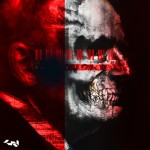
Artist: Barcoder
Title: Begging For Coins
Format: Download Only (MP3 + Lossless)
Label: CRL Studios
Rated:


Title: Begging For Coins
Format: Download Only (MP3 + Lossless)
Label: CRL Studios
Rated:
There are albums that politely invite listeners into their world. "Begging For Coins" kicks the door open, tracks mud across the carpet, points at the cracks in the walls, and demands to know why everyone is pretending not to notice them.
This is the latest dispatch from Barcoder, the politically charged side project of James Church, a figure well known within industrial and dark electronic circles through projects such as Lucidstatic and Pandora's Black Box. Across two decades, Church has established himself as an artist capable of balancing aggression with meticulous production, crafting music that hits with the force of a hammer while retaining the precision of a scalpel. Under the Barcoder banner, however, subtlety is often less important than urgency.
"Begging For Coins" gathers material that did not make it onto previous releases, but describing it as a collection of leftovers would be profoundly misleading. If anything, the album reveals another side of the project's identity. Rather than feeling like discarded fragments, these fifteen tracks form a coherent portrait of frustration, disillusionment, and resistance in an era where outrage has become both a commodity and a form of entertainment.
Musically, the album occupies a fertile intersection between industrial music, rhythmic noise, cybernetic body music, and electronic aggression. Church constructs tracks from distorted percussion, corrosive synth lines, fractured samples, and machine-like grooves that seem engineered for both movement and confrontation. The production is dense but purposeful. Every metallic impact, every distorted pulse, every layer of electronic abrasion contributes to an atmosphere of perpetual pressure.
What separates Barcoder from countless industrial projects content to recycle genre conventions is the project's engagement with contemporary anxieties. These songs are deeply concerned with communication, power, alienation, and the increasingly strange relationship between human beings and the systems that mediate their lives. Social media platforms, political tribalism, corporate influence, public outrage, and economic precarity haunt the record like invisible architecture.
The opening sequence establishes this immediately. Tracks such as "Buried Alive", "Dental Plan" and "152S" present a world in which information circulates endlessly while understanding becomes increasingly scarce. Church's perspective is often confrontational, occasionally provocative, and sometimes deliberately uncomfortable. Whether listeners agree with every sentiment is almost beside the point. The album's strength lies less in providing answers than in capturing a pervasive sense of societal exhaustion.
The guest collaborators add valuable dimensions without diluting the project's identity. Angel Of Violence brings a raw vocal presence that amplifies the album's themes of labor, frustration, and personal erosion. Illuminator contributes additional textures that deepen the sonic density, while Krate's appearances introduce subtle variations in pacing and atmosphere. Throughout, Church remains the gravitational center, holding together material that could otherwise fragment under its own intensity.
One of the album's recurring themes is the tension between agency and helplessness. Again and again, the songs depict individuals confronting systems that appear indifferent, opaque, or actively hostile. Yet "Begging For Coins" never collapses into pure nihilism. Anger, after all, is often evidence that someone still believes change remains possible. Cynicism tends to be quieter. This record is many things, but quiet is not one of them.
There is also a curious humanity beneath the machinery. Tracks such as "You Could Have" and "Muddy Boots And Leather Hands" reveal moments of vulnerability hiding beneath the layers of distortion. The album understands that political frustration and personal disappointment often emerge from the same source: the painful gap between what exists and what might have been.
The sequencing contributes significantly to the listening experience. Rather than building toward a single climax, the record unfolds like a series of confrontations with different aspects of contemporary life. Economic anxiety, social fragmentation, cultural spectacle, technological mediation, and institutional distrust all appear as recurring motifs. By the time "No Access" closes the album, one feels less as though a story has ended than as though another chapter of an ongoing struggle has been documented.
The album often seems to recognize the absurdity of the systems it critiques. There is something almost surreal about a civilization capable of extraordinary technological achievements while simultaneously arguing with strangers online at three in the morning about things nobody will remember next week. Church appears acutely aware of this contradiction.
Ultimately, "Begging For Coins" succeeds because it transforms frustration into momentum. Rather than merely documenting dissatisfaction, it channels it into a barrage of rhythm, texture, and confrontation. The result is not always comfortable, nor is it intended to be. Comfort rarely changes minds. It mostly sells mattresses.
What Barcoder offers instead is a reminder that industrial music remains uniquely suited to documenting the psychological landscape of modern life. The machines have become more sophisticated, the networks more pervasive, and the distractions more efficient, but the fundamental questions remain stubbornly unresolved. "Begging For Coins" stares directly at that reality and responds with fifteen tracks of controlled electronic defiance.
This is the latest dispatch from Barcoder, the politically charged side project of James Church, a figure well known within industrial and dark electronic circles through projects such as Lucidstatic and Pandora's Black Box. Across two decades, Church has established himself as an artist capable of balancing aggression with meticulous production, crafting music that hits with the force of a hammer while retaining the precision of a scalpel. Under the Barcoder banner, however, subtlety is often less important than urgency.
"Begging For Coins" gathers material that did not make it onto previous releases, but describing it as a collection of leftovers would be profoundly misleading. If anything, the album reveals another side of the project's identity. Rather than feeling like discarded fragments, these fifteen tracks form a coherent portrait of frustration, disillusionment, and resistance in an era where outrage has become both a commodity and a form of entertainment.
Musically, the album occupies a fertile intersection between industrial music, rhythmic noise, cybernetic body music, and electronic aggression. Church constructs tracks from distorted percussion, corrosive synth lines, fractured samples, and machine-like grooves that seem engineered for both movement and confrontation. The production is dense but purposeful. Every metallic impact, every distorted pulse, every layer of electronic abrasion contributes to an atmosphere of perpetual pressure.
What separates Barcoder from countless industrial projects content to recycle genre conventions is the project's engagement with contemporary anxieties. These songs are deeply concerned with communication, power, alienation, and the increasingly strange relationship between human beings and the systems that mediate their lives. Social media platforms, political tribalism, corporate influence, public outrage, and economic precarity haunt the record like invisible architecture.
The opening sequence establishes this immediately. Tracks such as "Buried Alive", "Dental Plan" and "152S" present a world in which information circulates endlessly while understanding becomes increasingly scarce. Church's perspective is often confrontational, occasionally provocative, and sometimes deliberately uncomfortable. Whether listeners agree with every sentiment is almost beside the point. The album's strength lies less in providing answers than in capturing a pervasive sense of societal exhaustion.
The guest collaborators add valuable dimensions without diluting the project's identity. Angel Of Violence brings a raw vocal presence that amplifies the album's themes of labor, frustration, and personal erosion. Illuminator contributes additional textures that deepen the sonic density, while Krate's appearances introduce subtle variations in pacing and atmosphere. Throughout, Church remains the gravitational center, holding together material that could otherwise fragment under its own intensity.
One of the album's recurring themes is the tension between agency and helplessness. Again and again, the songs depict individuals confronting systems that appear indifferent, opaque, or actively hostile. Yet "Begging For Coins" never collapses into pure nihilism. Anger, after all, is often evidence that someone still believes change remains possible. Cynicism tends to be quieter. This record is many things, but quiet is not one of them.
There is also a curious humanity beneath the machinery. Tracks such as "You Could Have" and "Muddy Boots And Leather Hands" reveal moments of vulnerability hiding beneath the layers of distortion. The album understands that political frustration and personal disappointment often emerge from the same source: the painful gap between what exists and what might have been.
The sequencing contributes significantly to the listening experience. Rather than building toward a single climax, the record unfolds like a series of confrontations with different aspects of contemporary life. Economic anxiety, social fragmentation, cultural spectacle, technological mediation, and institutional distrust all appear as recurring motifs. By the time "No Access" closes the album, one feels less as though a story has ended than as though another chapter of an ongoing struggle has been documented.
The album often seems to recognize the absurdity of the systems it critiques. There is something almost surreal about a civilization capable of extraordinary technological achievements while simultaneously arguing with strangers online at three in the morning about things nobody will remember next week. Church appears acutely aware of this contradiction.
Ultimately, "Begging For Coins" succeeds because it transforms frustration into momentum. Rather than merely documenting dissatisfaction, it channels it into a barrage of rhythm, texture, and confrontation. The result is not always comfortable, nor is it intended to be. Comfort rarely changes minds. It mostly sells mattresses.
What Barcoder offers instead is a reminder that industrial music remains uniquely suited to documenting the psychological landscape of modern life. The machines have become more sophisticated, the networks more pervasive, and the distractions more efficient, but the fundamental questions remain stubbornly unresolved. "Begging For Coins" stares directly at that reality and responds with fifteen tracks of controlled electronic defiance.
Stabbed by Prongs: Static Skin

Artist: Stabbed by Prongs (@)
Title: Static Skin
Format: Download Only (MP3 + Lossless)
Label: self-released
Rated:
Title: Static Skin
Format: Download Only (MP3 + Lossless)
Label: self-released
Rated:
There is a long tradition in industrial music of treating human relationships as collateral damage. Machines grind, cities decay, systems collapse, and somewhere in the background a couple is having a very bad conversation under fluorescent lighting. "Static Skin", the second full-length release from Stabbed By Prongs, turns that perspective inside out. The machinery remains, humming ominously beneath the surface, but the real fractures occur between people.
Stabbed By Prongs is the studio project of Buffalo-based musician and producer Craig Drabik. After years spent playing in various bands before stepping away from music, he returned to creative work during the pandemic, channeling both personal reflection and the broader social unease of the period into a dark electronic project. While the DNA of industrial heavyweights and 1990s electronic acts remains present, "Static Skin" feels less like an exercise in genre revival and more like an attempt to explore emotional vulnerabilities through mechanical means.
The album thrives on contrast. EBM-driven percussion collides with electro textures, industrial grit meets moments of unexpected warmth, and a rotating cast of vocalists continually shifts the emotional perspective. Rather than presenting a single narrator, the record unfolds like a collection of interconnected viewpoints, each illuminating a different facet of intimacy, insecurity, longing, or disillusionment.
Opening track "Corpus" establishes the album's psychological territory immediately. Beneath its darkly seductive atmosphere lies a portrait of uncertainty and self-doubt. The music projects strength while simultaneously revealing the cracks underneath, creating a tension that becomes one of the album's defining characteristics.
"Another Realm" follows with a more melancholic tone, exploring emotional distance in an age where communication has never been easier and genuine connection often feels strangely elusive. The track captures the peculiar loneliness of trying to maintain closeness across invisible barriers, transforming digital-era intimacy into something both hopeful and fragile.
One of the album's greatest strengths is its use of multiple vocalists. Returning collaborators Ry White, Andy Breton, Kimberly Kornmeier, and Lail Brown each bring distinct personalities to the material, while Gabrielle Emerson's contribution adds a fresh dimension. Their varied performances prevent the album from becoming emotionally monochromatic, allowing each track to occupy its own psychological landscape.
The expansive "Pyromancer" provides one of the record's most intriguing detours. Moving away from straightforward industrial aggression, it drifts into a hypnotic electro-trip-hop environment where atmosphere becomes as important as rhythm. The track unfolds gradually, less interested in immediate impact than in creating a slow-burning sense of immersion.
Elsewhere, "Violent Delights" examines the corrosive dynamics of manipulation and emotional control. Rather than depicting conflict as explosive drama, the song presents it as something methodical and consuming, a process that quietly reshapes ident. The longing expressed here is not entirely comforting; it exists alongside the risk of losing oneself in another person. That ambiguity gives the finale its power. The album repeatedly returns to the idea that intimacy can be both refuge and threat, sanctuary and erosion.
What makes "Static Skin" particularly effective is its refusal to choose between emotional honesty and dancefloor energy. The rhythms remain kinetic, often forceful, yet the record's real momentum comes from its exploration of human connection. Every beat seems to push outward while every lyric pulls inward.
The result is an album that understands a curious truth about industrial and dark electronic music: beneath the machinery, beneath the distortion, beneath the synthetic surfaces, there is often a deeply human concern. "Static Skin" embraces that contradiction. It is an album of hard edges surrounding fragile emotions, a collection of songs where movement and introspection coexist without cancelling one another out.
Rather than merely revisiting the sounds of classic industrial and electro traditions, Stabbed By Prongs uses them as a framework for examining contemporary anxieties about identity, trust, and connection. The record leaves behind a lingering impression that the most complex systems are not technological at all, but emotional. Those systems are messy, unpredictable, and prone to failure. They are also the reason albums like "Static Skin" resonate long after the final beat fades.
Stabbed By Prongs is the studio project of Buffalo-based musician and producer Craig Drabik. After years spent playing in various bands before stepping away from music, he returned to creative work during the pandemic, channeling both personal reflection and the broader social unease of the period into a dark electronic project. While the DNA of industrial heavyweights and 1990s electronic acts remains present, "Static Skin" feels less like an exercise in genre revival and more like an attempt to explore emotional vulnerabilities through mechanical means.
The album thrives on contrast. EBM-driven percussion collides with electro textures, industrial grit meets moments of unexpected warmth, and a rotating cast of vocalists continually shifts the emotional perspective. Rather than presenting a single narrator, the record unfolds like a collection of interconnected viewpoints, each illuminating a different facet of intimacy, insecurity, longing, or disillusionment.
Opening track "Corpus" establishes the album's psychological territory immediately. Beneath its darkly seductive atmosphere lies a portrait of uncertainty and self-doubt. The music projects strength while simultaneously revealing the cracks underneath, creating a tension that becomes one of the album's defining characteristics.
"Another Realm" follows with a more melancholic tone, exploring emotional distance in an age where communication has never been easier and genuine connection often feels strangely elusive. The track captures the peculiar loneliness of trying to maintain closeness across invisible barriers, transforming digital-era intimacy into something both hopeful and fragile.
One of the album's greatest strengths is its use of multiple vocalists. Returning collaborators Ry White, Andy Breton, Kimberly Kornmeier, and Lail Brown each bring distinct personalities to the material, while Gabrielle Emerson's contribution adds a fresh dimension. Their varied performances prevent the album from becoming emotionally monochromatic, allowing each track to occupy its own psychological landscape.
The expansive "Pyromancer" provides one of the record's most intriguing detours. Moving away from straightforward industrial aggression, it drifts into a hypnotic electro-trip-hop environment where atmosphere becomes as important as rhythm. The track unfolds gradually, less interested in immediate impact than in creating a slow-burning sense of immersion.
Elsewhere, "Violent Delights" examines the corrosive dynamics of manipulation and emotional control. Rather than depicting conflict as explosive drama, the song presents it as something methodical and consuming, a process that quietly reshapes ident. The longing expressed here is not entirely comforting; it exists alongside the risk of losing oneself in another person. That ambiguity gives the finale its power. The album repeatedly returns to the idea that intimacy can be both refuge and threat, sanctuary and erosion.
What makes "Static Skin" particularly effective is its refusal to choose between emotional honesty and dancefloor energy. The rhythms remain kinetic, often forceful, yet the record's real momentum comes from its exploration of human connection. Every beat seems to push outward while every lyric pulls inward.
The result is an album that understands a curious truth about industrial and dark electronic music: beneath the machinery, beneath the distortion, beneath the synthetic surfaces, there is often a deeply human concern. "Static Skin" embraces that contradiction. It is an album of hard edges surrounding fragile emotions, a collection of songs where movement and introspection coexist without cancelling one another out.
Rather than merely revisiting the sounds of classic industrial and electro traditions, Stabbed By Prongs uses them as a framework for examining contemporary anxieties about identity, trust, and connection. The record leaves behind a lingering impression that the most complex systems are not technological at all, but emotional. Those systems are messy, unpredictable, and prone to failure. They are also the reason albums like "Static Skin" resonate long after the final beat fades.
Decent News: Computer EP

Artist: Decent News (@)
Title: Computer EP
Format: Download Only (MP3 + Lossless)
Label: Kowloon [Walled City] Studios
Rated:
Title: Computer EP
Format: Download Only (MP3 + Lossless)
Label: Kowloon [Walled City] Studios
Rated:
There’s a particular exhaustion that only modern life can produce: being constantly connected, constantly informed, and somehow constantly wrong about everything anyway. "Computer EP" by DECENT NEWS takes that exhaustion, drenches it in distortion, hardcore abrasion, and industrial grime, then hurls it back at the listener like a riot shield ricocheting off concrete.
Founded in 2016 and operating somewhere between industrial metal, American hardcore, and the sound of a server room developing anger issues, DECENT NEWS have always approached aggression less as spectacle than as diagnosis. "Computer" continues that trajectory with admirable hostility. Five tracks, no wasted motion, and just enough bleak humor to remind you that civilization now largely consists of people doomscrolling themselves into ideological trench warfare while pretending this counts as participation.
“Flesh for the Feast” opens the EP in full confrontation mode, channeling protest violence, state repression, and collective disillusionment into a barrage of grinding riffs and barked accusations. The track’s central tension lies in its refusal to romanticize resistance. There are no heroic poses here, only bodies colliding with systems that already calculated the acceptable level of damage beforehand. The hardcore influence is unmistakable, but the industrial textures give everything a colder, more mechanized cruelty, as if the brutality itself had been automated for efficiency.
“Drowned in Power” pushes deeper into grotesque allegory. Its imagery of execution, mutilation, and a body incapable of dying feels almost medieval, yet disturbingly contemporary in spirit. Humanity’s appetite for spectacle has not evolved nearly as much as its technology. We’ve simply upgraded the delivery systems. The track lurches forward with an ugly momentum that suits its themes perfectly, every riff sounding partially rusted, every vocal line delivered like someone trying to spit blood out of a cracked helmet.
Then comes “Help Computer”, an instrumental interlude built around archival media samples celebrating the rise of the information age. Positioned in the center of the EP, it functions like a brief hallucination of optimism before the record resumes dragging itself through psychic wreckage. There’s something darkly comic about hearing outdated techno-utopian rhetoric framed by the knowledge of what followed: misinformation economies, algorithmic paranoia, entire populations confidently citing fabricated headlines written by websites that look like phishing scams designed by exhausted raccoons.
The emotional core of the EP, however, sits inside “Bloated & Blue”. Beneath the heaviness and hostility, the song exposes something rawer: isolation curdling into self-erasure. The lyrics move through addiction, self-loathing, suicidal ideation, and emotional abandonment with an uncomfortable directness. Importantly, the track never glamorizes despair. It sounds trapped inside it. The repetition of drowning imagery gives the piece a suffocating quality, as though the music itself were struggling to surface for air.
Closer “Valueless Trade” leaves little room for redemption, which feels consistent with the EP’s worldview. DECENT NEWS aren’t interested in catharsis. They document collapse with the grim focus of people who no longer believe collapse is hypothetical. Yet there’s still an undeniable vitality in the performance. Rage, after all, remains one of the few emotions capable of cutting through contemporary numbness.
Musically, the band’s fusion of industrial textures and hardcore directness avoids many of the clichés that plague both genres. The electronics don’t merely decorate the riffs, and the heaviness never devolves into empty machismo. There’s an underlying sense of social observation holding the whole thing together, however abrasive the delivery becomes.
Released via Kowloon [Walled City] Studios, "Computer EP" feels less like a polished statement than a compressed transmission from inside a nervous breakdown shared collectively by half the planet. Which, to be fair, may currently qualify as realism.
Not exactly comforting listening. But comfort is part of the problem this record is screaming about in the first place.
Founded in 2016 and operating somewhere between industrial metal, American hardcore, and the sound of a server room developing anger issues, DECENT NEWS have always approached aggression less as spectacle than as diagnosis. "Computer" continues that trajectory with admirable hostility. Five tracks, no wasted motion, and just enough bleak humor to remind you that civilization now largely consists of people doomscrolling themselves into ideological trench warfare while pretending this counts as participation.
“Flesh for the Feast” opens the EP in full confrontation mode, channeling protest violence, state repression, and collective disillusionment into a barrage of grinding riffs and barked accusations. The track’s central tension lies in its refusal to romanticize resistance. There are no heroic poses here, only bodies colliding with systems that already calculated the acceptable level of damage beforehand. The hardcore influence is unmistakable, but the industrial textures give everything a colder, more mechanized cruelty, as if the brutality itself had been automated for efficiency.
“Drowned in Power” pushes deeper into grotesque allegory. Its imagery of execution, mutilation, and a body incapable of dying feels almost medieval, yet disturbingly contemporary in spirit. Humanity’s appetite for spectacle has not evolved nearly as much as its technology. We’ve simply upgraded the delivery systems. The track lurches forward with an ugly momentum that suits its themes perfectly, every riff sounding partially rusted, every vocal line delivered like someone trying to spit blood out of a cracked helmet.
Then comes “Help Computer”, an instrumental interlude built around archival media samples celebrating the rise of the information age. Positioned in the center of the EP, it functions like a brief hallucination of optimism before the record resumes dragging itself through psychic wreckage. There’s something darkly comic about hearing outdated techno-utopian rhetoric framed by the knowledge of what followed: misinformation economies, algorithmic paranoia, entire populations confidently citing fabricated headlines written by websites that look like phishing scams designed by exhausted raccoons.
The emotional core of the EP, however, sits inside “Bloated & Blue”. Beneath the heaviness and hostility, the song exposes something rawer: isolation curdling into self-erasure. The lyrics move through addiction, self-loathing, suicidal ideation, and emotional abandonment with an uncomfortable directness. Importantly, the track never glamorizes despair. It sounds trapped inside it. The repetition of drowning imagery gives the piece a suffocating quality, as though the music itself were struggling to surface for air.
Closer “Valueless Trade” leaves little room for redemption, which feels consistent with the EP’s worldview. DECENT NEWS aren’t interested in catharsis. They document collapse with the grim focus of people who no longer believe collapse is hypothetical. Yet there’s still an undeniable vitality in the performance. Rage, after all, remains one of the few emotions capable of cutting through contemporary numbness.
Musically, the band’s fusion of industrial textures and hardcore directness avoids many of the clichés that plague both genres. The electronics don’t merely decorate the riffs, and the heaviness never devolves into empty machismo. There’s an underlying sense of social observation holding the whole thing together, however abrasive the delivery becomes.
Released via Kowloon [Walled City] Studios, "Computer EP" feels less like a polished statement than a compressed transmission from inside a nervous breakdown shared collectively by half the planet. Which, to be fair, may currently qualify as realism.
Not exactly comforting listening. But comfort is part of the problem this record is screaming about in the first place.
Death By Love: 444

Some bands are born from artistic vision. Others are born because reality detonates the previous arrangement and leaves musicians standing in the smoke holding damaged synthesizers and unresolved feelings. Death By Love clearly belongs to the second category. And honestly, that tends to produce better music. Stability is wonderful for cardiovascular health, less effective for goth-industrial records.
After the collapse of Dichro, producer and multi-instrumentalist Peter Guellard could have easily disappeared into the familiar post-band limbo of vague announcements and unfinished Dropbox folders. Instead, an unexpected creative collision with Polish vocalist Inga Habiba gave rise to something darker, sleeker, and emotionally more expansive. Their debut album 444, released through Distortion Productions, feels less like a debut and more like the documentation of two artists rapidly discovering a shared nocturnal language.
The album inhabits familiar territories: darkwave, industrial, gothic electronics, trip-hop atmospherics. Yet what makes "444" compelling is not genre allegiance but emotional architecture. Guellard and Habiba understand that darkness without tension quickly becomes costume drama. Plenty of modern darkwave records sound like attractive people sadly staring at candles while expensive reverb plugins do all the emotional labor. "444" instead carries genuine instability beneath its polished surfaces. There is longing here, exhaustion, seduction, spiritual confusion, resilience. Human wreckage, essentially. The eternal fuel source of art and late-night online conversations.
“Sellenno” opens the album like the slow unveiling of a ritual space. Habiba’s voice arrives with remarkable control, never overreaching into theatricality. She understands restraint, which in this style is invaluable. Rather than dominating the arrangements, her vocals move through them like smoke through ruined architecture. Guellard’s production meanwhile balances cinematic density with enough breathing room to avoid collapsing into gothic wallpaper.
“Cosmic Power” and “In Unity” deepen the album’s central mood: a strange mixture of vulnerability and propulsion. Rhythms pulse steadily beneath layers of shimmering synth textures, while guitars emerge not as rock gestures but as emotional weather systems. There is a subtle dialogue throughout the record between European coldwave melancholy, Eastern Asian nuances and American industrial precision, perhaps unsurprising considering the project’s transatlantic construction. The internet occasionally produces something more meaningful than targeted advertisements and collective neurological erosion.
One of the album’s greatest strengths lies in how naturally it integrates its influences. Trip-hop elements surface in the pacing and atmosphere, but never feel nostalgically borrowed from the 1990s. The gothic aesthetics avoid parody. Industrial textures appear as emotional pressure rather than brute aggression. Even the more dramatic moments maintain a sense of intimacy. “I Don’t” captures this especially well, allowing tension to simmer rather than explode.
“Strong Inside” deserves mention for how effectively it balances heaviness and momentum. The additional guitar work from Tomasz “Mechu” Wojciechowski injects a muscular undercurrent without pushing the track into metal territory. It remains elegant in its darkness, which is harder to achieve than people assume. Many artists mistake volume for intensity. "444" generally understands that true emotional heaviness often whispers.
Then there is “God”, perhaps the album’s emotional pivot point. Guellard’s vocal contributions add an almost confrontational fragility, creating one of the record’s most human moments. Not human in the triumphant self-help sense modern culture demands, but human in the older sense: uncertain creatures standing beneath incomprehensible skies while trying not to emotionally disintegrate before breakfast.
“Forest” and “Ziro” drift toward more atmospheric terrain, the latter enriched by Wojciech Lubertowicz’s duduk performance, which introduces a mournful organic texture that cuts beautifully through the electronic framework. It is one of several moments where "444" reveals its interest in spatial atmosphere rather than merely song construction. The album frequently feels architectural, as though each track were building another chamber inside an abandoned cathedral lit by malfunctioning LEDs.
The closing “Sellenno (Reprise)” stretches nearly eight minutes and wisely refuses the temptation of a grand explosive finale. Instead, it dissolves slowly into reflection, spoken word fragments, lingering textures, and emotional afterimages. The effect is less “ending” than “remaining haunted for a while”.
What ultimately elevates "444" beyond competent darkwave revivalism is its sincerity. There is no detectable cynicism in its construction. Guellard and Habiba seem genuinely invested in building emotional worlds rather than simply reproducing scene aesthetics. That matters. Dark music without emotional sincerity becomes fashion photography with drum machines.
The backstory inevitably shadows the album: a dissolved project, international collaboration, rapid creative reinvention, musicians rebuilding after rupture. Yet "444" never feels burdened by narrative baggage. Instead, it transforms instability into momentum. There is a difference between music that romanticizes darkness and music that has actually spent time wandering through it with open eyes.
In that sense, "444" succeeds beautifully. It dances with ghosts without turning them into mascots. And somewhere between Pittsburgh and ód, between collapsing pasts and uncertain futures, Death By Love managed to create a debut that feels strangely alive inside its shadows.
After the collapse of Dichro, producer and multi-instrumentalist Peter Guellard could have easily disappeared into the familiar post-band limbo of vague announcements and unfinished Dropbox folders. Instead, an unexpected creative collision with Polish vocalist Inga Habiba gave rise to something darker, sleeker, and emotionally more expansive. Their debut album 444, released through Distortion Productions, feels less like a debut and more like the documentation of two artists rapidly discovering a shared nocturnal language.
The album inhabits familiar territories: darkwave, industrial, gothic electronics, trip-hop atmospherics. Yet what makes "444" compelling is not genre allegiance but emotional architecture. Guellard and Habiba understand that darkness without tension quickly becomes costume drama. Plenty of modern darkwave records sound like attractive people sadly staring at candles while expensive reverb plugins do all the emotional labor. "444" instead carries genuine instability beneath its polished surfaces. There is longing here, exhaustion, seduction, spiritual confusion, resilience. Human wreckage, essentially. The eternal fuel source of art and late-night online conversations.
“Sellenno” opens the album like the slow unveiling of a ritual space. Habiba’s voice arrives with remarkable control, never overreaching into theatricality. She understands restraint, which in this style is invaluable. Rather than dominating the arrangements, her vocals move through them like smoke through ruined architecture. Guellard’s production meanwhile balances cinematic density with enough breathing room to avoid collapsing into gothic wallpaper.
“Cosmic Power” and “In Unity” deepen the album’s central mood: a strange mixture of vulnerability and propulsion. Rhythms pulse steadily beneath layers of shimmering synth textures, while guitars emerge not as rock gestures but as emotional weather systems. There is a subtle dialogue throughout the record between European coldwave melancholy, Eastern Asian nuances and American industrial precision, perhaps unsurprising considering the project’s transatlantic construction. The internet occasionally produces something more meaningful than targeted advertisements and collective neurological erosion.
One of the album’s greatest strengths lies in how naturally it integrates its influences. Trip-hop elements surface in the pacing and atmosphere, but never feel nostalgically borrowed from the 1990s. The gothic aesthetics avoid parody. Industrial textures appear as emotional pressure rather than brute aggression. Even the more dramatic moments maintain a sense of intimacy. “I Don’t” captures this especially well, allowing tension to simmer rather than explode.
“Strong Inside” deserves mention for how effectively it balances heaviness and momentum. The additional guitar work from Tomasz “Mechu” Wojciechowski injects a muscular undercurrent without pushing the track into metal territory. It remains elegant in its darkness, which is harder to achieve than people assume. Many artists mistake volume for intensity. "444" generally understands that true emotional heaviness often whispers.
Then there is “God”, perhaps the album’s emotional pivot point. Guellard’s vocal contributions add an almost confrontational fragility, creating one of the record’s most human moments. Not human in the triumphant self-help sense modern culture demands, but human in the older sense: uncertain creatures standing beneath incomprehensible skies while trying not to emotionally disintegrate before breakfast.
“Forest” and “Ziro” drift toward more atmospheric terrain, the latter enriched by Wojciech Lubertowicz’s duduk performance, which introduces a mournful organic texture that cuts beautifully through the electronic framework. It is one of several moments where "444" reveals its interest in spatial atmosphere rather than merely song construction. The album frequently feels architectural, as though each track were building another chamber inside an abandoned cathedral lit by malfunctioning LEDs.
The closing “Sellenno (Reprise)” stretches nearly eight minutes and wisely refuses the temptation of a grand explosive finale. Instead, it dissolves slowly into reflection, spoken word fragments, lingering textures, and emotional afterimages. The effect is less “ending” than “remaining haunted for a while”.
What ultimately elevates "444" beyond competent darkwave revivalism is its sincerity. There is no detectable cynicism in its construction. Guellard and Habiba seem genuinely invested in building emotional worlds rather than simply reproducing scene aesthetics. That matters. Dark music without emotional sincerity becomes fashion photography with drum machines.
The backstory inevitably shadows the album: a dissolved project, international collaboration, rapid creative reinvention, musicians rebuilding after rupture. Yet "444" never feels burdened by narrative baggage. Instead, it transforms instability into momentum. There is a difference between music that romanticizes darkness and music that has actually spent time wandering through it with open eyes.
In that sense, "444" succeeds beautifully. It dances with ghosts without turning them into mascots. And somewhere between Pittsburgh and ód, between collapsing pasts and uncertain futures, Death By Love managed to create a debut that feels strangely alive inside its shadows.