
Browse by Genre
Industrial Music / Industrial Metal / Aggro Industrial / Electro Metal
Industrial Noise / Power Noise / Harsh Noise
Synth Pop / Electro Pop / Synth-Electronica
Techno / Trance / Goa / Drum'n'Bass / Jungle / Tribal / Trip-Hop
Ambient / Electronica / Ethereal / Dub / Soundscapes / Abstract
Experimental / Avantgarde / Weird & Wired / Glitch / Noise / Field Recording
Dark / Gothic / Wave / New Wave / Dark Wave / Industrial Gothic
New Music / Downtown / Avantgarde Jazz / New Classical / World
Search Reviews
Music Reviews
Curse Mackey: Imaginary Enemies
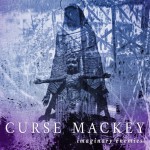
Artist: Curse Mackey (@)
Title: Imaginary Enemies
Format: CD + Download
Label: Negative Gain Productions (@)
Rated:


Title: Imaginary Enemies
Format: CD + Download
Label: Negative Gain Productions (@)
Rated:
Curse Mackey has always thrived in the margins, a shape-shifter between industrial abrasion and darkwave seduction, and "Imaginary Enemies" feels like the moment he finally names the demons that have been shadowing him since "Instant Exorcism". If that first solo album was the rite of cleansing and "Immoral Emporium" was the diagnosis of a decaying world, this new work is the autopsy of the self - performed with synths, noise, and a poet’s scalpel. The record is steeped in paranoia, but it’s not cartoon paranoia; it’s the kind you feel at 3 a.m. when the city is silent and your mind won’t be.
Songs like "Doomed for Monday" and "Vertigo Ego" carry the doomed swagger of Wax Trax! industrial anthems, but Mackey’s delivery is more intimate, like he’s whispering your downfall directly into your skull. "Discoccult" turns a prayer into a knife, twisting Catholic ritual into industrial liturgy, while "Blood Like Love" is the emotional epicenter, a grief-drenched elegy that could sit comfortably alongside The Soft Moon or Silent Servant yet carries Mackey’s singular dramatic weight. Even when the beats slam, there’s a vulnerability that undercuts the aggression - proof that the “imaginary enemies” are often just mirrors cracked into infinite shards. The lyrics are direct yet incantatory: serpents, martyrs, silhouettes, and monsters populate these ten tracks like archetypes in a private mythology. The title track in particular is a miniature psychodrama, where paranoia becomes both adversary and lover, an ouroboros of suspicion.
Musically, the album doesn’t just recycle the black leather tropes of darkwave; it mutates them, mixing modular synth grime with spectral drones, jackhammer rhythms, and a sense of theatrical tension that feels closer to a séance than a nightclub. It’s danceable in the way that drowning is rhythmic: relentless, suffocating, but strangely beautiful. What makes Mackey compelling here is his refusal to choose between performance and confession - the songs operate as both a darkwave exorcism and a late-night diary entry. "Imaginary Enemies" is the last chapter of a trilogy, but it also reads like a rebirth: a record that knows every shadow has a pulse, and every enemy wears a face we’ve already seen in the mirror.
Songs like "Doomed for Monday" and "Vertigo Ego" carry the doomed swagger of Wax Trax! industrial anthems, but Mackey’s delivery is more intimate, like he’s whispering your downfall directly into your skull. "Discoccult" turns a prayer into a knife, twisting Catholic ritual into industrial liturgy, while "Blood Like Love" is the emotional epicenter, a grief-drenched elegy that could sit comfortably alongside The Soft Moon or Silent Servant yet carries Mackey’s singular dramatic weight. Even when the beats slam, there’s a vulnerability that undercuts the aggression - proof that the “imaginary enemies” are often just mirrors cracked into infinite shards. The lyrics are direct yet incantatory: serpents, martyrs, silhouettes, and monsters populate these ten tracks like archetypes in a private mythology. The title track in particular is a miniature psychodrama, where paranoia becomes both adversary and lover, an ouroboros of suspicion.
Musically, the album doesn’t just recycle the black leather tropes of darkwave; it mutates them, mixing modular synth grime with spectral drones, jackhammer rhythms, and a sense of theatrical tension that feels closer to a séance than a nightclub. It’s danceable in the way that drowning is rhythmic: relentless, suffocating, but strangely beautiful. What makes Mackey compelling here is his refusal to choose between performance and confession - the songs operate as both a darkwave exorcism and a late-night diary entry. "Imaginary Enemies" is the last chapter of a trilogy, but it also reads like a rebirth: a record that knows every shadow has a pulse, and every enemy wears a face we’ve already seen in the mirror.
VV.AA.: Decoder OST

Decoder is the sort of underground film that sounds made-up until you realize it actually existed: a dystopian sci-fi shot in Hamburg and Berlin in 1984, directed by Klaus Maeck (alias Muscha), starring Christiane F. - yes, that Christiane F. - alongside FM Einheit of Einstürzende Neubauten as a fast-food worker turned sonic guerrilla. Add Genesis P-Orridge playing a priest of Black Noise, William S. Burroughs as a shadowy salesman of subversive tape machines, and cult actor Bill Rice as a detective, and you get a fever dream stitched together from punk cinema, industrial mythology, and Burroughs’ own theories of language-as-virus. The plot? Muzak, that syrupy anesthetic piped into diners and malls, is exposed as a tool of social control. Our anti-heroes hack it, corrupt it, and replace it with noise - sparking riots, awakening bodies, and scrambling the script of control.
The soundtrack was always more than accompaniment: it was the weapon. Neubauten pound metal into a claustrophobic hymn of resistance. Genesis P-Orridge and Dave Ball (Soft Cell) lace synths with both sleaze and menace, smuggling chaos into nightclub sheen. FM Einheit delivers percussive detonations that sound like a riot playing itself out in real time. William Burroughs’ voice, always half-incantation and half-instruction manual for sabotage, drifts through like a cursed broadcast. Then there’s Soft Cell themselves, dropping “Seedy Films” into this dystopian context, suddenly transformed from louche pop into a document of surveillance and decay. Matt Johnson of The The contributes a track that’s as unsettling as it is magnetic, the pop song as a virus with no cure.
Reissued now after 33 years, Decoder OST doesn’t just resurrect an obscure cult artifact; it reads like a blueprint we forgot to follow. The idea that sound could be weaponized, that Muzak could pacify or radicalize, feels eerily prophetic in an age of algorithmic playlists designed to smooth every edge of our attention. Listening today, the album isn’t nostalgic - it’s urgent, jagged, and very much alive. It whispers that every background track is political, every soundtrack is a script for behavior, and that noise is still the one language power can’t fully domesticate.
The soundtrack was always more than accompaniment: it was the weapon. Neubauten pound metal into a claustrophobic hymn of resistance. Genesis P-Orridge and Dave Ball (Soft Cell) lace synths with both sleaze and menace, smuggling chaos into nightclub sheen. FM Einheit delivers percussive detonations that sound like a riot playing itself out in real time. William Burroughs’ voice, always half-incantation and half-instruction manual for sabotage, drifts through like a cursed broadcast. Then there’s Soft Cell themselves, dropping “Seedy Films” into this dystopian context, suddenly transformed from louche pop into a document of surveillance and decay. Matt Johnson of The The contributes a track that’s as unsettling as it is magnetic, the pop song as a virus with no cure.
Reissued now after 33 years, Decoder OST doesn’t just resurrect an obscure cult artifact; it reads like a blueprint we forgot to follow. The idea that sound could be weaponized, that Muzak could pacify or radicalize, feels eerily prophetic in an age of algorithmic playlists designed to smooth every edge of our attention. Listening today, the album isn’t nostalgic - it’s urgent, jagged, and very much alive. It whispers that every background track is political, every soundtrack is a script for behavior, and that noise is still the one language power can’t fully domesticate.
16Volt: Wisdom (2025 reissue)
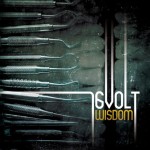
Some albums age like fine wine. Others age like uranium - still potent, still dangerous, but likely to set off alarms if you carry them into an airport. 16Volt’s "Wisdom", first unleashed in 1993, is firmly in the latter camp: a high-voltage, steel-tipped artifact from the days when industrial rock was less about playlists and more about punching holes in the night with sequencers and distortion pedals.
Eric Powell, the band’s nucleus, clearly wasn’t in the mood for compromise back then - every track still smolders with that Chicago-meets-Portland grit, polished just enough by Dave “Rave” Ogilvie and Keith “Fluffy” Auerbach to keep the sparks from setting the whole mixing desk on fire. This 2025 remaster doesn’t sand down the teeth; it just makes them sharper, more likely to bite through your nostalgia filter.
Listening now, "Wisdom" feels like a time capsule from the era when samplers were weapons, not plugins, and industrial rock was still dangerous enough to scandalize your parents. Tracks like “Motorskill” and the title cut drive like heavy machinery operated by someone who’s just finished reading a dystopian manual on how to dismantle the human psyche. Even the more atmospheric moments - “Dreams of Light” comes to mind - aren’t respite so much as the calm eye in a storm of grinding gears and coiled anger.
The bonus material adds another layer for fans who have memorized the original’s every jagged contour. Unreleased remixes from Ogilvie and early demos expose the wiring under the hood - messy, hot, and fascinating - while “Black Hole” is exactly the sort of extra that makes you glad for expanded editions.
Is "Wisdom" subtle? Not a chance. It’s the sonic equivalent of welding goggles and a flamethrower. But in an age where “industrial” often means “a little reverb and some black clothing”, this reissue is a reminder of when the term meant smoke, sweat, and steel - music made to cut, not to comfort.
If this is the past, it’s one worth revisiting - preferably loud enough to rattle the screws in your walls and remind you that 16Volt didn’t just ride the industrial wave; they sharpened its edge.
Eric Powell, the band’s nucleus, clearly wasn’t in the mood for compromise back then - every track still smolders with that Chicago-meets-Portland grit, polished just enough by Dave “Rave” Ogilvie and Keith “Fluffy” Auerbach to keep the sparks from setting the whole mixing desk on fire. This 2025 remaster doesn’t sand down the teeth; it just makes them sharper, more likely to bite through your nostalgia filter.
Listening now, "Wisdom" feels like a time capsule from the era when samplers were weapons, not plugins, and industrial rock was still dangerous enough to scandalize your parents. Tracks like “Motorskill” and the title cut drive like heavy machinery operated by someone who’s just finished reading a dystopian manual on how to dismantle the human psyche. Even the more atmospheric moments - “Dreams of Light” comes to mind - aren’t respite so much as the calm eye in a storm of grinding gears and coiled anger.
The bonus material adds another layer for fans who have memorized the original’s every jagged contour. Unreleased remixes from Ogilvie and early demos expose the wiring under the hood - messy, hot, and fascinating - while “Black Hole” is exactly the sort of extra that makes you glad for expanded editions.
Is "Wisdom" subtle? Not a chance. It’s the sonic equivalent of welding goggles and a flamethrower. But in an age where “industrial” often means “a little reverb and some black clothing”, this reissue is a reminder of when the term meant smoke, sweat, and steel - music made to cut, not to comfort.
If this is the past, it’s one worth revisiting - preferably loud enough to rattle the screws in your walls and remind you that 16Volt didn’t just ride the industrial wave; they sharpened its edge.
Rotorsand: Don't Become The Thing You Hated

Artist: Rotorsand (@)
Title: Don't Become The Thing You Hated
Format: CD + Download
Label: Metropolis (@)
Rated:
Title: Don't Become The Thing You Hated
Format: CD + Download
Label: Metropolis (@)
Rated:
Some records invite you to dance. Others ask you to think. Rare are those that command both - wielding basslines like sledgehammers while whispering philosophy in your ear. "Don't Become The Thing You Hated" is precisely that kind of album: a beautifully sculpted paradox, dressed in combat boots and existential dread.
Rotersand, the Hamburg-based duo of Rascal Nikov and Krischan Jan-Eric Wesenberg, return after what feels like a decade-long stare into the void. But instead of just gazing, they took notes, wrote verses, and built kick drums that sound like they were forged in a collapsing star. The result is not just a collection of songs but a cautionary fable masquerading as an industrial-electro album.
From the first beat of "All Tomorrows", you're thrown into a maelstrom of mechanical precision and lyrical intimacy. Rotersand have never been about cheap thrills, and here they double down - this is music that seduces with restraint, beats that bruise but also caress, synths that shimmer like city lights seen from a train you never meant to board. There's propulsion, yes - but also pause. The floor-filling power of "Sexiness of Slow" is balanced by the eerily contemplative "Private Firmament", a track that feels like late-night doomscrolling rendered in sound: seductive, melancholic, and oddly comforting.
Lyrically, the album does what very few in this genre dare: it asks questions that hurt. What happens when your rebellion begins to resemble the very authority it resisted? What are we becoming in the algorithmic reflection of our worst instincts? There’s rage here, but it's tempered - like a Molotov with a handwritten apology taped to the bottle.
And yet, it never loses the beat. These songs are built for the club, but not the club of clichés; more like a future cathedral where the faithful sweat, doubt, and dance. "Don't Stop Believing" isn't ironic - it’s wounded but earnest, like a final flare fired into a poisoned sky.
Production-wise, it’s meticulous. Nothing is accidental. The synths hum with ghost electricity. The beats snap with martial clarity. There’s a sense of architecture in the sequencing: "Heaven" doesn’t come to rescue you, but to make you wonder why you thought you needed saving.
If there’s a flaw, it’s only that this record demands your attention in a way that club-goers might not be used to. It doesn’t just want your body - it wants your ethics, your unease, your contradictions. Some might call that pretentious. Others might call it art.
By the time the closer "Forgotten Daydreams (They Live At Night)" fades, you’re left somewhere between elation and reckoning. It’s a kind of sonic aftermath - the emotional equivalent of the walk home from a protest that almost turned ugly, but didn’t. Or did it?
Rotersand have not just made a great album - they’ve made a necessary one. And in times like these, that’s rarer than bass drops and anti-capitalist slogans in four-four time.
Rotersand, the Hamburg-based duo of Rascal Nikov and Krischan Jan-Eric Wesenberg, return after what feels like a decade-long stare into the void. But instead of just gazing, they took notes, wrote verses, and built kick drums that sound like they were forged in a collapsing star. The result is not just a collection of songs but a cautionary fable masquerading as an industrial-electro album.
From the first beat of "All Tomorrows", you're thrown into a maelstrom of mechanical precision and lyrical intimacy. Rotersand have never been about cheap thrills, and here they double down - this is music that seduces with restraint, beats that bruise but also caress, synths that shimmer like city lights seen from a train you never meant to board. There's propulsion, yes - but also pause. The floor-filling power of "Sexiness of Slow" is balanced by the eerily contemplative "Private Firmament", a track that feels like late-night doomscrolling rendered in sound: seductive, melancholic, and oddly comforting.
Lyrically, the album does what very few in this genre dare: it asks questions that hurt. What happens when your rebellion begins to resemble the very authority it resisted? What are we becoming in the algorithmic reflection of our worst instincts? There’s rage here, but it's tempered - like a Molotov with a handwritten apology taped to the bottle.
And yet, it never loses the beat. These songs are built for the club, but not the club of clichés; more like a future cathedral where the faithful sweat, doubt, and dance. "Don't Stop Believing" isn't ironic - it’s wounded but earnest, like a final flare fired into a poisoned sky.
Production-wise, it’s meticulous. Nothing is accidental. The synths hum with ghost electricity. The beats snap with martial clarity. There’s a sense of architecture in the sequencing: "Heaven" doesn’t come to rescue you, but to make you wonder why you thought you needed saving.
If there’s a flaw, it’s only that this record demands your attention in a way that club-goers might not be used to. It doesn’t just want your body - it wants your ethics, your unease, your contradictions. Some might call that pretentious. Others might call it art.
By the time the closer "Forgotten Daydreams (They Live At Night)" fades, you’re left somewhere between elation and reckoning. It’s a kind of sonic aftermath - the emotional equivalent of the walk home from a protest that almost turned ugly, but didn’t. Or did it?
Rotersand have not just made a great album - they’ve made a necessary one. And in times like these, that’s rarer than bass drops and anti-capitalist slogans in four-four time.
16Volt: More or Less

Eric Powell’s 16Volt has always felt like the musical equivalent of a post-apocalyptic muscle car - stripped-down, slightly dented, built for destruction, but still roaring proudly down the highways of distortion. After a seven-year pit stop in the wastelands of hiatus, "More or Less" feels like a defiant re-entry into the fold - not with bells and whistles, but with grit under the fingernails and smoke curling from the engine.
What you get here isn’t some genre-redefining reinvention. Thank God. "More or Less" doubles down on what Powell has always done best: weaponizing dissatisfaction, channelling frustration into jagged riffs, syncopated snarl-beats, and a bark that doesn’t ask for sympathy but somehow earns it. It’s industrial rock not for the future, but for the disenchanted present - the one where your voice becomes static ("White Noise"), your optimism gets repo’d ("Empty As Hell"), and your therapist tells you to maybe "add it all up" instead of writing songs about it.
The production is tight but not sterile - everything sounds like it was filtered through an oil-slicked chain-link fence. There’s a retro-futurist tension at play, as if "More or Less" was recorded in a 1997 cyberpunk club squatting in a 2025 server room. Songs like "Unfolding Time" and "On Memory Lane" flirt with introspection, but Powell keeps things brisk - there’s no time to cry in the club if the club’s on fire.
Lyrically, Powell is still the charming misanthrope - never whiny, never overly cryptic, just refreshingly cynical in an age of over-processed emotionalism. Even when he indulges in sentimentality, it’s barbed: a bouquet of broken synths and barbed wire, lovingly arranged. He’s not here to heal you. He’s here to hand you the right kind of hammer.
It’s worth noting how much "More or Less" is tethered to Powell’s past - not just in sonic continuity, but spiritually. It’s the sound of someone rifling through old photo albums, then setting them on fire for warmth. There’s catharsis here, but it’s the hard-won kind, earned through decades of industry limbo, major label betrayals, and soundtrack cameos in long-forgotten PlayStation games.
Is it revolutionary? No. But that’s the point. It’s resolute. It’s sharp enough to draw blood but smart enough not to kill you. It’s exactly what it needs to be: a reminder that even the battered machines can still run when the fuse is right.
In a world constantly promising "more", Powell offers "less" - and somehow that feels like a gift.
What you get here isn’t some genre-redefining reinvention. Thank God. "More or Less" doubles down on what Powell has always done best: weaponizing dissatisfaction, channelling frustration into jagged riffs, syncopated snarl-beats, and a bark that doesn’t ask for sympathy but somehow earns it. It’s industrial rock not for the future, but for the disenchanted present - the one where your voice becomes static ("White Noise"), your optimism gets repo’d ("Empty As Hell"), and your therapist tells you to maybe "add it all up" instead of writing songs about it.
The production is tight but not sterile - everything sounds like it was filtered through an oil-slicked chain-link fence. There’s a retro-futurist tension at play, as if "More or Less" was recorded in a 1997 cyberpunk club squatting in a 2025 server room. Songs like "Unfolding Time" and "On Memory Lane" flirt with introspection, but Powell keeps things brisk - there’s no time to cry in the club if the club’s on fire.
Lyrically, Powell is still the charming misanthrope - never whiny, never overly cryptic, just refreshingly cynical in an age of over-processed emotionalism. Even when he indulges in sentimentality, it’s barbed: a bouquet of broken synths and barbed wire, lovingly arranged. He’s not here to heal you. He’s here to hand you the right kind of hammer.
It’s worth noting how much "More or Less" is tethered to Powell’s past - not just in sonic continuity, but spiritually. It’s the sound of someone rifling through old photo albums, then setting them on fire for warmth. There’s catharsis here, but it’s the hard-won kind, earned through decades of industry limbo, major label betrayals, and soundtrack cameos in long-forgotten PlayStation games.
Is it revolutionary? No. But that’s the point. It’s resolute. It’s sharp enough to draw blood but smart enough not to kill you. It’s exactly what it needs to be: a reminder that even the battered machines can still run when the fuse is right.
In a world constantly promising "more", Powell offers "less" - and somehow that feels like a gift.