
Browse by Genre
Industrial Music / Industrial Metal / Aggro Industrial / Electro Metal
Industrial Noise / Power Noise / Harsh Noise
Synth Pop / Electro Pop / Synth-Electronica
Techno / Trance / Goa / Drum'n'Bass / Jungle / Tribal / Trip-Hop
Ambient / Electronica / Ethereal / Dub / Soundscapes / Abstract
Experimental / Avantgarde / Weird & Wired / Glitch / Noise / Field Recording
Dark / Gothic / Wave / New Wave / Dark Wave / Industrial Gothic
New Music / Downtown / Avantgarde Jazz / New Classical / World
Search Reviews
Music Reviews
Daniel Szwed: Standard Cap
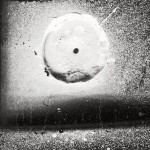
There’s a special category of “side projects” that artists describe as a "break", a palate cleanser, a moment of relief from more demanding work. "Standard Cap" by Daniel Szwed belongs to that category in theory. In practice, it sounds like the kind of break where you go outside to clear your head and end up shouting at the sky.
Originally released in a tiny tape edition - because of course it was - this second solo outing now resurfaces in a more accessible format via Rope Worm, still carrying the residue of its initial intention: something immediate, unfiltered, almost inconveniently direct. Conceived during sessions for the more elaborate "Sun’s Mother", it functions less as a companion piece and more as a deliberate stripping-down, like removing insulation just to see what kind of noise leaks through.
The setup is deceptively simple: drums, synths, vocals. No conceptual overload, no decorative excess. And yet, from the opening moments of “Standard Cap 1”, it’s clear that restraint here doesn’t mean minimalism in the polite sense. It means pressure. Repetition locks in quickly, rhythms hammer rather than groove, and the synth layers grind against them with a stubborn, metallic persistence.
Szwed’s approach to structure feels almost willfully blunt. Each of the six tracks sits around the same duration, titled with an efficiency that borders on indifference. No narrative cues, no emotional signposting. Just iteration. But within that repetition, small instabilities emerge - shifts in texture, slight ruptures in rhythm, moments where the system seems to falter before reasserting itself. It’s not evolution so much as controlled erosion.
The industrial and noise elements aren’t deployed as aesthetic markers so much as working conditions. This isn’t “influenced by” anything in a referential way; it’s built from the same logic: friction, density, refusal. The drums feel physical, almost claustrophobic, while the synths oscillate between drone and abrasion. Vocals, when they appear, are less communicative than symptomatic - signals of strain rather than carriers of meaning.
There’s something oddly methodical about the whole thing. Despite its rawness, "Standard Cap" never collapses into chaos. It holds its form with a kind of stubborn discipline, as if Szwed is testing how much repetition and distortion a structure can withstand before it loses coherence. The answer, apparently, is quite a lot.
The production - handled by a certain Jessica at Where is the Studio, according to release notes - maintains that balance between immediacy and control. Nothing feels overly polished, but nothing feels accidental either. It’s rough by design, not by limitation.
As a “mind refresher”, this is almost comically intense. If this is what Szwed does to relax, one can only assume the main project operates somewhere near tectonic levels of pressure. But that’s precisely what gives "Standard Cap" its peculiar clarity. By removing layers of intention, it reveals a core impulse: to push sound until it resists, then keep going.
It’s not inviting. It doesn’t pretend to be. But it is focused, consistent, and strangely honest in its refusal to offer anything beyond its own internal logic.
Six tracks, minimal variation, maximum insistence. A break, apparently.
Originally released in a tiny tape edition - because of course it was - this second solo outing now resurfaces in a more accessible format via Rope Worm, still carrying the residue of its initial intention: something immediate, unfiltered, almost inconveniently direct. Conceived during sessions for the more elaborate "Sun’s Mother", it functions less as a companion piece and more as a deliberate stripping-down, like removing insulation just to see what kind of noise leaks through.
The setup is deceptively simple: drums, synths, vocals. No conceptual overload, no decorative excess. And yet, from the opening moments of “Standard Cap 1”, it’s clear that restraint here doesn’t mean minimalism in the polite sense. It means pressure. Repetition locks in quickly, rhythms hammer rather than groove, and the synth layers grind against them with a stubborn, metallic persistence.
Szwed’s approach to structure feels almost willfully blunt. Each of the six tracks sits around the same duration, titled with an efficiency that borders on indifference. No narrative cues, no emotional signposting. Just iteration. But within that repetition, small instabilities emerge - shifts in texture, slight ruptures in rhythm, moments where the system seems to falter before reasserting itself. It’s not evolution so much as controlled erosion.
The industrial and noise elements aren’t deployed as aesthetic markers so much as working conditions. This isn’t “influenced by” anything in a referential way; it’s built from the same logic: friction, density, refusal. The drums feel physical, almost claustrophobic, while the synths oscillate between drone and abrasion. Vocals, when they appear, are less communicative than symptomatic - signals of strain rather than carriers of meaning.
There’s something oddly methodical about the whole thing. Despite its rawness, "Standard Cap" never collapses into chaos. It holds its form with a kind of stubborn discipline, as if Szwed is testing how much repetition and distortion a structure can withstand before it loses coherence. The answer, apparently, is quite a lot.
The production - handled by a certain Jessica at Where is the Studio, according to release notes - maintains that balance between immediacy and control. Nothing feels overly polished, but nothing feels accidental either. It’s rough by design, not by limitation.
As a “mind refresher”, this is almost comically intense. If this is what Szwed does to relax, one can only assume the main project operates somewhere near tectonic levels of pressure. But that’s precisely what gives "Standard Cap" its peculiar clarity. By removing layers of intention, it reveals a core impulse: to push sound until it resists, then keep going.
It’s not inviting. It doesn’t pretend to be. But it is focused, consistent, and strangely honest in its refusal to offer anything beyond its own internal logic.
Six tracks, minimal variation, maximum insistence. A break, apparently.
Łubin: Cargo
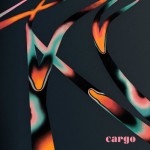
There’s something oddly reassuring about trains. Not the delays, obviously, or the existential dread of platform announcements, but the rhythm: that stubborn, repetitive insistence that something is moving forward, whether you understand the destination or not. Lubin builds "Cargo" entirely inside that logic, and then quietly dismantles it.
This third album is less about trains as objects and more about trains as systems of thought. Over nearly a year of field recordings and compositional work, Lubin reduces railway sound to its skeletal essence: pulses, friction, metallic breath. What remains is not documentary in the traditional sense, but something closer to an internalized infrastructure. The railway stops being a place and becomes a condition.
The track titles - "201 E", "ST 44", "TEM 2" - read like technical labels, almost bureaucratic in their precision. And yet the music they contain is anything but rigid. Beneath the mechanical naming lies a fluid, unstable sound world where glitchy electronics dissolve into field recordings and back again. It’s as if the machines themselves were trying to remember how they sound.
Opening pieces establish the central grammar: repetition as propulsion, texture as narrative. The rhythmic patterns mimic the cadence of wheels on tracks, but never settle into something comfortably loopable. There’s always a slight misalignment, a micro-hesitation that keeps the listener alert. You’re not riding the train. You’re listening from inside its nervous system.
What’s interesting is how "Cargo" avoids the obvious romanticism of travel. No sweeping vistas, no sentimental departures. Movement here is stripped of spectacle. It becomes cyclical, almost claustrophobic. The sense of journey is present, but without arrival. A loop rather than a line.
At times, the album drifts into something resembling a dream of industry: blurred edges, softened impacts, a kind of low-resolution memory of machinery. The glitch elements don’t disrupt so much as corrode, gently destabilizing the rhythmic grid. It’s minimalism, but with a faint anxiety running underneath, like a system that knows it might fail but keeps running anyway.
There’s a quiet intelligence in how Lubin handles time. Tracks stretch without feeling long, compress without feeling abrupt. The longest piece, "Newag 15D", unfolds like a slow recalibration of perception. By the end, rhythm no longer feels like something external. It has migrated inward, syncing with the body in a way that is slightly unsettling if you think about it too much.
If there’s humor here, it’s buried deep. The idea of turning freight trains into introspective, almost meditative compositions carries a certain dry absurdity. Industrial logistics reimagined as emotional cartography. Somewhere, a cargo manifest is being read as poetry.
What "Cargo" ultimately suggests is that infrastructure is never just functional. It accumulates memory, symbolism, even a kind of unconscious meaning. By focusing so closely on the sonic residue of railways, Lubin exposes the thin line between movement and stasis, between system and experience.
It’s not a journey in the traditional sense. More like being gently locked inside a moving mechanism and realizing, after a while, that you’ve started to breathe with it.
This third album is less about trains as objects and more about trains as systems of thought. Over nearly a year of field recordings and compositional work, Lubin reduces railway sound to its skeletal essence: pulses, friction, metallic breath. What remains is not documentary in the traditional sense, but something closer to an internalized infrastructure. The railway stops being a place and becomes a condition.
The track titles - "201 E", "ST 44", "TEM 2" - read like technical labels, almost bureaucratic in their precision. And yet the music they contain is anything but rigid. Beneath the mechanical naming lies a fluid, unstable sound world where glitchy electronics dissolve into field recordings and back again. It’s as if the machines themselves were trying to remember how they sound.
Opening pieces establish the central grammar: repetition as propulsion, texture as narrative. The rhythmic patterns mimic the cadence of wheels on tracks, but never settle into something comfortably loopable. There’s always a slight misalignment, a micro-hesitation that keeps the listener alert. You’re not riding the train. You’re listening from inside its nervous system.
What’s interesting is how "Cargo" avoids the obvious romanticism of travel. No sweeping vistas, no sentimental departures. Movement here is stripped of spectacle. It becomes cyclical, almost claustrophobic. The sense of journey is present, but without arrival. A loop rather than a line.
At times, the album drifts into something resembling a dream of industry: blurred edges, softened impacts, a kind of low-resolution memory of machinery. The glitch elements don’t disrupt so much as corrode, gently destabilizing the rhythmic grid. It’s minimalism, but with a faint anxiety running underneath, like a system that knows it might fail but keeps running anyway.
There’s a quiet intelligence in how Lubin handles time. Tracks stretch without feeling long, compress without feeling abrupt. The longest piece, "Newag 15D", unfolds like a slow recalibration of perception. By the end, rhythm no longer feels like something external. It has migrated inward, syncing with the body in a way that is slightly unsettling if you think about it too much.
If there’s humor here, it’s buried deep. The idea of turning freight trains into introspective, almost meditative compositions carries a certain dry absurdity. Industrial logistics reimagined as emotional cartography. Somewhere, a cargo manifest is being read as poetry.
What "Cargo" ultimately suggests is that infrastructure is never just functional. It accumulates memory, symbolism, even a kind of unconscious meaning. By focusing so closely on the sonic residue of railways, Lubin exposes the thin line between movement and stasis, between system and experience.
It’s not a journey in the traditional sense. More like being gently locked inside a moving mechanism and realizing, after a while, that you’ve started to breathe with it.
Nightmare Park: They're Coming To Get You, Barbara
Artist: Nightmare Park
Title: They're Coming To Get You, Barbara
Format: 3" Mini CD
Label: Inner Demons Records
Rated:

Title: They're Coming To Get You, Barbara
Format: 3" Mini CD
Label: Inner Demons Records
Rated:
Nightmare Park hail from Connecticut and describe themselves as “Blackened Harsh Static and Noise Walls, sounds sourced from Horror films that I like. . . . HELL IS REAL.” The Bandcamp page also has a lot of albums based on various horror films like "The Shining," "Pet Semetary," "Psycho," "Candyman," and many others. With little to go on, let's dive in and see what Barbara is in for.
This album consists of one 20 minute track titled "They're Coming To Get You, Barbara." I don't know who Barbara is, but she had better watch out. To put this succinctly, this is extremely crunchy noise. It is pulsing and completely overdriven. There are some subtle changes in the sound and you begin to hear patterns in the way that you can start to see patterns when watching television static. If you like harsh noise wall with an emphasis on "harsh," this will be right up your alley. This album weighs in at 20 minutes and is limited to 42 copies.
This album consists of one 20 minute track titled "They're Coming To Get You, Barbara." I don't know who Barbara is, but she had better watch out. To put this succinctly, this is extremely crunchy noise. It is pulsing and completely overdriven. There are some subtle changes in the sound and you begin to hear patterns in the way that you can start to see patterns when watching television static. If you like harsh noise wall with an emphasis on "harsh," this will be right up your alley. This album weighs in at 20 minutes and is limited to 42 copies.
Fail: Dated Twelve

Artist: Fail
Title: Dated Twelve
Format: Download Only (MP3 + Lossless)
Label: Inner Demons Records
Rated:

Title: Dated Twelve
Format: Download Only (MP3 + Lossless)
Label: Inner Demons Records
Rated:
For those of you unfamiliar with this artist, Fail is the work of Dan Fox, the man behind Inner Demons Records and the hardest workin’ man in noise music. His pedigree is well known, so let’s dive in and see what he have this time.
"160227B" kicks off with what sounds like heavily distorted vocoder and high-pitched feedback noise. Rumbling noise comes in to join the feedback to provide some balance. This then shifts gears into a rumbling ride with a synth pulse that rings out like a bass-driven heartbeat as heavily distorted voices run over the top of it all. But don't even try to figure out what they are saying because it is a fool's errand. There is a lot going on here, and I love the kitchen sink approach to noise, so this works well. But it is not chaotic. Rather, it comes across as intentionally constructed.
"160904" is a 20 minute drone-driven work that kicks off with the sounds of air raid sirens before shifting gears into heavy, stuttering drone, which smooths out into some bass drone with incidental noises thrown in and sweeping flanger. This then shifts to grinding noise over pulsing drone. Compared to the previous track, this is downright peaceful. If you like your drone with a little grit to it, this is well worth checking out.
Overall, this shows the versatility of Fail. It is not just harsh noise and it is definitely not total chaos. This is carefully constructed noise that has a goal beyond simply blowing the listener away. Well done. This album weighs in at around 33 minutes.
"160227B" kicks off with what sounds like heavily distorted vocoder and high-pitched feedback noise. Rumbling noise comes in to join the feedback to provide some balance. This then shifts gears into a rumbling ride with a synth pulse that rings out like a bass-driven heartbeat as heavily distorted voices run over the top of it all. But don't even try to figure out what they are saying because it is a fool's errand. There is a lot going on here, and I love the kitchen sink approach to noise, so this works well. But it is not chaotic. Rather, it comes across as intentionally constructed.
"160904" is a 20 minute drone-driven work that kicks off with the sounds of air raid sirens before shifting gears into heavy, stuttering drone, which smooths out into some bass drone with incidental noises thrown in and sweeping flanger. This then shifts to grinding noise over pulsing drone. Compared to the previous track, this is downright peaceful. If you like your drone with a little grit to it, this is well worth checking out.
Overall, this shows the versatility of Fail. It is not just harsh noise and it is definitely not total chaos. This is carefully constructed noise that has a goal beyond simply blowing the listener away. Well done. This album weighs in at around 33 minutes.
Fail: Metal Detector Detector

Artist: Fail
Title: Metal Detector Detector
Format: Download Only (MP3 + Lossless)
Label: Inner Demons Records
Rated:
Title: Metal Detector Detector
Format: Download Only (MP3 + Lossless)
Label: Inner Demons Records
Rated:
Fail is the work of Dan Fox, the man behind Inner Demons Records. He records under several names, most notably Fail, Loss, This Is What I Hear When You Talk, and others. Now let’s talk about the title. I love the idea of a metal detector detector, so let's comb the sand dunes and see what we find beneath the surface.
.
We kick it off with "I want to streak a nude beach by running around wearing a burqa," which is a 21 minute spacey trip. It totally sounds like there are times where Fox sampled the Star Trek transporter sound. This then shifts into a bass-heavy segment with an actual beat. Yes, a real one. You might even dance to it if you dance slow enough. Or if you are weighed down with a lot of cloth. Hypothetically speaking. Towards the end, it becomes a bit more punishing, with a lot of drone, noise, and pounding beats. There may be some distorted voice in there, but who can tell? And can we take a minute to appreciate the absurdity of the title? In a world that seems to be going straight to hell on all fronts, sometimes the only thing we can do is laugh. As Kurt Vonnegut remarked, "Laughter and tears are both responses to frustration and exhaustion. I myself prefer to laugh, since there is less cleaning up to do afterward." So it goes.
"Pink Freud" closes it off with another delightful title and a nice piece of almost peaceful drone. That “almost” is an important caveat, as the first third is smooth and calm, where it suddenly becomes dissonant and piercing. This then becomes a bit more distorted, but more soothing, like listening to a jet engine fly away into the distance.
Overall, another solid release from Fail, and a reminder that sometimes you just have to see the humor in the world. If you like it noisy, but not harsh noise wall, this is well worth checking out. This release is available exclusively to subscribers and weighs in at around 27 minutes.
.
We kick it off with "I want to streak a nude beach by running around wearing a burqa," which is a 21 minute spacey trip. It totally sounds like there are times where Fox sampled the Star Trek transporter sound. This then shifts into a bass-heavy segment with an actual beat. Yes, a real one. You might even dance to it if you dance slow enough. Or if you are weighed down with a lot of cloth. Hypothetically speaking. Towards the end, it becomes a bit more punishing, with a lot of drone, noise, and pounding beats. There may be some distorted voice in there, but who can tell? And can we take a minute to appreciate the absurdity of the title? In a world that seems to be going straight to hell on all fronts, sometimes the only thing we can do is laugh. As Kurt Vonnegut remarked, "Laughter and tears are both responses to frustration and exhaustion. I myself prefer to laugh, since there is less cleaning up to do afterward." So it goes.
"Pink Freud" closes it off with another delightful title and a nice piece of almost peaceful drone. That “almost” is an important caveat, as the first third is smooth and calm, where it suddenly becomes dissonant and piercing. This then becomes a bit more distorted, but more soothing, like listening to a jet engine fly away into the distance.
Overall, another solid release from Fail, and a reminder that sometimes you just have to see the humor in the world. If you like it noisy, but not harsh noise wall, this is well worth checking out. This release is available exclusively to subscribers and weighs in at around 27 minutes.