
Wednesday, August 19, 2026
Browse by Genre
Industrial Music / Industrial Metal / Aggro Industrial / Electro Metal
Industrial Noise / Power Noise / Harsh Noise
Synth Pop / Electro Pop / Synth-Electronica
Techno / Trance / Goa / Drum'n'Bass / Jungle / Tribal / Trip-Hop
Ambient / Electronica / Ethereal / Dub / Soundscapes / Abstract
Experimental / Avantgarde / Weird & Wired / Glitch / Noise / Field Recording
Dark / Gothic / Wave / New Wave / Dark Wave / Industrial Gothic
New Music / Downtown / Avantgarde Jazz / New Classical / World
Search Reviews
Music Reviews
Fail: When you’re a nail, everything starts to look like a hammer
Artist: Fail
Title: When you’re a nail, everything starts to look like a hammer
Format: Download Only (MP3 + Lossless)
Label: Inner Demons Records
Rated:
Title: When you’re a nail, everything starts to look like a hammer
Format: Download Only (MP3 + Lossless)
Label: Inner Demons Records
Rated:
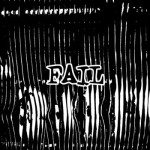
Fail is the work of Dan Fox, the man behind Inner Demons Records. He records under several names, most notably Fail, Loss, This Is What I Hear When You Talk, and others. This time around, we have the evocatively titled release " When you’re a nail, everything starts to look like a hammer," so let's give this a listen and see what Fox is going to hit us with this time around.
We kick things off with "Self-nemesis," which falls solidly under what James Keeler of Wilt refers to as "dark noise." This is noisy, but with a heavy amount of atmosphere. The closest comparison I can come up with is a noisier version of Inade. This is the sound of Armageddon; not the end, but the middle of the conflict. This is heavy and beautiful. Incredibly well done. "I'm hoping that in the future my world view will be far less accurate" closes it out with a long track at almost 19 minutes that gives Fox the ability to really delve into the soundscape. If the previous track was Armageddon, this is the smoldering aftermath. Planes overhead still survey the damage to see who will claim sovereignty over the ruined blackened soil below. Fires burn and autonomous machines still roam through the rubble, despite there being no one left to control them. There is a lot going on in this track as it continually shifts course, and it gets a bit noisier as it progresses, but it is all pretty bleak. That is to say that I enjoyed it immensely, although I share Fox's titular sentiments.
If you have heard some of the harsher Fail releases, this may not be what you were expecting, but like a gracious host, Fox always gives us exactly what we need. You could almost think of this as a mix between Loss and Fail, not really in approach, but in the kind of emotions evoked, This is very well done and well worth picking up. This album weighs in at around 25 minutes.
We kick things off with "Self-nemesis," which falls solidly under what James Keeler of Wilt refers to as "dark noise." This is noisy, but with a heavy amount of atmosphere. The closest comparison I can come up with is a noisier version of Inade. This is the sound of Armageddon; not the end, but the middle of the conflict. This is heavy and beautiful. Incredibly well done. "I'm hoping that in the future my world view will be far less accurate" closes it out with a long track at almost 19 minutes that gives Fox the ability to really delve into the soundscape. If the previous track was Armageddon, this is the smoldering aftermath. Planes overhead still survey the damage to see who will claim sovereignty over the ruined blackened soil below. Fires burn and autonomous machines still roam through the rubble, despite there being no one left to control them. There is a lot going on in this track as it continually shifts course, and it gets a bit noisier as it progresses, but it is all pretty bleak. That is to say that I enjoyed it immensely, although I share Fox's titular sentiments.
If you have heard some of the harsher Fail releases, this may not be what you were expecting, but like a gracious host, Fox always gives us exactly what we need. You could almost think of this as a mix between Loss and Fail, not really in approach, but in the kind of emotions evoked, This is very well done and well worth picking up. This album weighs in at around 25 minutes.
WIELORYB: Ritual
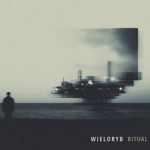
Some musicians treat rhythm like a polite suggestion. Others treat it like a hammer. On "Ritual", Pawe Kmiecik, operating under the long-standing moniker WIELORYB, clearly belongs to the second category. This is music that does not stroll into the room. It kicks the door open, drags in a stack of steel drums, and starts assembling a factory.
Originally released digitally in 2021 and now resurrected on CD by Zoharum with additional tracks and fresh artwork, "Ritual" stretches across more than seventy-eight minutes of dense rhythmic machinery. Fifteen tracks, most of them built around relentless industrial pulses, form something that feels less like a conventional album and more like a prolonged mechanical ceremony.
WIELORYB’s history runs deeper than casual listeners might assume. Founded in the mid-1990s, the project emerged during the formative years of Poland’s industrial and EBM underground, alongside acts like Agressiva 69. Back then the project functioned as a duo and occasionally a trio, navigating the raw electronic aesthetics that defined that era. Since 2010, however, the project has essentially become Kmiecik’s personal laboratory, a place where industrial structures slowly mutated into something closer to rhythmic noise: harsher, more physical, and considerably less concerned with traditional song forms.
"Ritual" embodies that evolution rather clearly. The opening track “Methods” wastes no time establishing the album’s grammar: pounding mechanical beats, layered textures that grind against one another like rusted gears, and an atmosphere thick enough to require ventilation. The sound design feels claustrophobic in a strangely deliberate way, as if the listener has been locked inside the basement of a particularly determined drum machine.
Yet beneath that oppressive density lies careful construction. Kmiecik’s approach to rhythm is surprisingly architectural. Patterns stack, fracture, and reform; percussion elements emerge briefly before dissolving back into the larger machine. “Many” and “Korangar” expand the palette with shifting layers of metallic percussion and subtle industrial drones, creating the sensation of wandering through a labyrinth of interconnected engines.
The title track “Ritual” itself appears almost like a compressed manifesto. Shorter than many of the surrounding pieces, it distills the project’s aesthetic into a concentrated burst of tribal-mechanical energy. The rhythm is hypnotic, almost ceremonial, as if ancient drum patterns had been translated into the language of malfunctioning circuitry.
That strange balance between archaic and mechanical impulses appears repeatedly throughout the record. “Tribal Order” and “Sacrifice” lean heavily into the idea of rhythm as communal invocation, although here the tribe in question might just be a gathering of malfunctioning robots chanting in a warehouse at three in the morning. The mood is dark but never static. Kmiecik frequently shifts the density of the arrangement, allowing brief moments of space before the percussion inevitably surges back.
Some tracks reveal unexpected nuance within the noise. “Las” introduces a slightly more atmospheric dimension, its textures suggesting distant environmental echoes rather than pure mechanical aggression. “Meadow”, intriguingly titled for such a harsh sonic environment, momentarily softens the album’s relentless momentum, as if someone briefly opened a door and allowed a gust of fresh air into the factory.
Still, subtlety is not the record’s primary mission. The sheer endurance test of listening through seventy-plus minutes of rhythmic noise is part of the experience. Albums like this operate less as background listening and more as immersive environments. One does not casually sip tea while "Ritual" plays. The music demands attention, physical engagement, perhaps even a mild tolerance for sonic blunt force.
The bonus tracks included in this new edition extend that atmosphere further rather than altering it. “Dragstore”, “Echoes in the Night”, and “Fly” function as additional corridors in the same industrial complex, each reinforcing the sense that the album’s universe is vast, echoing, and faintly menacing.
In a cultural landscape currently saturated with polite ambient drones and tasteful electronic minimalism, "Ritual" feels refreshingly stubborn. It refuses to be elegant. It refuses to be soothing. Instead it builds a massive rhythmic structure and invites the listener to stand inside it while the walls vibrate.
Not everyone will enjoy that experience. Some listeners prefer their music to behave nicely. "Ritual" does not. It marches, pounds, and reverberates like an underground ceremony conducted by machines that have developed their own theology.
And honestly, considering the current state of the world, a few industrial drums beating in the dark might be the most honest soundtrack available.
Originally released digitally in 2021 and now resurrected on CD by Zoharum with additional tracks and fresh artwork, "Ritual" stretches across more than seventy-eight minutes of dense rhythmic machinery. Fifteen tracks, most of them built around relentless industrial pulses, form something that feels less like a conventional album and more like a prolonged mechanical ceremony.
WIELORYB’s history runs deeper than casual listeners might assume. Founded in the mid-1990s, the project emerged during the formative years of Poland’s industrial and EBM underground, alongside acts like Agressiva 69. Back then the project functioned as a duo and occasionally a trio, navigating the raw electronic aesthetics that defined that era. Since 2010, however, the project has essentially become Kmiecik’s personal laboratory, a place where industrial structures slowly mutated into something closer to rhythmic noise: harsher, more physical, and considerably less concerned with traditional song forms.
"Ritual" embodies that evolution rather clearly. The opening track “Methods” wastes no time establishing the album’s grammar: pounding mechanical beats, layered textures that grind against one another like rusted gears, and an atmosphere thick enough to require ventilation. The sound design feels claustrophobic in a strangely deliberate way, as if the listener has been locked inside the basement of a particularly determined drum machine.
Yet beneath that oppressive density lies careful construction. Kmiecik’s approach to rhythm is surprisingly architectural. Patterns stack, fracture, and reform; percussion elements emerge briefly before dissolving back into the larger machine. “Many” and “Korangar” expand the palette with shifting layers of metallic percussion and subtle industrial drones, creating the sensation of wandering through a labyrinth of interconnected engines.
The title track “Ritual” itself appears almost like a compressed manifesto. Shorter than many of the surrounding pieces, it distills the project’s aesthetic into a concentrated burst of tribal-mechanical energy. The rhythm is hypnotic, almost ceremonial, as if ancient drum patterns had been translated into the language of malfunctioning circuitry.
That strange balance between archaic and mechanical impulses appears repeatedly throughout the record. “Tribal Order” and “Sacrifice” lean heavily into the idea of rhythm as communal invocation, although here the tribe in question might just be a gathering of malfunctioning robots chanting in a warehouse at three in the morning. The mood is dark but never static. Kmiecik frequently shifts the density of the arrangement, allowing brief moments of space before the percussion inevitably surges back.
Some tracks reveal unexpected nuance within the noise. “Las” introduces a slightly more atmospheric dimension, its textures suggesting distant environmental echoes rather than pure mechanical aggression. “Meadow”, intriguingly titled for such a harsh sonic environment, momentarily softens the album’s relentless momentum, as if someone briefly opened a door and allowed a gust of fresh air into the factory.
Still, subtlety is not the record’s primary mission. The sheer endurance test of listening through seventy-plus minutes of rhythmic noise is part of the experience. Albums like this operate less as background listening and more as immersive environments. One does not casually sip tea while "Ritual" plays. The music demands attention, physical engagement, perhaps even a mild tolerance for sonic blunt force.
The bonus tracks included in this new edition extend that atmosphere further rather than altering it. “Dragstore”, “Echoes in the Night”, and “Fly” function as additional corridors in the same industrial complex, each reinforcing the sense that the album’s universe is vast, echoing, and faintly menacing.
In a cultural landscape currently saturated with polite ambient drones and tasteful electronic minimalism, "Ritual" feels refreshingly stubborn. It refuses to be elegant. It refuses to be soothing. Instead it builds a massive rhythmic structure and invites the listener to stand inside it while the walls vibrate.
Not everyone will enjoy that experience. Some listeners prefer their music to behave nicely. "Ritual" does not. It marches, pounds, and reverberates like an underground ceremony conducted by machines that have developed their own theology.
And honestly, considering the current state of the world, a few industrial drums beating in the dark might be the most honest soundtrack available.
Barrena / See Through Buildings: Lament For Nuclear Winter / Windows Reflect Dust
Artist: Barrena / See Through Buildings (@)
Title: Lament For Nuclear Winter / Windows Reflect Dust
Format: Tape
Label: Fusion Audio Recordings (@)
Rated:

Title: Lament For Nuclear Winter / Windows Reflect Dust
Format: Tape
Label: Fusion Audio Recordings (@)
Rated:
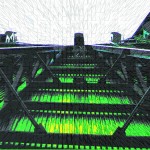
I really enjoy splits because the contrast can also be part of the experience. It is also a good way to find people you otherwise would not have known about, which is the case for me here. Barrena is the work of Puerto Rican artist Jorge Castro, and I have known his work for a long, long time. Castro has been in the experimental scene since the 1990s, most notably as part of Cornucopia, as well as other projects including Clon, Origami Subtropika and DEFORMA. The nice thing about Castro’s work is that he is difficult to nail down. Some of his stuff is harsh noise, some of it is mellow ambient, but all of it is interesting. The label describes the project thus: “As Barrena, Castro turns harsh noise wall formations into a meditative experience where feedback, distortion and digital artifacts become elements for immersive listening rather than disruption.” I was not familiar with See Through Buildings, but this is the harsh noise wall project of Ben Rehling, who hails from Garden Grove, CA. Rehling previously recorded under the name Jennifer Wolski in the 1990s and as part of A Moth In The Wine and The Climate Refugees. The label describes this track as “representative of the carefully crafted, droney HNW that has become See Through Buildings’ signature sound.” Sounds like a good time, so let’s dive in and see how this all plays out.
We kick it off with Barrena and “Lament For Nuclear Winter.” This is a low, rumbling piece with plenty of static thrown in for good measure. The overall feel is like watching television static while riding in a boxcar on a freight train. . . . that you aren’t supposed to be on because you jumped on in the middle of the night. And why is this train going so fast? This conductor seems like a man on a mission. What is the cargo in this train anyway? The track subtly shifts over time, sometimes highlighting the rumble, and sometimes the static, but it is a pleasant listen.
On the other side, we have See Through Buildings and “Windows Reflect Dust,” which is a pummeling wall of noise that buries everything under a mountain of crunchy static. However, this is not the kind of wall of noise where the artist simply records the space between radio stations. Rather, there is a lot of subtlety if you give it a listen with headphones. Or maybe there isn’t and your mind adds stuff that isn’t there to make sense of the chaos. Either way, it is a good piece for those who like their noise incredibly harsh, but with some underlying complexity.
I appreciate that although this is harsh noise wall, it is not as static as some practitioners make it. There is a lot happening under the layers, and you sometimes have to dig deep to find it, but like the princess and the pea, it’s there if you can feel it. This is a solid release of harsh noise wall and well worth checking out. This album weighs in at around 48 minutes and is limited to 100 copies.
We kick it off with Barrena and “Lament For Nuclear Winter.” This is a low, rumbling piece with plenty of static thrown in for good measure. The overall feel is like watching television static while riding in a boxcar on a freight train. . . . that you aren’t supposed to be on because you jumped on in the middle of the night. And why is this train going so fast? This conductor seems like a man on a mission. What is the cargo in this train anyway? The track subtly shifts over time, sometimes highlighting the rumble, and sometimes the static, but it is a pleasant listen.
On the other side, we have See Through Buildings and “Windows Reflect Dust,” which is a pummeling wall of noise that buries everything under a mountain of crunchy static. However, this is not the kind of wall of noise where the artist simply records the space between radio stations. Rather, there is a lot of subtlety if you give it a listen with headphones. Or maybe there isn’t and your mind adds stuff that isn’t there to make sense of the chaos. Either way, it is a good piece for those who like their noise incredibly harsh, but with some underlying complexity.
I appreciate that although this is harsh noise wall, it is not as static as some practitioners make it. There is a lot happening under the layers, and you sometimes have to dig deep to find it, but like the princess and the pea, it’s there if you can feel it. This is a solid release of harsh noise wall and well worth checking out. This album weighs in at around 48 minutes and is limited to 100 copies.
Split Apex: Thoughts In 3D


Eighty percent of the ocean floor is unmapped. Most bands can barely map a rehearsal room. Split Apex, naturally, choose the Mariana Trench.
With "Thoughts In 3D", the duo of Jussi Palmusaari and Peter Blundell deliver a vinyl debut that behaves less like an album and more like a deep-sea expedition log written under crushing pressure.
Palmusaari, who cut his teeth in Finland with Preesens in the late 90s and early 2000s, arrives in South London carrying a particular northern severity: guitar lines that feel chiseled rather than strummed. Blundell’s lineage runs through the angular, literate sprawl of Mosquitoes, and onward to Komare. His voice has that distinctly British quality of sounding observational and slightly detached even when the ground is splitting open beneath it. Together, they formed Split Apex in autumn 2024, rehearsed obsessively in Croydon, and apparently decided that subtlety was for people who enjoy breathable air.
Across five extended tracks, the record moves like a submersible lowering itself past sunlight.
“Peninsula” is the descent. Bass pulses like sonar. Guitar clangs and scrapes as if testing the hull integrity of the song itself. There’s a mechanical patience to it. You don’t get riffs; you get tectonic adjustments.
“Crux Machine” settles into something heavier, more sedimentary. A solitary guitar figure repeats with stubborn clarity while low-end loops throb underneath, like an engine that might be failing or might be achieving transcendence. It’s hard to tell. That ambiguity is part of the thrill.
On “Cast In Light”, the duo veer into what could be described as laboratory rock. If The Shadow Ring had abandoned literary introspection for surgical experimentation, this might be the result. Blundell’s vocal delivery sounds almost clinical, as if he’s documenting specimens rather than performing songs. Yet there’s tension in that restraint. You sense awe and dread occupying the same narrow corridor.
The title track, “Thoughts In 3D”, slithers rather than strides. Synth lines glow faintly, like bioluminescent organisms drifting just out of reach. The music feels dimensional not because it is busy, but because it has depth. Layers move independently, intersecting without resolving neatly. It refuses the easy climax.
“People, Nerves” completes the arc, rising toward the surface but carrying pressure scars. The guitars shimmer, the rhythm section tightens, and Blundell’s voice hovers between witness statement and existential report. The ascent is not triumphant. It is informed.
Reviews circulating online have pointed to the album’s balance between abrasion and atmosphere, its refusal to flatten intensity into mere noise. That assessment holds. What’s striking is the discipline. Split Apex do not indulge in chaos for its own sake. Every scrape, loop, and bass surge feels positioned with intent, as though the duo are charting coordinates rather than improvising freely.
The production keeps edges intact. Nothing is softened for comfort. The LP format suits it: five substantial tracks, each given space to breathe and to weigh on the listener. This is not background music. It insists on attention. It rewards patience.
If "Thoughts In 3D" has a central thesis, it is that pressure clarifies. Under enough weight, superficial gestures collapse. What remains is structure. Tone. Nerve.
Most bands write songs. Split Apex conduct sound pressure tests on the psyche and press the results to vinyl.
It turns out the ocean was not the dangerous part. The dangerous part is how calmly they guide you through it.
With "Thoughts In 3D", the duo of Jussi Palmusaari and Peter Blundell deliver a vinyl debut that behaves less like an album and more like a deep-sea expedition log written under crushing pressure.
Palmusaari, who cut his teeth in Finland with Preesens in the late 90s and early 2000s, arrives in South London carrying a particular northern severity: guitar lines that feel chiseled rather than strummed. Blundell’s lineage runs through the angular, literate sprawl of Mosquitoes, and onward to Komare. His voice has that distinctly British quality of sounding observational and slightly detached even when the ground is splitting open beneath it. Together, they formed Split Apex in autumn 2024, rehearsed obsessively in Croydon, and apparently decided that subtlety was for people who enjoy breathable air.
Across five extended tracks, the record moves like a submersible lowering itself past sunlight.
“Peninsula” is the descent. Bass pulses like sonar. Guitar clangs and scrapes as if testing the hull integrity of the song itself. There’s a mechanical patience to it. You don’t get riffs; you get tectonic adjustments.
“Crux Machine” settles into something heavier, more sedimentary. A solitary guitar figure repeats with stubborn clarity while low-end loops throb underneath, like an engine that might be failing or might be achieving transcendence. It’s hard to tell. That ambiguity is part of the thrill.
On “Cast In Light”, the duo veer into what could be described as laboratory rock. If The Shadow Ring had abandoned literary introspection for surgical experimentation, this might be the result. Blundell’s vocal delivery sounds almost clinical, as if he’s documenting specimens rather than performing songs. Yet there’s tension in that restraint. You sense awe and dread occupying the same narrow corridor.
The title track, “Thoughts In 3D”, slithers rather than strides. Synth lines glow faintly, like bioluminescent organisms drifting just out of reach. The music feels dimensional not because it is busy, but because it has depth. Layers move independently, intersecting without resolving neatly. It refuses the easy climax.
“People, Nerves” completes the arc, rising toward the surface but carrying pressure scars. The guitars shimmer, the rhythm section tightens, and Blundell’s voice hovers between witness statement and existential report. The ascent is not triumphant. It is informed.
Reviews circulating online have pointed to the album’s balance between abrasion and atmosphere, its refusal to flatten intensity into mere noise. That assessment holds. What’s striking is the discipline. Split Apex do not indulge in chaos for its own sake. Every scrape, loop, and bass surge feels positioned with intent, as though the duo are charting coordinates rather than improvising freely.
The production keeps edges intact. Nothing is softened for comfort. The LP format suits it: five substantial tracks, each given space to breathe and to weigh on the listener. This is not background music. It insists on attention. It rewards patience.
If "Thoughts In 3D" has a central thesis, it is that pressure clarifies. Under enough weight, superficial gestures collapse. What remains is structure. Tone. Nerve.
Most bands write songs. Split Apex conduct sound pressure tests on the psyche and press the results to vinyl.
It turns out the ocean was not the dangerous part. The dangerous part is how calmly they guide you through it.
Luz González: Bi Gezur
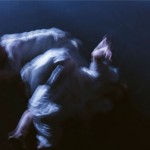
Luz González does not write tracks so much as she sets forces in motion and watches what survives. "Bi Gezur" unfolds like a compact but dense chapter in her ongoing investigation into bodies, friction, and unstable terrains, both physical and emotional. The sentence printed on the cover is not decorative poetry but a functional warning. These sounds will collide, merge, tear apart, and then calmly masquerade as landscape.
González’s background in sound art and electroacoustic composition is crucial, though never paraded like a diploma on the wall. Her music thinks with muscles rather than concepts. Rhythms arrive whipped and uneven, textures grind and smear, and distortion behaves less like an effect than like a condition of the air. Nothing here is ornamental. Each sound occupies space, pushes against it, tests its density. This is electronic music that understands its own weight.
The title, "Bi Gezur" - “two lies” in Basque - suggests misdirection, and the EP lives by that principle. Narrative gestures appear only to dissolve into abstraction, then re-emerge as something uncomfortably intimate. “Volverse paisaxe” opens the record by doing exactly that: becoming terrain, letting rhythm erode into contour. “Today Yesterday Tomorrow” toys with linear time until it buckles, while “Drawing Dinosaurs (Where can I hide my anger?)” channels tension into intricate, restless sound design that never quite releases its grip.
“Tsunami” hits without ceremony, a sudden compression of force rather than a dramatic build-up, followed by the brief, fragile suspension of “Óxido e flores”, which lasts just long enough to leave a bruise. The closing “Erreka” stretches out and earns its duration, drifting through industrial abrasion, submerged motion, and exposed vulnerability. González allows space to breathe without turning it into refuge. The sound keeps moving, alert, unsentimental.
"Bi Gezur" resists classification. It draws from experimental electronics, sound sculpture, and improvisational thinking without pledging loyalty to any single territory. What it offers instead is a physical listening experience, where anger, tenderness, and joy are treated as materials with texture and mass. This is not music that asks to be solved. It asks to be inhabited, even briefly, even at some cost. When it ends, the space it occupied feels altered, as if something passed through and left its trace.
González’s background in sound art and electroacoustic composition is crucial, though never paraded like a diploma on the wall. Her music thinks with muscles rather than concepts. Rhythms arrive whipped and uneven, textures grind and smear, and distortion behaves less like an effect than like a condition of the air. Nothing here is ornamental. Each sound occupies space, pushes against it, tests its density. This is electronic music that understands its own weight.
The title, "Bi Gezur" - “two lies” in Basque - suggests misdirection, and the EP lives by that principle. Narrative gestures appear only to dissolve into abstraction, then re-emerge as something uncomfortably intimate. “Volverse paisaxe” opens the record by doing exactly that: becoming terrain, letting rhythm erode into contour. “Today Yesterday Tomorrow” toys with linear time until it buckles, while “Drawing Dinosaurs (Where can I hide my anger?)” channels tension into intricate, restless sound design that never quite releases its grip.
“Tsunami” hits without ceremony, a sudden compression of force rather than a dramatic build-up, followed by the brief, fragile suspension of “Óxido e flores”, which lasts just long enough to leave a bruise. The closing “Erreka” stretches out and earns its duration, drifting through industrial abrasion, submerged motion, and exposed vulnerability. González allows space to breathe without turning it into refuge. The sound keeps moving, alert, unsentimental.
"Bi Gezur" resists classification. It draws from experimental electronics, sound sculpture, and improvisational thinking without pledging loyalty to any single territory. What it offers instead is a physical listening experience, where anger, tenderness, and joy are treated as materials with texture and mass. This is not music that asks to be solved. It asks to be inhabited, even briefly, even at some cost. When it ends, the space it occupied feels altered, as if something passed through and left its trace.