
Browse by Genre
Industrial Music / Industrial Metal / Aggro Industrial / Electro Metal
Industrial Noise / Power Noise / Harsh Noise
Synth Pop / Electro Pop / Synth-Electronica
Techno / Trance / Goa / Drum'n'Bass / Jungle / Tribal / Trip-Hop
Ambient / Electronica / Ethereal / Dub / Soundscapes / Abstract
Experimental / Avantgarde / Weird & Wired / Glitch / Noise / Field Recording
Dark / Gothic / Wave / New Wave / Dark Wave / Industrial Gothic
New Music / Downtown / Avantgarde Jazz / New Classical / World
Search Reviews
Music Reviews
VV.AA.: Happy Holidays: 2025 Zaftig Research Holiday Sampler
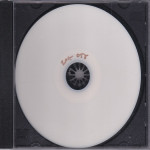
I always considered Chain D.L.K. the site that champions independent artists making music in obscure, leftfield, gray area genres that get little to no publicity or coverage elsewhere. These folks almost always make little to no money and release their work primarily because they love what they do, hope others do too and dollars be damned. (It wouldn't hurt to send some $$ their way and buy their product if you really like what's being offered.) That being said, once again it's time for the annual Zaftig Research Holiday Sampler. So what is Zaftig Research you may ask? Here is a partial explanation from label head, Brett Lunceford.
"From 1996 on, Zaftig Research has mainly functioned as a record label for our small group of artists, releasing limited edition works on CDR. We specialize in noise, dark ambient, power electronics, and other genres that are difficult to classify. We are mostly known for Stolen Light, Goose, and the annual Christmas compilations. We have also released a series of split releases with some of the more interesting names in experimental music."
Here is the lineup on the 2025 compilation:
1. Deforma - Light Speed Sleigh Ride
2. Fail - Merry Xmas, Enjoy Your Orange-Tinted Existential Chaos!
3. Goose - New Year's Eve
4. Narishkeyt - Tied Up Listening in a Corner While Everyone Has Fun
5. Nerthus + Praying For Oblivion - Asphalt Kathedrale
6. Orange - Christmas at Ground Zero
7. R4 - Urbi et Orbi (Pope'€™s Last Christmas Message)
8. Stolen Light - Santa Travelling at an Average Speed of 4,444,444.4m/s
9. Orange - Father Christmas
10.SUCCULENT SUCCUBUS - Hail Santa
11.This Is What I Hear When You Talk - The Listening of This Track Will Incur an 840% Tariff
12.Wilt - A Mournful Winter Solstice
Let's dive in to what we've got here. Deforma's "Light Speed Sleigh Ride" has all the rumbling power of freight train in an earthquake, relentless in its 4 minutes. Fail's "Merry Xmas, Enjoy Your Orange-Tinted Existential Chaos!" presents mangled, distorted electronic tones in various frequencies in a random display of power electronics. Lots of noise variety on this one, with an abrupt stop at the end. Goose's - "New Year's Eve" sounds like bombs or artillery fire in the distance, with a possible warning signal in the background. "Tied Up Listening in a Corner While Everyone Has Fun" by Narishkeyt sounds like the holiday party you never wanted to go to, or maybe a home invasion with a jumble of odd sonics and cut-up voices. The collaborative track by Nerthus + Praying For Oblivion, "Asphalt Kathedrale," is industrial noise and electronics designed to drive you out of your skull. There is definitely a loopish quality about this track, and the irregular beats did not go unnoticed. "Christmas at Ground Zero" by Orange gives an end of the world poetic recitation over a background of a nuclear holocaust. R4's " Urbi et Orbi (Pope'€™s Last Christmas Message)" deliver's Pop Leo XIV's 2025 Christmas message (in Italian) over a background of noise and power electronics. "Santa Travelling at an Average Speed of 4,444,444.4m/s" by Stolen Light is a relentless howling noise-fest from start to finish. Oh those poor reindeer! Orange is back again with "Father Christmas," the most traditionally music track so far. It sounds like "Silent Night" played on guitar, but with lots of effects and diversions, surrounded by plenty of noise. The original Christmas carol is barely recognizable, and by the end you will probably not remember what you've been listening to. SUCCULENT SUCCUBUS gives you "Hail Santa," which is primarily a repetitive industrial noise loop. Rearranging the letters of "Santa" will give you a more appropriate name for this track's hail. This Is What I Hear When You Talk's "The Listening of This Track Will Incur an 840% Tariff" was obviously inspired by Uncle Scam. It's more dark ambient than noise, but still with a strong noise undercurrent. It could have been similarly titled to Wilt's "A Mournful Winter Solstice" which was not on the CD Brett sent me for some odd reason, only 11 tracks out of 12.
Over all, I'm liking this 2025 Holiday Sampler better than some of Zaftig Research's previous years and I encourage you to go buy it if you're a noise enthusiast because that's the only way you'll get it. I think that it's only six bucks, a small price to pay in this age of gluttonous oligarchical consumerism.
"From 1996 on, Zaftig Research has mainly functioned as a record label for our small group of artists, releasing limited edition works on CDR. We specialize in noise, dark ambient, power electronics, and other genres that are difficult to classify. We are mostly known for Stolen Light, Goose, and the annual Christmas compilations. We have also released a series of split releases with some of the more interesting names in experimental music."
Here is the lineup on the 2025 compilation:
1. Deforma - Light Speed Sleigh Ride
2. Fail - Merry Xmas, Enjoy Your Orange-Tinted Existential Chaos!
3. Goose - New Year's Eve
4. Narishkeyt - Tied Up Listening in a Corner While Everyone Has Fun
5. Nerthus + Praying For Oblivion - Asphalt Kathedrale
6. Orange - Christmas at Ground Zero
7. R4 - Urbi et Orbi (Pope'€™s Last Christmas Message)
8. Stolen Light - Santa Travelling at an Average Speed of 4,444,444.4m/s
9. Orange - Father Christmas
10.SUCCULENT SUCCUBUS - Hail Santa
11.This Is What I Hear When You Talk - The Listening of This Track Will Incur an 840% Tariff
12.Wilt - A Mournful Winter Solstice
Let's dive in to what we've got here. Deforma's "Light Speed Sleigh Ride" has all the rumbling power of freight train in an earthquake, relentless in its 4 minutes. Fail's "Merry Xmas, Enjoy Your Orange-Tinted Existential Chaos!" presents mangled, distorted electronic tones in various frequencies in a random display of power electronics. Lots of noise variety on this one, with an abrupt stop at the end. Goose's - "New Year's Eve" sounds like bombs or artillery fire in the distance, with a possible warning signal in the background. "Tied Up Listening in a Corner While Everyone Has Fun" by Narishkeyt sounds like the holiday party you never wanted to go to, or maybe a home invasion with a jumble of odd sonics and cut-up voices. The collaborative track by Nerthus + Praying For Oblivion, "Asphalt Kathedrale," is industrial noise and electronics designed to drive you out of your skull. There is definitely a loopish quality about this track, and the irregular beats did not go unnoticed. "Christmas at Ground Zero" by Orange gives an end of the world poetic recitation over a background of a nuclear holocaust. R4's " Urbi et Orbi (Pope'€™s Last Christmas Message)" deliver's Pop Leo XIV's 2025 Christmas message (in Italian) over a background of noise and power electronics. "Santa Travelling at an Average Speed of 4,444,444.4m/s" by Stolen Light is a relentless howling noise-fest from start to finish. Oh those poor reindeer! Orange is back again with "Father Christmas," the most traditionally music track so far. It sounds like "Silent Night" played on guitar, but with lots of effects and diversions, surrounded by plenty of noise. The original Christmas carol is barely recognizable, and by the end you will probably not remember what you've been listening to. SUCCULENT SUCCUBUS gives you "Hail Santa," which is primarily a repetitive industrial noise loop. Rearranging the letters of "Santa" will give you a more appropriate name for this track's hail. This Is What I Hear When You Talk's "The Listening of This Track Will Incur an 840% Tariff" was obviously inspired by Uncle Scam. It's more dark ambient than noise, but still with a strong noise undercurrent. It could have been similarly titled to Wilt's "A Mournful Winter Solstice" which was not on the CD Brett sent me for some odd reason, only 11 tracks out of 12.
Over all, I'm liking this 2025 Holiday Sampler better than some of Zaftig Research's previous years and I encourage you to go buy it if you're a noise enthusiast because that's the only way you'll get it. I think that it's only six bucks, a small price to pay in this age of gluttonous oligarchical consumerism.
Modern Silent Cinema: Flesh Mother (Redux)
Artist: Modern Silent Cinema (@)
Title: Flesh Mother (Redux)
Format: CD & 12" + Download
Label: Bad Channel Records (@)
Rated:


Title: Flesh Mother (Redux)
Format: CD & 12" + Download
Label: Bad Channel Records (@)
Rated:
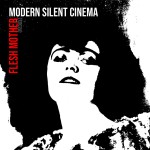
I just recently received this release from Cullen Gallagher (a transplant from Maine to Brooklyn, New York) who operates under the name of Modern Silent Cinema. MSC's releases go all the way back to 2004 with a varied approach to left field music, ranging from oddball soundtracks to primitive lo-fo avant garde piano and weird indie guitar/electronics albums. 'Flesh Mother' was originally recorded back in 2009 but now comes to light in commercial formats, remixed with a bonus track and remastered by Caleb Mulkerin (of Big Blood). The release date is scheduled for December 29, 2025, and this is one of the few times I've actually gotten a review finished before the release date. 'Flesh Mother (Redux)' is primarily a noise/black metal album with lots of distorted guitar grind and electronic grief. The opening track, "Velvet-Clawed Misfortune Approaches" begins with a wall of loud, heavy distortion with a vague notion of chord/note change. This lasts incessantly up to 3/4 of the way through the nearly 4 minute piece, the last quarter being a wind-down of sorts. Only true noisophiles may be brave enough to continue. The title track is next, a good deal more nuanced in its approach to noise with its distorted sonics and metallic rumblings as a strange rhythm emerges from the shadows. It sounds like what I would imagine to be a dreaming but restless malevolent dragon. "Twisted Passion (Made Her a Mistress of Sin)" has a vaguely shoegaze quality about it with some melodic concession but still primarily noise. "Acrohypothermy" fires guitar through all distortion pedals at once with some sort of swirling echo just to keep things moving. It's a phantasmagoria of noise indulgence until the end. Cullen break out the piano for '"Whittington's Wishes" as psychotic and distorted notes careen in a surreal echo chamber. Back to more heavy guitar-created noise on "Emlorin" but this time there is a melody woven into it like a demonic fanfare. More guitar harshness is the mainstay of "What You Have Left" that I'm sure is ear-splitting and teeth-jarring at a loud volume. "Assuage" takes a sustained, overdriven guitar note into a buzzy, seemingly endless drone with overtones that lasts for 6:25. (Talk about endurance tests...whew!) Finally we get the last track, "Fires That Destroy" which is unlike anything else on the album. Here you actually hear Cullen play his guitar without the heavy distortion (but still with some effects) in something that might resemble a song, or at least the makings of one. It is an odd chord progression with a fair amount of improvisation that might have been the result of on-the-spot creation. For me, what makes Modern Silent Cinema interesting is Cullen's output beyond this album. 'Flesh Mother's' appeal will largely be limited to black metal noise enthusiasts but those interested in a wider variety of avant garde sounds should check out MSC's other releases, and there are quite a few of them. You can purchase the CD of this album from MSC's Bandcamp site, but you'll have to go to the Bad Channel Records label site for the vinyl. By the way, that's the image of Polish silent film femme fatale Pola Negri on the cover.
Totalee: d!p
There is a peculiar beauty in watching three people stare at laptops with the intensity of gamblers betting the rent money. Totalee - Giuseppe Pisano, Andrea Laudante, and Paolo Montella - have made an artform out of this posture. Heads bowed, hands twitching, a tangle of cables pulsing like a small nervous system: they look like monks, if monks were allowed to glitch the liturgy in real time. "d!p" is the document of that devotional chaos, a quartet of live recordings stitched together from their spring 2024 zig-zag across Ireland and the UK.
Calling what they do “electroacoustic improvisation” feels both accurate and hilariously insufficient. This is music that behaves like an animal with too much energy and no intention of calming down. It skulks, it lunges, it doubles back. The trio’s stated canine metaphor - "WOOF", their word, not mine - isn’t cute branding; it’s a working description. These sets are patrol routes, scent trails, sudden alerts. One moment you’re lulled by a fine-grain drone, the next you’re ambushed by a metallic convulsion that feels like the room has inhaled sharply.
Totalee aren’t newcomers. All three members have spent years knitting their laptops into the wider web of European experimental music, performing with figures who treat electricity not as a tool but as a narrative partner. Pisano brings a background in textural dissection, Laudante leans into slow-burning dramaturgy, Montella thrives in unstable structures - and "d!p" captures them merging those sensibilities with a kind of wired telepathy. For a band whose stage presence is essentially three silhouettes sitting down, the music fizzes with kinetic violence.
“Prussia 44” sets the tone with its slow-erupting architecture: a jittery surface that keeps threatening to collapse, yet holds together through sheer collective instinct. “La Trota” has the opposite temperament - lighter, skittering, but quick to bare its teeth. “Tribute Unit”, recorded in Dublin like its opener, feels like a faulty circuit dreaming of choreography. And “Ginestra” stretches out into eleven minutes of controlled instability, like someone rewinding a landscape to see where the cracks first appeared.
What’s striking about these performances - and what several commentators have noted across different corners of the internet - is how physical they feel despite being assembled from digital debris. Totalee understand tension: when to let a grain of noise breathe, when to drive a wedge straight through it, when to pile on more sound until the structure strains. You can picture the trio in the moment - shoulders tightening, fingers flickering, choosing between restraint and detonation with a gambler’s calm.
There’s humour in their approach too, intentional or not. These pieces occasionally sound like malfunctioning devices staging their own protest. Yet there’s clarity inside the pandemonium, a sense that each derailment is a deliberate invitation: "Come on, follow us, the ground is safe enough until it isn’t". That balance between menace and play is Totalee’s secret weapon.
"d!p" might be presented as a manifesto about “how we move on our laptops”, but at heart it’s an ode to the live moment - the breath-hold before a sound mutates, the microscopic gestures that steer the whole thing away from disaster or straight into it. This is improvisation as speculative fiction, written in real time by three people hunched over glowing rectangles, conjuring landscapes from pure voltage.
It’s messy, muscular, and strangely tender. And like any good dog on the prowl, it leaves its mark wherever it wanders.
Calling what they do “electroacoustic improvisation” feels both accurate and hilariously insufficient. This is music that behaves like an animal with too much energy and no intention of calming down. It skulks, it lunges, it doubles back. The trio’s stated canine metaphor - "WOOF", their word, not mine - isn’t cute branding; it’s a working description. These sets are patrol routes, scent trails, sudden alerts. One moment you’re lulled by a fine-grain drone, the next you’re ambushed by a metallic convulsion that feels like the room has inhaled sharply.
Totalee aren’t newcomers. All three members have spent years knitting their laptops into the wider web of European experimental music, performing with figures who treat electricity not as a tool but as a narrative partner. Pisano brings a background in textural dissection, Laudante leans into slow-burning dramaturgy, Montella thrives in unstable structures - and "d!p" captures them merging those sensibilities with a kind of wired telepathy. For a band whose stage presence is essentially three silhouettes sitting down, the music fizzes with kinetic violence.
“Prussia 44” sets the tone with its slow-erupting architecture: a jittery surface that keeps threatening to collapse, yet holds together through sheer collective instinct. “La Trota” has the opposite temperament - lighter, skittering, but quick to bare its teeth. “Tribute Unit”, recorded in Dublin like its opener, feels like a faulty circuit dreaming of choreography. And “Ginestra” stretches out into eleven minutes of controlled instability, like someone rewinding a landscape to see where the cracks first appeared.
What’s striking about these performances - and what several commentators have noted across different corners of the internet - is how physical they feel despite being assembled from digital debris. Totalee understand tension: when to let a grain of noise breathe, when to drive a wedge straight through it, when to pile on more sound until the structure strains. You can picture the trio in the moment - shoulders tightening, fingers flickering, choosing between restraint and detonation with a gambler’s calm.
There’s humour in their approach too, intentional or not. These pieces occasionally sound like malfunctioning devices staging their own protest. Yet there’s clarity inside the pandemonium, a sense that each derailment is a deliberate invitation: "Come on, follow us, the ground is safe enough until it isn’t". That balance between menace and play is Totalee’s secret weapon.
"d!p" might be presented as a manifesto about “how we move on our laptops”, but at heart it’s an ode to the live moment - the breath-hold before a sound mutates, the microscopic gestures that steer the whole thing away from disaster or straight into it. This is improvisation as speculative fiction, written in real time by three people hunched over glowing rectangles, conjuring landscapes from pure voltage.
It’s messy, muscular, and strangely tender. And like any good dog on the prowl, it leaves its mark wherever it wanders.
Kevin Drumm: Sheer Hellish Miasma

Kevin Drumm’s "Sheer Hellish Miasma" doesn’t so much “play” as it erupts - a volcanic exhalation of Chicago’s harshest ghosts, funnelled through a man who has spent decades treating feedback as both sparring partner and spiritual adviser. When it first appeared in 2002, the album felt like a dare: "how much unfiltered sonic intensity can a human withstand before they either ascend or combust?". More than twenty years later, the world has become infinitely noisier, but Drumm’s monolith still stands there, arms crossed, unimpressed. And with this new 2LP reissue, it returns not as nostalgia but as a reminder that extremity, when shaped with intelligence and stubborn intention, ages better than most polite “future music”.
Drumm is often caricatured as the hermit-surgeon of the noise community: the guy who can turn a guitar into a plague wind, a contact mic into a moral dilemma, a pedal chain into a devotional rite. But what this album reveals - and what many who skim the surface never catch - is how deliberate his chaos is. "Sheer Hellish Miasma" is less an explosion than a controlled demolition, a building imploding in slow motion while someone inside calmly rearranges the furniture.
“Hitting the Pavement”, nearly twenty minutes long, feels like an attempt to sandblast the edges off reality. It’s dense, yes, but not thoughtless - textures coil and uncoil like industrial serpents, sometimes thrashing, sometimes simply shivering at high voltage. Survive that, and “Inferno” sprawls over two sides of wax, its inner turbulence punctured by Greg Kelley’s trumpet, which slices through the smog like a beacon or a distress signal - you decide which. Drumm has always treated collaboration as a foreign, almost suspicious pleasure, and the intrusion of brass here feels like a hallucination induced by sensory overload.
By the time “Cloudy” arrives, its deceptive title reads almost like a joke Drumm plays on the listener: a moment that seems softer only because your eardrums have been seasoned like cast iron. “Impotent Hummer”, meanwhile, grinds with a kind of apocalyptic humour - one imagines machinery trying to imitate Bach and dying nobly in the attempt. The closing “Turning Point”, surprisingly brief, feels like a cracked afterimage, a last whispered reminder that nothing this intense can end cleanly.
Part of the album’s mythology comes from its creation: those sessions in early-2000s Chicago, a period now romanticised as a golden age of American harshness, before everything was instantly archived, streamed, optimised, softened. Drumm worked with tools that were stubborn, temperamental, and gloriously imperfect - tape, pedals, raw electricity - and yet he sculpted something with an uncanny sense of form. The new cut by Rashad Becker in Berlin brings the details into sharper relief without diminishing the album’s essential hostility. It’s still a beast, only now its teeth gleam a little brighter.
Listening to "Sheer Hellish Miasma" today is a peculiar experience. It’s not “timeless” in the way critics usually mean - elegant, pristine, gently transcendent. No. It’s timeless in the sense that standing inside a hurricane is timeless. This is music that suspends linear thinking, that insists you surrender your expectations at the door. It’s a work that refuses polish, refuses comprehension, refuses mercy, yet paradoxically feels deeply crafted, even - dare one say it - "expressive".
In a world drowning in algorithmic smoothness, Drumm’s masterpiece returns like a ritual cleansing: abrasive, confrontational, unreasonably alive. It reminds us that extremes matter. That artistic conviction, when taken to its limits, can still shake the dust off our spirits. And perhaps most importantly, that sometimes the only way out is straight through the noise.
Drumm is often caricatured as the hermit-surgeon of the noise community: the guy who can turn a guitar into a plague wind, a contact mic into a moral dilemma, a pedal chain into a devotional rite. But what this album reveals - and what many who skim the surface never catch - is how deliberate his chaos is. "Sheer Hellish Miasma" is less an explosion than a controlled demolition, a building imploding in slow motion while someone inside calmly rearranges the furniture.
“Hitting the Pavement”, nearly twenty minutes long, feels like an attempt to sandblast the edges off reality. It’s dense, yes, but not thoughtless - textures coil and uncoil like industrial serpents, sometimes thrashing, sometimes simply shivering at high voltage. Survive that, and “Inferno” sprawls over two sides of wax, its inner turbulence punctured by Greg Kelley’s trumpet, which slices through the smog like a beacon or a distress signal - you decide which. Drumm has always treated collaboration as a foreign, almost suspicious pleasure, and the intrusion of brass here feels like a hallucination induced by sensory overload.
By the time “Cloudy” arrives, its deceptive title reads almost like a joke Drumm plays on the listener: a moment that seems softer only because your eardrums have been seasoned like cast iron. “Impotent Hummer”, meanwhile, grinds with a kind of apocalyptic humour - one imagines machinery trying to imitate Bach and dying nobly in the attempt. The closing “Turning Point”, surprisingly brief, feels like a cracked afterimage, a last whispered reminder that nothing this intense can end cleanly.
Part of the album’s mythology comes from its creation: those sessions in early-2000s Chicago, a period now romanticised as a golden age of American harshness, before everything was instantly archived, streamed, optimised, softened. Drumm worked with tools that were stubborn, temperamental, and gloriously imperfect - tape, pedals, raw electricity - and yet he sculpted something with an uncanny sense of form. The new cut by Rashad Becker in Berlin brings the details into sharper relief without diminishing the album’s essential hostility. It’s still a beast, only now its teeth gleam a little brighter.
Listening to "Sheer Hellish Miasma" today is a peculiar experience. It’s not “timeless” in the way critics usually mean - elegant, pristine, gently transcendent. No. It’s timeless in the sense that standing inside a hurricane is timeless. This is music that suspends linear thinking, that insists you surrender your expectations at the door. It’s a work that refuses polish, refuses comprehension, refuses mercy, yet paradoxically feels deeply crafted, even - dare one say it - "expressive".
In a world drowning in algorithmic smoothness, Drumm’s masterpiece returns like a ritual cleansing: abrasive, confrontational, unreasonably alive. It reminds us that extremes matter. That artistic conviction, when taken to its limits, can still shake the dust off our spirits. And perhaps most importantly, that sometimes the only way out is straight through the noise.
Katharina Ernst: Extrametric II
Artist: Katharina Ernst (@)
Title: Extrametric II
Format: LP
Label: Extrametric (http://www.extrametric.net/) (@)
Rated:
Title: Extrametric II
Format: LP
Label: Extrametric (http://www.extrametric.net/) (@)
Rated:
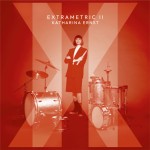
If rhythm is the oldest form of spellcasting, then Katharina Ernst is somewhere between percussionist, architect and quiet revolutionary - a builder of invisible structures that pulse, tilt and realign your inner wiring. Extrametric II, released on her own freshly minted label, feels like an artist drawing a map of her own nervous system with sticks, skins, wires and breath. It’s both ascetic and lush, a kind of ceremonial mathematics disguised as a solo record.
The album picks up precisely where her first Extrametric left off - down to the track numbering - as if Ernst were engaged in a long, single composition that occasionally comes up for air. But this time the monolith has new entrances: voice, text, and a growing family of electro-acoustic appendages spring from her drum kit like curious biomechanical limbs. The result is music that thinks in circles, spirals, counter-spirals, the kind of patterns you’d expect from someone who studied both fine arts and the polyrhythms of real life.
Ernst has always been fascinated by multiplicity: several beats staking out territory at once, none claiming supremacy. In interviews she links this to politics - and on Extrametric II, you can hear that idea in motion. The meters overlap the way cities breathe: stubbornly, beautifully, without asking permission. These pieces aren’t “songs” so much as living mechanisms, each built to test how many rhythmic lives can coexist inside one organism before it mutates into something else entirely.
Yet for all its cerebral geometry, the album has warmth. On x_10 and x_12, her voice slips into the machine-room with a disarming simplicity. It doesn’t dominate; it infiltrates. Spoken lines drift across the circuitry like someone whispering coordinates for an escape route. You get the sense that Ernst, who once declared the drum set an unapologetic occupier of space, is now using language to widen that territory even further.
Sonically, the palette is a treasure chest of unlikely alliances: kalimba ringing like a metallic raindrop in zero gravity, gongs that glow at the edges like the beginning of a dream, shakers that behave like rogue insects, a drum synthesizer that buzzes as if plotting its own uprising. Everything is played live - no safetynet, no illusion of perfection - and that immediacy gives the album its spine. You hear a musician engineering her own ecosystem in real time.
The short x_11 acts like a fissure in the continuum, a tiny door that opens and slams shut before you understand what dimension it led to. By the time x_14 unfurls, the suite feels less like a record and more like a ritual to sharpen attention - not a trance, but a heightened alertness where every micro-accent has gravity.
Ernst has spent years drifting between art institutions, noise basements, theatre stages and contemporary music ensembles, and Extrametric II gathers all those trajectories with enviable coherence. It’s an album that refuses to simplify itself for anyone but rewards any listener willing to lean in - the way you’d listen to a city from the inside, counting the breaths of morning buses, the footfall mosaics of crowds, the slow pulse of an underground station.
There’s no grand cosmic theme, no narrative arc, no expected emotional payoff. What there is instead is something rarer: a sense that rhythm can be a philosophy, and that coexistence - in sound and in life - doesn’t need hierarchy to function.
In the right light, Extrametric II is less a drum record than a miniature society. And a rather healthy one at that.
The album picks up precisely where her first Extrametric left off - down to the track numbering - as if Ernst were engaged in a long, single composition that occasionally comes up for air. But this time the monolith has new entrances: voice, text, and a growing family of electro-acoustic appendages spring from her drum kit like curious biomechanical limbs. The result is music that thinks in circles, spirals, counter-spirals, the kind of patterns you’d expect from someone who studied both fine arts and the polyrhythms of real life.
Ernst has always been fascinated by multiplicity: several beats staking out territory at once, none claiming supremacy. In interviews she links this to politics - and on Extrametric II, you can hear that idea in motion. The meters overlap the way cities breathe: stubbornly, beautifully, without asking permission. These pieces aren’t “songs” so much as living mechanisms, each built to test how many rhythmic lives can coexist inside one organism before it mutates into something else entirely.
Yet for all its cerebral geometry, the album has warmth. On x_10 and x_12, her voice slips into the machine-room with a disarming simplicity. It doesn’t dominate; it infiltrates. Spoken lines drift across the circuitry like someone whispering coordinates for an escape route. You get the sense that Ernst, who once declared the drum set an unapologetic occupier of space, is now using language to widen that territory even further.
Sonically, the palette is a treasure chest of unlikely alliances: kalimba ringing like a metallic raindrop in zero gravity, gongs that glow at the edges like the beginning of a dream, shakers that behave like rogue insects, a drum synthesizer that buzzes as if plotting its own uprising. Everything is played live - no safetynet, no illusion of perfection - and that immediacy gives the album its spine. You hear a musician engineering her own ecosystem in real time.
The short x_11 acts like a fissure in the continuum, a tiny door that opens and slams shut before you understand what dimension it led to. By the time x_14 unfurls, the suite feels less like a record and more like a ritual to sharpen attention - not a trance, but a heightened alertness where every micro-accent has gravity.
Ernst has spent years drifting between art institutions, noise basements, theatre stages and contemporary music ensembles, and Extrametric II gathers all those trajectories with enviable coherence. It’s an album that refuses to simplify itself for anyone but rewards any listener willing to lean in - the way you’d listen to a city from the inside, counting the breaths of morning buses, the footfall mosaics of crowds, the slow pulse of an underground station.
There’s no grand cosmic theme, no narrative arc, no expected emotional payoff. What there is instead is something rarer: a sense that rhythm can be a philosophy, and that coexistence - in sound and in life - doesn’t need hierarchy to function.
In the right light, Extrametric II is less a drum record than a miniature society. And a rather healthy one at that.