
Wednesday, August 19, 2026
Browse by Genre
Industrial Music / Industrial Metal / Aggro Industrial / Electro Metal
Industrial Noise / Power Noise / Harsh Noise
Synth Pop / Electro Pop / Synth-Electronica
Techno / Trance / Goa / Drum'n'Bass / Jungle / Tribal / Trip-Hop
Ambient / Electronica / Ethereal / Dub / Soundscapes / Abstract
Experimental / Avantgarde / Weird & Wired / Glitch / Noise / Field Recording
Dark / Gothic / Wave / New Wave / Dark Wave / Industrial Gothic
New Music / Downtown / Avantgarde Jazz / New Classical / World
Search Reviews
Music Reviews
Hara Alonso: Music of Many Nows

There is something faintly rebellious about paying attention to ordinary life. Not in the heroic sense, obviously. Nobody is going to erect a statue for the person who noticed the rain hitting a pavement differently on a Tuesday morning. Modern life has decided that attention should be monetised, accelerated and preferably accompanied by a notification. Hara Alonso's "Music of Many Nows" quietly refuses the arrangement.
Instead, she listens.
The premise is deceptively modest: spontaneous recordings made on a phone, gathered from the places where Alonso walks, works and simply happens to exist. A choir rehearsal overheard through a window, a badly tuned piano, fountains in Granada, rain, fragments of urban ambience. On paper this sounds like the sort of project that could easily become a tasteful field-recording diary, complete with a photograph of moss and an unnecessarily serious paragraph about "presence". Thankfully, Alonso is a musician first, and the material is treated as composition rather than evidence.
The result is a five-track work lasting barely twenty-six minutes, but its temporal scale is considerably stranger. "Music of Many Nows" seems to stretch the instant without freezing it. Its "now" is plural because there is never only one present: there is the street, the memory of the street, the sound entering the microphone, the sound reconstructed later, and the listener's own moment of hearing it. Alonso turns these overlapping temporalities into something resembling a sonic notebook, although one whose pages have been exposed to weather, electricity and mild philosophical instability.
That makes “Everything is Moving” a particularly apt beginning. The title could sound like a statement from someone having a bad day at the railway station, but here movement is less about destination than permeability. Sounds seem to pass through one another rather than line up obediently. Alonso's electronic language, developed through her work with piano, extended techniques, signal processing and granular textures, has always had a physical component. She is a pianist and composer concerned with the body and with the way space can become part of the instrument. Her current practice also extends into research around listening and corporeal experience at Stockholm University of the Arts.
On "Music of Many Nows", that concern becomes almost invisible. And that is precisely its strength.
“A Second is a Choir”, featuring cellist Lia Kohl, is where the album's method becomes especially persuasive. Rather than presenting environmental recordings as exotic specimens, Alonso allows them to become musical partners. The distinction is important. A fountain is not included because fountains are supposedly relaxing. Rain is not present because someone has recently discovered that rain sounds good on headphones. These sounds retain their ambiguity, their accidents and their slightly grubby reality. They are not turned into wallpaper.
The cello adds another layer of human intentionality without sealing the piece shut. The track can feel simultaneously composed and overheard, as though somebody had carefully arranged an accident and then had the decency not to tell the accident. It is one of the album's most affecting contradictions.
This is also where Alonso's earlier work casts a useful shadow. Her discography has moved between piano and electronics, free improvisation, ambient composition, collaborative work and more explicitly somatic approaches. "Somatic Suspension" established one vocabulary; "Notions of Hope" explored a considerably more exposed piano language; "touch•me•not", released by FUU in 2025, brought field recordings, prepared piano, Juno 6, voice, double bass and percussion into another tactile environment. "Music of Many Nows" feels like a logical continuation, but one in which the microphone has become less a recording device than an extension of attention.
“Soft Wanderlust” consequently does not need to take you anywhere spectacular. Its wandering is internal and acoustic. The title suggests travel, but this isn't tourism for the ears. There is no postcard Granada, no carefully lit Stockholm, no picturesque European melancholy manufactured for people who own expensive headphones. Instead, Alonso seems interested in the tiny perceptual shifts that happen while moving through familiar surroundings. A place becomes different because the listener has changed position, speed, mood or simply noticed something that had been there all along.
This quality has been picked up by early radio attention too. "Music of Many Nows" was featured on Rai Radio 3's "Battiti", while Australian radio programme "Utility Fog" singled out Alonso's ability to combine casual recordings, a choir and found piano into vignettes whose musical depth exceeds the apparent simplicity of their ingredients.
The fourth piece, “Another Period of Time”, introduces electric guitarist Helga J, and the collaboration subtly alters the album's gravitational field. Guitar brings a different kind of memory to the music, something more historically loaded and physically recognisable. Yet it does not suddenly turn the record into an ambient-rock experiment. Instead, the guitar becomes another surface across which Alonso's sounds can travel. The title is wonderfully slippery: another period of time might mean nostalgia, anticipation, déjà vu, geological time, or simply the strange sensation that five minutes spent staring out of a window somehow lasted both five seconds and half an hour.
Human beings are extraordinarily bad at experiencing time consistently. Alonso seems to know this.
Finally, “Linnéplatsen” closes the album without offering the conventional emotional punctuation. It feels less like a conclusion than the moment when you stop walking and realise you have been listening for longer than expected. The album's scattered environments have become strangely intimate, although nothing has been forced into intimacy. This is perhaps the most sophisticated aspect of the whole project: Alonso does not tell us what to feel about these sounds. She makes room for us to discover that we have already begun feeling something.
There is a quiet philosophical proposition underneath "Music of Many Nows": attention changes the thing being attended to. A fountain remains a fountain, a piano remains out of tune, a distant choir continues rehearsing behind a wall. Yet once listened to carefully, they acquire relationships, rhythms and histories. They become part of a composition without losing their status as ordinary things.
The album therefore occupies an interesting middle ground between field recording and autobiography. Alonso's biography is present everywhere, but never as confession. We hear where she has been because we hear what she noticed. Granada, Stockholm, Barcelona, Gothenburg and Chicago become less geographical locations than layers in a personal acoustical map.
And perhaps this is why the cassette format makes peculiar sense. A tape is an object with a slightly stubborn relationship to time. It suggests diaries, mixtapes, private archives and things recorded because someone wanted to remember them rather than because the world had demanded their publication. "Music of Many Nows" has exactly that quality. It feels recovered rather than announced.
There is no monumental gesture here, no attempt to turn everyday life into something grander than it is. Alonso does something more difficult: she makes the everyday sufficiently strange that we might actually look at it again.
The world is already full of enormous sounds. Sirens, advertisements, arguments, explosions, engines, algorithms shouting for attention. "Music of Many Nows" proposes that perhaps the more radical act is to hear the little things underneath them.
A choir behind a window.
Rain.
An imperfect piano.
Water falling somewhere nearby.
A guitar entering the frame.
And, suddenly, the present is no longer singular.
It has become five pieces of music, several cities, countless unnoticed details, and twenty-six minutes in which ordinary life gets to be complicated without having to become important.
That is a rather beautiful form of resistance.
Instead, she listens.
The premise is deceptively modest: spontaneous recordings made on a phone, gathered from the places where Alonso walks, works and simply happens to exist. A choir rehearsal overheard through a window, a badly tuned piano, fountains in Granada, rain, fragments of urban ambience. On paper this sounds like the sort of project that could easily become a tasteful field-recording diary, complete with a photograph of moss and an unnecessarily serious paragraph about "presence". Thankfully, Alonso is a musician first, and the material is treated as composition rather than evidence.
The result is a five-track work lasting barely twenty-six minutes, but its temporal scale is considerably stranger. "Music of Many Nows" seems to stretch the instant without freezing it. Its "now" is plural because there is never only one present: there is the street, the memory of the street, the sound entering the microphone, the sound reconstructed later, and the listener's own moment of hearing it. Alonso turns these overlapping temporalities into something resembling a sonic notebook, although one whose pages have been exposed to weather, electricity and mild philosophical instability.
That makes “Everything is Moving” a particularly apt beginning. The title could sound like a statement from someone having a bad day at the railway station, but here movement is less about destination than permeability. Sounds seem to pass through one another rather than line up obediently. Alonso's electronic language, developed through her work with piano, extended techniques, signal processing and granular textures, has always had a physical component. She is a pianist and composer concerned with the body and with the way space can become part of the instrument. Her current practice also extends into research around listening and corporeal experience at Stockholm University of the Arts.
On "Music of Many Nows", that concern becomes almost invisible. And that is precisely its strength.
“A Second is a Choir”, featuring cellist Lia Kohl, is where the album's method becomes especially persuasive. Rather than presenting environmental recordings as exotic specimens, Alonso allows them to become musical partners. The distinction is important. A fountain is not included because fountains are supposedly relaxing. Rain is not present because someone has recently discovered that rain sounds good on headphones. These sounds retain their ambiguity, their accidents and their slightly grubby reality. They are not turned into wallpaper.
The cello adds another layer of human intentionality without sealing the piece shut. The track can feel simultaneously composed and overheard, as though somebody had carefully arranged an accident and then had the decency not to tell the accident. It is one of the album's most affecting contradictions.
This is also where Alonso's earlier work casts a useful shadow. Her discography has moved between piano and electronics, free improvisation, ambient composition, collaborative work and more explicitly somatic approaches. "Somatic Suspension" established one vocabulary; "Notions of Hope" explored a considerably more exposed piano language; "touch•me•not", released by FUU in 2025, brought field recordings, prepared piano, Juno 6, voice, double bass and percussion into another tactile environment. "Music of Many Nows" feels like a logical continuation, but one in which the microphone has become less a recording device than an extension of attention.
“Soft Wanderlust” consequently does not need to take you anywhere spectacular. Its wandering is internal and acoustic. The title suggests travel, but this isn't tourism for the ears. There is no postcard Granada, no carefully lit Stockholm, no picturesque European melancholy manufactured for people who own expensive headphones. Instead, Alonso seems interested in the tiny perceptual shifts that happen while moving through familiar surroundings. A place becomes different because the listener has changed position, speed, mood or simply noticed something that had been there all along.
This quality has been picked up by early radio attention too. "Music of Many Nows" was featured on Rai Radio 3's "Battiti", while Australian radio programme "Utility Fog" singled out Alonso's ability to combine casual recordings, a choir and found piano into vignettes whose musical depth exceeds the apparent simplicity of their ingredients.
The fourth piece, “Another Period of Time”, introduces electric guitarist Helga J, and the collaboration subtly alters the album's gravitational field. Guitar brings a different kind of memory to the music, something more historically loaded and physically recognisable. Yet it does not suddenly turn the record into an ambient-rock experiment. Instead, the guitar becomes another surface across which Alonso's sounds can travel. The title is wonderfully slippery: another period of time might mean nostalgia, anticipation, déjà vu, geological time, or simply the strange sensation that five minutes spent staring out of a window somehow lasted both five seconds and half an hour.
Human beings are extraordinarily bad at experiencing time consistently. Alonso seems to know this.
Finally, “Linnéplatsen” closes the album without offering the conventional emotional punctuation. It feels less like a conclusion than the moment when you stop walking and realise you have been listening for longer than expected. The album's scattered environments have become strangely intimate, although nothing has been forced into intimacy. This is perhaps the most sophisticated aspect of the whole project: Alonso does not tell us what to feel about these sounds. She makes room for us to discover that we have already begun feeling something.
There is a quiet philosophical proposition underneath "Music of Many Nows": attention changes the thing being attended to. A fountain remains a fountain, a piano remains out of tune, a distant choir continues rehearsing behind a wall. Yet once listened to carefully, they acquire relationships, rhythms and histories. They become part of a composition without losing their status as ordinary things.
The album therefore occupies an interesting middle ground between field recording and autobiography. Alonso's biography is present everywhere, but never as confession. We hear where she has been because we hear what she noticed. Granada, Stockholm, Barcelona, Gothenburg and Chicago become less geographical locations than layers in a personal acoustical map.
And perhaps this is why the cassette format makes peculiar sense. A tape is an object with a slightly stubborn relationship to time. It suggests diaries, mixtapes, private archives and things recorded because someone wanted to remember them rather than because the world had demanded their publication. "Music of Many Nows" has exactly that quality. It feels recovered rather than announced.
There is no monumental gesture here, no attempt to turn everyday life into something grander than it is. Alonso does something more difficult: she makes the everyday sufficiently strange that we might actually look at it again.
The world is already full of enormous sounds. Sirens, advertisements, arguments, explosions, engines, algorithms shouting for attention. "Music of Many Nows" proposes that perhaps the more radical act is to hear the little things underneath them.
A choir behind a window.
Rain.
An imperfect piano.
Water falling somewhere nearby.
A guitar entering the frame.
And, suddenly, the present is no longer singular.
It has become five pieces of music, several cities, countless unnoticed details, and twenty-six minutes in which ordinary life gets to be complicated without having to become important.
That is a rather beautiful form of resistance.
Tujiko Noriko: Pon
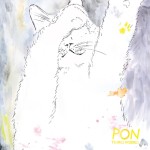
There is a particular difficulty in writing about music made out of grief when the music itself refuses to behave like grief. "Pon", Tujiko Noriko’s sixth album for Editions Mego, is dedicated to Ponpon, the deaf cat she adopted as a kitten and later lost in an accident. One might reasonably expect a record of mourning to arrive wearing black, sit in a corner and make everyone uncomfortable. Noriko has other ideas. Her response is stranger and, ultimately, more convincing: she builds a world in which affection, memory, absurdity, domestic noise, electronic fragility and melodic beauty can continue to coexist.
That distinction matters. "Pon" is not really an album "about" loss. It is an album about what remains active after loss has happened.
Noriko has spent more than two decades cultivating a musical language in which the apparently incompatible are allowed to occupy the same room. Electronics can be delicate rather than clinical; melodies can be sentimental without becoming syrupy; field recordings can function simultaneously as documentation and hallucination. Her work has always possessed an unusual relationship with technology, treating digital manipulation less as a demonstration of technical competence than as another bodily surface to touch, scratch and gently deform. Contemporary writing on "Pon" has picked up precisely on this tension between experimental electronics, dream-pop intimacy, field recordings and a deliberately childlike sense of wonder.
The opening “Only on Love” establishes the terms beautifully. There is no grand entrance, no neon sign announcing "IMPORTANT EMOTIONAL ALBUM HERE". Instead, Noriko lets sounds appear as if they had been lying around the room all along: small electronic events, soft vocal gestures, fragments of rhythm and melody occupying their own little corners. The result is intimate without being claustrophobic. Her voice rarely behaves like a conventional pop singer demanding the foreground. It is more like another object inside the arrangement, sometimes clearly articulated, sometimes half-swallowed by the machinery surrounding it.
That balance becomes increasingly fascinating as "Pon" progresses. “Bosom” and “Boku Wa Obake” introduce rhythmic and vocal oddities without abandoning the album's fundamental warmth. There is something slightly mischievous in the way Noriko inserts unexpected sounds into apparently innocent structures. The music frequently seems to be smiling while concealing a small knife behind its back.
And then there is “Knife of Yonder”, one of the album's major achievements. At almost eleven minutes, it has room to mutate rather than merely develop. It begins in an unusually warm, spacious electronic environment, gradually accumulates pressure and eventually opens into a much larger, almost ecstatic passage before drifting somewhere considerably less predictable. Its trajectory is important because it demonstrates that Noriko's gentleness is not synonymous with passivity. Beneath the pastel surfaces there is a restless composer constantly testing what a song is allowed to become.
This is perhaps where comparisons with Björk, which have followed Noriko since the beginning of her career, become particularly unhelpful. The resemblance is superficial at best. Both artists understand the expressive possibilities of the voice when surrounded by microscopic electronic detail, certainly, but Noriko's universe is considerably more eccentric and less interested in technological spectacle. Her music often feels assembled from things that should not quite fit together: lullaby, glitch, domestic recording, synthetic pulse, half-remembered melody, accidental noise. The seams are not hidden. They are part of the emotional information.
“Kikoeru Pon” brings that approach into especially sharp focus. The track incorporates domestic recordings and the sounds associated with Ponpon, allowing the animal to become present not through some sentimental reconstruction but through the ordinary acoustic traces of a shared life. It is an unusually powerful gesture because it refuses the monumental language of memorialisation. There is no marble statue here. There is a room, a memory, some noise, a voice and the faintly ridiculous fact that love often survives in the least cinematic details.
That sense of domesticity keeps returning. “Birthday” is almost miniature in scale, while “Beachside Cats” sounds like the sort of title that might belong to a harmless children's record until you remember that Tujiko Noriko is constitutionally incapable of leaving harmless things entirely alone. “Pon on TGV” shifts the geography again, transforming travel into another fragment of memory. The album becomes a collection of places and moments rather than a linear narrative.
There is also a fascinating relationship here between language and perception. Noriko does not need every listener to understand every word. The voice is frequently experienced first as texture, rhythm and emotional contour. That becomes especially poignant given Ponpon's deafness: "Pon" repeatedly asks what it means to communicate when conventional assumptions about listening no longer suffice. The record does not turn this into an academic thesis, thankfully. Humans already have enough academic theses. Instead, it lets the question remain embedded in the sounds themselves.
The later sequence becomes more spacious and contemplative, with “Kareki Ni Hana”, “Wakaru Pon” and “Kazeyo Pon” allowing the album's emotional temperature to settle. Some listeners may find the extended atmospheric passages less immediately eventful than the more intricate opening material, but that apparent looseness is part of the record's logic. Memory does not edit itself efficiently. It wanders, repeats, loses the thread, discovers something irrelevant and suddenly finds that the irrelevant thing was the point.
Noriko's production is crucial throughout. The electronics never create an impassable wall between listener and subject. Instead, they behave almost like translucent curtains. Behind them are melody, breath, domestic life and absence. Lawrence English contributes mixing and treatments, while Stephan Mathieu handles mastering, but the finished object remains unmistakably Noriko's: tactile, peculiar, tender and occasionally just odd enough to keep sentimentality at bay.
There is a lovely contradiction at the heart of "Pon". It is an album about something that cannot be recovered, yet it is full of movement. Things scurry, flicker, travel, glitch, sing and disappear. Even the album's shortest pieces feel less like interludes than photographs whose edges have begun to move.
Perhaps that is why "Pon" ultimately feels less like a memorial than a continuation. The cat is gone, but the sounds of having lived together have not vanished. They have been rearranged, transformed and given another life. Noriko does not attempt to make absence beautiful. She simply discovers that beauty was already hiding inside the ordinary things that absence leaves behind.
And that may be the most affecting thing about "Pon": it understands that remembering someone, or some creature, is not necessarily a solemn activity. Sometimes memory is a glitch. Sometimes it is a melody. Sometimes it is a noise from another room. Sometimes it is an inexplicable little electronic squeak that should probably have been removed in the mix but somehow makes the whole thing more alive.
"Pon" leaves those imperfections intact. Humanity, inconveniently, survives there.
That distinction matters. "Pon" is not really an album "about" loss. It is an album about what remains active after loss has happened.
Noriko has spent more than two decades cultivating a musical language in which the apparently incompatible are allowed to occupy the same room. Electronics can be delicate rather than clinical; melodies can be sentimental without becoming syrupy; field recordings can function simultaneously as documentation and hallucination. Her work has always possessed an unusual relationship with technology, treating digital manipulation less as a demonstration of technical competence than as another bodily surface to touch, scratch and gently deform. Contemporary writing on "Pon" has picked up precisely on this tension between experimental electronics, dream-pop intimacy, field recordings and a deliberately childlike sense of wonder.
The opening “Only on Love” establishes the terms beautifully. There is no grand entrance, no neon sign announcing "IMPORTANT EMOTIONAL ALBUM HERE". Instead, Noriko lets sounds appear as if they had been lying around the room all along: small electronic events, soft vocal gestures, fragments of rhythm and melody occupying their own little corners. The result is intimate without being claustrophobic. Her voice rarely behaves like a conventional pop singer demanding the foreground. It is more like another object inside the arrangement, sometimes clearly articulated, sometimes half-swallowed by the machinery surrounding it.
That balance becomes increasingly fascinating as "Pon" progresses. “Bosom” and “Boku Wa Obake” introduce rhythmic and vocal oddities without abandoning the album's fundamental warmth. There is something slightly mischievous in the way Noriko inserts unexpected sounds into apparently innocent structures. The music frequently seems to be smiling while concealing a small knife behind its back.
And then there is “Knife of Yonder”, one of the album's major achievements. At almost eleven minutes, it has room to mutate rather than merely develop. It begins in an unusually warm, spacious electronic environment, gradually accumulates pressure and eventually opens into a much larger, almost ecstatic passage before drifting somewhere considerably less predictable. Its trajectory is important because it demonstrates that Noriko's gentleness is not synonymous with passivity. Beneath the pastel surfaces there is a restless composer constantly testing what a song is allowed to become.
This is perhaps where comparisons with Björk, which have followed Noriko since the beginning of her career, become particularly unhelpful. The resemblance is superficial at best. Both artists understand the expressive possibilities of the voice when surrounded by microscopic electronic detail, certainly, but Noriko's universe is considerably more eccentric and less interested in technological spectacle. Her music often feels assembled from things that should not quite fit together: lullaby, glitch, domestic recording, synthetic pulse, half-remembered melody, accidental noise. The seams are not hidden. They are part of the emotional information.
“Kikoeru Pon” brings that approach into especially sharp focus. The track incorporates domestic recordings and the sounds associated with Ponpon, allowing the animal to become present not through some sentimental reconstruction but through the ordinary acoustic traces of a shared life. It is an unusually powerful gesture because it refuses the monumental language of memorialisation. There is no marble statue here. There is a room, a memory, some noise, a voice and the faintly ridiculous fact that love often survives in the least cinematic details.
That sense of domesticity keeps returning. “Birthday” is almost miniature in scale, while “Beachside Cats” sounds like the sort of title that might belong to a harmless children's record until you remember that Tujiko Noriko is constitutionally incapable of leaving harmless things entirely alone. “Pon on TGV” shifts the geography again, transforming travel into another fragment of memory. The album becomes a collection of places and moments rather than a linear narrative.
There is also a fascinating relationship here between language and perception. Noriko does not need every listener to understand every word. The voice is frequently experienced first as texture, rhythm and emotional contour. That becomes especially poignant given Ponpon's deafness: "Pon" repeatedly asks what it means to communicate when conventional assumptions about listening no longer suffice. The record does not turn this into an academic thesis, thankfully. Humans already have enough academic theses. Instead, it lets the question remain embedded in the sounds themselves.
The later sequence becomes more spacious and contemplative, with “Kareki Ni Hana”, “Wakaru Pon” and “Kazeyo Pon” allowing the album's emotional temperature to settle. Some listeners may find the extended atmospheric passages less immediately eventful than the more intricate opening material, but that apparent looseness is part of the record's logic. Memory does not edit itself efficiently. It wanders, repeats, loses the thread, discovers something irrelevant and suddenly finds that the irrelevant thing was the point.
Noriko's production is crucial throughout. The electronics never create an impassable wall between listener and subject. Instead, they behave almost like translucent curtains. Behind them are melody, breath, domestic life and absence. Lawrence English contributes mixing and treatments, while Stephan Mathieu handles mastering, but the finished object remains unmistakably Noriko's: tactile, peculiar, tender and occasionally just odd enough to keep sentimentality at bay.
There is a lovely contradiction at the heart of "Pon". It is an album about something that cannot be recovered, yet it is full of movement. Things scurry, flicker, travel, glitch, sing and disappear. Even the album's shortest pieces feel less like interludes than photographs whose edges have begun to move.
Perhaps that is why "Pon" ultimately feels less like a memorial than a continuation. The cat is gone, but the sounds of having lived together have not vanished. They have been rearranged, transformed and given another life. Noriko does not attempt to make absence beautiful. She simply discovers that beauty was already hiding inside the ordinary things that absence leaves behind.
And that may be the most affecting thing about "Pon": it understands that remembering someone, or some creature, is not necessarily a solemn activity. Sometimes memory is a glitch. Sometimes it is a melody. Sometimes it is a noise from another room. Sometimes it is an inexplicable little electronic squeak that should probably have been removed in the mix but somehow makes the whole thing more alive.
"Pon" leaves those imperfections intact. Humanity, inconveniently, survives there.
Ran Slavin: Aegean Gold

Artist: Ran Slavin (@)
Title: Aegean Gold
Format: 12" + Download
Label: Nocturnal Rainbow Recordings
Rated:

Title: Aegean Gold
Format: 12" + Download
Label: Nocturnal Rainbow Recordings
Rated:
There is a particular kind of musical memory that does not remember events so much as temperatures. A certain afternoon light. Salt drying on the skin. The colour of a wall just before sunset. The sound of water becoming indistinguishable from wind. "Aegean Gold", Ran Slavin's twenty-second solo long-player, operates almost entirely inside that peculiar territory where recollection stops being documentary and becomes atmosphere.
This is important, because an album inspired by the Aegean could very easily have become a soundtrack for an expensive holiday advertisement. One can almost imagine the danger: turquoise water, tasteful linen clothing, an abandoned amphora, somebody gazing meaningfully toward the horizon while a Greek island appears to have been personally curated by a luxury hotel chain. Thankfully, Slavin has more interesting things in mind.
The sea here is not really a landscape. It is a state of mind.
Slavin has spent more than two decades moving between electronic composition, cinematic sound, abstraction and visual art, and "Aegean Gold" feels like the work of somebody who understands that landscape is never merely what stands in front of the eyes. It is also what the mind subsequently does with it. His own Nocturnal Rainbow Recordings, founded in 2022, has become a kind of self-contained home for this ongoing body of work, allowing the albums to exist without having to obey the usual industrial superstition that every record must announce itself as a new beginning. There is, instead, continuity.
The opening trio makes this unusually clear. “Sun Kissed Waters”, “Saffron Breeze” and “Marble & Salt” first appear in abbreviated versions before returning later in more expansive forms. These are not simply radio edits followed by their supposedly serious incarnations. They function more like photographic exposures of different durations. One gives you the glance, another asks you to remain in the room. That structural decision says quite a lot about Slavin's understanding of memory.
Memory rarely operates in real time. Sometimes an entire summer survives as a two-second flash. Sometimes a trivial afternoon returns with ridiculous cinematic detail decades later. The short and long versions of these pieces mirror that instability: recollection can be a postcard or an entire climate.
Musically, "Aegean Gold" is remarkably restrained. Slow-moving drones, vintage-flavoured orchestral pads and delicate electronic textures provide the broad atmospheric field, but the album's most consequential presence is the piano. It does not behave like a grand classical protagonist arriving to explain the plot. It appears modestly, sometimes almost apologetically, tracing melodic paths through the surrounding haze. Bandcamp describes the album as piano-led orchestral ambient, and that description is accurate, although perhaps too well behaved for something whose emotional effects are considerably more slippery. The piano gives the record something human to hold onto. Without it, the surrounding electronics could have become an exceptionally attractive piece of environmental design. With it, they acquire hesitation. A note can sound like a decision. A chord can feel like the recollection of one.
“Golden Haze” is particularly effective in this respect. Its atmosphere does not attempt to imitate sunlight literally. Instead, it creates the sensation of light losing its edges. The drones seem to soften the distance between objects, while the melodic fragments retain just enough definition to suggest that something is being remembered rather than merely observed. “Coral Veil / Glacier Green” extends that ambiguity. Even the title seems to contain two incompatible temperatures: tropical warmth and mineral coldness. Slavin's music thrives on precisely these small contradictions. The Mediterranean is not presented as a single colour but as an unstable palette in which blue can become silver, gold can become grey, and brightness can acquire melancholy.
This is where "Aegean Gold" becomes more than a travelogue. The record certainly contains geographical specificity. “Plomari Days” is named after the town on Lesbos, while “Sea & Santur” places the sea beside the distinctive sound-world of the santur. But these references never become ethnographic postcards. They function as mnemonic triggers. The music does not tell us what the Aegean is. It asks what the Aegean might become inside somebody's memory. That distinction saves the album from the worst excesses of ambient tourism.
There is also something intriguing about Slavin's choice of electronic means. His music has always occupied a zone where sound, cinema and visual imagination overlap, and the present album often feels as though it has been photographed rather than composed. Yet it remains unmistakably synthetic. The orchestral colours have a slight patina, the drones possess the patience of machines, and the electronics never completely disappear behind their picturesque associations. Nature is being remembered through technology. Which is, in fairness, what most of us do now. We photograph sunsets, record waves, geo-tag ruins and then spend years looking at compressed representations of places we once inhabited physically. The machine has become part of memory's vocabulary.
Slavin simply makes that condition sound beautiful. The album's most substantial achievement is therefore its refusal to distinguish sharply between external landscape and internal projection. “Marble & Salt” can suggest architecture, mineral surfaces, seawater and skin without deciding which one matters most. “Saffron Breeze” feels almost tactile despite being constructed from electronic materials. “Sun Kissed Waters” does not need actual waves because the imagination supplies them with embarrassing efficiency.
And then there is “Sea & Santur”, which closes the album without really closing anything. The title proposes an encounter between two things, but the music leaves them suspended in a soft field of resonance. It feels less like arriving somewhere than watching the last light retreat from a shoreline. That is probably the right ending. Because "Aegean Gold" is ultimately not about Greece. It is about "the places we carry after leaving them".
The distinction matters. A geographical location exists independently of our affection for it. Memory does not. Memory edits relentlessly. It removes the unpleasant weather, the arguments, the badly timed ferry, the mosquito bites, the overpriced coffee and the person who was irritating for three consecutive days. It retains the light. Slavin's great trick is to allow the music to behave in exactly this way.
There are no hard edges here because memory tends to sand them down. There is little dramatic conflict because recollection is an unreliable curator. Even melancholy arrives filtered through warmth. The album does not deny sadness; it simply lets it float in the same water as beauty. This is also why the title "Aegean Gold" works better than it initially seems. Gold is not merely a colour. It is what memory does to certain experiences. It makes them precious, sometimes disproportionately so. The ordinary becomes luminous because it has been removed from ordinary time.
Slavin understands that transformation without becoming sentimental about it. The result is a record that can be approached as ambient music, modern-classical electronics, cinematic composition or simply as a place to sit quietly for forty-seven minutes. The ten-track sequence lasts just under forty-eight minutes, with the repeated compositions providing a useful sense of recurrence rather than conventional development. And perhaps that is its deepest strength: "Aegean Gold" does not demand attention through novelty. It asks for time. That can feel almost radical now.
Modern music, like modern life, seems increasingly terrified that you might become bored for seven seconds. Slavin instead allows sounds to linger until they cease being objects and become surroundings. The music does not constantly move forward. Sometimes it simply changes the light.
By the end, the Aegean has become less a place than a condition: sun on water, mineral under fingertips, a piano note suspended in air, an image already fading as it appears.
A beautiful memory, perhaps. Or a memory of something that never happened. At this point, the distinction seems rather unnecessary.
This is important, because an album inspired by the Aegean could very easily have become a soundtrack for an expensive holiday advertisement. One can almost imagine the danger: turquoise water, tasteful linen clothing, an abandoned amphora, somebody gazing meaningfully toward the horizon while a Greek island appears to have been personally curated by a luxury hotel chain. Thankfully, Slavin has more interesting things in mind.
The sea here is not really a landscape. It is a state of mind.
Slavin has spent more than two decades moving between electronic composition, cinematic sound, abstraction and visual art, and "Aegean Gold" feels like the work of somebody who understands that landscape is never merely what stands in front of the eyes. It is also what the mind subsequently does with it. His own Nocturnal Rainbow Recordings, founded in 2022, has become a kind of self-contained home for this ongoing body of work, allowing the albums to exist without having to obey the usual industrial superstition that every record must announce itself as a new beginning. There is, instead, continuity.
The opening trio makes this unusually clear. “Sun Kissed Waters”, “Saffron Breeze” and “Marble & Salt” first appear in abbreviated versions before returning later in more expansive forms. These are not simply radio edits followed by their supposedly serious incarnations. They function more like photographic exposures of different durations. One gives you the glance, another asks you to remain in the room. That structural decision says quite a lot about Slavin's understanding of memory.
Memory rarely operates in real time. Sometimes an entire summer survives as a two-second flash. Sometimes a trivial afternoon returns with ridiculous cinematic detail decades later. The short and long versions of these pieces mirror that instability: recollection can be a postcard or an entire climate.
Musically, "Aegean Gold" is remarkably restrained. Slow-moving drones, vintage-flavoured orchestral pads and delicate electronic textures provide the broad atmospheric field, but the album's most consequential presence is the piano. It does not behave like a grand classical protagonist arriving to explain the plot. It appears modestly, sometimes almost apologetically, tracing melodic paths through the surrounding haze. Bandcamp describes the album as piano-led orchestral ambient, and that description is accurate, although perhaps too well behaved for something whose emotional effects are considerably more slippery. The piano gives the record something human to hold onto. Without it, the surrounding electronics could have become an exceptionally attractive piece of environmental design. With it, they acquire hesitation. A note can sound like a decision. A chord can feel like the recollection of one.
“Golden Haze” is particularly effective in this respect. Its atmosphere does not attempt to imitate sunlight literally. Instead, it creates the sensation of light losing its edges. The drones seem to soften the distance between objects, while the melodic fragments retain just enough definition to suggest that something is being remembered rather than merely observed. “Coral Veil / Glacier Green” extends that ambiguity. Even the title seems to contain two incompatible temperatures: tropical warmth and mineral coldness. Slavin's music thrives on precisely these small contradictions. The Mediterranean is not presented as a single colour but as an unstable palette in which blue can become silver, gold can become grey, and brightness can acquire melancholy.
This is where "Aegean Gold" becomes more than a travelogue. The record certainly contains geographical specificity. “Plomari Days” is named after the town on Lesbos, while “Sea & Santur” places the sea beside the distinctive sound-world of the santur. But these references never become ethnographic postcards. They function as mnemonic triggers. The music does not tell us what the Aegean is. It asks what the Aegean might become inside somebody's memory. That distinction saves the album from the worst excesses of ambient tourism.
There is also something intriguing about Slavin's choice of electronic means. His music has always occupied a zone where sound, cinema and visual imagination overlap, and the present album often feels as though it has been photographed rather than composed. Yet it remains unmistakably synthetic. The orchestral colours have a slight patina, the drones possess the patience of machines, and the electronics never completely disappear behind their picturesque associations. Nature is being remembered through technology. Which is, in fairness, what most of us do now. We photograph sunsets, record waves, geo-tag ruins and then spend years looking at compressed representations of places we once inhabited physically. The machine has become part of memory's vocabulary.
Slavin simply makes that condition sound beautiful. The album's most substantial achievement is therefore its refusal to distinguish sharply between external landscape and internal projection. “Marble & Salt” can suggest architecture, mineral surfaces, seawater and skin without deciding which one matters most. “Saffron Breeze” feels almost tactile despite being constructed from electronic materials. “Sun Kissed Waters” does not need actual waves because the imagination supplies them with embarrassing efficiency.
And then there is “Sea & Santur”, which closes the album without really closing anything. The title proposes an encounter between two things, but the music leaves them suspended in a soft field of resonance. It feels less like arriving somewhere than watching the last light retreat from a shoreline. That is probably the right ending. Because "Aegean Gold" is ultimately not about Greece. It is about "the places we carry after leaving them".
The distinction matters. A geographical location exists independently of our affection for it. Memory does not. Memory edits relentlessly. It removes the unpleasant weather, the arguments, the badly timed ferry, the mosquito bites, the overpriced coffee and the person who was irritating for three consecutive days. It retains the light. Slavin's great trick is to allow the music to behave in exactly this way.
There are no hard edges here because memory tends to sand them down. There is little dramatic conflict because recollection is an unreliable curator. Even melancholy arrives filtered through warmth. The album does not deny sadness; it simply lets it float in the same water as beauty. This is also why the title "Aegean Gold" works better than it initially seems. Gold is not merely a colour. It is what memory does to certain experiences. It makes them precious, sometimes disproportionately so. The ordinary becomes luminous because it has been removed from ordinary time.
Slavin understands that transformation without becoming sentimental about it. The result is a record that can be approached as ambient music, modern-classical electronics, cinematic composition or simply as a place to sit quietly for forty-seven minutes. The ten-track sequence lasts just under forty-eight minutes, with the repeated compositions providing a useful sense of recurrence rather than conventional development. And perhaps that is its deepest strength: "Aegean Gold" does not demand attention through novelty. It asks for time. That can feel almost radical now.
Modern music, like modern life, seems increasingly terrified that you might become bored for seven seconds. Slavin instead allows sounds to linger until they cease being objects and become surroundings. The music does not constantly move forward. Sometimes it simply changes the light.
By the end, the Aegean has become less a place than a condition: sun on water, mineral under fingertips, a piano note suspended in air, an image already fading as it appears.
A beautiful memory, perhaps. Or a memory of something that never happened. At this point, the distinction seems rather unnecessary.
Cyparissus: Tombeaux Infinis
Artist: Cyparissus
Title: Tombeaux Infinis
Format: Download Only (MP3 + Lossless)
Label: Dragon's Eye Recordings (@)
Rated:
Title: Tombeaux Infinis
Format: Download Only (MP3 + Lossless)
Label: Dragon's Eye Recordings (@)
Rated:
Identity is a rather inconvenient thing. We like to imagine it as a possession, something stored somewhere inside the body alongside our childhood memories, embarrassing photographs and the passwords we will definitely remember this time. But identity becomes considerably less stable once another person enters the room. What do they see? What have they misunderstood? What have we misunderstood about what they have understood?
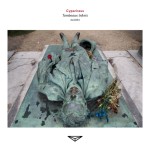
"Tombeaux Infinis", the third Cyparissus album for Dragon's Eye Recordings, has no tidy answer to these questions. It does something more interesting: it turns the problem into a method of composition.
Cyparissus is the alias of Kenneth Moss, an environmental science educator from central Maine who has been making music since the mid-2000s without following the conventional academic route into composition. Their interests in biology, entomology, language and the natural world have long seeped into the music, which often occupies the porous territory between ambient, experimental electronics, drone and sound collage. Previous Cyparissus releases such as "To the Moon and Back" and "Two Shakes of a Lamb's Tail" already treated identity as something unstable and difficult to observe from within. This new record turns the camera around.
The trilogy's first volume looked backward, the second examined the immediate present, and "Tombeaux Infinis" looks outward, toward the gaze of other people. The conceptual progression sounds neat on paper, but the music itself is anything but neat. It behaves like a collection of damaged mirrors, each returning a recognisable image with some crucial piece missing.
“Calamine Crush” establishes the atmosphere with a strange mixture of delicacy and unease. Sounds seem to emerge from a haze rather than begin at a clearly defined point. There is no insistence on the clean architecture of conventional electronic composition. Instead, Cyparissus allows textures to hover, overlap and acquire meaning through proximity. That looseness is deceptive. The album is carefully constructed, but its construction is deliberately made visible as a process of uncertainty. Voices, fragments and electronic material are not presented as finished objects. They are shown being interpreted.
The most revealing sequence involves Freddy Ruppert. First, his reading of text written by Cyparissus is presented with minimal interference. Then the voice is broken apart, glitched and granulated until language approaches the threshold of intelligibility. Finally, the material is reconstructed so that Ruppert's voice speaks phrases assembled by Cyparissus.
The progression is quietly brutal.
First: this is what you said.
Then: this is what remains when I interfere.
Finally: this is what I hear you saying.
It is difficult to think of a more accurate sonic metaphor for human relationships.
We spend enormous amounts of time interpreting other people, usually with the confidence of people who have never once had access to the complete evidence. A pause becomes a judgement. A facial expression becomes a message. Silence becomes an accusation. Someone says something perfectly ordinary and we spend three days constructing an elaborate psychological opera around it.
Cyparissus turns that basic human malfunction into musical form. “Alces” and “Cimmerian” continue the movement between comprehensible material and atmospheric ambiguity. The sounds are sparse but never empty. There is a sense of information constantly approaching the listener and then withdrawing before it can be completely decoded. This is where the album's title becomes particularly evocative. "Tombeaux Infinis" suggests infinite tombs, endless repositories of things that have been buried but not necessarily forgotten. The record feels populated by such remnants: voices stripped from their original context, phrases severed from their intentions, sounds detached from their sources. Nothing is quite dead, but nothing is entirely alive in its original form either. The past is not preserved. It is edited.
“What is meant by the phrase, ‘La tristesse durera toujours.’” takes this uncertainty into more explicitly linguistic territory. The famous sentence associated with the final words of Vincent van Gogh becomes less a quotation to be admired than a linguistic object to be worried at. Meaning begins to detach from authorship. The question becomes not simply what the phrase means, but what happens when somebody else decides what it means. This distinction runs through the entire album.
Cyparissus is not particularly interested in the idea of an untouched recording. Every recording already involves framing. A microphone chooses what counts as sound. Editing determines what remains. Mixing establishes relationships that did not exist in the original event. Even listening is interpretive. The supposedly objective document is therefore a myth. A very useful myth, perhaps, but still a myth.
“Amplexus” introduces another kind of closeness. Its title refers to the physical embrace used by some amphibians during mating, a detail that might seem biologically specific until one notices how often Cyparissus's music treats bodies, connection and distance as related problems. The biological vocabulary is not decorative. It gives the abstract question of identity a physical substrate.
Bodies touch. Voices overlap. Boundaries become inconvenient. The album repeatedly returns to this problem.
“Saturn Jupiter” widens the scale, introducing an almost astronomical distance into a record otherwise obsessed with interpersonal perception. It is an effective contrast. The farther the music seems to travel outward, the more it raises the question of where the observer actually stands.
“Moose Moon” is perhaps the most characteristic title in this respect: animal, landscape, celestial body, observation. A moose does not care what you think of it. The moon certainly does not. Humans, however, have spent thousands of years projecting meaning onto both. We are spectacularly bad at leaving things alone. Cyparissus understands this.
The album's environmental and biological associations therefore never feel like an attempt to create a picturesque “nature” ambience. The natural world functions more like a counterargument to human certainty. It reminds us that our categories are temporary, while the things we classify continue existing perfectly well without consulting us.
“Theriaca” is another beautifully ambiguous piece, its title referring to the old medicinal compound known as theriac. Historically, theriac became an almost absurdly elaborate mixture believed to counteract poisons. It is an appropriate image for an album in which disparate materials are combined in the hope that some larger meaning might emerge. But "Tombeaux Infinis" is suspicious of cures. It does not resolve. It accumulates.
“Cocytus”, named for the river of lamentation in Dante's frozen ninth circle of Hell, brings the album into darker territory. Yet the music remains too restrained to become conventionally gothic. There are no dramatic gestures demanding that we recognise the darkness. Instead, the atmosphere becomes colder, more isolated, more difficult to inhabit. The effect is stronger precisely because Cyparissus refuses to overplay it.
This restraint is one of the album's defining virtues. The record contains plenty of conceptual material, but it never turns into an audio essay with a soundtrack attached. The ideas are embedded in the manipulation of sound itself. You do not need to know the trilogy's theoretical architecture to experience the uncertainty. The music already produces it. That is difficult to achieve.
Conceptual electronic music can easily become a little too pleased with its own explanation. Once the artist has supplied the philosophical framework, the listener is sometimes left feeling like an unfortunate undergraduate who has been handed the reading list before being allowed to hear the album. Cyparissus avoids that trap. The concepts remain useful, but the sounds retain their independence.
The final track, “We'll Never Slow Dance”, provides the most poignant conclusion. The title suggests intimacy, but also its impossibility. A slow dance requires two people to coordinate movement while remaining aware of each other. It is perhaps one of the simplest metaphors for mutual perception imaginable.
Yet there is always a gap. One person moves. The other interprets. Neither ever has complete access to the other's experience. That gap is where "Tombeaux Infinis" lives.
The album is ultimately less about identity than about the impossibility of possessing an identity privately. We are partly made by memory, partly by self-perception and partly by other people's descriptions of us. Those descriptions are inevitably incomplete, sometimes generous, sometimes hostile, often simply wrong. Cyparissus does not try to correct the record. Instead, the record becomes the correction.
A voice is given to another person, broken apart, rearranged and returned. A sound is detached from its origin and placed beside another. A phrase changes meaning because its surroundings change. Something familiar becomes strange, then strangely familiar again. This is not simply an aesthetic technique. It is how identity works. We are all, to some degree, collages made by other people. The uncomfortable part is that some of those people were editing without our permission.
"Tombeaux Infinis" understands that identity is not a monument but an ongoing excavation. Every attempt to uncover a definitive self produces another layer of material. Every explanation creates another question. The infinite tombs of the title may therefore not contain dead identities at all. They contain previous versions of ourselves, along with the versions other people invented for us.
Some are recognisable. Some are grotesque. Some are probably more accurate than we'd like. The album's achievement is to make that philosophical problem tactile. Its electronics do not illustrate an argument about perception. They behave like perception itself: selective, unstable, associative, prone to distortion and absolutely convinced that it is telling the truth.
That last part, naturally, is the most human thing about it.
"Tombeaux Infinis" closes Cyparissus's trilogy without closing its question. There is no final self-portrait, no authoritative answer, no neat psychological frame around the work.
Just another reflection. And behind it, another. And another...
"Tombeaux Infinis", the third Cyparissus album for Dragon's Eye Recordings, has no tidy answer to these questions. It does something more interesting: it turns the problem into a method of composition.
Cyparissus is the alias of Kenneth Moss, an environmental science educator from central Maine who has been making music since the mid-2000s without following the conventional academic route into composition. Their interests in biology, entomology, language and the natural world have long seeped into the music, which often occupies the porous territory between ambient, experimental electronics, drone and sound collage. Previous Cyparissus releases such as "To the Moon and Back" and "Two Shakes of a Lamb's Tail" already treated identity as something unstable and difficult to observe from within. This new record turns the camera around.
The trilogy's first volume looked backward, the second examined the immediate present, and "Tombeaux Infinis" looks outward, toward the gaze of other people. The conceptual progression sounds neat on paper, but the music itself is anything but neat. It behaves like a collection of damaged mirrors, each returning a recognisable image with some crucial piece missing.
“Calamine Crush” establishes the atmosphere with a strange mixture of delicacy and unease. Sounds seem to emerge from a haze rather than begin at a clearly defined point. There is no insistence on the clean architecture of conventional electronic composition. Instead, Cyparissus allows textures to hover, overlap and acquire meaning through proximity. That looseness is deceptive. The album is carefully constructed, but its construction is deliberately made visible as a process of uncertainty. Voices, fragments and electronic material are not presented as finished objects. They are shown being interpreted.
The most revealing sequence involves Freddy Ruppert. First, his reading of text written by Cyparissus is presented with minimal interference. Then the voice is broken apart, glitched and granulated until language approaches the threshold of intelligibility. Finally, the material is reconstructed so that Ruppert's voice speaks phrases assembled by Cyparissus.
The progression is quietly brutal.
First: this is what you said.
Then: this is what remains when I interfere.
Finally: this is what I hear you saying.
It is difficult to think of a more accurate sonic metaphor for human relationships.
We spend enormous amounts of time interpreting other people, usually with the confidence of people who have never once had access to the complete evidence. A pause becomes a judgement. A facial expression becomes a message. Silence becomes an accusation. Someone says something perfectly ordinary and we spend three days constructing an elaborate psychological opera around it.
Cyparissus turns that basic human malfunction into musical form. “Alces” and “Cimmerian” continue the movement between comprehensible material and atmospheric ambiguity. The sounds are sparse but never empty. There is a sense of information constantly approaching the listener and then withdrawing before it can be completely decoded. This is where the album's title becomes particularly evocative. "Tombeaux Infinis" suggests infinite tombs, endless repositories of things that have been buried but not necessarily forgotten. The record feels populated by such remnants: voices stripped from their original context, phrases severed from their intentions, sounds detached from their sources. Nothing is quite dead, but nothing is entirely alive in its original form either. The past is not preserved. It is edited.
“What is meant by the phrase, ‘La tristesse durera toujours.’” takes this uncertainty into more explicitly linguistic territory. The famous sentence associated with the final words of Vincent van Gogh becomes less a quotation to be admired than a linguistic object to be worried at. Meaning begins to detach from authorship. The question becomes not simply what the phrase means, but what happens when somebody else decides what it means. This distinction runs through the entire album.
Cyparissus is not particularly interested in the idea of an untouched recording. Every recording already involves framing. A microphone chooses what counts as sound. Editing determines what remains. Mixing establishes relationships that did not exist in the original event. Even listening is interpretive. The supposedly objective document is therefore a myth. A very useful myth, perhaps, but still a myth.
“Amplexus” introduces another kind of closeness. Its title refers to the physical embrace used by some amphibians during mating, a detail that might seem biologically specific until one notices how often Cyparissus's music treats bodies, connection and distance as related problems. The biological vocabulary is not decorative. It gives the abstract question of identity a physical substrate.
Bodies touch. Voices overlap. Boundaries become inconvenient. The album repeatedly returns to this problem.
“Saturn Jupiter” widens the scale, introducing an almost astronomical distance into a record otherwise obsessed with interpersonal perception. It is an effective contrast. The farther the music seems to travel outward, the more it raises the question of where the observer actually stands.
“Moose Moon” is perhaps the most characteristic title in this respect: animal, landscape, celestial body, observation. A moose does not care what you think of it. The moon certainly does not. Humans, however, have spent thousands of years projecting meaning onto both. We are spectacularly bad at leaving things alone. Cyparissus understands this.
The album's environmental and biological associations therefore never feel like an attempt to create a picturesque “nature” ambience. The natural world functions more like a counterargument to human certainty. It reminds us that our categories are temporary, while the things we classify continue existing perfectly well without consulting us.
“Theriaca” is another beautifully ambiguous piece, its title referring to the old medicinal compound known as theriac. Historically, theriac became an almost absurdly elaborate mixture believed to counteract poisons. It is an appropriate image for an album in which disparate materials are combined in the hope that some larger meaning might emerge. But "Tombeaux Infinis" is suspicious of cures. It does not resolve. It accumulates.
“Cocytus”, named for the river of lamentation in Dante's frozen ninth circle of Hell, brings the album into darker territory. Yet the music remains too restrained to become conventionally gothic. There are no dramatic gestures demanding that we recognise the darkness. Instead, the atmosphere becomes colder, more isolated, more difficult to inhabit. The effect is stronger precisely because Cyparissus refuses to overplay it.
This restraint is one of the album's defining virtues. The record contains plenty of conceptual material, but it never turns into an audio essay with a soundtrack attached. The ideas are embedded in the manipulation of sound itself. You do not need to know the trilogy's theoretical architecture to experience the uncertainty. The music already produces it. That is difficult to achieve.
Conceptual electronic music can easily become a little too pleased with its own explanation. Once the artist has supplied the philosophical framework, the listener is sometimes left feeling like an unfortunate undergraduate who has been handed the reading list before being allowed to hear the album. Cyparissus avoids that trap. The concepts remain useful, but the sounds retain their independence.
The final track, “We'll Never Slow Dance”, provides the most poignant conclusion. The title suggests intimacy, but also its impossibility. A slow dance requires two people to coordinate movement while remaining aware of each other. It is perhaps one of the simplest metaphors for mutual perception imaginable.
Yet there is always a gap. One person moves. The other interprets. Neither ever has complete access to the other's experience. That gap is where "Tombeaux Infinis" lives.
The album is ultimately less about identity than about the impossibility of possessing an identity privately. We are partly made by memory, partly by self-perception and partly by other people's descriptions of us. Those descriptions are inevitably incomplete, sometimes generous, sometimes hostile, often simply wrong. Cyparissus does not try to correct the record. Instead, the record becomes the correction.
A voice is given to another person, broken apart, rearranged and returned. A sound is detached from its origin and placed beside another. A phrase changes meaning because its surroundings change. Something familiar becomes strange, then strangely familiar again. This is not simply an aesthetic technique. It is how identity works. We are all, to some degree, collages made by other people. The uncomfortable part is that some of those people were editing without our permission.
"Tombeaux Infinis" understands that identity is not a monument but an ongoing excavation. Every attempt to uncover a definitive self produces another layer of material. Every explanation creates another question. The infinite tombs of the title may therefore not contain dead identities at all. They contain previous versions of ourselves, along with the versions other people invented for us.
Some are recognisable. Some are grotesque. Some are probably more accurate than we'd like. The album's achievement is to make that philosophical problem tactile. Its electronics do not illustrate an argument about perception. They behave like perception itself: selective, unstable, associative, prone to distortion and absolutely convinced that it is telling the truth.
That last part, naturally, is the most human thing about it.
"Tombeaux Infinis" closes Cyparissus's trilogy without closing its question. There is no final self-portrait, no authoritative answer, no neat psychological frame around the work.
Just another reflection. And behind it, another. And another...
Jorge Solís Arenazas: Conatus

Artist: Jorge Solís Arenazas (@)
Title: Conatus
Format: Download Only (MP3 + Lossless)
Label: self-released
Rated:
Title: Conatus
Format: Download Only (MP3 + Lossless)
Label: self-released
Rated:
There is something almost perversely appropriate about making a forty-three-minute electronic composition during lockdown and deciding that its principal subject should be persistence. Humanity had temporarily discovered that time could become a viscous substance, that Tuesdays could last approximately three geological eras, and that staring at the same four walls was apparently an acceptable lifestyle. Solís Arenazas responded by asking what happens when sound refuses to leave. "Conatus" is the answer.
The word comes from Spinoza's notion of the fundamental tendency of every being to persevere in its existence, to continue being what it is while simultaneously entering into relations that inevitably alter it. Solís Arenazas does not merely borrow this idea as an intellectual ornament. He builds the entire piece around it. A small number of sonic materials persist for an extended duration, repeating without ever remaining perfectly identical. Their survival depends on change. That distinction is crucial.
A loop normally promises recurrence: here we are again, back at the beginning, congratulations, humanity has invented the circle. But "Conatus" is interested in a less obedient kind of repetition. Its materials return altered by their previous encounters. Frequencies interfere, textures thicken or thin, microscopic deviations accumulate. What initially appears static gradually reveals itself as a system in continuous negotiation with itself.
This is also where Solís Arenazas' wider practice becomes relevant. The Mexico City-based sound artist, essayist and composer works across electroacoustic music, synthesis, acousmatic research, installations, radio and documentary sound, with a recurring interest in ambiguity, language and the behaviour of indeterminate materials. His work has appeared in contexts ranging from contemporary dance and film to sound installations and experimental music. His 2026 LINE release "Displacements", for example, explores relationships between language, chaotic systems and randomness through feedback, noise, field recordings and electronic processes. "Conatus" approaches similar territory from a considerably narrower doorway. Everything happens inside a single piece. That could sound restrictive. It isn't. The forty-three minutes function less like a conventional composition than like a laboratory in which a handful of sounds are left alone long enough to reveal their bad habits. The materials were originally recorded at Vano Sonoro's studios in Mexico City in early 2021, then subjected to processes involving Markov-chain probability, interference modulation, low-frequency oscillation and resampling. But the interesting thing is not the technology itself. It is the composer's decision to listen before intervening.
The procedure is almost anti-virtuosic. Instead of constantly demonstrating control, Solís Arenazas allows the system to produce unexpected consequences and then responds to them. Parameters are adjusted sparingly. The composer becomes partly gardener, partly scientist, partly person sitting in front of a computer wondering whether that strange sound was intentional. It is a productive relinquishing of authority. The piece consequently develops through tiny discrepancies. A tone that initially seems merely functional begins acquiring grain. A pulse creates secondary vibrations. One frequency appears to lean against another. A texture thickens enough to become almost architectural before gradually losing its solidity. The listener's attention is repeatedly redirected from the object itself toward the space around it. This is where "Conatus" becomes genuinely compelling. Its repetition is not about hypnosis in the conventional ambient sense. It is about "perceptual recalibration". The longer the same materials remain present, the more aggressively the ear starts examining them. What sounded like a single event becomes a cluster of internal movements. What seemed motionless begins crawling.
There is a beautiful paradox here: the music changes because it insists on remaining itself. Spinoza would probably approve. Or at least he might have found the premise less ridiculous than most things humans do with synthesizers. The piece also has an interesting relationship with the experience of lockdown without attempting to turn itself into a pandemic document. There are no obvious gestures toward catastrophe, isolation or collective trauma. Instead, the connection is temporal. "Conatus" remembers a period in which duration became unusually conspicuous. Ordinary time lost its usual punctuation. Days ceased to be differentiated by events and became quantities of waiting. Solís Arenazas translates that experience into sound without narrating it.
The result is not music about lockdown so much as music that understands what it meant for time to become materially noticeable. At first, forty-three minutes can seem like an extravagant amount of time to ask from a listener. By the end, the opposite becomes true. The duration feels necessary because the composition needs enough temporal distance for its smallest deviations to become significant. This is the great risk of such music, naturally. Minimalism can easily become minimal effort wearing a serious expression. Put a drone on for forty minutes, mention phenomenology somewhere in the accompanying text and humanity will occasionally reward you for it.
"Conatus" earns its duration because the repetition contains consequences. Its materials do not simply persist. They remember.
Every recurrence carries traces of what happened before. The sonic environment therefore becomes cumulative rather than cyclical. The listener is never returned to precisely the same point, even when the surface suggests otherwise. The piece behaves more like a spiral than a loop, gradually circling the same territory while changing its altitude.
There is also something quietly physical about the music. The low-frequency components and interference processes give the piece a sense of pressure. It does not merely occupy listening space; it modifies the perception of that space. Headphones make this particularly evident, because the apparently modest events begin revealing depth and lateral movement that the first pass may have concealed. This is perhaps the most successful aspect of "Conatus": its ability to turn small differences into events.
Nothing needs to explode. Nothing needs to announce a climax. There is no heroic final transformation waiting patiently at minute forty-two. Instead, the reward lies in discovering that the supposedly identical thing has been changing all along. That idea extends beyond music. A person repeats habits and remains recognisably themselves, yet is altered by every repetition. A relationship returns to familiar gestures but never to the same circumstances. A memory resurfaces with a slightly different emphasis. Even an apparently stable identity is continuously modified by its encounters.
Persistence is therefore not the opposite of change. Persistence is one of the mechanisms through which change happens.
That is what gives "Conatus" its philosophical weight without requiring it to behave like a philosophy lecture with a synthesizer underneath. The Spinozist premise is useful because it is audible. You can hear the materials trying to remain themselves. You can also hear them failing, which is arguably the more interesting part.
The piece ends, but it does not feel concluded in any conventional sense. It simply reaches the point at which the listener is released from the experiment. The processes could presumably continue. The sounds could keep modifying one another indefinitely. And perhaps that is the final trick.
"Conatus" makes us aware that repetition is never really repetition. There is always another microscopic difference waiting inside the return, another accidental relation, another mutation too small to notice until we have stayed still long enough.
In a culture addicted to novelty, Solís Arenazas proposes something considerably stranger: stay with the same thing until it becomes something else.
It turns out that patience, unlike most fashionable production techniques, still has consequences.
The word comes from Spinoza's notion of the fundamental tendency of every being to persevere in its existence, to continue being what it is while simultaneously entering into relations that inevitably alter it. Solís Arenazas does not merely borrow this idea as an intellectual ornament. He builds the entire piece around it. A small number of sonic materials persist for an extended duration, repeating without ever remaining perfectly identical. Their survival depends on change. That distinction is crucial.
A loop normally promises recurrence: here we are again, back at the beginning, congratulations, humanity has invented the circle. But "Conatus" is interested in a less obedient kind of repetition. Its materials return altered by their previous encounters. Frequencies interfere, textures thicken or thin, microscopic deviations accumulate. What initially appears static gradually reveals itself as a system in continuous negotiation with itself.
This is also where Solís Arenazas' wider practice becomes relevant. The Mexico City-based sound artist, essayist and composer works across electroacoustic music, synthesis, acousmatic research, installations, radio and documentary sound, with a recurring interest in ambiguity, language and the behaviour of indeterminate materials. His work has appeared in contexts ranging from contemporary dance and film to sound installations and experimental music. His 2026 LINE release "Displacements", for example, explores relationships between language, chaotic systems and randomness through feedback, noise, field recordings and electronic processes. "Conatus" approaches similar territory from a considerably narrower doorway. Everything happens inside a single piece. That could sound restrictive. It isn't. The forty-three minutes function less like a conventional composition than like a laboratory in which a handful of sounds are left alone long enough to reveal their bad habits. The materials were originally recorded at Vano Sonoro's studios in Mexico City in early 2021, then subjected to processes involving Markov-chain probability, interference modulation, low-frequency oscillation and resampling. But the interesting thing is not the technology itself. It is the composer's decision to listen before intervening.
The procedure is almost anti-virtuosic. Instead of constantly demonstrating control, Solís Arenazas allows the system to produce unexpected consequences and then responds to them. Parameters are adjusted sparingly. The composer becomes partly gardener, partly scientist, partly person sitting in front of a computer wondering whether that strange sound was intentional. It is a productive relinquishing of authority. The piece consequently develops through tiny discrepancies. A tone that initially seems merely functional begins acquiring grain. A pulse creates secondary vibrations. One frequency appears to lean against another. A texture thickens enough to become almost architectural before gradually losing its solidity. The listener's attention is repeatedly redirected from the object itself toward the space around it. This is where "Conatus" becomes genuinely compelling. Its repetition is not about hypnosis in the conventional ambient sense. It is about "perceptual recalibration". The longer the same materials remain present, the more aggressively the ear starts examining them. What sounded like a single event becomes a cluster of internal movements. What seemed motionless begins crawling.
There is a beautiful paradox here: the music changes because it insists on remaining itself. Spinoza would probably approve. Or at least he might have found the premise less ridiculous than most things humans do with synthesizers. The piece also has an interesting relationship with the experience of lockdown without attempting to turn itself into a pandemic document. There are no obvious gestures toward catastrophe, isolation or collective trauma. Instead, the connection is temporal. "Conatus" remembers a period in which duration became unusually conspicuous. Ordinary time lost its usual punctuation. Days ceased to be differentiated by events and became quantities of waiting. Solís Arenazas translates that experience into sound without narrating it.
The result is not music about lockdown so much as music that understands what it meant for time to become materially noticeable. At first, forty-three minutes can seem like an extravagant amount of time to ask from a listener. By the end, the opposite becomes true. The duration feels necessary because the composition needs enough temporal distance for its smallest deviations to become significant. This is the great risk of such music, naturally. Minimalism can easily become minimal effort wearing a serious expression. Put a drone on for forty minutes, mention phenomenology somewhere in the accompanying text and humanity will occasionally reward you for it.
"Conatus" earns its duration because the repetition contains consequences. Its materials do not simply persist. They remember.
Every recurrence carries traces of what happened before. The sonic environment therefore becomes cumulative rather than cyclical. The listener is never returned to precisely the same point, even when the surface suggests otherwise. The piece behaves more like a spiral than a loop, gradually circling the same territory while changing its altitude.
There is also something quietly physical about the music. The low-frequency components and interference processes give the piece a sense of pressure. It does not merely occupy listening space; it modifies the perception of that space. Headphones make this particularly evident, because the apparently modest events begin revealing depth and lateral movement that the first pass may have concealed. This is perhaps the most successful aspect of "Conatus": its ability to turn small differences into events.
Nothing needs to explode. Nothing needs to announce a climax. There is no heroic final transformation waiting patiently at minute forty-two. Instead, the reward lies in discovering that the supposedly identical thing has been changing all along. That idea extends beyond music. A person repeats habits and remains recognisably themselves, yet is altered by every repetition. A relationship returns to familiar gestures but never to the same circumstances. A memory resurfaces with a slightly different emphasis. Even an apparently stable identity is continuously modified by its encounters.
Persistence is therefore not the opposite of change. Persistence is one of the mechanisms through which change happens.
That is what gives "Conatus" its philosophical weight without requiring it to behave like a philosophy lecture with a synthesizer underneath. The Spinozist premise is useful because it is audible. You can hear the materials trying to remain themselves. You can also hear them failing, which is arguably the more interesting part.
The piece ends, but it does not feel concluded in any conventional sense. It simply reaches the point at which the listener is released from the experiment. The processes could presumably continue. The sounds could keep modifying one another indefinitely. And perhaps that is the final trick.
"Conatus" makes us aware that repetition is never really repetition. There is always another microscopic difference waiting inside the return, another accidental relation, another mutation too small to notice until we have stayed still long enough.
In a culture addicted to novelty, Solís Arenazas proposes something considerably stranger: stay with the same thing until it becomes something else.
It turns out that patience, unlike most fashionable production techniques, still has consequences.