
Browse by Genre
Industrial Music / Industrial Metal / Aggro Industrial / Electro Metal
Industrial Noise / Power Noise / Harsh Noise
Synth Pop / Electro Pop / Synth-Electronica
Techno / Trance / Goa / Drum'n'Bass / Jungle / Tribal / Trip-Hop
Ambient / Electronica / Ethereal / Dub / Soundscapes / Abstract
Experimental / Avantgarde / Weird & Wired / Glitch / Noise / Field Recording
Dark / Gothic / Wave / New Wave / Dark Wave / Industrial Gothic
New Music / Downtown / Avantgarde Jazz / New Classical / World
Search Reviews
Music Reviews
Haptic: Ambivalence
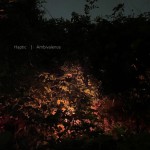
Artist: Haptic
Title: Ambivalence
Format: Download Only (MP3 + Lossless)
Label: Ash International
Rated:

Title: Ambivalence
Format: Download Only (MP3 + Lossless)
Label: Ash International
Rated:
Ambivalence is one of those words people like to use when they don’t want to admit they’re torn. In Haptic’s case, it’s less indecision and more a working method: holding opposing states in place long enough to see what kind of sound leaks out.
Across two extended pieces, "Ambivalence" finds Haptic - that is, Steven Hess, Joseph Clayton Mills, and Adam Sonderberg - operating in a space they’ve been refining for years: somewhere between composition and erosion. Their history, spanning installations, film work, and performances in institutions that tend to prefer silence dressed as art, shows up here not as prestige but as discipline. They know how to wait.
“Late Work I” unfolds like a system slowly revealing its own instability. Recorded in London with the addition of Mark Wastell, it begins in near-stasis, a low-density field where sound feels provisional, almost reluctant to commit. Small events appear, hover, and then either integrate or vanish. There’s a sense of microscopic negotiation, as if each element is testing whether it deserves to remain. Over time, the piece thickens, though never in a dramatic way. It accumulates rather than builds, which is a subtle but important distinction. You don’t notice the change until you realize you’ve been listening differently for the past ten minutes.
“Late Work II”, assembled across multiple locations and expanded with performers like Sarah Hughes and Seth Cooke, feels more dispersed, less centered. If the first piece suggests a room, this one suggests a network. Sounds emerge from different directions, loosely coordinated but not entirely aligned. There’s a quiet tension between cohesion and fragmentation, as if the piece is constantly deciding whether to cohere or fall apart. It does both, repeatedly.
What Haptic continue to do well, almost annoyingly well, is restraint. This kind of long-form electroacoustic work often collapses under the weight of its own seriousness, mistaking duration for depth. "Ambivalence" avoids that trap by maintaining a kind of internal skepticism. Nothing is allowed to dominate for too long. Textures are introduced, explored, and then quietly undermined. Stability is always temporary.
There are echoes of reductionist improvisation and post-lowercase aesthetics, but the trio doesn’t fully commit to austerity. There’s a subtle richness in the material, a willingness to let density creep in when necessary, only to strip it back again. It’s a constant recalibration of presence and absence, which fits the title a little too perfectly.
Mastering by Giuseppe Ielasi ensures that even the smallest gestures carry weight, which matters when your music depends on the listener noticing things they would normally ignore. And that’s really the unspoken demand here: attention. Not passive, not distracted. The kind that most people reserve for problems, not for sound.
Is it enjoyable? That depends on your definition. It’s not pleasant in any conventional sense, but it is absorbing, in the way watching something slowly take shape can be, even if you’re not entirely sure what it’s becoming.
Haptic’s seventeenth release doesn’t try to resolve its contradictions. It just sustains them, patiently, until they start to feel like the point rather than the problem. Which, inconveniently, is often how things actually work.
Across two extended pieces, "Ambivalence" finds Haptic - that is, Steven Hess, Joseph Clayton Mills, and Adam Sonderberg - operating in a space they’ve been refining for years: somewhere between composition and erosion. Their history, spanning installations, film work, and performances in institutions that tend to prefer silence dressed as art, shows up here not as prestige but as discipline. They know how to wait.
“Late Work I” unfolds like a system slowly revealing its own instability. Recorded in London with the addition of Mark Wastell, it begins in near-stasis, a low-density field where sound feels provisional, almost reluctant to commit. Small events appear, hover, and then either integrate or vanish. There’s a sense of microscopic negotiation, as if each element is testing whether it deserves to remain. Over time, the piece thickens, though never in a dramatic way. It accumulates rather than builds, which is a subtle but important distinction. You don’t notice the change until you realize you’ve been listening differently for the past ten minutes.
“Late Work II”, assembled across multiple locations and expanded with performers like Sarah Hughes and Seth Cooke, feels more dispersed, less centered. If the first piece suggests a room, this one suggests a network. Sounds emerge from different directions, loosely coordinated but not entirely aligned. There’s a quiet tension between cohesion and fragmentation, as if the piece is constantly deciding whether to cohere or fall apart. It does both, repeatedly.
What Haptic continue to do well, almost annoyingly well, is restraint. This kind of long-form electroacoustic work often collapses under the weight of its own seriousness, mistaking duration for depth. "Ambivalence" avoids that trap by maintaining a kind of internal skepticism. Nothing is allowed to dominate for too long. Textures are introduced, explored, and then quietly undermined. Stability is always temporary.
There are echoes of reductionist improvisation and post-lowercase aesthetics, but the trio doesn’t fully commit to austerity. There’s a subtle richness in the material, a willingness to let density creep in when necessary, only to strip it back again. It’s a constant recalibration of presence and absence, which fits the title a little too perfectly.
Mastering by Giuseppe Ielasi ensures that even the smallest gestures carry weight, which matters when your music depends on the listener noticing things they would normally ignore. And that’s really the unspoken demand here: attention. Not passive, not distracted. The kind that most people reserve for problems, not for sound.
Is it enjoyable? That depends on your definition. It’s not pleasant in any conventional sense, but it is absorbing, in the way watching something slowly take shape can be, even if you’re not entirely sure what it’s becoming.
Haptic’s seventeenth release doesn’t try to resolve its contradictions. It just sustains them, patiently, until they start to feel like the point rather than the problem. Which, inconveniently, is often how things actually work.
Strangebird~Sounds: Minerals From The Crust

Artist: Strangebird~Sounds
Title: Minerals From The Crust
Format: Download Only (MP3 + Lossless)
Label: Audiobulb (@)
Rated:

Title: Minerals From The Crust
Format: Download Only (MP3 + Lossless)
Label: Audiobulb (@)
Rated:
Geology is patient. Music, less so. "Minerals From The Crust" tries to reconcile the two, which is either ambitious or mildly delusional depending on your tolerance for concept-driven electronica. Against expectations, Gregory Geerts - working as Strangebird~Sounds - makes the idea hold together without turning it into a lecture disguised as a record.
Built around Eurorack modular synthesis (that beloved playground where cables breed like anxious thoughts), the album approaches sound as matter: shaped, fractured, compressed, occasionally allowed to shimmer. Geerts has been circling this territory for a while, but here the focus feels sharpened. Not more complex, just more intentional, which is rarer than most modular enthusiasts would like to admit.
“AMETRINE” opens like a brief calibration, a small flicker of tone and texture that sets the palette without overstaying its welcome. Then “AZURITE” settles into something more hypnotic, pulsing basslines underpinning crystalline sequences that feel structured but never rigid. There’s a tactile quality to the sound, as if you could run your fingers across it and come away with residue.
“BARYTE” and “CALCITE” deepen the terrain. Layers accumulate, but not in the usual maximalist sense. Instead, elements interlock, forming patterns that seem stable until they subtly shift, like mineral formations under pressure. It’s controlled unpredictability, the kind that comes from knowing your system well enough to let it misbehave productively.
“CELESTINE” and “FLUORITE” introduce a lighter, more suspended quality, where rhythm becomes less about propulsion and more about suggestion. The beats are there, technically, but they feel optional, like the music wouldn’t collapse without them. It’s ambient techno in the loosest sense, more concerned with texture than destination.
“MESOLITE” lives up to its fractured name, breaking rhythm into smaller, less obedient fragments. There’s a hint of microsound influence here, tiny events flickering in and out, refusing to coalesce into anything too comfortable. If you were hoping for a groove you could hold onto, this is where it slips away.
By the time “NEPTUNITE” and the longer “ZEOLITE” arrive, the album has settled into its own internal logic. Not narrative, exactly, but progression. You move through it the way you might move through layers of sediment, aware that each section contains traces of what came before, even if you can’t fully reconstruct it.
Comparisons to the broader ambient techno continuum are inevitable, but "Minerals From The Crust" feels less interested in the club-adjacent lineage and more in sound as material inquiry. There are faint echoes of artists who treat synthesis as a sculptural practice, but Geerts avoids the trap of turning process into spectacle. The machinery is present, but it doesn’t demand applause.
What makes the album work is its restraint. It could have easily become a showcase for modular excess, endless patching for the sake of complexity. Instead, it opts for brevity and focus. Most tracks hover around the three-minute mark, which in this context feels almost radical. Say what you need to say, then stop. Imagine that.
It’s not a record that overwhelms. It accumulates. Quietly, steadily, until you realize you’ve been listening more closely than you intended. Which, for a project about the slow formation of structure beneath the surface, feels appropriately on point.
Built around Eurorack modular synthesis (that beloved playground where cables breed like anxious thoughts), the album approaches sound as matter: shaped, fractured, compressed, occasionally allowed to shimmer. Geerts has been circling this territory for a while, but here the focus feels sharpened. Not more complex, just more intentional, which is rarer than most modular enthusiasts would like to admit.
“AMETRINE” opens like a brief calibration, a small flicker of tone and texture that sets the palette without overstaying its welcome. Then “AZURITE” settles into something more hypnotic, pulsing basslines underpinning crystalline sequences that feel structured but never rigid. There’s a tactile quality to the sound, as if you could run your fingers across it and come away with residue.
“BARYTE” and “CALCITE” deepen the terrain. Layers accumulate, but not in the usual maximalist sense. Instead, elements interlock, forming patterns that seem stable until they subtly shift, like mineral formations under pressure. It’s controlled unpredictability, the kind that comes from knowing your system well enough to let it misbehave productively.
“CELESTINE” and “FLUORITE” introduce a lighter, more suspended quality, where rhythm becomes less about propulsion and more about suggestion. The beats are there, technically, but they feel optional, like the music wouldn’t collapse without them. It’s ambient techno in the loosest sense, more concerned with texture than destination.
“MESOLITE” lives up to its fractured name, breaking rhythm into smaller, less obedient fragments. There’s a hint of microsound influence here, tiny events flickering in and out, refusing to coalesce into anything too comfortable. If you were hoping for a groove you could hold onto, this is where it slips away.
By the time “NEPTUNITE” and the longer “ZEOLITE” arrive, the album has settled into its own internal logic. Not narrative, exactly, but progression. You move through it the way you might move through layers of sediment, aware that each section contains traces of what came before, even if you can’t fully reconstruct it.
Comparisons to the broader ambient techno continuum are inevitable, but "Minerals From The Crust" feels less interested in the club-adjacent lineage and more in sound as material inquiry. There are faint echoes of artists who treat synthesis as a sculptural practice, but Geerts avoids the trap of turning process into spectacle. The machinery is present, but it doesn’t demand applause.
What makes the album work is its restraint. It could have easily become a showcase for modular excess, endless patching for the sake of complexity. Instead, it opts for brevity and focus. Most tracks hover around the three-minute mark, which in this context feels almost radical. Say what you need to say, then stop. Imagine that.
It’s not a record that overwhelms. It accumulates. Quietly, steadily, until you realize you’ve been listening more closely than you intended. Which, for a project about the slow formation of structure beneath the surface, feels appropriately on point.
Vasco Trilla & Lu?s Vicente: Ghost Strata
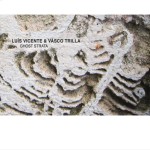
Artist: Vasco Trilla & Lu?s Vicente
Title: Ghost Strata
Format: CD + Download
Label: Cipsela Records (@)
Rated:
Title: Ghost Strata
Format: CD + Download
Label: Cipsela Records (@)
Rated:
There’s a particular courage in releasing an album that refuses to hide behind density, harmony, or even the polite illusion of structure. "Ghost Strata" by Luís Vicente and Vasco Trilla offers no such comforts. It stands there, almost bare, and dares you to listen without expecting to be guided.
Recorded in Barcelona but assembled from a broader European improvisational lineage, this duo encounter feels less like a conversation and more like a geological survey. The title isn’t decorative. Each “Strata” behaves like a layer of time, pressure, and residue, built not through accumulation in the traditional sense, but through friction, interruption, and careful attention to absence.
Vicente’s trumpet avoids lyricism in any conventional form. When it sings, it does so reluctantly, as if aware that melody might be a kind of betrayal. More often, it fractures into breath, metallic whispers, elongated tones that hover just long enough to suggest intention before dissolving. There are moments where it recalls the stark vocabulary of Don Cherry or the spatial austerity of Jon Hassell, but stripped even further, reduced to gesture and air.
Opposite him, Trilla doesn’t accompany so much as destabilize. His percussion is a field of events rather than a rhythmic foundation. Textures scrape, resonate, scatter. Silence is used not as a pause but as an active element, shaping the contour of each piece as much as any struck surface. At times, it feels like he’s playing the edges of sound itself, testing how little is required for something to register as presence.
“Strata #1” opens with a cautious probing, both musicians circling the space rather than occupying it. By “Strata #2” and “#3”, the interaction deepens, though deepening here doesn’t mean intensifying in any obvious way. It’s more about trust, or at least a shared willingness to let things remain unresolved. Sounds appear, hesitate, and withdraw, leaving traces that linger longer than the events themselves.
The longer “Strata #5” closes the album with a kind of suspended gravity. There’s no climax, no catharsis waiting at the end. Instead, the piece stretches time until it becomes slightly uncomfortable, forcing you to confront your own listening habits. Do you wait for something to happen, or do you accept that this is what’s happening?
What makes "Ghost Strata" compelling is its discipline. Free improvisation often risks excess, the urge to fill space simply because it exists. Vicente and Trilla resist that instinct. They carve rather than accumulate, removing as much as they add. The result is music that feels precise without being rigid, open without being formless.
It’s not an easy listen, and it has no interest in becoming one. But within its restraint lies a peculiar kind of clarity. Not pristine, not pure, but honest in a way that more elaborate constructions rarely achieve.
You don’t leave this record with melodies in your head. You leave with a heightened awareness of sound itself, which is a less convenient souvenir, but arguably a more durable one.
Recorded in Barcelona but assembled from a broader European improvisational lineage, this duo encounter feels less like a conversation and more like a geological survey. The title isn’t decorative. Each “Strata” behaves like a layer of time, pressure, and residue, built not through accumulation in the traditional sense, but through friction, interruption, and careful attention to absence.
Vicente’s trumpet avoids lyricism in any conventional form. When it sings, it does so reluctantly, as if aware that melody might be a kind of betrayal. More often, it fractures into breath, metallic whispers, elongated tones that hover just long enough to suggest intention before dissolving. There are moments where it recalls the stark vocabulary of Don Cherry or the spatial austerity of Jon Hassell, but stripped even further, reduced to gesture and air.
Opposite him, Trilla doesn’t accompany so much as destabilize. His percussion is a field of events rather than a rhythmic foundation. Textures scrape, resonate, scatter. Silence is used not as a pause but as an active element, shaping the contour of each piece as much as any struck surface. At times, it feels like he’s playing the edges of sound itself, testing how little is required for something to register as presence.
“Strata #1” opens with a cautious probing, both musicians circling the space rather than occupying it. By “Strata #2” and “#3”, the interaction deepens, though deepening here doesn’t mean intensifying in any obvious way. It’s more about trust, or at least a shared willingness to let things remain unresolved. Sounds appear, hesitate, and withdraw, leaving traces that linger longer than the events themselves.
The longer “Strata #5” closes the album with a kind of suspended gravity. There’s no climax, no catharsis waiting at the end. Instead, the piece stretches time until it becomes slightly uncomfortable, forcing you to confront your own listening habits. Do you wait for something to happen, or do you accept that this is what’s happening?
What makes "Ghost Strata" compelling is its discipline. Free improvisation often risks excess, the urge to fill space simply because it exists. Vicente and Trilla resist that instinct. They carve rather than accumulate, removing as much as they add. The result is music that feels precise without being rigid, open without being formless.
It’s not an easy listen, and it has no interest in becoming one. But within its restraint lies a peculiar kind of clarity. Not pristine, not pure, but honest in a way that more elaborate constructions rarely achieve.
You don’t leave this record with melodies in your head. You leave with a heightened awareness of sound itself, which is a less convenient souvenir, but arguably a more durable one.
Chris Wood & Albert Sapsford: Pristine

Artist: Chris Wood & Albert Sapsford
Title: Pristine
Format: CD + Download
Label: Pharmafabrik (@)
Rated:
Title: Pristine
Format: CD + Download
Label: Pharmafabrik (@)
Rated:
There’s something faintly absurd about calling a record "Pristine" when it’s born out of lockdown anxiety, long-distance miscommunication, and the general psychological debris of recent history. And yet, here we are. Against expectations, Chris Wood and Albert Sapsford manage to make the title feel less like irony and more like a quiet objective: not purity as absence of noise, but clarity wrestled out of it.
This is a collaboration conducted entirely at a distance, with no spoken communication. Which sounds romantic until you remember how most human communication already fails "with" words. So perhaps they just skipped the inefficient part. What emerges is a work that feels meticulously assembled yet strangely detached from ego, as if each sound was negotiated rather than declared.
Wood, an architect as well as a musician, brings a structural sensibility that’s hard to miss. These tracks don’t simply unfold, they are built. Spaces open, close, echo, and reconfigure with a logic that feels almost spatial before it feels musical. Sapsford, working with software-based modular systems and algorithmic processes, introduces a different kind of intelligence: less about structure as form, more about structure as evolving system. Between them, "Pristine" becomes a kind of sonic architecture that is constantly recalculating itself.
“The Multiplier” sits at the center like an extended corridor you’re not entirely sure you’ll exit. At over 17 minutes, it could have collapsed under its own weight, but instead it sustains a delicate balance between drift and direction. Layers accumulate slowly, not in a grand crescendo but in subtle shifts, like light changing in a room you’ve been sitting in too long. Time stretches, not dramatically, just enough to make you question your internal clock.
Elsewhere, “The Blackness Thrown Away” leans into something heavier, almost orchestral in its density, though “orchestral” here means mass rather than melody. There are moments of near-absurdity, fragments that feel slightly out of place, like echoes of The Residents drifting through a more disciplined environment. It shouldn’t work, but it does, mostly because the album never insists on coherence as a virtue.
The presence of piano across several tracks is crucial. It introduces a human gesture that doesn’t resolve the surrounding abstraction but complicates it. Notes appear, hesitate, dissolve into the surrounding electronics. It’s less about melody than about the memory of melody, something half-recalled and then immediately obscured.
There are also traces of field recordings, voices, mechanical residues, small intrusions of reality that prevent the album from floating away entirely. They act like anchors, though unreliable ones. You think you’ve located something concrete, and then it shifts, absorbed back into the texture.
Comparisons to Tangerine Dream make a certain sense in terms of atmosphere, but "Pristine" is less interested in cosmic expansiveness than in interior space. This isn’t about traveling outward. It’s about navigating a condition, a mental architecture shaped by isolation, uncertainty, and the stubborn desire to find some form of coherence anyway.
What’s quietly impressive is how the album avoids the usual clichés of “lockdown music”. There’s no overt melancholy, no performative fragility. Instead, it operates with patience, with a kind of measured attention that feels almost defiant. It doesn’t dramatize crisis. It processes it, slowly, methodically, without promising resolution.
Calling it ambient is technically correct and emotionally insufficient. "Pristine" is less a background and more a threshold, a place where sound hovers between intention and accident, between control and surrender. It doesn’t demand immersion, but it rewards it in ways that are difficult to summarize without sounding like you’ve spent too much time alone. Which, to be fair, is exactly where this album comes from.
This is a collaboration conducted entirely at a distance, with no spoken communication. Which sounds romantic until you remember how most human communication already fails "with" words. So perhaps they just skipped the inefficient part. What emerges is a work that feels meticulously assembled yet strangely detached from ego, as if each sound was negotiated rather than declared.
Wood, an architect as well as a musician, brings a structural sensibility that’s hard to miss. These tracks don’t simply unfold, they are built. Spaces open, close, echo, and reconfigure with a logic that feels almost spatial before it feels musical. Sapsford, working with software-based modular systems and algorithmic processes, introduces a different kind of intelligence: less about structure as form, more about structure as evolving system. Between them, "Pristine" becomes a kind of sonic architecture that is constantly recalculating itself.
“The Multiplier” sits at the center like an extended corridor you’re not entirely sure you’ll exit. At over 17 minutes, it could have collapsed under its own weight, but instead it sustains a delicate balance between drift and direction. Layers accumulate slowly, not in a grand crescendo but in subtle shifts, like light changing in a room you’ve been sitting in too long. Time stretches, not dramatically, just enough to make you question your internal clock.
Elsewhere, “The Blackness Thrown Away” leans into something heavier, almost orchestral in its density, though “orchestral” here means mass rather than melody. There are moments of near-absurdity, fragments that feel slightly out of place, like echoes of The Residents drifting through a more disciplined environment. It shouldn’t work, but it does, mostly because the album never insists on coherence as a virtue.
The presence of piano across several tracks is crucial. It introduces a human gesture that doesn’t resolve the surrounding abstraction but complicates it. Notes appear, hesitate, dissolve into the surrounding electronics. It’s less about melody than about the memory of melody, something half-recalled and then immediately obscured.
There are also traces of field recordings, voices, mechanical residues, small intrusions of reality that prevent the album from floating away entirely. They act like anchors, though unreliable ones. You think you’ve located something concrete, and then it shifts, absorbed back into the texture.
Comparisons to Tangerine Dream make a certain sense in terms of atmosphere, but "Pristine" is less interested in cosmic expansiveness than in interior space. This isn’t about traveling outward. It’s about navigating a condition, a mental architecture shaped by isolation, uncertainty, and the stubborn desire to find some form of coherence anyway.
What’s quietly impressive is how the album avoids the usual clichés of “lockdown music”. There’s no overt melancholy, no performative fragility. Instead, it operates with patience, with a kind of measured attention that feels almost defiant. It doesn’t dramatize crisis. It processes it, slowly, methodically, without promising resolution.
Calling it ambient is technically correct and emotionally insufficient. "Pristine" is less a background and more a threshold, a place where sound hovers between intention and accident, between control and surrender. It doesn’t demand immersion, but it rewards it in ways that are difficult to summarize without sounding like you’ve spent too much time alone. Which, to be fair, is exactly where this album comes from.
DNA?AND? & Lampeknusekontoret: «Hot, Hot, Hot»
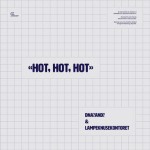
Artist: DNA?AND? & Lampeknusekontoret
Title: «Hot, Hot, Hot»
Format: 12" + Download
Label: Den Pene Inngang
Rated:
Title: «Hot, Hot, Hot»
Format: 12" + Download
Label: Den Pene Inngang
Rated:
“We do not come in peace.” It’s always comforting when a record opens with a statement that sounds like either a threat or a bureaucratic disclaimer gone feral. "Hot, Hot, Hot" by DNA?AND? and Lampeknusekontoret keeps that promise with admirable inconsistency, which is exactly what it should do.
This is not an album in the traditional sense. It’s a 40-minute event, a live-recorded sprawl of improvisation that refuses to behave like a “piece” and instead unfolds like a situation. You don’t follow it so much as get caught inside it, occasionally wondering who, if anyone, is in charge. The answer appears to be: no one, and that’s the design.
The backstory matters here, and not in the usual press-kit way. Lampeknusekontoret emerged from workshops involving youth with disabilities, initiated by figures like Harald Fetveit and later expanded through collaborations that included Anla Courtis of Reynols. What could have easily been framed as a “community project” in the most reductive sense instead becomes something far more interesting: a collective practice where authorship dissolves, hierarchies blur, and unpredictability isn’t a side effect but the core method.
The result, recorded in Oslo in 2024, is a dense, often disorienting collage of gestures. Fragments of speech surface and vanish. Textures collide without warning. There are moments that feel almost like accidental musique concrète, as if the room itself decided to contribute, and others that hint at pop-cultural debris drifting through the mix like half-remembered radio signals. It’s messy, obviously. If you were expecting polish, you’ve taken a wrong turn somewhere.
But within that apparent chaos, something else happens. The music breathes with a kind of collective intuition that doesn’t rely on virtuosity in the conventional sense. Instead, it leans on presence, on reaction, on the fragile act of listening while producing sound. There are passages of surprising intimacy, where the density thins and individual gestures briefly come into focus, only to be swallowed again by the group dynamic.
The “hot” in the title isn’t about tempo or energy in any predictable way. It’s more about proximity, about the friction of elements pushed too close together. At times the piece feels almost overcrowded, like a room where too many conversations are happening at once. Then suddenly it opens up, leaving a kind of sonic afterimage, a trace of what just passed through.
It would be easy, and frankly lazy, to frame this as outsider art or to romanticize its origins. That would miss the point entirely. What’s compelling here is not the context alone, but how that context produces a different relationship to sound. Control is partial, intention is distributed, and the result sits somewhere between composition and accident, between agency and drift.
Does it “work”? That depends on your tolerance for ambiguity and your willingness to abandon the idea that music should guide you somewhere. "Hot, Hot, Hot" doesn’t guide. It surrounds, interrupts, occasionally overwhelms, and then leaves you to assemble meaning from the residue.
Not peaceful, not orderly, and definitely not background listening. But alive in a way that more “refined” records often forget how to be.
This is not an album in the traditional sense. It’s a 40-minute event, a live-recorded sprawl of improvisation that refuses to behave like a “piece” and instead unfolds like a situation. You don’t follow it so much as get caught inside it, occasionally wondering who, if anyone, is in charge. The answer appears to be: no one, and that’s the design.
The backstory matters here, and not in the usual press-kit way. Lampeknusekontoret emerged from workshops involving youth with disabilities, initiated by figures like Harald Fetveit and later expanded through collaborations that included Anla Courtis of Reynols. What could have easily been framed as a “community project” in the most reductive sense instead becomes something far more interesting: a collective practice where authorship dissolves, hierarchies blur, and unpredictability isn’t a side effect but the core method.
The result, recorded in Oslo in 2024, is a dense, often disorienting collage of gestures. Fragments of speech surface and vanish. Textures collide without warning. There are moments that feel almost like accidental musique concrète, as if the room itself decided to contribute, and others that hint at pop-cultural debris drifting through the mix like half-remembered radio signals. It’s messy, obviously. If you were expecting polish, you’ve taken a wrong turn somewhere.
But within that apparent chaos, something else happens. The music breathes with a kind of collective intuition that doesn’t rely on virtuosity in the conventional sense. Instead, it leans on presence, on reaction, on the fragile act of listening while producing sound. There are passages of surprising intimacy, where the density thins and individual gestures briefly come into focus, only to be swallowed again by the group dynamic.
The “hot” in the title isn’t about tempo or energy in any predictable way. It’s more about proximity, about the friction of elements pushed too close together. At times the piece feels almost overcrowded, like a room where too many conversations are happening at once. Then suddenly it opens up, leaving a kind of sonic afterimage, a trace of what just passed through.
It would be easy, and frankly lazy, to frame this as outsider art or to romanticize its origins. That would miss the point entirely. What’s compelling here is not the context alone, but how that context produces a different relationship to sound. Control is partial, intention is distributed, and the result sits somewhere between composition and accident, between agency and drift.
Does it “work”? That depends on your tolerance for ambiguity and your willingness to abandon the idea that music should guide you somewhere. "Hot, Hot, Hot" doesn’t guide. It surrounds, interrupts, occasionally overwhelms, and then leaves you to assemble meaning from the residue.
Not peaceful, not orderly, and definitely not background listening. But alive in a way that more “refined” records often forget how to be.