
Browse by Genre
Industrial Music / Industrial Metal / Aggro Industrial / Electro Metal
Industrial Noise / Power Noise / Harsh Noise
Synth Pop / Electro Pop / Synth-Electronica
Techno / Trance / Goa / Drum'n'Bass / Jungle / Tribal / Trip-Hop
Ambient / Electronica / Ethereal / Dub / Soundscapes / Abstract
Experimental / Avantgarde / Weird & Wired / Glitch / Noise / Field Recording
Dark / Gothic / Wave / New Wave / Dark Wave / Industrial Gothic
New Music / Downtown / Avantgarde Jazz / New Classical / World
Search Reviews
Music Reviews
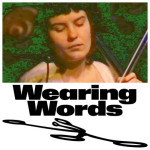
Emily Wittbrodt: Wearing Words
Artist: Emily Wittbrodt (@)
Title: Wearing Words
Format: 12" + Download
Label: Futura Resistenza (@)
Rated:

Title: Wearing Words
Format: 12" + Download
Label: Futura Resistenza (@)
Rated:
Emily Wittbrodt’s "Wearing Words" is built on a small, slightly maddening premise: what if language doesn’t belong to you, but you insist on using it anyway? Not as expression, but as adaptation. Not speaking, but wearing.
She describes the process as feeling “like wearing clothes that don’t belong to me”, a borrowed vocabulary that never quite settles on the skin. That image ends up doing more work than most album concepts manage in a lifetime. Because once you hear it, you can’t un-hear it: every phrase on this record sounds negotiated rather than owned, gently forced into melodic shapes that existed before meaning arrived.
Wittbrodt, trained in classical traditions but clearly uninterested in staying obedient to them, constructs the music first - clean, deliberate, almost architectural - and only later searches for the words that can inhabit it. Not decorate it, not explain it. Fit it. It’s a backwards method, and predictably, it produces a kind of friction that becomes the album’s real subject.
She has said she spent weeks doing nothing but chasing the right words, to the point of dreaming about them, as if language had turned into a low-level fever. You can hear that obsessive fine-tuning everywhere: lines that feel just slightly too tight, vowels stretched like fabric under tension, consonants landing with surgical precision. It’s meticulous, but not sterile. More like someone trying to tailor a suit in the dark.
Musically, "Wearing Words" drifts in a zone where chamber pop, baroque echoes, and restrained improvisation keep brushing against each other without ever fully merging. The cello remains the axis, warm but unsentimental, while accordion, clarinet, and electronics hover like secondary thoughts. Nothing insists. Nothing performs urgency. Even the more ornate passages feel as if they’re holding back, aware that too much certainty would break the spell.
Sandro HÄhnel’s voice is a crucial decision. Wittbrodt deliberately writes outside his natural range, forcing him into a softer, almost disembodied delivery. The result is a voice that doesn’t declare identity but suspends it. Gender blurs, authority dissolves, and what remains is something fragile, almost provisional. A voice that sounds like it’s trying on language rather than owning it.
There’s also a darker undercurrent Wittbrodt hints at: that people “wear words” not just out of discomfort, but out of strategy. Language as camouflage. Language as manipulation. It’s not hammered into a thesis, but it lingers behind the songs like a quiet suspicion that meaning itself might be compromised.
And that’s where the album becomes more than an elegant experiment. It starts to resemble a study of how we communicate when we’re not entirely sure we can. When language feels second-hand, when expression arrives late, when clarity is something you assemble rather than discover.
Tracks like “Lied” or the title piece don’t resolve this tension. They sit inside it. Melodies offer a sense of direction, while the words keep shifting underfoot, never fully settling. It’s beautiful in a slightly unstable way, like a sentence that almost says what you mean but leaves a residue of doubt.
In the end, "Wearing Words" doesn’t try to fix the gap between sound and language. It just exposes it, patiently, almost tenderly. Wittbrodt doesn’t claim fluency. She documents the effort.
And honestly, that’s a lot closer to how most people actually live with language than they’d like to admit.
She describes the process as feeling “like wearing clothes that don’t belong to me”, a borrowed vocabulary that never quite settles on the skin. That image ends up doing more work than most album concepts manage in a lifetime. Because once you hear it, you can’t un-hear it: every phrase on this record sounds negotiated rather than owned, gently forced into melodic shapes that existed before meaning arrived.
Wittbrodt, trained in classical traditions but clearly uninterested in staying obedient to them, constructs the music first - clean, deliberate, almost architectural - and only later searches for the words that can inhabit it. Not decorate it, not explain it. Fit it. It’s a backwards method, and predictably, it produces a kind of friction that becomes the album’s real subject.
She has said she spent weeks doing nothing but chasing the right words, to the point of dreaming about them, as if language had turned into a low-level fever. You can hear that obsessive fine-tuning everywhere: lines that feel just slightly too tight, vowels stretched like fabric under tension, consonants landing with surgical precision. It’s meticulous, but not sterile. More like someone trying to tailor a suit in the dark.
Musically, "Wearing Words" drifts in a zone where chamber pop, baroque echoes, and restrained improvisation keep brushing against each other without ever fully merging. The cello remains the axis, warm but unsentimental, while accordion, clarinet, and electronics hover like secondary thoughts. Nothing insists. Nothing performs urgency. Even the more ornate passages feel as if they’re holding back, aware that too much certainty would break the spell.
Sandro HÄhnel’s voice is a crucial decision. Wittbrodt deliberately writes outside his natural range, forcing him into a softer, almost disembodied delivery. The result is a voice that doesn’t declare identity but suspends it. Gender blurs, authority dissolves, and what remains is something fragile, almost provisional. A voice that sounds like it’s trying on language rather than owning it.
There’s also a darker undercurrent Wittbrodt hints at: that people “wear words” not just out of discomfort, but out of strategy. Language as camouflage. Language as manipulation. It’s not hammered into a thesis, but it lingers behind the songs like a quiet suspicion that meaning itself might be compromised.
And that’s where the album becomes more than an elegant experiment. It starts to resemble a study of how we communicate when we’re not entirely sure we can. When language feels second-hand, when expression arrives late, when clarity is something you assemble rather than discover.
Tracks like “Lied” or the title piece don’t resolve this tension. They sit inside it. Melodies offer a sense of direction, while the words keep shifting underfoot, never fully settling. It’s beautiful in a slightly unstable way, like a sentence that almost says what you mean but leaves a residue of doubt.
In the end, "Wearing Words" doesn’t try to fix the gap between sound and language. It just exposes it, patiently, almost tenderly. Wittbrodt doesn’t claim fluency. She documents the effort.
And honestly, that’s a lot closer to how most people actually live with language than they’d like to admit.
Phew & Danielle de Picciotto: Paper Masks
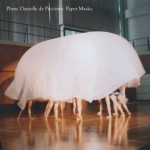
Two artists who have spent decades dismantling the obvious decide, at some point, to exchange voices across continents and see what survives the journey. Predictably, "Paper Masks" does not aim for clarity. It prefers interference.
On one side, Phew, a figure who has been quietly reshaping the edges of electronic and post-punk language since her days in Aunt Sally. On the other, Danielle de Picciotto, whose biography alone reads like a small cultural ecosystem, from co-founding the Love Parade to weaving text, performance, and sound into something that resists stable categorization. Put them together, then separate them again geographically, and you get an album built on distance itself.
The working method is almost suspiciously simple: voice sent from Berlin, music shaped in Japan, minimal negotiation between the two. In less patient hands, this could have produced a polite collage. Instead, it feels like a series of transmissions that occasionally align and more often graze past each other, leaving sparks.
The opening stretch establishes the album’s central tension: language as material versus language as meaning. De Picciotto’s spoken word doesn’t sit “on top” of Phew’s electronics. It gets folded, stretched, sometimes gently sabotaged. German phrases arrive with a certain weight, then dissolve into texture before they can fully declare themselves. Phew’s own voice enters not as a counterpart but as a parallel current, less concerned with articulation than with presence. The result is less dialogue than overlapping solitudes.
Tracks like "Der Verpasste Kaffee" and "Amnesie" toy with minimalism, but not the serene, gallery-friendly kind. Silence here is unstable, always on the verge of being punctured by sudden electronic ruptures. There’s a sense that the music is testing how little structure it can maintain before it collapses, then pulling back just in time. It’s controlled, but only just.
"Sugar Sprinkles" pushes things further into disorientation. The voices fragment, multiply, blur into something almost post-human. If you were hoping for a comforting narrative thread, this is where it politely evaporates. What remains is rhythm as suggestion, speech as residue, identity as something temporarily misplaced.
Elsewhere, "Pixelwissen" and "Iceberg" expand the spatial dimension of the record. The sound design grows more architectural, less concerned with immediacy and more with scale. You get the impression of vast, empty interiors where voices echo not to communicate, but to confirm that space exists at all. It’s oddly physical music for something assembled through file exchanges.
Then there’s "Paper Memories", one of the more fragile moments, where the distance between the two artists feels almost tender rather than alienating. The piece hovers, unsure whether to cohere, and that hesitation becomes its emotional core. By the time "Im Nebel" closes the album, the fog metaphor is impossible to ignore, though thankfully never overexplained. Things fade, but not dramatically. More like a signal weakening.
What makes "Paper Masks" compelling is not innovation in the loud, attention-seeking sense. Both artists have done radical things before. Here, the interest lies in restraint and in the decision to let misalignment remain audible. The “mask” of the title doesn’t conceal identity so much as reveal how unstable it already is, especially when filtered through language, distance, and technology.
In a cultural moment obsessed with immediacy and clean communication, "Paper Masks" lingers in the opposite direction. It suggests that what fails to connect might be just as interesting as what does. Not a comforting thought, but an honest one.
On one side, Phew, a figure who has been quietly reshaping the edges of electronic and post-punk language since her days in Aunt Sally. On the other, Danielle de Picciotto, whose biography alone reads like a small cultural ecosystem, from co-founding the Love Parade to weaving text, performance, and sound into something that resists stable categorization. Put them together, then separate them again geographically, and you get an album built on distance itself.
The working method is almost suspiciously simple: voice sent from Berlin, music shaped in Japan, minimal negotiation between the two. In less patient hands, this could have produced a polite collage. Instead, it feels like a series of transmissions that occasionally align and more often graze past each other, leaving sparks.
The opening stretch establishes the album’s central tension: language as material versus language as meaning. De Picciotto’s spoken word doesn’t sit “on top” of Phew’s electronics. It gets folded, stretched, sometimes gently sabotaged. German phrases arrive with a certain weight, then dissolve into texture before they can fully declare themselves. Phew’s own voice enters not as a counterpart but as a parallel current, less concerned with articulation than with presence. The result is less dialogue than overlapping solitudes.
Tracks like "Der Verpasste Kaffee" and "Amnesie" toy with minimalism, but not the serene, gallery-friendly kind. Silence here is unstable, always on the verge of being punctured by sudden electronic ruptures. There’s a sense that the music is testing how little structure it can maintain before it collapses, then pulling back just in time. It’s controlled, but only just.
"Sugar Sprinkles" pushes things further into disorientation. The voices fragment, multiply, blur into something almost post-human. If you were hoping for a comforting narrative thread, this is where it politely evaporates. What remains is rhythm as suggestion, speech as residue, identity as something temporarily misplaced.
Elsewhere, "Pixelwissen" and "Iceberg" expand the spatial dimension of the record. The sound design grows more architectural, less concerned with immediacy and more with scale. You get the impression of vast, empty interiors where voices echo not to communicate, but to confirm that space exists at all. It’s oddly physical music for something assembled through file exchanges.
Then there’s "Paper Memories", one of the more fragile moments, where the distance between the two artists feels almost tender rather than alienating. The piece hovers, unsure whether to cohere, and that hesitation becomes its emotional core. By the time "Im Nebel" closes the album, the fog metaphor is impossible to ignore, though thankfully never overexplained. Things fade, but not dramatically. More like a signal weakening.
What makes "Paper Masks" compelling is not innovation in the loud, attention-seeking sense. Both artists have done radical things before. Here, the interest lies in restraint and in the decision to let misalignment remain audible. The “mask” of the title doesn’t conceal identity so much as reveal how unstable it already is, especially when filtered through language, distance, and technology.
In a cultural moment obsessed with immediacy and clean communication, "Paper Masks" lingers in the opposite direction. It suggests that what fails to connect might be just as interesting as what does. Not a comforting thought, but an honest one.
Andreas Voelk & Scott Monteith: And All The Clocks Ran Dry

Artist: Andreas Voelk & Scott Monteith (@)
Title: And All The Clocks Ran Dry
Format: Download Only (MP3 + Lossless)
Label: Room40 (@)
Rated:

Title: And All The Clocks Ran Dry
Format: Download Only (MP3 + Lossless)
Label: Room40 (@)
Rated:
Time is usually the one thing music pretends to control. Bars, beats, structures, neat little grids to reassure us that something is happening in order. "And All The Clocks Ran Dry" quietly dismantles that illusion and leaves you with something far less convenient: duration without guarantees.
The collaboration between Andreas Voelk - known for his work as Das Ende der Liebe - and Scott Monteith (better recognized as Deadbeat) unfolds across a single, uninterrupted session. No edits, no second thoughts, no polite corrections. Just two musicians in a Berlin studio, trusting that if they keep listening long enough, something will take shape. It’s a risky approach, mostly because it assumes restraint is more interesting than intervention. Somehow, they’re right.
Released on Room40, the album is split into two long movements that feel less like parts and more like phases of the same slowly evolving state. “Part I” opens in near suspension: a faint hum of electric organs, Rhodes tones stretched into soft halos, a space that feels less constructed than discovered. There’s an echo of dub here, but stripped of its rhythmic backbone, leaving only the sense of depth, of sound receding into itself.
Monteith’s history with dub techno lingers in the background, but it’s been carefully disarmed. No kicks, no obvious pulse. Instead, there’s a kind of phantom rhythm, implied rather than stated, like a memory of movement rather than movement itself. Voelk’s organ textures drift through this space, occasionally aligning into something that resembles harmony, only to dissolve again before it can settle.
“Part II” doesn’t so much continue as deepen. The material becomes slightly denser, though dense here is relative. Layers accumulate, but they never harden into structure. It’s more like sediment forming under water: slow, unstable, always subject to subtle shifts. Silence plays an equal role, not as absence but as a kind of pressure, shaping how the sounds are perceived.
The references are easy to spot if you care about that sort of thing. There are traces of Cluster in the drifting tonalities, a hint of Popol Vuh in the spiritualized calm, and the ghost of King Tubby in the way space itself becomes an instrument. But none of these dominate. They function more like distant landmarks than destinations.
What makes the album work is its refusal to dramatize improvisation. There’s no sense of “look, this is happening now”. Instead, the music behaves as if it would exist whether you were listening or not. It builds itself gradually, almost reluctantly, and then just as quietly recedes.
The analog setting matters too. Tape hiss, subtle imperfections, the slight instability of old keyboards. These aren’t nostalgic gestures; they’re part of the material. They remind you that this is a physical process, not just an abstract idea about sound.
Mastered by Lawrence English, the album maintains a delicate balance between clarity and diffusion. Nothing is overly defined, but nothing disappears completely either. It’s a careful equilibrium, one that mirrors the central idea: presence without fixation.
At around forty-five minutes, "And All The Clocks Ran Dry" doesn’t aim for revelation in the usual sense. It doesn’t build toward a climax or offer a resolution you can point to. Instead, it asks you to sit with a process that unfolds in real time, indifferent to your expectations.
Which is mildly inconvenient, given how used we are to things making sense on schedule.
The collaboration between Andreas Voelk - known for his work as Das Ende der Liebe - and Scott Monteith (better recognized as Deadbeat) unfolds across a single, uninterrupted session. No edits, no second thoughts, no polite corrections. Just two musicians in a Berlin studio, trusting that if they keep listening long enough, something will take shape. It’s a risky approach, mostly because it assumes restraint is more interesting than intervention. Somehow, they’re right.
Released on Room40, the album is split into two long movements that feel less like parts and more like phases of the same slowly evolving state. “Part I” opens in near suspension: a faint hum of electric organs, Rhodes tones stretched into soft halos, a space that feels less constructed than discovered. There’s an echo of dub here, but stripped of its rhythmic backbone, leaving only the sense of depth, of sound receding into itself.
Monteith’s history with dub techno lingers in the background, but it’s been carefully disarmed. No kicks, no obvious pulse. Instead, there’s a kind of phantom rhythm, implied rather than stated, like a memory of movement rather than movement itself. Voelk’s organ textures drift through this space, occasionally aligning into something that resembles harmony, only to dissolve again before it can settle.
“Part II” doesn’t so much continue as deepen. The material becomes slightly denser, though dense here is relative. Layers accumulate, but they never harden into structure. It’s more like sediment forming under water: slow, unstable, always subject to subtle shifts. Silence plays an equal role, not as absence but as a kind of pressure, shaping how the sounds are perceived.
The references are easy to spot if you care about that sort of thing. There are traces of Cluster in the drifting tonalities, a hint of Popol Vuh in the spiritualized calm, and the ghost of King Tubby in the way space itself becomes an instrument. But none of these dominate. They function more like distant landmarks than destinations.
What makes the album work is its refusal to dramatize improvisation. There’s no sense of “look, this is happening now”. Instead, the music behaves as if it would exist whether you were listening or not. It builds itself gradually, almost reluctantly, and then just as quietly recedes.
The analog setting matters too. Tape hiss, subtle imperfections, the slight instability of old keyboards. These aren’t nostalgic gestures; they’re part of the material. They remind you that this is a physical process, not just an abstract idea about sound.
Mastered by Lawrence English, the album maintains a delicate balance between clarity and diffusion. Nothing is overly defined, but nothing disappears completely either. It’s a careful equilibrium, one that mirrors the central idea: presence without fixation.
At around forty-five minutes, "And All The Clocks Ran Dry" doesn’t aim for revelation in the usual sense. It doesn’t build toward a climax or offer a resolution you can point to. Instead, it asks you to sit with a process that unfolds in real time, indifferent to your expectations.
Which is mildly inconvenient, given how used we are to things making sense on schedule.
Cleared: Lustres
Patience is one of those virtues people admire from a safe distance, like glaciers or monks. Cleared have spent nearly fifteen years practicing it in public, which is either admirable discipline or a very slow refusal to hurry up. On "Lustres", that patience finally condenses into something that feels less like a method and more like a climate.
The duo - Steven Hess and Michael Vallera - have always worked through exchange: fragments passed back and forth, reshaped, recontextualized, sometimes stripped of their original identity entirely. This time, the process has been refined to a kind of asymmetrical collaboration. One generates the raw material, the other dismantles and reassembles it. It sounds almost clinical, but the results are anything but.
Released on Room40, "Lustres" leans more decisively into an electronic palette than their earlier work, though “electronic” here doesn’t mean clean or predictable. The sound is layered with different fidelities, where pristine textures coexist with degraded, almost corroded fragments. It’s less about contrast for its own sake and more about memory: how sound is never just itself, but also the device, the space, the context that carried it.
The title track, “Lustres”, opens like a slow rotation. Not quite a melody, not quite a drone. More like a surface being revealed under changing light. Elements drift into focus, then recede, leaving behind a faint afterimage. It’s music that doesn’t present itself all at once. You have to wait for it to admit what it’s doing.
“Shore” suggests something more grounded, though only just. There’s a subtle sense of boundary, of one texture pressing against another, but the edges remain porous. Nothing fully separates. Field recordings, processed tones, and distant harmonic traces blend into a continuum that feels both organic and slightly unreal, like a landscape remembered rather than observed.
“Aubade” introduces a faint sense of emergence, though not in any dramatic sense. If this is a dawn, it’s one that happens behind clouds. Gradual shifts in density and tone create the impression of light without ever fully illuminating the scene. It’s restrained to the point of near-denial, which is exactly why it works.
“Far”, the closing piece, feels appropriately named. It extends the album’s logic into a kind of distance, where sound becomes less about presence and more about implication. Things are suggested, hinted at, then withdrawn. You’re left with traces, not statements.
What "Lustres" does particularly well is resist the urge to resolve. Many records in this territory eventually reveal a hidden structure, a moment where everything clicks into place. Cleared avoid that satisfaction. Instead, they maintain a state of suspension, where meaning remains slightly out of reach. Not frustratingly so, just enough to keep you listening.
There are echoes of other artists operating in the long-form ambient and electroacoustic continuum, but Cleared’s approach feels less concerned with atmosphere as a fixed mood and more with atmosphere as a shifting condition. Subterranean and celestial, as they suggest, but also something in between: a space where orientation is never quite stable.
The mastering by Lawrence English gives the material a quiet precision, ensuring that even the most delicate elements retain their presence. Which matters, because this is music built on small differences, on the slow accumulation of detail.
Four tracks, each around ten minutes, none of them in a hurry to justify their existence. "Lustres" doesn’t demand attention so much as require a certain kind of listening: patient, slightly unfocused, willing to accept that not everything needs to declare itself immediately.
In other words, the exact opposite of how most people consume music now. Which probably explains why it feels necessary.
The duo - Steven Hess and Michael Vallera - have always worked through exchange: fragments passed back and forth, reshaped, recontextualized, sometimes stripped of their original identity entirely. This time, the process has been refined to a kind of asymmetrical collaboration. One generates the raw material, the other dismantles and reassembles it. It sounds almost clinical, but the results are anything but.
Released on Room40, "Lustres" leans more decisively into an electronic palette than their earlier work, though “electronic” here doesn’t mean clean or predictable. The sound is layered with different fidelities, where pristine textures coexist with degraded, almost corroded fragments. It’s less about contrast for its own sake and more about memory: how sound is never just itself, but also the device, the space, the context that carried it.
The title track, “Lustres”, opens like a slow rotation. Not quite a melody, not quite a drone. More like a surface being revealed under changing light. Elements drift into focus, then recede, leaving behind a faint afterimage. It’s music that doesn’t present itself all at once. You have to wait for it to admit what it’s doing.
“Shore” suggests something more grounded, though only just. There’s a subtle sense of boundary, of one texture pressing against another, but the edges remain porous. Nothing fully separates. Field recordings, processed tones, and distant harmonic traces blend into a continuum that feels both organic and slightly unreal, like a landscape remembered rather than observed.
“Aubade” introduces a faint sense of emergence, though not in any dramatic sense. If this is a dawn, it’s one that happens behind clouds. Gradual shifts in density and tone create the impression of light without ever fully illuminating the scene. It’s restrained to the point of near-denial, which is exactly why it works.
“Far”, the closing piece, feels appropriately named. It extends the album’s logic into a kind of distance, where sound becomes less about presence and more about implication. Things are suggested, hinted at, then withdrawn. You’re left with traces, not statements.
What "Lustres" does particularly well is resist the urge to resolve. Many records in this territory eventually reveal a hidden structure, a moment where everything clicks into place. Cleared avoid that satisfaction. Instead, they maintain a state of suspension, where meaning remains slightly out of reach. Not frustratingly so, just enough to keep you listening.
There are echoes of other artists operating in the long-form ambient and electroacoustic continuum, but Cleared’s approach feels less concerned with atmosphere as a fixed mood and more with atmosphere as a shifting condition. Subterranean and celestial, as they suggest, but also something in between: a space where orientation is never quite stable.
The mastering by Lawrence English gives the material a quiet precision, ensuring that even the most delicate elements retain their presence. Which matters, because this is music built on small differences, on the slow accumulation of detail.
Four tracks, each around ten minutes, none of them in a hurry to justify their existence. "Lustres" doesn’t demand attention so much as require a certain kind of listening: patient, slightly unfocused, willing to accept that not everything needs to declare itself immediately.
In other words, the exact opposite of how most people consume music now. Which probably explains why it feels necessary.
John McGuire: Double String Trios

Artist: John McGuire (@)
Title: Double String Trios
Format: CD + Download
Label: Unseen Worlds (@)
Rated:
Title: Double String Trios
Format: CD + Download
Label: Unseen Worlds (@)
Rated:
Minimalism, when it ages well, doesn’t soften. It sharpens. It becomes less about repetition as a trick and more about repetition as a form of thinking. John McGuire has been thinking this way for decades, and "Double String Trios" feels like the result of a mind that never really stopped refining its own internal machinery.
Released by Unseen Worlds, the album gathers three substantial works written between 2012 and 2021, all based on a deceptively simple idea: two string trios facing each other, in dialogue, or perhaps in polite disagreement. It’s the kind of setup that sounds almost academic on paper, which usually means either something lifeless or something quietly astonishing. McGuire, inconveniently for cynics, lands closer to the latter.
His background matters here. Emerging from the postwar Cologne scene, shaped by figures like Karlheinz Stockhausen and Krzysztof Penderecki, McGuire developed a language rooted in serial processes but filtered through an almost obsessive sensitivity to sonic continuity. In his earlier electronic work, he dealt with pulses so fast they blurred into texture. Here, those same ideas are translated into strings, where nothing can hide. Every transition is exposed, every micro-shift carries the weight of human imperfection.
“Jump Cuts” opens the set with a title that promises fragmentation but delivers something more paradoxical: a continuity built out of constant recalibration. The two trios don’t so much interrupt each other as orbit, exchanging fragments, aligning briefly, then slipping out of phase. It’s intricate without being decorative, structured without feeling rigid. You can hear the system at work, but you also hear it breathe.
“Double Bars” expands this logic. The antiphonal setup becomes more pronounced, almost architectural. Lines cross, mirror, and diverge with a precision that feels less like composition and more like an ecosystem maintaining its balance. The use of proportional systems - Fibonacci relationships, rotating tempi - could easily turn into a compositional flex, but McGuire avoids that trap. The math is there, but it serves perception rather than dominating it.
By the time “Playground” arrives, the title feels like a quiet joke. There is play here, but it’s the kind that comes after decades of discipline. The music feels more fluid, less concerned with demonstrating its own logic, even as that logic remains intact. The two trios interact with a kind of understated elasticity, as if the rules have been internalized to the point of invisibility.
Under the direction of Axel Lindner, the ensemble navigates this terrain with impressive clarity. Nothing feels forced, nothing overstated. Which is crucial, because this music doesn’t reward dramatics. It rewards attention, patience, and a willingness to accept that meaning here is cumulative rather than immediate.
There’s a quiet irony in hearing work rooted in early electronic thinking translated so convincingly into acoustic form. It suggests that the real legacy of that era wasn’t the machines themselves, but a way of organizing sound that can survive without them.
At over an hour, the album doesn’t rush to prove anything. It unfolds, insists gently, and trusts you to keep up. Which, given the current attention economy, is either brave or slightly absurd. Possibly both.
But then again, so is writing music that treats time not as something to fill, but as something to shape.
Released by Unseen Worlds, the album gathers three substantial works written between 2012 and 2021, all based on a deceptively simple idea: two string trios facing each other, in dialogue, or perhaps in polite disagreement. It’s the kind of setup that sounds almost academic on paper, which usually means either something lifeless or something quietly astonishing. McGuire, inconveniently for cynics, lands closer to the latter.
His background matters here. Emerging from the postwar Cologne scene, shaped by figures like Karlheinz Stockhausen and Krzysztof Penderecki, McGuire developed a language rooted in serial processes but filtered through an almost obsessive sensitivity to sonic continuity. In his earlier electronic work, he dealt with pulses so fast they blurred into texture. Here, those same ideas are translated into strings, where nothing can hide. Every transition is exposed, every micro-shift carries the weight of human imperfection.
“Jump Cuts” opens the set with a title that promises fragmentation but delivers something more paradoxical: a continuity built out of constant recalibration. The two trios don’t so much interrupt each other as orbit, exchanging fragments, aligning briefly, then slipping out of phase. It’s intricate without being decorative, structured without feeling rigid. You can hear the system at work, but you also hear it breathe.
“Double Bars” expands this logic. The antiphonal setup becomes more pronounced, almost architectural. Lines cross, mirror, and diverge with a precision that feels less like composition and more like an ecosystem maintaining its balance. The use of proportional systems - Fibonacci relationships, rotating tempi - could easily turn into a compositional flex, but McGuire avoids that trap. The math is there, but it serves perception rather than dominating it.
By the time “Playground” arrives, the title feels like a quiet joke. There is play here, but it’s the kind that comes after decades of discipline. The music feels more fluid, less concerned with demonstrating its own logic, even as that logic remains intact. The two trios interact with a kind of understated elasticity, as if the rules have been internalized to the point of invisibility.
Under the direction of Axel Lindner, the ensemble navigates this terrain with impressive clarity. Nothing feels forced, nothing overstated. Which is crucial, because this music doesn’t reward dramatics. It rewards attention, patience, and a willingness to accept that meaning here is cumulative rather than immediate.
There’s a quiet irony in hearing work rooted in early electronic thinking translated so convincingly into acoustic form. It suggests that the real legacy of that era wasn’t the machines themselves, but a way of organizing sound that can survive without them.
At over an hour, the album doesn’t rush to prove anything. It unfolds, insists gently, and trusts you to keep up. Which, given the current attention economy, is either brave or slightly absurd. Possibly both.
But then again, so is writing music that treats time not as something to fill, but as something to shape.