
Browse by Genre
Industrial Music / Industrial Metal / Aggro Industrial / Electro Metal
Industrial Noise / Power Noise / Harsh Noise
Synth Pop / Electro Pop / Synth-Electronica
Techno / Trance / Goa / Drum'n'Bass / Jungle / Tribal / Trip-Hop
Ambient / Electronica / Ethereal / Dub / Soundscapes / Abstract
Experimental / Avantgarde / Weird & Wired / Glitch / Noise / Field Recording
Dark / Gothic / Wave / New Wave / Dark Wave / Industrial Gothic
New Music / Downtown / Avantgarde Jazz / New Classical / World
Search Reviews
Music Reviews
T.C.O. (aka Mirco Magnani): TITLES (Special Edition)
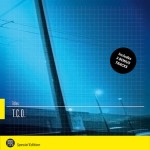
Artist: T.C.O. (aka Mirco Magnani)
Title: TITLES (Special Edition)
Format: Download Only (MP3 + Lossless)
Label: Undogmatisch (@)
Rated:

Title: TITLES (Special Edition)
Format: Download Only (MP3 + Lossless)
Label: Undogmatisch (@)
Rated:
Reissues are a strange ritual. You take something that already existed, survived, and quietly aged, then hold it up to the present like a piece of evidence and ask: "does this still speak, or are we just being sentimental?" "TITLES (Special Edition)" answers with a calm, almost indifferent yes.
Behind T.C.O. is Mirco Magnani, a figure who has long operated in that fertile in-between where electronic experimentation avoids both academic stiffness and club orthodoxy. Originally released in 2009 via a Shenzhen-based label, the album already carried a kind of geographic and aesthetic dislocation, an Italian artist filtered through a Chinese platform, working in a language of sound that didn’t particularly care about borders. Fifteen years later, that displacement feels less like a quirk and more like a quiet prediction.
What’s striking about "TITLES" is how little it tries to announce itself. No grand conceptual framing, no heavy-handed narrative. Just a sequence of pieces that behave like studies, or perhaps fragments of a larger system that never fully reveals itself. Tracks like “TITLE 2” and “PRUNE” sketch out a vocabulary built on clipped rhythms, dry textures, and a sense of motion that never quite resolves into groove. It’s not dance music, but it remembers that dance music exists somewhere else, in another room.
“METRIE” and “DESCENT” deepen that approach, working with repetition not as hypnosis but as examination. Patterns loop, but they don’t settle. There’s always a slight imbalance, a tilt that keeps the ear from relaxing. You could call it minimal, but that would imply a kind of reduction. This feels more like selective focus, as if Magnani is choosing very carefully what "not" to say.
Then there are moments like “IMLETI” and “CHAMBRE”, where the atmosphere thickens just enough to suggest space without fully constructing it. These tracks hover in a curious state, neither abstract enough to disappear nor concrete enough to hold onto. They feel like rooms sketched in outline, waiting for walls that never arrive.
The added remixes, produced shortly after the original release, don’t radically transform the material so much as refract it. The 2010 version of “METRIE” loosens the structure slightly, letting elements drift with a bit more elasticity, while “IMLETI (2010 remix)” leans into texture, emphasizing surface over form. By the time “TITLE 4 (2011 remix)” closes the set, the effect is less about variation and more about perspective, like revisiting the same object under different lighting conditions.
What’s almost irritating, in a quiet way, is how well this record holds up. You might expect some trace of datedness, a sonic fingerprint tying it too neatly to the late 2000s. Instead, it sits comfortably in the present, not because it was ahead of its time in some grand, heroic sense, but because it never aligned itself too closely with any specific moment to begin with.
There are faint resonances with the microsound and minimal techno continuum, the kind of territory mapped by artists who treat sound as material rather than message. But "TITLES" avoids the clinical detachment that sometimes plagues that scene. There’s a subtle warmth here, not emotional in any obvious way, but present in the care with which each element is placed.
Calling this reissue “necessary” might sound like label rhetoric, but in this case it’s not entirely wrong. Not because the world was desperately missing it, but because it reminds you that some works don’t expire. They just wait, patiently, for someone to notice that they never really left.
Behind T.C.O. is Mirco Magnani, a figure who has long operated in that fertile in-between where electronic experimentation avoids both academic stiffness and club orthodoxy. Originally released in 2009 via a Shenzhen-based label, the album already carried a kind of geographic and aesthetic dislocation, an Italian artist filtered through a Chinese platform, working in a language of sound that didn’t particularly care about borders. Fifteen years later, that displacement feels less like a quirk and more like a quiet prediction.
What’s striking about "TITLES" is how little it tries to announce itself. No grand conceptual framing, no heavy-handed narrative. Just a sequence of pieces that behave like studies, or perhaps fragments of a larger system that never fully reveals itself. Tracks like “TITLE 2” and “PRUNE” sketch out a vocabulary built on clipped rhythms, dry textures, and a sense of motion that never quite resolves into groove. It’s not dance music, but it remembers that dance music exists somewhere else, in another room.
“METRIE” and “DESCENT” deepen that approach, working with repetition not as hypnosis but as examination. Patterns loop, but they don’t settle. There’s always a slight imbalance, a tilt that keeps the ear from relaxing. You could call it minimal, but that would imply a kind of reduction. This feels more like selective focus, as if Magnani is choosing very carefully what "not" to say.
Then there are moments like “IMLETI” and “CHAMBRE”, where the atmosphere thickens just enough to suggest space without fully constructing it. These tracks hover in a curious state, neither abstract enough to disappear nor concrete enough to hold onto. They feel like rooms sketched in outline, waiting for walls that never arrive.
The added remixes, produced shortly after the original release, don’t radically transform the material so much as refract it. The 2010 version of “METRIE” loosens the structure slightly, letting elements drift with a bit more elasticity, while “IMLETI (2010 remix)” leans into texture, emphasizing surface over form. By the time “TITLE 4 (2011 remix)” closes the set, the effect is less about variation and more about perspective, like revisiting the same object under different lighting conditions.
What’s almost irritating, in a quiet way, is how well this record holds up. You might expect some trace of datedness, a sonic fingerprint tying it too neatly to the late 2000s. Instead, it sits comfortably in the present, not because it was ahead of its time in some grand, heroic sense, but because it never aligned itself too closely with any specific moment to begin with.
There are faint resonances with the microsound and minimal techno continuum, the kind of territory mapped by artists who treat sound as material rather than message. But "TITLES" avoids the clinical detachment that sometimes plagues that scene. There’s a subtle warmth here, not emotional in any obvious way, but present in the care with which each element is placed.
Calling this reissue “necessary” might sound like label rhetoric, but in this case it’s not entirely wrong. Not because the world was desperately missing it, but because it reminds you that some works don’t expire. They just wait, patiently, for someone to notice that they never really left.
Leonie Strecker: Chroma
Artist: Leonie Strecker (@)
Title: Chroma
Format: Download Only (MP3 + Lossless)
Label: Line (@)
Rated:

Title: Chroma
Format: Download Only (MP3 + Lossless)
Label: Line (@)
Rated:
There’s a particular kind of album that doesn’t want to be “understood” so much as misperceived in interesting ways. "Chroma" by Leonie Strecker fits neatly into that category, quietly refusing to sit still long enough for your brain to label it and move on. It shimmers, withdraws, reappears somewhere slightly to the left of where you thought it was. If that sounds inconvenient, it is. Also the point.
Strecker, born in Düsseldorf and now based in Vienna, comes out of a trajectory that passes through electroacoustic composition studies in Rome, Düsseldorf, and Graz, with stops at institutions and festivals that tend to favor work you don’t casually hum in the shower. Her practice circles around presence, absence, and memory, which in less careful hands would result in something vaguely atmospheric and instantly forgettable. Instead, "Chroma" behaves like a controlled perceptual glitch, precise in construction but unstable in experience.
The opening “chroma accuracy” acts like a compressed thesis statement. Synthetic organ tones hover in a space that feels both architectural and imaginary, their harmonic clarity constantly threatened by saturation and interference. It’s structured, even disciplined, yet what you actually perceive keeps slipping. You’re never entirely sure whether you’re hearing a stable object or just the afterimage of one. A promising start, if you enjoy mild epistemological discomfort.
Then “a tear in my eye” interrupts the flow with something smaller and more volatile. Silence, high-frequency tones, and bursts of noise flicker in and out like a faulty circuit deciding whether to cooperate. It’s brief, almost rude in its brevity, but it introduces something crucial: the body. That fleeting vocal fragment toward the end doesn’t resolve into anything recognizable, which makes it more unsettling. It suggests presence without granting it, like someone almost speaking in the next room and then thinking better of it.
“peripher” is where things begin to stretch out and breathe, or at least simulate breathing. It starts from something recognizably physical, a recorded source that still carries the residue of space and touch, before gradually dissolving into the album’s synthetic core. The organ here becomes less an instrument and more a threshold, a halfway state between air, mechanism, and abstraction. Tones drift, detune, and recombine until the distinction between acoustic and electronic feels like a philosophical argument you’ve lost interest in winning.
At the center sits “MONO”, which might be the most quietly disorienting piece of the set. Noise initially behaves like background, the kind your brain politely ignores, until it doesn’t. It thickens into space, into rhythm, into something almost structural. Out of this, a voice begins to emerge, or rather fragments of one, consonants without commitment, speech reduced to its skeletal remains. Knowing that this piece originates from a performance where Strecker’s voice is gradually submerged only adds to the unease. What remains is not language but the memory of articulation, like finding footprints with no visible walker.
The title track “chroma” closes the album by intensifying everything without ever tipping into excess. Layers slide over one another, revealing and concealing in slow motion. Nothing dramatic happens, which is exactly why everything feels unstable. A tone shifts, a layer disappears, and suddenly what you thought was fixed reveals itself as provisional. The piece doesn’t resolve so much as thin out, like an image losing contrast until it becomes pure light.
The concept of “chroma” here isn’t decorative theory pasted onto sound to make it seem intelligent. It’s embedded in the listening experience. Just as color in philosophy hovers between object and perception, these sounds exist in a similar in-between. They’re not fully “in” the speakers, nor entirely in your head, but somewhere in the negotiation between the two. It’s a fragile, shifting zone, and Strecker navigates it with unnerving control.
There are distant affinities with the textural patience of Fennesz or the spatial sensitivity of Chihei Hatakeyama, but "Chroma" is less interested in atmosphere as environment and more in perception as process. It doesn’t give you a place to rest. It gives you a series of almost-places, each one dissolving as you arrive.
Not exactly background music, unless your background involves questioning whether sound itself has stable edges. In that case, this will feel uncomfortably at home.
Strecker, born in Düsseldorf and now based in Vienna, comes out of a trajectory that passes through electroacoustic composition studies in Rome, Düsseldorf, and Graz, with stops at institutions and festivals that tend to favor work you don’t casually hum in the shower. Her practice circles around presence, absence, and memory, which in less careful hands would result in something vaguely atmospheric and instantly forgettable. Instead, "Chroma" behaves like a controlled perceptual glitch, precise in construction but unstable in experience.
The opening “chroma accuracy” acts like a compressed thesis statement. Synthetic organ tones hover in a space that feels both architectural and imaginary, their harmonic clarity constantly threatened by saturation and interference. It’s structured, even disciplined, yet what you actually perceive keeps slipping. You’re never entirely sure whether you’re hearing a stable object or just the afterimage of one. A promising start, if you enjoy mild epistemological discomfort.
Then “a tear in my eye” interrupts the flow with something smaller and more volatile. Silence, high-frequency tones, and bursts of noise flicker in and out like a faulty circuit deciding whether to cooperate. It’s brief, almost rude in its brevity, but it introduces something crucial: the body. That fleeting vocal fragment toward the end doesn’t resolve into anything recognizable, which makes it more unsettling. It suggests presence without granting it, like someone almost speaking in the next room and then thinking better of it.
“peripher” is where things begin to stretch out and breathe, or at least simulate breathing. It starts from something recognizably physical, a recorded source that still carries the residue of space and touch, before gradually dissolving into the album’s synthetic core. The organ here becomes less an instrument and more a threshold, a halfway state between air, mechanism, and abstraction. Tones drift, detune, and recombine until the distinction between acoustic and electronic feels like a philosophical argument you’ve lost interest in winning.
At the center sits “MONO”, which might be the most quietly disorienting piece of the set. Noise initially behaves like background, the kind your brain politely ignores, until it doesn’t. It thickens into space, into rhythm, into something almost structural. Out of this, a voice begins to emerge, or rather fragments of one, consonants without commitment, speech reduced to its skeletal remains. Knowing that this piece originates from a performance where Strecker’s voice is gradually submerged only adds to the unease. What remains is not language but the memory of articulation, like finding footprints with no visible walker.
The title track “chroma” closes the album by intensifying everything without ever tipping into excess. Layers slide over one another, revealing and concealing in slow motion. Nothing dramatic happens, which is exactly why everything feels unstable. A tone shifts, a layer disappears, and suddenly what you thought was fixed reveals itself as provisional. The piece doesn’t resolve so much as thin out, like an image losing contrast until it becomes pure light.
The concept of “chroma” here isn’t decorative theory pasted onto sound to make it seem intelligent. It’s embedded in the listening experience. Just as color in philosophy hovers between object and perception, these sounds exist in a similar in-between. They’re not fully “in” the speakers, nor entirely in your head, but somewhere in the negotiation between the two. It’s a fragile, shifting zone, and Strecker navigates it with unnerving control.
There are distant affinities with the textural patience of Fennesz or the spatial sensitivity of Chihei Hatakeyama, but "Chroma" is less interested in atmosphere as environment and more in perception as process. It doesn’t give you a place to rest. It gives you a series of almost-places, each one dissolving as you arrive.
Not exactly background music, unless your background involves questioning whether sound itself has stable edges. In that case, this will feel uncomfortably at home.
Sicker Man: Spökenkieker

Artist: Sicker Man (http://www.sicker-man.com/) (@)
Title: Spökenkieker
Format: LP
Label: Blank Records (@)
Rated:
Title: Spökenkieker
Format: LP
Label: Blank Records (@)
Rated:
Some artists make albums. Others build elaborate time machines and then pretend it’s just a record. Sicker Man has been quietly doing the latter for years, and "Spökenkieker" feels less like a new chapter than a return to the scene of the original disturbance.
The title alone already refuses to sit still. A soothsayer cursed with foresight, condemned to see forward only by staring backward. It’s a neat metaphor, but also an uncomfortably accurate description of how this album behaves. Vethake doesn’t chase the future. He excavates it, like something buried prematurely under layers of cultural fatigue.
There’s a specific geography haunting this record. Eastern Westphalia, the Teutoburg Forest, that damp mythological undergrowth where folklore doesn’t quite die, it just waits. You can hear it in the way the music breathes: not in clean lines, but in fog, in half-remembered gestures. The past here isn’t referenced, it leaks.
Musically, "Spökenkieker" is a careful mess. Not chaotic, that would be too easy. It’s more like several centuries arguing quietly in the same room. The electric cello, Vethake’s long-time accomplice, remains the gravitational center. It hums, scratches, dissolves, reassembles. Around it orbit fragments of spiritual jazz, orchestral swing, dub-inflected low-end pressure, and ambient architectures that seem to forget their own blueprints halfway through construction.
Tracks like “Johatsu” and its reprise function as thresholds rather than statements. They don’t begin or end so much as seep in and out, like memory failing to commit to a fixed version of itself. “Stop The Gravy Train” carries a title that suggests sabotage, and to its credit, it delivers something close: rhythms that feel slightly misaligned, as if refusing to fully cooperate with the idea of forward motion. It’s music that distrusts momentum.
The spoken word samples, scattered but never intrusive, act like archival ghosts. Not nostalgic, not explanatory. Just there, insisting that time is layered and inconvenient. Meanwhile, pieces like “Glass” and “Mean Drift” operate in a more fragile register, where texture becomes narrative and the smallest sonic shift feels like a plot twist no one bothered to explain.
There’s an underlying tension running through the album: the suspicion that the future has already happened, and we somehow missed it. This is where the hauntological angle stops being theory and starts becoming mood. Vethake doesn’t illustrate lost futures, he stages their afterlife. And it’s not grand or cinematic. It’s intimate, almost domestic. A flicker in the corner of perception.
For all its conceptual weight, "Spökenkieker" avoids collapsing under its own ambition. Mostly because it never tries to resolve anything. The two parts of “Ad Finem” suggest closure, but deliver something closer to suspension. Ending, in this context, is just another form of delay.
There’s also a dry sense of defiance embedded in the whole thing. The line about either mourning the dead or picking a fight isn’t just a slogan. The album does both, often in the same breath. It mourns through texture, and it fights through structure, or the refusal of it.
After more than two decades of moving through film scores, installations, and collaborations, Vethake still sounds mildly dissatisfied with the idea of settling into a recognizable form. Which is, frankly, the only reason this works. "Spökenkieker" doesn’t offer clarity, comfort, or even a stable identity. It offers a kind of persistent unease that feels strangely honest.
And in a landscape where the future is often marketed like a recycled product with better lighting, that unease might be the closest thing to foresight we get.
The title alone already refuses to sit still. A soothsayer cursed with foresight, condemned to see forward only by staring backward. It’s a neat metaphor, but also an uncomfortably accurate description of how this album behaves. Vethake doesn’t chase the future. He excavates it, like something buried prematurely under layers of cultural fatigue.
There’s a specific geography haunting this record. Eastern Westphalia, the Teutoburg Forest, that damp mythological undergrowth where folklore doesn’t quite die, it just waits. You can hear it in the way the music breathes: not in clean lines, but in fog, in half-remembered gestures. The past here isn’t referenced, it leaks.
Musically, "Spökenkieker" is a careful mess. Not chaotic, that would be too easy. It’s more like several centuries arguing quietly in the same room. The electric cello, Vethake’s long-time accomplice, remains the gravitational center. It hums, scratches, dissolves, reassembles. Around it orbit fragments of spiritual jazz, orchestral swing, dub-inflected low-end pressure, and ambient architectures that seem to forget their own blueprints halfway through construction.
Tracks like “Johatsu” and its reprise function as thresholds rather than statements. They don’t begin or end so much as seep in and out, like memory failing to commit to a fixed version of itself. “Stop The Gravy Train” carries a title that suggests sabotage, and to its credit, it delivers something close: rhythms that feel slightly misaligned, as if refusing to fully cooperate with the idea of forward motion. It’s music that distrusts momentum.
The spoken word samples, scattered but never intrusive, act like archival ghosts. Not nostalgic, not explanatory. Just there, insisting that time is layered and inconvenient. Meanwhile, pieces like “Glass” and “Mean Drift” operate in a more fragile register, where texture becomes narrative and the smallest sonic shift feels like a plot twist no one bothered to explain.
There’s an underlying tension running through the album: the suspicion that the future has already happened, and we somehow missed it. This is where the hauntological angle stops being theory and starts becoming mood. Vethake doesn’t illustrate lost futures, he stages their afterlife. And it’s not grand or cinematic. It’s intimate, almost domestic. A flicker in the corner of perception.
For all its conceptual weight, "Spökenkieker" avoids collapsing under its own ambition. Mostly because it never tries to resolve anything. The two parts of “Ad Finem” suggest closure, but deliver something closer to suspension. Ending, in this context, is just another form of delay.
There’s also a dry sense of defiance embedded in the whole thing. The line about either mourning the dead or picking a fight isn’t just a slogan. The album does both, often in the same breath. It mourns through texture, and it fights through structure, or the refusal of it.
After more than two decades of moving through film scores, installations, and collaborations, Vethake still sounds mildly dissatisfied with the idea of settling into a recognizable form. Which is, frankly, the only reason this works. "Spökenkieker" doesn’t offer clarity, comfort, or even a stable identity. It offers a kind of persistent unease that feels strangely honest.
And in a landscape where the future is often marketed like a recycled product with better lighting, that unease might be the closest thing to foresight we get.
Arnold Dreyblatt: Descendants
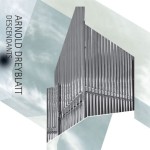
There are composers who write pieces, and then there are those who design entire acoustic ecosystems and let you wander inside, hoping you won’t get lost. Arnold Dreyblatt belongs, stubbornly, to the second category.
"Descendants" is not a composition in the usual sense. It’s a space that has been tuned until it begins to think on its own.
Commissioned for the Orgelpark in Amsterdam and released by Unsounds in collaboration with Echonance Festival, the piece unfolds across four pipe organs - each with its own historical baggage, mechanical temperament, and stubborn personality. Instead of forcing them into polite agreement, Dreyblatt lets them coexist within his custom just-intonation system, derived from harmonic overtones that behave less like notes and more like gravitational fields.
If that sounds abstract, it is. Comfortingly so.
The tuning itself - anchored to a fundamental C with A at 415 Hz - creates intervals that don’t quite align with what your ears have been trained to accept as “in tune”. Not wrong, just… differently right. Slightly skewed relationships between pitches generate beating patterns, interference, slow pulsations. The sound doesn’t sit still. It breathes, wavers, recalibrates itself in real time, like a structure constantly adjusting its own foundations.
The result is a 50-minute continuum that resists segmentation, even though it’s technically organized into five sections. You don’t hear “movements” so much as shifts in atmospheric pressure. One cluster of harmonics thickens, another recedes. Certain frequencies bloom unexpectedly, filling the hall like light filtering through uneven glass. Others withdraw, leaving behind a faint afterimage.
Dreyblatt’s background in the second wave of New York minimalism is still audible, but only in spirit. The steady pulse that once defined his early work has been dissolved into something more diffuse. Time here isn’t marked by rhythm, but by accumulation and decay. Events don’t happen; they emerge.
What makes "Descendants" particularly effective is its relationship to the instruments themselves. These are not neutral sound sources. A 15th-century organ reconstruction does not behave like a contemporary one, and Dreyblatt doesn’t pretend otherwise. He distributes his harmonic material across them in a way that highlights their differences rather than smoothing them out. The piece becomes a negotiation between architectures - wood, metal, air, history - each contributing its own resistance.
Performed by Claudio F. Baroni, Reiner van Houdt, Dreyblatt himself, and Lucie Nezri, the work maintains a remarkable balance between precision and instability. You get the sense that everything is carefully calibrated, yet always on the verge of drifting. It’s controlled, but not rigid. Structured, but not fixed.
There’s also a quiet physicality to the experience. Pipe organs don’t just produce sound; they move air. And here, that movement becomes part of the composition. Low frequencies press against the body, higher ones shimmer just out of reach, and in between there’s a constant negotiation between presence and absence. Listening becomes less about following a line and more about inhabiting a field.
As the third volume in the Echonance series, "Descendants" fits neatly into a broader exploration of spatial and perceptual listening. But it also stands on its own as a particularly uncompromising statement. It doesn’t guide you, doesn’t explain itself, doesn’t offer narrative footholds.
It simply exists, with quiet insistence.
And somewhere within that shifting lattice of harmonics, you start to notice something slightly inconvenient: your ears adjusting, your expectations recalibrating, your sense of “tuning” quietly rewritten. Not dramatically. Just enough to make everything else sound a little less certain afterward.
Which, one suspects, was the point all along.
"Descendants" is not a composition in the usual sense. It’s a space that has been tuned until it begins to think on its own.
Commissioned for the Orgelpark in Amsterdam and released by Unsounds in collaboration with Echonance Festival, the piece unfolds across four pipe organs - each with its own historical baggage, mechanical temperament, and stubborn personality. Instead of forcing them into polite agreement, Dreyblatt lets them coexist within his custom just-intonation system, derived from harmonic overtones that behave less like notes and more like gravitational fields.
If that sounds abstract, it is. Comfortingly so.
The tuning itself - anchored to a fundamental C with A at 415 Hz - creates intervals that don’t quite align with what your ears have been trained to accept as “in tune”. Not wrong, just… differently right. Slightly skewed relationships between pitches generate beating patterns, interference, slow pulsations. The sound doesn’t sit still. It breathes, wavers, recalibrates itself in real time, like a structure constantly adjusting its own foundations.
The result is a 50-minute continuum that resists segmentation, even though it’s technically organized into five sections. You don’t hear “movements” so much as shifts in atmospheric pressure. One cluster of harmonics thickens, another recedes. Certain frequencies bloom unexpectedly, filling the hall like light filtering through uneven glass. Others withdraw, leaving behind a faint afterimage.
Dreyblatt’s background in the second wave of New York minimalism is still audible, but only in spirit. The steady pulse that once defined his early work has been dissolved into something more diffuse. Time here isn’t marked by rhythm, but by accumulation and decay. Events don’t happen; they emerge.
What makes "Descendants" particularly effective is its relationship to the instruments themselves. These are not neutral sound sources. A 15th-century organ reconstruction does not behave like a contemporary one, and Dreyblatt doesn’t pretend otherwise. He distributes his harmonic material across them in a way that highlights their differences rather than smoothing them out. The piece becomes a negotiation between architectures - wood, metal, air, history - each contributing its own resistance.
Performed by Claudio F. Baroni, Reiner van Houdt, Dreyblatt himself, and Lucie Nezri, the work maintains a remarkable balance between precision and instability. You get the sense that everything is carefully calibrated, yet always on the verge of drifting. It’s controlled, but not rigid. Structured, but not fixed.
There’s also a quiet physicality to the experience. Pipe organs don’t just produce sound; they move air. And here, that movement becomes part of the composition. Low frequencies press against the body, higher ones shimmer just out of reach, and in between there’s a constant negotiation between presence and absence. Listening becomes less about following a line and more about inhabiting a field.
As the third volume in the Echonance series, "Descendants" fits neatly into a broader exploration of spatial and perceptual listening. But it also stands on its own as a particularly uncompromising statement. It doesn’t guide you, doesn’t explain itself, doesn’t offer narrative footholds.
It simply exists, with quiet insistence.
And somewhere within that shifting lattice of harmonics, you start to notice something slightly inconvenient: your ears adjusting, your expectations recalibrating, your sense of “tuning” quietly rewritten. Not dramatically. Just enough to make everything else sound a little less certain afterward.
Which, one suspects, was the point all along.
Jorge Solís Arenazas: Displacements
Artist: Jorge Solís Arenazas (@)
Title: Displacements
Format: Download Only (MP3 + Lossless)
Label: Line (@)
Rated:
Title: Displacements
Format: Download Only (MP3 + Lossless)
Label: Line (@)
Rated:
Debut albums are usually eager things. They try to explain themselves, justify their existence, maybe even win you over. "Displacements" doesn’t bother. It behaves more like a system already in motion before you arrived, and frankly, it’s not going to stop just because you pressed play.
Jorge Solís Arenazas comes to this first full-length release not as a newcomer, but as someone who has already spent years circling the problem of sound from multiple angles: composition, writing, radio, installation. You can hear that background immediately. This is not “music” in the conventional sense. It’s closer to a set of conditions under which listening becomes unstable, slightly unreliable, occasionally even suspicious of itself.
The conceptual backbone is almost annoyingly rigorous. Language, chaos, discrete systems, the way structure emerges from accident. All the things that make normal people slowly back away from the room. Yet what’s interesting is how little of that theory feels imposed. Instead, it seeps into the material, shaping it from within rather than sitting on top like a polite academic hat.
The album is organized as a kind of vertical journey, which sounds grand until you realize it mostly involves frequencies doing things your ears aren’t entirely comfortable with. “Anabasis I” opens in the upper register, built from feedback systems that feel less like instruments and more like negotiations. High frequencies flicker, stretch, threaten to disappear. It’s not aggressive, but it is insistent, like a mosquito that studied philosophy.
Then comes “Catabasis”, the descent. Brownian noise, low-end rumble, a slow gravitational pull into density. If the first piece destabilizes your sense of orientation, this one removes the ground altogether. There’s a peculiar beauty in how it accumulates weight without ever becoming static. It breathes, but heavily, like something that has learned respiration from a manual written in another language.
“Eschatia” sits in between, and predictably refuses to behave like a simple midpoint. It feels more like a border crossing where nobody checks your documents but everything still feels vaguely illicit. Synth layers drift in and out, residues of rhythm appear and dissolve, and for a brief moment you might think you’ve found something resembling form. That illusion doesn’t last. It was never meant to.
By the time “Anabasis II” arrives, the ascent has changed character. It’s not a repetition but a memory of the first movement, altered by everything that happened in between. The feedback is more fractured, less innocent. If the opening suggested exploration, this closing section feels like returning to a place that no longer exists in the same way.
What makes "Displacements" quietly compelling is its refusal to dramatize any of this. There are no climaxes, no gestures designed to reassure you that something “important” just happened. Instead, the album trusts accumulation, micro-variation, the slow imprint of sound on memory. It’s almost irritatingly patient. You keep waiting for a revelation, and it keeps offering you… process.
Which, to be fair, is the point.
The mastering by Rafael Anton Irisarri deserves a brief, reluctant nod. There’s a clarity here that prevents the material from collapsing into indistinct noise. Every frequency band feels intentional, even when it’s actively resisting your attempt to make sense of it.
Released on LINE, a label that has built an entire aesthetic out of restraint and microscopic attention, "Displacements" fits almost too well. It shares that familiar LINE quality of being simultaneously precise and elusive, like a diagram that keeps erasing itself while you study it.
There’s also something unexpectedly human beneath all this abstraction. The dedication to his brother, the long gestation of the material, the years of thinking and rethinking these structures. For all its talk of systems and randomness, the album is ultimately about attention. About how we listen, how we remember, how we impose meaning on things that don’t particularly care whether we understand them.
Not exactly background music. More like foreground uncertainty.
You won’t come out of it with answers. But you might start noticing how fragile your questions were to begin with, which is either enlightening or deeply inconvenient, depending on your tolerance for ambiguity.
Jorge Solís Arenazas comes to this first full-length release not as a newcomer, but as someone who has already spent years circling the problem of sound from multiple angles: composition, writing, radio, installation. You can hear that background immediately. This is not “music” in the conventional sense. It’s closer to a set of conditions under which listening becomes unstable, slightly unreliable, occasionally even suspicious of itself.
The conceptual backbone is almost annoyingly rigorous. Language, chaos, discrete systems, the way structure emerges from accident. All the things that make normal people slowly back away from the room. Yet what’s interesting is how little of that theory feels imposed. Instead, it seeps into the material, shaping it from within rather than sitting on top like a polite academic hat.
The album is organized as a kind of vertical journey, which sounds grand until you realize it mostly involves frequencies doing things your ears aren’t entirely comfortable with. “Anabasis I” opens in the upper register, built from feedback systems that feel less like instruments and more like negotiations. High frequencies flicker, stretch, threaten to disappear. It’s not aggressive, but it is insistent, like a mosquito that studied philosophy.
Then comes “Catabasis”, the descent. Brownian noise, low-end rumble, a slow gravitational pull into density. If the first piece destabilizes your sense of orientation, this one removes the ground altogether. There’s a peculiar beauty in how it accumulates weight without ever becoming static. It breathes, but heavily, like something that has learned respiration from a manual written in another language.
“Eschatia” sits in between, and predictably refuses to behave like a simple midpoint. It feels more like a border crossing where nobody checks your documents but everything still feels vaguely illicit. Synth layers drift in and out, residues of rhythm appear and dissolve, and for a brief moment you might think you’ve found something resembling form. That illusion doesn’t last. It was never meant to.
By the time “Anabasis II” arrives, the ascent has changed character. It’s not a repetition but a memory of the first movement, altered by everything that happened in between. The feedback is more fractured, less innocent. If the opening suggested exploration, this closing section feels like returning to a place that no longer exists in the same way.
What makes "Displacements" quietly compelling is its refusal to dramatize any of this. There are no climaxes, no gestures designed to reassure you that something “important” just happened. Instead, the album trusts accumulation, micro-variation, the slow imprint of sound on memory. It’s almost irritatingly patient. You keep waiting for a revelation, and it keeps offering you… process.
Which, to be fair, is the point.
The mastering by Rafael Anton Irisarri deserves a brief, reluctant nod. There’s a clarity here that prevents the material from collapsing into indistinct noise. Every frequency band feels intentional, even when it’s actively resisting your attempt to make sense of it.
Released on LINE, a label that has built an entire aesthetic out of restraint and microscopic attention, "Displacements" fits almost too well. It shares that familiar LINE quality of being simultaneously precise and elusive, like a diagram that keeps erasing itself while you study it.
There’s also something unexpectedly human beneath all this abstraction. The dedication to his brother, the long gestation of the material, the years of thinking and rethinking these structures. For all its talk of systems and randomness, the album is ultimately about attention. About how we listen, how we remember, how we impose meaning on things that don’t particularly care whether we understand them.
Not exactly background music. More like foreground uncertainty.
You won’t come out of it with answers. But you might start noticing how fragile your questions were to begin with, which is either enlightening or deeply inconvenient, depending on your tolerance for ambiguity.