
Browse by Genre
Industrial Music / Industrial Metal / Aggro Industrial / Electro Metal
Industrial Noise / Power Noise / Harsh Noise
Synth Pop / Electro Pop / Synth-Electronica
Techno / Trance / Goa / Drum'n'Bass / Jungle / Tribal / Trip-Hop
Ambient / Electronica / Ethereal / Dub / Soundscapes / Abstract
Experimental / Avantgarde / Weird & Wired / Glitch / Noise / Field Recording
Dark / Gothic / Wave / New Wave / Dark Wave / Industrial Gothic
New Music / Downtown / Avantgarde Jazz / New Classical / World
Search Reviews
Music Reviews
Schedars: Schedars
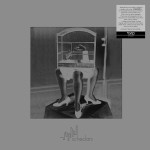
It may seem rhetorical to start a review by talking about the charm and difficulty of decoding certain dynamics of Japanese culture for those who, despite decades of reading manga and books on Zen spirituality, engage with it. For me, the Japanese music scene has always been difficult to map: apart from the bands that are also released by foreign labels (Yellow Magic Orchestra and its members, Zeni Geva, Teengenerate, The 5.6.7.8's, and Shonen Knife are the first that come to mind), the other myriad bands are unknown to me. Spittle, with their new sub-label Spittle Made In Japan, will try to give prominence to the post-punk and wave scene of the Land of the Rising Sun with vinyl reissues, focusing on the 80s. The first release arrives these days and is the reissue of the first LP by the Schedars. Printed in 2023, the self-titled album by the Schedars was self-produced by them in LP and is now reissued with an extra track. The band is active in the Tokyo scene and consists of singer and keyboardist Sio, guitarist Enrike Kkai ji, saxophonist KMDR, bassist TAN, and drummer Ktr. Listening to the only tracks from the new version of their debut, the first thing that catches the "ear" are their sound references, namely the entire New York scene of the late '70s centered around the groups included in the compilation "No New York" (James Chance's The Contortions, Mars, Arto Lindsay's DNA, and Lydia Lunch's Teenage Jesus And The Jerks). The Tokyo band blends all four groups with their characteristic edginess and experimental expressiveness (see the dissonant use of guitar and sax), including here and there moments where those edges are smoothed out (as in "Shameless Display," an almost easy listening track with funky bass and flute interventions). The tracks rarely reach three minutes and highlight the energy and freshness of their sound. Despite the decidedly derivative sound, I liked the album, and since the last two tracks that close the album (the aforementioned track and the unreleased "Stroll") show a softer side, but always with a certain transversal attitude, who knows if these may indicate a new side of the future sound of the Schedars.
Sorry For Laughing: Rain Flowers

Artist: Sorry For Laughing
Title: Rain Flowers
Format: CD x 2 (double CD)
Label: Klanggalerie (@)
Rated:

Title: Rain Flowers
Format: CD x 2 (double CD)
Label: Klanggalerie (@)
Rated:
If postmodernism ever had a family reunion, "Rain Flowers" would be the enigmatic great-uncle who shows up with a weather-beaten accordion, a bag of old photographs, and three other people sharing his coat.
Gordon H. Whitlow - of Biota and Mnemonists legend - has reanimated Sorry For Laughing not as a solo pseudonym but as a kind of avant-garde roundtable séance. This time, the ghosts come bearing string sections, half-sung lullabies, processed folk memories, and dreams of agrarian hallucination. "Rain Flowers" is an album made not so much for listening as for inhabiting. Enter carefully: the floors creak, the wallpaper breathes, and someone is definitely reciting poetry to a dog in the attic.
Across two discs, "Rain Flowers" plays like a wandering ethnomusicological field recording compiled by telepaths. There are old songs, yes - fragmented folk traditions viewed through cracked stained glass - but there are also original compositions that behave like they were grown, not written. The presence of Edward Ka-Spel (The Legendary Pink Dots) and Martyn Bates (Eyeless in Gaza) adds an oracular sheen to the proceedings. Ka-Spel’s spoken incantations drift like the mutterings of a prophetic librarian; Bates, meanwhile, brings his unmistakable mixture of devotion and doubt to lullabies and laments alike.
Take "Johnny’s Gone to Hilo": not the sailor’s ditty your granddad remembers, but a reverb-laced resurrection in which the ocean is more psychological than geographical. Or "Christ Child Lullaby", where the sacred is rendered fragile, sung from beneath a pile of detuned harmoniums and dusk.
There are moments of cracked beauty ("The Hunter", "I Go Bound") and moments that seem to arise purely out of tape hiss and memory fog ("Processional", "Will Be"). Violinist Patrick Q Wright (formerly of Tuxedomoon), the spectral guitar stylings of Janet Feder, and Whitlow’s arcane organ work give the album a slightly ecclesiastical air - if your church was designed by Kurt Schwitters and haunted by John Cage.
But don’t mistake "Rain Flowers" for preciousness. There’s play here, too. This isn't the kind of seriousness that needs to explain itself; it's the sort that knows how to let contradiction bloom. The album’s name itself - "Rain Flowers" - evokes something impossible yet tenderly natural, like a garden grown under bad weather or a memory you never had.
And that's perhaps the album’s most poetic gift: its embrace of the liminal, the marginal, the in-between. These pieces operate in the cracks between genres, between tradition and experiment, memory and invention. You won’t find a clean melodic narrative or anything resembling a hit single here - but what you will find is a complex emotional topography, a field of sonic ruins that reveals, for those willing to linger, a kind of spiritual archaeology.
By the end of the journey, you may not be able to recall the precise instrumentation of any given track - but you'll remember how the whole thing felt, like waking from a dream where a baroque puppet troupe performed a Beckett play in an abandoned greenhouse.
"Rain Flowers" is a love letter to imperfection, to collage, to listening with your whole nervous system. It’s a record that rewards patience and curiosity, a kind of strange pastoral mass for our scattered, overwhelmed moment.
So, sit in the garden. Let it rain. And listen.
Gordon H. Whitlow - of Biota and Mnemonists legend - has reanimated Sorry For Laughing not as a solo pseudonym but as a kind of avant-garde roundtable séance. This time, the ghosts come bearing string sections, half-sung lullabies, processed folk memories, and dreams of agrarian hallucination. "Rain Flowers" is an album made not so much for listening as for inhabiting. Enter carefully: the floors creak, the wallpaper breathes, and someone is definitely reciting poetry to a dog in the attic.
Across two discs, "Rain Flowers" plays like a wandering ethnomusicological field recording compiled by telepaths. There are old songs, yes - fragmented folk traditions viewed through cracked stained glass - but there are also original compositions that behave like they were grown, not written. The presence of Edward Ka-Spel (The Legendary Pink Dots) and Martyn Bates (Eyeless in Gaza) adds an oracular sheen to the proceedings. Ka-Spel’s spoken incantations drift like the mutterings of a prophetic librarian; Bates, meanwhile, brings his unmistakable mixture of devotion and doubt to lullabies and laments alike.
Take "Johnny’s Gone to Hilo": not the sailor’s ditty your granddad remembers, but a reverb-laced resurrection in which the ocean is more psychological than geographical. Or "Christ Child Lullaby", where the sacred is rendered fragile, sung from beneath a pile of detuned harmoniums and dusk.
There are moments of cracked beauty ("The Hunter", "I Go Bound") and moments that seem to arise purely out of tape hiss and memory fog ("Processional", "Will Be"). Violinist Patrick Q Wright (formerly of Tuxedomoon), the spectral guitar stylings of Janet Feder, and Whitlow’s arcane organ work give the album a slightly ecclesiastical air - if your church was designed by Kurt Schwitters and haunted by John Cage.
But don’t mistake "Rain Flowers" for preciousness. There’s play here, too. This isn't the kind of seriousness that needs to explain itself; it's the sort that knows how to let contradiction bloom. The album’s name itself - "Rain Flowers" - evokes something impossible yet tenderly natural, like a garden grown under bad weather or a memory you never had.
And that's perhaps the album’s most poetic gift: its embrace of the liminal, the marginal, the in-between. These pieces operate in the cracks between genres, between tradition and experiment, memory and invention. You won’t find a clean melodic narrative or anything resembling a hit single here - but what you will find is a complex emotional topography, a field of sonic ruins that reveals, for those willing to linger, a kind of spiritual archaeology.
By the end of the journey, you may not be able to recall the precise instrumentation of any given track - but you'll remember how the whole thing felt, like waking from a dream where a baroque puppet troupe performed a Beckett play in an abandoned greenhouse.
"Rain Flowers" is a love letter to imperfection, to collage, to listening with your whole nervous system. It’s a record that rewards patience and curiosity, a kind of strange pastoral mass for our scattered, overwhelmed moment.
So, sit in the garden. Let it rain. And listen.
Peter Murphy: Silver Shade
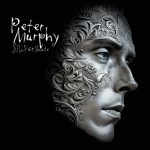

In the twilight of his career, Peter Murphy, the erstwhile frontman of Bauhaus, emerges once more from the shadows with "Silver Shade", his first studio album in over a decade. At 67, Murphy doesn't merely revisit the gothic tones of his past; he reimagines them, weaving a tapestry that's both a reflection and a reinvention.
The album opens with "Swoon", a track that lives up to its name. Featuring Trent Reznor, it melds synth-punk and funk into a hypnotic rhythm, setting the stage for the journey ahead. "Hot Roy" follows, racing with an EBM pulse, while "Sherpa" offers a more expansive, operatic resonance, guiding listeners through introspective terrains.
The title track, "Silver Shade", stands out with its edgy vibe, showcasing Murphy's vocals in a light that defies his age, reminiscent of his youthful vigor. "The Artroom Wonder", inspired by a memory from Murphy's school days, features Tool's Justin Chancellor, adding depth to a composition rich in curiosity and discovery. "Meaning Of My Life" delves into introspection, presenting a cinematic soundscape that borders on prog rock, while "Xavier New Boy" offers a laid-back, almost spoken-word delivery over a sci-fi electronic backdrop. "Cochita Is Lame" intrigues with its potential religious undertones, though Murphy's true intent remains enigmatic.
"Soothsayer" brings a rock-tinged energy, warning of false prophets, and "Time Waits" introduces Eastern influences, perhaps a nod to Murphy's current residence in Istanbul. The album concludes with "Sailmaker's Charm", a track that swells with emotion, leaving listeners with a sense of closure and reflection.
Produced by Youth, known for his work with Killing Joke, the album benefits from a polished yet raw sound, capturing the essence of Murphy's artistic evolution. While some tracks might feel overly grandiose, the album as a whole stands as a testament to Murphy's enduring ability to conjure romanticized imagery through his distinctive baritone.
"Silver Shade" sounds like a journey through the corridors of Murphy's mind - a blend of past reminiscences and present musings. It's a reminder that even as time marches on, the spirit of artistry remains undiminished.
The album opens with "Swoon", a track that lives up to its name. Featuring Trent Reznor, it melds synth-punk and funk into a hypnotic rhythm, setting the stage for the journey ahead. "Hot Roy" follows, racing with an EBM pulse, while "Sherpa" offers a more expansive, operatic resonance, guiding listeners through introspective terrains.
The title track, "Silver Shade", stands out with its edgy vibe, showcasing Murphy's vocals in a light that defies his age, reminiscent of his youthful vigor. "The Artroom Wonder", inspired by a memory from Murphy's school days, features Tool's Justin Chancellor, adding depth to a composition rich in curiosity and discovery. "Meaning Of My Life" delves into introspection, presenting a cinematic soundscape that borders on prog rock, while "Xavier New Boy" offers a laid-back, almost spoken-word delivery over a sci-fi electronic backdrop. "Cochita Is Lame" intrigues with its potential religious undertones, though Murphy's true intent remains enigmatic.
"Soothsayer" brings a rock-tinged energy, warning of false prophets, and "Time Waits" introduces Eastern influences, perhaps a nod to Murphy's current residence in Istanbul. The album concludes with "Sailmaker's Charm", a track that swells with emotion, leaving listeners with a sense of closure and reflection.
Produced by Youth, known for his work with Killing Joke, the album benefits from a polished yet raw sound, capturing the essence of Murphy's artistic evolution. While some tracks might feel overly grandiose, the album as a whole stands as a testament to Murphy's enduring ability to conjure romanticized imagery through his distinctive baritone.
"Silver Shade" sounds like a journey through the corridors of Murphy's mind - a blend of past reminiscences and present musings. It's a reminder that even as time marches on, the spirit of artistry remains undiminished.
RG Rough: 80

RG Rough's latest release, "80", is the final installment in his decade-spanning trilogy, following *60* and *70*. This series delves into the sonic landscapes of the '60s, '70s, and now the '80s, reimagining them through an experimental lens. In "80", RG Rough crafts a sonic collage that captures the essence of the 1980s, not through direct sampling, but by reconstructing its atmosphere using fragmented sounds and textures.
The album is divided into two extended tracks: "80/81/82/83/84" and "85/86/87/88/89". Each segment weaves together elements reminiscent of post-punk rhythms, ambient synths, and electroacoustic noise, creating a tapestry that is both nostalgic and forward-thinking. Listeners might find echoes of bands like The Durutti Column or Minimal Compact, yet the compositions remain uniquely RG Rough's own.
RG Rough, a French-British musician based in Bordeaux, has a rich history in the music scene. Starting in the early '90s, he played in various pop, indie, and garage bands before transitioning to more experimental and electronic territories in the 2000s. His collaborations with artists like Richard Pinhas and Makoto Kawabata further showcase his versatility and commitment to pushing musical boundaries.
"80" stands as a testament to RG Rough's ability to reinterpret and recontextualize musical eras, offering listeners a journey that's both familiar and refreshingly new. It's a fitting conclusion to a trilogy that challenges our perceptions of time, memory, and sound.
The album is divided into two extended tracks: "80/81/82/83/84" and "85/86/87/88/89". Each segment weaves together elements reminiscent of post-punk rhythms, ambient synths, and electroacoustic noise, creating a tapestry that is both nostalgic and forward-thinking. Listeners might find echoes of bands like The Durutti Column or Minimal Compact, yet the compositions remain uniquely RG Rough's own.
RG Rough, a French-British musician based in Bordeaux, has a rich history in the music scene. Starting in the early '90s, he played in various pop, indie, and garage bands before transitioning to more experimental and electronic territories in the 2000s. His collaborations with artists like Richard Pinhas and Makoto Kawabata further showcase his versatility and commitment to pushing musical boundaries.
"80" stands as a testament to RG Rough's ability to reinterpret and recontextualize musical eras, offering listeners a journey that's both familiar and refreshingly new. It's a fitting conclusion to a trilogy that challenges our perceptions of time, memory, and sound.
Little Annie: With

Little Annie doesn’t enter a room. She materializes - slowly, like smoke curling in through a cracked window. On "With", a new collection of collaborations spanning her shape-shifting, slow-burning, cigarette-paper career, Annie curates a dark, glistening bouquet of duets with some of alternative music’s most infamous spirits: Marc Almond, Coil, Swans, Bonnie “Prince” Billy, Kid Congo Powers, Baby Dee, Paul Wallfisch, and Italian cultists Larsen. The result is not so much a compilation as a séance.
Anne Bandez - aka Little Annie, aka Annie Anxiety - is the kind of artist whose career reads like a novel no one was brave enough to write. Emerging from the scorched poetry of New York’s No Wave scene in the late ’70s and somehow managing to flirt with industrial, torch song, trip-hop, punk theater, and glam decadence all in the same breath, she’s one of those rare voices that sounds both completely disenchanted and madly in love with the world. And now here she is, with all her ghosts in tow.
The album begins with a fragile swoon: “Yesterday When I Was Young” with Marc Almond. If this isn’t two cabaret vampires sipping absinthe and weeping gently over the last cigarette in Paris, I don’t know what is. Almond’s silk and Annie’s gravel create a kind of dignified decay. Romance, in ruins. The song becomes a perfume bottle of regret you want to wear anyway.
Then comes “Things Happen” with Coil, and suddenly we’re floating in an esoteric ether - Annie whispering over liquid electronics like she’s telling secrets to an obsidian mirror. You can practically hear John Balance’s shadow nodding in approval. It’s not a duet, exactly - it’s more like being held aloft by an invisible choir of machines.
"With" isn’t just a list of names - it’s a network of moods. “The Weather The War” with Kid Congo is like a news broadcast from a dream. “Isle of Weeping Ladies” with Paul Wallfisch is the album’s monochrome heart, all ghost piano and dignity, and “State of Grace” with Baby Dee and Bonnie “Prince” Billy feels like a drunken gospel for the world’s forgotten saints. It is vulnerable, tender, and absolutely cracked in all the right ways.
And then there’s the collaboration with Swans - “Some Things We Do”. Yes, it is as stark and seismic as you'd expect. But the surprise is how Annie matches the towering, tectonic gravitas of Swans not by out-shouting them, but by going inside - deeper, quieter, like a prayer mouthed under the roar. She doesn’t ride the wave. She anchors it.
Sonically, the whole thing is gorgeously mastered by Martin Siewert, who knows a thing or two about sculpting shadow and feedback. You don’t just hear this record - you sit inside it. Preferably with velvet curtains drawn and a glass of something dark. The artwork - by Annie herself - adds another layer of her presence: smudgy, symbolic, and full of unsaid things.
What’s most striking about "With" is that it doesn't feel like a best-of or a look-what-I-did collection. It feels more like a scrapbook left behind in an old nightclub dressing room: pages of candlelit hymns, strange dreams, lipstick-smeared dedications to late-night souls and early-morning regrets. The glue is Annie herself, an artist who never shouts, but always haunts.
She doesn’t merely collaborate - she possesses and is possessed in return. Like a jazz singer in a haunted warehouse, she lets every track collapse into its own drama, leaning into melancholy like it’s a trusted old armchair.
You don’t need to know all the names involved here. But if you do, "With" feels like a reunion of kindred disobedients. If you don’t, then this might just be the most stylish introduction to the underworld you’ve ever had.
"With" is torch song, séance, lullaby, and warning. And Little Annie remains what she’s always been: too strange for stardom, too radiant for oblivion, and still singing, with or without your permission.
Anne Bandez - aka Little Annie, aka Annie Anxiety - is the kind of artist whose career reads like a novel no one was brave enough to write. Emerging from the scorched poetry of New York’s No Wave scene in the late ’70s and somehow managing to flirt with industrial, torch song, trip-hop, punk theater, and glam decadence all in the same breath, she’s one of those rare voices that sounds both completely disenchanted and madly in love with the world. And now here she is, with all her ghosts in tow.
The album begins with a fragile swoon: “Yesterday When I Was Young” with Marc Almond. If this isn’t two cabaret vampires sipping absinthe and weeping gently over the last cigarette in Paris, I don’t know what is. Almond’s silk and Annie’s gravel create a kind of dignified decay. Romance, in ruins. The song becomes a perfume bottle of regret you want to wear anyway.
Then comes “Things Happen” with Coil, and suddenly we’re floating in an esoteric ether - Annie whispering over liquid electronics like she’s telling secrets to an obsidian mirror. You can practically hear John Balance’s shadow nodding in approval. It’s not a duet, exactly - it’s more like being held aloft by an invisible choir of machines.
"With" isn’t just a list of names - it’s a network of moods. “The Weather The War” with Kid Congo is like a news broadcast from a dream. “Isle of Weeping Ladies” with Paul Wallfisch is the album’s monochrome heart, all ghost piano and dignity, and “State of Grace” with Baby Dee and Bonnie “Prince” Billy feels like a drunken gospel for the world’s forgotten saints. It is vulnerable, tender, and absolutely cracked in all the right ways.
And then there’s the collaboration with Swans - “Some Things We Do”. Yes, it is as stark and seismic as you'd expect. But the surprise is how Annie matches the towering, tectonic gravitas of Swans not by out-shouting them, but by going inside - deeper, quieter, like a prayer mouthed under the roar. She doesn’t ride the wave. She anchors it.
Sonically, the whole thing is gorgeously mastered by Martin Siewert, who knows a thing or two about sculpting shadow and feedback. You don’t just hear this record - you sit inside it. Preferably with velvet curtains drawn and a glass of something dark. The artwork - by Annie herself - adds another layer of her presence: smudgy, symbolic, and full of unsaid things.
What’s most striking about "With" is that it doesn't feel like a best-of or a look-what-I-did collection. It feels more like a scrapbook left behind in an old nightclub dressing room: pages of candlelit hymns, strange dreams, lipstick-smeared dedications to late-night souls and early-morning regrets. The glue is Annie herself, an artist who never shouts, but always haunts.
She doesn’t merely collaborate - she possesses and is possessed in return. Like a jazz singer in a haunted warehouse, she lets every track collapse into its own drama, leaning into melancholy like it’s a trusted old armchair.
You don’t need to know all the names involved here. But if you do, "With" feels like a reunion of kindred disobedients. If you don’t, then this might just be the most stylish introduction to the underworld you’ve ever had.
"With" is torch song, séance, lullaby, and warning. And Little Annie remains what she’s always been: too strange for stardom, too radiant for oblivion, and still singing, with or without your permission.