
Browse by Genre
Industrial Music / Industrial Metal / Aggro Industrial / Electro Metal
Industrial Noise / Power Noise / Harsh Noise
Synth Pop / Electro Pop / Synth-Electronica
Techno / Trance / Goa / Drum'n'Bass / Jungle / Tribal / Trip-Hop
Ambient / Electronica / Ethereal / Dub / Soundscapes / Abstract
Experimental / Avantgarde / Weird & Wired / Glitch / Noise / Field Recording
Dark / Gothic / Wave / New Wave / Dark Wave / Industrial Gothic
New Music / Downtown / Avantgarde Jazz / New Classical / World
Search Reviews
Music Reviews
Puce Moment: Sans Soleil
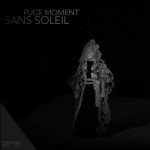
Puce Moment’s "Sans Soleil" is a ghost ritual set to tape, stitched from the lacquered past of Japanese court music and the modular squelch of modern electronics. The duo - Nicolas Devos and Pénélope Michel - doesn’t simply blend Gagaku with synths. No. They dissolve time, steep it in a theremin-tinged broth, and serve it as a steaming bowl of sonic ambiguity.
Gagaku, with its roots sunk deep in the 5th century, normally floats in imperial stillness. But here, it mutates. The sho wheezes like a haunted accordion in a dream, the hichiriki cries from a misty void, and somewhere in the shadows, a SH-101 sips tea with a Jen SX1000. The result is music that’s neither past nor present - just pure presence. Think “court music for deities on ketamine”.
Each track is a different spell. "Kangen" hums like a Buddhist AM radio lost in a thunderstorm. "Batu" unravels itself slowly, a procession of sounds where order collapses with the grace of falling sakura. "Sho" might be the quietest riot you’ll ever hear - a celebration of restraint so tense it feels like your bones are humming. And "Bugaku", which once might have scored elegant dances, now limps, stumbles, reconfigures - like choreography invented mid-apocalypse.
There is chaos, yes, but it’s reverent. The electronics don’t mock tradition - they court it, they court it clumsily and beautifully, like someone trying to waltz with a ghost. Sometimes the past leans in. Sometimes it pulls away.
Behind it all: the duo’s taste for fictional ethnology, sonic ceremony, and the uncomfortable beauty of contamination. Not collage, but conversation. Not pastiche, but possession.
And if this is a séance, then "Sans Soleil" is the flickering candle. A brief and gorgeous tremble between what was and what might be.
Gagaku, with its roots sunk deep in the 5th century, normally floats in imperial stillness. But here, it mutates. The sho wheezes like a haunted accordion in a dream, the hichiriki cries from a misty void, and somewhere in the shadows, a SH-101 sips tea with a Jen SX1000. The result is music that’s neither past nor present - just pure presence. Think “court music for deities on ketamine”.
Each track is a different spell. "Kangen" hums like a Buddhist AM radio lost in a thunderstorm. "Batu" unravels itself slowly, a procession of sounds where order collapses with the grace of falling sakura. "Sho" might be the quietest riot you’ll ever hear - a celebration of restraint so tense it feels like your bones are humming. And "Bugaku", which once might have scored elegant dances, now limps, stumbles, reconfigures - like choreography invented mid-apocalypse.
There is chaos, yes, but it’s reverent. The electronics don’t mock tradition - they court it, they court it clumsily and beautifully, like someone trying to waltz with a ghost. Sometimes the past leans in. Sometimes it pulls away.
Behind it all: the duo’s taste for fictional ethnology, sonic ceremony, and the uncomfortable beauty of contamination. Not collage, but conversation. Not pastiche, but possession.
And if this is a séance, then "Sans Soleil" is the flickering candle. A brief and gorgeous tremble between what was and what might be.
Zenial: Foil Punk

In a world brimming with uncertainty and quickening paranoia, Lukasz Szalankiewicz - known to the realms of experimental electronic enthusiasts as Zenial - has unveiled a dystopian soundtrack for our times, one that smacks of cyberpunk echoes, metallic ghosts, and the palpable tension of a future where humanity grapples with its own obsolescence. "Foil Punk" is an album forged in the unsettling hum of machines, where each track feels like a sonic fragment from a fractured, possibly doomed, future.
Recorded at the prestigious Centre National De Création Musicale in Reims, and heavily influenced by cyberpunk aesthetics and conspiracy theories, "Foil Punk" invites listeners to engage in an uneasy discourse about artificial intelligence, human fear, and the inexorable march of technological dehumanization. The album is an experience where fear is not merely a backdrop - it is the architect, the engine, and the very air we breathe.
From the very first track, "Katedra 2.11" a rapid-fire flurry of glitchy, otherworldly pulses, Zenial doesn't hold back, pulling the listener into a world that is both harsh and hypnotically alluring. There's an overwhelming sense of urgency, as though the machinery of the universe is accelerating past our comprehension, leaving us in a state of perpetual catch-up. The track lasts just over four minutes, but it feels like a condensed eternity - sound unfurling like an unraveling narrative of our technological plight.
"I'm Yours" follows, with its ethereal, almost romantic quality. A deceptive track, it might first sound like a reprieve from the chaos, but in typical Zenial fashion, it quickly becomes disorienting. The melody collapses into a stuttered rhythm, like a heart skipping beats, a metaphor for a world where control is a façade.
Track 3, "Access granted" feels like an invitation - and a warning. Its cold, mechanical voice proclaims permission granted, but the warm rush of relief that accompanies the words soon morphs into something unsettling. The tone suggests that in the near future, our access to everything we desire will come with a price. And who is in charge of granting it? This question lingers, even after the track ends.
And then comes "Deckard" - a sprawling 13-minute epic that calls to mind the towering, sterile landscapes of Ridley Scott's "Blade Runner". The track is built on low, rumbling bass and erratic, fractured rhythms that stretch across the entire piece, as though the machinery of this dystopia is malfunctioning, pushing through systems that were never meant to interact. Zenial’s knack for weaving tension from silence and noise is unmatched here, as the soundscape builds relentlessly, like a machine on the brink of overload.
When you reach "Leon Kowalski, serial number N6MAC41717", the longest track of the album, you're deep in the belly of the beast. This 14-minute piece feels like an odyssey, a journey through the decaying underbelly of a world run by algorithms, surveillance, and a profound sense of human alienation. The name itself - a nod to "Blade Runner" - suggests that this track is more than just a sonic exploration; it's a tribute to the forgotten souls in a post-human landscape. Zenial’s use of sound here is almost cruel, pushing the listener into an emotional corner where the lines between synthetic and organic are no longer distinct.
"Upgrade" follows with its eerily smooth synths and sharp percussion, a soundtrack to an ascension that feels as much like a surrender as it does a technological upgrade. The track flows into "Bialy Szum" - White Noise - which lingers in the air like an afterthought, like the hum of a world that's too saturated with information to ever pause for breath. The rhythm is sparse, minimalistic, as if representing the stillness before a storm of bytes and signals.
Finally, "Event Horizon" closes the album with a slow, creeping dread. The title alone brings to mind the edge of a black hole - the point of no return - and as the track moves through low, vibrating drones and distant metallic rumbles, it’s impossible not to feel a sense of inevitable collapse, as though there’s no way out. Time stretches and warps, much like the concept it’s named after. Here, Zenial pulls no punches, leaving you in a state of suspended finality.
What strikes you as you journey through "Foil Punk" is Zenial’s skillful weaving of sounds that both engage and alienate. He draws from his deep well of experience, particularly from projects like Angst'78, NOR_POL, and Aabzu, but here, he steps into new territory - where cold, analytical sound meets a very human, very emotional landscape of fear, anxiety, and the unknown.
As much as this album is a tribute to the culture and philosophy of cyberpunk, it is also an invitation to discuss the ways in which humanity is at the mercy of the technologies we’ve birthed. But Zenial, like the best experimental musicians, provides no clear answers. Instead, he invites you into the conversation, asking you to reflect on the dangers that lurk just beneath the surface of our ever-connected world.
In a world increasingly defined by machine learning and artificial intelligence, "Foil Punk" is a prophetic soundtrack for the not-so-distant future, where humanity may find itself as mere passengers on a ship piloted by algorithms. What happens when we lose control? What happens when we can no longer distinguish between human and machine? These are the questions "Foil Punk" dares us to consider, all while delivering a listening experience that is as mesmerizing as it is unnerving.
It's a dark, compelling, and, at times, absurd journey - a punk manifesto for a new era, where foil hats and neon-lit streets are as real as the machines that will one day rule them.
Recorded at the prestigious Centre National De Création Musicale in Reims, and heavily influenced by cyberpunk aesthetics and conspiracy theories, "Foil Punk" invites listeners to engage in an uneasy discourse about artificial intelligence, human fear, and the inexorable march of technological dehumanization. The album is an experience where fear is not merely a backdrop - it is the architect, the engine, and the very air we breathe.
From the very first track, "Katedra 2.11" a rapid-fire flurry of glitchy, otherworldly pulses, Zenial doesn't hold back, pulling the listener into a world that is both harsh and hypnotically alluring. There's an overwhelming sense of urgency, as though the machinery of the universe is accelerating past our comprehension, leaving us in a state of perpetual catch-up. The track lasts just over four minutes, but it feels like a condensed eternity - sound unfurling like an unraveling narrative of our technological plight.
"I'm Yours" follows, with its ethereal, almost romantic quality. A deceptive track, it might first sound like a reprieve from the chaos, but in typical Zenial fashion, it quickly becomes disorienting. The melody collapses into a stuttered rhythm, like a heart skipping beats, a metaphor for a world where control is a façade.
Track 3, "Access granted" feels like an invitation - and a warning. Its cold, mechanical voice proclaims permission granted, but the warm rush of relief that accompanies the words soon morphs into something unsettling. The tone suggests that in the near future, our access to everything we desire will come with a price. And who is in charge of granting it? This question lingers, even after the track ends.
And then comes "Deckard" - a sprawling 13-minute epic that calls to mind the towering, sterile landscapes of Ridley Scott's "Blade Runner". The track is built on low, rumbling bass and erratic, fractured rhythms that stretch across the entire piece, as though the machinery of this dystopia is malfunctioning, pushing through systems that were never meant to interact. Zenial’s knack for weaving tension from silence and noise is unmatched here, as the soundscape builds relentlessly, like a machine on the brink of overload.
When you reach "Leon Kowalski, serial number N6MAC41717", the longest track of the album, you're deep in the belly of the beast. This 14-minute piece feels like an odyssey, a journey through the decaying underbelly of a world run by algorithms, surveillance, and a profound sense of human alienation. The name itself - a nod to "Blade Runner" - suggests that this track is more than just a sonic exploration; it's a tribute to the forgotten souls in a post-human landscape. Zenial’s use of sound here is almost cruel, pushing the listener into an emotional corner where the lines between synthetic and organic are no longer distinct.
"Upgrade" follows with its eerily smooth synths and sharp percussion, a soundtrack to an ascension that feels as much like a surrender as it does a technological upgrade. The track flows into "Bialy Szum" - White Noise - which lingers in the air like an afterthought, like the hum of a world that's too saturated with information to ever pause for breath. The rhythm is sparse, minimalistic, as if representing the stillness before a storm of bytes and signals.
Finally, "Event Horizon" closes the album with a slow, creeping dread. The title alone brings to mind the edge of a black hole - the point of no return - and as the track moves through low, vibrating drones and distant metallic rumbles, it’s impossible not to feel a sense of inevitable collapse, as though there’s no way out. Time stretches and warps, much like the concept it’s named after. Here, Zenial pulls no punches, leaving you in a state of suspended finality.
What strikes you as you journey through "Foil Punk" is Zenial’s skillful weaving of sounds that both engage and alienate. He draws from his deep well of experience, particularly from projects like Angst'78, NOR_POL, and Aabzu, but here, he steps into new territory - where cold, analytical sound meets a very human, very emotional landscape of fear, anxiety, and the unknown.
As much as this album is a tribute to the culture and philosophy of cyberpunk, it is also an invitation to discuss the ways in which humanity is at the mercy of the technologies we’ve birthed. But Zenial, like the best experimental musicians, provides no clear answers. Instead, he invites you into the conversation, asking you to reflect on the dangers that lurk just beneath the surface of our ever-connected world.
In a world increasingly defined by machine learning and artificial intelligence, "Foil Punk" is a prophetic soundtrack for the not-so-distant future, where humanity may find itself as mere passengers on a ship piloted by algorithms. What happens when we lose control? What happens when we can no longer distinguish between human and machine? These are the questions "Foil Punk" dares us to consider, all while delivering a listening experience that is as mesmerizing as it is unnerving.
It's a dark, compelling, and, at times, absurd journey - a punk manifesto for a new era, where foil hats and neon-lit streets are as real as the machines that will one day rule them.
Those Holy: Remixes EP
Those Holy are a duo from Liverpool which released their debut track in November 2024 on soundcloud which got the proper EP treatment now.
"In Shadows" consists of female mesmerizing vocals paired with a nearly hypnotic electronic rhythm structure remiscent of eerie 80's which could have been a little more to the forefront without harm but undoubtly a refreshing melancholic song.
After the groovy but haunting coldwave original the first remix comes from Autums, who has an impressive discography in nearly all styles of alternative electronics. His version adds more pressure to the beat and such sharpens the contrast to the ethereal vocal parts used here prominently. Was there ever a Cocteau Twins Remix album? it might have sounded not to far away from this.
Next is the 'Shadow Time Remix' from Tolouse Low Trax, which stays beat orientated but adds various samples reminding of running time as dub effects giving the song a different space to breathe not unlike some of the darker trip hop classics.
Overall a very satisfying and varied listening with a coherent gothic electronic pop flair.
This is a limitied 10", hand-made by renowned cutters Lathe To The Grave, just in case you don't have to worry about customs duty. Otherwise you still can get easily a digital copy for a decent price.
"In Shadows" consists of female mesmerizing vocals paired with a nearly hypnotic electronic rhythm structure remiscent of eerie 80's which could have been a little more to the forefront without harm but undoubtly a refreshing melancholic song.
After the groovy but haunting coldwave original the first remix comes from Autums, who has an impressive discography in nearly all styles of alternative electronics. His version adds more pressure to the beat and such sharpens the contrast to the ethereal vocal parts used here prominently. Was there ever a Cocteau Twins Remix album? it might have sounded not to far away from this.
Next is the 'Shadow Time Remix' from Tolouse Low Trax, which stays beat orientated but adds various samples reminding of running time as dub effects giving the song a different space to breathe not unlike some of the darker trip hop classics.
Overall a very satisfying and varied listening with a coherent gothic electronic pop flair.
This is a limitied 10", hand-made by renowned cutters Lathe To The Grave, just in case you don't have to worry about customs duty. Otherwise you still can get easily a digital copy for a decent price.
Golem mecanique: Siamo Tutti In Pericolo

Artist: Golem mecanique
Title: Siamo Tutti In Pericolo
Format: LP
Label: Ideological Organ (@)
Rated:

Title: Siamo Tutti In Pericolo
Format: LP
Label: Ideological Organ (@)
Rated:
The final words of Pier Paolo Pasolini - "Siamo tutti in pericolo" ("We are all in danger") - hang over this album like an incantation, an omen, or perhaps an unfinished sentence left drifting over the cold November beach where his body was found. With this work, Karen Jebane, under the spectral alias of Golem Mecanique, does not attempt to solve the mystery of Pasolini’s murder, nor to eulogize him in a traditional sense. Instead, she summons the unresolved tension of his art, the silent violence that seeps through his films, and the haunted presence of his last night.
Jebane’s instrument of choice - the drone box, a mechanized hurdy-gurdy built by Leo Maurel - becomes something more than a tool for repetition. It is a breathing specter, a voice that hums like the friction of time itself. Against this endless tide of sound, she layers her own voice in stark, ceremonial phrases, often eroded by time and modulation, as if trying to recall a forgotten language. This is not simply music; it is an act of necromancy.
The album unfolds like a series of lost transmissions from another plane. "La notte" opens with an oppressive weight, a slow descent into Pasolini’s final hours, the drone thick and unrelenting. "Il giorno prima" is spectral, its zither plucks hanging like flickering candle flames in the dark. The chilling "Teorema" - named after Pasolini’s 1968 film where a divine, seductive figure disrupts a bourgeois household - features a disembodied voice, somewhere between a hymn and a whisper, as if calling to something just beyond reach.
But it is "La tua ultima serata" ("Your last evening") that feels like the heart of the album, a piece that stretches like a slow exhalation, heavy with sorrow and inevitability. Jebane’s voice does not lament; it observes. It marks time. It is as if the music itself stands watch, ensuring that Pasolini’s body, brutalized and abandoned on that beach, is not left to silence.
In "Le lacrime di Maria", the closing piece, the drone becomes almost human, wailing in the void. Jebane has cited Maria Callas and Scott Walker as phantoms within this work, and here their influence is clear - Callas’ operatic sorrow, Walker’s abyssal dramatism, both lingering like voices caught in the wind.
To call "Siamo Tutti In Pericolo" a tribute would be insufficient. It does not commemorate; it embodies. Jebane has taken Pasolini’s final words and stretched them into a ritual, a black mass of sound and memory where the past is neither dead nor resolved.
Somewhere, on an infinite loop, the phrase still echoes: "Siamo tutti in pericolo". Perhaps it was never just about Pasolini. Perhaps it was always about us.
Jebane’s instrument of choice - the drone box, a mechanized hurdy-gurdy built by Leo Maurel - becomes something more than a tool for repetition. It is a breathing specter, a voice that hums like the friction of time itself. Against this endless tide of sound, she layers her own voice in stark, ceremonial phrases, often eroded by time and modulation, as if trying to recall a forgotten language. This is not simply music; it is an act of necromancy.
The album unfolds like a series of lost transmissions from another plane. "La notte" opens with an oppressive weight, a slow descent into Pasolini’s final hours, the drone thick and unrelenting. "Il giorno prima" is spectral, its zither plucks hanging like flickering candle flames in the dark. The chilling "Teorema" - named after Pasolini’s 1968 film where a divine, seductive figure disrupts a bourgeois household - features a disembodied voice, somewhere between a hymn and a whisper, as if calling to something just beyond reach.
But it is "La tua ultima serata" ("Your last evening") that feels like the heart of the album, a piece that stretches like a slow exhalation, heavy with sorrow and inevitability. Jebane’s voice does not lament; it observes. It marks time. It is as if the music itself stands watch, ensuring that Pasolini’s body, brutalized and abandoned on that beach, is not left to silence.
In "Le lacrime di Maria", the closing piece, the drone becomes almost human, wailing in the void. Jebane has cited Maria Callas and Scott Walker as phantoms within this work, and here their influence is clear - Callas’ operatic sorrow, Walker’s abyssal dramatism, both lingering like voices caught in the wind.
To call "Siamo Tutti In Pericolo" a tribute would be insufficient. It does not commemorate; it embodies. Jebane has taken Pasolini’s final words and stretched them into a ritual, a black mass of sound and memory where the past is neither dead nor resolved.
Somewhere, on an infinite loop, the phrase still echoes: "Siamo tutti in pericolo". Perhaps it was never just about Pasolini. Perhaps it was always about us.
That's How I Fight: Movement Three - Continuum
Artist: That's How I Fight
Title: Movement Three - Continuum
Format: CD + Download
Label: Zoharum (http://zoharum.com/) (@)
Rated:
Title: Movement Three - Continuum
Format: CD + Download
Label: Zoharum (http://zoharum.com/) (@)
Rated:
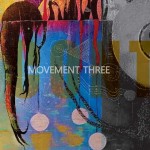
Some albums tell a story. Others build a world. "Movement III: Continuum" does neither. Instead, it unfolds like a topographical map of sound - shifting landscapes, uncharted territories, a weather system of tones and gestures. That’s How I Fight, a Polish collective balancing improvisation and structure on the tip of a razor, have created something that is neither purely free nor strictly composed. It is an entity in flux, constantly forming and unforming before your ears.
This release, despite its title, is the fourth official album from the group, recorded in the same sessions as "Movement III" but standing apart as its own distinct sonic chapter. If its predecessor embraced a kind of minimalist restraint, "Continuum" expands outward, introducing denser structures and a wider dynamic range. It is as if the first record was the inhale, and this one is the exhale - a sprawling, pulsing organism, more forceful yet equally elusive.
From the opening piece, "34", the album establishes its peculiar logic: synthesizers drift like mist, guitars appear like sudden mountain ridges, drums emerge as tectonic shifts rather than rhythmic anchors. There is no obvious center - just layers, accumulating and dissipating. "36" takes this further, the flute and synthesizers forming a kind of spectral dialogue, a coded language whispered between ghosts.
That’s How I Fight - a name that suggests struggle, defiance, an art born from necessity - operate on an intuitive level, as if sculpting air itself. Gosia Florczak’s synthesizers and accordion serve as a fluid undercurrent, while Piotr Sulik’s guitar loops trace ephemeral shapes above. Jacek Sokoowski’s percussion doesn’t dictate movement so much as punctuate it, creating ripples in the sonic flow, and Pieczarka Franciszek’s flute and vocal textures provide a haunting, human counterpoint.
By the time "30" rolls in - its nearly 13-minute runtime a journey in itself - one begins to grasp the album’s internal logic: this is not music that obeys linear progression. It swells and recedes like a tide, constantly rearranging its own molecules. And then there is "38", the final and longest piece, an immersive meditation where all elements intertwine, dissolving the boundaries between improvisation and composition, between music and atmosphere.
The idea of a “continuum” is not just a title here; it’s a guiding principle. This is music that exists on a spectrum, a continuum of sound, emotion, and time. You do not listen to it in the usual way - you inhabit it. And when it ends, you are left not with the feeling of having reached a conclusion, but rather of having been momentarily submerged in something vast, something ongoing, something that does not stop when you press pause.
Like watching clouds shift, like standing in the eye of a slow-moving storm, "Movement III: Continuum" is an experience as much as it is an album. And as with any experience, its impact depends entirely on how deeply you are willing to step inside.
This release, despite its title, is the fourth official album from the group, recorded in the same sessions as "Movement III" but standing apart as its own distinct sonic chapter. If its predecessor embraced a kind of minimalist restraint, "Continuum" expands outward, introducing denser structures and a wider dynamic range. It is as if the first record was the inhale, and this one is the exhale - a sprawling, pulsing organism, more forceful yet equally elusive.
From the opening piece, "34", the album establishes its peculiar logic: synthesizers drift like mist, guitars appear like sudden mountain ridges, drums emerge as tectonic shifts rather than rhythmic anchors. There is no obvious center - just layers, accumulating and dissipating. "36" takes this further, the flute and synthesizers forming a kind of spectral dialogue, a coded language whispered between ghosts.
That’s How I Fight - a name that suggests struggle, defiance, an art born from necessity - operate on an intuitive level, as if sculpting air itself. Gosia Florczak’s synthesizers and accordion serve as a fluid undercurrent, while Piotr Sulik’s guitar loops trace ephemeral shapes above. Jacek Sokoowski’s percussion doesn’t dictate movement so much as punctuate it, creating ripples in the sonic flow, and Pieczarka Franciszek’s flute and vocal textures provide a haunting, human counterpoint.
By the time "30" rolls in - its nearly 13-minute runtime a journey in itself - one begins to grasp the album’s internal logic: this is not music that obeys linear progression. It swells and recedes like a tide, constantly rearranging its own molecules. And then there is "38", the final and longest piece, an immersive meditation where all elements intertwine, dissolving the boundaries between improvisation and composition, between music and atmosphere.
The idea of a “continuum” is not just a title here; it’s a guiding principle. This is music that exists on a spectrum, a continuum of sound, emotion, and time. You do not listen to it in the usual way - you inhabit it. And when it ends, you are left not with the feeling of having reached a conclusion, but rather of having been momentarily submerged in something vast, something ongoing, something that does not stop when you press pause.
Like watching clouds shift, like standing in the eye of a slow-moving storm, "Movement III: Continuum" is an experience as much as it is an album. And as with any experience, its impact depends entirely on how deeply you are willing to step inside.