
Browse by Genre
Industrial Music / Industrial Metal / Aggro Industrial / Electro Metal
Industrial Noise / Power Noise / Harsh Noise
Synth Pop / Electro Pop / Synth-Electronica
Techno / Trance / Goa / Drum'n'Bass / Jungle / Tribal / Trip-Hop
Ambient / Electronica / Ethereal / Dub / Soundscapes / Abstract
Experimental / Avantgarde / Weird & Wired / Glitch / Noise / Field Recording
Dark / Gothic / Wave / New Wave / Dark Wave / Industrial Gothic
New Music / Downtown / Avantgarde Jazz / New Classical / World
Search Reviews
Music Reviews
Ships In The Night: Protection Spells
Artist: Ships In The Night (@)
Title: Protection Spells
Format: CD + Download
Label: Metropolis (@)
Rated:


Title: Protection Spells
Format: CD + Download
Label: Metropolis (@)
Rated:
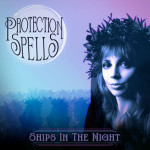
Alethea Leventhal’s "Protection Spells", released May 2nd on Metropolis Records under her Ships In The Night moniker, is an atmospheric dark-pop incantation that marries gothic synthwave with emotional ritual. A Charlottesville/NYC-based multi-instrumentalist, Leventhal channels her inner witch - the album’s core theme is emotional protection. It unfolds through ten tracks, beginning with the anthemic “Blood Harmony”, a self-described incantation meant to shield and reclaim empowerment, and “Some Of Those Dreams”, its dream-pop predecessor.
Sonically, "Protection Spells" spins like a nocturnal lucid dream: shimmering synth washes ride on taut, kinetic rhythms, lush enough to seduce but always anchored by a kind of moody resolve. Leventhal’s production balances polish and rawness - her voice glides between whispered vulnerability and assertive chant, setting up tracks like “Inside” or “Wells of Pain” that sound like cinematic vignettes about self-war and selfcare. There’s a surprising warmth amid the gothic shadows - a reminder that dark pop can both haunt and heal.
This is the artist’s third full-length, following "Myriologues" (2017) and "Latent Powers" (2021), and it reveals a deepening narrative arc: from grief to empowerment to ritualized self-preservation. The album even drops a cover - "Enjoy the Silence" - a nod to Depeche Mode’s influence, here played not as homage but as part of Leventhal’s own mythic language of stillness and sanctuary.
Critical responses see "Protection Spells" as a balm for troubling times - Electrowelt called it “a balm for a harrowing age”, while early reviews emphasize its “bewitching heights” and emotional ambition. Its nods to witch house, dream pop, and darkwave are expected, but the album is anchored by Leventhal’s songwriting and sound design - which summon strength without abandoning mystery.
There’s even drama in the rollout: the release was celebrated with a David Lynch–themed “Black Lodge Ball”, a fittingly surreal container for Leventhal’s cinematic approach. And with a Wave-Gotik-Treffen appearance on the horizon, she's stepping confidently into the goth-electronic central stage.
"Protection Spells" is not just a collection of songs - it’s a soundtrack for emotional resilience. It weaves ritual, atmosphere, and pop songwriting into a cohesive spell meant to empower, reassure, and maybe even stun. In a time when vulnerability often feels like exposure, Leventhal offers protection - and beauty - in equal measure.
In short: darkly luminescent, emotionally sophisticated, witchy without the winks - a record that feels like it was meant as much to heal its creator as to cast a spell over its listeners.
Sonically, "Protection Spells" spins like a nocturnal lucid dream: shimmering synth washes ride on taut, kinetic rhythms, lush enough to seduce but always anchored by a kind of moody resolve. Leventhal’s production balances polish and rawness - her voice glides between whispered vulnerability and assertive chant, setting up tracks like “Inside” or “Wells of Pain” that sound like cinematic vignettes about self-war and selfcare. There’s a surprising warmth amid the gothic shadows - a reminder that dark pop can both haunt and heal.
This is the artist’s third full-length, following "Myriologues" (2017) and "Latent Powers" (2021), and it reveals a deepening narrative arc: from grief to empowerment to ritualized self-preservation. The album even drops a cover - "Enjoy the Silence" - a nod to Depeche Mode’s influence, here played not as homage but as part of Leventhal’s own mythic language of stillness and sanctuary.
Critical responses see "Protection Spells" as a balm for troubling times - Electrowelt called it “a balm for a harrowing age”, while early reviews emphasize its “bewitching heights” and emotional ambition. Its nods to witch house, dream pop, and darkwave are expected, but the album is anchored by Leventhal’s songwriting and sound design - which summon strength without abandoning mystery.
There’s even drama in the rollout: the release was celebrated with a David Lynch–themed “Black Lodge Ball”, a fittingly surreal container for Leventhal’s cinematic approach. And with a Wave-Gotik-Treffen appearance on the horizon, she's stepping confidently into the goth-electronic central stage.
"Protection Spells" is not just a collection of songs - it’s a soundtrack for emotional resilience. It weaves ritual, atmosphere, and pop songwriting into a cohesive spell meant to empower, reassure, and maybe even stun. In a time when vulnerability often feels like exposure, Leventhal offers protection - and beauty - in equal measure.
In short: darkly luminescent, emotionally sophisticated, witchy without the winks - a record that feels like it was meant as much to heal its creator as to cast a spell over its listeners.
Then Comes Silence: Boxed
Artist: Then Comes Silence (@)
Title: Boxed
Format: Download Only (MP3 + Lossless)
Label: Metropolis (@)
Rated:
Title: Boxed
Format: Download Only (MP3 + Lossless)
Label: Metropolis (@)
Rated:
Ever wanted to peek into the bonus track vault without donating a kidney? "Boxed" is your ticket: the digital re-release of a seven-track treasure trove originally hiding in sold-out box sets from their 2022 album "Hunger". It’s post-punk goth with a Swedish chill - two Spanish ditties, two instrumental walk-ons, a remix, and an outtake - offering fans both nostalgia and novelty.
Very few EPs manage to feel exclusive and universal at once. "Boxed" knows its audience: hardcore Then Comes Silence followers. Instrumentals like "Spökenas Intåg" and "Skuggornas Intåg" could score a Scandinavian horror film you’ll never make - brooding, shadowy, understated cinematic ghoulishness. Then there’s the outtake "We Only Have So Long", which strips back the gothic veneer into an introspective synth-guitar ballad that, surprisingly, stirs without haunting.
Who knew goth post-punk sounded even more dramatic in Spanish? "Días y Años" and "Cebo" re-imagine their vast emotional landscapes through a new linguistic lens. The former collects longing and twilight in every verse; the latter pumps with rhythmic intensity, the metaphorical hook (“the bait lost its lure”) doubling as a poetic double-cross.
The "Blood Runs Cold (H Zombie Remix)" injects industrial electro haze that soundtracks late-night introspection. Meanwhile, "WLTN Unboxing" - an oddly playful instrumental - feels like a backstage pass rather than a song. It’s snug, low-key, a moment of off-stage intimacy amid the brooding of the rest of the EP.
Let’s be upfront: "Boxed" isn't trying to court new fans. It’s a curated packet for those who already own the map. Reviews are generally positive: fans appreciate the deeper insight into Then Comes Silence’s vault, while critics note it’s a release meant to tide listeners over between the band’s full-length cycles.
"Boxed" is not just b-sides and builder tracks - it’s a coherent satellite to Hunger, orbiting the same dark atmospherics while illuminating new corners of the band’s gothic-rock universe. It’s an insider’s delight, an off-menu tasting for fans who already loved Hunger and weren’t yet ready to say goodbye. For the rest of us: think of it as a midnight snack - rich, atmospheric, and just enough to whet the appetite for whatever comes next.
Perfect for darkwave enthusiasts, goth romantics, and anyone who wonders what extras lurk in the haunted attic of Swedish post-punk.
Very few EPs manage to feel exclusive and universal at once. "Boxed" knows its audience: hardcore Then Comes Silence followers. Instrumentals like "Spökenas Intåg" and "Skuggornas Intåg" could score a Scandinavian horror film you’ll never make - brooding, shadowy, understated cinematic ghoulishness. Then there’s the outtake "We Only Have So Long", which strips back the gothic veneer into an introspective synth-guitar ballad that, surprisingly, stirs without haunting.
Who knew goth post-punk sounded even more dramatic in Spanish? "Días y Años" and "Cebo" re-imagine their vast emotional landscapes through a new linguistic lens. The former collects longing and twilight in every verse; the latter pumps with rhythmic intensity, the metaphorical hook (“the bait lost its lure”) doubling as a poetic double-cross.
The "Blood Runs Cold (H Zombie Remix)" injects industrial electro haze that soundtracks late-night introspection. Meanwhile, "WLTN Unboxing" - an oddly playful instrumental - feels like a backstage pass rather than a song. It’s snug, low-key, a moment of off-stage intimacy amid the brooding of the rest of the EP.
Let’s be upfront: "Boxed" isn't trying to court new fans. It’s a curated packet for those who already own the map. Reviews are generally positive: fans appreciate the deeper insight into Then Comes Silence’s vault, while critics note it’s a release meant to tide listeners over between the band’s full-length cycles.
"Boxed" is not just b-sides and builder tracks - it’s a coherent satellite to Hunger, orbiting the same dark atmospherics while illuminating new corners of the band’s gothic-rock universe. It’s an insider’s delight, an off-menu tasting for fans who already loved Hunger and weren’t yet ready to say goodbye. For the rest of us: think of it as a midnight snack - rich, atmospheric, and just enough to whet the appetite for whatever comes next.
Perfect for darkwave enthusiasts, goth romantics, and anyone who wonders what extras lurk in the haunted attic of Swedish post-punk.
Thin Eater: s/t

From Gothenburg, Sweden, comes Thin Eater, and their brand new self-titled album. The band is Anders Calderon - lead vocals and keyboards, and Martin Claesson - guitar and keyboards. The album is 12 tracks of gothic/darkwave goodness in 46 minutes. The album opens with a nice, melancholy dark track titled "Misery" then shoots off into an old-school rocker full of 80s/90s energy called "Silently Quitting At the Speed of Light." Vocals are stereotypically gothy, owing a bit to Peter Murphy, Cruxshadows and London After Midnight, while not sounding much like them. Lots of flanging on Claesson's guitar, another gotrh hallmark. Song 3 - "Amphibian Sheep with 13 Heads (A Proposal)" has an alt-western sound. No drummer or percussion programmer was mentioned so I guess there is a "Dr. Avalanche" SOM style drum machine in use. While the main thrust of the band seems to be guitar-based, there is a healthy dose of electro injected, and it comes across quite nicely on "You Are A Star Now." The songs are varied enough on this album to make it interesting throughout, in spite of some similar sounding tracks. Thematically, this is typical black-clad vintage goth stuff - songs such as "The Landala Vampire," "Undead," and "Release The Children of the Night" tell you all you need to know about which side of the grave these guys are on. Funny though, they don't look very gothic, but sure sound it. I don't know how many artists are still doing this kind of music but I imagine not as may as ten or twenty years ago. There are a lot of good songs on this album and I'd be hard-pressed to pick a single, but if I had to, it would be the aforementioned "Silently Quitting At the Speed of Light." Its hook may not be as strong as its vibe, but it's still a really good song. They say the album was released on Leptura Records, but I can't find a website for the label so I guess it's self-released. Still, Thin Eater is definitely worth looking into.
INsCissorS: The Wordless God II (And Other Cinematic Rituals)
Artist: INsCissorS
Title: The Wordless God II (And Other Cinematic Rituals)
Format: Tape + Download
Label: Zoharum (http://zoharum.com/) (@)
Rated:
Title: The Wordless God II (And Other Cinematic Rituals)
Format: Tape + Download
Label: Zoharum (http://zoharum.com/) (@)
Rated:
God spoke, and the world began. But what if He didn’t? What if, instead of booming declarations and divinely dictated blueprints, the cosmos was birthed from silence - wordless, weighty, brooding? That’s the tantalising premise behind "The Wordless God II", the latest ceremonial drift from Greek project InScissors, now reissued on tape by Polish label Zoharum, after a previous CD birth via FYC Records.
Far from being a mere sequel by name, "The Wordless God II" unearths the bones and blood of its 2010 predecessor ("The Veritable Essence...") and rebuilds them with a far more elaborate ritual toolkit. This isn’t your standard dark ambient drift; this is ambient cinema dragged through the psychological theatre of a scorched liturgy. Imagine Ennio Morricone suffering an existential crisis inside a crumbling Orthodox basilica, and you're somewhere in the right astral postcode.
Vincent Andelmoth, the mind behind InScissors, isn’t interested in minimalist sketches or formless fog. Here, ten long-form movements snake through time with baroque precision: strings that sing like ancient psalms, vocal incantations that hover between chant and subconscious exorcism, and layers of synth and acoustics that shift like tectonic plates in slow agony. It's not ambient that disappears into the wallpaper - it confronts, demands, and sometimes seduces with the gravity of forgotten rituals.
There are moments of hushed beauty, sure - but they don’t arrive to comfort. They arrive like dreams do: sideways, symbolic, dressed in tattered robes of meaning. And then, out of nowhere, an ominous swell, a sudden choral exhale, or a percussive texture kicks in - not to wake you up, but to deepen the dream. It’s all very cinematic, but not the cinema of popcorn and plot. Think of Tarkovsky locked in a cathedral with a 4-track tape machine and a metaphysical hangover.
What's striking, and perhaps underappreciated, is how InScissors doesn’t just construct sound environments, but frames them with the careful dramaturgy of someone who’s seen too much. The compositions are rich in both spatial awareness and narrative arc. Even the silence between the drones feels carefully edited - as if edited by absence itself.
At over 70 minutes, this might seem like a heavy pilgrimage. But boredom never enters the chapel. The album morphs constantly - like a dark room gradually revealing forgotten frescoes the longer you stare. That’s the cinematic part: not filmic imitation, but the skill of timed revelation. One moment you’re drifting in a velvet void, the next you’re bathed in distorted scripture.
Is "The Wordless God II" nihilistic? Spiritual? Anti-theological? Perhaps all three, or none. The album poses a question wrapped in poetic logic: "What if creation was never spoken aloud? Would we still have myths? Or just machines and regrets?" The music doesn’t answer. It just pulls you deeper into the possibility.
Zoharum’s decision to give this release a tape edition feels poetic in itself - a format that crackles and frays at the edges, just like the divine silence it evokes.
In the end, "The Wordless God II" doesn’t offer salvation, but it does offer a score to accompany your descent into meaning’s shadow. If that sounds like your kind of sacred, then welcome to the altar.
Far from being a mere sequel by name, "The Wordless God II" unearths the bones and blood of its 2010 predecessor ("The Veritable Essence...") and rebuilds them with a far more elaborate ritual toolkit. This isn’t your standard dark ambient drift; this is ambient cinema dragged through the psychological theatre of a scorched liturgy. Imagine Ennio Morricone suffering an existential crisis inside a crumbling Orthodox basilica, and you're somewhere in the right astral postcode.
Vincent Andelmoth, the mind behind InScissors, isn’t interested in minimalist sketches or formless fog. Here, ten long-form movements snake through time with baroque precision: strings that sing like ancient psalms, vocal incantations that hover between chant and subconscious exorcism, and layers of synth and acoustics that shift like tectonic plates in slow agony. It's not ambient that disappears into the wallpaper - it confronts, demands, and sometimes seduces with the gravity of forgotten rituals.
There are moments of hushed beauty, sure - but they don’t arrive to comfort. They arrive like dreams do: sideways, symbolic, dressed in tattered robes of meaning. And then, out of nowhere, an ominous swell, a sudden choral exhale, or a percussive texture kicks in - not to wake you up, but to deepen the dream. It’s all very cinematic, but not the cinema of popcorn and plot. Think of Tarkovsky locked in a cathedral with a 4-track tape machine and a metaphysical hangover.
What's striking, and perhaps underappreciated, is how InScissors doesn’t just construct sound environments, but frames them with the careful dramaturgy of someone who’s seen too much. The compositions are rich in both spatial awareness and narrative arc. Even the silence between the drones feels carefully edited - as if edited by absence itself.
At over 70 minutes, this might seem like a heavy pilgrimage. But boredom never enters the chapel. The album morphs constantly - like a dark room gradually revealing forgotten frescoes the longer you stare. That’s the cinematic part: not filmic imitation, but the skill of timed revelation. One moment you’re drifting in a velvet void, the next you’re bathed in distorted scripture.
Is "The Wordless God II" nihilistic? Spiritual? Anti-theological? Perhaps all three, or none. The album poses a question wrapped in poetic logic: "What if creation was never spoken aloud? Would we still have myths? Or just machines and regrets?" The music doesn’t answer. It just pulls you deeper into the possibility.
Zoharum’s decision to give this release a tape edition feels poetic in itself - a format that crackles and frays at the edges, just like the divine silence it evokes.
In the end, "The Wordless God II" doesn’t offer salvation, but it does offer a score to accompany your descent into meaning’s shadow. If that sounds like your kind of sacred, then welcome to the altar.
Dalila Kayros: Khthonie

Artist: Dalila Kayros (@)
Title: Khthonie
Format: CD & 12" + Download
Label: Subsound Records (@)
Rated:
Title: Khthonie
Format: CD & 12" + Download
Label: Subsound Records (@)
Rated:
From the depths of Sardinia's ancient landscapes emerges Khthonie, the latest sonic odyssey by avant-garde vocalist and composer Dalila Kayros, in collaboration with electronic alchemist Danilo Casti. This album is not merely a collection of tracks; it's a visceral journey into the underworld, drawing inspiration from chthonian deities of Greek mythology - primordial forces that predate the very formation of the earth.
Kayros, known for her boundary-pushing vocal techniques and conceptual artistry, employs her voice as a multifaceted instrument - screaming, whispering, and chanting - to convey the tumultuous emotions of our apocalyptic times. Her approach challenges traditional notions of beauty in music, asserting that the voice's primary role is to express the rawness of our surroundings.
The album opens with "Nea", a minimalist piece that uses restraint as a form of power. The sparse electronics and haunting vocals create a sense of unease, setting the tone for the journey ahead.
"Sakramonade" follows, blending Italian and Sardinian languages to craft a spell-like invocation. The lyrics speak of transformation and liberation, with lines like "Sakra sangre d’ira scura" (sacred blood of dark fury) emphasizing the album's themes of inner turmoil and rebirth.
In "Mitza", inspired by Sardinian incubation rites, Kayros delves into the unconscious, using dreamlike melodies and unsettling rhythms to explore the source of nightmares and visions.
"Leviatan" and "Lamia" showcase Kayros' vocal versatility, embodying chaos, mourning, and prophecy. The tracks evoke images of ancient rituals and forgotten goddesses, with the music's feral rhythms and industrial growls enhancing the otherworldly atmosphere.
The album culminates with "Corpus Sonorum", a choral piece that serves as a reverent conclusion to the journey. Incorporating a quote from Judith Butler, the track reflects on the liminal space between past and future, urging listeners to embrace transformation and the unknown.
Khthonie is a daring exploration of sound and emotion, challenging listeners to confront the darkness within and around them. It's an album that doesn't just entertain - it transforms.
Kayros, known for her boundary-pushing vocal techniques and conceptual artistry, employs her voice as a multifaceted instrument - screaming, whispering, and chanting - to convey the tumultuous emotions of our apocalyptic times. Her approach challenges traditional notions of beauty in music, asserting that the voice's primary role is to express the rawness of our surroundings.
The album opens with "Nea", a minimalist piece that uses restraint as a form of power. The sparse electronics and haunting vocals create a sense of unease, setting the tone for the journey ahead.
"Sakramonade" follows, blending Italian and Sardinian languages to craft a spell-like invocation. The lyrics speak of transformation and liberation, with lines like "Sakra sangre d’ira scura" (sacred blood of dark fury) emphasizing the album's themes of inner turmoil and rebirth.
In "Mitza", inspired by Sardinian incubation rites, Kayros delves into the unconscious, using dreamlike melodies and unsettling rhythms to explore the source of nightmares and visions.
"Leviatan" and "Lamia" showcase Kayros' vocal versatility, embodying chaos, mourning, and prophecy. The tracks evoke images of ancient rituals and forgotten goddesses, with the music's feral rhythms and industrial growls enhancing the otherworldly atmosphere.
The album culminates with "Corpus Sonorum", a choral piece that serves as a reverent conclusion to the journey. Incorporating a quote from Judith Butler, the track reflects on the liminal space between past and future, urging listeners to embrace transformation and the unknown.
Khthonie is a daring exploration of sound and emotion, challenging listeners to confront the darkness within and around them. It's an album that doesn't just entertain - it transforms.