
Browse by Genre
Industrial Music / Industrial Metal / Aggro Industrial / Electro Metal
Industrial Noise / Power Noise / Harsh Noise
Synth Pop / Electro Pop / Synth-Electronica
Techno / Trance / Goa / Drum'n'Bass / Jungle / Tribal / Trip-Hop
Ambient / Electronica / Ethereal / Dub / Soundscapes / Abstract
Experimental / Avantgarde / Weird & Wired / Glitch / Noise / Field Recording
Dark / Gothic / Wave / New Wave / Dark Wave / Industrial Gothic
New Music / Downtown / Avantgarde Jazz / New Classical / World
Search Reviews
Music Reviews
J?rgen Tr?en & Stein Urheim: Galant Galakse

Artist: J?rgen Tr?en & Stein Urheim
Title: Galant Galakse
Format: 12" + Download
Label: Action Jazz (@)
Rated:

Title: Galant Galakse
Format: 12" + Download
Label: Action Jazz (@)
Rated:
Galant Galakse is a record that insists the cosmos is best understood not through telescopes but through duct-taped oscillators, rescued zithers, and the odd harmonica dragged through a black hole. Jørgen Træen and Stein Urheim, two Norwegians with an unholy amount of sonic toys, treat this album less like a set of tracks and more like a pair of interstellar expeditions where the laws of gravity have been mischievously rewritten.
If their first duo outing, "Krympende klode", was the shock of discovering a new planet, "Galant galakse" is the delight of colonizing it with unlikely flora and fauna. Across two extended pieces - "Pønskepause" and "Urpust" - they fold together modular burbles, cosmic hums, woodsy flutes, alien guitar voicings, and percussive shrapnel in ways that feel both anarchic and strangely coherent. One minute you’re in a medieval folk tune with a tamboura drone, the next you’re eavesdropping on Delia Derbyshire’s ghost arguing with Harry Partch’s instruments in a forest clearing.
It’s not “songs” we’re dealing with here, but long-form sonic narratives - elastic, unpredictable, full of interruptions that seem whimsical until you realize they were the point all along. The duo’s trick is balance: Træen’s electronics provide the magnetic field, Urheim’s strings and reeds the wandering comets, and together they keep your ears chasing unexpected orbits. Henry Kaiser briefly swoops in on guitar like a friendly meteorite, just to prove there’s always room for another eccentric body in this constellation.
There are no lyrics, but the album still “sings”. The instruments speak in tongues: a synth murmurs in binary prayer, a pocket trumpet wheezes like a drunken prophet, guitars slip into accents borrowed from continents that don’t exist. The voices of the galaxy are all here, just wearing new disguises.
The irony, of course, is in the title: this galaxy isn’t particularly “galant”. It’s awkward, messy, delightfully rude to convention - yet charming precisely because of its refusal to behave. Træen and Urheim aren’t writing a polite astronomical report; they’re doodling spirals in the margins of the universe and inviting us to get lost in them.
This isn’t background music for stargazing. It’s foreground music for falling headfirst into the stars and realizing, mid-spin, that chaos can be more elegant than order.
If their first duo outing, "Krympende klode", was the shock of discovering a new planet, "Galant galakse" is the delight of colonizing it with unlikely flora and fauna. Across two extended pieces - "Pønskepause" and "Urpust" - they fold together modular burbles, cosmic hums, woodsy flutes, alien guitar voicings, and percussive shrapnel in ways that feel both anarchic and strangely coherent. One minute you’re in a medieval folk tune with a tamboura drone, the next you’re eavesdropping on Delia Derbyshire’s ghost arguing with Harry Partch’s instruments in a forest clearing.
It’s not “songs” we’re dealing with here, but long-form sonic narratives - elastic, unpredictable, full of interruptions that seem whimsical until you realize they were the point all along. The duo’s trick is balance: Træen’s electronics provide the magnetic field, Urheim’s strings and reeds the wandering comets, and together they keep your ears chasing unexpected orbits. Henry Kaiser briefly swoops in on guitar like a friendly meteorite, just to prove there’s always room for another eccentric body in this constellation.
There are no lyrics, but the album still “sings”. The instruments speak in tongues: a synth murmurs in binary prayer, a pocket trumpet wheezes like a drunken prophet, guitars slip into accents borrowed from continents that don’t exist. The voices of the galaxy are all here, just wearing new disguises.
The irony, of course, is in the title: this galaxy isn’t particularly “galant”. It’s awkward, messy, delightfully rude to convention - yet charming precisely because of its refusal to behave. Træen and Urheim aren’t writing a polite astronomical report; they’re doodling spirals in the margins of the universe and inviting us to get lost in them.
This isn’t background music for stargazing. It’s foreground music for falling headfirst into the stars and realizing, mid-spin, that chaos can be more elegant than order.
Seth Thorn: a curious doubling of terms
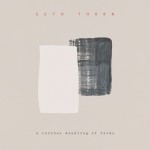
Artist: Seth Thorn (@)
Title: a curious doubling of terms
Format: Download Only (MP3 + Lossless)
Label: Audiobulb (@)
Rated:
Title: a curious doubling of terms
Format: Download Only (MP3 + Lossless)
Label: Audiobulb (@)
Rated:
Seth Thorn’s "a curious doubling of terms" feels like a diary written half in moss, half in binary. A violinist by training, an academic by trade, and a coder by obsession, Thorn builds music as if trying to braid memory with circuitry. This debut solo work, released via Audiobulb, leans into his dual identity: the human breath of bowed strings rubbing against the algorithmic churn of his self-built Haze system, a tool for conjuring lo-fi fog like a machine dreaming of Debussy in slow decay.
The album begins with "necarney creek", where water seems to seep through the strings, a merging of creek and ocean rendered not in field recordings but in timbral suggestion. It’s as if the violin, untethered from concert tradition, had wandered into the surf to test its resonance against salt air. From there, Thorn oscillates between intimacy ("the unspoken", barely two minutes of fragile tone that feels like a thought left unsent) and abstraction ("machinic heterogeneticist", whose title alone promises the kind of music that makes you wonder if your hard drive is about to weep).
Titles like "old degrowth forest" and "friends show" the way betray his environmental and humanistic leanings: these are not just code-and-bow exercises but philosophical sketches, touching on sustainability, community, and the uneasy romance between organic time and mechanical process. By the closing "morbid symptomatic logic", Thorn seems to suggest that even the most lyrical systems collapse under their own rules - entropy dressed as a coda.
There are no lyrics here, yet the music speaks with a sort of textual density: each piece feels like a sentence, or perhaps a fragment, in a longer argument about what it means to be human inside a machinic age. Funny enough, the album’s title could describe Thorn himself - both academic and improviser, violinist and coder, romantic and logician. "A curious doubling of terms" is less a debut than a paradox, and in embracing paradox it finds its own fragile coherence.
The album begins with "necarney creek", where water seems to seep through the strings, a merging of creek and ocean rendered not in field recordings but in timbral suggestion. It’s as if the violin, untethered from concert tradition, had wandered into the surf to test its resonance against salt air. From there, Thorn oscillates between intimacy ("the unspoken", barely two minutes of fragile tone that feels like a thought left unsent) and abstraction ("machinic heterogeneticist", whose title alone promises the kind of music that makes you wonder if your hard drive is about to weep).
Titles like "old degrowth forest" and "friends show" the way betray his environmental and humanistic leanings: these are not just code-and-bow exercises but philosophical sketches, touching on sustainability, community, and the uneasy romance between organic time and mechanical process. By the closing "morbid symptomatic logic", Thorn seems to suggest that even the most lyrical systems collapse under their own rules - entropy dressed as a coda.
There are no lyrics here, yet the music speaks with a sort of textual density: each piece feels like a sentence, or perhaps a fragment, in a longer argument about what it means to be human inside a machinic age. Funny enough, the album’s title could describe Thorn himself - both academic and improviser, violinist and coder, romantic and logician. "A curious doubling of terms" is less a debut than a paradox, and in embracing paradox it finds its own fragile coherence.
RG: Premier rapport


RG’s "Premier rapport" is the kind of “report” no bureaucrat would dare file: five pages of sonic graffiti scrawled across the margins of free improvisation, where saxophone and modular synth keep trying to seduce, sabotage, or simply outwit each other. Forget the suit-and-tie connotations of Renseignements Généraux - here, RG is not surveillance but exposure: two musicians showing us the mess, the pulse, the hesitation, the crash, as if saying this is what happens when Lyon meets Paris, when reeds meet wires.
Quentin Rollet has long since unlearned the polite lessons of the conservatory, using his alto and sopranino saxophones not as melodic instruments but as mood disruptors - yelps, murmurs, strangled songs that sometimes recall free jazz, sometimes the hiss of a radiator in revolt. François Galland, once a teenage punk drummer, now wires his own labyrinth in modular form, a system designed for failure as much as for discovery. His synth doesn’t “accompany” so much as destabilize: a swarm of glitches can turn into a cathedral drone, or collapse into silence, leaving the saxophone to mutter like a witness refusing to testify.
The track titles suggest a dry humor - "Bisou électronique" is anything but tender, a kiss that crackles with static. "Commune mesure" stretches past twelve minutes, but there’s nothing measured about it, unless you count the oscillations of chaos. "Lune de septembre" is the centerpiece, a seventeen-minute séance where Galland’s machine breath seems to pull Rollet’s lines into orbit, both players circling an invisible body. "Simples amis" ironically proves nothing is simple between friends - especially when one wields a modular system like a box of unstable fireworks. And then "Contrevent", a final gust of just ninety seconds, like slamming the folder shut after too much disclosure.
There are no lyrics, but the “text” is there in the interplay: accusations, jokes, reconciliations, pauses that say more than words. The report they file is less intelligence-gathering than emotional intelligence: what happens when two sensibilities, equally restless, share a stage and decide not to play it safe.
Listening to Premier rapport is like eavesdropping on a secret conversation, only to realize the secret is that there is none—they’re making it all up, in real time, with the joy and peril that entails. If the authorities really were listening, they’d probably file it under “subversive”. And rightly so.
Quentin Rollet has long since unlearned the polite lessons of the conservatory, using his alto and sopranino saxophones not as melodic instruments but as mood disruptors - yelps, murmurs, strangled songs that sometimes recall free jazz, sometimes the hiss of a radiator in revolt. François Galland, once a teenage punk drummer, now wires his own labyrinth in modular form, a system designed for failure as much as for discovery. His synth doesn’t “accompany” so much as destabilize: a swarm of glitches can turn into a cathedral drone, or collapse into silence, leaving the saxophone to mutter like a witness refusing to testify.
The track titles suggest a dry humor - "Bisou électronique" is anything but tender, a kiss that crackles with static. "Commune mesure" stretches past twelve minutes, but there’s nothing measured about it, unless you count the oscillations of chaos. "Lune de septembre" is the centerpiece, a seventeen-minute séance where Galland’s machine breath seems to pull Rollet’s lines into orbit, both players circling an invisible body. "Simples amis" ironically proves nothing is simple between friends - especially when one wields a modular system like a box of unstable fireworks. And then "Contrevent", a final gust of just ninety seconds, like slamming the folder shut after too much disclosure.
There are no lyrics, but the “text” is there in the interplay: accusations, jokes, reconciliations, pauses that say more than words. The report they file is less intelligence-gathering than emotional intelligence: what happens when two sensibilities, equally restless, share a stage and decide not to play it safe.
Listening to Premier rapport is like eavesdropping on a secret conversation, only to realize the secret is that there is none—they’re making it all up, in real time, with the joy and peril that entails. If the authorities really were listening, they’d probably file it under “subversive”. And rightly so.
Christian Wallumr?d: Percolation
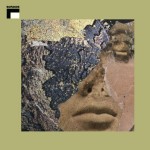
Christian Wallumrød’s "Percolation" (Sofa, 2025) is the kind of record that tiptoes into your ear rather than barging through the door. A pianist who has made a career out of making silence feel like an instrument in its own right, Wallumrød here seems to let sound drip and trickle, as though testing how little is needed to make music happen. It’s both modest and mischievous: hesitant notes, awkward stumbles, ghostly synths, even an autoharp drifting in like a curious stranger. And yet, amid the false starts and cracked edges, there’s melody - sometimes fragile as a folksong remembered in fragments, sometimes slyly grinning like a Monk riff gone Nordic.
What makes "Percolation" so magnetic is its refusal to choose between beauty and oddity. “Ny gitar” and “The sing” could almost be hymns, stripped to their bones, while “Higher than your gluteus” throws us into a swampy New Orleans groove before handing the reins to a squelchy acid-house beat that sounds like someone spilled coffee on the sequencer. It’s playful, a little irreverent, but also tender: music that doesn’t aim for perfection so much as presence.
Across his long and uncategorizable career - dancing between jazz, folk, new music, improvisation, and whatever else refuses to be neatly boxed - Wallumrød has built a language where silence and noise, virtuosity and clumsiness, history and future all keep each other in check. "Percolation" distills that language into its purest essence, neither a departure nor a repetition, but a refinement: a filtering, a trickling through. Like the title suggests, the record seeps slowly into you, until you realize you’re humming along to something that may or may not be a melody, but is definitely Christian Wallumrød.
What makes "Percolation" so magnetic is its refusal to choose between beauty and oddity. “Ny gitar” and “The sing” could almost be hymns, stripped to their bones, while “Higher than your gluteus” throws us into a swampy New Orleans groove before handing the reins to a squelchy acid-house beat that sounds like someone spilled coffee on the sequencer. It’s playful, a little irreverent, but also tender: music that doesn’t aim for perfection so much as presence.
Across his long and uncategorizable career - dancing between jazz, folk, new music, improvisation, and whatever else refuses to be neatly boxed - Wallumrød has built a language where silence and noise, virtuosity and clumsiness, history and future all keep each other in check. "Percolation" distills that language into its purest essence, neither a departure nor a repetition, but a refinement: a filtering, a trickling through. Like the title suggests, the record seeps slowly into you, until you realize you’re humming along to something that may or may not be a melody, but is definitely Christian Wallumrød.
Kory Reeder: In Place

Kory Reeder’s "In Place" is less an album than a topographical map of silence, traced with pencil-thin lines of sound. It returns to his long-running Grid Series - compositions structured like graph paper, where performers move across coordinates of pitch and texture rather than following a linear script. Think Agnes Martin if she’d swapped canvas for notation, grids for sound. Here, Reeder sits at the piano with Kathleen Crabtree and Michael Moore on violas, and together they turn the barest gestures into entire landscapes.
The three pieces - "Landscape Study", "Field", and "Present Tense" - are studies in patience, in the art of lingering. "Landscape Study" sets instruments in “sustaining” and “non-sustaining” camps, a sonic ecology where long tones become terrain and small interruptions mimic birds, shadows, passing clouds. "Field" folds in recordings from Reeder’s native Nebraska, letting the hum of the outside world merge with the fragility of viola and piano. The result is not nostalgic but startlingly present, as if silence itself were given a voice. "Present Tense", true to its name, resists completion altogether: a grid of possibilities walked through differently each time, leaving behind only traces, never the whole.
Reeder, a composer as comfortable in academic halls as in basements and noise collectives, has always treated music as a social act - a negotiation between freedom and frame, between performer choice and composer intent. His text-based scores ask players to listen harder than they play, to find meaning in the gaps. On "In Place", that ethos is almost radical: this is music that refuses spectacle, trading drama for depth. It asks the listener to stay with it, to surrender the instinct for climax and resolution, and to notice how repetition, tiny and shifting, builds its own form of beauty.
Funny enough, despite all the grids and rules, what you remember isn’t the structure but the afterglow - the aura of tones colliding and vanishing, the sensation that time slowed and rearranged itself. "In Place" might frustrate the restless, but for those willing to lean in, it offers the rarest of luxuries: music that doesn’t shout at you, but patiently teaches you how to hear.
The three pieces - "Landscape Study", "Field", and "Present Tense" - are studies in patience, in the art of lingering. "Landscape Study" sets instruments in “sustaining” and “non-sustaining” camps, a sonic ecology where long tones become terrain and small interruptions mimic birds, shadows, passing clouds. "Field" folds in recordings from Reeder’s native Nebraska, letting the hum of the outside world merge with the fragility of viola and piano. The result is not nostalgic but startlingly present, as if silence itself were given a voice. "Present Tense", true to its name, resists completion altogether: a grid of possibilities walked through differently each time, leaving behind only traces, never the whole.
Reeder, a composer as comfortable in academic halls as in basements and noise collectives, has always treated music as a social act - a negotiation between freedom and frame, between performer choice and composer intent. His text-based scores ask players to listen harder than they play, to find meaning in the gaps. On "In Place", that ethos is almost radical: this is music that refuses spectacle, trading drama for depth. It asks the listener to stay with it, to surrender the instinct for climax and resolution, and to notice how repetition, tiny and shifting, builds its own form of beauty.
Funny enough, despite all the grids and rules, what you remember isn’t the structure but the afterglow - the aura of tones colliding and vanishing, the sensation that time slowed and rearranged itself. "In Place" might frustrate the restless, but for those willing to lean in, it offers the rarest of luxuries: music that doesn’t shout at you, but patiently teaches you how to hear.