
Browse by Genre
Industrial Music / Industrial Metal / Aggro Industrial / Electro Metal
Industrial Noise / Power Noise / Harsh Noise
Synth Pop / Electro Pop / Synth-Electronica
Techno / Trance / Goa / Drum'n'Bass / Jungle / Tribal / Trip-Hop
Ambient / Electronica / Ethereal / Dub / Soundscapes / Abstract
Experimental / Avantgarde / Weird & Wired / Glitch / Noise / Field Recording
Dark / Gothic / Wave / New Wave / Dark Wave / Industrial Gothic
New Music / Downtown / Avantgarde Jazz / New Classical / World
Search Reviews
Music Reviews
RG: Premier rapport


RG’s "Premier rapport" is the kind of “report” no bureaucrat would dare file: five pages of sonic graffiti scrawled across the margins of free improvisation, where saxophone and modular synth keep trying to seduce, sabotage, or simply outwit each other. Forget the suit-and-tie connotations of Renseignements Généraux - here, RG is not surveillance but exposure: two musicians showing us the mess, the pulse, the hesitation, the crash, as if saying this is what happens when Lyon meets Paris, when reeds meet wires.
Quentin Rollet has long since unlearned the polite lessons of the conservatory, using his alto and sopranino saxophones not as melodic instruments but as mood disruptors - yelps, murmurs, strangled songs that sometimes recall free jazz, sometimes the hiss of a radiator in revolt. François Galland, once a teenage punk drummer, now wires his own labyrinth in modular form, a system designed for failure as much as for discovery. His synth doesn’t “accompany” so much as destabilize: a swarm of glitches can turn into a cathedral drone, or collapse into silence, leaving the saxophone to mutter like a witness refusing to testify.
The track titles suggest a dry humor - "Bisou électronique" is anything but tender, a kiss that crackles with static. "Commune mesure" stretches past twelve minutes, but there’s nothing measured about it, unless you count the oscillations of chaos. "Lune de septembre" is the centerpiece, a seventeen-minute séance where Galland’s machine breath seems to pull Rollet’s lines into orbit, both players circling an invisible body. "Simples amis" ironically proves nothing is simple between friends - especially when one wields a modular system like a box of unstable fireworks. And then "Contrevent", a final gust of just ninety seconds, like slamming the folder shut after too much disclosure.
There are no lyrics, but the “text” is there in the interplay: accusations, jokes, reconciliations, pauses that say more than words. The report they file is less intelligence-gathering than emotional intelligence: what happens when two sensibilities, equally restless, share a stage and decide not to play it safe.
Listening to Premier rapport is like eavesdropping on a secret conversation, only to realize the secret is that there is none—they’re making it all up, in real time, with the joy and peril that entails. If the authorities really were listening, they’d probably file it under “subversive”. And rightly so.
Quentin Rollet has long since unlearned the polite lessons of the conservatory, using his alto and sopranino saxophones not as melodic instruments but as mood disruptors - yelps, murmurs, strangled songs that sometimes recall free jazz, sometimes the hiss of a radiator in revolt. François Galland, once a teenage punk drummer, now wires his own labyrinth in modular form, a system designed for failure as much as for discovery. His synth doesn’t “accompany” so much as destabilize: a swarm of glitches can turn into a cathedral drone, or collapse into silence, leaving the saxophone to mutter like a witness refusing to testify.
The track titles suggest a dry humor - "Bisou électronique" is anything but tender, a kiss that crackles with static. "Commune mesure" stretches past twelve minutes, but there’s nothing measured about it, unless you count the oscillations of chaos. "Lune de septembre" is the centerpiece, a seventeen-minute séance where Galland’s machine breath seems to pull Rollet’s lines into orbit, both players circling an invisible body. "Simples amis" ironically proves nothing is simple between friends - especially when one wields a modular system like a box of unstable fireworks. And then "Contrevent", a final gust of just ninety seconds, like slamming the folder shut after too much disclosure.
There are no lyrics, but the “text” is there in the interplay: accusations, jokes, reconciliations, pauses that say more than words. The report they file is less intelligence-gathering than emotional intelligence: what happens when two sensibilities, equally restless, share a stage and decide not to play it safe.
Listening to Premier rapport is like eavesdropping on a secret conversation, only to realize the secret is that there is none—they’re making it all up, in real time, with the joy and peril that entails. If the authorities really were listening, they’d probably file it under “subversive”. And rightly so.
Christian Wallumr?d: Percolation
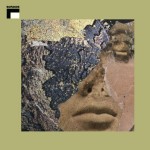
Christian Wallumrød’s "Percolation" (Sofa, 2025) is the kind of record that tiptoes into your ear rather than barging through the door. A pianist who has made a career out of making silence feel like an instrument in its own right, Wallumrød here seems to let sound drip and trickle, as though testing how little is needed to make music happen. It’s both modest and mischievous: hesitant notes, awkward stumbles, ghostly synths, even an autoharp drifting in like a curious stranger. And yet, amid the false starts and cracked edges, there’s melody - sometimes fragile as a folksong remembered in fragments, sometimes slyly grinning like a Monk riff gone Nordic.
What makes "Percolation" so magnetic is its refusal to choose between beauty and oddity. “Ny gitar” and “The sing” could almost be hymns, stripped to their bones, while “Higher than your gluteus” throws us into a swampy New Orleans groove before handing the reins to a squelchy acid-house beat that sounds like someone spilled coffee on the sequencer. It’s playful, a little irreverent, but also tender: music that doesn’t aim for perfection so much as presence.
Across his long and uncategorizable career - dancing between jazz, folk, new music, improvisation, and whatever else refuses to be neatly boxed - Wallumrød has built a language where silence and noise, virtuosity and clumsiness, history and future all keep each other in check. "Percolation" distills that language into its purest essence, neither a departure nor a repetition, but a refinement: a filtering, a trickling through. Like the title suggests, the record seeps slowly into you, until you realize you’re humming along to something that may or may not be a melody, but is definitely Christian Wallumrød.
What makes "Percolation" so magnetic is its refusal to choose between beauty and oddity. “Ny gitar” and “The sing” could almost be hymns, stripped to their bones, while “Higher than your gluteus” throws us into a swampy New Orleans groove before handing the reins to a squelchy acid-house beat that sounds like someone spilled coffee on the sequencer. It’s playful, a little irreverent, but also tender: music that doesn’t aim for perfection so much as presence.
Across his long and uncategorizable career - dancing between jazz, folk, new music, improvisation, and whatever else refuses to be neatly boxed - Wallumrød has built a language where silence and noise, virtuosity and clumsiness, history and future all keep each other in check. "Percolation" distills that language into its purest essence, neither a departure nor a repetition, but a refinement: a filtering, a trickling through. Like the title suggests, the record seeps slowly into you, until you realize you’re humming along to something that may or may not be a melody, but is definitely Christian Wallumrød.
Kory Reeder: In Place
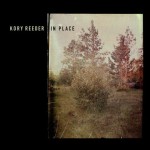
Kory Reeder’s "In Place" is less an album than a topographical map of silence, traced with pencil-thin lines of sound. It returns to his long-running Grid Series - compositions structured like graph paper, where performers move across coordinates of pitch and texture rather than following a linear script. Think Agnes Martin if she’d swapped canvas for notation, grids for sound. Here, Reeder sits at the piano with Kathleen Crabtree and Michael Moore on violas, and together they turn the barest gestures into entire landscapes.
The three pieces - "Landscape Study", "Field", and "Present Tense" - are studies in patience, in the art of lingering. "Landscape Study" sets instruments in “sustaining” and “non-sustaining” camps, a sonic ecology where long tones become terrain and small interruptions mimic birds, shadows, passing clouds. "Field" folds in recordings from Reeder’s native Nebraska, letting the hum of the outside world merge with the fragility of viola and piano. The result is not nostalgic but startlingly present, as if silence itself were given a voice. "Present Tense", true to its name, resists completion altogether: a grid of possibilities walked through differently each time, leaving behind only traces, never the whole.
Reeder, a composer as comfortable in academic halls as in basements and noise collectives, has always treated music as a social act - a negotiation between freedom and frame, between performer choice and composer intent. His text-based scores ask players to listen harder than they play, to find meaning in the gaps. On "In Place", that ethos is almost radical: this is music that refuses spectacle, trading drama for depth. It asks the listener to stay with it, to surrender the instinct for climax and resolution, and to notice how repetition, tiny and shifting, builds its own form of beauty.
Funny enough, despite all the grids and rules, what you remember isn’t the structure but the afterglow - the aura of tones colliding and vanishing, the sensation that time slowed and rearranged itself. "In Place" might frustrate the restless, but for those willing to lean in, it offers the rarest of luxuries: music that doesn’t shout at you, but patiently teaches you how to hear.
The three pieces - "Landscape Study", "Field", and "Present Tense" - are studies in patience, in the art of lingering. "Landscape Study" sets instruments in “sustaining” and “non-sustaining” camps, a sonic ecology where long tones become terrain and small interruptions mimic birds, shadows, passing clouds. "Field" folds in recordings from Reeder’s native Nebraska, letting the hum of the outside world merge with the fragility of viola and piano. The result is not nostalgic but startlingly present, as if silence itself were given a voice. "Present Tense", true to its name, resists completion altogether: a grid of possibilities walked through differently each time, leaving behind only traces, never the whole.
Reeder, a composer as comfortable in academic halls as in basements and noise collectives, has always treated music as a social act - a negotiation between freedom and frame, between performer choice and composer intent. His text-based scores ask players to listen harder than they play, to find meaning in the gaps. On "In Place", that ethos is almost radical: this is music that refuses spectacle, trading drama for depth. It asks the listener to stay with it, to surrender the instinct for climax and resolution, and to notice how repetition, tiny and shifting, builds its own form of beauty.
Funny enough, despite all the grids and rules, what you remember isn’t the structure but the afterglow - the aura of tones colliding and vanishing, the sensation that time slowed and rearranged itself. "In Place" might frustrate the restless, but for those willing to lean in, it offers the rarest of luxuries: music that doesn’t shout at you, but patiently teaches you how to hear.
The Good Ones: Rwanda Sings with Strings
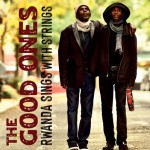
"Rwanda Sings with Strings" feels less like a studio album and more like a séance in a hotel room where memory, loss, and joy are summoned by voice and wood. The Good Ones - Adrien Kazigira and Janvier Havugimana - have been harmonizing since boyhood, carrying the scars of genocide and the tenderness of survival into every syllable. Their fifth album fulfills a long-held dream: to have their Rwandan folk songs clothed in strings, not as lush orchestrations but as immediate, improvised breaths by Gordon Withers (cello) and Matvei Sigalov (violin). Recorded in single takes under the watch of Ian Brennan, the album carries the crackle of a space alive with risk, laughter, and fatigue; you can almost hear the musicians discovering each other in real time.
The lyrics, sung in Kinyarwanda, continue Kazigira’s chronicling of rural love and loss - often devastating in their bluntness. "I Love You So Much, But You Refused to Marry Me (Your Beauty I Cannot Unsee)" is both lament and indictment, rooted in the harsh economics of farming families who break engagements out of fear of poverty. "Mediatrice, You Left This World Too Soon" transforms personal grief into collective mourning, while "Agnes Dreams of Being an Artist" captures the fragile defiance of aspiration. Even the humor is bittersweet: "In the Hills of Nyarusange, They Talk Too Much" cuts gossip down to size with wry folk wisdom, while "The Valley of the Turkeys (The Things I’ve Seen)" plays like a travelogue from their American tours, mixing poultry, poetry, and memory.
Havugimana’s percussion - a bucket, a paper cup, a pair of boots - embodies the band’s ethic: music drawn from scarcity, beauty conjured from what others discard. Against this, the strings don’t so much embellish as entwine, lifting the songs toward a quiet transcendence. It is telling that Kazigira, after the session, reportedly embraced the cello as if it were kin; on this album, the instruments feel less like guests and more like long-lost relatives.
What lingers most is the doubleness of the record: mournful yet hopeful, intimate yet expansive, grounded in Rwandan soil yet resonant with echoes of Boubacar Traoré, Nick Drake, even Van Morrison. The Good Ones never set out to be international stars; their project was to look for “the good ones” left in their community. And yet here they are, embraced by listeners across continents, their songs carried further than they ever imagined. "Rwanda Sings with Strings" is a reminder that music, at its most elemental, is not about perfection but about presence: a fragile voice, a trembling bow, a found rhythm, and the insistence that life, even when it refuses to be kind, can still sing.
The lyrics, sung in Kinyarwanda, continue Kazigira’s chronicling of rural love and loss - often devastating in their bluntness. "I Love You So Much, But You Refused to Marry Me (Your Beauty I Cannot Unsee)" is both lament and indictment, rooted in the harsh economics of farming families who break engagements out of fear of poverty. "Mediatrice, You Left This World Too Soon" transforms personal grief into collective mourning, while "Agnes Dreams of Being an Artist" captures the fragile defiance of aspiration. Even the humor is bittersweet: "In the Hills of Nyarusange, They Talk Too Much" cuts gossip down to size with wry folk wisdom, while "The Valley of the Turkeys (The Things I’ve Seen)" plays like a travelogue from their American tours, mixing poultry, poetry, and memory.
Havugimana’s percussion - a bucket, a paper cup, a pair of boots - embodies the band’s ethic: music drawn from scarcity, beauty conjured from what others discard. Against this, the strings don’t so much embellish as entwine, lifting the songs toward a quiet transcendence. It is telling that Kazigira, after the session, reportedly embraced the cello as if it were kin; on this album, the instruments feel less like guests and more like long-lost relatives.
What lingers most is the doubleness of the record: mournful yet hopeful, intimate yet expansive, grounded in Rwandan soil yet resonant with echoes of Boubacar Traoré, Nick Drake, even Van Morrison. The Good Ones never set out to be international stars; their project was to look for “the good ones” left in their community. And yet here they are, embraced by listeners across continents, their songs carried further than they ever imagined. "Rwanda Sings with Strings" is a reminder that music, at its most elemental, is not about perfection but about presence: a fragile voice, a trembling bow, a found rhythm, and the insistence that life, even when it refuses to be kind, can still sing.
VV.AA.: Compost Eclectic Selection Vol.2
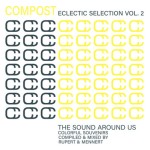
Artist: VV.AA.
Title: Compost Eclectic Selection Vol.2
Format: Download Only (MP3 + Lossless)
Label: Compost Records (@)
Rated:

Title: Compost Eclectic Selection Vol.2
Format: Download Only (MP3 + Lossless)
Label: Compost Records (@)
Rated:
Compost Records has always been the sort of label that refuses to sit still. Since the mid-90s, it has acted like a curious botanist in the sonic jungle, cataloguing species of jazz, house, broken beat, downtempo, techno, and whatever strange hybrid grew in the shade. "Eclectic Selection Vol. 2", lovingly assembled by Rupert & Mennert (those self-styled archivists of the Compost vaults), is less a compilation and more a time-travel diary: a journey through three decades of grooves that don’t quite fit into tidy boxes, but feel strangely timeless.
The set flows like a good conversation at 3 a.m.: Fon-Kin’s "Da Flow" kicks things off with hip-hop swagger, then A Forest Mighty Black and Knowtoryus lean into dusty mid-90s aesthetics - the kind of sample-driven funk that smells faintly of rolling papers and VHS tapes. Robinn’s "The Sound Around Us" drops in with modern polish, a reminder that Compost has never been afraid of soulful hooks, while Alex Attias’ "Finding Who We Are" stretches out like an astral sermon, complete with Colonel Red’s unmistakable grit. By the time we land on Marbert Rocel’s Yoruba-tweaked "Let’s Take Off", the compilation feels less like a museum piece and more like a DJ guiding you through parallel rooms of the same after-party.
There’s humor in the sequencing too - "The Hang Track" retools Manu Delago’s hang drum into something like eco-house therapy, while Zwicker’s "Submarine Kabelgau" bubbles along with playful absurdity (yes, it sounds as odd as its title suggests). And buried in the middle, Genf’s "Stockholm 13 H" acts like an interlude scribbled in shorthand: two minutes of sonic graffiti before the big canvases return.
The lyrics, when they appear - from Mad Fam’lee’s punchy verses to Siri Svegler’s weary refrain of "Not Worth It" - remind us that Compost’s world has always been about human touch as much as studio trickery. There’s joy, cynicism, longing, and above all, a refusal to reduce “club music” to anonymous beats.
The continuous mix by Rupert & Mennert ties it all together with the care of DJs who know both the thrill of the unexpected drop and the beauty of leaving silence between notes. It’s less about nostalgia and more about reminding us that genre boundaries were always imaginary fences anyway.
Listening to "Eclectic Selection Vol. 2" is like leafing through an old photo album and realizing half the pictures look like they could have been taken yesterday. Compost’s trick has always been to curate music that feels out of time - colorful souvenirs, yes, but also a reminder that the sound around us has always been richer than we first thought.
The set flows like a good conversation at 3 a.m.: Fon-Kin’s "Da Flow" kicks things off with hip-hop swagger, then A Forest Mighty Black and Knowtoryus lean into dusty mid-90s aesthetics - the kind of sample-driven funk that smells faintly of rolling papers and VHS tapes. Robinn’s "The Sound Around Us" drops in with modern polish, a reminder that Compost has never been afraid of soulful hooks, while Alex Attias’ "Finding Who We Are" stretches out like an astral sermon, complete with Colonel Red’s unmistakable grit. By the time we land on Marbert Rocel’s Yoruba-tweaked "Let’s Take Off", the compilation feels less like a museum piece and more like a DJ guiding you through parallel rooms of the same after-party.
There’s humor in the sequencing too - "The Hang Track" retools Manu Delago’s hang drum into something like eco-house therapy, while Zwicker’s "Submarine Kabelgau" bubbles along with playful absurdity (yes, it sounds as odd as its title suggests). And buried in the middle, Genf’s "Stockholm 13 H" acts like an interlude scribbled in shorthand: two minutes of sonic graffiti before the big canvases return.
The lyrics, when they appear - from Mad Fam’lee’s punchy verses to Siri Svegler’s weary refrain of "Not Worth It" - remind us that Compost’s world has always been about human touch as much as studio trickery. There’s joy, cynicism, longing, and above all, a refusal to reduce “club music” to anonymous beats.
The continuous mix by Rupert & Mennert ties it all together with the care of DJs who know both the thrill of the unexpected drop and the beauty of leaving silence between notes. It’s less about nostalgia and more about reminding us that genre boundaries were always imaginary fences anyway.
Listening to "Eclectic Selection Vol. 2" is like leafing through an old photo album and realizing half the pictures look like they could have been taken yesterday. Compost’s trick has always been to curate music that feels out of time - colorful souvenirs, yes, but also a reminder that the sound around us has always been richer than we first thought.