
Browse by Genre
Industrial Music / Industrial Metal / Aggro Industrial / Electro Metal
Industrial Noise / Power Noise / Harsh Noise
Synth Pop / Electro Pop / Synth-Electronica
Techno / Trance / Goa / Drum'n'Bass / Jungle / Tribal / Trip-Hop
Ambient / Electronica / Ethereal / Dub / Soundscapes / Abstract
Experimental / Avantgarde / Weird & Wired / Glitch / Noise / Field Recording
Dark / Gothic / Wave / New Wave / Dark Wave / Industrial Gothic
New Music / Downtown / Avantgarde Jazz / New Classical / World
Search Reviews
Music Reviews
Barry Schraeder: Ambient : Aether
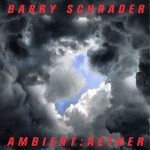
Artist: Barry Schraeder (@)
Title: Ambient : Aether
Format: CD + Download
Label: self-released
Rated:

Title: Ambient : Aether
Format: CD + Download
Label: self-released
Rated:
The last we heard from Barry Schrader was his 'Lost Analog" release in 2022, which was a collection of pieces created from 1972 through 1983, using the Buchla 200 analog modular synthesizer. Prior to that, it was his 'Barnum Museum' from 2013, an excellent album of fantastic and varied cinematic soundscapes. Schrader's latest work, 'Ambient : Aether' is quite different from both of those, being entirely computer-generated in four large-scale movements, an imaginary journey through the aerosphere, traveling from the rising clouds that we can see to the atmospheric edge and the invisible mythic aether beyond. Schrader says the album is not ambient in the traditional sense, but I guess that depends on what you believe traditional ambient music to be. Rather than get in a philosophical discussion of the minutia of genre parameters, I can tell you 'Ambient : Aether' sure sounds ambient to me. It is some of the finest minimal space ambient I've come across, where atmosphere is all, activity is slight, and the tone is everything.
The album's four pieces are: "Cloudrise" - An aural portrait of ever-changing skies, where clouds gather, dissolve, darken, brighten, and vanish in the distance. "Atmospheric Rivers" -- Streams of vapor swell into torrents before dispersing into delicate rivulets of sound. "Supernal Ascent" - A layered voyage through the Troposphere, Stratosphere, Mesosphere, Thermosphere, and finally the Exosphere, surrounding the listener is shifting sonic strata. "Aether" - The final movement reaches the edge of mystery, exploring the unknown beyond the Earth's atmosphere.
Exactly how the textures and sonic manipulation through the use of a computer was achieved isn't clear, but I don't think the technical methodology is important to the average ambient listener. What I can say is that it is thematically consistent throughout, mostly smooth as silk, and a pleasure to listen to. If space ambient is your kind of music, don't let this one pass you by.
The album's four pieces are: "Cloudrise" - An aural portrait of ever-changing skies, where clouds gather, dissolve, darken, brighten, and vanish in the distance. "Atmospheric Rivers" -- Streams of vapor swell into torrents before dispersing into delicate rivulets of sound. "Supernal Ascent" - A layered voyage through the Troposphere, Stratosphere, Mesosphere, Thermosphere, and finally the Exosphere, surrounding the listener is shifting sonic strata. "Aether" - The final movement reaches the edge of mystery, exploring the unknown beyond the Earth's atmosphere.
Exactly how the textures and sonic manipulation through the use of a computer was achieved isn't clear, but I don't think the technical methodology is important to the average ambient listener. What I can say is that it is thematically consistent throughout, mostly smooth as silk, and a pleasure to listen to. If space ambient is your kind of music, don't let this one pass you by.
Larum: Treatise by Cornelius Cardew
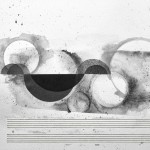

Cornelius Cardew’s Treatise is a work that has seduced musicians for decades, not because it tells them what to do, but because it stubbornly refuses to. A 193-page score without a single conventional note, just cryptic geometries and a long central line that seems to whisper: “here’s the axis of your universe, good luck”, To enter it is like reading a book where the words are erased but the punctuation remains, forcing you to invent the story with each turn of the page.
Larum - Micah Frank (modular synth), Chet Doxas (woodwinds, foley), and Taylor Deupree (looping, processing) - take Cardew’s challenge seriously, and perhaps mischievously. Their Treatise is not a free-for-all, but a kind of architectural spelunking: the line is treated as time itself, a horizon against which shapes become signs for harmony, density, or sudden silence. It’s almost as if Kandinsky were dictating music from beyond the grave, through diagrams rather than dictums.
The performances, recorded both at Public Records and at Fridman Gallery in New York, breathe differently depending on the room. In Brooklyn, the trio leans into warmth and pulse, with the modular synth pulsing like a nervous system while the woodwinds breathe a fragile human counterpoint. At the gallery, the music becomes more spectral, stretched like thin threads of spider silk, with silence taking on the weight of an instrument.
There are no lyrics, of course, but Doxas’s reed-playing often feels like a secret language trying to claw its way out of abstraction. The modular swells and loops frame it like parentheses around an unfinished sentence. If Treatise is a text, this version reads like poetry scrawled in disappearing ink - phrases half-heard, immediately dissolving into noise, only to be resurrected in another form minutes later.
It’s tempting to say Larum play Cardew, but that misses the point: they inhabit him, walk through his shapes like rooms, and leave their fingerprints on the walls. The result is music that is both rigorous and free, logic wrapped in intuition. And maybe that’s the joke: in order to play Treatise faithfully, you must betray it just enough to make it your own.
This Premier Rapport with Cardew’s ghost is not about resolution, but about conversation across time: a British radical drawing lines on paper in the 1960s, and a trio in 2025 turning those lines into something you can actually hear. It’s not an explanation - it’s a continuation.
Larum - Micah Frank (modular synth), Chet Doxas (woodwinds, foley), and Taylor Deupree (looping, processing) - take Cardew’s challenge seriously, and perhaps mischievously. Their Treatise is not a free-for-all, but a kind of architectural spelunking: the line is treated as time itself, a horizon against which shapes become signs for harmony, density, or sudden silence. It’s almost as if Kandinsky were dictating music from beyond the grave, through diagrams rather than dictums.
The performances, recorded both at Public Records and at Fridman Gallery in New York, breathe differently depending on the room. In Brooklyn, the trio leans into warmth and pulse, with the modular synth pulsing like a nervous system while the woodwinds breathe a fragile human counterpoint. At the gallery, the music becomes more spectral, stretched like thin threads of spider silk, with silence taking on the weight of an instrument.
There are no lyrics, of course, but Doxas’s reed-playing often feels like a secret language trying to claw its way out of abstraction. The modular swells and loops frame it like parentheses around an unfinished sentence. If Treatise is a text, this version reads like poetry scrawled in disappearing ink - phrases half-heard, immediately dissolving into noise, only to be resurrected in another form minutes later.
It’s tempting to say Larum play Cardew, but that misses the point: they inhabit him, walk through his shapes like rooms, and leave their fingerprints on the walls. The result is music that is both rigorous and free, logic wrapped in intuition. And maybe that’s the joke: in order to play Treatise faithfully, you must betray it just enough to make it your own.
This Premier Rapport with Cardew’s ghost is not about resolution, but about conversation across time: a British radical drawing lines on paper in the 1960s, and a trio in 2025 turning those lines into something you can actually hear. It’s not an explanation - it’s a continuation.
Benedicte Maurseth: Mirra
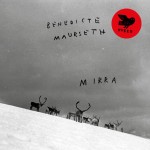
Benedicte Maurseth is not simply playing the Hardanger fiddle anymore; she is bending it into a compass, a listening device, an ecological stethoscope pressed to the chest of the Hardangervidda plateau. Mirra, her follow-up to the award-winning Hárr, circles around the lives of wild reindeer, creatures she has seen only twice in her life yet has carried with her since childhood. It is less an ethnographic study and more a myth told in sound: the grunt of hooves on ice, the whisper of snow, the stubborn silence of waiting out a storm at minus forty. Maurseth, with Håkon Stene, Mats Eilertsen, and Morten Qvenild, arranges these tales into a patient music where repetition becomes survival, drone becomes migration, and minimalism becomes the animal wisdom of not wasting energy.
The tracks follow the annual cycle - calves staggering to their feet, summer grazing, the inevitable hunt - while also stretching into metaphors for human endurance and fragility. “Jaktmarsj” is not a triumphant anthem but a reminder that danger is just another season; “Simleflokk under månen” lets a herd shimmer into moonlight, hypnotic and spectral, as if the listener were both predator and prey. The title itself, “mirra”, speaks of reindeer running in circles: a practical survival trick but also a metaphor for our own looping lives, our attempts to fend off predators both ecological and political.
It would be easy to call this “folk meets minimalism”, or to cite krautrock and American pattern music as influences, but that misses the point. Maurseth is not layering traditions like a clever producer; she is re-tuning the listener’s body until we too feel like herd animals, negotiating a shrinking habitat. The reindeer grunt and click in her music without words, yet their message is clearer than lyrics: we are still here, for now.
And there lies the irony. Maurseth gives us music that is beautiful, almost comforting in its cycles, while reminding us that the very subject - wild reindeer - is vanishing under human pressure. The listener is seduced into the circle, but the circle itself may be breaking. Mirra is therefore both celebration and requiem, a record that teaches endurance while quietly asking whether endurance will be enough.
The tracks follow the annual cycle - calves staggering to their feet, summer grazing, the inevitable hunt - while also stretching into metaphors for human endurance and fragility. “Jaktmarsj” is not a triumphant anthem but a reminder that danger is just another season; “Simleflokk under månen” lets a herd shimmer into moonlight, hypnotic and spectral, as if the listener were both predator and prey. The title itself, “mirra”, speaks of reindeer running in circles: a practical survival trick but also a metaphor for our own looping lives, our attempts to fend off predators both ecological and political.
It would be easy to call this “folk meets minimalism”, or to cite krautrock and American pattern music as influences, but that misses the point. Maurseth is not layering traditions like a clever producer; she is re-tuning the listener’s body until we too feel like herd animals, negotiating a shrinking habitat. The reindeer grunt and click in her music without words, yet their message is clearer than lyrics: we are still here, for now.
And there lies the irony. Maurseth gives us music that is beautiful, almost comforting in its cycles, while reminding us that the very subject - wild reindeer - is vanishing under human pressure. The listener is seduced into the circle, but the circle itself may be breaking. Mirra is therefore both celebration and requiem, a record that teaches endurance while quietly asking whether endurance will be enough.
J?rgen Tr?en & Stein Urheim: Galant Galakse

Artist: J?rgen Tr?en & Stein Urheim
Title: Galant Galakse
Format: 12" + Download
Label: Action Jazz (@)
Rated:
Title: Galant Galakse
Format: 12" + Download
Label: Action Jazz (@)
Rated:
Galant Galakse is a record that insists the cosmos is best understood not through telescopes but through duct-taped oscillators, rescued zithers, and the odd harmonica dragged through a black hole. Jørgen Træen and Stein Urheim, two Norwegians with an unholy amount of sonic toys, treat this album less like a set of tracks and more like a pair of interstellar expeditions where the laws of gravity have been mischievously rewritten.
If their first duo outing, "Krympende klode", was the shock of discovering a new planet, "Galant galakse" is the delight of colonizing it with unlikely flora and fauna. Across two extended pieces - "Pønskepause" and "Urpust" - they fold together modular burbles, cosmic hums, woodsy flutes, alien guitar voicings, and percussive shrapnel in ways that feel both anarchic and strangely coherent. One minute you’re in a medieval folk tune with a tamboura drone, the next you’re eavesdropping on Delia Derbyshire’s ghost arguing with Harry Partch’s instruments in a forest clearing.
It’s not “songs” we’re dealing with here, but long-form sonic narratives - elastic, unpredictable, full of interruptions that seem whimsical until you realize they were the point all along. The duo’s trick is balance: Træen’s electronics provide the magnetic field, Urheim’s strings and reeds the wandering comets, and together they keep your ears chasing unexpected orbits. Henry Kaiser briefly swoops in on guitar like a friendly meteorite, just to prove there’s always room for another eccentric body in this constellation.
There are no lyrics, but the album still “sings”. The instruments speak in tongues: a synth murmurs in binary prayer, a pocket trumpet wheezes like a drunken prophet, guitars slip into accents borrowed from continents that don’t exist. The voices of the galaxy are all here, just wearing new disguises.
The irony, of course, is in the title: this galaxy isn’t particularly “galant”. It’s awkward, messy, delightfully rude to convention - yet charming precisely because of its refusal to behave. Træen and Urheim aren’t writing a polite astronomical report; they’re doodling spirals in the margins of the universe and inviting us to get lost in them.
This isn’t background music for stargazing. It’s foreground music for falling headfirst into the stars and realizing, mid-spin, that chaos can be more elegant than order.
If their first duo outing, "Krympende klode", was the shock of discovering a new planet, "Galant galakse" is the delight of colonizing it with unlikely flora and fauna. Across two extended pieces - "Pønskepause" and "Urpust" - they fold together modular burbles, cosmic hums, woodsy flutes, alien guitar voicings, and percussive shrapnel in ways that feel both anarchic and strangely coherent. One minute you’re in a medieval folk tune with a tamboura drone, the next you’re eavesdropping on Delia Derbyshire’s ghost arguing with Harry Partch’s instruments in a forest clearing.
It’s not “songs” we’re dealing with here, but long-form sonic narratives - elastic, unpredictable, full of interruptions that seem whimsical until you realize they were the point all along. The duo’s trick is balance: Træen’s electronics provide the magnetic field, Urheim’s strings and reeds the wandering comets, and together they keep your ears chasing unexpected orbits. Henry Kaiser briefly swoops in on guitar like a friendly meteorite, just to prove there’s always room for another eccentric body in this constellation.
There are no lyrics, but the album still “sings”. The instruments speak in tongues: a synth murmurs in binary prayer, a pocket trumpet wheezes like a drunken prophet, guitars slip into accents borrowed from continents that don’t exist. The voices of the galaxy are all here, just wearing new disguises.
The irony, of course, is in the title: this galaxy isn’t particularly “galant”. It’s awkward, messy, delightfully rude to convention - yet charming precisely because of its refusal to behave. Træen and Urheim aren’t writing a polite astronomical report; they’re doodling spirals in the margins of the universe and inviting us to get lost in them.
This isn’t background music for stargazing. It’s foreground music for falling headfirst into the stars and realizing, mid-spin, that chaos can be more elegant than order.
Seth Thorn: a curious doubling of terms
Artist: Seth Thorn (@)
Title: a curious doubling of terms
Format: Download Only (MP3 + Lossless)
Label: Audiobulb (@)
Rated:
Title: a curious doubling of terms
Format: Download Only (MP3 + Lossless)
Label: Audiobulb (@)
Rated:
Seth Thorn’s "a curious doubling of terms" feels like a diary written half in moss, half in binary. A violinist by training, an academic by trade, and a coder by obsession, Thorn builds music as if trying to braid memory with circuitry. This debut solo work, released via Audiobulb, leans into his dual identity: the human breath of bowed strings rubbing against the algorithmic churn of his self-built Haze system, a tool for conjuring lo-fi fog like a machine dreaming of Debussy in slow decay.
The album begins with "necarney creek", where water seems to seep through the strings, a merging of creek and ocean rendered not in field recordings but in timbral suggestion. It’s as if the violin, untethered from concert tradition, had wandered into the surf to test its resonance against salt air. From there, Thorn oscillates between intimacy ("the unspoken", barely two minutes of fragile tone that feels like a thought left unsent) and abstraction ("machinic heterogeneticist", whose title alone promises the kind of music that makes you wonder if your hard drive is about to weep).
Titles like "old degrowth forest" and "friends show" the way betray his environmental and humanistic leanings: these are not just code-and-bow exercises but philosophical sketches, touching on sustainability, community, and the uneasy romance between organic time and mechanical process. By the closing "morbid symptomatic logic", Thorn seems to suggest that even the most lyrical systems collapse under their own rules - entropy dressed as a coda.
There are no lyrics here, yet the music speaks with a sort of textual density: each piece feels like a sentence, or perhaps a fragment, in a longer argument about what it means to be human inside a machinic age. Funny enough, the album’s title could describe Thorn himself - both academic and improviser, violinist and coder, romantic and logician. "A curious doubling of terms" is less a debut than a paradox, and in embracing paradox it finds its own fragile coherence.
The album begins with "necarney creek", where water seems to seep through the strings, a merging of creek and ocean rendered not in field recordings but in timbral suggestion. It’s as if the violin, untethered from concert tradition, had wandered into the surf to test its resonance against salt air. From there, Thorn oscillates between intimacy ("the unspoken", barely two minutes of fragile tone that feels like a thought left unsent) and abstraction ("machinic heterogeneticist", whose title alone promises the kind of music that makes you wonder if your hard drive is about to weep).
Titles like "old degrowth forest" and "friends show" the way betray his environmental and humanistic leanings: these are not just code-and-bow exercises but philosophical sketches, touching on sustainability, community, and the uneasy romance between organic time and mechanical process. By the closing "morbid symptomatic logic", Thorn seems to suggest that even the most lyrical systems collapse under their own rules - entropy dressed as a coda.
There are no lyrics here, yet the music speaks with a sort of textual density: each piece feels like a sentence, or perhaps a fragment, in a longer argument about what it means to be human inside a machinic age. Funny enough, the album’s title could describe Thorn himself - both academic and improviser, violinist and coder, romantic and logician. "A curious doubling of terms" is less a debut than a paradox, and in embracing paradox it finds its own fragile coherence.