
Browse by Genre
Industrial Music / Industrial Metal / Aggro Industrial / Electro Metal
Industrial Noise / Power Noise / Harsh Noise
Synth Pop / Electro Pop / Synth-Electronica
Techno / Trance / Goa / Drum'n'Bass / Jungle / Tribal / Trip-Hop
Ambient / Electronica / Ethereal / Dub / Soundscapes / Abstract
Experimental / Avantgarde / Weird & Wired / Glitch / Noise / Field Recording
Dark / Gothic / Wave / New Wave / Dark Wave / Industrial Gothic
New Music / Downtown / Avantgarde Jazz / New Classical / World
Search Reviews
Music Reviews
Relay For Death: Mutual Consuming

Artist: Relay For Death
Title: Mutual Consuming
Format: 12" + Download
Label: The Helen Scarsdale Agency (@)
Rated:

Title: Mutual Consuming
Format: 12" + Download
Label: The Helen Scarsdale Agency (@)
Rated:
Relay For Death have always sounded like they’re making music at the very end of the world - or perhaps just past it, when the ruins have cooled, and only the faint hum of electricity survives. With "Mutual Consuming", the Spikula twins refine that post-apocalyptic grammar into something both implacable and strangely serene: two side-long slabs of smoldering ambience, at once minimal and oppressive, delicate and devastating.
The title comes from traditional Chinese medicine, where yin and yang don’t fight so much as they devour one another, endlessly. Relay For Death take that idea and render it in sound: frequencies that seem to eat themselves, loops collapsing into static, drones feeding on their own reverberations. It’s not Ouroboros, exactly, but something more dyspeptic - an eternal feedback cycle where digestion never ends, only mutates.
Side A, "intone the morph orb", is a slow sink into an abyssal throb, like Thomas Köner’s polar drones except more toxic, thickened with radiation and decay. It feels like the inside of a glacier listening to itself dissolve. Side B, "terminal ice wind", blows colder: all brittle metallic resonance and cavernous breaths, an industrial cousin of MB’s desolate meditations. The piece unfurls like weather, impersonal yet all-consuming, leaving you with the unsettling impression that the storm doesn’t notice you, and never will.
Relay For Death have long worked in this hermetic register - grim, uncompromising, allergic to narrative - but here the sense of collapse feels almost sculptural. Noise, usually about eruption, here becomes about erosion: a slow wearing down of sound into absence. What’s remarkable is how immersive that void is. If destruction has a texture, the twins have managed to record it.
Originally part of the now-mythical "On Corrosion" boxset (the ten-cassette wooden reliquary that instantly vanished into collector lore), "Mutual Consuming" finally crawls back into circulation on its own. It still feels less like an album and more like an environment: a frozen, poisoned atmosphere in which the listener is allowed to drift, stripped of warmth but overwhelmed by detail.
Listening is like staring too long into black water: first frightening, then mesmerizing, then almost comforting. Relay For Death may claim there’s no through-line with their past work, but the bleak humor of that denial is telling. In the gorge fest of existence, the twins don’t offer catharsis or clarity. What they offer is endurance. A space where destruction, rather than resisted, is simply inhabited.
It’s nihilism with staying power. A music for when there’s nothing left to do but sit with the storm, and let it consume.
The title comes from traditional Chinese medicine, where yin and yang don’t fight so much as they devour one another, endlessly. Relay For Death take that idea and render it in sound: frequencies that seem to eat themselves, loops collapsing into static, drones feeding on their own reverberations. It’s not Ouroboros, exactly, but something more dyspeptic - an eternal feedback cycle where digestion never ends, only mutates.
Side A, "intone the morph orb", is a slow sink into an abyssal throb, like Thomas Köner’s polar drones except more toxic, thickened with radiation and decay. It feels like the inside of a glacier listening to itself dissolve. Side B, "terminal ice wind", blows colder: all brittle metallic resonance and cavernous breaths, an industrial cousin of MB’s desolate meditations. The piece unfurls like weather, impersonal yet all-consuming, leaving you with the unsettling impression that the storm doesn’t notice you, and never will.
Relay For Death have long worked in this hermetic register - grim, uncompromising, allergic to narrative - but here the sense of collapse feels almost sculptural. Noise, usually about eruption, here becomes about erosion: a slow wearing down of sound into absence. What’s remarkable is how immersive that void is. If destruction has a texture, the twins have managed to record it.
Originally part of the now-mythical "On Corrosion" boxset (the ten-cassette wooden reliquary that instantly vanished into collector lore), "Mutual Consuming" finally crawls back into circulation on its own. It still feels less like an album and more like an environment: a frozen, poisoned atmosphere in which the listener is allowed to drift, stripped of warmth but overwhelmed by detail.
Listening is like staring too long into black water: first frightening, then mesmerizing, then almost comforting. Relay For Death may claim there’s no through-line with their past work, but the bleak humor of that denial is telling. In the gorge fest of existence, the twins don’t offer catharsis or clarity. What they offer is endurance. A space where destruction, rather than resisted, is simply inhabited.
It’s nihilism with staying power. A music for when there’s nothing left to do but sit with the storm, and let it consume.
Dj Haram: Beside Myself

DJ Haram’s Beside Myself is the kind of record that could only have been made in a world teetering on the brink - half diary of grief, half declaration of resistance, half inside joke told through clenched teeth. Yes, that’s three halves, but the math fits the spirit: this is music that exists in overflow, in contradiction, in the anxious doubling of being “beside oneself”.
Across its 14 tracks, Haram builds a jagged cathedral of bass, noise, and borrowed traditions. Jersey Club patterns snap against darbuka drums, punk energy snarls beside electroacoustic drones, and her own voice - poetic, bitter, tender, sardonic - threads through the chaos. This isn’t the kind of “world music” where cultures melt politely into a tasteful soup. It’s a sonic clash kitchen where saz-like tones and rattling percussion get tossed in with grime-stained synths, tape hiss, and militant beats. You can almost hear the sparks flying off the gear.
Her collaborators make the road less lonely: Moor Mother and the 700 Bliss kin bring barbed-wire lyricism; Bbymutha slides in with defiant bite; Armand Hammer pull no punches; trumpeter Aquiles Navarro blows fire through the smoke. Even when the grooves threaten to collapse under their own distortion, there’s a collective force holding the pieces together - a small, volatile community in sound.
The political undertow is everywhere, but never in the neat, hashtag-friendly way. Haram herself mocks the commodification of dissent, sneering at the way radical slogans get “yaasified” into brand aesthetics. Instead, she builds what she calls a “vulnerable shelter amidst a worsening storm”, music that refuses easy catharsis. No “joy is resistance” platitudes here - just raw, unresolved survival, jagged as an unhealed scar.
What makes Beside Myself so compelling is that it is, paradoxically, both a mirror of despair and a generator of new energy. Its pessimism is almost hopeful in its refusal to compromise. Each track is a little act of friction: bass that grumbles like collapsing concrete, verses that cut like graffiti on glass, beats that stutter and rage but never surrender to silence.
It’s unclassifiable, yet unmistakably hers. A record that won’t heal the world, as Haram admits, but will at least soundtrack the feeling of being alive inside its fractures. Think of it less as an album and more as a dispatch from the trenches: a reminder that even when the system is devouring itself, there are still frequencies left to hijack, still noises left to make.
Listening to Beside Myself feels like holding onto a burning wire. It hurts, but it’s alive. And in times like these, maybe that’s the most radical kind of music we can ask for.
Across its 14 tracks, Haram builds a jagged cathedral of bass, noise, and borrowed traditions. Jersey Club patterns snap against darbuka drums, punk energy snarls beside electroacoustic drones, and her own voice - poetic, bitter, tender, sardonic - threads through the chaos. This isn’t the kind of “world music” where cultures melt politely into a tasteful soup. It’s a sonic clash kitchen where saz-like tones and rattling percussion get tossed in with grime-stained synths, tape hiss, and militant beats. You can almost hear the sparks flying off the gear.
Her collaborators make the road less lonely: Moor Mother and the 700 Bliss kin bring barbed-wire lyricism; Bbymutha slides in with defiant bite; Armand Hammer pull no punches; trumpeter Aquiles Navarro blows fire through the smoke. Even when the grooves threaten to collapse under their own distortion, there’s a collective force holding the pieces together - a small, volatile community in sound.
The political undertow is everywhere, but never in the neat, hashtag-friendly way. Haram herself mocks the commodification of dissent, sneering at the way radical slogans get “yaasified” into brand aesthetics. Instead, she builds what she calls a “vulnerable shelter amidst a worsening storm”, music that refuses easy catharsis. No “joy is resistance” platitudes here - just raw, unresolved survival, jagged as an unhealed scar.
What makes Beside Myself so compelling is that it is, paradoxically, both a mirror of despair and a generator of new energy. Its pessimism is almost hopeful in its refusal to compromise. Each track is a little act of friction: bass that grumbles like collapsing concrete, verses that cut like graffiti on glass, beats that stutter and rage but never surrender to silence.
It’s unclassifiable, yet unmistakably hers. A record that won’t heal the world, as Haram admits, but will at least soundtrack the feeling of being alive inside its fractures. Think of it less as an album and more as a dispatch from the trenches: a reminder that even when the system is devouring itself, there are still frequencies left to hijack, still noises left to make.
Listening to Beside Myself feels like holding onto a burning wire. It hurts, but it’s alive. And in times like these, maybe that’s the most radical kind of music we can ask for.
Andy Graydon & Klaus Janek: A Book Of Waves
Artist: Andy Graydon & Klaus Janek (@)
Title: A Book Of Waves
Format: CD + Download
Label: Room40 (@)
Rated:

Title: A Book Of Waves
Format: CD + Download
Label: Room40 (@)
Rated:
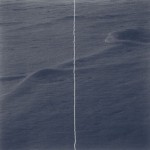
Some records are less albums than they are tidal charts: sound as a record of pressure, pull, undertow. A Book of Waves, the long-gestating collaboration between sound artist Andy Graydon and contrabassist Klaus Janek, belongs squarely to that category. It feels less like two musicians conversing than like two bodies of water colliding - surface glints against abyssal depth, sudden turbulence against long, rolling swells. Released on Room40, it’s the sort of project that refuses to be rushed, shaped over two years of back-and-forth exchanges across oceans and continents. The distance didn’t dilute the duo’s synergy; it gave it gravity.
Graydon, known for weaving installations and sonic environments that meditate on ecology and perception, brings textures that hiss, shimmer, and scatter like foam across the crest of a wave. Janek, whose double bass has long been a tectonic presence in improvised and electroacoustic circles, anchors the drift with sonorous lows and grainy, resonant arco passages that feel closer to geological rumble than “melody”. Together, their process was one of asynchronous layering: not the give-and-take of live improvisation but something slower, more sculptural, like carving tidal pools into stone and waiting for them to fill.
The title nods to Stefan Helmreich’s book on the science and culture of waves, and it’s apt - because what Graydon and Janek create isn’t merely music about water but music that moves as water does. Opener “Premeridian” unfurls in glacial arcs, a dawn tide of bass drone and airy crackle. “Uta” lingers in delicate suspension, like the moment just before a wave breaks, each sound an eddy threatening to spiral away. By the time we reach “Silcrow”, the album’s center of gravity, we’re submerged in a deep-sea zone of creaks and shifting masses, a place where pressure itself seems to have become audible. The closing “Postmedian” is less resolution than ebb - the sea pulling back, leaving rivulets behind, fragile but persistent.
What makes A Book of Waves compelling is its refusal to settle. It drifts between the live impulse and the fixed studio artifact, between improvisation and composition, between erosion and accumulation. The listener becomes less a spectator and more a shoreline: shaped, battered, and soothed by whatever comes ashore.
It is, in the best sense, an album that seems to resist ownership. The sounds belong to no one, not even the duo - they belong to the physics of resonance, the shared languages of pulse and decay, the way all waves eventually leave their trace. To play it is to sit with slowness, with movement that measures itself not in minutes but in tides.
And perhaps that is the secret joy here: Graydon and Janek remind us that music, like water, has no need to hurry. It will find us, carve us, drown us, or cradle us, whether or not we’re ready.
Graydon, known for weaving installations and sonic environments that meditate on ecology and perception, brings textures that hiss, shimmer, and scatter like foam across the crest of a wave. Janek, whose double bass has long been a tectonic presence in improvised and electroacoustic circles, anchors the drift with sonorous lows and grainy, resonant arco passages that feel closer to geological rumble than “melody”. Together, their process was one of asynchronous layering: not the give-and-take of live improvisation but something slower, more sculptural, like carving tidal pools into stone and waiting for them to fill.
The title nods to Stefan Helmreich’s book on the science and culture of waves, and it’s apt - because what Graydon and Janek create isn’t merely music about water but music that moves as water does. Opener “Premeridian” unfurls in glacial arcs, a dawn tide of bass drone and airy crackle. “Uta” lingers in delicate suspension, like the moment just before a wave breaks, each sound an eddy threatening to spiral away. By the time we reach “Silcrow”, the album’s center of gravity, we’re submerged in a deep-sea zone of creaks and shifting masses, a place where pressure itself seems to have become audible. The closing “Postmedian” is less resolution than ebb - the sea pulling back, leaving rivulets behind, fragile but persistent.
What makes A Book of Waves compelling is its refusal to settle. It drifts between the live impulse and the fixed studio artifact, between improvisation and composition, between erosion and accumulation. The listener becomes less a spectator and more a shoreline: shaped, battered, and soothed by whatever comes ashore.
It is, in the best sense, an album that seems to resist ownership. The sounds belong to no one, not even the duo - they belong to the physics of resonance, the shared languages of pulse and decay, the way all waves eventually leave their trace. To play it is to sit with slowness, with movement that measures itself not in minutes but in tides.
And perhaps that is the secret joy here: Graydon and Janek remind us that music, like water, has no need to hurry. It will find us, carve us, drown us, or cradle us, whether or not we’re ready.
Gintas K: Atmosfera
If some composers aim for perfection by endless layering and polishing, Gintas K seems to thrive on the thrill of letting go. Atmosfera, released on Fusion Audio Recordings in a ridiculously small edition (100 tapes, 25 CDs - blink and you missed it), is the Lithuanian sound artist’s latest act of deliberate impermanence: seven live, overdub-free improvisations where ambience collides with electroacoustic hiccups, micromelodies, piano droplets and eruptions of noise. It’s a storm disguised as a slow leak, a cascade of accidents made into architecture.
A founding member of Modus and a ceaseless solo experimenter, Gintas Kraptaviius has long blurred the line between “composition” and “happening”. His prolific output - at times overwhelming - feels like a laboratory where every take matters, even when it seems like it shouldn’t. On Atmosfera, you hear that ethos crystallize: pieces that begin with a faint drip (literally on the edge of perception) gradually mutate into frothy, fizzing streams of distortion, piano chords gleaming like phosphorescent fish in murky water. The effect is strangely biological - machines mimicking aquatic ecosystems, electricity dreaming it is rain.
What’s striking is the album’s refusal to cohere in traditional ways. One moment you’re lulled by melancholic keys over a burbling undercurrent, the next you’re swamped by squawks, feedback at tinnitus pitch, or what sounds suspiciously like a robot frog choking on laser beams. And yet, somehow, the chaos flows. Each track feels less like a composition and more like a tidepool: an unstable but self-contained environment teeming with unpredictable life.
There’s humor here, too - intentional or not. A title like “Atmosfera #5” unleashes squeals and whistles so abrasive they feel like a parody of highbrow electroacoustics, but then you notice how the noise curls back into itself, softening into an almost devotional hush. It’s like watching an aquarium where the fish suddenly stage a punk gig before resuming their calm, hypnotic laps around the glass.
Listening to Atmosfera is a reminder of how fragile and absurd sound can be when stripped of narrative or polish. It doesn’t care if it unsettles or soothes - it just exists, fizzes, drips, crackles, and then is gone. In that sense, it mirrors its own limited-edition format: ephemeral, fleeting, already half-vanished.
Ultimately, Gintas K’s album is less about “atmosphere” in the cinematic sense than about atmospheres in the meteorological one: shifts of pressure, sudden rainbursts, lightning cracks across an otherwise still sky. You don’t listen to it so much as live inside it for an hour, letting it soak you through. And when it fades, you’re left with the faint echo of piano and water, like memory itself dripping through the cracks.
A founding member of Modus and a ceaseless solo experimenter, Gintas Kraptaviius has long blurred the line between “composition” and “happening”. His prolific output - at times overwhelming - feels like a laboratory where every take matters, even when it seems like it shouldn’t. On Atmosfera, you hear that ethos crystallize: pieces that begin with a faint drip (literally on the edge of perception) gradually mutate into frothy, fizzing streams of distortion, piano chords gleaming like phosphorescent fish in murky water. The effect is strangely biological - machines mimicking aquatic ecosystems, electricity dreaming it is rain.
What’s striking is the album’s refusal to cohere in traditional ways. One moment you’re lulled by melancholic keys over a burbling undercurrent, the next you’re swamped by squawks, feedback at tinnitus pitch, or what sounds suspiciously like a robot frog choking on laser beams. And yet, somehow, the chaos flows. Each track feels less like a composition and more like a tidepool: an unstable but self-contained environment teeming with unpredictable life.
There’s humor here, too - intentional or not. A title like “Atmosfera #5” unleashes squeals and whistles so abrasive they feel like a parody of highbrow electroacoustics, but then you notice how the noise curls back into itself, softening into an almost devotional hush. It’s like watching an aquarium where the fish suddenly stage a punk gig before resuming their calm, hypnotic laps around the glass.
Listening to Atmosfera is a reminder of how fragile and absurd sound can be when stripped of narrative or polish. It doesn’t care if it unsettles or soothes - it just exists, fizzes, drips, crackles, and then is gone. In that sense, it mirrors its own limited-edition format: ephemeral, fleeting, already half-vanished.
Ultimately, Gintas K’s album is less about “atmosphere” in the cinematic sense than about atmospheres in the meteorological one: shifts of pressure, sudden rainbursts, lightning cracks across an otherwise still sky. You don’t listen to it so much as live inside it for an hour, letting it soak you through. And when it fades, you’re left with the faint echo of piano and water, like memory itself dripping through the cracks.
DuChamp: The Wild Joy

Artist: DuChamp (@)
Title: The Wild Joy
Format: LP
Label: Torto Editions/Ramble Records/Atena Records (@)
Rated:
Title: The Wild Joy
Format: LP
Label: Torto Editions/Ramble Records/Atena Records (@)
Rated:
Some records feel like cathedrals built out of resonance rather than stone, and "The Wild Joy" by DuChamp is one of those rare constructions. Enter it and you’re immediately caught between the monumental and the intimate: drones that rumble like tectonic plates shifting beneath your feet, yet laced with fragile guitar phrases and voices that seem to hover just outside your peripheral hearing. It’s music that can both shake the ground and cradle you at once.
DuChamp - Italian scientist, curator, and Berlin-based devotee of the drone - has been carving out her path for more than a decade, and this new album feels like a distillation of her stubborn fidelity to sound as a medium of transcendence. Where earlier works often embraced starkness and density, "The Wild Joy" opens into a broader, more ambiguous territory. The five tracks bleed into one another like movements in a liturgy, yet never lose their sense of human warmth. The baritone guitar, organ, synths, and bouzouki aren’t simply layered - they converse, weaving between low-end gravitational pull and the sudden flare of melody, like a candle flickering in a cavern.
There’s also something wonderfully corporeal here. These drones aren’t the abstract hum of machines but feel lived-in, breathed, pulsed through veins. On “Epithalamion”, the duet of voices extends the sense of embodiment, making the piece less a drone and more a ritual - a kind of spectral folk song suspended in slow motion. Elsewhere, samples and subtle gestures enrich the surface like carvings on ancient stone, proof of hands that once lingered here.
Yet the album doesn’t bask in solemnity. Despite its title suggesting unbridled rapture, "The Wild Joy" is never bombastic. The joy here is sly, subterranean, and enduring - a joy found in persistence, in vibration, in the refusal to compromise with silence. It’s joy as stubborn devotion, the kind only someone “religiously devoted to drone” could deliver.
If drone is often accused of being static, DuChamp pushes back: here time is elastic, expanding and contracting, shimmering with ambiguity. The listener becomes aware not only of sound but of their own body within it, suspended in a rare state of balance.
By the time the closing title track arrives, the impression is clear: this is not just an album, but a topology of presence, a map of frequencies where emotion, science, and sheer sonic willpower coalesce. It belongs in that curious lineage where drone touches the sacred - not as dogma, but as direct experience.
"The Wild Joy" is exactly what its title promises, though the joy here is less about ecstatic dance than about surrendering to resonance itself, letting it rewire your perception until you emerge with ears attuned to subtler shades of time.
DuChamp - Italian scientist, curator, and Berlin-based devotee of the drone - has been carving out her path for more than a decade, and this new album feels like a distillation of her stubborn fidelity to sound as a medium of transcendence. Where earlier works often embraced starkness and density, "The Wild Joy" opens into a broader, more ambiguous territory. The five tracks bleed into one another like movements in a liturgy, yet never lose their sense of human warmth. The baritone guitar, organ, synths, and bouzouki aren’t simply layered - they converse, weaving between low-end gravitational pull and the sudden flare of melody, like a candle flickering in a cavern.
There’s also something wonderfully corporeal here. These drones aren’t the abstract hum of machines but feel lived-in, breathed, pulsed through veins. On “Epithalamion”, the duet of voices extends the sense of embodiment, making the piece less a drone and more a ritual - a kind of spectral folk song suspended in slow motion. Elsewhere, samples and subtle gestures enrich the surface like carvings on ancient stone, proof of hands that once lingered here.
Yet the album doesn’t bask in solemnity. Despite its title suggesting unbridled rapture, "The Wild Joy" is never bombastic. The joy here is sly, subterranean, and enduring - a joy found in persistence, in vibration, in the refusal to compromise with silence. It’s joy as stubborn devotion, the kind only someone “religiously devoted to drone” could deliver.
If drone is often accused of being static, DuChamp pushes back: here time is elastic, expanding and contracting, shimmering with ambiguity. The listener becomes aware not only of sound but of their own body within it, suspended in a rare state of balance.
By the time the closing title track arrives, the impression is clear: this is not just an album, but a topology of presence, a map of frequencies where emotion, science, and sheer sonic willpower coalesce. It belongs in that curious lineage where drone touches the sacred - not as dogma, but as direct experience.
"The Wild Joy" is exactly what its title promises, though the joy here is less about ecstatic dance than about surrendering to resonance itself, letting it rewire your perception until you emerge with ears attuned to subtler shades of time.