
Browse by Genre
Industrial Music / Industrial Metal / Aggro Industrial / Electro Metal
Industrial Noise / Power Noise / Harsh Noise
Synth Pop / Electro Pop / Synth-Electronica
Techno / Trance / Goa / Drum'n'Bass / Jungle / Tribal / Trip-Hop
Ambient / Electronica / Ethereal / Dub / Soundscapes / Abstract
Experimental / Avantgarde / Weird & Wired / Glitch / Noise / Field Recording
Dark / Gothic / Wave / New Wave / Dark Wave / Industrial Gothic
New Music / Downtown / Avantgarde Jazz / New Classical / World
Search Reviews
Music Reviews
Jan Jelinek, Mads Emil Nielsen: Framework / Zwischen Remixes
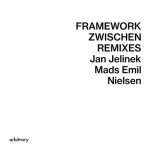
Artist: Jan Jelinek, Mads Emil Nielsen (@)
Title: Framework / Zwischen Remixes
Format: 7"
Label: arbitrary (@)
Rated:


Title: Framework / Zwischen Remixes
Format: 7"
Label: arbitrary (@)
Rated:
If most 7” singles are designed as quick bursts of immediacy - radio candy for the needle - "Framework / Zwischen Remixes" is the exact opposite: two miniaturized labyrinths, folded neatly onto vinyl like origami made of sine waves. Released by Copenhagen’s always-curatorial arbitrary imprint, this record pairs German reductionist Jan Jelinek with the label’s founder Mads Emil Nielsen, each re-sculpting the other’s work until what remains feels like an echo refracted through a hall of conceptual mirrors.
On side A, Jelinek takes Nielsen’s "Framework 10" - originally a piece of crisp sine waves and noise sequences from Nielsen’s "Framework Book/CD" - and smudges its geometry until it pulses like a living organism. Jelinek has always been adept at turning the grid into a ghost, coaxing warmth out of the most minimal source material, and here he transforms Nielsen’s blueprint into something like a fragile architecture of breath. It’s clinical in its DNA yet oddly emotive, as though the machine is dreaming in slow motion.
Flip the disc, and Nielsen returns the favor, tackling Jelinek’s "Zwischen", a voice collage built around fragments of recorded speech. Here the Duchampian question hovers overhead (“spin the wheel, or just watch it turn?”), and Nielsen reshapes Jelinek’s voices and electronics into something that feels simultaneously reverent and alien. His remix is less about re-assembly than about reframing - like taking a familiar sculpture and placing it in a new light so its shadow becomes the true artwork. It’s brief, but it lingers, leaving you with the sensation of a thought half-completed, an answer deferred.
Together, these two tracks form a strange, elegant dialogue. They remind us that remixing isn’t just about adding beats or extending runtime; it can also be an act of translation, a slow negotiation between two artistic languages that happen to share the same alphabet of abstraction. This is less a 7” for DJs than for deep listeners - the kind who stare at the grooves as if they might reveal secret blueprints for a new Bauhaus.
Ultimately, "Framework / Zwischen Remixes" is a lesson in restraint. At under 12 minutes total, it’s ephemeral, yet in that brevity lies a peculiar power: two sides, two voices, two reinterpretations, suspended like insects in amber. It doesn’t demand long arguments - it whispers, “listen again”, and then disappears, leaving only the ghost of its vibrations behind.
On side A, Jelinek takes Nielsen’s "Framework 10" - originally a piece of crisp sine waves and noise sequences from Nielsen’s "Framework Book/CD" - and smudges its geometry until it pulses like a living organism. Jelinek has always been adept at turning the grid into a ghost, coaxing warmth out of the most minimal source material, and here he transforms Nielsen’s blueprint into something like a fragile architecture of breath. It’s clinical in its DNA yet oddly emotive, as though the machine is dreaming in slow motion.
Flip the disc, and Nielsen returns the favor, tackling Jelinek’s "Zwischen", a voice collage built around fragments of recorded speech. Here the Duchampian question hovers overhead (“spin the wheel, or just watch it turn?”), and Nielsen reshapes Jelinek’s voices and electronics into something that feels simultaneously reverent and alien. His remix is less about re-assembly than about reframing - like taking a familiar sculpture and placing it in a new light so its shadow becomes the true artwork. It’s brief, but it lingers, leaving you with the sensation of a thought half-completed, an answer deferred.
Together, these two tracks form a strange, elegant dialogue. They remind us that remixing isn’t just about adding beats or extending runtime; it can also be an act of translation, a slow negotiation between two artistic languages that happen to share the same alphabet of abstraction. This is less a 7” for DJs than for deep listeners - the kind who stare at the grooves as if they might reveal secret blueprints for a new Bauhaus.
Ultimately, "Framework / Zwischen Remixes" is a lesson in restraint. At under 12 minutes total, it’s ephemeral, yet in that brevity lies a peculiar power: two sides, two voices, two reinterpretations, suspended like insects in amber. It doesn’t demand long arguments - it whispers, “listen again”, and then disappears, leaving only the ghost of its vibrations behind.
Charlie Werber: Krater
"Chicago-based drummer/composer Charlie Werber unveils 'Krater,' his first release under his own name, an album that transcends the boundaries of rhythm, time and consciousness. Featuring a collaboration with Daniel O'Sullivan (Ulver, Sun O))), Guapo), ‘Krater’ explores circular rhythm, the dissolution of dualities, and the fusion of opposites through sound. Built upon the foundation of Werber's extensive work in avant-garde and progressive music- spanning projects such as The Flying Luttenbachers, Chiromancer, Murmur, Lovely Little Girls and Guzzlemug, ‘Krater’ marks a moment of singular artistic expression. At its core, 'Krater' is a study in ouroboric polymeters: circular rhythmic structures that bypass traditional compositional storytelling in favor of a dynamic interplay between listener and pattern."
Well, that's all the promo flavor-text above, so let's delve into what the music on this album really sounds like. There are two long tracks, over 22 minutes per album side, with Werber being responsible for the composition and playing his drum kit, and Daniel O’Sullivan- all other instrumentation, vocals, additional composition on "Krater 1," mixing, and engineering. The drumming on "Krater 0" (side 1) is consistent and methodical throughout; absolutely tribal, highly repetitive, nearly loop-like but I bet it wasn’t looped but played out from start to finish. O'Sullivan contributes wordless OM vocals, like a chanted mantra giving the rhythm an Eastern flavor. That lasts for a while, then the voice changes a bit, and other sounds are introduced - a plucked string here and there, sometimes effected, sometimes not, violin, flute, all played rather abstractly with no concession to melody, merely for effect. Yes, there is a jammy, improvisational quality to the piece, which is the feature, not the bug. In a certain sense, it carries all the joy and enthusiasm of a drum circle, but a lot more formalized and professional. More instruments come and go in the mix- blippy synth, harmonium, odd vocal sounds, chirping birds, etc., etc. A very trance-like transcendental piece of music that would comfortably fit in the meditative world music category.
"Krater 1" begins with a similar rhythm and a repeated, multitracked wordless vocal by O'Sullivan with a harmonium pad underpinning. Six minutes in, the voices drop out, except for repeated unintelligible phrases and effected, plucked strings that emerge very similar to those in "Krater O," with other instruments mirroring side 1. At this point I'm reminded of the Third Ear Band, a British group from back in the late '60s/early '70s that wove mystical music magic with oboe, viola, cello and percussion. While "Krater 1" sounds very similar to "Krater 0" there are subtle differences, and "Krater 1" seems more fully realized. For one thing, there is a good deal more drone and instrumental groove. It's not the individual elements that make the music interesting though, it's their use in the totality of the composition. Just like life, things happen, arise and fade away. The overall feeling though is one of intense purpose, a celebration of what makes life worth living and the pulse of the essence of it all. While I would have liked both sides to have been substantially different from each other, I see what the artist is trying to achieve, and I believe, for the most part, both of these guys have succeeded very well in this. The album is only twenty bucks, a worthy purchase IMHO.
Well, that's all the promo flavor-text above, so let's delve into what the music on this album really sounds like. There are two long tracks, over 22 minutes per album side, with Werber being responsible for the composition and playing his drum kit, and Daniel O’Sullivan- all other instrumentation, vocals, additional composition on "Krater 1," mixing, and engineering. The drumming on "Krater 0" (side 1) is consistent and methodical throughout; absolutely tribal, highly repetitive, nearly loop-like but I bet it wasn’t looped but played out from start to finish. O'Sullivan contributes wordless OM vocals, like a chanted mantra giving the rhythm an Eastern flavor. That lasts for a while, then the voice changes a bit, and other sounds are introduced - a plucked string here and there, sometimes effected, sometimes not, violin, flute, all played rather abstractly with no concession to melody, merely for effect. Yes, there is a jammy, improvisational quality to the piece, which is the feature, not the bug. In a certain sense, it carries all the joy and enthusiasm of a drum circle, but a lot more formalized and professional. More instruments come and go in the mix- blippy synth, harmonium, odd vocal sounds, chirping birds, etc., etc. A very trance-like transcendental piece of music that would comfortably fit in the meditative world music category.
"Krater 1" begins with a similar rhythm and a repeated, multitracked wordless vocal by O'Sullivan with a harmonium pad underpinning. Six minutes in, the voices drop out, except for repeated unintelligible phrases and effected, plucked strings that emerge very similar to those in "Krater O," with other instruments mirroring side 1. At this point I'm reminded of the Third Ear Band, a British group from back in the late '60s/early '70s that wove mystical music magic with oboe, viola, cello and percussion. While "Krater 1" sounds very similar to "Krater 0" there are subtle differences, and "Krater 1" seems more fully realized. For one thing, there is a good deal more drone and instrumental groove. It's not the individual elements that make the music interesting though, it's their use in the totality of the composition. Just like life, things happen, arise and fade away. The overall feeling though is one of intense purpose, a celebration of what makes life worth living and the pulse of the essence of it all. While I would have liked both sides to have been substantially different from each other, I see what the artist is trying to achieve, and I believe, for the most part, both of these guys have succeeded very well in this. The album is only twenty bucks, a worthy purchase IMHO.
Rosa Ensemble: Oddments

Artist: Rosa Ensemble (@)
Title: Oddments
Format: Download Only (MP3 + Lossless)
Label: Cuneiform (http://www.cuneiformrecords.com/) (@)
Rated:
Title: Oddments
Format: Download Only (MP3 + Lossless)
Label: Cuneiform (http://www.cuneiformrecords.com/) (@)
Rated:
"Oddments" is a fitting title for Rosa Ensemble’s debut on Cuneiform Records, though “odd” here should not be mistaken for awkward. It’s odd like a dream where a trombone argues with a drum kit in Morse code while a guitar slips into math-rock gymnastics, only to be interrupted by a percussionist who seems to be stirring soup with mallets. Each fragment on this record feels like a shard from a larger, ungraspable mosaic - eighteen miniatures that play with genre, gesture, and expectation like cats batting at loose strings.
The Dutch ensemble has been blurring categories since its founding in 1997: starting with contemporary classical seriousness, then happily derailing itself into multimedia theater, absurdist cabaret, Beefheart tributes, and collaborations with pop eccentrics like Spinvis. On "Oddments", now a quintet featuring musicians with terrifyingly wide résumés - John Dikeman’s free-jazz sax, Koen Kaptijn’s trombone-as-noise-machine, Jeroen Kimman’s anything-goes guitar arsenal, Mei Yi Lee’s restless percussion, and Peter Jessen’s bass grounding it all - the group returns to something deceptively “small”. Instead of grand productions, we get a collection of bite-sized compositions from Floris van Bergeijk, Jeroen Kimman, and Wilbert Bulsink. Each track is a tiny organism, a lab sample that twitches, mutates, and occasionally self-destructs in under two minutes.
The humor is part of the design. Tracks called “muzak (beginners)” and “muzak (gevorderden)” wink knowingly at the cheap background genre while sounding like it’s been disassembled by dadaists with soldering irons. “Hoempa” feels like a carnival band hijacked by free improvisers, while “Naaiman” has the nervy precision of a sewing machine going off script. And then there’s “Tedjes blues”, which is barely a blues at all, more like the ghost of one, half-remembered and played through a cracked megaphone.
But amid the jokes and jolts, there are moments of disarming beauty. “Slaapwankel” (literally “sleep-walk”) drifts with a kind of tender unease, half lullaby, half disoriented stumble through moonlight. “Nachtmuziek” brushes against something almost classical in its restraint, before slipping back into Rosa’s signature twilight of the absurd.
What makes "Oddments" remarkable is how these pieces never feel like mere sketches or leftovers. Instead, the album revels in the fragmentary, asking the listener to embrace incompleteness as a form of wholeness. It’s a collage aesthetic - part Erik Satie’s sardonic brevity, part Captain Beefheart’s fractured logic, part downtown New York improv scene - but filtered through Dutch wit and precision.
Rosa Ensemble, after nearly three decades of restless reinvention, prove that seriousness and silliness are not opposites but co-conspirators. "Oddments" is playful, unpredictable, and gloriously unclassifiable: a cabinet of sonic curiosities where every drawer reveals another strange delight.
The Dutch ensemble has been blurring categories since its founding in 1997: starting with contemporary classical seriousness, then happily derailing itself into multimedia theater, absurdist cabaret, Beefheart tributes, and collaborations with pop eccentrics like Spinvis. On "Oddments", now a quintet featuring musicians with terrifyingly wide résumés - John Dikeman’s free-jazz sax, Koen Kaptijn’s trombone-as-noise-machine, Jeroen Kimman’s anything-goes guitar arsenal, Mei Yi Lee’s restless percussion, and Peter Jessen’s bass grounding it all - the group returns to something deceptively “small”. Instead of grand productions, we get a collection of bite-sized compositions from Floris van Bergeijk, Jeroen Kimman, and Wilbert Bulsink. Each track is a tiny organism, a lab sample that twitches, mutates, and occasionally self-destructs in under two minutes.
The humor is part of the design. Tracks called “muzak (beginners)” and “muzak (gevorderden)” wink knowingly at the cheap background genre while sounding like it’s been disassembled by dadaists with soldering irons. “Hoempa” feels like a carnival band hijacked by free improvisers, while “Naaiman” has the nervy precision of a sewing machine going off script. And then there’s “Tedjes blues”, which is barely a blues at all, more like the ghost of one, half-remembered and played through a cracked megaphone.
But amid the jokes and jolts, there are moments of disarming beauty. “Slaapwankel” (literally “sleep-walk”) drifts with a kind of tender unease, half lullaby, half disoriented stumble through moonlight. “Nachtmuziek” brushes against something almost classical in its restraint, before slipping back into Rosa’s signature twilight of the absurd.
What makes "Oddments" remarkable is how these pieces never feel like mere sketches or leftovers. Instead, the album revels in the fragmentary, asking the listener to embrace incompleteness as a form of wholeness. It’s a collage aesthetic - part Erik Satie’s sardonic brevity, part Captain Beefheart’s fractured logic, part downtown New York improv scene - but filtered through Dutch wit and precision.
Rosa Ensemble, after nearly three decades of restless reinvention, prove that seriousness and silliness are not opposites but co-conspirators. "Oddments" is playful, unpredictable, and gloriously unclassifiable: a cabinet of sonic curiosities where every drawer reveals another strange delight.
The DirtBirdz: Jawbreakerz

Artist: The DirtBirdz (@)
Title: Jawbreakerz
Format: Download Only (MP3 + Lossless)
Label: Distrackt Records (@)
Rated:
Title: Jawbreakerz
Format: Download Only (MP3 + Lossless)
Label: Distrackt Records (@)
Rated:
If techno were a candy, "Jawbreakerz" would be the one that cracks your teeth before it melts in your mouth. Dublin duo The DirtBirdz return with an eight-track EP on Sonic Distrackt that is equal parts sugar rush and concrete slab, serving five pummeling originals and three remixes that trace the fault lines of underground techno with the precision of a wrecking ball.
From the opening blast of “909 Jawbreaker”, it’s clear the duo aren’t interested in subtle introductions. Percussion ricochets like loose bolts in a factory, while stabbing synths spar with the kick in a way that makes you wonder if your speakers have started plotting mutiny. “FR8 Train” continues the industrial metaphors literally, a mechanized groove that feels like being tied to the tracks while the locomotive barrels through. Then comes “Bass BangEr”, a cheeky nod to jacking house tropes but driven through the DirtBirdz’ grinder until it emerges distorted, swaggering, and oddly funky - like a bouncer who also moonlights as a breakdancer.
“Uncle Charly” is where the duo get nostalgic, dialing up the haze of early rave culture with distorted kicks and stabs that sound like they’ve been smuggled straight from a forgotten 1992 warehouse. But the EP’s real pivot is “XTC”, the deepest and most hypnotic of the originals, with acid lines wriggling like neon worms in a storm drain, offering a kind of subterranean euphoria rather than the high-gloss peak-time smash.
The remixes extend this palette rather than dilute it. Label bosses Brotherhood of the Wolf take “Bass BangEr” in two directions: first, an industrial behemoth bristling with drones and oppressive low-end; then, a dub version that strips it back to hypnotic stabs and rolling percussion, proving minimalism can be just as crushing as maximalism. Finally, JCIE’s remix of “XTC” slows things down, pulling the track apart until it feels like a dream of a rave rather than the thing itself - like hearing it seep through the walls of the club from the outside.
What makes "Jawbreakerz" compelling isn’t just its technical heft (though there’s plenty of that) but the way it manages to wear its influences openly without feeling derivative. Early ’90s rave culture, hard-edged industrial techno, acid squiggles, warehouse hypnosis - they’re all in the cauldron, but The DirtBirdz stir with a grin, letting humor and playfulness peek through the concrete. Even the titles - “FR8 Train”, “Uncle Charly” - suggest they know this music is as much about cheek as it is about pounding the floor.
In the end, "Jawbreakerz" is a record built for clubs that still reek of smoke machines, sticky floors, and 5 a.m. delirium, but it’s also smart enough to toy with those tropes rather than just replicate them. It’s techno with both fists up and tongue firmly in cheek - unrelenting, but with a wink.
From the opening blast of “909 Jawbreaker”, it’s clear the duo aren’t interested in subtle introductions. Percussion ricochets like loose bolts in a factory, while stabbing synths spar with the kick in a way that makes you wonder if your speakers have started plotting mutiny. “FR8 Train” continues the industrial metaphors literally, a mechanized groove that feels like being tied to the tracks while the locomotive barrels through. Then comes “Bass BangEr”, a cheeky nod to jacking house tropes but driven through the DirtBirdz’ grinder until it emerges distorted, swaggering, and oddly funky - like a bouncer who also moonlights as a breakdancer.
“Uncle Charly” is where the duo get nostalgic, dialing up the haze of early rave culture with distorted kicks and stabs that sound like they’ve been smuggled straight from a forgotten 1992 warehouse. But the EP’s real pivot is “XTC”, the deepest and most hypnotic of the originals, with acid lines wriggling like neon worms in a storm drain, offering a kind of subterranean euphoria rather than the high-gloss peak-time smash.
The remixes extend this palette rather than dilute it. Label bosses Brotherhood of the Wolf take “Bass BangEr” in two directions: first, an industrial behemoth bristling with drones and oppressive low-end; then, a dub version that strips it back to hypnotic stabs and rolling percussion, proving minimalism can be just as crushing as maximalism. Finally, JCIE’s remix of “XTC” slows things down, pulling the track apart until it feels like a dream of a rave rather than the thing itself - like hearing it seep through the walls of the club from the outside.
What makes "Jawbreakerz" compelling isn’t just its technical heft (though there’s plenty of that) but the way it manages to wear its influences openly without feeling derivative. Early ’90s rave culture, hard-edged industrial techno, acid squiggles, warehouse hypnosis - they’re all in the cauldron, but The DirtBirdz stir with a grin, letting humor and playfulness peek through the concrete. Even the titles - “FR8 Train”, “Uncle Charly” - suggest they know this music is as much about cheek as it is about pounding the floor.
In the end, "Jawbreakerz" is a record built for clubs that still reek of smoke machines, sticky floors, and 5 a.m. delirium, but it’s also smart enough to toy with those tropes rather than just replicate them. It’s techno with both fists up and tongue firmly in cheek - unrelenting, but with a wink.
(Exit) Knarr: Drops
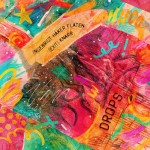
Artist: (Exit) Knarr (@)
Title: Drops
Format: 12" + Download
Label: Sonic Transmissions Records
Rated:
Title: Drops
Format: 12" + Download
Label: Sonic Transmissions Records
Rated:
If there’s one thing Ingebrigt Håker Flaten has mastered over the decades, it’s the art of turning experiments that shouldn’t work into music that absolutely does. What began as a one-off commission for Vossajazz has now grown into his most vital project, (Exit) Knarr, a vessel big enough to hold free-jazz fury, painterly abstraction, and electronics without ever capsizing. On "Drops" (Sonic Transmissions Records), the third studio album by this steady sextet, Håker Flaten doesn’t just steer the ship - he redraws the nautical charts altogether.
The big idea this time: graphic scores. Skeptics might groan - ah, another exercise in shapes and squiggles masquerading as music - but "Drops" proves why (Exit) Knarr is a different beast. Håker Flaten treats visual art like a Rosetta Stone for sound, citing influences as wide-ranging as Kandinsky, Hilma af Klint, Braxton, Cage, and Xenakis. The results are not esoteric puzzles but vivid sonic canvases: bursts of saxophone like brushstrokes, piano lines flickering like rays through stained glass, bass and drums sculpting a rhythmic architecture that feels both ancient and futuristic. Electronics buzz in and out, not as gimmick but as atmosphere, expanding the palette like a painter suddenly discovering neon.
The opener, "Deluge", is a Wayne Shorter deconstruction, a sprawling homage that feels less like a cover than a séance - summoning Shorter’s spirit while bending it through Knarr’s idiosyncratic prism. With Mette Rasmussen and Veslemøy Narvesen joining for this extended lineup, the piece floods the room with both reverence and unruly joy. The title track, "Drops", condenses that energy into glittering shards - sharp, bright, and quick to vanish. "Kanón (for Paal Nilssen-Love)", at nearly seventeen minutes, is the record’s backbone, a monumental free-jazz sprawl that pays tribute while also flexing the band’s stamina and wit. Finally, "Austin Vibes", tweaked by Karl Hjalmar Nyberg, is a sly nod to Håker Flaten’s Texas chapter, folding geography into sonics as easily as flipping a record side.
There’s an almost mischievous clarity to "Drops". For all its conceptual depth, the music never drowns in theory. Instead, it radiates a restless joy - an insistence that even the most abstract experiments should swing, should sing, should breathe. After all, this is a band that thrives on collision: jazz against electronics, structure against improvisation, rigor against play. What might look on paper like chaos becomes, in their hands, inevitability.
At its heart, "Drops" is about transformation. Childhood sketches reappear as graphic scores; personal mythologies turn into band dialogues; one festival commission becomes a flagship ensemble. You can hear Håker Flaten the painter, the scientist, the jazz radical, the cosmic traveler - all converging in a single fluid gesture.
The album closes with the sense that (Exit) Knarr isn’t just a band but a long voyage - each release another stop in an unfolding odyssey. "Drops" may be a new destination, but it already points to other horizons. It rewards repetition, not because it hides secrets, but because its surface is alive, always refracting light differently, depending on how you listen.
It’s a record that reminds you: sometimes the best way to explain music is to draw it first - and then play until the paper catches fire.
The big idea this time: graphic scores. Skeptics might groan - ah, another exercise in shapes and squiggles masquerading as music - but "Drops" proves why (Exit) Knarr is a different beast. Håker Flaten treats visual art like a Rosetta Stone for sound, citing influences as wide-ranging as Kandinsky, Hilma af Klint, Braxton, Cage, and Xenakis. The results are not esoteric puzzles but vivid sonic canvases: bursts of saxophone like brushstrokes, piano lines flickering like rays through stained glass, bass and drums sculpting a rhythmic architecture that feels both ancient and futuristic. Electronics buzz in and out, not as gimmick but as atmosphere, expanding the palette like a painter suddenly discovering neon.
The opener, "Deluge", is a Wayne Shorter deconstruction, a sprawling homage that feels less like a cover than a séance - summoning Shorter’s spirit while bending it through Knarr’s idiosyncratic prism. With Mette Rasmussen and Veslemøy Narvesen joining for this extended lineup, the piece floods the room with both reverence and unruly joy. The title track, "Drops", condenses that energy into glittering shards - sharp, bright, and quick to vanish. "Kanón (for Paal Nilssen-Love)", at nearly seventeen minutes, is the record’s backbone, a monumental free-jazz sprawl that pays tribute while also flexing the band’s stamina and wit. Finally, "Austin Vibes", tweaked by Karl Hjalmar Nyberg, is a sly nod to Håker Flaten’s Texas chapter, folding geography into sonics as easily as flipping a record side.
There’s an almost mischievous clarity to "Drops". For all its conceptual depth, the music never drowns in theory. Instead, it radiates a restless joy - an insistence that even the most abstract experiments should swing, should sing, should breathe. After all, this is a band that thrives on collision: jazz against electronics, structure against improvisation, rigor against play. What might look on paper like chaos becomes, in their hands, inevitability.
At its heart, "Drops" is about transformation. Childhood sketches reappear as graphic scores; personal mythologies turn into band dialogues; one festival commission becomes a flagship ensemble. You can hear Håker Flaten the painter, the scientist, the jazz radical, the cosmic traveler - all converging in a single fluid gesture.
The album closes with the sense that (Exit) Knarr isn’t just a band but a long voyage - each release another stop in an unfolding odyssey. "Drops" may be a new destination, but it already points to other horizons. It rewards repetition, not because it hides secrets, but because its surface is alive, always refracting light differently, depending on how you listen.
It’s a record that reminds you: sometimes the best way to explain music is to draw it first - and then play until the paper catches fire.