
Browse by Genre
Industrial Music / Industrial Metal / Aggro Industrial / Electro Metal
Industrial Noise / Power Noise / Harsh Noise
Synth Pop / Electro Pop / Synth-Electronica
Techno / Trance / Goa / Drum'n'Bass / Jungle / Tribal / Trip-Hop
Ambient / Electronica / Ethereal / Dub / Soundscapes / Abstract
Experimental / Avantgarde / Weird & Wired / Glitch / Noise / Field Recording
Dark / Gothic / Wave / New Wave / Dark Wave / Industrial Gothic
New Music / Downtown / Avantgarde Jazz / New Classical / World
Search Reviews
Music Reviews
Michael Vorfeld: Glühlampenmusik

Artist: Michael Vorfeld (@)
Title: Glühlampenmusik
Format: Tape + Download
Label: Karlrecords (http://www.karlrecords.net/) (@)
Rated:

Title: Glühlampenmusik
Format: Tape + Download
Label: Karlrecords (http://www.karlrecords.net/) (@)
Rated:
There are artists who pick up guitars, and there are artists who pick up light bulbs. Michael Vorfeld belongs firmly, gloriously, in the latter camp. With "Glühlampenmusik" (Karl Records), he celebrates twenty years of coaxing sound out of what most of us would only use to illuminate a living room. It’s a reminder that sometimes the best experimental music begins not with virtuosity, but with curiosity - and the willingness to stare at a filament until it starts singing.
The premise sounds absurd, even dadaist: microphones trained on incandescent lamps, relays clicking, dimmers gasping, filaments trembling, light turned into sound. But Vorfeld has been doing this since the mid-’80s, refining his incandescent sorcery into a practice that is at once laboratory experiment, performance art, and meditative ritual. What you hear in "Glühlampenmusik" is not electricity simply behaving - it’s electricity confessing.
Across ten pieces, the music shifts from sparse crackles and luminous drones ("Lichte Wendel") to full-on buzzing pulsations that could almost pass for minimalist techno if you squint hard enough ("Phasenpuls"). In between, you get flickering Morse codes of current ("Leuchtcode"), percussive bursts that sound like sparks skittering across a basement floor ("Leiterfunken"), and ghostly streams of glowing resonance ("Lumenfluss"). Sometimes the hum is gentle, as if the lamps are purring; sometimes it’s abrasive, as if the grid itself were choking on static.
Vorfeld’s work is deeply physical - you can almost see the filaments glowing, feel the heat, smell the ozone. But it’s also quietly funny: a celebration of the humble bulb as both relic and prophet. At a time when the world is switching en masse to LED efficiency, Vorfeld insists on giving the incandescent lamp one last great operatic aria before retirement. This is not nostalgia - it’s archaeology of energy, digging out the hidden song of a dying technology.
Mastered by Rashad Becker, the sound is both forensic and hypnotic, capturing the micro-events of electricity with an intensity that borders on the cosmic. It’s easy to forget that these noises come from domestic objects; they could be mistaken for recordings of a pulsar, or a mothership warming up.
So what is "Glühlampenmusik" really? A flickering joke? A physics lesson? A club set for ghosts of Edison’s workshop? Perhaps all three. What’s certain is that it illuminates (pun unavoidable) how fragile, funny, and fertile the act of listening can be.
Better not try this at home, though - unless you enjoy short circuits as sound art.
The premise sounds absurd, even dadaist: microphones trained on incandescent lamps, relays clicking, dimmers gasping, filaments trembling, light turned into sound. But Vorfeld has been doing this since the mid-’80s, refining his incandescent sorcery into a practice that is at once laboratory experiment, performance art, and meditative ritual. What you hear in "Glühlampenmusik" is not electricity simply behaving - it’s electricity confessing.
Across ten pieces, the music shifts from sparse crackles and luminous drones ("Lichte Wendel") to full-on buzzing pulsations that could almost pass for minimalist techno if you squint hard enough ("Phasenpuls"). In between, you get flickering Morse codes of current ("Leuchtcode"), percussive bursts that sound like sparks skittering across a basement floor ("Leiterfunken"), and ghostly streams of glowing resonance ("Lumenfluss"). Sometimes the hum is gentle, as if the lamps are purring; sometimes it’s abrasive, as if the grid itself were choking on static.
Vorfeld’s work is deeply physical - you can almost see the filaments glowing, feel the heat, smell the ozone. But it’s also quietly funny: a celebration of the humble bulb as both relic and prophet. At a time when the world is switching en masse to LED efficiency, Vorfeld insists on giving the incandescent lamp one last great operatic aria before retirement. This is not nostalgia - it’s archaeology of energy, digging out the hidden song of a dying technology.
Mastered by Rashad Becker, the sound is both forensic and hypnotic, capturing the micro-events of electricity with an intensity that borders on the cosmic. It’s easy to forget that these noises come from domestic objects; they could be mistaken for recordings of a pulsar, or a mothership warming up.
So what is "Glühlampenmusik" really? A flickering joke? A physics lesson? A club set for ghosts of Edison’s workshop? Perhaps all three. What’s certain is that it illuminates (pun unavoidable) how fragile, funny, and fertile the act of listening can be.
Better not try this at home, though - unless you enjoy short circuits as sound art.
Pneuma: Random Gods
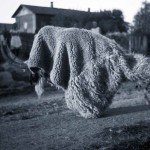
Timóteo Azevedo, aka Random Gods, has always been something of a ghost in the Portuguese experimental scene - appearing briefly on compilations and EPs, then disappearing back into the shadows. With "Pneuma", his debut album for Souk (the restless sublabel of Discrepant), he steps into the light, only to remind us that the light itself is unstable, flickering, more interrogation lamp than warm sunrise.
The album opens with “Abertura”, a short orchestral overture, fragile but tense, as if to tune the listener into a ritual that is about to start. Then comes the meat: “Somatiga” with its syncopated kicks and grime-like synth jabs, a track that feels like rusted steel trying to remember the rave. The title piece “Pneuma” breathes at halfstep tempo, its neon melodies bending through submerged bass as if dragged through deep water. “Acervo” fractures rhythm further - kicks crumbling, claps like loose shrapnel - while “Prumoo” stomps forward with a merciless, post-industrial groove that could make the warehouse walls sweat.
But Random Gods doesn’t just deal in pressure. “Alvoro” mutates footwork into an artifact from some other timeline: sharp, ritualistic, but strangely graceful. And closing track “Ex-Tejo” offers something unexpected - melancholy, almost tender, a sunrise moment after the storm of distorted rhythms and metallic edges. It doesn’t resolve the tension, but it hints at the possibility of release, of breath ("pneuma") returning after suffocation.
What makes "Pneuma" stand out is its ability to sound both scavenged and futuristic at once. Azevedo treats rhythm and texture like found objects - shards of metal, broken percussion, the ghosts of hardcore and industrial - assembling them into an uneasy body music that feels prophetic in its dread. These are not beats for the club as much as beats for the ruins that remain after the club has burned down.
Random Gods has released before (Danse Noire, ZABRA), but here he seems to crystallize a language: one part ritual, one part collapse, one part hope that survives through sheer stubbornness. "Pneuma" is a record of fragments, but the way it breathes - unevenly, urgently - makes it whole.
And maybe that’s the point. In times when the world mutates faster than we can process, Random Gods teaches us to listen to the fragments, to find rhythm in the wreckage, and to hold on to the last glimmers of morning light over the Tejo, however faint.
The album opens with “Abertura”, a short orchestral overture, fragile but tense, as if to tune the listener into a ritual that is about to start. Then comes the meat: “Somatiga” with its syncopated kicks and grime-like synth jabs, a track that feels like rusted steel trying to remember the rave. The title piece “Pneuma” breathes at halfstep tempo, its neon melodies bending through submerged bass as if dragged through deep water. “Acervo” fractures rhythm further - kicks crumbling, claps like loose shrapnel - while “Prumoo” stomps forward with a merciless, post-industrial groove that could make the warehouse walls sweat.
But Random Gods doesn’t just deal in pressure. “Alvoro” mutates footwork into an artifact from some other timeline: sharp, ritualistic, but strangely graceful. And closing track “Ex-Tejo” offers something unexpected - melancholy, almost tender, a sunrise moment after the storm of distorted rhythms and metallic edges. It doesn’t resolve the tension, but it hints at the possibility of release, of breath ("pneuma") returning after suffocation.
What makes "Pneuma" stand out is its ability to sound both scavenged and futuristic at once. Azevedo treats rhythm and texture like found objects - shards of metal, broken percussion, the ghosts of hardcore and industrial - assembling them into an uneasy body music that feels prophetic in its dread. These are not beats for the club as much as beats for the ruins that remain after the club has burned down.
Random Gods has released before (Danse Noire, ZABRA), but here he seems to crystallize a language: one part ritual, one part collapse, one part hope that survives through sheer stubbornness. "Pneuma" is a record of fragments, but the way it breathes - unevenly, urgently - makes it whole.
And maybe that’s the point. In times when the world mutates faster than we can process, Random Gods teaches us to listen to the fragments, to find rhythm in the wreckage, and to hold on to the last glimmers of morning light over the Tejo, however faint.
Trondheim Voices + Asle Karstad: Sobre Las Olas (Original Motion Picture Soundtrack)

Artist: Trondheim Voices + Asle Karstad (@)
Title: Sobre Las Olas (Original Motion Picture Soundtrack)
Format: Download Only (MP3 + Lossless)
Label: MNJ Records (@)
Rated:

Title: Sobre Las Olas (Original Motion Picture Soundtrack)
Format: Download Only (MP3 + Lossless)
Label: MNJ Records (@)
Rated:
Film music is usually something that creeps in through the back door. It whispers, it nudges, it tries to be invisible while telling you what to feel. "Sobre las Olas", instead, kicks the door wide open and says: “Forget the orchestra. Forget the violins. The human voice was here first”.
Trondheim Voices, the ever-restless Norwegian ensemble of improvising singers, teamed up with sound designer Asle Karstad and Mexican-Spanish director Horacio Alcalá to attempt the unthinkable: score an entire feature film using nothing but improvised vocals, filtered, looped and reshaped in real time with custom-built “Maccatrols”. The result is less soundtrack and more geological force - like tectonic plates made of breath and syllables, grinding until landscapes emerge.
The music doesn’t decorate "Sobre las Olas". It "inhabits" it. In tracks like "Pure Soul" and "Angel Farewell", the voices move like winds through the fictional island of Magdala, sometimes gentle, sometimes cutting, always impossible to pin down. "Love Letter to Carmen" lasts barely more than a minute, yet it feels like a memory excavated from someone else’s dream. "David Lynch would probably nod approvingly, then ask for the number of their sound engineer".
There’s a strange irony here: despite being thoroughly futuristic in its use of live electronics, the record sounds primordial. These are not melodies or arias; they are incantations, echoes of something that might have existed before language itself. You can almost believe Alcalá when he says the voices came first and the film followed, as if Magdala’s myths had been sung into existence.
Not every listener will find comfort here - this is not music that hugs you; it stares at you until you reveal your own secrets. Yet, there’s also serenity: in "Lake Love" or "Sky", voices drift and expand like fog lifting over water, reminding us that fragility and enormity are sometimes the same thing.
"Sobre las Olas" is a gamble, yes. But it pays off beautifully. Where other soundtracks are content to be invisible scaffolding, this one is the building itself: cathedral walls made of resonance, foundations laid in whispers, arches rising in loops of air. A risky experiment, but one that makes the listener believe again in the simple, terrifying, miraculous power of the human voice.
Trondheim Voices, the ever-restless Norwegian ensemble of improvising singers, teamed up with sound designer Asle Karstad and Mexican-Spanish director Horacio Alcalá to attempt the unthinkable: score an entire feature film using nothing but improvised vocals, filtered, looped and reshaped in real time with custom-built “Maccatrols”. The result is less soundtrack and more geological force - like tectonic plates made of breath and syllables, grinding until landscapes emerge.
The music doesn’t decorate "Sobre las Olas". It "inhabits" it. In tracks like "Pure Soul" and "Angel Farewell", the voices move like winds through the fictional island of Magdala, sometimes gentle, sometimes cutting, always impossible to pin down. "Love Letter to Carmen" lasts barely more than a minute, yet it feels like a memory excavated from someone else’s dream. "David Lynch would probably nod approvingly, then ask for the number of their sound engineer".
There’s a strange irony here: despite being thoroughly futuristic in its use of live electronics, the record sounds primordial. These are not melodies or arias; they are incantations, echoes of something that might have existed before language itself. You can almost believe Alcalá when he says the voices came first and the film followed, as if Magdala’s myths had been sung into existence.
Not every listener will find comfort here - this is not music that hugs you; it stares at you until you reveal your own secrets. Yet, there’s also serenity: in "Lake Love" or "Sky", voices drift and expand like fog lifting over water, reminding us that fragility and enormity are sometimes the same thing.
"Sobre las Olas" is a gamble, yes. But it pays off beautifully. Where other soundtracks are content to be invisible scaffolding, this one is the building itself: cathedral walls made of resonance, foundations laid in whispers, arches rising in loops of air. A risky experiment, but one that makes the listener believe again in the simple, terrifying, miraculous power of the human voice.
Arvo Zylo & Hal McGee: The Bubblegum Variations

Artist: Arvo Zylo & Hal McGee (http://www.haltapes.com/) (@)
Title: The Bubblegum Variations
Format: Download Only (MP3 + Lossless)
Label: No Part Of It (@)
Rated:
Title: The Bubblegum Variations
Format: Download Only (MP3 + Lossless)
Label: No Part Of It (@)
Rated:
Bubblegum usually pops quickly, sweet for a second and then discarded. But Arvo Zylo and Hal McGee, veterans of sound as diary and noise as autobiography, have chewed the metaphor until it became a whole alternate universe: "The Bubblegum Variations". Over 350 recordings are thrown into a blender of chance, friendship, and obsessive archiving, producing something that’s less “bubblegum pop” and more “bubblegum entropy”.
Zylo came armed with walkie-talkie confessions, harmonium wheezes, forgotten tapes, belt sanders, and stray ghosts of early-2000s gear. McGee responded with his dictaphones - always the diarist - capturing the faithful dog Stanley, familial voices, circuit-bent keyboards, and the rough hum of everyday life. Together, they stitched it all into a six-part odyssey that feels at once like a personal journal, a haunted funhouse, and an anarchic jukebox.
Listening to "The Bubblegum Variations" is a little like rummaging through a garage where every box contains a different reality: a squeaky toy organ bleeds into a cornet honk, which mutates into a field recording of traffic, which collapses into tape hiss that suddenly resembles breath. It is absurd, messy, sometimes hilarious, sometimes unexpectedly moving - like finding a love letter scribbled on the back of a grocery receipt.
Zylo (born the same year McGee started recording) has long cultivated an aesthetic of maximalist collage, while McGee’s Haltapes catalog - thousands of micro-diaries, cassette letters, and home-brewed experiments - makes him one of the true lifers of the noise underground. Together, they make something that refuses polish and instead insists on rawness, chance, and generosity. There is no hierarchy of sound here: the squeal of a toy keyboard is as important as the resonance of a singing bowl or the voice of a friend.
At six sprawling tracks, the album isn’t about narrative arcs or climaxes. It’s about immersion - being swallowed into an unpredictable stream where memory, banality, and surrealism share the same bed. And perhaps that’s the truest “bubblegum” here: the way small, disposable things - dictaphone chatter, broken toys, forgotten loops - stretch into a strangely elastic eternity.
You don’t consume "The Bubblegum Variations" the way you’d consume an album. You inhabit it. You chew it until your jaw aches, until sweetness fades into strangeness, and then - unexpectedly - you taste something that feels like truth.
Zylo came armed with walkie-talkie confessions, harmonium wheezes, forgotten tapes, belt sanders, and stray ghosts of early-2000s gear. McGee responded with his dictaphones - always the diarist - capturing the faithful dog Stanley, familial voices, circuit-bent keyboards, and the rough hum of everyday life. Together, they stitched it all into a six-part odyssey that feels at once like a personal journal, a haunted funhouse, and an anarchic jukebox.
Listening to "The Bubblegum Variations" is a little like rummaging through a garage where every box contains a different reality: a squeaky toy organ bleeds into a cornet honk, which mutates into a field recording of traffic, which collapses into tape hiss that suddenly resembles breath. It is absurd, messy, sometimes hilarious, sometimes unexpectedly moving - like finding a love letter scribbled on the back of a grocery receipt.
Zylo (born the same year McGee started recording) has long cultivated an aesthetic of maximalist collage, while McGee’s Haltapes catalog - thousands of micro-diaries, cassette letters, and home-brewed experiments - makes him one of the true lifers of the noise underground. Together, they make something that refuses polish and instead insists on rawness, chance, and generosity. There is no hierarchy of sound here: the squeal of a toy keyboard is as important as the resonance of a singing bowl or the voice of a friend.
At six sprawling tracks, the album isn’t about narrative arcs or climaxes. It’s about immersion - being swallowed into an unpredictable stream where memory, banality, and surrealism share the same bed. And perhaps that’s the truest “bubblegum” here: the way small, disposable things - dictaphone chatter, broken toys, forgotten loops - stretch into a strangely elastic eternity.
You don’t consume "The Bubblegum Variations" the way you’d consume an album. You inhabit it. You chew it until your jaw aches, until sweetness fades into strangeness, and then - unexpectedly - you taste something that feels like truth.
Urbs & Cutex: On Our Way
Artist: Urbs & Cutex (@)
Title: On Our Way
Format: 12" x 2 + Download
Label: Compost Records (@)
Rated:
Title: On Our Way
Format: 12" x 2 + Download
Label: Compost Records (@)
Rated:
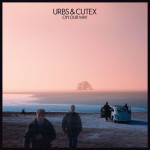
Imagine two Viennese DJs disappearing into the ether for 22 years, only to re-emerge with a record that sounds as though they never left the room - just took a very long coffee break. That’s "On Our Way", the third album by Urbs & Cutex, a duo who, back in the early 2000s, helped define a slice of Vienna’s beat culture: jazzy loops, East Coast swagger, downtempo haze, all polished with that particular Central European sense of restraint.
Here, they lean into the same language, but with more patience, more layering, and more sly humour. These tracks aren’t “beats for hire” anymore, but carefully plotted worlds where loops refuse to loop lazily. The opener "When Winter’s Gone" eases in with their signature warmth, and then - shock of shocks - comes "Wherever You Are", featuring New York MC T.R.A.C., the first-ever rap appearance on one of their albums. It works like a wink to the present: “See? We can do this if we want”.
Across 14 tracks, the duo plays a subtle balancing act. There’s the sunlit nostalgia of "Indian Summer", the shimmering melancholy of "Lament", the bubbly lightness of "Bubbles" (yes, truth in advertising), and the noir-tinted "Lovegod", closing the album with a murmur instead of a bang. It’s hip-hop that remembers its roots but resists trend-chasing. You won’t find trap hi-hats or algorithmic polish here; you’ll find beats as unhurried as an old Volkswagen Beetle rolling through Vienna’s streets at night.
The best trick of "On Our Way" is that it doesn’t feel like a comeback at all - it feels like a continuation, as if the last two decades were just a long pause button. Some will hear retro; others, timelessness. In truth, it’s both.
Urbs & Cutex may joke about taking another 222 years for the next one, but "On Our Way" proves that their music isn’t racing against time. It’s moving at its own pace, which might just be the secret of its charm: beats that age, not like milk, but like wine.
Here, they lean into the same language, but with more patience, more layering, and more sly humour. These tracks aren’t “beats for hire” anymore, but carefully plotted worlds where loops refuse to loop lazily. The opener "When Winter’s Gone" eases in with their signature warmth, and then - shock of shocks - comes "Wherever You Are", featuring New York MC T.R.A.C., the first-ever rap appearance on one of their albums. It works like a wink to the present: “See? We can do this if we want”.
Across 14 tracks, the duo plays a subtle balancing act. There’s the sunlit nostalgia of "Indian Summer", the shimmering melancholy of "Lament", the bubbly lightness of "Bubbles" (yes, truth in advertising), and the noir-tinted "Lovegod", closing the album with a murmur instead of a bang. It’s hip-hop that remembers its roots but resists trend-chasing. You won’t find trap hi-hats or algorithmic polish here; you’ll find beats as unhurried as an old Volkswagen Beetle rolling through Vienna’s streets at night.
The best trick of "On Our Way" is that it doesn’t feel like a comeback at all - it feels like a continuation, as if the last two decades were just a long pause button. Some will hear retro; others, timelessness. In truth, it’s both.
Urbs & Cutex may joke about taking another 222 years for the next one, but "On Our Way" proves that their music isn’t racing against time. It’s moving at its own pace, which might just be the secret of its charm: beats that age, not like milk, but like wine.