
Browse by Genre
Industrial Music / Industrial Metal / Aggro Industrial / Electro Metal
Industrial Noise / Power Noise / Harsh Noise
Synth Pop / Electro Pop / Synth-Electronica
Techno / Trance / Goa / Drum'n'Bass / Jungle / Tribal / Trip-Hop
Ambient / Electronica / Ethereal / Dub / Soundscapes / Abstract
Experimental / Avantgarde / Weird & Wired / Glitch / Noise / Field Recording
Dark / Gothic / Wave / New Wave / Dark Wave / Industrial Gothic
New Music / Downtown / Avantgarde Jazz / New Classical / World
Search Reviews
Music Reviews
Pyrame: Mutation
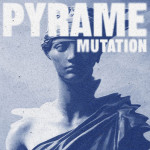
Artist: Pyrame (@)
Title: Mutation
Format: Download Only (MP3 + Lossless)
Label: Thisbe Recordings (@)
Rated:

Title: Mutation
Format: Download Only (MP3 + Lossless)
Label: Thisbe Recordings (@)
Rated:
Some records come as diary entries, others as manifestos. "Mutation", the new EP by Pyrame, feels like a telegram sent from a dimension where Berlin clubs and post-punk rehearsal basements share the same fluorescent light. It’s only six tracks long, but it unfolds like a whole novella about instability: technological, personal, planetary. Pyrame, a Swiss-born, Berlin-based artist, has long been orbiting between electro, new wave, and left-field pop; here he fuses those impulses into something more urgent, almost frantic, as though sound itself is mutating faster than the hands that shape it.
The title track, "Mutation", doesn’t so much begin as it lunges forward - sharp synth stabs, a pulse that flirts with menace, vocals half-spoken like someone reading coordinates while the ship is already falling apart. It’s not a dancefloor filler in the usual sense, more a pressure chamber: the groove insists, but the air feels thin. Then comes "Hyperspace of Dimension 7", the kind of title that could only belong to someone knowingly poking fun at cosmic excess while secretly loving it. The track itself leans heavier into psychedelic electro, basslines stretching out like neon highways, melodies flickering with sci-fi melancholy.
Where Pyrame’s originals set the stage, the remixes turn the kaleidoscope. H.L.M. presses "Mutation" into sleeker, club-ready form - less jagged, more streamlined, like the mutant has been taught to dance. Oltrefuturo contributes not one but two re-imaginations of "Hyperspace": the “Voce Dimensionale Mix” adds vocal textures that make it feel like an alien transmission, while the “Trance-A-Lento Mix” slows the rush into something hypnotic, meditative, almost devotional. Acid Washed, meanwhile, take the same source material and inject it with their trademark blend of slick retro-futurism, landing somewhere between Italo disco fever dream and cybernetic elegy.
Together, the EP feels less like a collection of remixes and more like a philosophical exercise: how many shapes can one idea take before it ceases to be itself? Pyrame seems aware of the irony - he speaks of a world mutating too fast to follow, yet the music insists on repetition, revisitation, re-rendering. The result is oddly comforting: yes, things mutate, but they also return, echo, refract, as if reminding us that change is not erasure but a different kind of persistence.
"Mutation" may not answer the riddle of “Dimension 7” (if such a place exists), but it does what good electronic records often do: it proposes a temporary cosmology, a set of rules by which rhythm and tone rearrange the chaos into something momentarily livable. And if the ship still crashes, at least it does so with style, distortion, and a sense of humour.
The title track, "Mutation", doesn’t so much begin as it lunges forward - sharp synth stabs, a pulse that flirts with menace, vocals half-spoken like someone reading coordinates while the ship is already falling apart. It’s not a dancefloor filler in the usual sense, more a pressure chamber: the groove insists, but the air feels thin. Then comes "Hyperspace of Dimension 7", the kind of title that could only belong to someone knowingly poking fun at cosmic excess while secretly loving it. The track itself leans heavier into psychedelic electro, basslines stretching out like neon highways, melodies flickering with sci-fi melancholy.
Where Pyrame’s originals set the stage, the remixes turn the kaleidoscope. H.L.M. presses "Mutation" into sleeker, club-ready form - less jagged, more streamlined, like the mutant has been taught to dance. Oltrefuturo contributes not one but two re-imaginations of "Hyperspace": the “Voce Dimensionale Mix” adds vocal textures that make it feel like an alien transmission, while the “Trance-A-Lento Mix” slows the rush into something hypnotic, meditative, almost devotional. Acid Washed, meanwhile, take the same source material and inject it with their trademark blend of slick retro-futurism, landing somewhere between Italo disco fever dream and cybernetic elegy.
Together, the EP feels less like a collection of remixes and more like a philosophical exercise: how many shapes can one idea take before it ceases to be itself? Pyrame seems aware of the irony - he speaks of a world mutating too fast to follow, yet the music insists on repetition, revisitation, re-rendering. The result is oddly comforting: yes, things mutate, but they also return, echo, refract, as if reminding us that change is not erasure but a different kind of persistence.
"Mutation" may not answer the riddle of “Dimension 7” (if such a place exists), but it does what good electronic records often do: it proposes a temporary cosmology, a set of rules by which rhythm and tone rearrange the chaos into something momentarily livable. And if the ship still crashes, at least it does so with style, distortion, and a sense of humour.
Yorkshire Modular Society + Peter Digby Lee: Beneath the Hanging Sky

Artist: Yorkshire Modular Society + Peter Digby Lee
Title: Beneath the Hanging Sky
Format: Download Only (MP3 + Lossless)
Label: Dragon's Eye Recordings (@)
Rated:
Title: Beneath the Hanging Sky
Format: Download Only (MP3 + Lossless)
Label: Dragon's Eye Recordings (@)
Rated:
Listening to "Beneath the Hanging Sky" is like staring into a fog so thick you begin to notice colors you didn’t know fog could contain. This debut collaboration between Yorkshire Modular Society (Dominick Schofield) and Peter Digby Lee stretches across almost two and a half hours, yet it feels less like an album and more like a landscape you wander into, barefoot, unsure where it ends - or if it does.
The origin story is telling: the two didn’t meet through words but through vibration, in the resonance bath of Todmorden, where sound lingers in the bones longer than conversation ever could. Later, Peter handed Dominick a lifetime’s worth of sonic fieldnotes - flutes, bowls, breath, metal, recordings thick with memory - and from these, Dominick sculpted vast, slow-moving architectures. The result isn’t so much a record as an excavation of resonance itself: how long a sound can be held, what ghosts live in its decay, how repetition becomes revelation.
The four pieces here - ranging from twenty to nearly forty minutes - are long not for indulgence but for necessity. "Beneath the Hanging Sky", opening with bansuri loops and metallic shimmers, unfolds like a dawn that refuses to arrive. "Glass Lung" exhales slowly, a barely-there dream of flutes and modular synths that seem to dissolve even as you reach for them. "Echo for the Unseen" deepens the descent: slowed-down singing bowls stretched into spectral clouds, hovering like the outline of a cathedral made entirely of vapor. And finally, "Spiral of Breath" circles itself with layered ohms, a devotional closing where the act of listening becomes indistinguishable from meditation.
The beauty of this record lies in its refusal to hurry. Each piece moves like breath through a long corridor, or like a mantra repeated until it no longer matters what the words mean. There’s almost monastic patience at play here, yet it’s not dry asceticism - it’s porous, glowing, tactile. You can feel both Dominick’s meticulous shaping (a lifetime of shifting from piano to percussion, from indie stages to modular synth caverns) and Peter’s devotional grounding (his years in North Indian classical study, silent retreats, trance parties, and even homebuilt flotation tanks). It’s a collision of rigor and surrender, science and mysticism, modular wires and bamboo flutes.
At times it feels like music designed to be infinite - recordings that could have gone on for days, looping gently beneath the weather until the listener either drifts into sleep or into a state where sleep is unnecessary. There’s humor, too, if you tilt your head: "Glass Lung" could be the soundtrack to a robot sighing in relief after a long day, and "Spiral of Breath" might just be the universe chanting itself awake after hitting the cosmic snooze button.
But mostly, "Beneath the Hanging Sky" is a lesson in attention. It doesn’t demand, it invites. It doesn’t explain, it lingers. It asks you to sit with it, as you would with a friend who doesn’t speak much, but whose presence changes the air in the room. By the end, you might not know whether you’ve been listening to music, meditation, or memory itself - but you will feel lighter, stretched, a little dissolved.
This is less an album to “consume” than a space to inhabit. To borrow its own imagery: it is not a soundtrack for the sky above you, but the one hanging inside you, waiting to be noticed.
The origin story is telling: the two didn’t meet through words but through vibration, in the resonance bath of Todmorden, where sound lingers in the bones longer than conversation ever could. Later, Peter handed Dominick a lifetime’s worth of sonic fieldnotes - flutes, bowls, breath, metal, recordings thick with memory - and from these, Dominick sculpted vast, slow-moving architectures. The result isn’t so much a record as an excavation of resonance itself: how long a sound can be held, what ghosts live in its decay, how repetition becomes revelation.
The four pieces here - ranging from twenty to nearly forty minutes - are long not for indulgence but for necessity. "Beneath the Hanging Sky", opening with bansuri loops and metallic shimmers, unfolds like a dawn that refuses to arrive. "Glass Lung" exhales slowly, a barely-there dream of flutes and modular synths that seem to dissolve even as you reach for them. "Echo for the Unseen" deepens the descent: slowed-down singing bowls stretched into spectral clouds, hovering like the outline of a cathedral made entirely of vapor. And finally, "Spiral of Breath" circles itself with layered ohms, a devotional closing where the act of listening becomes indistinguishable from meditation.
The beauty of this record lies in its refusal to hurry. Each piece moves like breath through a long corridor, or like a mantra repeated until it no longer matters what the words mean. There’s almost monastic patience at play here, yet it’s not dry asceticism - it’s porous, glowing, tactile. You can feel both Dominick’s meticulous shaping (a lifetime of shifting from piano to percussion, from indie stages to modular synth caverns) and Peter’s devotional grounding (his years in North Indian classical study, silent retreats, trance parties, and even homebuilt flotation tanks). It’s a collision of rigor and surrender, science and mysticism, modular wires and bamboo flutes.
At times it feels like music designed to be infinite - recordings that could have gone on for days, looping gently beneath the weather until the listener either drifts into sleep or into a state where sleep is unnecessary. There’s humor, too, if you tilt your head: "Glass Lung" could be the soundtrack to a robot sighing in relief after a long day, and "Spiral of Breath" might just be the universe chanting itself awake after hitting the cosmic snooze button.
But mostly, "Beneath the Hanging Sky" is a lesson in attention. It doesn’t demand, it invites. It doesn’t explain, it lingers. It asks you to sit with it, as you would with a friend who doesn’t speak much, but whose presence changes the air in the room. By the end, you might not know whether you’ve been listening to music, meditation, or memory itself - but you will feel lighter, stretched, a little dissolved.
This is less an album to “consume” than a space to inhabit. To borrow its own imagery: it is not a soundtrack for the sky above you, but the one hanging inside you, waiting to be noticed.
R. Schappert: SUMmerSUMmer

R. Schappert’s "SUMmerSUMmer" could feel like a season bottled, shaken gently, and poured out in seven different glasses, each with its own flavor of sun, breeze, and uncertainty. Released via his own r-ecords imprint and distributed through Kompakt Digital, the work sits at that porous border where electronica meets diary entry, where beats carry both lightness and melancholy in the same stride. It’s Schappert’s second offering on the label, and it expands his ongoing exploration of how personal states of mind can be rendered as soundscapes that oscillate between dancefloor invitation and reflective solitude.
The opening title track sets the tone immediately: shimmering synths and airy beats conjure a kind of half-remembered party feeling - like standing at the edge of the dancefloor, beer sweating in hand, while twilight insists it’s still too early for abandon. The music never resolves into one mood, and that’s precisely the point: fluorescent melancholy drapes itself over warm rhythmic pulses, a reminder that summer is never just joy, but also longing for something you can’t quite name.
Across the record, tempo, and tone shift like weather fronts. "LÄuft" moves with understated confidence, "Getting lost with you" stretches time until it feels almost cinematic, while "Love nest" - at over ten minutes - builds a slow-motion intimacy that feels less like a track and more like a room you wander into and never want to leave.
Text, too, plays a key role. Schappert feeds his own words into AI voices - sometimes whispered, sometimes sung - producing uncanny narrators that float over the tracks like synthetic ghosts. “My dream is the other side of the end”, one voice intones, and suddenly the whole record feels like a philosophical postcard from an uncertain future. Are we moving forward, or in circles? The album never says, but its refusal to decide becomes strangely liberating.
Closing track "C’mon darlin’ C’mon bro" crystallizes the duality: playful in tone yet laced with doubt, carried by a bassline that feels both grounding and dissolving. The AI vocals rise here, too - half human, half machine, suggesting that perhaps summer itself has been outsourced to a synthetic chorus. It’s funny, haunting, and oddly touching, like someone teaching a robot how to sigh.
If Schappert’s "SUMmerSUMmer" has a thesis, it’s this: life in 2025 is less about choosing a direction than about learning to move with contradictions - dancing while doubting, laughing while longing, feeling both the warmth of sun and the burn of its reminder that nothing lasts forever. Reviewing it feels like reviewing summer itself: better experienced than explained, yet worth trying to capture before it melts away.
The opening title track sets the tone immediately: shimmering synths and airy beats conjure a kind of half-remembered party feeling - like standing at the edge of the dancefloor, beer sweating in hand, while twilight insists it’s still too early for abandon. The music never resolves into one mood, and that’s precisely the point: fluorescent melancholy drapes itself over warm rhythmic pulses, a reminder that summer is never just joy, but also longing for something you can’t quite name.
Across the record, tempo, and tone shift like weather fronts. "LÄuft" moves with understated confidence, "Getting lost with you" stretches time until it feels almost cinematic, while "Love nest" - at over ten minutes - builds a slow-motion intimacy that feels less like a track and more like a room you wander into and never want to leave.
Text, too, plays a key role. Schappert feeds his own words into AI voices - sometimes whispered, sometimes sung - producing uncanny narrators that float over the tracks like synthetic ghosts. “My dream is the other side of the end”, one voice intones, and suddenly the whole record feels like a philosophical postcard from an uncertain future. Are we moving forward, or in circles? The album never says, but its refusal to decide becomes strangely liberating.
Closing track "C’mon darlin’ C’mon bro" crystallizes the duality: playful in tone yet laced with doubt, carried by a bassline that feels both grounding and dissolving. The AI vocals rise here, too - half human, half machine, suggesting that perhaps summer itself has been outsourced to a synthetic chorus. It’s funny, haunting, and oddly touching, like someone teaching a robot how to sigh.
If Schappert’s "SUMmerSUMmer" has a thesis, it’s this: life in 2025 is less about choosing a direction than about learning to move with contradictions - dancing while doubting, laughing while longing, feeling both the warmth of sun and the burn of its reminder that nothing lasts forever. Reviewing it feels like reviewing summer itself: better experienced than explained, yet worth trying to capture before it melts away.
Heat On: s/t

Walking into "Heat On" is like stepping into a Chicago jazz playground where history, groove, and freedom swirl together in the best possible way. Lily Finnegan - drummer, composer, community builder - is launching her powerhouse quartet onto the Cuneiform label with a Statement-With-a-Capital-S: a debut that’s rooted in the city’s legacy yet unafraid to burst forward with kinetic joy.
This isn’t jazz by numbers. It’s an audacious love letter to Chicago’s inside-out ethos - where melody and dissonance banter, tradition yields to invention, and every note feels alive with intention. Finnegan’s rhythm engine - her drum kit and Nick Macri’s supple bass - grounds the band. She draws power from influences like Jack DeJohnette’s Special Edition, yet she doesn’t mimic; she channels the spirit. Techno-metaphor fans, take note - this is jazz that propels, not because it pounds, but because it moves with clarity and gravity.
Saxophonists Ed Wilkerson Jr. and Fred Jackson Jr. are more than bandmates: they’re storytellers. Wilkerson - an AACM legend - is as commanding as ever, his tone a rich slab of Chicago soul. Jackson, equally steady in decades of experience, weaves counterpoint that feels instinctual and deeply melodic. Together, they uncannily mirror Finnegan’s own rhythmic drive, creating a rich interplay of voices.
Tracks like “Green Milk” kick off with explosive delight: payload-full of swing, melody, and subtle humor. By “RSJ”, the dialogue between Finnegan and Jackson - riffing off Ronald Shannon Jackson - carves its own hyper-alert beauty. “Inverted Spoon” and “Rimrock” taper and bloom, as if jazz had slowed down enough to share whispered secrets. The three-part suite “Beltline” is where structure and abstraction collide - Part 1 pushes hard, Part 2 drifts contemplatively, Part 3 reclaims motion with renewed complexity. And “The Great” closes with a wild exhale: high-energy jazz that flirts with post-bop and winks at DeJohnette’s edge-of-control swing.
Finnegan’s background is as rich as her drumming: from punk roots to academic rigor at Berklee’s Global Jazz Institute, working under mentors like Terri Lyne Carrington and Kris Davis, and pioneering Chicago’s music justice and experimental scenes. She’s not just stepping into Chicago’s lineage - she’s expanding it, threading punk urgency and critical thought into every groove.
"Heat On" is an album that rewards both heart and ear - jazzy but not retro, thoughtful without forsaking impulse, fierce without losing warmth. At once sprawling and intimate, it confirms Lily Finnegan isn’t just joining the story of Jazz; she’s showing us how to keep writing it.
This isn’t jazz by numbers. It’s an audacious love letter to Chicago’s inside-out ethos - where melody and dissonance banter, tradition yields to invention, and every note feels alive with intention. Finnegan’s rhythm engine - her drum kit and Nick Macri’s supple bass - grounds the band. She draws power from influences like Jack DeJohnette’s Special Edition, yet she doesn’t mimic; she channels the spirit. Techno-metaphor fans, take note - this is jazz that propels, not because it pounds, but because it moves with clarity and gravity.
Saxophonists Ed Wilkerson Jr. and Fred Jackson Jr. are more than bandmates: they’re storytellers. Wilkerson - an AACM legend - is as commanding as ever, his tone a rich slab of Chicago soul. Jackson, equally steady in decades of experience, weaves counterpoint that feels instinctual and deeply melodic. Together, they uncannily mirror Finnegan’s own rhythmic drive, creating a rich interplay of voices.
Tracks like “Green Milk” kick off with explosive delight: payload-full of swing, melody, and subtle humor. By “RSJ”, the dialogue between Finnegan and Jackson - riffing off Ronald Shannon Jackson - carves its own hyper-alert beauty. “Inverted Spoon” and “Rimrock” taper and bloom, as if jazz had slowed down enough to share whispered secrets. The three-part suite “Beltline” is where structure and abstraction collide - Part 1 pushes hard, Part 2 drifts contemplatively, Part 3 reclaims motion with renewed complexity. And “The Great” closes with a wild exhale: high-energy jazz that flirts with post-bop and winks at DeJohnette’s edge-of-control swing.
Finnegan’s background is as rich as her drumming: from punk roots to academic rigor at Berklee’s Global Jazz Institute, working under mentors like Terri Lyne Carrington and Kris Davis, and pioneering Chicago’s music justice and experimental scenes. She’s not just stepping into Chicago’s lineage - she’s expanding it, threading punk urgency and critical thought into every groove.
"Heat On" is an album that rewards both heart and ear - jazzy but not retro, thoughtful without forsaking impulse, fierce without losing warmth. At once sprawling and intimate, it confirms Lily Finnegan isn’t just joining the story of Jazz; she’s showing us how to keep writing it.
Autistici: Familiarity Enfolded
Autistici has always been less a musician in the conventional sense and more a careful gardener of sound, planting seeds of texture and waiting patiently as they unfurl into strange, delicate blossoms. "Familiarity Enfolded" - the second in a trilogy of collaborative explorations on Audiobulb - takes this ethos and pushes it deeper into the soil of shared authorship, where the lines between one artist’s gesture and another’s reply blur into something fluid, organic, and unpredictable.
This record is not about dominance or ego but about listening: the art of stepping back, of allowing Tomo-Nakaguchi, A Dancing Beggar, Russ Young, and OdNu to breathe into the compositions and, in turn, letting those breaths become the air in which Autistici’s own ideas float. The result is music that feels like a weather system - sometimes clear, sometimes hazed with fog, sometimes rumbling with an unseen storm just over the horizon.
The opening remix of Tomo-Nakaguchi’s “Twilight Glow Of The Sky” does precisely what its title suggests: it hovers in suspension, twilight as sound, every detail in slow dissolve, as if the sky itself were remembering how to dim. “Caiplie’s Hermitage” with A Dancing Beggar is more grounded yet haunted, like discovering an abandoned chapel on a windswept coast, stones singing back centuries of salt and silence. Russ Young’s contribution, “Dissolved In Light”, seems to melt at the edges, a piece that refuses to remain solid, spilling its form like water across glass.
And then there is “Fata Morgana”, a 20-minute mirage co-created with OdNu and A Dancing Beggar, which could be the record’s heart: a hall of shifting illusions, radiant yet unstable, where you are never quite sure whether the music is drawing you nearer or pulling you further away. It is both destination and disappearance, a sonic horizon that keeps receding just as you reach it.
There’s a quiet irony at play here. For an album called "Familiarity Enfolded", what you encounter feels anything but familiar. It feels uncanny, otherworldly, but also intimate - like rediscovering a dream you forgot you had, or finding a photograph of a place you’ve never visited yet somehow recognize.
Autistici, long aligned with labels like 12k, Home Normal, Hibernate, and Eilean Rec, has built a body of work rooted in the fragile dialogue between technology and environment, industry and wilderness, structure and chance. This new chapter underscores that philosophy by dissolving the boundary between self and other. To collaborate, here, is to surrender control - and in that surrender lies the album’s deepest resonance: a reminder that music, at its best, isn’t possession but communion.
And perhaps that is the quiet message tucked within these four pieces: to be enfolded is to accept. To step into a sound not entirely your own. To recognize that sometimes the most beautiful creations arrive when we stop clutching at authorship and instead let the currents carry us.
This record is not about dominance or ego but about listening: the art of stepping back, of allowing Tomo-Nakaguchi, A Dancing Beggar, Russ Young, and OdNu to breathe into the compositions and, in turn, letting those breaths become the air in which Autistici’s own ideas float. The result is music that feels like a weather system - sometimes clear, sometimes hazed with fog, sometimes rumbling with an unseen storm just over the horizon.
The opening remix of Tomo-Nakaguchi’s “Twilight Glow Of The Sky” does precisely what its title suggests: it hovers in suspension, twilight as sound, every detail in slow dissolve, as if the sky itself were remembering how to dim. “Caiplie’s Hermitage” with A Dancing Beggar is more grounded yet haunted, like discovering an abandoned chapel on a windswept coast, stones singing back centuries of salt and silence. Russ Young’s contribution, “Dissolved In Light”, seems to melt at the edges, a piece that refuses to remain solid, spilling its form like water across glass.
And then there is “Fata Morgana”, a 20-minute mirage co-created with OdNu and A Dancing Beggar, which could be the record’s heart: a hall of shifting illusions, radiant yet unstable, where you are never quite sure whether the music is drawing you nearer or pulling you further away. It is both destination and disappearance, a sonic horizon that keeps receding just as you reach it.
There’s a quiet irony at play here. For an album called "Familiarity Enfolded", what you encounter feels anything but familiar. It feels uncanny, otherworldly, but also intimate - like rediscovering a dream you forgot you had, or finding a photograph of a place you’ve never visited yet somehow recognize.
Autistici, long aligned with labels like 12k, Home Normal, Hibernate, and Eilean Rec, has built a body of work rooted in the fragile dialogue between technology and environment, industry and wilderness, structure and chance. This new chapter underscores that philosophy by dissolving the boundary between self and other. To collaborate, here, is to surrender control - and in that surrender lies the album’s deepest resonance: a reminder that music, at its best, isn’t possession but communion.
And perhaps that is the quiet message tucked within these four pieces: to be enfolded is to accept. To step into a sound not entirely your own. To recognize that sometimes the most beautiful creations arrive when we stop clutching at authorship and instead let the currents carry us.