
Browse by Genre
Industrial Music / Industrial Metal / Aggro Industrial / Electro Metal
Industrial Noise / Power Noise / Harsh Noise
Synth Pop / Electro Pop / Synth-Electronica
Techno / Trance / Goa / Drum'n'Bass / Jungle / Tribal / Trip-Hop
Ambient / Electronica / Ethereal / Dub / Soundscapes / Abstract
Experimental / Avantgarde / Weird & Wired / Glitch / Noise / Field Recording
Dark / Gothic / Wave / New Wave / Dark Wave / Industrial Gothic
New Music / Downtown / Avantgarde Jazz / New Classical / World
Search Reviews
Music Reviews
Retina.it: Amabilis Insania

Artist: Retina.it (@)
Title: Amabilis Insania
Format: 12" + Download
Label: Stochastic Resonance (@)
Rated:
Title: Amabilis Insania
Format: 12" + Download
Label: Stochastic Resonance (@)
Rated:
Some albums invite you in gently. "Amabilis Insania" does not. It opens the door, quotes Kant, and shoves you into a philosophical abyss with a polite Neapolitan nod. Welcome back to the world of Retina.it - where form disintegrates, rhythm dissolves, and meaning hangs by a thread of modular wire.
Their first full-length LP in over a decade, "Amabilis Insania" is less a "comeback" than a well-timed reminder that Naples’ most quietly radical duo never really left - they’ve just been burrowing deeper into the substrata of sonic and conceptual possibility. Here, Retina.it (a.k.a. Lino Monaco and Nicola Buono) merge existential electronics with granular emotional geology. This isn’t your cousin’s ambient techno. This is a 9-track philosophical fever dream dressed in low-end frequencies and strange metallic dreams.
The record takes its name - “lovely madness” - from a phrase that could easily describe the duo’s entire discography. But don’t be fooled by the poetics: this is not romantic madness. It’s the madness of self-awareness, of sublime terror, of glimpsing infinity through the cold eyes of a modular synth. “Sublime Transformation” kicks off like a suspended heartbeat, breathing through pulses and hisses until it unfurls into something both menacing and meditative. It’s less a track and more a psychic recalibration. Somewhere, Kant is spinning in his grave, probably at 33 RPM.
The entire album is stitched together by contradictions. “Abstract Mind” is heavy, yet airborne - like concrete levitating through sheer metaphysical will. “Shadow’s Cave” offers a chiaroscuro of dub echoes and creaking surfaces, a descent into some Platonic grotto where Ideas are haunted by their own impermanence. It’s music for thinking about the fact that you’re thinking. But not in a pretentious way - more in the way you feel when your reflection blinks first.
Retina.it’s sound design is, as ever, masterful: full of sharp angles, gelatinous drones, vaporized rhythms, and the occasional seismic glitch. You can almost hear the solder cooling on the modular rig. Every sound feels both sculpted and discovered, as though it crawled out from under a rock somewhere in Campania with a profound truth and a kick drum.
There’s an emotional current here too, though it’s not loud about it. “Clear Eye” is strangely tender, like finding a small flower growing in an abandoned factory. “Demagnetizer” feels like the moment just after a memory fades. And then there’s the title track, “Amabilis Insania”. a distillation of the album’s tension between harmony and chaos. It shimmers with restraint, pulsing with a kind of dignified vertigo - like a waltz danced on a tightrope over a philosophical abyss.
Even the digital-only bonus track, “Individuationis”, is telling: it clocks in under three minutes but somehow contains enough existential weight to crack a lesser artist's laptop. It’s a haiku made of voltage.
And don’t get us started on the visuals - unless you want a 30-minute digression on bacterial simulations, agent-based systems, and generative art that looks like Escher’s fever dreams reinterpreted by AI with abandonment issues. Let’s just say the collaboration with Scual and Andrea Ucchino isn’t just impressive - it’s integral. These aren't album visuals. They're living organisms.
In the end, "Amabilis Insania" doesn’t so much resolve as continue - it’s a meditation, a confrontation, and a kind of auditory koan. Retina.it isn't interested in explaining the sublime. They'd rather let you feel it squirm under your skin, inside a low-frequency fog.
This isn’t background music. It’s back-of-the-mind music. It doesn’t ask for attention. It demands introspection. And if you emerge from it changed, dazed, or vaguely enlightened - well, that’s probably intentional.
Their first full-length LP in over a decade, "Amabilis Insania" is less a "comeback" than a well-timed reminder that Naples’ most quietly radical duo never really left - they’ve just been burrowing deeper into the substrata of sonic and conceptual possibility. Here, Retina.it (a.k.a. Lino Monaco and Nicola Buono) merge existential electronics with granular emotional geology. This isn’t your cousin’s ambient techno. This is a 9-track philosophical fever dream dressed in low-end frequencies and strange metallic dreams.
The record takes its name - “lovely madness” - from a phrase that could easily describe the duo’s entire discography. But don’t be fooled by the poetics: this is not romantic madness. It’s the madness of self-awareness, of sublime terror, of glimpsing infinity through the cold eyes of a modular synth. “Sublime Transformation” kicks off like a suspended heartbeat, breathing through pulses and hisses until it unfurls into something both menacing and meditative. It’s less a track and more a psychic recalibration. Somewhere, Kant is spinning in his grave, probably at 33 RPM.
The entire album is stitched together by contradictions. “Abstract Mind” is heavy, yet airborne - like concrete levitating through sheer metaphysical will. “Shadow’s Cave” offers a chiaroscuro of dub echoes and creaking surfaces, a descent into some Platonic grotto where Ideas are haunted by their own impermanence. It’s music for thinking about the fact that you’re thinking. But not in a pretentious way - more in the way you feel when your reflection blinks first.
Retina.it’s sound design is, as ever, masterful: full of sharp angles, gelatinous drones, vaporized rhythms, and the occasional seismic glitch. You can almost hear the solder cooling on the modular rig. Every sound feels both sculpted and discovered, as though it crawled out from under a rock somewhere in Campania with a profound truth and a kick drum.
There’s an emotional current here too, though it’s not loud about it. “Clear Eye” is strangely tender, like finding a small flower growing in an abandoned factory. “Demagnetizer” feels like the moment just after a memory fades. And then there’s the title track, “Amabilis Insania”. a distillation of the album’s tension between harmony and chaos. It shimmers with restraint, pulsing with a kind of dignified vertigo - like a waltz danced on a tightrope over a philosophical abyss.
Even the digital-only bonus track, “Individuationis”, is telling: it clocks in under three minutes but somehow contains enough existential weight to crack a lesser artist's laptop. It’s a haiku made of voltage.
And don’t get us started on the visuals - unless you want a 30-minute digression on bacterial simulations, agent-based systems, and generative art that looks like Escher’s fever dreams reinterpreted by AI with abandonment issues. Let’s just say the collaboration with Scual and Andrea Ucchino isn’t just impressive - it’s integral. These aren't album visuals. They're living organisms.
In the end, "Amabilis Insania" doesn’t so much resolve as continue - it’s a meditation, a confrontation, and a kind of auditory koan. Retina.it isn't interested in explaining the sublime. They'd rather let you feel it squirm under your skin, inside a low-frequency fog.
This isn’t background music. It’s back-of-the-mind music. It doesn’t ask for attention. It demands introspection. And if you emerge from it changed, dazed, or vaguely enlightened - well, that’s probably intentional.
øjeRum: Til Vinden I Dine Øjne
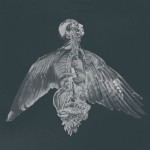
There are records that you listen to, and there are records that "listen to you back". "Til Vinden I Dine Øjne" - roughly translated as "To the Wind in Your Eyes" - is squarely in the latter camp. It doesn’t announce itself, it doesn’t demand attention, and it most certainly doesn’t care whether you “get it”. It simply "is", like fog, like breath, like the kind of sadness that turns into wisdom when no one’s watching.
This isn’t ambient music in the Brian Eno sense, with its tidy furniture-rearranging intent. øjeRum (Paw Grabowski, Denmark’s quiet high priest of haunted stillness) has been carving out his own particular spectral niche for years now, often with nothing more than loops, tape hiss, and whatever memory smells like in minor key. Here, on this new offering from Room40, he distills his aesthetic into two glacially evolving 30-minute movements so hushed and weightless they might just float off your hard drive and haunt your attic.
The opening piece, "Til Vinden I Dine Øjne", doesn’t begin so much as it fades in, like déjà vu arriving on tiptoe. Loops rise and fall in soft motion, gentle as the breathing of someone who once meant everything and now only visits in dreams. The textures are all gossamer and gauze - somewhere between dusty harmonium, decayed field recording, and a lullaby forgotten by time. It’s ambient as séance, a form of communication with the barely-there.
The second piece, "Tågen Ved Mørkets Mund" ("The Fog at the Mouth of Darkness" - a title that could easily be a Bergman film or a doom metal album), moves in similarly slow spirals. You start to wonder if it’s changing at all, until you realize "you" are. Like an old photo slowly warping in the sun, the piece subtly decomposes and reconfigures itself, quietly rearranging your perception until you’re no longer sure where the music ends and your own melancholic projections begin.
There's a looped fragility here that borders on ritual - if your rituals involve staring out of rainy windows at 4 AM while remembering a name you’ve forgotten how to pronounce. And repetition, in øjeRum’s hands, isn’t monotony - it’s a kind of soft spellcasting. The kind of looping where nothing truly repeats, because "you" are slightly different with every pass.
There are no melodies in the traditional sense, no rhythms to tap, no climaxes to anticipate. And that’s the point. This isn’t a soundtrack. It’s an inhalation. Or maybe it’s the air after a long exhale, when everything has stopped moving and you suddenly remember what silence "actually" sounds like.
Lawrence English’s mastering job (from Negative Space, fittingly) ensures that every breath of tape crackle and shimmer of tone is preserved in its full, ghostly bloom. Listening on headphones feels like standing in a field where music once happened - and now only its scent remains.
øjeRum’s great trick is making nothing feel like everything. The absence becomes presence. The quiet becomes the point. And in a world obsessed with volume, drama, and immediacy, "Til Vinden I Dine Øjne" feels almost radical in its refusal to assert anything at all. It simply lingers.
So let it. Let it play while you stare at a wall, or a tree, or the idea of someone you haven’t seen in years. Let it soundtrack your stillness. Or don’t. It won’t mind.
Because like the wind it’s named after, this album moves through you whether you notice or not.
This isn’t ambient music in the Brian Eno sense, with its tidy furniture-rearranging intent. øjeRum (Paw Grabowski, Denmark’s quiet high priest of haunted stillness) has been carving out his own particular spectral niche for years now, often with nothing more than loops, tape hiss, and whatever memory smells like in minor key. Here, on this new offering from Room40, he distills his aesthetic into two glacially evolving 30-minute movements so hushed and weightless they might just float off your hard drive and haunt your attic.
The opening piece, "Til Vinden I Dine Øjne", doesn’t begin so much as it fades in, like déjà vu arriving on tiptoe. Loops rise and fall in soft motion, gentle as the breathing of someone who once meant everything and now only visits in dreams. The textures are all gossamer and gauze - somewhere between dusty harmonium, decayed field recording, and a lullaby forgotten by time. It’s ambient as séance, a form of communication with the barely-there.
The second piece, "Tågen Ved Mørkets Mund" ("The Fog at the Mouth of Darkness" - a title that could easily be a Bergman film or a doom metal album), moves in similarly slow spirals. You start to wonder if it’s changing at all, until you realize "you" are. Like an old photo slowly warping in the sun, the piece subtly decomposes and reconfigures itself, quietly rearranging your perception until you’re no longer sure where the music ends and your own melancholic projections begin.
There's a looped fragility here that borders on ritual - if your rituals involve staring out of rainy windows at 4 AM while remembering a name you’ve forgotten how to pronounce. And repetition, in øjeRum’s hands, isn’t monotony - it’s a kind of soft spellcasting. The kind of looping where nothing truly repeats, because "you" are slightly different with every pass.
There are no melodies in the traditional sense, no rhythms to tap, no climaxes to anticipate. And that’s the point. This isn’t a soundtrack. It’s an inhalation. Or maybe it’s the air after a long exhale, when everything has stopped moving and you suddenly remember what silence "actually" sounds like.
Lawrence English’s mastering job (from Negative Space, fittingly) ensures that every breath of tape crackle and shimmer of tone is preserved in its full, ghostly bloom. Listening on headphones feels like standing in a field where music once happened - and now only its scent remains.
øjeRum’s great trick is making nothing feel like everything. The absence becomes presence. The quiet becomes the point. And in a world obsessed with volume, drama, and immediacy, "Til Vinden I Dine Øjne" feels almost radical in its refusal to assert anything at all. It simply lingers.
So let it. Let it play while you stare at a wall, or a tree, or the idea of someone you haven’t seen in years. Let it soundtrack your stillness. Or don’t. It won’t mind.
Because like the wind it’s named after, this album moves through you whether you notice or not.
Quentin Hiatus and Thomas B: Apartmani: 1C

Artist: Quentin Hiatus and Thomas B (http://quentinhiatus.com/) (@)
Title: Apartmani: 1C
Format: Download Only (MP3 + Lossless)
Label: Free Love Digi
Rated:

Title: Apartmani: 1C
Format: Download Only (MP3 + Lossless)
Label: Free Love Digi
Rated:
You unlock the door of "Apartmani: 1C" and step inside. No, it’s not a real apartment - unless your landlord’s into alternate dimensions and sub-bass therapy. This is not your average lease; this is the duplex of drum and bass reimagined by two sonic tenants, Quentin Hiatus and Thomas B, each carrying a box of broken expectations, emotional baggage, and killer beats. The welcome mat reads: “Check your genre conventions at the door”.
The EP opens with "Take The L", which you’d think would be a track about failure. But no - Quentin Hiatus reclaims the letter and turns it into a labyrinth. It’s laced with sharp snares, detuned harmonics and something like a vapor trail of introspection. This is the kind of track that doesn’t shout - it quietly rearranges your insides. Quentin, the cosmic loner of the Free Love Digi catalogue, has once again folded existential malaise into a syncopated dream loop. Somewhere between poetic restraint and barely contained chaos, he makes the L feel like a privilege.
Thomas B’s "Emotional Damage" follows, and let’s be honest - it’s a little too on the nose. And yet, it works. It’s like someone made a breakbeat diary entry during a nervous breakdown, then handed it over to a robot with impeccable groove calibration. There’s a masochistic charm to its wounded low-end and glitched-out sensitivity. If your feelings had subwoofers, this is what they’d play during therapy.
Then Quentin returns with "Verbose", which could easily be the EP’s thesis statement. It's a study in language - not spoken, but implied - where each percussive twitch feels like a parenthetical aside and each bassline, an inner monologue. You don’t listen to this track so much as get monologued at by a ghost that’s read too much Wittgenstein. It’s clever without being smug, and complex without needing to prove it. If drum and bass had a philosophy department, this would be required reading.
Finally, Thomas B closes the set with "Need Ya", a track that - if it were a person - would be that ex who texts you at 2 a.m., full of longing and reverb. It’s smoother, more tender, but still keeps its fists clenched in the pocket of a hoodie. Emotional, yes, but never melodramatic. The bassline hums like a fridge filled with regrets. You might call it ‘soulful halftime’ if you were the kind of person who needed categories. We prefer to call it "subtle yearning, with bonus hi-hats".
"Apartmani: 1C" is, in its own fractured way, a kind of audio novella - one that refuses to be pinned to a genre, or a mood, or even a BPM. Quentin Hiatus remains the genre’s poet-laureate of alienation and groove, while Thomas B brings that East Coast rave-rooted sensibility, filtered through years of experimentation and subtle defiance.
It's not a party, and it’s not quite a therapy session either. It's a shared space between two seasoned minds who know their way around a drop and aren't afraid to leave the walls unpainted. Rent’s cheap - get in while you can.
The EP opens with "Take The L", which you’d think would be a track about failure. But no - Quentin Hiatus reclaims the letter and turns it into a labyrinth. It’s laced with sharp snares, detuned harmonics and something like a vapor trail of introspection. This is the kind of track that doesn’t shout - it quietly rearranges your insides. Quentin, the cosmic loner of the Free Love Digi catalogue, has once again folded existential malaise into a syncopated dream loop. Somewhere between poetic restraint and barely contained chaos, he makes the L feel like a privilege.
Thomas B’s "Emotional Damage" follows, and let’s be honest - it’s a little too on the nose. And yet, it works. It’s like someone made a breakbeat diary entry during a nervous breakdown, then handed it over to a robot with impeccable groove calibration. There’s a masochistic charm to its wounded low-end and glitched-out sensitivity. If your feelings had subwoofers, this is what they’d play during therapy.
Then Quentin returns with "Verbose", which could easily be the EP’s thesis statement. It's a study in language - not spoken, but implied - where each percussive twitch feels like a parenthetical aside and each bassline, an inner monologue. You don’t listen to this track so much as get monologued at by a ghost that’s read too much Wittgenstein. It’s clever without being smug, and complex without needing to prove it. If drum and bass had a philosophy department, this would be required reading.
Finally, Thomas B closes the set with "Need Ya", a track that - if it were a person - would be that ex who texts you at 2 a.m., full of longing and reverb. It’s smoother, more tender, but still keeps its fists clenched in the pocket of a hoodie. Emotional, yes, but never melodramatic. The bassline hums like a fridge filled with regrets. You might call it ‘soulful halftime’ if you were the kind of person who needed categories. We prefer to call it "subtle yearning, with bonus hi-hats".
"Apartmani: 1C" is, in its own fractured way, a kind of audio novella - one that refuses to be pinned to a genre, or a mood, or even a BPM. Quentin Hiatus remains the genre’s poet-laureate of alienation and groove, while Thomas B brings that East Coast rave-rooted sensibility, filtered through years of experimentation and subtle defiance.
It's not a party, and it’s not quite a therapy session either. It's a shared space between two seasoned minds who know their way around a drop and aren't afraid to leave the walls unpainted. Rent’s cheap - get in while you can.
Xenia Pestova Bennett: Annea Lockwood The Piano Works

Artist: Xenia Pestova Bennett
Title: Annea Lockwood The Piano Works
Format: CD + Download
Label: Unsounds (@)
Rated:
Title: Annea Lockwood The Piano Works
Format: CD + Download
Label: Unsounds (@)
Rated:
Let us begin by setting one piano on fire. Then bury another one in a slanted trench. Water a third. Let animals nibble on its strings, let the wind play its octaves, let moss grow between its damp hammers. Eventually, of course, someone will try to "play" it. That someone, in this case, is Xenia Pestova Bennett - and what she does on "The Piano Works" is less a performance and more a conjuring of lost voices, rusted memory, and the gentle madness that comes from talking to pianos as if they were old friends with secrets.
Annea Lockwood, composer of these works and an unapologetic saboteur of sonic norms, has spent decades lovingly dismantling what we thought we knew about the piano. No longer a mere box of tempered expectations, her instrument becomes a wilderness of textures - rubbed, scraped, struck, whispered into. And Pestova Bennett is the ideal medium for this séance: not just a pianist, but a sonic gardener, coaxing strange blossoms from familiar soil.
Let’s walk through the pieces. And I mean that literally - Lockwood asks us to "ear-walk". In the titular "Ear-Walking Woman", Pestova Bennett takes us on a tactile stroll through a piano’s innards. Bubble wrap, pestles, wooden balls: not tools of sabotage but extensions of listening, each gesture more like echolocation than execution. It's as if the piano has turned into a percussive forest floor and she’s barefoot, alert, reverent, and slightly amused.
"Red Mesa", inspired by a solitary desert journey in the American Southwest, is dust and bone rendered in resonance. Pestova Bennett lets silence stretch just long enough to make you check if your speakers are still working. Then - bam - a brittle chord like a hawk shadow. The mesa speaks. Its cliffs remember. You begin to feel that the real performer here is the land itself; the pianist, once again, becomes interpreter rather than protagonist.
Then comes "RCSC", a short homage to Ruth Crawford Seeger via a ten-note row, which in Lockwood’s hands is less serialism and more séance. Pestova Bennett doesn’t so much “play” it as carve it delicately into space, like someone carefully spelling out a name on an ancient wall with a soft brush. Blink and you’ll miss it, but those three minutes leave an aftertaste like cold iron or antique ink.
Finally, "Ceci n’est pas un piano" - and no, Magritte isn’t rolling in his grave, he’s winking from it. This piece is meta to the marrow: it includes Pestova Bennett’s own recorded voice, speaking of her hands, her memories, her pianos, all fed back into the instrument via a transducer, so her voice is heard through the body of the piano itself. It's like listening to someone whisper from inside a dream. The line between performer, memory, and material dissolves. The piano becomes a confessional. Or maybe a possessed diary. Either way, it’s deeply intimate and more than a little uncanny.
What’s most striking about this release is how personal it feels - not in the “this-is-my-breakup-album” way, but in the way a walk through a childhood attic is personal. Pestova Bennett brings Lockwood’s works to life not with academic stiffness or avant-garde severity, but with a curiosity that borders on mischievous reverence. You can almost hear her smiling between the notes, not because the music is funny (although it sometimes is), but because it "matters".
There’s a kind of beautiful anti-virtuosity at play here. Yes, Pestova Bennett has the technique to melt a Rachmaninoff concerto into her morning coffee. But she’s not showing off. She’s listening. She’s letting the piano breathe weird air, grow mold, gossip with insects. She’s letting Lockwood’s sonic philosophy - of decay as transformation, of gesture as ecology - radiate in slow, unpredictable pulses.
If "The Piano Works" teaches us anything, it’s this: the piano is not dead. But it might be buried. Or burning. Or singing your name from the bottom of a pond. And if you listen carefully enough, if you walk with your ears and let go of your habits, it might just answer back. In strange timbres. In old stories. In blissful rust.
And maybe - just maybe - it will laugh with you, too.
Annea Lockwood, composer of these works and an unapologetic saboteur of sonic norms, has spent decades lovingly dismantling what we thought we knew about the piano. No longer a mere box of tempered expectations, her instrument becomes a wilderness of textures - rubbed, scraped, struck, whispered into. And Pestova Bennett is the ideal medium for this séance: not just a pianist, but a sonic gardener, coaxing strange blossoms from familiar soil.
Let’s walk through the pieces. And I mean that literally - Lockwood asks us to "ear-walk". In the titular "Ear-Walking Woman", Pestova Bennett takes us on a tactile stroll through a piano’s innards. Bubble wrap, pestles, wooden balls: not tools of sabotage but extensions of listening, each gesture more like echolocation than execution. It's as if the piano has turned into a percussive forest floor and she’s barefoot, alert, reverent, and slightly amused.
"Red Mesa", inspired by a solitary desert journey in the American Southwest, is dust and bone rendered in resonance. Pestova Bennett lets silence stretch just long enough to make you check if your speakers are still working. Then - bam - a brittle chord like a hawk shadow. The mesa speaks. Its cliffs remember. You begin to feel that the real performer here is the land itself; the pianist, once again, becomes interpreter rather than protagonist.
Then comes "RCSC", a short homage to Ruth Crawford Seeger via a ten-note row, which in Lockwood’s hands is less serialism and more séance. Pestova Bennett doesn’t so much “play” it as carve it delicately into space, like someone carefully spelling out a name on an ancient wall with a soft brush. Blink and you’ll miss it, but those three minutes leave an aftertaste like cold iron or antique ink.
Finally, "Ceci n’est pas un piano" - and no, Magritte isn’t rolling in his grave, he’s winking from it. This piece is meta to the marrow: it includes Pestova Bennett’s own recorded voice, speaking of her hands, her memories, her pianos, all fed back into the instrument via a transducer, so her voice is heard through the body of the piano itself. It's like listening to someone whisper from inside a dream. The line between performer, memory, and material dissolves. The piano becomes a confessional. Or maybe a possessed diary. Either way, it’s deeply intimate and more than a little uncanny.
What’s most striking about this release is how personal it feels - not in the “this-is-my-breakup-album” way, but in the way a walk through a childhood attic is personal. Pestova Bennett brings Lockwood’s works to life not with academic stiffness or avant-garde severity, but with a curiosity that borders on mischievous reverence. You can almost hear her smiling between the notes, not because the music is funny (although it sometimes is), but because it "matters".
There’s a kind of beautiful anti-virtuosity at play here. Yes, Pestova Bennett has the technique to melt a Rachmaninoff concerto into her morning coffee. But she’s not showing off. She’s listening. She’s letting the piano breathe weird air, grow mold, gossip with insects. She’s letting Lockwood’s sonic philosophy - of decay as transformation, of gesture as ecology - radiate in slow, unpredictable pulses.
If "The Piano Works" teaches us anything, it’s this: the piano is not dead. But it might be buried. Or burning. Or singing your name from the bottom of a pond. And if you listen carefully enough, if you walk with your ears and let go of your habits, it might just answer back. In strange timbres. In old stories. In blissful rust.
And maybe - just maybe - it will laugh with you, too.
Paula Sanchez & Katharina Weber: …and discovering fishes that have their own light

Artist: Paula Sanchez & Katharina Weber
Title: …and discovering fishes that have their own light
Format: CD
Label: Cubus Records (http://www.cubus-records.ch/en/alben-en/)
Rated:
Title: …and discovering fishes that have their own light
Format: CD
Label: Cubus Records (http://www.cubus-records.ch/en/alben-en/)
Rated:
The title “…and discovering fishes that have their own light” could pass for a line of aquatic surrealist poetry, but the music inside the sealed jewel of this CD is no mere metaphor - it is that luminous discovery itself. Paula Sanchez and Katharina Weber, both graduates of the deep listening school of tough nuance, have fashioned from one 33-minute span a single, unspooled territory where sound behaves like bioluminescence: small gestures flare, fade, then reappear with a quiet insistence, illuminating the darkness not by volume but by fidelity.
Sanchez’s cello and Weber’s piano never settle into predictable roles of soloist and accompanist; instead, they inhabit a shared ecology. The cellist, forged in the dual fires of classical discipline in Argentina and the open-ended improvisational tutelage under Fred Frith and Alfred Zimmerlin in Basel, brings a line that can be at once filament-thin and cavernous. Weber, newly unshackled from institutional teaching and coming off a high-profile compositional career including her recent “Hommage à Frank Martin”, folds her pianistic language into the conversation with a cultivated restraint that allows the smallest resonance to bloom. Their interplay is less about “playing together” and more about mutual attunement: micro-dynamics shift like tides, and silence gains the weight of a held breath.
Structurally, the piece refuses easy delineations. Motifs surface almost as if remembered rather than invented, suggesting a recomposition of internalized themes rather than a linear improvisation. The cello’s bowed whispers and bowed attacks trace delicate filaments, which the piano sometimes mirrors, sometimes contradicts - occasional clusters fracture into timbral smears, and the decay of a single note is treated with the same gravity as its attack. There’s a sense that the two are negotiating not only harmony but the very rules of time: stretching, compressing, letting phrases hang just long enough to become uncanny before allowing them to dissolve. It’s a deconstruction of expectation that, paradoxically, builds its own internal logic so quietly that one only notices the architecture once fully immersed.
Notably, there is a generosity to their spacing. Rather than filling every gap, they let air and the wood of their instruments speak. In those moments, the recording takes on the quality of shared breath, and one hears both artists listening - in real time - to the shape of what emerges, adjusting with a care that feels, at times, like the slow, precise work of mending a torn fabric. This heedfulness is where the album’s “light” resides: not as a flashy technicolor blaze, but as a patient radiance that unfolds in layers, like watching phosphorescence spread under skin-deep water.
Humor, if it appears, is of the wry, almost invisible kind. The listener might imagine the two artists tiptoeing through centuries of musical pedigree - classical, contemporary, experimental - then shrugging, leaning close, and deciding to refashion it all into something tenderly intransigent. That they can make such a thing feel immediate, human, and slightly mischievous without ever abandoning subtlety is part of the album’s quiet marvel.
There’s also a pilgrimage aspect embedded here. Titles and press blur into the mythic: fishes with their own light, the act of discovering. What Sanchez and Weber offer is a shared discovery of how two widely trained, deeply experienced voices can generate a luminous ecosystem out of sparse means - strings, hammers, wood, silence, touch. The long span becomes a vessel in which memory, impulse, and listening fold into each other; occasional moments of harmonic convergence feel like finding a familiar shore in an otherwise uncharted sea.
Production-wise, the sound is intimate without being claustrophobic. The recording captures the texture of bow against string, key action, sympathetic resonance, and the natural ambient decay of the space, preserving the fragile edges where sound bleeds into the room. It’s a document that invites repeated descent: each listen reveals a new filament of detail, a fresh glow from that internal light.
In a musical landscape often seduced by maximal gestures or overt dramatic arcs, “…and discovering fishes that have their own light” is a reminder that depth can be built in pauses, that drama can live in the slow morphing of timbre, and that companionship - between instruments, between artists - is among the most luminous phenomena we encounter in sound. This is contemplative music with a pulse, an improvisation that knows when to breathe, and a shared moment of discovery that feels like finding something precious in an unexpected ocean.
Sanchez’s cello and Weber’s piano never settle into predictable roles of soloist and accompanist; instead, they inhabit a shared ecology. The cellist, forged in the dual fires of classical discipline in Argentina and the open-ended improvisational tutelage under Fred Frith and Alfred Zimmerlin in Basel, brings a line that can be at once filament-thin and cavernous. Weber, newly unshackled from institutional teaching and coming off a high-profile compositional career including her recent “Hommage à Frank Martin”, folds her pianistic language into the conversation with a cultivated restraint that allows the smallest resonance to bloom. Their interplay is less about “playing together” and more about mutual attunement: micro-dynamics shift like tides, and silence gains the weight of a held breath.
Structurally, the piece refuses easy delineations. Motifs surface almost as if remembered rather than invented, suggesting a recomposition of internalized themes rather than a linear improvisation. The cello’s bowed whispers and bowed attacks trace delicate filaments, which the piano sometimes mirrors, sometimes contradicts - occasional clusters fracture into timbral smears, and the decay of a single note is treated with the same gravity as its attack. There’s a sense that the two are negotiating not only harmony but the very rules of time: stretching, compressing, letting phrases hang just long enough to become uncanny before allowing them to dissolve. It’s a deconstruction of expectation that, paradoxically, builds its own internal logic so quietly that one only notices the architecture once fully immersed.
Notably, there is a generosity to their spacing. Rather than filling every gap, they let air and the wood of their instruments speak. In those moments, the recording takes on the quality of shared breath, and one hears both artists listening - in real time - to the shape of what emerges, adjusting with a care that feels, at times, like the slow, precise work of mending a torn fabric. This heedfulness is where the album’s “light” resides: not as a flashy technicolor blaze, but as a patient radiance that unfolds in layers, like watching phosphorescence spread under skin-deep water.
Humor, if it appears, is of the wry, almost invisible kind. The listener might imagine the two artists tiptoeing through centuries of musical pedigree - classical, contemporary, experimental - then shrugging, leaning close, and deciding to refashion it all into something tenderly intransigent. That they can make such a thing feel immediate, human, and slightly mischievous without ever abandoning subtlety is part of the album’s quiet marvel.
There’s also a pilgrimage aspect embedded here. Titles and press blur into the mythic: fishes with their own light, the act of discovering. What Sanchez and Weber offer is a shared discovery of how two widely trained, deeply experienced voices can generate a luminous ecosystem out of sparse means - strings, hammers, wood, silence, touch. The long span becomes a vessel in which memory, impulse, and listening fold into each other; occasional moments of harmonic convergence feel like finding a familiar shore in an otherwise uncharted sea.
Production-wise, the sound is intimate without being claustrophobic. The recording captures the texture of bow against string, key action, sympathetic resonance, and the natural ambient decay of the space, preserving the fragile edges where sound bleeds into the room. It’s a document that invites repeated descent: each listen reveals a new filament of detail, a fresh glow from that internal light.
In a musical landscape often seduced by maximal gestures or overt dramatic arcs, “…and discovering fishes that have their own light” is a reminder that depth can be built in pauses, that drama can live in the slow morphing of timbre, and that companionship - between instruments, between artists - is among the most luminous phenomena we encounter in sound. This is contemplative music with a pulse, an improvisation that knows when to breathe, and a shared moment of discovery that feels like finding something precious in an unexpected ocean.