
Browse by Genre
Industrial Music / Industrial Metal / Aggro Industrial / Electro Metal
Industrial Noise / Power Noise / Harsh Noise
Synth Pop / Electro Pop / Synth-Electronica
Techno / Trance / Goa / Drum'n'Bass / Jungle / Tribal / Trip-Hop
Ambient / Electronica / Ethereal / Dub / Soundscapes / Abstract
Experimental / Avantgarde / Weird & Wired / Glitch / Noise / Field Recording
Dark / Gothic / Wave / New Wave / Dark Wave / Industrial Gothic
New Music / Downtown / Avantgarde Jazz / New Classical / World
Search Reviews
Music Reviews
We Contain Multitudes: Minako
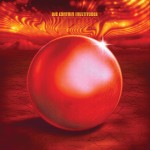
Artist: We Contain Multitudes (@)
Title: Minako
Format: 12" x 2 + Download
Label: Expert Work Records (@)
Rated:


Title: Minako
Format: 12" x 2 + Download
Label: Expert Work Records (@)
Rated:
I have to say, I was a bit skeptical when I received this album from a PR outfit that sends me a lot of promos to review, a fair number of which aren't a match for the genres that Chain D.L.K. covers. On the accompanying one-sheet (actually a 3-sheet) it cited the genres as math rock and psychedelic rock, and for fans of Pelicans, King Crimson and The Fucking Champs. The genres seemed like an interesting combo (perhaps creating something new and rivetingly experimental in the process) and of the FFO, Only King Crimson I know. The other two seem to be guitar-heavy, often sludgy instrumental outfits steeped in doom and stoner metal. Not a bad thing if you like that sort of stuff, but strictly speaking, we don't cover that here. KC, of course, is another story but we don't cover progressive rock either. Perhaps I should mention now that We Contain Multitudes has two members from Bitch Magnet - Jon Fine (Ex- Bitch Magnet, Vineland, Don Caballero), Orestes Morfin (Ex-Bitch Magnet, Bored Spies, God Rifle, Walt Mink) and Simon Kobayashi (Smallgang, Hurtling, Splintered Man). Those roots are likely telling, and how they guys got from BM to WCM remains to be heard.
First, 'Minako' is all instrumental, and a double album at that, but only 7 tracks. Beginning with the title track "Minako," there is a repeating effected guitar loop, drone guitar (Frppertronic-like) with slow-beat drumming and loping bass, a musical mandala with obvious psychedelic overtones. There is a simple, improvisational quality to this track that might appeal to stoners, Dead-Heads, and experimental rock enthusiasts alike. Be warned though, this goes on for over sixteen minutes and gets heavier as it progresses. "Can We Just Not?" is an oddly-timed number with a break or chorus of the type you'd usually only hear in prog rock. I don't know, but to me, this songs screams out for vocals that just aren't there. (Keyboard might have been nice too, but I guess that's altogether something different.) Acoustic guitar at the end was kind of nice. Nice fancy bass work in "D9" but once again this song needs more. Good guitar work but I'm losing a bit of interest.
Well, who can't grok a title like "We Are All Fucked," and this one's just crazy with its not easy to follow chord progressions and oblique timing, then neatly two minutes in it shifts gears entirely into a medium measured post-rock groove where it remains for the rest of the song. (I could hear Lou Reed or Ian Curtis singing over this one...rest their souls.) "Bathroom Drugs" begins with a repeating guitar riff you might associate with any hard rock band, but the counter guitar part just takes it to another level. (I think if Beck and Montrose were still around and tempted to do something new, it might sound like this.) The track has a very live sound, and likely goes over great live too.
Quite unexpected was "Jeitinho" with samba-style drumming, toned down guitar, and very active bass. When the drumming changes to a more conventional rock style I was beginning to tire, but just as I did, Jon threw in a cool guitar break and all was well again. A bit to repetitive but still enjoyable. Final track, "Atkins," is a 9 minute opus that begins by following the familiar repeating chord pattern progression, then then throws curve balls into other directions, yet manages to return to its base. Midway through we come to an overdriven guitar drone extended halt, the progression gets deconstructed and Fripp-style sustained guitar provides a lovely melody as the pace has slowed considerably. This goes on for a good while, finally winding down. I'd say that 'Minako' is a better album than I thought it might be before I heard it, but considering the talent and musicianship of these guys, I think it could have been better. Considering Jon live in New York City, Orestes live in Tuscon, AZ and Simon live in London, UK, the album is still quite a feat. Absolutely worth a listen, and I think the vinyl is going fast.
First, 'Minako' is all instrumental, and a double album at that, but only 7 tracks. Beginning with the title track "Minako," there is a repeating effected guitar loop, drone guitar (Frppertronic-like) with slow-beat drumming and loping bass, a musical mandala with obvious psychedelic overtones. There is a simple, improvisational quality to this track that might appeal to stoners, Dead-Heads, and experimental rock enthusiasts alike. Be warned though, this goes on for over sixteen minutes and gets heavier as it progresses. "Can We Just Not?" is an oddly-timed number with a break or chorus of the type you'd usually only hear in prog rock. I don't know, but to me, this songs screams out for vocals that just aren't there. (Keyboard might have been nice too, but I guess that's altogether something different.) Acoustic guitar at the end was kind of nice. Nice fancy bass work in "D9" but once again this song needs more. Good guitar work but I'm losing a bit of interest.
Well, who can't grok a title like "We Are All Fucked," and this one's just crazy with its not easy to follow chord progressions and oblique timing, then neatly two minutes in it shifts gears entirely into a medium measured post-rock groove where it remains for the rest of the song. (I could hear Lou Reed or Ian Curtis singing over this one...rest their souls.) "Bathroom Drugs" begins with a repeating guitar riff you might associate with any hard rock band, but the counter guitar part just takes it to another level. (I think if Beck and Montrose were still around and tempted to do something new, it might sound like this.) The track has a very live sound, and likely goes over great live too.
Quite unexpected was "Jeitinho" with samba-style drumming, toned down guitar, and very active bass. When the drumming changes to a more conventional rock style I was beginning to tire, but just as I did, Jon threw in a cool guitar break and all was well again. A bit to repetitive but still enjoyable. Final track, "Atkins," is a 9 minute opus that begins by following the familiar repeating chord pattern progression, then then throws curve balls into other directions, yet manages to return to its base. Midway through we come to an overdriven guitar drone extended halt, the progression gets deconstructed and Fripp-style sustained guitar provides a lovely melody as the pace has slowed considerably. This goes on for a good while, finally winding down. I'd say that 'Minako' is a better album than I thought it might be before I heard it, but considering the talent and musicianship of these guys, I think it could have been better. Considering Jon live in New York City, Orestes live in Tuscon, AZ and Simon live in London, UK, the album is still quite a feat. Absolutely worth a listen, and I think the vinyl is going fast.
Mike Lazarev: Tarnished Tapes and Saturated Signals
Artist: Mike Lazarev
Title: Tarnished Tapes and Saturated Signals
Format: CD + Download
Label: Dronarivm/Fonodroom (@)
Rated:
Title: Tarnished Tapes and Saturated Signals
Format: CD + Download
Label: Dronarivm/Fonodroom (@)
Rated:
The followup to his 2024 album release, 'Tarnished Tapes,' London, UK electronic composer Mike Lazarev continues the sonic journey he explored in that previous album with 'Tarnished Tapes and Saturated Signals.' This is reflected not only in his production process, where he carefully sculpted each sound within a heavily layered texture, lo-fi aesthetic, and analogue recording, but also in the central idea behind each piece. (To Mike) "This music brings to mind the hazy memories of playing an old cassette found in the back of my car, its tape warped and distorted by the heat of that last carefree summer, floating on empty roads towards the sunrise, a ringing in the ears still present after a warehouse rave. This blend of deconstructed electronica, cinematic ambience, and modern classical composition fuses a mesmerizing combination of expansive nostalgia, reductionist pianism, and deep emotional atmosphere, evoking a sense of loss, disintegration, and the fragility of our temporal selves."
That's a rather heady, personalized description but you need to know what the artist was aiming for. This is thickly layered ambience that has its fair share of noise, but also explores unexpected regions. There are 8 tracks totaling 48 minutes on 'Tarnished Tapes and Saturated Signals.' A good amount of them are somewhat heavy and oppressive atmospherically, but nevertheless interesting. It is not what I'd call dark ambient, but is certainly more distinct than grey ambient. Largely comprised of drones and sustained synth pads, you never know when some sonic event might occur, like a wild arpeggio synth loop, noise in various forms, Berlin school sequencing, and other sonic delights. My favorite track on the album is "Buried Riddles Under Broken Glass," the only one with a drum/rhythm track. It's less abstract than most of the others and while repetitive in its percussion, arpeggiated sequencing and melody, it has a certain nostalgia that I still hold dear. The sparse piano and muted trumpet (or similar horn) on "Faded Glimpse of Drifting Sundays" is another track that conjures a certain sentimental feeling of days gone by. This is one of those albums that requires more than just a single listen to absorb, which is great for replay value. It also might lead you to explore Mr. Lazarev's other works, which there seem to be plenty of.
That's a rather heady, personalized description but you need to know what the artist was aiming for. This is thickly layered ambience that has its fair share of noise, but also explores unexpected regions. There are 8 tracks totaling 48 minutes on 'Tarnished Tapes and Saturated Signals.' A good amount of them are somewhat heavy and oppressive atmospherically, but nevertheless interesting. It is not what I'd call dark ambient, but is certainly more distinct than grey ambient. Largely comprised of drones and sustained synth pads, you never know when some sonic event might occur, like a wild arpeggio synth loop, noise in various forms, Berlin school sequencing, and other sonic delights. My favorite track on the album is "Buried Riddles Under Broken Glass," the only one with a drum/rhythm track. It's less abstract than most of the others and while repetitive in its percussion, arpeggiated sequencing and melody, it has a certain nostalgia that I still hold dear. The sparse piano and muted trumpet (or similar horn) on "Faded Glimpse of Drifting Sundays" is another track that conjures a certain sentimental feeling of days gone by. This is one of those albums that requires more than just a single listen to absorb, which is great for replay value. It also might lead you to explore Mr. Lazarev's other works, which there seem to be plenty of.
Yann Novak: Continuity

Yann Novak’s Continuity is a haunting meditation on truth and transparency in an age saturated with data and simulations. Released by Room40 in July 2025, the album spans three extended sonic essays that treat the listener to a spectral architecture of looping field recordings and synth drones. Each piece - from “Metric of Caution” to “Zones of Privacy” - feels less like music than deep excavation into the spaces where systems meant to reveal end up concealing.
Novak positions his art between recording and revelation: loops recorded in public spaces morph into eerie soundscapes that feel surveilled rather than observed. Even a spoofed voicemail featuring a law enforcement script becomes another layer in the labyrinth, a reminder that deception often lives inside truth’s shadow.
Critics note how the tracks interlock seamlessly, like geological strata of bass drones, oscillating textures, and chords heavy with both melody and malaise. The progression is slow yet unrelenting: what seems stable gradually becomes disquieting, like meaning slipping through a sieve. The ambient palette never resorts to emptiness - a dense web of subtle detail rewards patient listening, offering new revelations at each spin.
Born in Los Angeles, Novak brings a hybrid identity to the project: influenced by his experience of dyslexia and partial color blindness, he treats sound almost as a corrective lens for perception, urging listeners to re-experience what they thought they knew. There’s a systemic irony in using “transparency” as camouflage: the clearer things appear, the murkier the terrain becomes, echoing modern surveillance systems that promise clarity but deliver control.
With Continuity, Novak crafts listening as an act of resistance - sound becomes political architecture, loops become critique, and layered textures index the paradox of information itself. It’s minimalist in structure but rich in implication: an unsettling yet compelling journey through the hollow core of our own connective frameworks.
Funny or touching? Perhaps there’s a wry smile hidden in the slipstream: in a world where “transparency” means curated exposure, Novak’s insistence on ambiguity feels like a gentle prank on reality. This album makes you reconsider what you think you hear - and maybe even what you’re told you can trust.
Novak positions his art between recording and revelation: loops recorded in public spaces morph into eerie soundscapes that feel surveilled rather than observed. Even a spoofed voicemail featuring a law enforcement script becomes another layer in the labyrinth, a reminder that deception often lives inside truth’s shadow.
Critics note how the tracks interlock seamlessly, like geological strata of bass drones, oscillating textures, and chords heavy with both melody and malaise. The progression is slow yet unrelenting: what seems stable gradually becomes disquieting, like meaning slipping through a sieve. The ambient palette never resorts to emptiness - a dense web of subtle detail rewards patient listening, offering new revelations at each spin.
Born in Los Angeles, Novak brings a hybrid identity to the project: influenced by his experience of dyslexia and partial color blindness, he treats sound almost as a corrective lens for perception, urging listeners to re-experience what they thought they knew. There’s a systemic irony in using “transparency” as camouflage: the clearer things appear, the murkier the terrain becomes, echoing modern surveillance systems that promise clarity but deliver control.
With Continuity, Novak crafts listening as an act of resistance - sound becomes political architecture, loops become critique, and layered textures index the paradox of information itself. It’s minimalist in structure but rich in implication: an unsettling yet compelling journey through the hollow core of our own connective frameworks.
Funny or touching? Perhaps there’s a wry smile hidden in the slipstream: in a world where “transparency” means curated exposure, Novak’s insistence on ambiguity feels like a gentle prank on reality. This album makes you reconsider what you think you hear - and maybe even what you’re told you can trust.
Amosphère: Cosmogonical Ears
Artist: Amosphère (@)
Title: Cosmogonical Ears
Format: 12" + Download
Label: Hallow Ground (@)
Rated:
Title: Cosmogonical Ears
Format: 12" + Download
Label: Hallow Ground (@)
Rated:
Let’s say you don’t listen to this album. Let’s say instead that it listens to you - with its cosmogonical ears, wide and timeless, somewhere between a distant galaxy and the inside of your skull. This isn’t ambient music as wallpaper. It’s ambient music as architecture. Slow, monolithic, softly breathing architecture. Like a cathedral made of time.
Paris-based Amosphère (aka multidisciplinary artist and composer Claire Guerlain) has spent the last few years navigating silence, meditation, and myth. And not in the tired, Spotify-playlist sense, but in the rigorous, ritualistic, “I just composed a 22-minute piece for a Buddhist sculpture exhibition using handmade ceramic instruments” kind of way. Cosmogonical Ears, her debut for Hallow Ground, feels like the sonic equivalent of looking into a telescope and seeing your own retina reflected - a meditation not just on sound, but on perception itself.
The album is made of three long-form pieces, and they’re long for a reason: they stretch time like a gravitational field. “Land of Eternal Delight” is the centre of gravity here, a 22-minute drift through sonic incense and architectural stillness. Built around Amosphère’s electronic organ and Marc Lochner’s flute, the piece is slow, not because it’s ambient, but because it’s thinking. The pacing is glacial, yet never cold - it’s a warmth drawn from inner space, not outer.
Then comes “Teleportation”, and yes, it’s inspired by quantum physics. But don’t worry, there’s no need to bring a degree in particle theory. Think less Star Trek and more slow entanglement between breath and signal. Using the vintage VCS3 synth like a ritual tool, Amosphère draws nonlinear geometries in sound - tones that shift, unravel, and recombine like the auditory version of a Möbius strip. Lochner’s flute again drifts in and out like a signal from another dimension, or perhaps just from another room.
Closing the circle (or warping it) is “Black Hole In, White Hole Out”. Recorded in Corsica and featuring Miao Zhao’s bass clarinet alongside a church organ, the track is both heavy and porous. It imagines what it might feel like - not just sound like - to cross a black hole. This is music as hypothetical physics. It doesn’t describe crossing a cosmic boundary; it becomes the process. It’s dense, droning, and slightly terrifying, in a beautiful way - as if someone replaced the pipe organ in a cathedral with the event horizon of a star.
There’s an ascetic discipline behind this work, but also vulnerability. These aren’t just sonic studies in perception and cosmology; they’re gestures of care. The album doesn’t offer conclusions - how could it? Instead, it poses questions through tone: What if sound could bend spacetime? What if listening was a form of teleportation? What if we’re all already entangled, just vibrating at slightly different frequencies?
Cosmogonical Ears sits comfortably next to the likes of Kali Malone, FUJI|||||||||||TA, and other Hallow Ground explorers of slow resonance and metaphysical frequency. But Amosphère’s voice is her own - crystalline, rigorous, gently strange.
You don’t simply “press play” on this album. You enter it, like a sacred site. Or fall into it, like a soft black hole. Best to surrender. Let your ears be cosmogonical for a while.
Paris-based Amosphère (aka multidisciplinary artist and composer Claire Guerlain) has spent the last few years navigating silence, meditation, and myth. And not in the tired, Spotify-playlist sense, but in the rigorous, ritualistic, “I just composed a 22-minute piece for a Buddhist sculpture exhibition using handmade ceramic instruments” kind of way. Cosmogonical Ears, her debut for Hallow Ground, feels like the sonic equivalent of looking into a telescope and seeing your own retina reflected - a meditation not just on sound, but on perception itself.
The album is made of three long-form pieces, and they’re long for a reason: they stretch time like a gravitational field. “Land of Eternal Delight” is the centre of gravity here, a 22-minute drift through sonic incense and architectural stillness. Built around Amosphère’s electronic organ and Marc Lochner’s flute, the piece is slow, not because it’s ambient, but because it’s thinking. The pacing is glacial, yet never cold - it’s a warmth drawn from inner space, not outer.
Then comes “Teleportation”, and yes, it’s inspired by quantum physics. But don’t worry, there’s no need to bring a degree in particle theory. Think less Star Trek and more slow entanglement between breath and signal. Using the vintage VCS3 synth like a ritual tool, Amosphère draws nonlinear geometries in sound - tones that shift, unravel, and recombine like the auditory version of a Möbius strip. Lochner’s flute again drifts in and out like a signal from another dimension, or perhaps just from another room.
Closing the circle (or warping it) is “Black Hole In, White Hole Out”. Recorded in Corsica and featuring Miao Zhao’s bass clarinet alongside a church organ, the track is both heavy and porous. It imagines what it might feel like - not just sound like - to cross a black hole. This is music as hypothetical physics. It doesn’t describe crossing a cosmic boundary; it becomes the process. It’s dense, droning, and slightly terrifying, in a beautiful way - as if someone replaced the pipe organ in a cathedral with the event horizon of a star.
There’s an ascetic discipline behind this work, but also vulnerability. These aren’t just sonic studies in perception and cosmology; they’re gestures of care. The album doesn’t offer conclusions - how could it? Instead, it poses questions through tone: What if sound could bend spacetime? What if listening was a form of teleportation? What if we’re all already entangled, just vibrating at slightly different frequencies?
Cosmogonical Ears sits comfortably next to the likes of Kali Malone, FUJI|||||||||||TA, and other Hallow Ground explorers of slow resonance and metaphysical frequency. But Amosphère’s voice is her own - crystalline, rigorous, gently strange.
You don’t simply “press play” on this album. You enter it, like a sacred site. Or fall into it, like a soft black hole. Best to surrender. Let your ears be cosmogonical for a while.
Joreng Boi: Closed Circle
Artist: Joreng Boi
Title: Closed Circle
Format: Download Only (MP3 + Lossless)
Label: Hundert Records
Distributor: !K7 Music
Rated:
Title: Closed Circle
Format: Download Only (MP3 + Lossless)
Label: Hundert Records
Distributor: !K7 Music
Rated:
Imagine stepping into a theatre where the script has dissolved, the actors are ghosts, and the stage is filled with fog, dew, and memory. That’s roughly where Closed Circle begins - a gentle drift into the ambient hinterlands, where every note seems to have taken a vow of quietness and every silence is sacred.
Originally composed as part of a theatrical performance, Closed Circle refuses to detach from its origin story. You can feel the presence of imaginary movements, offstage whispers, props left just out of view. And yet, removed from the stage, the album gains another life - not lesser, but eerily parallel. These are scenes without dialogue, emotions distilled to the shimmer of a synth, the rustle of a contact mic in a windy field, the sigh of a monochord bowed slowly in a darkened room.
Joreng Boi - alias of Korean sound artist Joreng Jung, now based in Cologne - moves with a kind of sonic modesty that feels deliberate and political. There’s no bombast here, no pulse-chasing, no algorithmic feeding frenzy. Just sound, listening to itself unfold. Ambient, yes, but not the spa-friendly variety: this is ambient as slow thinking, as durational presence, as a way of mapping the emotional weather of an empty chair.
"The Hat" opens like a quiet footstep in a gallery, the synths glowing like streetlights at 4 a.m. "Moon Lizard" lasts just over two minutes but feels like a childhood memory of a dream. “In Watermelon Sugar” - nodding, perhaps, to Brautigan’s oblique utopia - spins its textures with gentle nostalgia, never quite settling between comfort and unease. “Specters of Marx”, at under two minutes, is maybe the most haunting: a brief encounter with philosophical residue, unfinished revolutions, or just a joke told by wind through wire.
The closing track, “Agora is empty”, features Esther Rosiny-Wieland on monochord - and here, the album exhales its longest breath. It feels like a ceremony after the crowd has gone home, something sacred left behind by accident. Over ten minutes of slow unfolding, it sketches a space where absence becomes compositional. It’s not a lament. It’s a kind of meditative shrug - the agora is empty, but the echo remains.
In the lineage of lowercase ambient, post-minimalism, and the performative hauntology of theater sound design, Closed Circle doesn’t seek to impress. It seeks to exist, fully and vulnerably, like a candle that knows it's almost out and chooses to flicker beautifully.
It’s a short album - just over 27 minutes - but it leaves a long echo. You don’t come here for catharsis; you come here to notice what slips away when no one’s looking. And maybe, in the hush, to hear yourself think again.
Originally composed as part of a theatrical performance, Closed Circle refuses to detach from its origin story. You can feel the presence of imaginary movements, offstage whispers, props left just out of view. And yet, removed from the stage, the album gains another life - not lesser, but eerily parallel. These are scenes without dialogue, emotions distilled to the shimmer of a synth, the rustle of a contact mic in a windy field, the sigh of a monochord bowed slowly in a darkened room.
Joreng Boi - alias of Korean sound artist Joreng Jung, now based in Cologne - moves with a kind of sonic modesty that feels deliberate and political. There’s no bombast here, no pulse-chasing, no algorithmic feeding frenzy. Just sound, listening to itself unfold. Ambient, yes, but not the spa-friendly variety: this is ambient as slow thinking, as durational presence, as a way of mapping the emotional weather of an empty chair.
"The Hat" opens like a quiet footstep in a gallery, the synths glowing like streetlights at 4 a.m. "Moon Lizard" lasts just over two minutes but feels like a childhood memory of a dream. “In Watermelon Sugar” - nodding, perhaps, to Brautigan’s oblique utopia - spins its textures with gentle nostalgia, never quite settling between comfort and unease. “Specters of Marx”, at under two minutes, is maybe the most haunting: a brief encounter with philosophical residue, unfinished revolutions, or just a joke told by wind through wire.
The closing track, “Agora is empty”, features Esther Rosiny-Wieland on monochord - and here, the album exhales its longest breath. It feels like a ceremony after the crowd has gone home, something sacred left behind by accident. Over ten minutes of slow unfolding, it sketches a space where absence becomes compositional. It’s not a lament. It’s a kind of meditative shrug - the agora is empty, but the echo remains.
In the lineage of lowercase ambient, post-minimalism, and the performative hauntology of theater sound design, Closed Circle doesn’t seek to impress. It seeks to exist, fully and vulnerably, like a candle that knows it's almost out and chooses to flicker beautifully.
It’s a short album - just over 27 minutes - but it leaves a long echo. You don’t come here for catharsis; you come here to notice what slips away when no one’s looking. And maybe, in the hush, to hear yourself think again.