
Browse by Genre
Industrial Music / Industrial Metal / Aggro Industrial / Electro Metal
Industrial Noise / Power Noise / Harsh Noise
Synth Pop / Electro Pop / Synth-Electronica
Techno / Trance / Goa / Drum'n'Bass / Jungle / Tribal / Trip-Hop
Ambient / Electronica / Ethereal / Dub / Soundscapes / Abstract
Experimental / Avantgarde / Weird & Wired / Glitch / Noise / Field Recording
Dark / Gothic / Wave / New Wave / Dark Wave / Industrial Gothic
New Music / Downtown / Avantgarde Jazz / New Classical / World
Search Reviews
Music Reviews
Raz Ohara: Memories Of Tomorrow

Artist: Raz Ohara (http://razohara.com/) (@)
Title: Memories Of Tomorrow
Format: Download Only (MP3 + Lossless)
Label: House Of Frequency
Rated:

Title: Memories Of Tomorrow
Format: Download Only (MP3 + Lossless)
Label: House Of Frequency
Rated:
Raz Ohara’s Memories of Tomorrow is an understated masterpiece: a dreamy fusion of analogue warmth, live instrumentation, and electronic sophistication that refuses to lean on loops or samples - every sound is performed at the moment. As the album unfolds, it feels less like a sequence of tracks and more like a passage through time: a river that carries thirty years of Ohara’s musical evolution, gently winding through ambient textures, melancholic groove, subtle jazz inflections, and soulful electronic pulses.
The centerpiece, “Vessel of Love”, offers an emotional core that grapples with the repression of intimacy in modern life. Swathed in nostalgic synth beds and held aloft by Ohara’s hushed, resonant vocal, the song’s hypnotic pulse commands attention without ever forcing it. Think Bonobo-like luxury of sound - but with a personal narrative woven in every breath.
Earlier singles like “Beyond and Deep Down” and “Ignited” previewed the album’s dual nature - meditative yet kinetic - earning praise from Electronic Groove and airtime across Radio Eins in Germany. “Ignited”, in particular, balances sportingly punchy rhythm beneath fluttering arpeggio lines, its energy glowing softly rather than exploding, evocative of early Moderat but in the filtered light of Ohara’s solo vision.
What sets Memories of Tomorrow apart is Ohara’s refusal to rely on studio tricks. Everything you hear is played, shaped, and felt in real time - with a sonic clarity that comes from mastering both analog tools and intimacy of performance. The result is both polished and fragile - a tactile sound that breathes alongside you.
Over the course of these seven tracks, genre boundaries blur into insignificance. Ambient currents merge with downtempo rhythm; folk-like melodies shadow electronic groove; sorrow and hope ripple through memory-laced harmonics. The album doesn’t dictate listening conditions - it’s as powerful on a rainy late-night drive as it is under Ibiza’s sunrise skies (a fitting match for Ohara’s upcoming summer residency at Babel).
In an industry where repetition often masquerades as risk, Raz Ohara offers subtlety as his act of rebellion. Memories of Tomorrow invites you to let go of linear storylines and simply feel: to hold the future and the past in the same moment. A deeply moving, rare album that - like good memory - resonates long after the music stops.
The centerpiece, “Vessel of Love”, offers an emotional core that grapples with the repression of intimacy in modern life. Swathed in nostalgic synth beds and held aloft by Ohara’s hushed, resonant vocal, the song’s hypnotic pulse commands attention without ever forcing it. Think Bonobo-like luxury of sound - but with a personal narrative woven in every breath.
Earlier singles like “Beyond and Deep Down” and “Ignited” previewed the album’s dual nature - meditative yet kinetic - earning praise from Electronic Groove and airtime across Radio Eins in Germany. “Ignited”, in particular, balances sportingly punchy rhythm beneath fluttering arpeggio lines, its energy glowing softly rather than exploding, evocative of early Moderat but in the filtered light of Ohara’s solo vision.
What sets Memories of Tomorrow apart is Ohara’s refusal to rely on studio tricks. Everything you hear is played, shaped, and felt in real time - with a sonic clarity that comes from mastering both analog tools and intimacy of performance. The result is both polished and fragile - a tactile sound that breathes alongside you.
Over the course of these seven tracks, genre boundaries blur into insignificance. Ambient currents merge with downtempo rhythm; folk-like melodies shadow electronic groove; sorrow and hope ripple through memory-laced harmonics. The album doesn’t dictate listening conditions - it’s as powerful on a rainy late-night drive as it is under Ibiza’s sunrise skies (a fitting match for Ohara’s upcoming summer residency at Babel).
In an industry where repetition often masquerades as risk, Raz Ohara offers subtlety as his act of rebellion. Memories of Tomorrow invites you to let go of linear storylines and simply feel: to hold the future and the past in the same moment. A deeply moving, rare album that - like good memory - resonates long after the music stops.
Ori Barel: Bronze, Beige, Morse
Artist: Ori Barel
Title: Bronze, Beige, Morse
Format: Download Only (MP3 + Lossless)
Label: Unseen Worlds (@)
Rated:

Title: Bronze, Beige, Morse
Format: Download Only (MP3 + Lossless)
Label: Unseen Worlds (@)
Rated:
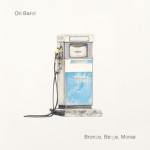
Imagine a radio tuned to a parallel universe where surf bands jam with malfunctioning AI, jazz trumpeters sip espresso in glitch cafés, and Frank Zappa's ghost hovers over the mixing console muttering, “Make it weirder”. That universe is where *Bronze, Beige, Morse* lives - an album as erratic and enchanting as a fever dream with perfect timing.
Barel, an artist with one foot in academia and the other in some joyous electronic sandbox, doesn't write music so much as plot sonic Rube Goldberg machines. Each track clicks, clatters, and spirals in directions you didn’t expect but somehow feel inevitable. The result? An experience that’s as unpredictable as it is cohesive, like finding a secret dance in the chaos of a city street.
Take the title: Bronze, Beige, Morse. Three words that sound like a bad real estate pitch but hint at the synesthetic heart of the record. Metallic, muted, encoded - that’s the vibe. Musical colors flash and fade. Melodies peek through only to vanish like mirages. Harmony becomes an unstable isotope, decaying and reforming in real time.
“Back to Montevideo” might open the album, but there's no ticket home here - only detours. “Harmonica W.” could be a warped sea shanty trapped in a pinball machine, while “Sea Castle” floats in on a dreamy current before collapsing into funhouse reflections. And then there’s “Silly Goose”, which earns its name proudly with a rhythm section led by Chad Wackerman (yes, that Wackerman), tumbling through time signatures like a goose through an obstacle course built by robots.
There’s a narrative logic beneath the fragmentation - this isn’t randomness for its own sake. Barel thrives on contrast: between the soft and the serrated, the playful and the profound. At times it feels like you're watching a cartoon orchestra conducted by a Zen master. Or reading poetry that rearranges itself while you blink.
And yet for all its complexity, Bronze, Beige, Morse doesn’t alienate. It invites you in with sly humor, cinematic flair, and just enough melodic thread to keep your ears curious. It’s a puzzle that enjoys being unsolved. A jazz record, maybe - if jazz were programmed by sentient machines in love with Stravinsky and Atari games.
More than a collection of tracks, it’s a kaleidoscope of musical thought: wonky, wired, and wonderfully alive.
Barel, an artist with one foot in academia and the other in some joyous electronic sandbox, doesn't write music so much as plot sonic Rube Goldberg machines. Each track clicks, clatters, and spirals in directions you didn’t expect but somehow feel inevitable. The result? An experience that’s as unpredictable as it is cohesive, like finding a secret dance in the chaos of a city street.
Take the title: Bronze, Beige, Morse. Three words that sound like a bad real estate pitch but hint at the synesthetic heart of the record. Metallic, muted, encoded - that’s the vibe. Musical colors flash and fade. Melodies peek through only to vanish like mirages. Harmony becomes an unstable isotope, decaying and reforming in real time.
“Back to Montevideo” might open the album, but there's no ticket home here - only detours. “Harmonica W.” could be a warped sea shanty trapped in a pinball machine, while “Sea Castle” floats in on a dreamy current before collapsing into funhouse reflections. And then there’s “Silly Goose”, which earns its name proudly with a rhythm section led by Chad Wackerman (yes, that Wackerman), tumbling through time signatures like a goose through an obstacle course built by robots.
There’s a narrative logic beneath the fragmentation - this isn’t randomness for its own sake. Barel thrives on contrast: between the soft and the serrated, the playful and the profound. At times it feels like you're watching a cartoon orchestra conducted by a Zen master. Or reading poetry that rearranges itself while you blink.
And yet for all its complexity, Bronze, Beige, Morse doesn’t alienate. It invites you in with sly humor, cinematic flair, and just enough melodic thread to keep your ears curious. It’s a puzzle that enjoys being unsolved. A jazz record, maybe - if jazz were programmed by sentient machines in love with Stravinsky and Atari games.
More than a collection of tracks, it’s a kaleidoscope of musical thought: wonky, wired, and wonderfully alive.
Brìghde Chaimbeul: Sunwise
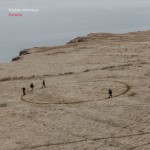
If "Carry Them With Us" was a door cracked open to the otherworld, "Sunwise" swings it wide, letting the winter air flood in, stirring the hearth smoke, and inviting ancestral voices to gather round once more. With this third album, Brìghde Chaimbeul doesn’t just play the small pipes - she communes with them, summoning landscapes, stories, and half-buried memories as if the reeds were conduits for spirit and soil alike.
Here, she turns further inward yet expands outward, deepening her bond with tradition while pressing into new, intimate experimental territories. The result is an album that feels both older than the rocks and startlingly of the now. "Sunwise" is a rite of turning - sun-circling, time-bending, an act of resistance through slowness and ritual.
It begins with "Dùsgadh/Waking", an invocation that rises slowly, like frost melting from heather, the drone steady and inevitable, a constant reminder that we are in the realm of cycles, not climaxes. Chaimbeul’s pipes do not soar so much as shimmer, like breath on cold air. When "A’ Chailleach" arrives - Colin Stetson once again returning like a trusted spectral ally - it is with a thunderous weight: pipes, sax, and voice entwine in a whirl of sound that conjures the mythic hag of winter, stomping the hills into sleep, sweeping away the last green.
There is humour in the bleakness. The track titles - "The Rain Is Wine and the Stones Are Cheese" - sound like the mischief of folk tales told after too much whisky, but they are rooted in real oral traditions. This blend of reverence and strangeness is what makes "Sunwise" so rich. The short interludes ("Kindle the Fire", "She Went Astray") are like fragments overheard through time, crackling like embers or skipping like forgotten wax cylinders. You’re never quite sure if you’re in a church, a cave, or a field at dusk.
The presence of her father, poet Aonghas Phàdraig Chaimbeul, reciting on "Duan", adds a powerful intergenerational weight. The piece evokes Hogmanay customs where people once processed sunwise around houses, reciting protective rhymes - rituals that were both celebratory and slightly ominous, like all the best traditions. There’s an undeniable druidic magic here, but it never feels like cosplay or fetishisation. It’s lived-in, weathered, belonging.
Unlike her previous album, this is more of a solitary walk - though she is joined here and there by family, spirits, and field recordings like sonic cairns dotting her path. Her brother Eòsaph joins in on the final piece, their voices interlacing in the canntaireachd style, a whispered code from another time. It’s barely a minute long, but you can feel the weight of generations in those 59 seconds.
What Chaimbeul does here is alchemical. She takes ancient materials and reconfigures them with minimalist sensibilities and meticulous attention to sonic texture. This is not folk as twee nostalgia nor as self-conscious reinvention - it is folk as dream-logic, as deep time, as living echo.
"Sunwise" isn’t flashy. It doesn’t need to be. It hums and pulses like buried ley lines, like the turning of the earth underfoot. In a world that rushes and roars, it invites stillness - not as silence, but as resonance. In Brìghde Chaimbeul’s hands, the small pipes become vast. They become weather. They become memory. They become future.
And as we walk sunwise with her - three times around the fire, the stone, the old house - we remember something we didn’t know we’d forgotten. Or perhaps, more fittingly, it remembers us.
Here, she turns further inward yet expands outward, deepening her bond with tradition while pressing into new, intimate experimental territories. The result is an album that feels both older than the rocks and startlingly of the now. "Sunwise" is a rite of turning - sun-circling, time-bending, an act of resistance through slowness and ritual.
It begins with "Dùsgadh/Waking", an invocation that rises slowly, like frost melting from heather, the drone steady and inevitable, a constant reminder that we are in the realm of cycles, not climaxes. Chaimbeul’s pipes do not soar so much as shimmer, like breath on cold air. When "A’ Chailleach" arrives - Colin Stetson once again returning like a trusted spectral ally - it is with a thunderous weight: pipes, sax, and voice entwine in a whirl of sound that conjures the mythic hag of winter, stomping the hills into sleep, sweeping away the last green.
There is humour in the bleakness. The track titles - "The Rain Is Wine and the Stones Are Cheese" - sound like the mischief of folk tales told after too much whisky, but they are rooted in real oral traditions. This blend of reverence and strangeness is what makes "Sunwise" so rich. The short interludes ("Kindle the Fire", "She Went Astray") are like fragments overheard through time, crackling like embers or skipping like forgotten wax cylinders. You’re never quite sure if you’re in a church, a cave, or a field at dusk.
The presence of her father, poet Aonghas Phàdraig Chaimbeul, reciting on "Duan", adds a powerful intergenerational weight. The piece evokes Hogmanay customs where people once processed sunwise around houses, reciting protective rhymes - rituals that were both celebratory and slightly ominous, like all the best traditions. There’s an undeniable druidic magic here, but it never feels like cosplay or fetishisation. It’s lived-in, weathered, belonging.
Unlike her previous album, this is more of a solitary walk - though she is joined here and there by family, spirits, and field recordings like sonic cairns dotting her path. Her brother Eòsaph joins in on the final piece, their voices interlacing in the canntaireachd style, a whispered code from another time. It’s barely a minute long, but you can feel the weight of generations in those 59 seconds.
What Chaimbeul does here is alchemical. She takes ancient materials and reconfigures them with minimalist sensibilities and meticulous attention to sonic texture. This is not folk as twee nostalgia nor as self-conscious reinvention - it is folk as dream-logic, as deep time, as living echo.
"Sunwise" isn’t flashy. It doesn’t need to be. It hums and pulses like buried ley lines, like the turning of the earth underfoot. In a world that rushes and roars, it invites stillness - not as silence, but as resonance. In Brìghde Chaimbeul’s hands, the small pipes become vast. They become weather. They become memory. They become future.
And as we walk sunwise with her - three times around the fire, the stone, the old house - we remember something we didn’t know we’d forgotten. Or perhaps, more fittingly, it remembers us.
Hari Hardman: The World Died A Long Time Ago

Artist: Hari Hardman (@)
Title: The World Died A Long Time Ago
Format: Download Only (MP3 + Lossless)
Label: No Part Of It (@)
Rated:
Title: The World Died A Long Time Ago
Format: Download Only (MP3 + Lossless)
Label: No Part Of It (@)
Rated:
Hari Hardman’s The World Died A Long Time Ago arrives like a bruised time capsule flung from a collapsing timeline: rusted at the hinges, leaking bad dreams and paranoid poetry, humming with lo-fi signals from some derelict broadcast tower that never got the memo about the end. It’s music as séance, junkyard liturgy, and existential pratfall - all delivered with the charisma of a ghost who’s seen too much and decided to laugh anyway.
In just under 24 minutes, Hardman offers six tracks that don't just explore decay - they dance in it, lick it, wear it as a second skin. There's a dystopian playfulness here, like a kid kicking around skulls in a sandbox. Titles like “Highgate Boris Karloff” and “Lysergic Trapdoor” suggest a surrealist horror-comedy of manners, while the sound itself leans into twisted tape manipulations, mangled beats, and industrial detritus arranged like a sonic collage of urban collapse. Think post-punk’s forgotten cousin, raised by VHS ghosts and dropout circuit-benders.
There are recognizable elements - snippets of melody, haunted vocal treatments, rhythms that stumble like drunk prophets - but they're fleeting, glimpsed through murk and noise. At times, it recalls the haunted DIY ethos of early Cabaret Voltaire or the theatrical nihilism of Nurse With Wound on a particularly concise day. But Hardman isn’t imitating anyone. He’s muttering into the void in his own distinct dialect: post-collapse vernacular for the weird and the wounded.
“Garry Guerrilla” kicks things off like a half-remembered theme song from a cancelled spy show on a dead satellite. “Harbingers of Doom” is less prophetic than it is resigned - doom not as threat, but as old roommate. “The Last of Slough” manages to make the name of an English town feel like the punchline to a cosmic joke, delivered in reverb.
The production is gloriously wrong in all the right ways: crusty, hiss-soaked, and defiantly lo-fi, as though recorded onto wax cylinders using broken surveillance equipment. But that’s the aesthetic’s strength - Hardman isn’t polishing anything. He’s embalming it, wrapping it in hiss like linen, prepping it for a pyramid that was never finished.
There's also a strange tenderness lurking beneath the grit. You hear it most in “Satanic Antarctica”, a glacial closer that floats in a sea of slow decay, whispering to penguins and demons alike. It’s mournful but serene, like someone lighting candles at the end of the world - not to fight the darkness, but to make it feel a little less lonely.
And yes, the question hovers - will we ever really understand the unanswered question? Probably not. But Hardman doesn’t seem to mind. He’s built a soundtrack for the era after all questions stopped mattering, after the curtain fell but before the applause. The world, he suggests, didn’t end with a bang or a whimper. It ended a long time ago. We just didn’t notice.
And here he is, DJing the afterparty in the ruins. Bring your own bones.
In just under 24 minutes, Hardman offers six tracks that don't just explore decay - they dance in it, lick it, wear it as a second skin. There's a dystopian playfulness here, like a kid kicking around skulls in a sandbox. Titles like “Highgate Boris Karloff” and “Lysergic Trapdoor” suggest a surrealist horror-comedy of manners, while the sound itself leans into twisted tape manipulations, mangled beats, and industrial detritus arranged like a sonic collage of urban collapse. Think post-punk’s forgotten cousin, raised by VHS ghosts and dropout circuit-benders.
There are recognizable elements - snippets of melody, haunted vocal treatments, rhythms that stumble like drunk prophets - but they're fleeting, glimpsed through murk and noise. At times, it recalls the haunted DIY ethos of early Cabaret Voltaire or the theatrical nihilism of Nurse With Wound on a particularly concise day. But Hardman isn’t imitating anyone. He’s muttering into the void in his own distinct dialect: post-collapse vernacular for the weird and the wounded.
“Garry Guerrilla” kicks things off like a half-remembered theme song from a cancelled spy show on a dead satellite. “Harbingers of Doom” is less prophetic than it is resigned - doom not as threat, but as old roommate. “The Last of Slough” manages to make the name of an English town feel like the punchline to a cosmic joke, delivered in reverb.
The production is gloriously wrong in all the right ways: crusty, hiss-soaked, and defiantly lo-fi, as though recorded onto wax cylinders using broken surveillance equipment. But that’s the aesthetic’s strength - Hardman isn’t polishing anything. He’s embalming it, wrapping it in hiss like linen, prepping it for a pyramid that was never finished.
There's also a strange tenderness lurking beneath the grit. You hear it most in “Satanic Antarctica”, a glacial closer that floats in a sea of slow decay, whispering to penguins and demons alike. It’s mournful but serene, like someone lighting candles at the end of the world - not to fight the darkness, but to make it feel a little less lonely.
And yes, the question hovers - will we ever really understand the unanswered question? Probably not. But Hardman doesn’t seem to mind. He’s built a soundtrack for the era after all questions stopped mattering, after the curtain fell but before the applause. The world, he suggests, didn’t end with a bang or a whimper. It ended a long time ago. We just didn’t notice.
And here he is, DJing the afterparty in the ruins. Bring your own bones.
Jliat: The Symphony No. 2 in C minor by Gustav Mahler, Resurrection Symphony

Artist: Jliat (http://jliat.com/) (@)
Title: The Symphony No. 2 in C minor by Gustav Mahler, Resurrection Symphony
Format: Download Only (MP3 + Lossless)
Label: No Part Of It (@)
Rated:
Title: The Symphony No. 2 in C minor by Gustav Mahler, Resurrection Symphony
Format: Download Only (MP3 + Lossless)
Label: No Part Of It (@)
Rated:
Imagine Gustav Mahler, on the brink of cosmic despair, returning to Earth in a pixelated vapor trail, only to discover that his majestic Resurrection Symphony has been resurrected again - but this time, inside a haunted PlayStation. And instead of an orchestra, he’s greeted by a guitar rendered in MIDI steel, processed through time, sarcasm, and something that smells vaguely like postmodernism. Welcome to the strange, hilarious, possibly sacred world of Jliat.
This “Guitar Hero” version of Mahler’s Second isn’t a remix. It’s not a cover. It’s not even a re-interpretation in the traditional sense. It is, quite literally, an ontological prank disguised as a 41-minute track, which is - according to the title - only the fifth movement. That's right. No warm-up, no exposition. Just straight to the eschatology.
James Whitehead (alias Jliat), a long-time British noise conceptualist with roots extending back to studies under John Cage, continues here his lifelong mission of turning the act of listening into a philosophical riddle. Known for his explorations of inaudible MP3s, Merzbow simulacra, and hour-long drones that hum like the sound of time collapsing in a cupboard, Whitehead brings his usual dry wit and academic mischief to the altar of late-Romantic symphonic transcendence. And then lights the altar on fire using virtual distortion pedals and the ghost of irony.
Let’s be clear: this is not Mahler as Bernstein would conduct him. This is Mahler as performed by an emotionally conflicted cyborg trapped inside a noise bunker. The grandeur is still there, sort of - but it’s cloaked in lo-fi digital fuzz, smeared with artificial tremolo, and retimed in a way that suggests both reverence and total conceptual betrayal. It’s like building a cathedral out of melted circuit boards and letting pigeons live in it. Beautiful. Pointless. Majestic.
There’s something especially funny - yet oddly moving - about the contrast between Mahler’s apocalyptic ambitions and the brittle, processed guitar tones used here. It’s the musical equivalent of staging Hamlet using sock puppets: absurd on paper, and yet somehow more honest than most “serious” tributes. The drama remains. The tragedy is intact. But you’re forced to see it all sideways, through a cracked postmodern lens. It hurts a little, and that’s the point.
Beneath the distortion and snark, there's a clear affection for the original work. The grand gestures of the Scherzo movement are still discernible - if you squint - and the pacing, for all its alien processing, feels deeply aware of the emotional terrain it's traversing. This isn’t a parody in the cheap sense. It’s more like a glitchy séance: trying to summon the Romantic spirit in an age where everything has been digitized, commodified, and turned into ironic content.
And yet, by refusing to offer a traditional listening experience, Jliat challenges our very ideas of fidelity, beauty, and purpose in art. Does it matter what it “sounds like”? Or is the act of making a “Mahler Guitar Hero” piece the real symphony? Is this resurrection, or resurrection-as-meme? And is there really a difference anymore?
In the end, this isn't music for the ears - it’s music for the brainstem. Or perhaps the spleen. You don’t so much listen to Jliat as you endure him, puzzle over him, laugh nervously at the implications, and eventually come to respect the quiet, stubborn radicalism of it all.
Whitehead remains one of those rare artists who remind us that absurdity and profundity are not mutually exclusive. Sometimes, the dumbest idea is the smartest one. Sometimes, to take music seriously, you have to first destroy it.
Welcome to the Resurrection. Please keep your expectations and your sanity inside the ride at all times.
This “Guitar Hero” version of Mahler’s Second isn’t a remix. It’s not a cover. It’s not even a re-interpretation in the traditional sense. It is, quite literally, an ontological prank disguised as a 41-minute track, which is - according to the title - only the fifth movement. That's right. No warm-up, no exposition. Just straight to the eschatology.
James Whitehead (alias Jliat), a long-time British noise conceptualist with roots extending back to studies under John Cage, continues here his lifelong mission of turning the act of listening into a philosophical riddle. Known for his explorations of inaudible MP3s, Merzbow simulacra, and hour-long drones that hum like the sound of time collapsing in a cupboard, Whitehead brings his usual dry wit and academic mischief to the altar of late-Romantic symphonic transcendence. And then lights the altar on fire using virtual distortion pedals and the ghost of irony.
Let’s be clear: this is not Mahler as Bernstein would conduct him. This is Mahler as performed by an emotionally conflicted cyborg trapped inside a noise bunker. The grandeur is still there, sort of - but it’s cloaked in lo-fi digital fuzz, smeared with artificial tremolo, and retimed in a way that suggests both reverence and total conceptual betrayal. It’s like building a cathedral out of melted circuit boards and letting pigeons live in it. Beautiful. Pointless. Majestic.
There’s something especially funny - yet oddly moving - about the contrast between Mahler’s apocalyptic ambitions and the brittle, processed guitar tones used here. It’s the musical equivalent of staging Hamlet using sock puppets: absurd on paper, and yet somehow more honest than most “serious” tributes. The drama remains. The tragedy is intact. But you’re forced to see it all sideways, through a cracked postmodern lens. It hurts a little, and that’s the point.
Beneath the distortion and snark, there's a clear affection for the original work. The grand gestures of the Scherzo movement are still discernible - if you squint - and the pacing, for all its alien processing, feels deeply aware of the emotional terrain it's traversing. This isn’t a parody in the cheap sense. It’s more like a glitchy séance: trying to summon the Romantic spirit in an age where everything has been digitized, commodified, and turned into ironic content.
And yet, by refusing to offer a traditional listening experience, Jliat challenges our very ideas of fidelity, beauty, and purpose in art. Does it matter what it “sounds like”? Or is the act of making a “Mahler Guitar Hero” piece the real symphony? Is this resurrection, or resurrection-as-meme? And is there really a difference anymore?
In the end, this isn't music for the ears - it’s music for the brainstem. Or perhaps the spleen. You don’t so much listen to Jliat as you endure him, puzzle over him, laugh nervously at the implications, and eventually come to respect the quiet, stubborn radicalism of it all.
Whitehead remains one of those rare artists who remind us that absurdity and profundity are not mutually exclusive. Sometimes, the dumbest idea is the smartest one. Sometimes, to take music seriously, you have to first destroy it.
Welcome to the Resurrection. Please keep your expectations and your sanity inside the ride at all times.