
Browse by Genre
Industrial Music / Industrial Metal / Aggro Industrial / Electro Metal
Industrial Noise / Power Noise / Harsh Noise
Synth Pop / Electro Pop / Synth-Electronica
Techno / Trance / Goa / Drum'n'Bass / Jungle / Tribal / Trip-Hop
Ambient / Electronica / Ethereal / Dub / Soundscapes / Abstract
Experimental / Avantgarde / Weird & Wired / Glitch / Noise / Field Recording
Dark / Gothic / Wave / New Wave / Dark Wave / Industrial Gothic
New Music / Downtown / Avantgarde Jazz / New Classical / World
Search Reviews
Music Reviews
Annie Bloch & Emily Wittbrodt: The Mendelssohn-Project
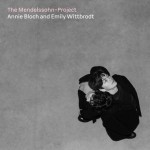
Artist: Annie Bloch & Emily Wittbrodt (http://anniebloch.com/) (@)
Title: The Mendelssohn-Project
Format: CD + Download
Label: stssts records
Rated:

Title: The Mendelssohn-Project
Format: CD + Download
Label: stssts records
Rated:
Felix Mendelssohn’s ghost probably never expected to be invited to a séance inside a pipe organ, but here he is, echoing through the smoky corridors of "The Mendelssohn-Project", where 19th-century formalism meets a kind of disciplined mischief. This collaboration between Annie Bloch and Emily Wittbrodt - two intrepid sonic cartographers based in Cologne - takes the bones of Mendelssohn’s "Prelude and Fugue in C minor" and breathes into them a whole new set of lungs, ones that wheeze, sigh, rebel, and occasionally burst into ecstatic laughter.
It all starts innocently enough: the "PrÄludium" is presented in its solemn dignity, with Ralf Borghoff’s stately organ lines pairing up with Wittbrodt’s expressive cello to re-establish the original material in something like its Sunday best. But from track II onward, things begin to unravel - in the best way possible. These are not deconstructions in the academic sense. Think of them instead as meditative dérives through the haunted house of classical form. The themes stretch like shadows at dusk, and time no longer clicks forward - it pulses, dilates, contracts.
The duo are less interested in paying homage to Mendelssohn than in asking him provocative questions: What if your fugue never quite arrives? What if the cello forgets the theme and starts daydreaming in microtonal glissandi? What if the organ becomes less a church fixture and more a breathing, groaning creature with a memory problem?
And yet, "The Mendelssohn-Project" is not a parody or a demolition job - it’s an act of creative reverence. Bloch and Wittbrodt aren’t trying to “fix” Mendelssohn. They’re communing with him through their own artistic languages, blending their roots in jazz, folk, pop, and the German experimental underground. There's humor here - sometimes subtle, sometimes cheeky - as when a staccato cello line seems to tiptoe away from the organ’s grandiosity, or when harmonies flirt with dissonance like two choir members gossiping during mass. But there’s also a deep seriousness of intent, a sense that both artists are trying to hear something that isn’t quite there anymore - a fugitive resonance that lies between the notes, between eras, between identities.
Wittbrodt, ever the restless cellist, plays like someone who has both studied the score and torn it up out of love. Her cello sings and sighs, but also scratches, pulses, and hums - an instrument halfway between a baroque narrator and a noise poet. Bloch, on the other hand, coaxes the organ into unlikely registers of fragility. You’d expect grandeur; you get hesitation, intimacy, occasional moments of whispered rupture. Her work on the 2025 chamber-pop gem "I DEPEND" hinted at this interplay between the monumental and the personal - here it blossoms fully, in a sonic cathedral with no fixed theology.
By the time we reach track VII, it’s clear that the original fugue is long gone, replaced by something far more interesting: a shared language that lives in the interstices between structure and intuition, quotation and invention, reverence and rebellion. The duo doesn’t just reinterpret Mendelssohn - they translate him into a dialect of the now.
In the end, "The Mendelssohn-Project" is less about Mendelssohn and more about what it means to inherit sound. What do we do with the musical past? Imitate it? Break it? Speak to it softly and wait for a reply? Bloch and Wittbrodt choose the latter - and in doing so, they’ve made one of the most beguiling and strangely touching records of the year. It’s a quiet act of musical archaeology with a sly grin and a generous soul. Felix, wherever he is, might be nodding along - perhaps even tapping a foot in triple meter.
It all starts innocently enough: the "PrÄludium" is presented in its solemn dignity, with Ralf Borghoff’s stately organ lines pairing up with Wittbrodt’s expressive cello to re-establish the original material in something like its Sunday best. But from track II onward, things begin to unravel - in the best way possible. These are not deconstructions in the academic sense. Think of them instead as meditative dérives through the haunted house of classical form. The themes stretch like shadows at dusk, and time no longer clicks forward - it pulses, dilates, contracts.
The duo are less interested in paying homage to Mendelssohn than in asking him provocative questions: What if your fugue never quite arrives? What if the cello forgets the theme and starts daydreaming in microtonal glissandi? What if the organ becomes less a church fixture and more a breathing, groaning creature with a memory problem?
And yet, "The Mendelssohn-Project" is not a parody or a demolition job - it’s an act of creative reverence. Bloch and Wittbrodt aren’t trying to “fix” Mendelssohn. They’re communing with him through their own artistic languages, blending their roots in jazz, folk, pop, and the German experimental underground. There's humor here - sometimes subtle, sometimes cheeky - as when a staccato cello line seems to tiptoe away from the organ’s grandiosity, or when harmonies flirt with dissonance like two choir members gossiping during mass. But there’s also a deep seriousness of intent, a sense that both artists are trying to hear something that isn’t quite there anymore - a fugitive resonance that lies between the notes, between eras, between identities.
Wittbrodt, ever the restless cellist, plays like someone who has both studied the score and torn it up out of love. Her cello sings and sighs, but also scratches, pulses, and hums - an instrument halfway between a baroque narrator and a noise poet. Bloch, on the other hand, coaxes the organ into unlikely registers of fragility. You’d expect grandeur; you get hesitation, intimacy, occasional moments of whispered rupture. Her work on the 2025 chamber-pop gem "I DEPEND" hinted at this interplay between the monumental and the personal - here it blossoms fully, in a sonic cathedral with no fixed theology.
By the time we reach track VII, it’s clear that the original fugue is long gone, replaced by something far more interesting: a shared language that lives in the interstices between structure and intuition, quotation and invention, reverence and rebellion. The duo doesn’t just reinterpret Mendelssohn - they translate him into a dialect of the now.
In the end, "The Mendelssohn-Project" is less about Mendelssohn and more about what it means to inherit sound. What do we do with the musical past? Imitate it? Break it? Speak to it softly and wait for a reply? Bloch and Wittbrodt choose the latter - and in doing so, they’ve made one of the most beguiling and strangely touching records of the year. It’s a quiet act of musical archaeology with a sly grin and a generous soul. Felix, wherever he is, might be nodding along - perhaps even tapping a foot in triple meter.
Zimoun: Harmonium I-VI

Zimoun’s "Harmonium I–VI" feels like a transmission from the lungs of an old machine that has decided to dream. Known for his kinetic installations where hundreds of simple mechanisms whir, tap, and oscillate into hypnotic chorus, the Swiss artist here turns his attention inward - or at least toward the solitary, breath-fed intimacy of a single, century-old harmonium. No motors, no paper bags rustling, no wires stretched across museum halls. Just wood, air, bellows, and keys.
The result? Imagine an ancient synth found in a monastery, half-repaired by monks, half-possessed by ghosts. Across these six pieces, Zimoun maintains his usual fascination for microstructures - those tiny sonic events that live on the borders of perception - but the material feels warmer, more tactile. This isn’t just minimalism; it’s minimalism that breathes. And creaks. And sighs. There’s an endearing fragility here, as though each sound might collapse under its own weight, or vanish if you listen too hard.
What’s striking is how Zimoun resists the temptation to fetishize the harmonium’s imperfections. There are no “vintage instrument” theatrics, no exaggerated wheezes or artificial patinas. Instead, the focus is on the shifting textures and harmonic tensions that emerge when the instrument is played with monk-like patience. "Harmonium II", for instance, feels like the wind circling a room with no exits. "Harmonium IV" crackles with quiet unease, like a hymn being forgotten in real time.
Despite the apparent simplicity, these pieces open up like rooms in a dream - you enter expecting bare walls and find strange drafts, slow flickering lights, smells you half-remember. This is music that invites you to slow down not just your body, but your expectations. It’s easy to miss the movement, because the movement is in the stillness. Zimoun knows that repetition is never truly repetitive, that machines can hum like monks, that slowness is its own kind of rhythm.
Perhaps "Harmonium I–VI" won’t change your life. But it might alter the shape of your silence. It may remind you that even the most antiquated of instruments still contains an unfinished sentence - one that begins and ends in breath, like all the best stories.
The result? Imagine an ancient synth found in a monastery, half-repaired by monks, half-possessed by ghosts. Across these six pieces, Zimoun maintains his usual fascination for microstructures - those tiny sonic events that live on the borders of perception - but the material feels warmer, more tactile. This isn’t just minimalism; it’s minimalism that breathes. And creaks. And sighs. There’s an endearing fragility here, as though each sound might collapse under its own weight, or vanish if you listen too hard.
What’s striking is how Zimoun resists the temptation to fetishize the harmonium’s imperfections. There are no “vintage instrument” theatrics, no exaggerated wheezes or artificial patinas. Instead, the focus is on the shifting textures and harmonic tensions that emerge when the instrument is played with monk-like patience. "Harmonium II", for instance, feels like the wind circling a room with no exits. "Harmonium IV" crackles with quiet unease, like a hymn being forgotten in real time.
Despite the apparent simplicity, these pieces open up like rooms in a dream - you enter expecting bare walls and find strange drafts, slow flickering lights, smells you half-remember. This is music that invites you to slow down not just your body, but your expectations. It’s easy to miss the movement, because the movement is in the stillness. Zimoun knows that repetition is never truly repetitive, that machines can hum like monks, that slowness is its own kind of rhythm.
Perhaps "Harmonium I–VI" won’t change your life. But it might alter the shape of your silence. It may remind you that even the most antiquated of instruments still contains an unfinished sentence - one that begins and ends in breath, like all the best stories.
ZÖJ: Give Water To Birds
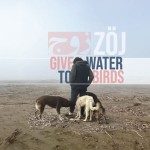
ZÖJ’s "Give Water To Birds" is a gentle, breathing testament to the kind of music that doesn't demand attention but patiently earns it - layer by layer, breath by breath. It arrives like the first light through a dusty window: soft, persistent, necessary. The duo - Gelareh Pour on kamancheh, qheychak alto and vocals, and Brian O’Dwyer on drums - are joined by guitarist Brett Langsford in this second offering, which feels less like a studio album and more like a collective exhalation. Recorded live, the album resists the digital sterility of the age and instead leans into its own physicality: bow against string, hand against skin, silence against sound.
What sets this work apart is its quiet courage. Rather than flood the listener with grand gestures, "Give Water To Birds" builds slowly and deliberately, inviting deep listening the way a slow tide invites wading. Persian poetry - by the likes of Kasraie, Ahmadi, Ebtehaj, Langeroudi, and Moshiri - threads its way through the album, not as ornamental texts but as living voices, full of longing and memory. In "Caspian", the sea becomes a maternal mirror, cloudy with exile and ache. "Forever Tehrani" walks back into a childhood alley and finds the scent of mud-brick mortar still intact. "Tasian" is almost unbearable in its softness - its meditation on absence, waiting, and the haunting echo of "never" is enough to make even the most cynical listener pause.
Musically, there’s a kind of disciplined generosity at play. Pour’s strings never grandstand - they shimmer and quiver with restraint, occasionally whispering into vocal laments that dissolve into air. O’Dwyer’s drumming is a masterclass in sensitivity; never bombastic, always intuitive. Langsford’s guitar adds melodic breath and harmonic shimmer in just the right moments. Together, they don’t so much perform as listen to one another, constantly adjusting their volume, pace, and presence as if in a conversation held just below the threshold of speech.
And yet, for all its introspection, the album isn’t static. There’s humour tucked away in the details - a kind of quiet resilience that resists total melancholy. You can almost picture Gelareh Pour tightening a string with poetic intent while Brian O’Dwyer sprinkles a brushstroke of rhythm like watering a bonsai: precise, patient, a bit cheeky. The final track, "Marbles for Kaylie", has something lighter about it, a quiet playfulness that reminds us grief and joy aren’t opposites - they’re partners in the same dance.
In a musical landscape saturated with loud declarations and attention-hungry production, "Give Water To Birds" feels like an act of rebellion through tenderness. It doesn’t try to fix anything. It simply offers presence. Like the poems it carries, it knows the world is broken, and loves it anyway. This is not ambient music to be passively absorbed - it’s an invitation to sit with discomfort, with nostalgia, with memory and with the extraordinary intimacy of listening. The birds in the title aren’t metaphors; they’re real, they’re heard, they’re witnesses. So are we.
What sets this work apart is its quiet courage. Rather than flood the listener with grand gestures, "Give Water To Birds" builds slowly and deliberately, inviting deep listening the way a slow tide invites wading. Persian poetry - by the likes of Kasraie, Ahmadi, Ebtehaj, Langeroudi, and Moshiri - threads its way through the album, not as ornamental texts but as living voices, full of longing and memory. In "Caspian", the sea becomes a maternal mirror, cloudy with exile and ache. "Forever Tehrani" walks back into a childhood alley and finds the scent of mud-brick mortar still intact. "Tasian" is almost unbearable in its softness - its meditation on absence, waiting, and the haunting echo of "never" is enough to make even the most cynical listener pause.
Musically, there’s a kind of disciplined generosity at play. Pour’s strings never grandstand - they shimmer and quiver with restraint, occasionally whispering into vocal laments that dissolve into air. O’Dwyer’s drumming is a masterclass in sensitivity; never bombastic, always intuitive. Langsford’s guitar adds melodic breath and harmonic shimmer in just the right moments. Together, they don’t so much perform as listen to one another, constantly adjusting their volume, pace, and presence as if in a conversation held just below the threshold of speech.
And yet, for all its introspection, the album isn’t static. There’s humour tucked away in the details - a kind of quiet resilience that resists total melancholy. You can almost picture Gelareh Pour tightening a string with poetic intent while Brian O’Dwyer sprinkles a brushstroke of rhythm like watering a bonsai: precise, patient, a bit cheeky. The final track, "Marbles for Kaylie", has something lighter about it, a quiet playfulness that reminds us grief and joy aren’t opposites - they’re partners in the same dance.
In a musical landscape saturated with loud declarations and attention-hungry production, "Give Water To Birds" feels like an act of rebellion through tenderness. It doesn’t try to fix anything. It simply offers presence. Like the poems it carries, it knows the world is broken, and loves it anyway. This is not ambient music to be passively absorbed - it’s an invitation to sit with discomfort, with nostalgia, with memory and with the extraordinary intimacy of listening. The birds in the title aren’t metaphors; they’re real, they’re heard, they’re witnesses. So are we.
Giovanni di Domenico + Alex Zethson: Edge Runner + Noema

Edge Runner – Noema is a double helix of sound and stance. One disc dwells in the volcanic crevices of post-ambient jazz-noise (Di Domenico’s "Edge Runner"), while the other ("Noema" by Zethson) takes us through the long, slow undulations of harmonic hypnosis. Each feels like a hand grasping at the ineffable - from opposite ends of the piano.
Di Domenico, the Roman-born sonic alchemist with the soul of a global drifter and the fingers of a combat poet, doesn’t play piano as much as he provokes it into spasms of resonance. His half of the diptych is tumultuous, deliberately dense - music not built for casual listening, but for being wrestled with. The drone is king, yes, but its throne is uneven, carved out of sub-harmonics, jagged textures, and moods that drift from oppressive to strangely serene. There's nothing clean here. Every moment teeters between chaos and ceremony, like a ritual conducted during an earthquake. It’s beautiful - just not in ways most people would admit aloud.
Zethson, in contrast, starts in the cave and climbs toward the cathedral. "Noema" is a single 44-minute live improvisation: an arc that’s part sacred geometry, part somatic trance. If Di Domenico’s approach is sculptural - chiseling through noise - Zethson’s is architectural: building arches of sound from the ground up. Using repeating fifths, chromatic murmurs, and pedal-less attacks that make his grand piano sound like a prepared zither, he creates tension not through dissonance, but through the paradox of movement in stillness. Imagine a dancer who never takes a step, yet covers miles.
Both artists - although separated in temperament, origin, and even recording context - intersect on a spiritual plane. They speak in tongues made of felt, hammers, breath, and memory. There’s no ego on display, no desire to impress. What we hear is sound, in its rawest, strangest honesty.
The album’s title, "Edge Runner – Noema", is almost philosophical. Di Domenico runs along the ledge, defying gravity, sometimes slipping, sometimes soaring. Zethson offers the "noema": not just the thought, but the object of thought - the idea as thing. Together, they chart a topography of extremes and interiors. The edge and the essence. The outburst and the inner voice.
Is it ambient? No. Is it jazz? Sometimes. Is it modern composition? Maybe in another timeline. What it really is, is commitment - to form, to freedom, to the tremble between the two. Like a monk and a mad scientist recording in adjacent monasteries, they've given us something that feels both ancient and absolutely of now.
You don’t listen to this album; you inhabit it. You step into its shadow, walk until your eyes adjust, and only then begin to notice that the darkness is full of color.
Di Domenico, the Roman-born sonic alchemist with the soul of a global drifter and the fingers of a combat poet, doesn’t play piano as much as he provokes it into spasms of resonance. His half of the diptych is tumultuous, deliberately dense - music not built for casual listening, but for being wrestled with. The drone is king, yes, but its throne is uneven, carved out of sub-harmonics, jagged textures, and moods that drift from oppressive to strangely serene. There's nothing clean here. Every moment teeters between chaos and ceremony, like a ritual conducted during an earthquake. It’s beautiful - just not in ways most people would admit aloud.
Zethson, in contrast, starts in the cave and climbs toward the cathedral. "Noema" is a single 44-minute live improvisation: an arc that’s part sacred geometry, part somatic trance. If Di Domenico’s approach is sculptural - chiseling through noise - Zethson’s is architectural: building arches of sound from the ground up. Using repeating fifths, chromatic murmurs, and pedal-less attacks that make his grand piano sound like a prepared zither, he creates tension not through dissonance, but through the paradox of movement in stillness. Imagine a dancer who never takes a step, yet covers miles.
Both artists - although separated in temperament, origin, and even recording context - intersect on a spiritual plane. They speak in tongues made of felt, hammers, breath, and memory. There’s no ego on display, no desire to impress. What we hear is sound, in its rawest, strangest honesty.
The album’s title, "Edge Runner – Noema", is almost philosophical. Di Domenico runs along the ledge, defying gravity, sometimes slipping, sometimes soaring. Zethson offers the "noema": not just the thought, but the object of thought - the idea as thing. Together, they chart a topography of extremes and interiors. The edge and the essence. The outburst and the inner voice.
Is it ambient? No. Is it jazz? Sometimes. Is it modern composition? Maybe in another timeline. What it really is, is commitment - to form, to freedom, to the tremble between the two. Like a monk and a mad scientist recording in adjacent monasteries, they've given us something that feels both ancient and absolutely of now.
You don’t listen to this album; you inhabit it. You step into its shadow, walk until your eyes adjust, and only then begin to notice that the darkness is full of color.
Alan Lamb: Archival Recordings: Primal Image / Beauty
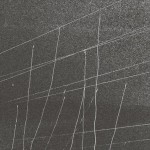
Alan Lamb’s "Archival Recordings: Primal Image / Beauty" is a time machine, a sonic archaeology of wind and wire. Alan Lamb (1944–2025), a neurophysiologist turned sound sculptor, recorded these pieces in the early ’80s on his family’s remote farm in Western Australia, using what he called the "Faraway Wind Organ": telephone wires stretched across the landscape.
Primal Image (1981) opens with a restless energy - an Aeolian dance between tension, timbre, and the whimsy of wind. It’s like hearing a cathedral built by nature itself. Twenty-nine minutes of evolving drones stretch and collapse, urging you closer, whispering the earth’s own original frequencies.
Beauty (1983) is quieter yet infinitely profound. Condensed from twenty hours of recording, it’s a folding of time itself - almost reverential in tone. Its resonance is magnetic, revealing a patient mind that listens as much as it composes.
Both tracks feel eternal, material yet fragile - utterly present and, paradoxically, timeless. Lamb pressed minimal processing into service of pure clay: wind, wire, and silence. His work invites us to tune our ears to the hidden symphonies of landscape and time.
A poetic encounter: imagine standing in a forgotten outback field, wires humming like an Aeolian angel, each vibration a spoken prayer - Lamb captured all of it. This is ambient music as heirloom, breathing slow and deep.
He pioneered a genre of “wire music”, later embraced by peers like Ellen Fullman and Alvin Lucier, yet Lamb’s voice remains singular - scientific and soulful, speculative and deeply human.
This release is for those who want to hear the world not just as sound, but as material memory. For anyone intrigued by how wind carves melody into metal, or how patience rewrites time, "Primal Image / Beauty" is essential listening.
Primal Image (1981) opens with a restless energy - an Aeolian dance between tension, timbre, and the whimsy of wind. It’s like hearing a cathedral built by nature itself. Twenty-nine minutes of evolving drones stretch and collapse, urging you closer, whispering the earth’s own original frequencies.
Beauty (1983) is quieter yet infinitely profound. Condensed from twenty hours of recording, it’s a folding of time itself - almost reverential in tone. Its resonance is magnetic, revealing a patient mind that listens as much as it composes.
Both tracks feel eternal, material yet fragile - utterly present and, paradoxically, timeless. Lamb pressed minimal processing into service of pure clay: wind, wire, and silence. His work invites us to tune our ears to the hidden symphonies of landscape and time.
A poetic encounter: imagine standing in a forgotten outback field, wires humming like an Aeolian angel, each vibration a spoken prayer - Lamb captured all of it. This is ambient music as heirloom, breathing slow and deep.
He pioneered a genre of “wire music”, later embraced by peers like Ellen Fullman and Alvin Lucier, yet Lamb’s voice remains singular - scientific and soulful, speculative and deeply human.
This release is for those who want to hear the world not just as sound, but as material memory. For anyone intrigued by how wind carves melody into metal, or how patience rewrites time, "Primal Image / Beauty" is essential listening.