
Browse by Genre
Industrial Music / Industrial Metal / Aggro Industrial / Electro Metal
Industrial Noise / Power Noise / Harsh Noise
Synth Pop / Electro Pop / Synth-Electronica
Techno / Trance / Goa / Drum'n'Bass / Jungle / Tribal / Trip-Hop
Ambient / Electronica / Ethereal / Dub / Soundscapes / Abstract
Experimental / Avantgarde / Weird & Wired / Glitch / Noise / Field Recording
Dark / Gothic / Wave / New Wave / Dark Wave / Industrial Gothic
New Music / Downtown / Avantgarde Jazz / New Classical / World
Search Reviews
Music Reviews
Animal Machine / Richard Ramirez: Música para el colapso

Artist: Animal Machine / Richard Ramirez
Title: Música para el colapso
Format: Tape + Download
Label: Buh Records (@)
Rated:


Title: Música para el colapso
Format: Tape + Download
Label: Buh Records (@)
Rated:
It took nearly fifteen years for this split to finally erupt from the archives, and yet, somehow, "Música para el colapso" doesn’t feel dated - it feels perfectly, disturbingly, of the moment. As if the world finally degraded enough to deserve its sound. Originally conceived in the early 2010s, when CD-Rs and photocopied artwork ruled the noise underground like fragile artifacts of impermanence, this release captures two masters of sonic devastation speaking different dialects of collapse: one gestural, kinetic, and crude; the other static, suffocating, and paradoxically serene.
Animal Machine, the brutalist alter ego of Peruvian artist Ernesto Bohórquez, offers a live recording from Poland in 2009 - an era when his nomadic presence was electrifying stages and undergrounds across Europe. It’s a recording with no intention of easing you in. From the first second, it blasts like a sandblaster to the frontal cortex: shrieking frequencies layered over granular distortion, with movements that feel less composed than exorcized. The performance isn’t so much a track as an event - a riot of knobs and broken cables, sonic extremity pushed into the red until what’s left is just the rasping architecture of noise. If harsh noise were a martial art, this would be its flying kick to the teeth.
Richard Ramirez, by contrast, offers something almost... contemplative? "Perverted by Religion" (recorded in 2011, a title both blasphemous and oddly autobiographical if you've tracked Ramirez’s aesthetic evolution) unfolds like a glacial slab of HNW (harsh noise wall), static at first blush but quietly shifting like tectonic pressure over time. It's the auditory equivalent of watching a monolith breathe - unyielding, but never quite still. Ramirez’s ability to locate detail within density makes this track a Rorschach test for attention: listen casually and it’s just a roar; listen deeply and you start to hallucinate shapes in the distortion. Crucially, he doesn’t push you anywhere - you either submit to the wall or bounce off it.
Together, these two approaches - Animal Machine’s live-wire chaos and Ramirez’s anti-dynamic purity - make "Música para el colapso" a compelling split, not a polite conversation between peers but a dialectical confrontation. It’s the sound of noise cannibalizing itself: punk impulse versus minimalist intent, entropy as ecstasy versus entropy as discipline.
This isn’t nostalgia. It’s resurrection. A cassette release for 2025 feels not retro but defiant, as if saying: the format must decay just like the sound. The cover art by Héctor Delgado recalls a time when album sleeves were xeroxed confessions rather than glossy distractions. And yet, for all its tape-hiss aesthetic and crusty provenance, the release sounds sharp, violent, alive.
There’s a strange poetry to the timing: what was meant to come out in a past collapse finds its voice in a new one. And maybe that’s what noise does best - it doesn’t forecast the apocalypse, it just soundtracks the one we’re already in.
Highly recommended for listeners who think Merzbow is too gentle, and silence a little too arrogant.
Animal Machine, the brutalist alter ego of Peruvian artist Ernesto Bohórquez, offers a live recording from Poland in 2009 - an era when his nomadic presence was electrifying stages and undergrounds across Europe. It’s a recording with no intention of easing you in. From the first second, it blasts like a sandblaster to the frontal cortex: shrieking frequencies layered over granular distortion, with movements that feel less composed than exorcized. The performance isn’t so much a track as an event - a riot of knobs and broken cables, sonic extremity pushed into the red until what’s left is just the rasping architecture of noise. If harsh noise were a martial art, this would be its flying kick to the teeth.
Richard Ramirez, by contrast, offers something almost... contemplative? "Perverted by Religion" (recorded in 2011, a title both blasphemous and oddly autobiographical if you've tracked Ramirez’s aesthetic evolution) unfolds like a glacial slab of HNW (harsh noise wall), static at first blush but quietly shifting like tectonic pressure over time. It's the auditory equivalent of watching a monolith breathe - unyielding, but never quite still. Ramirez’s ability to locate detail within density makes this track a Rorschach test for attention: listen casually and it’s just a roar; listen deeply and you start to hallucinate shapes in the distortion. Crucially, he doesn’t push you anywhere - you either submit to the wall or bounce off it.
Together, these two approaches - Animal Machine’s live-wire chaos and Ramirez’s anti-dynamic purity - make "Música para el colapso" a compelling split, not a polite conversation between peers but a dialectical confrontation. It’s the sound of noise cannibalizing itself: punk impulse versus minimalist intent, entropy as ecstasy versus entropy as discipline.
This isn’t nostalgia. It’s resurrection. A cassette release for 2025 feels not retro but defiant, as if saying: the format must decay just like the sound. The cover art by Héctor Delgado recalls a time when album sleeves were xeroxed confessions rather than glossy distractions. And yet, for all its tape-hiss aesthetic and crusty provenance, the release sounds sharp, violent, alive.
There’s a strange poetry to the timing: what was meant to come out in a past collapse finds its voice in a new one. And maybe that’s what noise does best - it doesn’t forecast the apocalypse, it just soundtracks the one we’re already in.
Highly recommended for listeners who think Merzbow is too gentle, and silence a little too arrogant.
Walter Campbell: Hello, Catholic Guilt

Artist: Walter Campbell
Title: Hello, Catholic Guilt
Format: Download Only (MP3 + Lossless)
Label: No Part Of It (@)
Rated:
Title: Hello, Catholic Guilt
Format: Download Only (MP3 + Lossless)
Label: No Part Of It (@)
Rated:
There are records that feel like confessions, and then there are confessions that become records. "Hello, Catholic Guilt" belongs unmistakably to the latter breed - a single, 27-minute, slow-burning drone-liturgy that unfolds like a whispered mea culpa in the shadow of a church you haven’t stepped into in twenty years but still dream about during thunderstorms.
Walter Campbell, formerly (and perhaps eternally) Catholic, crafts an ambient monolith that doesn’t scream or weep, but instead simmers with internal heat. Five invisible sections trace a quiet psychodrama - Father, Son, Holy, Spirit, Amen - each corresponding to a decade of spiritual weather. This isn’t the rage of deconversion or the ecstasy of release. It’s something more nuanced, more unresolved: the low-hum of theological tinnitus, a presence that lingers even when belief has long since packed its bags and left.
The piece moves with tectonic patience, shifting textures like moods - grainy tones that swell and decay, a buried choir of sighs and synths barely audible under layers of warm fog and frayed tape. Think Pinkcourtesyphone in a state of existential doubt, or The Caretaker without the ballroom - just the echoing lobby of memory. There are no jump scares, no climaxes, no neat resolutions. Just the low-frequency murmur of someone reconciling themselves with ghosts that never quite left the room.
Campbell cites influences like Smell & Quim and Grant Evans, but this record isn’t vulgar or abrasive - it’s devotional in form if not in content. The improvisational flow suggests spontaneity, but the restraint feels monkish. A discipline of doubt. A silence that says more than any creed.
It’s also, in its way, funny. Not ha-ha funny, but funny in that painfully familiar way that guilt can twist itself into knots over the most mundane of acts - swearing in traffic, eating too quickly, skipping the Sign of the Cross at dinner. The title alone carries a smirk: "Hello, Catholic Guilt" - as if answering a call that was never disconnected. One imagines a rotary phone ringing in a dream, and a voice saying, “Sorry, God, for swearing”, before hanging up again.
Mastered by Grant Richardson at Hex Audio Labs, the sonic clarity is remarkable for something that wants so badly to dissolve. It never collapses under its own weight, nor does it drift aimlessly. Rather, it pulses forward like someone kneeling through the stations of a personal, wordless cross.
"Hello, Catholic Guilt" is not just a piece of music. It’s an ambience of memory, a quietly radiant reckoning, a half-lit corridor between belief and identity. It asks nothing of the listener but patience, presence - and maybe, just maybe, a small act of forgiveness.
Walter Campbell, formerly (and perhaps eternally) Catholic, crafts an ambient monolith that doesn’t scream or weep, but instead simmers with internal heat. Five invisible sections trace a quiet psychodrama - Father, Son, Holy, Spirit, Amen - each corresponding to a decade of spiritual weather. This isn’t the rage of deconversion or the ecstasy of release. It’s something more nuanced, more unresolved: the low-hum of theological tinnitus, a presence that lingers even when belief has long since packed its bags and left.
The piece moves with tectonic patience, shifting textures like moods - grainy tones that swell and decay, a buried choir of sighs and synths barely audible under layers of warm fog and frayed tape. Think Pinkcourtesyphone in a state of existential doubt, or The Caretaker without the ballroom - just the echoing lobby of memory. There are no jump scares, no climaxes, no neat resolutions. Just the low-frequency murmur of someone reconciling themselves with ghosts that never quite left the room.
Campbell cites influences like Smell & Quim and Grant Evans, but this record isn’t vulgar or abrasive - it’s devotional in form if not in content. The improvisational flow suggests spontaneity, but the restraint feels monkish. A discipline of doubt. A silence that says more than any creed.
It’s also, in its way, funny. Not ha-ha funny, but funny in that painfully familiar way that guilt can twist itself into knots over the most mundane of acts - swearing in traffic, eating too quickly, skipping the Sign of the Cross at dinner. The title alone carries a smirk: "Hello, Catholic Guilt" - as if answering a call that was never disconnected. One imagines a rotary phone ringing in a dream, and a voice saying, “Sorry, God, for swearing”, before hanging up again.
Mastered by Grant Richardson at Hex Audio Labs, the sonic clarity is remarkable for something that wants so badly to dissolve. It never collapses under its own weight, nor does it drift aimlessly. Rather, it pulses forward like someone kneeling through the stations of a personal, wordless cross.
"Hello, Catholic Guilt" is not just a piece of music. It’s an ambience of memory, a quietly radiant reckoning, a half-lit corridor between belief and identity. It asks nothing of the listener but patience, presence - and maybe, just maybe, a small act of forgiveness.
Maedon: 2.0
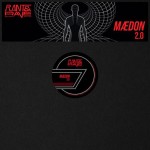
Welcome to 2.0, the not-so-quiet metamorphosis of Maedon, where the Baltimore-bred, Berlin-hardened artist trades in her rusted-out industrial shell for something sleeker, slinkier, and strangely groovier. This isn’t a gentle pivot. It’s a declaration made with fists and footwork: four tracks that slam down the velvet rope between techno heritage and future mutations, with Maedon as the bouncer, the DJ, and the kid still dancing after everyone else has passed out.
If her previous works were scorched-earth manifestos - steeped in EBM grime, metallic clang, and psychic unrest - 2.0 is the sound of all that abrasion retooled into propulsion. The EP opens with “Working Out The Kinks”, a title that implies uncertainty but sounds anything but: a stroboscopic throwdown with clipped vocal snaps and a groove that grinds like it's got unfinished business. The palette still hints at her industrial DNA, but it’s been processed into precision. This isn't Maedon abandoning herself - it’s Maedon editing herself for maximum impact.
“Temporal” is the kind of track that should come with a warning: Do not listen while standing still. Its bass snarls, its pads orbit like stressed satellites, and its drum programming is meaner than your ex’s new DJ boyfriend. It flirts with darkness without surrendering to cliché, proving Maedon hasn’t forgotten how to scare you - she just prefers to do it rhythmically now.
On “Growing Pains,” the title might be autobiographical, but the execution is fully grown. The swing in the low-end could collapse warehouse beams. This is where her older sound ghosts in again - worn textures, ambiguous sirens - but layered smartly beneath a bassline that could bully any Berlin dancefloor into submission. It's playful, sure, but like a cat pawing a mouse: curious and cruel in equal measure.
Then comes “Breakthrough”, which isn’t just a closer - it’s a mission statement. There’s menace in the synth lead, modulation like a broken jaw healing badly, and a relentless stomp that doesn’t aim for transcendence - it drags you there. It's a track that sounds like it had to fight its way into existence, and that’s precisely what makes it hit so hard.
Maedon’s 2.0 isn’t simply about refining her craft - it’s about reprogramming the interface between the personal and the sonic. She’s pulled herself out of the reverb tank, cleaned the grit from her fingernails (only slightly), and placed herself somewhere between DJ as sculptor and techno as memoir. There’s pain here, sure. But there’s also funk. Brutal funk. Maedon-funk.
And while the EP’s surface is polished with Berlin-grade minimalism, its pulse still bleeds from the back rooms of Philly basements and New York afterhours. It's a record that acknowledges its scars but chooses to dance anyway - a snarling, sexy evolution from an artist who’s never been interested in staying still.
So yes, this is Maedon 2.0. But don’t let the versioning fool you. She’s not softening. She’s sharpening. The update just made her more dangerous.
Recommended if you like Tresor at 3 AM, Paula Temple’s teeth-gritted moments, early Regis fed through a funk filter, and techno that doesn’t ask for your attention - it seizes it.
If her previous works were scorched-earth manifestos - steeped in EBM grime, metallic clang, and psychic unrest - 2.0 is the sound of all that abrasion retooled into propulsion. The EP opens with “Working Out The Kinks”, a title that implies uncertainty but sounds anything but: a stroboscopic throwdown with clipped vocal snaps and a groove that grinds like it's got unfinished business. The palette still hints at her industrial DNA, but it’s been processed into precision. This isn't Maedon abandoning herself - it’s Maedon editing herself for maximum impact.
“Temporal” is the kind of track that should come with a warning: Do not listen while standing still. Its bass snarls, its pads orbit like stressed satellites, and its drum programming is meaner than your ex’s new DJ boyfriend. It flirts with darkness without surrendering to cliché, proving Maedon hasn’t forgotten how to scare you - she just prefers to do it rhythmically now.
On “Growing Pains,” the title might be autobiographical, but the execution is fully grown. The swing in the low-end could collapse warehouse beams. This is where her older sound ghosts in again - worn textures, ambiguous sirens - but layered smartly beneath a bassline that could bully any Berlin dancefloor into submission. It's playful, sure, but like a cat pawing a mouse: curious and cruel in equal measure.
Then comes “Breakthrough”, which isn’t just a closer - it’s a mission statement. There’s menace in the synth lead, modulation like a broken jaw healing badly, and a relentless stomp that doesn’t aim for transcendence - it drags you there. It's a track that sounds like it had to fight its way into existence, and that’s precisely what makes it hit so hard.
Maedon’s 2.0 isn’t simply about refining her craft - it’s about reprogramming the interface between the personal and the sonic. She’s pulled herself out of the reverb tank, cleaned the grit from her fingernails (only slightly), and placed herself somewhere between DJ as sculptor and techno as memoir. There’s pain here, sure. But there’s also funk. Brutal funk. Maedon-funk.
And while the EP’s surface is polished with Berlin-grade minimalism, its pulse still bleeds from the back rooms of Philly basements and New York afterhours. It's a record that acknowledges its scars but chooses to dance anyway - a snarling, sexy evolution from an artist who’s never been interested in staying still.
So yes, this is Maedon 2.0. But don’t let the versioning fool you. She’s not softening. She’s sharpening. The update just made her more dangerous.
Recommended if you like Tresor at 3 AM, Paula Temple’s teeth-gritted moments, early Regis fed through a funk filter, and techno that doesn’t ask for your attention - it seizes it.
JARR: Evangeline

'Evangeline' is the sixth album by the duo of Jon Attwood (Yellow6) and Ray Robinson (Wodwo) collectively known as JARR (for obvious reasons), consisting of ten compositions in 49 minutes. The album is comprised of slow and contemplative reverbed guitar loops, walls of ambient textures, delayed guitar melodies, minimal post-rock ambience, and washes of shoegazing drones. For me, JARR albums are a pleasure and something to look forward to, and although they are in a similar musical vein, there is always some difference, something that makes each unique. The concept of the album is based on Longfellow's poem by the same title, a story of love and exile, movement and stillness, and you may get those feelings when listening to it. You don't have to read the poem to appreciate the album, but it won't hurt.
Quoting directly from JARR: “Collaboration is a strange, fragile thing. Two minds pushing and pulling, sometimes in step, sometimes not. One of us leans into structure, into the certainty of BPM, the steady grid that locks everything into place. The other prefers the slipstream, the moments between the beats, where things breathe, stretch, threaten to come undone. Over time, this push-pull has become its own rhythm, a quiet tension humming beneath every track we make. Not a battle, not quite. More like a dance, where the steps aren’t always agreed upon but somehow still work." And it works great on 'Evangeline,' whatever their creative process. This is an album that you can enjoy in its entirety, or pick and choose a favorite track. For me, each piece seemed a bit more abstract than some of JARR's other works, but that's a positive, not a negative. When you can evoke a certain feeling, be it longing, thoughtful contemplation, sadness, hopefulness, or peacefulness with your music, you really have something special. Lord knows we need music like this in these troubled times, something to counteract the apprehension, anxiety and angst of these troubled times. 'Evangeline' will soothe your soul and bring you calm. Surely that is worth a whole lot. The physical release is limited to 200 CD-r copies in the usual SIS handmade packaging. Highly recommended.
Quoting directly from JARR: “Collaboration is a strange, fragile thing. Two minds pushing and pulling, sometimes in step, sometimes not. One of us leans into structure, into the certainty of BPM, the steady grid that locks everything into place. The other prefers the slipstream, the moments between the beats, where things breathe, stretch, threaten to come undone. Over time, this push-pull has become its own rhythm, a quiet tension humming beneath every track we make. Not a battle, not quite. More like a dance, where the steps aren’t always agreed upon but somehow still work." And it works great on 'Evangeline,' whatever their creative process. This is an album that you can enjoy in its entirety, or pick and choose a favorite track. For me, each piece seemed a bit more abstract than some of JARR's other works, but that's a positive, not a negative. When you can evoke a certain feeling, be it longing, thoughtful contemplation, sadness, hopefulness, or peacefulness with your music, you really have something special. Lord knows we need music like this in these troubled times, something to counteract the apprehension, anxiety and angst of these troubled times. 'Evangeline' will soothe your soul and bring you calm. Surely that is worth a whole lot. The physical release is limited to 200 CD-r copies in the usual SIS handmade packaging. Highly recommended.
Deaf Center: Reverie

If Deaf Center’s "Reverie" were a weather system, it wouldn’t be a thunderstorm or a breeze - it would be the thick, silvery fog that slips in quietly at dawn and changes the shape of everything. After another monastic silence, Totland and Skodvin return not with bombast but with something far more disarming: two longform pieces recorded live in Berlin, which feel less like performances and more like séances. A summoning, perhaps, of all their shared years and ghosted ideas, traced in piano, cello, guitar and drifting electronics.
“Rev” is a reverberated dreamscape built on piano phrases that refuse to resolve. It expands slowly, organically, like frost across a windowpane, each loop folding into the next until you’re unsure whether you’re still in a melody or inside its afterglow. Skodvin’s textural manipulations feel like he's carving silence with a spoon, occasionally revealing small pockets of unease beneath Totland’s melodies. It's not dark ambient, it's more like dim ambient - subtly glowing, soft around the edges, but aware of the void.
“Erie”, true to its name, is more haunted. At first, it tiptoes like chamber jazz: delicate piano and cello exchanges reminiscent of empty hotel lobbies at 3 a.m. But it slowly tilts sideways into drone, dissolving its own structure until we’re left with organ-like rumblings and resonances so low they might only be felt, not heard. There's sadness here, yes, but also warmth - a kind of melancholy that doesn't cut but cradles. The piece floats in and out of being, like a memory replayed in murky half-focus, familiar but unstable.
What makes "Reverie" quietly stunning is its refusal to perform. There’s no climax, no tension and release, no grand narrative arc. Instead, it invites you into a slow breath, one you didn’t know you needed. This isn’t ambient as background, it’s ambient as foreground - an acoustic fabric you have to wear, feel wrinkle, weight, and fold around you.
That it was recorded live barely seems credible - the intimacy and sonic detail rivals many studio albums, though the occasional human rustle and breath remind you this happened in a room, once, between two people who understand each other in the rare language of shared silence. The chemistry is telepathic, the interplay never showy. And in an era that often mistakes maximalism for meaning, "Reverie" is a quiet marvel - an album that does so much by doing so little, like a whispered truth that lingers longer than a shout.
Not a return, not quite a continuation, but a beautiful moment in-between: "Reverie" lets time blur and holds you gently in the pause. A sigh of a record.
“Rev” is a reverberated dreamscape built on piano phrases that refuse to resolve. It expands slowly, organically, like frost across a windowpane, each loop folding into the next until you’re unsure whether you’re still in a melody or inside its afterglow. Skodvin’s textural manipulations feel like he's carving silence with a spoon, occasionally revealing small pockets of unease beneath Totland’s melodies. It's not dark ambient, it's more like dim ambient - subtly glowing, soft around the edges, but aware of the void.
“Erie”, true to its name, is more haunted. At first, it tiptoes like chamber jazz: delicate piano and cello exchanges reminiscent of empty hotel lobbies at 3 a.m. But it slowly tilts sideways into drone, dissolving its own structure until we’re left with organ-like rumblings and resonances so low they might only be felt, not heard. There's sadness here, yes, but also warmth - a kind of melancholy that doesn't cut but cradles. The piece floats in and out of being, like a memory replayed in murky half-focus, familiar but unstable.
What makes "Reverie" quietly stunning is its refusal to perform. There’s no climax, no tension and release, no grand narrative arc. Instead, it invites you into a slow breath, one you didn’t know you needed. This isn’t ambient as background, it’s ambient as foreground - an acoustic fabric you have to wear, feel wrinkle, weight, and fold around you.
That it was recorded live barely seems credible - the intimacy and sonic detail rivals many studio albums, though the occasional human rustle and breath remind you this happened in a room, once, between two people who understand each other in the rare language of shared silence. The chemistry is telepathic, the interplay never showy. And in an era that often mistakes maximalism for meaning, "Reverie" is a quiet marvel - an album that does so much by doing so little, like a whispered truth that lingers longer than a shout.
Not a return, not quite a continuation, but a beautiful moment in-between: "Reverie" lets time blur and holds you gently in the pause. A sigh of a record.