
Browse by Genre
Industrial Music / Industrial Metal / Aggro Industrial / Electro Metal
Industrial Noise / Power Noise / Harsh Noise
Synth Pop / Electro Pop / Synth-Electronica
Techno / Trance / Goa / Drum'n'Bass / Jungle / Tribal / Trip-Hop
Ambient / Electronica / Ethereal / Dub / Soundscapes / Abstract
Experimental / Avantgarde / Weird & Wired / Glitch / Noise / Field Recording
Dark / Gothic / Wave / New Wave / Dark Wave / Industrial Gothic
New Music / Downtown / Avantgarde Jazz / New Classical / World
Search Reviews
Music Reviews
Paal Nilssen-Love: 5th of March 2021
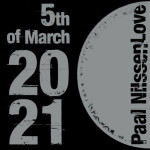
Artist: Paal Nilssen-Love
Title: 5th of March 2021
Format: CD + Download
Label: PNL Records (@)
Rated:

Title: 5th of March 2021
Format: CD + Download
Label: PNL Records (@)
Rated:
When the world paused in 2021, NilssenLove transformed lockdown into a laboratory. With his cymbals lost in Brazil, he summoned nine Paiste gongs - eight tuned to cosmic frequencies - and retreated to Vanntårnet, an old water tower-turned-gallery just outside Oslo. There, the structure became his amplifier; his body, the instrument’s extension. This is not just music - it’s architecture, seismic waves of sound shaped by human presence.
Recorded by Lasse Marhaug and released four years later in May 2025, the album delivers a raw, physically immersive experience. You hear the artist’s footsteps echo, the room’s resonance breathe. Waves of low-end frequencies roll like tectonic plates, obliterating the divide between performer, instrument, and space.
What stands out is the balance between monolithic sound and delicate color. Interludes of woodblocks, woodblocks, even improvised instruments - shekere, banister, styled props - prevent the gong’s mass from overwhelming. The result is a textured soundscape that's at once primal and meticulous - “cosmic meditation”, one reviewer dubbed it.
The album unfolds in seven movements, the first nearly twenty minutes long, the rest darting in like gusts of wind - an 18:56 opener followed by pieces as short as a minute. It’s a masterclass in restraint: density followed by empty space, tension followed by release. The long opener invites listeners to acclimate, to feel each vibration against their psyche; the shorter pieces punch like sonic haikus - concise, potent, and unpredictable.
NilssenLove’s trajectory - from Kitschy Norse drummer to avant-garde impresario - gives this project philosophical heft. Known for propelling Large Unit and storming freejazz stages, here he drops the rhythms and embraces resonances. Planetary gongs tuned by Hans Gusto, played within a reverberant tower - the conceptual rigor rivals his sonic boldness.
This is also a social document: a solo trek through pandemic solitude, a search for meaning in vibration. The gap between each gong bloom and decay feels like the pause between breaths. You imagine the artist, fifty years old but reborn as a cosmic cartographer, plotting gravity’s curves in sound.
For adventurous ears, this is essential - a bold reimagination of what a solo percussion album can be. It’s not background; it's gravitational pull.
Why you should listen:
Physical immersion: feel the room and the artist’s movement as soundwaves saturate the space.
Dynamic interplay: weighty gong resonance balanced by textural nuance.
Cosmic scale in microcosm: planetary tuning meets personal introspection.
Pandemic-era artistry: solitude redefined as creation, not retreat.
If you’ve ever wondered, "what does silence sound like when it’s built out of gongs?", this is your answer. It resonates in the body, not just the ears.
Recorded by Lasse Marhaug and released four years later in May 2025, the album delivers a raw, physically immersive experience. You hear the artist’s footsteps echo, the room’s resonance breathe. Waves of low-end frequencies roll like tectonic plates, obliterating the divide between performer, instrument, and space.
What stands out is the balance between monolithic sound and delicate color. Interludes of woodblocks, woodblocks, even improvised instruments - shekere, banister, styled props - prevent the gong’s mass from overwhelming. The result is a textured soundscape that's at once primal and meticulous - “cosmic meditation”, one reviewer dubbed it.
The album unfolds in seven movements, the first nearly twenty minutes long, the rest darting in like gusts of wind - an 18:56 opener followed by pieces as short as a minute. It’s a masterclass in restraint: density followed by empty space, tension followed by release. The long opener invites listeners to acclimate, to feel each vibration against their psyche; the shorter pieces punch like sonic haikus - concise, potent, and unpredictable.
NilssenLove’s trajectory - from Kitschy Norse drummer to avant-garde impresario - gives this project philosophical heft. Known for propelling Large Unit and storming freejazz stages, here he drops the rhythms and embraces resonances. Planetary gongs tuned by Hans Gusto, played within a reverberant tower - the conceptual rigor rivals his sonic boldness.
This is also a social document: a solo trek through pandemic solitude, a search for meaning in vibration. The gap between each gong bloom and decay feels like the pause between breaths. You imagine the artist, fifty years old but reborn as a cosmic cartographer, plotting gravity’s curves in sound.
For adventurous ears, this is essential - a bold reimagination of what a solo percussion album can be. It’s not background; it's gravitational pull.
Why you should listen:
Physical immersion: feel the room and the artist’s movement as soundwaves saturate the space.
Dynamic interplay: weighty gong resonance balanced by textural nuance.
Cosmic scale in microcosm: planetary tuning meets personal introspection.
Pandemic-era artistry: solitude redefined as creation, not retreat.
If you’ve ever wondered, "what does silence sound like when it’s built out of gongs?", this is your answer. It resonates in the body, not just the ears.
The Crippled Flower: Forming Haze

Somewhere in the twilight of West Germany, just as the synthetic gloss of the '80s began to peel, The Crippled Flower bloomed. And wilted. And now - through the slow magic of cassette hiss and careful archiving - it blooms again. "Forming Haze" isn’t a collection of songs so much as a scrapbook of stubborn beauty: 14 fragments (plus one digital whisper) of a band that arrived too late for the revolution, but too early for the nostalgia.
Emerging from Düsseldorf - specifically, the wonderfully obscure record shop "Heartbeat" - The Crippled Flower never quite sounded like a band in the traditional sense. These are sketches, test signals, clandestine communiqués from a group of kindred spirits with diverging astrological charts. And yet, there’s an unexpected cohesion in the chaos: a static electricity that never fully discharges, like a neon sign half-lit in the fog.
The sonic palette is a blurred mural of cold-wave pulses, skeletal funk, analog synths with chipped teeth, and guitars that shimmer like forgotten loves. Fans of Wire, Felt, or early Scritti Politti might find familiar terrain here - but don’t get too comfortable. Singer Phil Elston doesn’t sing so much as narrate from another timeline, observing human absurdities with a disillusioned tenderness. His Sprechgesang threads the shifting aesthetics together, holding the cracked mirror in place.
There’s something profoundly touching about this release - not just for the music itself, but for what it represents: a testimony to failure, to detours, to alternate futures that almost were. These songs weren’t designed to conquer stages or airwaves. They were moments of clarity captured on 4-track in the liminal hours between art school, fox-hunt sabotage, and broken-down synths.
Tracks like "Timetunnel Vision" and "Walking Away" feel like pages from a post-punk diary abandoned in a train station. "Animals", recorded live at ZAKK in Düsseldorf, hums with awkward urgency, as if the band knew it was their swan song. And "Now", the digital-only closer, lasts less than a minute - but it encapsulates the whole ethos: ephemeral, enigmatic, utterly sincere.
And what became of these dreamers? Krausen drifted into the proto-Kreidler avant-galaxy. Ahlers pursued art in Paris (as one does). Schneider remained a sonic explorer. Elston seems to have vanished into a Kraftwerkian ether, unreachable and unbothered by hashtags or timelines.
So why does "Forming Haze" matter now? Because in an era drowning in data and polished pastiche, it reminds us of a time when being in a band meant not having answers. When experimentation was messy, personal, and unrewarded. When a cassette could be a manifesto.
It's not nostalgia. It's archaeology. And The Crippled Flower, for all their ephemerality, left behind a time capsule that still radiates. Lopsided, luminous, and utterly human.
Emerging from Düsseldorf - specifically, the wonderfully obscure record shop "Heartbeat" - The Crippled Flower never quite sounded like a band in the traditional sense. These are sketches, test signals, clandestine communiqués from a group of kindred spirits with diverging astrological charts. And yet, there’s an unexpected cohesion in the chaos: a static electricity that never fully discharges, like a neon sign half-lit in the fog.
The sonic palette is a blurred mural of cold-wave pulses, skeletal funk, analog synths with chipped teeth, and guitars that shimmer like forgotten loves. Fans of Wire, Felt, or early Scritti Politti might find familiar terrain here - but don’t get too comfortable. Singer Phil Elston doesn’t sing so much as narrate from another timeline, observing human absurdities with a disillusioned tenderness. His Sprechgesang threads the shifting aesthetics together, holding the cracked mirror in place.
There’s something profoundly touching about this release - not just for the music itself, but for what it represents: a testimony to failure, to detours, to alternate futures that almost were. These songs weren’t designed to conquer stages or airwaves. They were moments of clarity captured on 4-track in the liminal hours between art school, fox-hunt sabotage, and broken-down synths.
Tracks like "Timetunnel Vision" and "Walking Away" feel like pages from a post-punk diary abandoned in a train station. "Animals", recorded live at ZAKK in Düsseldorf, hums with awkward urgency, as if the band knew it was their swan song. And "Now", the digital-only closer, lasts less than a minute - but it encapsulates the whole ethos: ephemeral, enigmatic, utterly sincere.
And what became of these dreamers? Krausen drifted into the proto-Kreidler avant-galaxy. Ahlers pursued art in Paris (as one does). Schneider remained a sonic explorer. Elston seems to have vanished into a Kraftwerkian ether, unreachable and unbothered by hashtags or timelines.
So why does "Forming Haze" matter now? Because in an era drowning in data and polished pastiche, it reminds us of a time when being in a band meant not having answers. When experimentation was messy, personal, and unrewarded. When a cassette could be a manifesto.
It's not nostalgia. It's archaeology. And The Crippled Flower, for all their ephemerality, left behind a time capsule that still radiates. Lopsided, luminous, and utterly human.
The Reference Group: File Under Unpopular
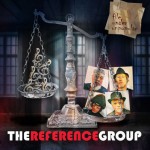
Artist: The Reference Group
Title: File Under Unpopular
Format: Download Only (MP3 + Lossless)
Label: Cuneiform (http://www.cuneiformrecords.com/) (@)
Rated:
Title: File Under Unpopular
Format: Download Only (MP3 + Lossless)
Label: Cuneiform (http://www.cuneiformrecords.com/) (@)
Rated:
Ah, "File Under Unpopular" - a title that reads like an inside joke, a self-fulfilling prophecy, or just a shrug toward the weird, the wonderful, and the proudly marginal. But rest assured: this archival splinter grenade from The Reference Group is anything but forgettable. It’s a psychedelic-avant-prog fusion so stubbornly idiosyncratic that you could shelve it between Captain Beefheart, Univers Zero, a high school jazz band on mushrooms, and a malfunctioning Commodore 64 - and it’d still elbow them all out of the way for attention.
The group is the resurrected chimera of drummer/composer Michael Maksymenko and bassist/multi-instrumentalist Ralf Nygård, with the stringed incantations of Jimmy Ågren (slide guitar freak wizard and Captain Beefheart disciple) and the shape-shifting riff alchemy of Mathias Danielsson, the musical shaman from outer-Stockholm. Though The Reference Group had the lifespan of a mayfly on acid - just 2007 to 2008 and a single live show to their name - they left behind eight tracks that now resurface like a myth long buried in the radioactive swamp of the avant-garde underground.
Let’s be clear: this is "not" casual listening. “It Will Resolve Itself Athematically” opens the album with a title as twisted as the track itself. It’s both a command and a warning: themes are for cowards, hooks are for pop stars. Here, we get rhythmic asymmetry, gurgling guitar grit, and drum patterns that treat meter like a dare. Maksymenko plays with the neurotic precision of a man juggling flaming hammers, while Ågren's slide guitar screeches and slithers like a chrome snake on a Moebius strip.
The record jerks and spasms between composed angularity and something that smells like improv but probably isn’t. “Leatherreport” could be a lost Beefheart b-side that got filtered through a stack of Swedish fanzines and ended up reborn as a punk-jazz sci-fi theme song. “Hash of Lungs” is just as grotesque and surreal as it sounds - somewhere between Zappa and a derailed train of thought. “Also Sprach Barista”, meanwhile, feels like a caffeinated sketch of Ligeti performed by cartoon animals in a jazz cellar.
And then there’s the instrumentation itself. Nygård’s use of a "Zanzithophone" - a MIDI wind controller meant for schoolkids who once played recorder - adds a layer of beautifully deranged whimsy. It’s like handing Sun Ra a Fisher-Price synth and telling him to soundtrack a nature documentary. The closer, “Orange Envelope”, recorded with a handheld device, is a lo-fi postcard from a dream that already forgot itself.
Somehow, amidst the chaos, there’s cohesion. This isn't random weirdness - it’s curated weirdness, intensely focused like a slapstick symphony. It’s the ghost of post-prog dressed up in dadaist drag, making you laugh, then twitch, then listen harder. Maksymenko even delivers (inaudible) lyrics via semaphore on one track - proof that this band won’t even whisper its secrets unless you know how to decode flags.
So, why "File Under Unpopular"? Maybe because categorization is futile. Maybe because it's better that way. Popularity demands compromise, and this album is allergic to it. It’s an archival release that sounds more contemporary than most of today’s experimental fare: wild, brainy, full of snarling joy and absurd sophistication.
Unpopular? Maybe. But in a world of algorithmic playlists and prefab sonic comfort food, "File Under Unpopular" is a flaming meatball lobbed into the easy-listening punch bowl. And thank the music gods for that.
The group is the resurrected chimera of drummer/composer Michael Maksymenko and bassist/multi-instrumentalist Ralf Nygård, with the stringed incantations of Jimmy Ågren (slide guitar freak wizard and Captain Beefheart disciple) and the shape-shifting riff alchemy of Mathias Danielsson, the musical shaman from outer-Stockholm. Though The Reference Group had the lifespan of a mayfly on acid - just 2007 to 2008 and a single live show to their name - they left behind eight tracks that now resurface like a myth long buried in the radioactive swamp of the avant-garde underground.
Let’s be clear: this is "not" casual listening. “It Will Resolve Itself Athematically” opens the album with a title as twisted as the track itself. It’s both a command and a warning: themes are for cowards, hooks are for pop stars. Here, we get rhythmic asymmetry, gurgling guitar grit, and drum patterns that treat meter like a dare. Maksymenko plays with the neurotic precision of a man juggling flaming hammers, while Ågren's slide guitar screeches and slithers like a chrome snake on a Moebius strip.
The record jerks and spasms between composed angularity and something that smells like improv but probably isn’t. “Leatherreport” could be a lost Beefheart b-side that got filtered through a stack of Swedish fanzines and ended up reborn as a punk-jazz sci-fi theme song. “Hash of Lungs” is just as grotesque and surreal as it sounds - somewhere between Zappa and a derailed train of thought. “Also Sprach Barista”, meanwhile, feels like a caffeinated sketch of Ligeti performed by cartoon animals in a jazz cellar.
And then there’s the instrumentation itself. Nygård’s use of a "Zanzithophone" - a MIDI wind controller meant for schoolkids who once played recorder - adds a layer of beautifully deranged whimsy. It’s like handing Sun Ra a Fisher-Price synth and telling him to soundtrack a nature documentary. The closer, “Orange Envelope”, recorded with a handheld device, is a lo-fi postcard from a dream that already forgot itself.
Somehow, amidst the chaos, there’s cohesion. This isn't random weirdness - it’s curated weirdness, intensely focused like a slapstick symphony. It’s the ghost of post-prog dressed up in dadaist drag, making you laugh, then twitch, then listen harder. Maksymenko even delivers (inaudible) lyrics via semaphore on one track - proof that this band won’t even whisper its secrets unless you know how to decode flags.
So, why "File Under Unpopular"? Maybe because categorization is futile. Maybe because it's better that way. Popularity demands compromise, and this album is allergic to it. It’s an archival release that sounds more contemporary than most of today’s experimental fare: wild, brainy, full of snarling joy and absurd sophistication.
Unpopular? Maybe. But in a world of algorithmic playlists and prefab sonic comfort food, "File Under Unpopular" is a flaming meatball lobbed into the easy-listening punch bowl. And thank the music gods for that.
Giovanni di Domenico & Rutger Zuydervelt: Painting A Picture / Picture A Painting
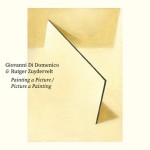
Artist: Giovanni di Domenico & Rutger Zuydervelt (@)
Title: Painting A Picture / Picture A Painting
Format: LP
Label: Moving Furniture Records (@)
Rated:
Title: Painting A Picture / Picture A Painting
Format: LP
Label: Moving Furniture Records (@)
Rated:
This is a collaboration that doesn’t shout “Look what we made!” so much as whisper, “Listen to what was already there”. "Painting A Picture / Picture A Painting" is a two-track, vinyl-length whisper between two sonic artisans who’ve each spent decades crafting beauty from nuance, subtle friction, and the gentle blurring of form.
It starts with a seed: Giovanni Di Domenico, Roman-born, Brussels-based pianist with a well-worn passport of free improvisation and collaborative cross-pollination, sends Rutger Zuydervelt (known for his work as Machinefabriek) a series of live piano and Rhodes recordings. No overdubs, just fingers and keys and time. “I believe your approach to sound could match very well these tracks…” he writes. Rutger responds not with words, but with texture, deconstruction, reinterpretation. Like placing a mirror under a mirror and watching recursion bloom.
The first piece, “Painting A Picture”, lays this process bare: Giovanni’s tactile, searching performance is caressed, crumpled, and ghosted by Rutger’s subtle manipulations. It’s like watching a reflection try to remember the face it mimics - everything’s slightly off, but poetically so. The Rhodes hums like a submerged choir, while glitchy textures curl around the sustain pedal’s footprints. It’s music that exists just between now and not-quite-yet.
The second piece, “Picture A Painting”, flips the equation. Rutger sets the stage with a sonic environment conjured from echoes of the first track - and then Giovanni enters, not with dominance but with a sort of patient humility. His playing here is more restrained, almost hesitant at times, like he’s brushing pigment onto ice. Every note feels like a decision. Every silence, a brushstroke held midair. There’s a sense that the two are no longer collaborating across time and layers, but in the same room - dreaming together with different palettes.
A nod here to the cover artwork: Christiaan Kuitwaard’s painting of a blank canvas is a bold and elegant metaphor. Not emptiness, but "possibility". Fitting, too, for a label like Moving Furniture Records - a place where minimalism, drone, and silence get up, stretch, and rearrange the sonic furniture when no one’s watching.
And it’s funny - for music so abstract and gentle, "Painting A Picture / Picture A Painting" doesn’t fade into the background. It invites stillness, yes, but also attention. It’s the sound of two artists erasing the borders between composition and improvisation, piano and process, self and other. It’s like watching a duet between a painter and their memory of a painting.
Verdict: This is music for listeners who like their beauty slow, their collaboration deep, and their metaphors wrapped in silence. A record that doesn’t show off, but rewards repeated viewings - or listenings - like a canvas that only reveals its real image under moonlight.
It starts with a seed: Giovanni Di Domenico, Roman-born, Brussels-based pianist with a well-worn passport of free improvisation and collaborative cross-pollination, sends Rutger Zuydervelt (known for his work as Machinefabriek) a series of live piano and Rhodes recordings. No overdubs, just fingers and keys and time. “I believe your approach to sound could match very well these tracks…” he writes. Rutger responds not with words, but with texture, deconstruction, reinterpretation. Like placing a mirror under a mirror and watching recursion bloom.
The first piece, “Painting A Picture”, lays this process bare: Giovanni’s tactile, searching performance is caressed, crumpled, and ghosted by Rutger’s subtle manipulations. It’s like watching a reflection try to remember the face it mimics - everything’s slightly off, but poetically so. The Rhodes hums like a submerged choir, while glitchy textures curl around the sustain pedal’s footprints. It’s music that exists just between now and not-quite-yet.
The second piece, “Picture A Painting”, flips the equation. Rutger sets the stage with a sonic environment conjured from echoes of the first track - and then Giovanni enters, not with dominance but with a sort of patient humility. His playing here is more restrained, almost hesitant at times, like he’s brushing pigment onto ice. Every note feels like a decision. Every silence, a brushstroke held midair. There’s a sense that the two are no longer collaborating across time and layers, but in the same room - dreaming together with different palettes.
A nod here to the cover artwork: Christiaan Kuitwaard’s painting of a blank canvas is a bold and elegant metaphor. Not emptiness, but "possibility". Fitting, too, for a label like Moving Furniture Records - a place where minimalism, drone, and silence get up, stretch, and rearrange the sonic furniture when no one’s watching.
And it’s funny - for music so abstract and gentle, "Painting A Picture / Picture A Painting" doesn’t fade into the background. It invites stillness, yes, but also attention. It’s the sound of two artists erasing the borders between composition and improvisation, piano and process, self and other. It’s like watching a duet between a painter and their memory of a painting.
Verdict: This is music for listeners who like their beauty slow, their collaboration deep, and their metaphors wrapped in silence. A record that doesn’t show off, but rewards repeated viewings - or listenings - like a canvas that only reveals its real image under moonlight.
Fluxion: Haze

Fluxion’s "Haze" (Vibrant Music, March 2025) is like drifting through an antique dream built from layers of dub, ambient, techno, and shadow-wrapped jazz. K. Soublis, the Athenian architect behind Fluxion since the Chain Reaction days, has sculpted his most cinematic and emotionally varied album in years - a warm, deep dive across ten tracks, each shifting the light subtly to reveal hidden facets.
You can sense his storytelling ambition from the opening chords of “Life Motif”, a cyclical meditation that gently unfurls like the first page of an unorthodox novel. Then “Touch” rolls in: dub chords wavy with jazz-house sway, like sunlight dancing on damp pavement. It’s pure Fluxion magic - weightless grooves tethered to a deep bassline that leaves goosebumps on the spine.
He pivots smartly through the record’s moods - “Magenta” revives that late90s dub-ambient aesthetic with crackling percussion and subtle pressure, “Footsteps (Fluxion Rework)” repurposes his remix skills into something deeply personal, and “Berlin” drifts into nostalgia territory with a glow that feels like dawn after a long transit.
By the time “Nexus” and “Desiderium” arrive, the fog has deepened: slower tempos, hushed keys, subtle strings. These tracks are contemplative exits more than dancefloor starters, ending with precise, emotional understatement. And “What Tomorrow Brings” - eight and a half minutes of hopeful rise - is the emotional fulcrum, where past and future briefly orbit each other before sunrise breaks.
What strikes most is Fluxion’s restless yet coherent vision. He’s restless - always pushing forward - but never abandoning the dub techno roots he helped plant decades ago. He’s cinematic - channels always flow from ambient to jazz to techno and back - but the voyage never feels contrived. It’s textured, refined, and emotionally resonant without lowering your guard.
In an era saturated with retro-styled sound, "Haze" stands out for its emotional sophistication: here, a groove isn’t just rhythm - it’s reflection. A chord progression isn't just harmony - it's memory, hope, or longing. And percussion isn't just pulse - it's narrative. That's why "Haze" feels like “late night session perfection” and “moody minimal bliss” all at once - a carefully constructed portal suited for both personal reverie and shared atmospheres.
Verdict: A late-night odyssey suffused with dubby warmth and modern-classical depth. Fluxion proves again that the best journeys are those that feel eternal yet intimate - and "Haze" is that rare fusion of heart and horizon in one cohesive voyage.
You can sense his storytelling ambition from the opening chords of “Life Motif”, a cyclical meditation that gently unfurls like the first page of an unorthodox novel. Then “Touch” rolls in: dub chords wavy with jazz-house sway, like sunlight dancing on damp pavement. It’s pure Fluxion magic - weightless grooves tethered to a deep bassline that leaves goosebumps on the spine.
He pivots smartly through the record’s moods - “Magenta” revives that late90s dub-ambient aesthetic with crackling percussion and subtle pressure, “Footsteps (Fluxion Rework)” repurposes his remix skills into something deeply personal, and “Berlin” drifts into nostalgia territory with a glow that feels like dawn after a long transit.
By the time “Nexus” and “Desiderium” arrive, the fog has deepened: slower tempos, hushed keys, subtle strings. These tracks are contemplative exits more than dancefloor starters, ending with precise, emotional understatement. And “What Tomorrow Brings” - eight and a half minutes of hopeful rise - is the emotional fulcrum, where past and future briefly orbit each other before sunrise breaks.
What strikes most is Fluxion’s restless yet coherent vision. He’s restless - always pushing forward - but never abandoning the dub techno roots he helped plant decades ago. He’s cinematic - channels always flow from ambient to jazz to techno and back - but the voyage never feels contrived. It’s textured, refined, and emotionally resonant without lowering your guard.
In an era saturated with retro-styled sound, "Haze" stands out for its emotional sophistication: here, a groove isn’t just rhythm - it’s reflection. A chord progression isn't just harmony - it's memory, hope, or longing. And percussion isn't just pulse - it's narrative. That's why "Haze" feels like “late night session perfection” and “moody minimal bliss” all at once - a carefully constructed portal suited for both personal reverie and shared atmospheres.
Verdict: A late-night odyssey suffused with dubby warmth and modern-classical depth. Fluxion proves again that the best journeys are those that feel eternal yet intimate - and "Haze" is that rare fusion of heart and horizon in one cohesive voyage.