
Browse by Genre
Industrial Music / Industrial Metal / Aggro Industrial / Electro Metal
Industrial Noise / Power Noise / Harsh Noise
Synth Pop / Electro Pop / Synth-Electronica
Techno / Trance / Goa / Drum'n'Bass / Jungle / Tribal / Trip-Hop
Ambient / Electronica / Ethereal / Dub / Soundscapes / Abstract
Experimental / Avantgarde / Weird & Wired / Glitch / Noise / Field Recording
Dark / Gothic / Wave / New Wave / Dark Wave / Industrial Gothic
New Music / Downtown / Avantgarde Jazz / New Classical / World
Search Reviews
Music Reviews
Bewider: Ships That Pass in the Night
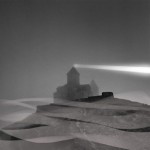


There is something stubbornly nocturnal about "Ships That Pass in the Night". Not just “best enjoyed in the dark” nocturnal, but the kind that insists you dim the room, lower your expectations of clarity, and accept that whatever is about to happen will only half-explain itself. Bewider - alias Piernicola Di Muro, a figure more accustomed to shaping emotions for the cinema than stepping into the spotlight - builds an album that behaves like a series of near-misses: patterns align, glances are exchanged, then everything politely drifts apart again. No climax, no reunion, just the echo of what might have been.
Di Muro’s background as a film composer and mix engineer is evident, but not in a bombastic, cinematic way. This isn’t soundtrack music begging for images; it’s more like the negative space between scenes, the part where the camera lingers too long on an empty street. The electronic sequences are angular, restrained, often slightly aloof, intersecting briefly before choosing solitude over commitment. Melodies don’t so much develop as they hesitate, circle, and then think better of it. It’s music that understands the poetry of restraint - and also knows when to quietly disappear before overstaying its welcome.
There’s a particular elegance in how "Ships That Pass in the Night" handles loneliness. It’s not tragic, and certainly not melodramatic. This is loneliness with good posture. The tracks feel like conversations overheard through walls: recognizable human warmth filtered through circuitry, softened by distance. The electronic textures are clean but never sterile, shaped with the precision of someone who knows exactly how much space a sound needs to breathe - and when it’s better left alone. If this album were a drive, it wouldn’t be a dramatic escape down an endless highway, but a calm, late-night journey where the headlights briefly illuminate other drivers before everyone continues on their separate routes.
What makes the record quietly compelling is its refusal to force meaning. Di Muro doesn’t insist on narrative resolution; instead, he trusts the listener to sit with ambiguity. The Longfellow reference in the title isn’t decorative - it’s structural. Each track behaves like one of those passing ships, exchanging signals just long enough to acknowledge mutual existence. In an era obsessed with constant connection, "Ships That Pass in the Night" gently suggests that fleeting encounters can be enough, and that not every trajectory needs to converge.
Ultimately, this is a record about motion without destination, connection without possession. Bewider doesn’t shout, doesn’t dazzle, doesn’t beg for attention. He lets the music move at its own pace, confident that those who are listening closely will catch the glow as it slips past. It’s a quiet album, yes - but it’s the kind of quiet that stays with you, like headlights in the rearview mirror, fading slowly, stubbornly memorable.
Di Muro’s background as a film composer and mix engineer is evident, but not in a bombastic, cinematic way. This isn’t soundtrack music begging for images; it’s more like the negative space between scenes, the part where the camera lingers too long on an empty street. The electronic sequences are angular, restrained, often slightly aloof, intersecting briefly before choosing solitude over commitment. Melodies don’t so much develop as they hesitate, circle, and then think better of it. It’s music that understands the poetry of restraint - and also knows when to quietly disappear before overstaying its welcome.
There’s a particular elegance in how "Ships That Pass in the Night" handles loneliness. It’s not tragic, and certainly not melodramatic. This is loneliness with good posture. The tracks feel like conversations overheard through walls: recognizable human warmth filtered through circuitry, softened by distance. The electronic textures are clean but never sterile, shaped with the precision of someone who knows exactly how much space a sound needs to breathe - and when it’s better left alone. If this album were a drive, it wouldn’t be a dramatic escape down an endless highway, but a calm, late-night journey where the headlights briefly illuminate other drivers before everyone continues on their separate routes.
What makes the record quietly compelling is its refusal to force meaning. Di Muro doesn’t insist on narrative resolution; instead, he trusts the listener to sit with ambiguity. The Longfellow reference in the title isn’t decorative - it’s structural. Each track behaves like one of those passing ships, exchanging signals just long enough to acknowledge mutual existence. In an era obsessed with constant connection, "Ships That Pass in the Night" gently suggests that fleeting encounters can be enough, and that not every trajectory needs to converge.
Ultimately, this is a record about motion without destination, connection without possession. Bewider doesn’t shout, doesn’t dazzle, doesn’t beg for attention. He lets the music move at its own pace, confident that those who are listening closely will catch the glow as it slips past. It’s a quiet album, yes - but it’s the kind of quiet that stays with you, like headlights in the rearview mirror, fading slowly, stubbornly memorable.
Michaela Melián: music for a while


Michaela Melián has always treated music less as a destination than as a climate, something you step into and slowly realize you’re breathing differently. "music for a while", her first fully autonomous LP in over a decade, feels exactly like that: a suspended zone where time doesn’t stop, but loses its urgency, like a clock ticking behind a heavy curtain. If this record had a warning label, it would probably read: “May induce reflective staring out of windows”.
Melián’s background - visual artist, co-founder of F.S.K., long-term explorer of sound installations - matters here, because "music for a while" doesn’t behave like a conventional album. It unfolds more like a sequence of rooms connected by half-open doors. Her signature language is intact: chamber-like strings, subdued electronics, loops that don’t hypnotize so much as gently disorient, and a voice that appears less to narrate than to haunt. Yet compared to her earlier, often exhibition-bound works, there’s a darker sediment here, a quiet heaviness that feels less conceptual and more existential. The clouds on the cover, photographed above Marseille, aren’t just scenic - they loom, patient and unconcerned, like the world itself.
Felix Raethel’s co-production plays a crucial role, especially in the restrained, almost metronomic percussion that ticks through several tracks like a reminder that time is still passing, whether we like it or not. Strings - cello, violin, viola, zither - are bent into looping figures that feel both intimate and slightly unwell, as if folk memory had wandered into an electroacoustic laboratory and forgotten how to leave. Pieces like “Traverse Benjamin” and “MÄrchenwald” open fissures into atonal, experimental territory, where synthesizers don’t decorate but unsettle, tugging the music away from nostalgia just when it threatens to become too comforting.
There’s also Melián’s peculiar gift for covers, which she treats less as homage than as quiet acts of translation. Sparks’ “My Other Voice” becomes a fragile, inward-facing apparition, bizarrely stripped of glam and irony, while Irving Berlin’s “They say it’s wonderful” closes the record in a state of groovy melancholy that feels almost cruelly tender. It’s the sound of optimism remembered rather than lived - a smile seen through frosted glass.
What makes "music for a while" compelling is its refusal to dramatize. This is not protest music, nor escapism, nor soundtrack-ready ambience. It’s music that acknowledges the weight of the present without shouting about it, choosing instead to linger, to pace, to wait. In 2025, that restraint feels quietly radical. Melián doesn’t offer answers, and she certainly doesn’t offer comfort on demand. She offers duration, atmosphere, and the strange relief of being allowed to sit with unease without having to resolve it.
In the end, "music for a while" does exactly what its title promises - and nothing more. It stays with you, unassuming and persistent, like a thought you didn’t invite but are glad you didn’t interrupt.
Melián’s background - visual artist, co-founder of F.S.K., long-term explorer of sound installations - matters here, because "music for a while" doesn’t behave like a conventional album. It unfolds more like a sequence of rooms connected by half-open doors. Her signature language is intact: chamber-like strings, subdued electronics, loops that don’t hypnotize so much as gently disorient, and a voice that appears less to narrate than to haunt. Yet compared to her earlier, often exhibition-bound works, there’s a darker sediment here, a quiet heaviness that feels less conceptual and more existential. The clouds on the cover, photographed above Marseille, aren’t just scenic - they loom, patient and unconcerned, like the world itself.
Felix Raethel’s co-production plays a crucial role, especially in the restrained, almost metronomic percussion that ticks through several tracks like a reminder that time is still passing, whether we like it or not. Strings - cello, violin, viola, zither - are bent into looping figures that feel both intimate and slightly unwell, as if folk memory had wandered into an electroacoustic laboratory and forgotten how to leave. Pieces like “Traverse Benjamin” and “MÄrchenwald” open fissures into atonal, experimental territory, where synthesizers don’t decorate but unsettle, tugging the music away from nostalgia just when it threatens to become too comforting.
There’s also Melián’s peculiar gift for covers, which she treats less as homage than as quiet acts of translation. Sparks’ “My Other Voice” becomes a fragile, inward-facing apparition, bizarrely stripped of glam and irony, while Irving Berlin’s “They say it’s wonderful” closes the record in a state of groovy melancholy that feels almost cruelly tender. It’s the sound of optimism remembered rather than lived - a smile seen through frosted glass.
What makes "music for a while" compelling is its refusal to dramatize. This is not protest music, nor escapism, nor soundtrack-ready ambience. It’s music that acknowledges the weight of the present without shouting about it, choosing instead to linger, to pace, to wait. In 2025, that restraint feels quietly radical. Melián doesn’t offer answers, and she certainly doesn’t offer comfort on demand. She offers duration, atmosphere, and the strange relief of being allowed to sit with unease without having to resolve it.
In the end, "music for a while" does exactly what its title promises - and nothing more. It stays with you, unassuming and persistent, like a thought you didn’t invite but are glad you didn’t interrupt.
Vorsicht Kinder: Alkopop

"Alkopop" sounds exactly like the thing you swear you won’t drink again after the third glass, and then immediately order another of. Vorsicht Kinder know this, and they lean into it with a grin that’s half dada prank, half post-punk snarl, all sugar laced with static. Two years after "Verschluck dich nicht", the Berlin quartet return not to tidy things up, but to make the mess more articulate, more rhythmic, and paradoxically more emotional.
At first blush, this record behaves like a sugar rush with a safety pin stuck in it. Short, punchy songs snap and twitch, powered by that familiar Neue Deutsche Welle nerve and no-wave refusal to behave. Guitars jab rather than caress, rhythms pogo and derail, vocals arrive like slogans scribbled on a bathroom mirror at 4 a.m. The band’s long-standing habit of swapping instruments seeps into the music itself: nothing sits still for long, identities are fluid, roles are provisional, and that instability becomes the point rather than the problem.
Yet "Alkopop" isn’t just faster, louder, sillier. There’s a noticeable widening of the emotional lens. Amid the bratty immediacy, longer and more reflective moments appear, like a hangover thought that won’t quite leave you alone. Tracks stretch out, drift slightly, and allow a melancholic haze to creep in. Even the techno-leaning pulse of “Alcohole” feels less like club bravado and more like a dancefloor confession, sweaty, euphoric, and a little sad once the lights come on.
Lyrically, Vorsicht Kinder remain joyfully uninterested in coherence as a moral duty. Their dadaist feminist stance doesn’t lecture, it detonates. Lust, rage, ecstasy, boredom, and absurdity collide in lines that feel shouted, whispered, or accidentally overheard. There’s humor everywhere, but it’s the kind that bares its teeth. The joke is funny, yes, but it’s also aimed directly at your habits, your routines, your little loops of consumption and self-performance. Alkopop, after all, is not just a drink, it’s a lifestyle glitch.
The album’s strength lies in how confidently it holds contradiction. It’s playful without being lightweight, catchy without becoming obedient, political without turning into a pamphlet. It understands that nonsense can be a strategy, that repetition can be rebellion, and that joy can be an act of resistance. Like Kitchen Leg Records itself, with its deep roots in DIY culture, collage aesthetics, and punk economy of means, this release treats imperfection as a resource rather than a flaw.
By the time "Last Sip of Lemondade" closes the record, you’re left with the strange clarity that follows good chaos. Your ears are buzzing, your head is slightly tilted, and you’re not entirely sure what just happened, only that it felt necessary. "Alkopop" doesn’t offer answers, detox plans, or moral redemption. It hands you another glass, winks, and reminds you that sometimes the smartest response to a broken machine is to dance next to it until it overheats.
At first blush, this record behaves like a sugar rush with a safety pin stuck in it. Short, punchy songs snap and twitch, powered by that familiar Neue Deutsche Welle nerve and no-wave refusal to behave. Guitars jab rather than caress, rhythms pogo and derail, vocals arrive like slogans scribbled on a bathroom mirror at 4 a.m. The band’s long-standing habit of swapping instruments seeps into the music itself: nothing sits still for long, identities are fluid, roles are provisional, and that instability becomes the point rather than the problem.
Yet "Alkopop" isn’t just faster, louder, sillier. There’s a noticeable widening of the emotional lens. Amid the bratty immediacy, longer and more reflective moments appear, like a hangover thought that won’t quite leave you alone. Tracks stretch out, drift slightly, and allow a melancholic haze to creep in. Even the techno-leaning pulse of “Alcohole” feels less like club bravado and more like a dancefloor confession, sweaty, euphoric, and a little sad once the lights come on.
Lyrically, Vorsicht Kinder remain joyfully uninterested in coherence as a moral duty. Their dadaist feminist stance doesn’t lecture, it detonates. Lust, rage, ecstasy, boredom, and absurdity collide in lines that feel shouted, whispered, or accidentally overheard. There’s humor everywhere, but it’s the kind that bares its teeth. The joke is funny, yes, but it’s also aimed directly at your habits, your routines, your little loops of consumption and self-performance. Alkopop, after all, is not just a drink, it’s a lifestyle glitch.
The album’s strength lies in how confidently it holds contradiction. It’s playful without being lightweight, catchy without becoming obedient, political without turning into a pamphlet. It understands that nonsense can be a strategy, that repetition can be rebellion, and that joy can be an act of resistance. Like Kitchen Leg Records itself, with its deep roots in DIY culture, collage aesthetics, and punk economy of means, this release treats imperfection as a resource rather than a flaw.
By the time "Last Sip of Lemondade" closes the record, you’re left with the strange clarity that follows good chaos. Your ears are buzzing, your head is slightly tilted, and you’re not entirely sure what just happened, only that it felt necessary. "Alkopop" doesn’t offer answers, detox plans, or moral redemption. It hands you another glass, winks, and reminds you that sometimes the smartest response to a broken machine is to dance next to it until it overheats.
Ivar Grydeland: Bøyning, brytning
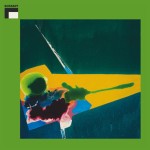
Ivar Grydeland has always seemed less interested in playing the guitar than in negotiating with it. Strings, circuits, delays, ghosts of notes past: everything is invited to the table, and no one is guaranteed a speaking turn. On "Bøyning, brytning" - his third solo album for SOFA - this approach reaches a quietly absorbing clarity. It’s a record about bending and breaking, yes, but also about letting go: of control, of linear time, of the fantasy that sound should behave itself.
Living on the Nesodden peninsula, with the Oslo fjord as daily companion, Grydeland once again turns to water as both metaphor and method. But this is not postcard ambient, nor the sonic equivalent of a tasteful screensaver. The album’s title refers to how light curves and refracts, and that’s exactly how the music moves: angles instead of lines, reflections instead of statements. Sounds arrive as if from a distance, take a detour through some unseen medium, and finally settle - briefly - right beside your ear.
The technical setup behind "Bøyning, brytning" is deliberately unruly: a carefully built system of analog and digital tools designed to resist obedience. Grydeland plays pedal steel, electric and Portuguese guitars into this semi-autonomous environment, where delays and responses behave like temperamental collaborators rather than neutral tools. The result feels uncannily social for a solo record, continuing an investigation he began years ago into how electronics can simulate the sensation of playing with others - sometimes supportive, sometimes contrary, sometimes just confusing enough to be interesting.
The opening piece, “Virkning av lysets bøyning”, stretches across seventeen minutes and sets the tone with patient authority. Joined by percussionist Michaela Antalová, Grydeland allows rhythm to breathe rather than assert itself. The pulse is there, but it drifts, smokes, evaporates. Guitar tones shimmer and tilt, suggesting motion without destination, like watching currents intersect beneath the surface. It’s immersive without being narcotic - music that asks for attention, not surrender.
From there, Grydeland continues alone, finding percussive and harmonic counterpoints inside his own system. “Fordums streng” is almost a ballad, if one accepts a definition of ballad that includes creaking resonance and tones bleeding gently into each other like ink in water. “Virkning av lysets brytning” introduces a more mechanical tension: a melody repeatedly interrupted by sharp, almost slapstick pulses, as if the music were being politely sabotaged by its own infrastructure.
“Ringer i ringer av vann” lives up to its title, sending resonant waves through quiet electronic pops, each sound triggering another at an oblique angle. And then there’s the closing miniature, “Snyt meg langsommere”, whose title carries a wink even if its translation remains cheerfully elusive. Grydeland builds a cavernous, underwater space - only to eject us, without warning, back onto dry land. No grand finale, no fade into infinity. Just a reminder that immersion is temporary.
What makes "Bøyning, brytning" compelling is not virtuosity in the traditional sense, but trust: trust in systems, in listening, in the idea that meaning can emerge from interaction rather than intention. Grydeland doesn’t dramatize this process; he lets it unfold. The humor, when it appears, is dry and structural - the kind that comes from setting something in motion and watching it politely refuse to behave.
This is music that bends toward the listener without ever fully revealing its shape. It refracts, reflects, and occasionally glitches, like light on unsettled water. If you’re looking for statements, you may leave empty-handed. If you’re willing to linger at the edge, watching small changes accumulate until they suddenly matter, "Bøyning, brytning" offers quiet, lasting rewards.
Living on the Nesodden peninsula, with the Oslo fjord as daily companion, Grydeland once again turns to water as both metaphor and method. But this is not postcard ambient, nor the sonic equivalent of a tasteful screensaver. The album’s title refers to how light curves and refracts, and that’s exactly how the music moves: angles instead of lines, reflections instead of statements. Sounds arrive as if from a distance, take a detour through some unseen medium, and finally settle - briefly - right beside your ear.
The technical setup behind "Bøyning, brytning" is deliberately unruly: a carefully built system of analog and digital tools designed to resist obedience. Grydeland plays pedal steel, electric and Portuguese guitars into this semi-autonomous environment, where delays and responses behave like temperamental collaborators rather than neutral tools. The result feels uncannily social for a solo record, continuing an investigation he began years ago into how electronics can simulate the sensation of playing with others - sometimes supportive, sometimes contrary, sometimes just confusing enough to be interesting.
The opening piece, “Virkning av lysets bøyning”, stretches across seventeen minutes and sets the tone with patient authority. Joined by percussionist Michaela Antalová, Grydeland allows rhythm to breathe rather than assert itself. The pulse is there, but it drifts, smokes, evaporates. Guitar tones shimmer and tilt, suggesting motion without destination, like watching currents intersect beneath the surface. It’s immersive without being narcotic - music that asks for attention, not surrender.
From there, Grydeland continues alone, finding percussive and harmonic counterpoints inside his own system. “Fordums streng” is almost a ballad, if one accepts a definition of ballad that includes creaking resonance and tones bleeding gently into each other like ink in water. “Virkning av lysets brytning” introduces a more mechanical tension: a melody repeatedly interrupted by sharp, almost slapstick pulses, as if the music were being politely sabotaged by its own infrastructure.
“Ringer i ringer av vann” lives up to its title, sending resonant waves through quiet electronic pops, each sound triggering another at an oblique angle. And then there’s the closing miniature, “Snyt meg langsommere”, whose title carries a wink even if its translation remains cheerfully elusive. Grydeland builds a cavernous, underwater space - only to eject us, without warning, back onto dry land. No grand finale, no fade into infinity. Just a reminder that immersion is temporary.
What makes "Bøyning, brytning" compelling is not virtuosity in the traditional sense, but trust: trust in systems, in listening, in the idea that meaning can emerge from interaction rather than intention. Grydeland doesn’t dramatize this process; he lets it unfold. The humor, when it appears, is dry and structural - the kind that comes from setting something in motion and watching it politely refuse to behave.
This is music that bends toward the listener without ever fully revealing its shape. It refracts, reflects, and occasionally glitches, like light on unsettled water. If you’re looking for statements, you may leave empty-handed. If you’re willing to linger at the edge, watching small changes accumulate until they suddenly matter, "Bøyning, brytning" offers quiet, lasting rewards.
Isak Ingvarsson: The Calling
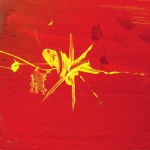
Isak Ingvarsson’s "The Calling" arrives with the quiet confidence of someone who has wrestled with angels, lost a few rounds, and decided to turn the whole affair into music rather than theology. This debut album doesn’t so much answer questions as circle them patiently, like a cat around a warm radiator, aware that certainty is overrated and doubt has better acoustics. Rooted in Ingvarsson’s Catholic upbringing but stripped of any ecclesiastical stiffness, the record treats faith less as doctrine and more as a recurring melodic ghost: something learned early, forgotten badly, and remembered at inconvenient moments.
At its core, "The Calling" is a trio record that understands the power of restraint. Ingvarsson’s tenor and baritone saxophones don’t preach; they confess, hesitate, and occasionally mutter under their breath. His lines often feel like psalms rewritten by someone who skipped church but kept the hymns lodged somewhere deep in the body. Johan Graden’s piano and organ work provides a harmonic terrain that is at once grounded and slippery, moving between meditative repetition and sudden, sideways harmonic decisions that feel like doors opening where you expected walls. Kresten Osgood, meanwhile, plays drums as if time itself were optional, nudging, prodding, and sometimes sabotaging the pulse just enough to keep everything human. Even the Yamaha PSR-1500, an instrument that in lesser hands might scream “bad taste”, is deployed with a sense of mischief that borders on grace.
What makes the album compelling is its refusal to dramatize despair or sanctify hope. Pieces unfold slowly, motifs are worried rather than developed, and silences are treated as equal partners. Tracks like “Calling” and “My Prayer” suggest ritual, but a ritual emptied of spectacle: no incense, no stained glass, just breath, friction, and repetition. Elsewhere, the recurring appearances of “Tre Toner” feel like a stubborn thought returning in slightly altered form, refusing to be resolved because resolution would be dishonest. This is music that insists on asking questions without answers, and then asking them again, just to be sure.
Ingvarsson’s background - studies in Berlin, current immersion in New York’s jazz ecosystem, mentorships that bridge avant-garde severity and straight-ahead tradition - comes through not as stylistic name-dropping but as a kind of internal tension. You can hear the pull between discipline and rupture, between lyricism and abrasion. Yet "The Calling" never collapses into angst tourism. There’s a strange calm here, the kind that comes from accepting that belief and doubt are not opposites but roommates who don’t speak much.
In the end, "The Calling" feels less like a debut statement and more like an ongoing process, caught mid-thought. It’s a record that understands that faith, like improvisation, is mostly about listening: to what’s been inherited, to what refuses to leave, and to what emerges when you stop demanding clarity. No miracles are promised here, no conversions attempted. Just a careful, searching music that suggests that sometimes the calling isn’t a voice from above, but a persistent murmur from inside, asking you to keep going, even when the answers remain stubbornly out of reach.
At its core, "The Calling" is a trio record that understands the power of restraint. Ingvarsson’s tenor and baritone saxophones don’t preach; they confess, hesitate, and occasionally mutter under their breath. His lines often feel like psalms rewritten by someone who skipped church but kept the hymns lodged somewhere deep in the body. Johan Graden’s piano and organ work provides a harmonic terrain that is at once grounded and slippery, moving between meditative repetition and sudden, sideways harmonic decisions that feel like doors opening where you expected walls. Kresten Osgood, meanwhile, plays drums as if time itself were optional, nudging, prodding, and sometimes sabotaging the pulse just enough to keep everything human. Even the Yamaha PSR-1500, an instrument that in lesser hands might scream “bad taste”, is deployed with a sense of mischief that borders on grace.
What makes the album compelling is its refusal to dramatize despair or sanctify hope. Pieces unfold slowly, motifs are worried rather than developed, and silences are treated as equal partners. Tracks like “Calling” and “My Prayer” suggest ritual, but a ritual emptied of spectacle: no incense, no stained glass, just breath, friction, and repetition. Elsewhere, the recurring appearances of “Tre Toner” feel like a stubborn thought returning in slightly altered form, refusing to be resolved because resolution would be dishonest. This is music that insists on asking questions without answers, and then asking them again, just to be sure.
Ingvarsson’s background - studies in Berlin, current immersion in New York’s jazz ecosystem, mentorships that bridge avant-garde severity and straight-ahead tradition - comes through not as stylistic name-dropping but as a kind of internal tension. You can hear the pull between discipline and rupture, between lyricism and abrasion. Yet "The Calling" never collapses into angst tourism. There’s a strange calm here, the kind that comes from accepting that belief and doubt are not opposites but roommates who don’t speak much.
In the end, "The Calling" feels less like a debut statement and more like an ongoing process, caught mid-thought. It’s a record that understands that faith, like improvisation, is mostly about listening: to what’s been inherited, to what refuses to leave, and to what emerges when you stop demanding clarity. No miracles are promised here, no conversions attempted. Just a careful, searching music that suggests that sometimes the calling isn’t a voice from above, but a persistent murmur from inside, asking you to keep going, even when the answers remain stubbornly out of reach.